Dental Implant
January 14, 2026
All on 6 Dental Implants: A Complete Guide to Six Implant Full Arch Teeth
 Dr. Rifat Alsaman

All on 6 Dental Implants replace a full upper or lower arch with a fixed bridge anchored on six implants. They suit adults with missing or failing teeth and enough jawbone. Temporary teeth are often fitted on surgery day. The permanent bridge usually follows after three to six months of healing.
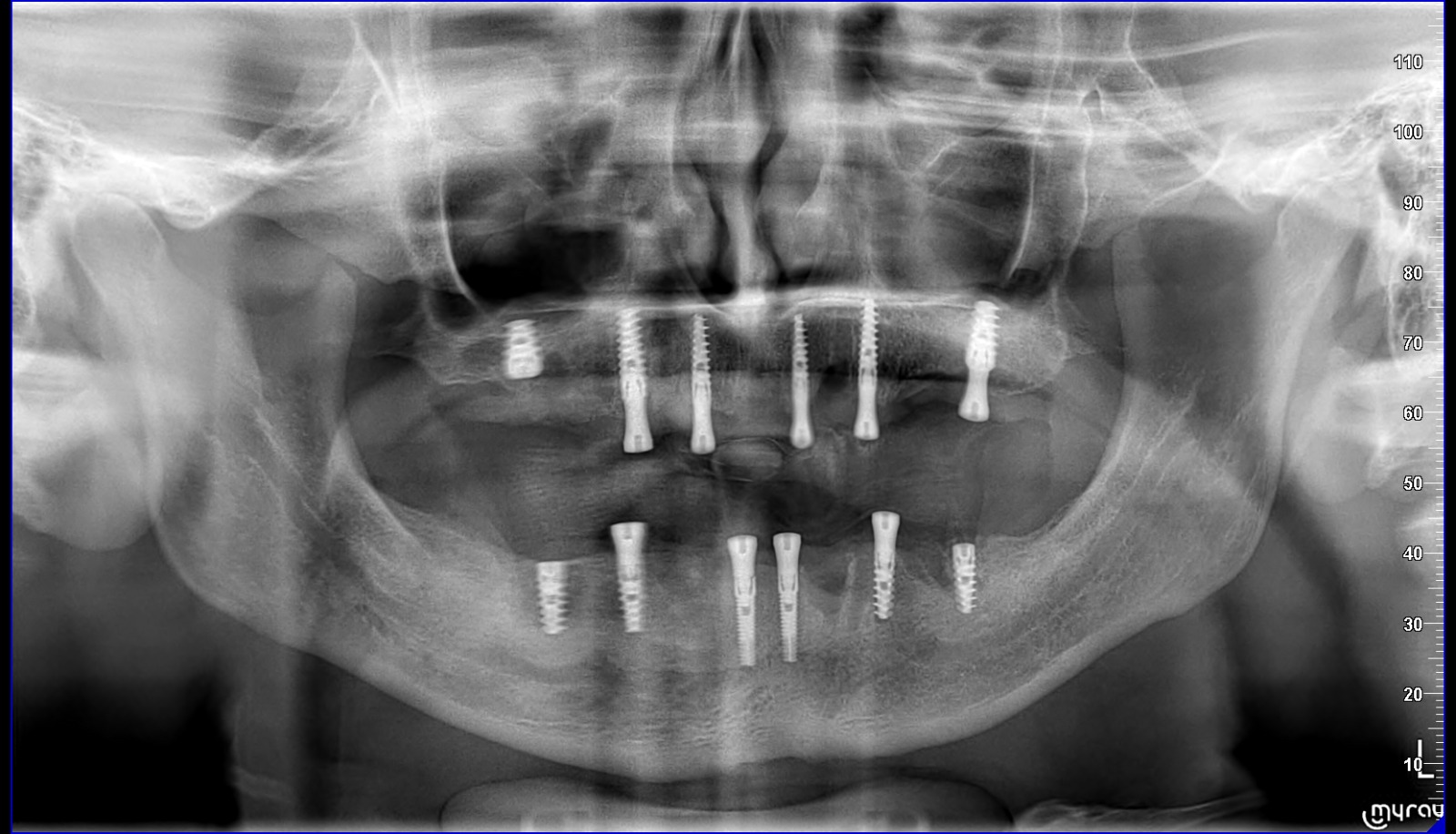
The treatment uses six implants to hold one fixed bridge of about 10 to 12 teeth.
Six implants spread chewing forces across more anchor points than four.
Research has not shown clearly higher survival with more implants per arch .
Temporary teeth often arrive on the day of surgery.
Daily cleaning under the bridge and regular reviews protect long-term results.
Key Takeaways
All-on-6 dental implants replace a full arch of missing or failing teeth using six implants to support a fixed bridge.
Temporary teeth may be fitted on the day of surgery, while permanent teeth usually follow after 3–6 months of healing.
Material choice matters: Zirconia, acrylic hybrids, and porcelain-on-titanium restorations differ in strength, aesthetics, repairability, and cost.
Recovery and maintenance are essential: Follow a soft-food diet initially, maintain daily hygiene, and attend regular dental reviews.
Suitability and cost vary: Bone quality, overall health, additional procedures, and bridge materials determine the best treatment plan and final price.
Ready to transform your smile?
Talk to our team and get a personal FREE treatment plan.
What Are All on 6 Dental Implants?
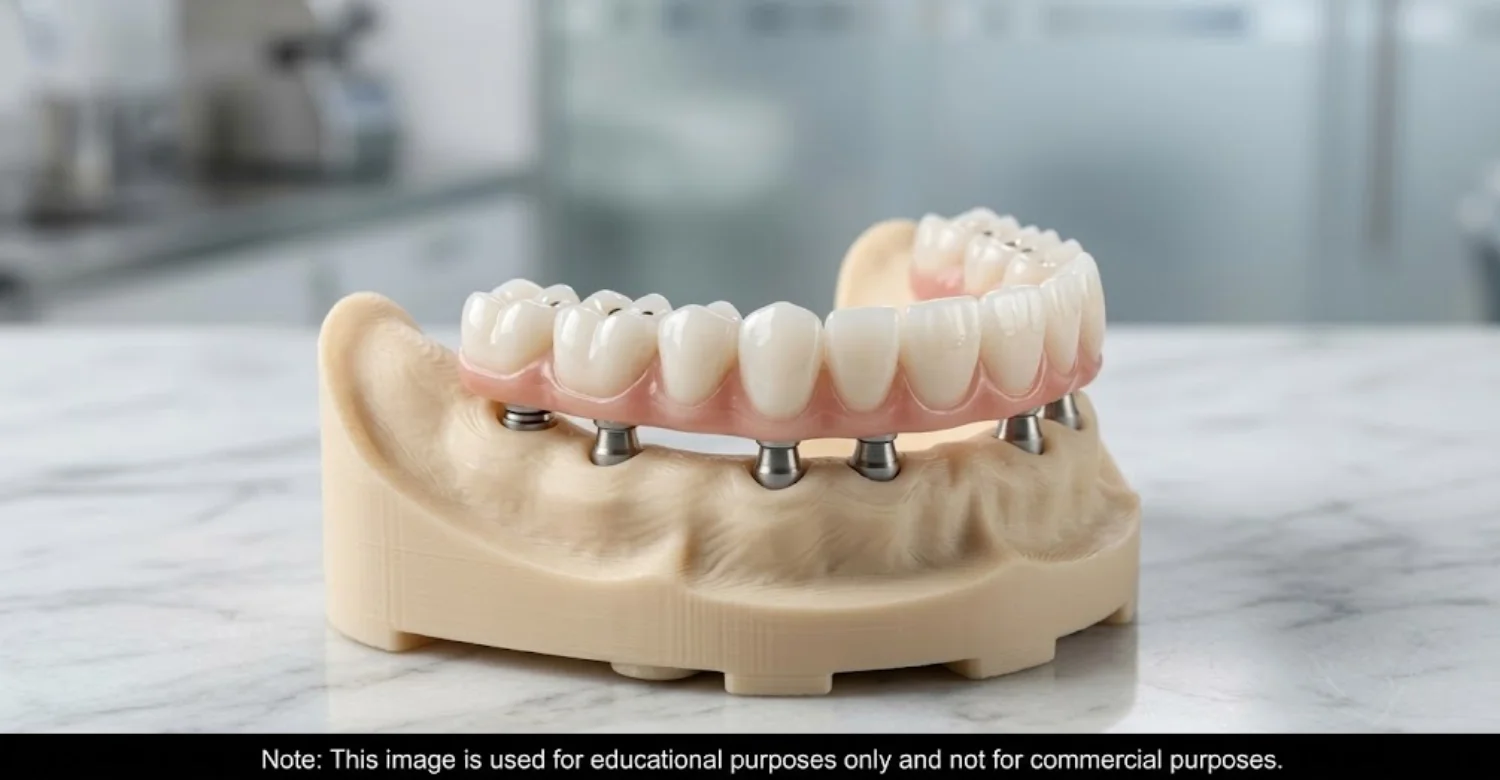
This solution is a fixed full-arch treatment that uses six implants to support one bridge of teeth. The bridge replaces every tooth in the upper or lower jaw. Only a dentist can remove it.
The system has three main parts:
Six implants: small titanium or zirconia posts placed in the jawbone. They act like artificial tooth roots.
Multiunit abutments: small connectors screwed onto the implants. They correct angles and create an even base for the bridge.
Full arch bridge: one prosthesis holding about 10 to 12 teeth. It may include gumcoloured material where bone and gum were lost.
What Is the All on 6 Technique?
This technique uses six implants to share the load of one fixed arch. It builds on the fullarch concept first developed for four implants. Back implants may be tilted to avoid the sinus or a nerve. Tilting can allow longer implants and better support without grafting in some cases . The surgeon plans every implant position digitally before surgery. A temporary bridge is often attached within hours when the implants are stable enough. This approach is called immediate loading. If stability is low, the dentist waits before fitting fixed teeth.
Why All on 6 Implants Are Used
Six-implant bridges are used when a whole arch of teeth is missing, failing or beyond repair. Common reasons include advanced gum disease, extensive decay and repeated failed dental work. Some patients choose them because removable dentures feel loose during eating or speaking. A fixed upper bridge also avoids covering the palate, the roof of the mouth. Six implants are often chosen when bone volume allows extra anchorage. This is common in the upper jaw, where bone is usually softer.
Where the Six Implants Are Placed
In this procedure, the six implants usually sit in three pairs across the arch: front, middle and back. Exact positions depend on your bone, nerves, sinuses and planned bridge.
Zone | Implants | Typical position | Main role |
Front | 2 | Incisor or canine area | Support front teeth and appearance |
Middle | 2 | Premolar area | Spread biting forces along the arch |
Back | 2 | Molar area, sometimes tilted | Support chewing and shorten the cantilever |
Types of Dental Restorations
Dental restorations range from single tooth repairs to full arch replacements. The right one depends on how many teeth are missing and how healthy the rest are.
Fillings and crowns: repair or cover a damaged natural tooth.
Single implant crown: replaces one missing tooth with one implant.
Fixed partial denture (bridge): replaces a short gap using neighbouring teeth or implants.
Removable partial denture: a plate that clips onto remaining teeth.
Complete denture: a removable plate that replaces a whole arch.
Implant overdenture: a removable denture that snaps onto two to four implants.
Fullarch fixed bridge: a fixed arch of teeth screwed onto several implants, such as All on 6 Dental Implants.
All on 6 vs Bridges and Partial Solutions
Unlike fixed partial dentures, this system replaces the entire upper or lower arch. A partial bridge fills a gap of one to a few teeth. It depends on healthy teeth or implants on either side. A six-implant restoration suits a different situation. It is used when most or all teeth in an arch are missing or need removal. Placing many separate implants is another option. It usually needs more implants and more bone. Partial solutions keep your natural teeth, which is valuable when those teeth are healthy. Dentists usually try to save healthy teeth before recommending a full arch option.
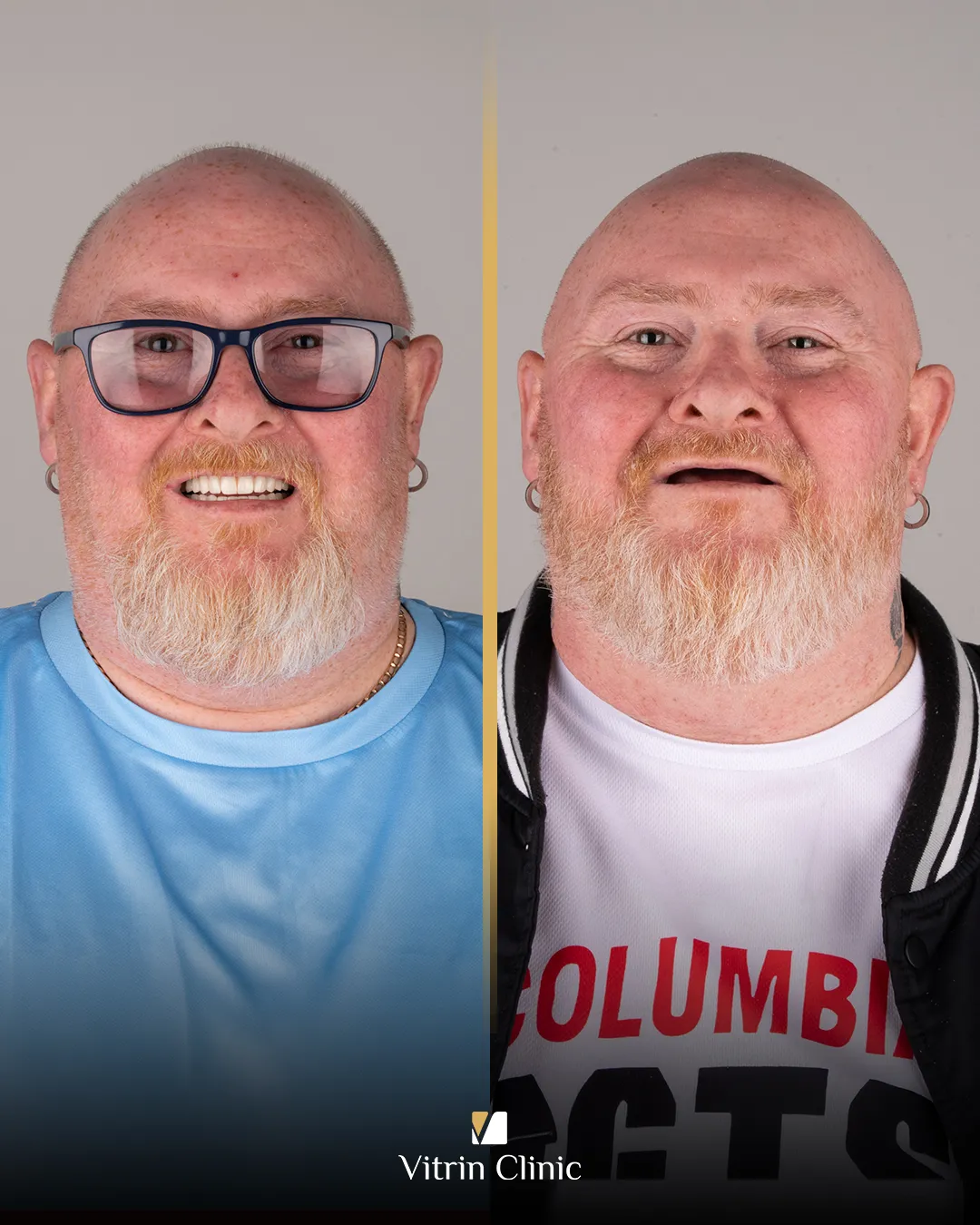

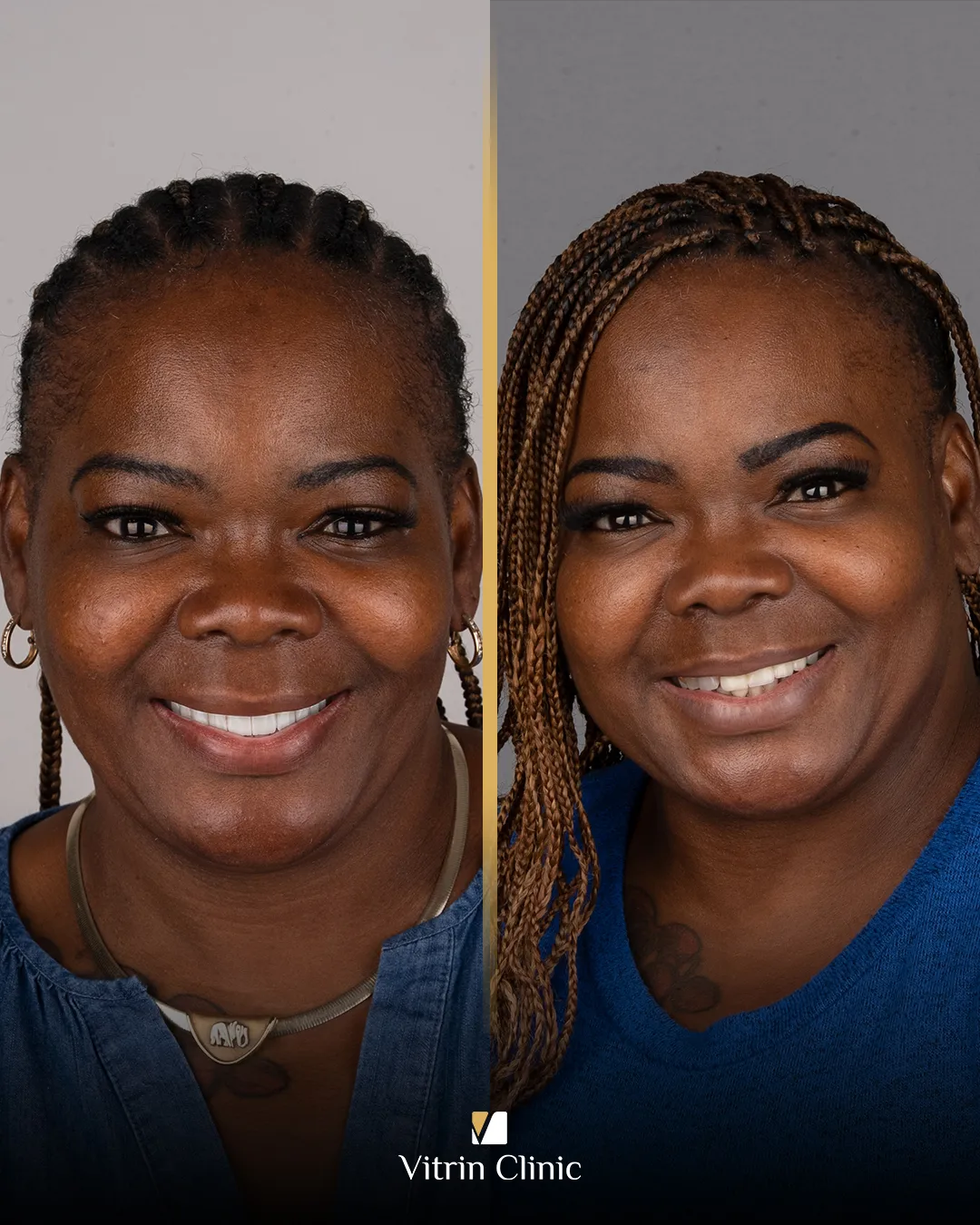
All on 6 vs Allon4: Key Differences
The main difference is the amount of support. Using six implants offers more support than the standard Allon4 bridge configuration. Both use one fixed bridge per arch. Reviews have found similar survival with fewer or more implants per arch.
Factor | Allon4 | All on 6 |
Number of implants | 4 per arch | 6 per arch |
Implant angle | Back two usually tilted | Often more upright; back pair sometimes tilted |
Bone needed | Less; designed for reduced bone | More bone along the arch |
Force distribution | Four anchor points | Six anchor points, shorter spans |
Redundancy if one fails | 3 implants remain | 5 implants remain |
Surgery time | Usually shorter | Usually longer |
Ease of cleaning | Fewer implant sites | More implant sites to clean |
Bone graft likelihood | Often avoided | More likely when bone is limited |
What Happens If One Implant Fails?
If one implant fails, the outcome depends on how many implants remain. With a six-implant system, five remain. The bridge may stay usable while your dentist plans a replacement. With four implants, three remain. Three may not safely support a full bridge, so a temporary solution is often needed. In both cases, the failed implant is usually removed. The site may need healing or grafting before a new implant is placed. This backup is one reason some clinicians prefer six implants. Implant failure is uncommon, but the risk is higher in smokers.
Which Is Better for the Upper Jaw vs the Lower Jaw?
The upper jaw often benefits more from six implants, while the lower jaw often does well with four. Upper jaw bone is usually softer and less dense. The sinuses also limit bone height at the back. Extra implants can help spread forces through softer bone. The lower jaw is usually denser, so four implants often give enough support. In one large review, upperjaw cases most often used six implants. Lowerjaw cases more often used four or five . These are trends, not rules. Your own scans decide what fits.
How Your Dentist Decides Between 4 and 6 Implants
Your dentist decides by matching your bone, bite and health to the support your bridge needs. Key factors include:
Bone volume and density on the 3D scan
Sinus and nerve positions
Bite force and any clenching or grinding habits
Opposing teeth, such as natural teeth or another implant bridge
Planned bridge material and length
General health, smoking and healing ability
Your willingness to have grafting, and your budget
Strong biters or people with softer bones may be guided toward All on 6 Dental Implants. People with limited bone may be guided toward four implants with tilted back implants.
Who Is a Good Candidate for All on 6?
A good candidate has a healthy jawbone, controlled gum disease and stable general health. All on 6 Dental Implants need more bone than four implant designs. The main criteria are:
Bone quantity and density: enough height and width for six implants.
Gum health: active gum infection should be treated before surgery.
General health: some conditions and medicines that affect bone need careful review.
Smoking: smokers have about twice the implant failure risk of nonsmokers.
Diabetes: Well-controlled diabetes is usually manageable. Poorly controlled blood sugar can slow healing.
Patients with significant bone loss may not be candidates for 6 implants without grafting. Elective implant surgery is usually postponed during pregnancy.
Options If You Don't Have Enough Bone
Several options remain when bone is too limited for All on 6 Dental Implants.
Bone graft: adds bone or bone substitute to rebuild width or height. Healing may take several months.
Sinus lift: raises the sinus floor in the upper back jaw and places graft material beneath it.
Allon4: four implants with tilted back implants, which often avoids grafting.
Zygomatic implants: long implants anchored in the cheekbone. They are used for severe upper jaw bone loss and need specialist experience.
Each option has different healing times, risks and costs. A 3D scan shows which ones suit your anatomy.
Pros and Cons of All on 6 Dental Implants
All on 6 Dental Implants offer strong support and a backup if one implant fails. They also need more bone, longer surgery and careful cleaning. The two lists below set out both sides.
Advantages
Fixed teeth that stay in place while eating and speaking
Six anchor points that spread chewing forces
Backup support if one implant fails
Temporary teeth often fitted on surgery day
An upper bridge that leaves the palate uncovered
Implants that help preserve the jawbone around them
Shorter bridge extensions behind the last implant
Disadvantages
Needs more bone than four implant options
Longer surgery, with possibly more swelling
More implant sites to clean under the bridge
Higher hardware cost than four implants
Grafting may be needed, which adds time
Not suitable for every patient or medical history
Remaining teeth in the arch are usually removed
Bridge repairs need clinic visits
Reasons to Choose All on 6 Dental Implants
People usually choose All on 6 Dental Implants for stability, confidence and long term planning. Typical reasons include:
Frustration with loose or uncomfortable dentures
Many failing teeth that need repeated repairs
Softer upper jaw bone, where extra anchorage helps
A strong bite or a history of breaking dental work
Wanting a backup if one implant fails
Preferring fixed teeth over removable options
These reasons support a discussion with your dentist, not a decision on their own. The right choice depends on your scans and health.
The All on 6 Procedure, Step by Step
Treatment with All on 6 Dental Implants moves from digital planning to surgery, temporary teeth and then a permanent bridge. Most patients finish about three to six months after surgery. Bone grafting can extend this timeline.
What the Process Usually Involves
The process usually involves two phases: a surgical phase and a prosthetic phase. The surgical phase removes failing teeth and places the implants. The prosthetic phase designs, tests and fits your new teeth. Healing happens between the two.
Expect several appointments in total. These include planning visits, surgery, healing checks and final fitting visits. International patients often plan two trips. The first covers surgery and the temporary bridge. The second covers the permanent bridge.
1. Consultation, CBCT and Digital Smile Design
The first step toward All on 6 Dental Implants is a 3D scan and a digital design. A CBCT scan (conebeam computed tomography) shows bone height, width and density in three dimensions. It also maps nerves and sinuses.
Intraoral scans and photos record your bite, face and smile line. Digital Smile Design uses these images to preview tooth shape and position. Your dentist also reviews your medical history and every medicine you take. This is when you discuss risks, alternatives and estimated costs.
2. Extractions and Site Preparation
On surgery day, any remaining failing teeth are removed first. Treatment uses local anaesthetic, and many clinics also offer sedation. The surgeon then cleans infected tissue from the sockets.
The bone ridge may be smoothed to create an even base for the bridge. Small grafts may be placed if gaps appear around planned implant sites. Removing teeth and placing implants in one visit is common. It is not always possible when infection or bone loss is severe.
3. Guided Placement of Six Implants
The six implants are placed in planned positions, often with a surgical guide. A surgical guide is a custom template made from your CBCT and scans. It directs the drill to the planned angle and depth.
Guides help protect nerves and sinuses. They also match implant positions to the bridge design. Freehand placement by an experienced surgeon is another accepted approach. The surgeon then measures how firmly each implant sits. This is called primary stability.
4. SameDay Temporary Teeth (Immediate Loading)
When primary stability is adequate, a temporary bridge is usually fitted within hours to a day. This is called immediate loading. Multiunit abutments are attached first.
The temporary bridge is usually acrylic and screwed onto the abutments. It lets you leave with fixed teeth while the implants heal. If stability is low, your dentist may delay loading. A healing abutment may then protect each implant while bone and gum heal. A removable denture may be worn during this time.
5. Healing and Osseointegration (3–6 Months)
Osseointegration is the process of bone growing tightly around the implant surface. It allows All on 6 Dental Implants to carry a fixed bridge. It usually takes three to six months. Upperjaw healing often takes longer than lowerjaw healing.
During this time, the implants must not be overloaded. A soft diet and good hygiene protect healing. Your gums also reshape as the extraction sites heal. Review visits check the implants, bite and gum health. The temporary bridge may be adjusted as the gums change.
6. Final Impressions and Permanent Bridge Delivery
Once the implants have integrated, precise impressions are taken for the permanent bridge. These may use digital scanning or photogrammetry. Photogrammetry uses special cameras to record exact implant positions.
A trial set of teeth is often tested to confirm bite, speech and appearance. The final bridge is then made and screwed onto the abutments. Your dentist checks the fit, bite and cleaning access. Screw access holes are sealed with tooth coloured material.
Ready to transform your smile?
Talk to our team and get a personal FREE treatment plan.
Temporary vs Permanent All on 6 Teeth
With All on 6 Dental Implants, temporary teeth protect healing implants, while permanent teeth are built for long-term strength and appearance.
Feature | Temporary bridge | Permanent bridge |
Material | Usually acrylic (PMMA) | Zirconia, acrylic hybrid or porcelain on titanium |
Purpose | Protect implants and test the design | Longterm function |
Duration | About 3–6 months | Many years with good care |
Food allowed | Soft foods only | Most foods, with sensible care |
Appearance | Natural but simpler | More lifelike detail |
Adjustability | Easy to modify | Harder to change once made |
Why the Temporary Phase Matters
The temporary phase lets you test your new teeth before the final bridge is made. You can check how your bite feels. You can test speech, including "s" and "f" sounds. You can also see how the teeth suit your face and smile.
Your dentist can reshape tooth length, position or gum contours. These changes are recorded and copied into the permanent design. Problems found now are easier to fix than after the final bridge is made.
Can Temporary All on 6 Teeth Break?
Yes, temporary teeth can crack or break because acrylic is weaker than final materials. Common causes include biting hard foods, grinding and accidental knocks. A crack may also signal a bite problem.
If your temporary bridge cracks, contact your clinic promptly. Do not try to glue it yourself. A broken temporary can overload the healing implants. Many repairs are quick, and some can be done in the clinic the same day.
What Changes When Permanent Teeth Are Fitted
Permanent teeth are stronger, more detailed and shaped for long term cleaning. You can gradually return to a wider diet. The bridge may feel slightly different from the temporary one at first.
Speech and bite usually adapt within days to a couple of weeks. Your dentist will show you how to clean under the new bridge. Many dentists also recommend a night guard if you grind your teeth. Regular reviews begin from this point.
Permanent Bridge Materials: Zirconia vs Acrylic Hybrid vs Porcelain on Titanium
The best material for All on 6 Dental Implants depends on your bite force, appearance goals, budget and repair needs.
Material | Strength | Appearance | Staining | Repairability |
Zirconia | Very high | Natural and lifelike | Resists stains well | Difficult; chips may need a remake |
Acrylic hybrid (titanium bar with acrylic teeth) | Moderate | Good, but less lifelike | Can stain and wear over time | Easy; teeth can be replaced |
Porcelain on titanium | High | Very natural | Resists stains | Chips repairable, sometimes complex |
.jpg)
.jpg)
Recovery and Eating After All on 6
Recovery from All on 6 Dental Implants happens in stages, and your diet expands as healing progresses.
Stage | What to expect | Eating |
Day 1–3 | Swelling, bruising, mild bleeding and soreness | Cool liquids and smooth soft foods |
Week 1–2 | Swelling eases; stitches dissolve or are removed | Soft foods needing little chewing |
Months 1–6 | Implants integrate; bridge may be adjusted | Soft foods; no hard or sticky foods |
After permanent bridge | Full function returns gradually | Most foods, cut into smaller pieces |
What Recovery Is Really Like
Recovery is usually uncomfortable for a few days, then steadily easier. Swelling often peaks on the second or third day. Bruising on the cheeks or neck can appear. Many people return to desk work within a few days to a week.
Your speech may sound different while your tongue adapts. Pain is usually manageable with medicines your dentist recommends. Use only the products and doses your clinician advises. Tell them about all other medicines you take. Feeling tired after surgery is common.
Soft Food Diet With Temporary Teeth
A soft food diet protects your implants while they bond with the bone. Good choices include:
Yoghurt, smoothies and blended soups
Scrambled eggs and omelettes
Mashed potatoes and other mashed vegetables
Soft fish, minced meat and well cooked pasta
Porridge and soft rice
Avoid nuts, crusty bread, hard fruit, raw carrots, ice, toffee and chewing gum. Do not bite into food with your front teeth. Cut food small and chew gently with your back teeth.
When Can You Eat Normally?
Most people return to a normal diet after the permanent bridge is fitted. That is usually three to six months after surgery. Your dentist decides once the implants have integrated.
Reintroduce firmer foods gradually. Very hard items, such as ice or bones, can still damage any bridge material. Sticky sweets can loosen or chip restorations over time. Food can also collect under the bridge, so clean after meals when you can.
Recovery & Aftercare Tips
Simple habits in the first weeks support healing.
Rest with your head raised for the first few nights.
Use cold packs on your cheeks during the first day or two.
Follow your clinic's rinsing and cleaning instructions exactly.
Take only medicines prescribed or recommended for you.
Avoid smoking and vaping, because both slow healing.
Limit alcohol, especially while taking prescribed medicines.
Avoid strenuous exercise for several days.
Attend every review appointment.
Warning Signs That Need Urgent Care
Contact your clinic promptly if you notice heavy bleeding, fever, pus or a loose implant. Also call if pain worsens after the third day. Seek emergency medical care immediately for difficulty breathing or swallowing. The same applies to swelling that spreads quickly towards the eye, neck or floor of the mouth. These signs can indicate a serious infection or reaction.
How Long Do All on 6 Implants Last?
With All on 6 Dental Implants, the implants often last many years, while the bridge usually needs repair or replacement sooner. A major systematic review reported about 93% implant survival at 10 years. The same review reported about 80% survival for the bridges themselves at 10 years. These figures cover implant supported bridges in general, not All on 6 alone.
Lifespan depends on several factors:
Oral hygiene: plaque can cause periimplantitis, an infection of the gum and bone around implants.
Smoking: raises the risk of implant failure.
Bruxism: grinding or clenching overloads implants and chips teeth.
Followup: regular checks catch loose screws and early bone loss.
General health: poorly controlled diabetes may affect gums and bone.
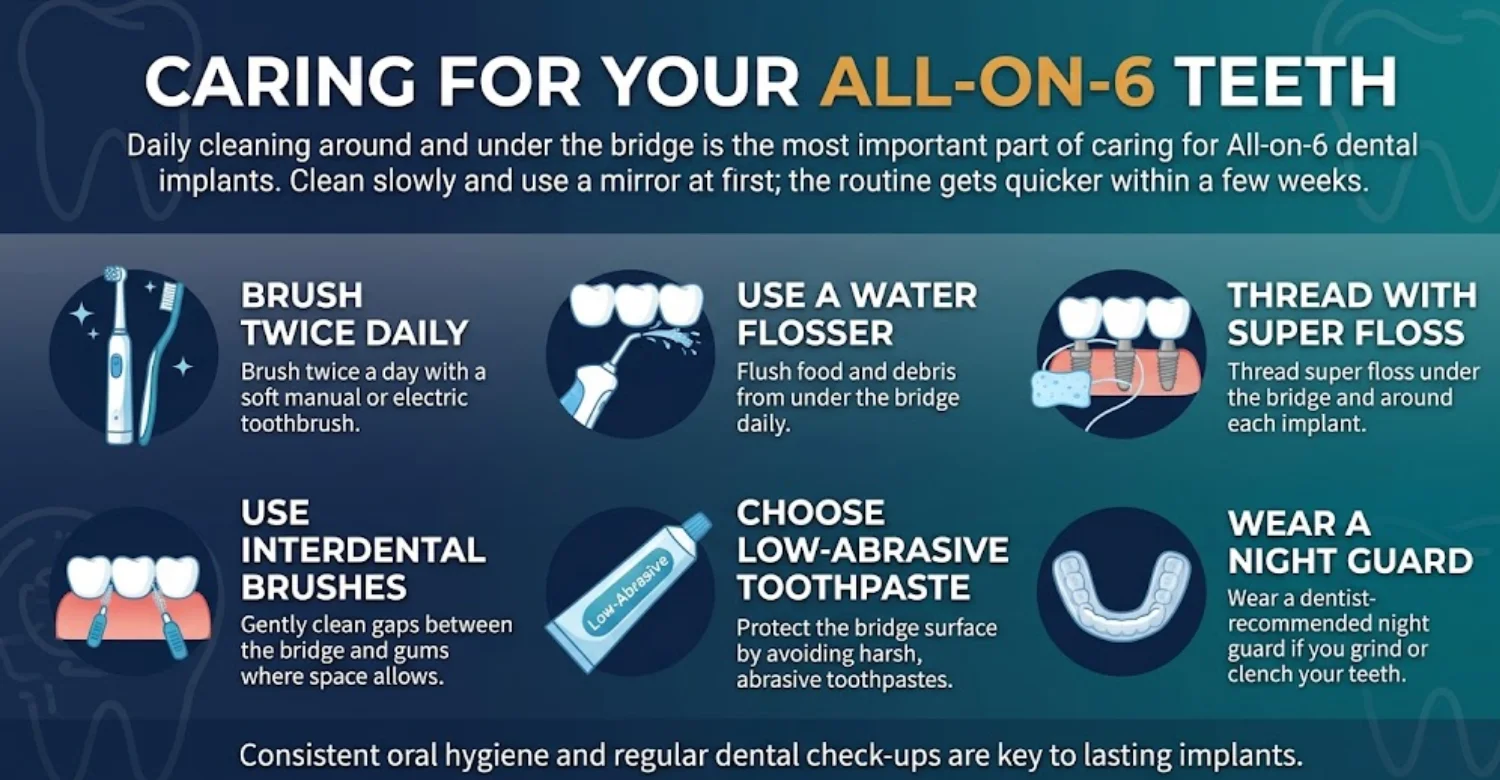
Caring for All on 6: How to Maintain Them LongTerm?
Long-term maintenance combines home care with professional reviews. Many dentists recommend checkups every six months. Some patients need visits every three to four months.
At each review, the dentist checks your gums, bite, screws and bridge wear. Xrays may be taken to monitor bone levels. From time to time, the dentist unscrews the bridge for deep cleaning. The interval depends on your hygiene and the clinic's protocol.
Report any looseness, clicking, bad taste or bleeding early. Small problems are easier to fix before they spread.
Ready to transform your smile?
Talk to our team and get a personal FREE treatment plan.
Are There Alternatives to All on 6 Dental Implants?
Yes, several alternatives to All on 6 Dental Implants exist. Each one has different costs, bone needs and comfort levels.
Allon4: four implants and one fixed bridge; needs less bone.
Implant overdenture: a removable denture that clips onto implants. It usually costs less and is easy to clean.
Separate implant bridges: several shorter bridges on more implants. They usually need more bone.
Conventional complete dentures: no surgery, but less stable, especially in the lower jaw.
Zygomatic implants: an option for severe upper jaw bone loss.
Restoring natural teeth: possible when enough healthy teeth remain.
Discuss the benefits and limits of each option before deciding.
What Affects the Cost of All-on-6 Dental Implants?
The cost of All-on-6 dental implants depends on the implant system, replacement teeth, additional procedures, and clinical complexity. Six implants require more implant components than All-on-4, but the final price also depends on the patient's bone condition and the type of fixed bridge selected.
Average All-on-6 Dental Implant Cost by Country
The table below compares published planning ranges for All-on-6 dental implants per jaw. UK and Turkish prices are converted to approximate USD values for easier comparison.
United Kingdom
$21,500
Approximate midpoint per jaw
Midpoint $21,500
Estimated range $16,000–$27,000
Turkey
$8,000
Approximate midpoint per jaw
Midpoint $8,000
Estimated range $4,500–$11,500
United States
$31,000
Approximate midpoint per jaw
Midpoint $31,000
Estimated range $24,000–$38,000
Average All-on-6 Cost in Turkey
Turkey offers a wide range of All-on-6 treatment prices. Published estimates vary depending on whether the package includes temporary teeth, the final bridge, extractions, and other procedures.
Treatment component | How it affects the cost |
Six dental implants | Implant brand, design, and component quality affect the price. |
Temporary fixed teeth | May be included in the initial package or charged separately. |
Permanent bridge | Material and fabrication methods influence the final cost. |
Extractions | Removing damaged or remaining teeth may add to the total. |
Bone grafting or sinus lift | Additional procedures increase the cost when clinically necessary. |
Diagnostics and surgical planning | Scans, X-rays, and surgical guides may be included or billed separately. |
How Does Bridge Material Affect All-on-6 Cost?
The material used for the fixed bridge can significantly affect the overall price.
Bridge option | General cost consideration |
Acrylic or composite hybrid bridge | Often has a lower initial cost; replacement or maintenance may be needed over time. |
Zirconia bridge | Often costs more initially and may offer a durable, aesthetic restoration when suitable. |
Other reinforced or metal-supported designs | Cost depends on the framework, finishing material, and laboratory work. |
Does Bone Grafting Increase All-on-6 Cost?
Yes. If there is insufficient bone to support the implants, additional procedures may be recommended following examination and imaging.
Bone grafting
$300–$3,000
Estimated cost in the US, per site
Estimated range $300–$3,000
Priced Per site
Sinus lift
$1,500–$5,000
Estimated cost in the US
Estimated range $1,500–$5,000
Does All-on-6 Cost More for Both Jaws?
Yes. Treating both the upper and lower jaws generally costs more than treating one jaw because each requires its own implant-supported restoration and treatment plan.
Treatment scope | How to interpret the quote |
All-on-6 for one jaw | Covers the upper or lower arch, depending on the plan. |
All-on-6 for both jaws | Covers both arches; confirm whether all surgical and prosthetic stages are included. |
What Should an All-on-6 Cost Estimate Include?
Before agreeing to treatment, request an itemized written estimate covering:
Six implants and their abutments or prosthetic components.
The implant system and any applicable warranty terms.
Extractions, if required.
Digital scans, X-rays, and surgical planning.
Temporary and permanent fixed bridges.
Bone grafting or sinus lifts, if necessary.
Anaesthesia or sedation, where applicable.
Follow-up visits and maintenance arrangements.
Can All on 6 teeth be removed?
You cannot remove an All on 6 bridge yourself, because it is screwed onto the implants. Your dentist can unscrew it for deep cleaning, repairs or adjustments. This makes professional maintenance easier than with cemented bridges. If the bridge feels loose, contact your clinic rather than trying to tighten it yourself.
Can you get All on 6 on both jaws?
Yes, All on 6 Dental Implants can be placed in both the upper and lower jaw. Some patients have both arches treated in one surgery. Others treat each arch separately. Some combine six implants in the upper jaw with four in the lower jaw. Your bones, health and budget guide the plan.
How long do temporary All on 6 teeth last?
Temporary All on 6 teeth are usually worn for about three to six months. They are designed for the healing phase, not for longterm use. Acrylic can crack, stain or wear if it is used too long. Your dentist replaces it with the permanent bridge once the implants have integrated.
How Vitrin Clinic Plans All on 6 Treatment
At Vitrin Clinic, planning for All on 6 Dental Implants starts with diagnosis rather than a fixed package. A clinical examination and CBCT scan show bone, nerves, sinuses and the condition of remaining teeth. Any active gum disease or infection is identified for treatment first.
Digital planning then places each implant virtually around the planned teeth. A surgical guide may be made from that plan when it suits the case. Implant systems are selected according to bone quality and the planned bridge.
If six implants are not suitable, the team explains the alternatives. These may include four implants, grafting or a removable option.

All on 6 Dental Implants at Vitrin Clinic: Estimates, Follow Up and International Patients
Vitrin Clinic provides a treatment estimate after reviewing your scans and medical history. The estimate lists what is included, such as surgery, temporary teeth and the permanent bridge. It also flags possible extra costs, such as grafting. It becomes a final quote only after the clinical examination.
International patients usually plan two visits. The first covers surgery and the temporary bridge. The second, about three to six months later, covers the permanent bridge. Allow several days locally after surgery for review checks.
Ready to transform your smile?
Talk to our team and get a personal FREE treatment plan.
Final Thoughts on All on 6 Dental Implants
All on 6 Dental Implants can restore a full arch of fixed teeth when bone and health allow. Six implants add support and a margin of safety. They also need more bone, longer surgery and careful daily cleaning. Four implants or another option may suit you better. A detailed scan and an honest discussion of risks should guide your decision.
Get your FREE treatment plan now .
Medical Disclaimer
This article is for general information only. It does not replace an examination, diagnosis or treatment plan from a qualified dentist. Suitability, risks and results vary between individuals. Always share your medical history and all current medicines with your dental team. If you have breathing or swallowing difficulty or rapidly spreading swelling, seek emergency care immediately.
References
FAQs
Dr. Rifat Alsaman has more than 5 years of clinical experience in dentistry and currently serves as the Head of the Medical Team at Vitrin Clinic. He is dedicated to providing exceptional patient care, overseeing treatment planning, and ensuring the highest clinical standards across the team. His expertise, attention to detail, and commitment to continuous professional development have helped countless patients achieve healthier, more confident smiles.


