General Dentistry
August 30, 2026
Can Certain Foods Whiten Teeth Naturally?

A brighter smile often begins with everyday food choices. Certain Foods Whiten Teeth Naturally is a useful search topic, but the science requires realistic expectations. Foods cannot bleach the internal color of natural teeth like professional whitening products. However, some foods may support cleaner-looking teeth through chewing, saliva stimulation, hydration, and enamel-supporting nutrients. Crunchy fruits and vegetables can help dislodge some loose food debris during eating. Dairy foods provide calcium and phosphorus that support tooth mineral balance. Water-rich foods can also contribute to oral cleansing by increasing moisture around teeth. The American Dental Association links diet with tooth decay, erosion, and overall oral health. Vitrin Clinic recommends viewing food as part of comprehensive oral care. Good brushing, interdental cleaning, professional examinations, and appropriate whitening remain important. The goal should be healthier teeth that naturally appear cleaner and brighter.
Can Certain Foods Whiten Teeth Naturally?
Yes, some foods can help teeth look cleaner, but they cannot provide true bleaching. Certain Foods Whiten Teeth Naturally mainly through indirect oral-health effects rather than chemical whitening. Crunchy produce may provide gentle mechanical action while chewing. Foods requiring more chewing can also stimulate saliva production. Saliva helps wash away food particles and contains calcium and phosphate. These minerals contribute to maintaining tooth mineral balance. However, food cannot reliably remove established calculus, deep stains, or intrinsic discoloration. Professional whitening uses specifically designed agents to lighten natural tooth color. Surface-stain removal is different from bleaching. Therefore, apples, carrots, celery, dairy products, and water-rich foods should support oral hygiene. They should never replace fluoride toothpaste, interdental cleaning, or dental examinations. Vitrin Clinic encourages patients to combine smart nutrition with evidence-based dental care.
How Food Can Help Make Teeth Look Whiter
Food can influence how clean and bright teeth appear without actually bleaching enamel. Certain Foods Whiten Teeth Naturally through several potential mechanisms involving texture, saliva, hydration, and nutrition. Crunchy foods may help disturb loose debris while being chewed. Saliva then helps wash particles from tooth surfaces. Nutrient-rich foods can also support enamel maintenance. This matters because healthy enamel provides the outer surface of every natural tooth. The American Dental Association explains that diet affects conditions including caries and erosive tooth wear. Frequent sugar and acid exposure can work against a brighter appearance. Choosing balanced meals may therefore support both oral health and smile appearance. Food should be considered supportive rather than curative. Vitrin Clinic emphasizes that visible discoloration still requires proper diagnosis before selecting treatment.
Mechanical Cleaning From Crunchy Foods
Crunchy foods may provide mild mechanical cleaning while you chew. Certain Foods Whiten Teeth Naturally can include foods whose texture helps disturb loose particles from tooth surfaces. Apples, carrots, celery, and cucumbers are common examples. Their fibrous structure requires chewing and can increase contact between food and teeth. This action is not equivalent to brushing. Dental plaque is a sticky microbial biofilm that requires deliberate oral hygiene for effective removal. NIDCR recommends brushing twice daily with fluoride toothpaste and cleaning between teeth regularly. Crunchy foods may therefore complement hygiene rather than replace it. They can also be preferable to sticky, sugar-rich snacks. The benefit depends on the whole dietary pattern rather than one food. Vitrin Clinic recommends choosing nutritious foods while maintaining consistent plaque-control habits.
Increased Saliva Production
Chewing can increase saliva flow, which supports natural oral cleansing. Certain Foods Whiten Teeth Naturally may work indirectly when foods encourage active chewing and salivary production. Saliva moistens food and helps clear particles from teeth and gums. It also contains calcium and phosphate that contribute to enamel protection. The American Dental Association reports that healthy unstimulated saliva flow averages approximately 0.3–0.4 milliliters per minute. Stimulated chewing can increase salivary flow substantially. This does not mean food produces whitening comparable to dental bleaching. Instead, saliva helps maintain the environment surrounding teeth. Hydration also supports normal salivary function. Patients with persistent dry mouth may require individualized dental advice. Vitrin Clinic can assess oral conditions that influence staining, enamel appearance, and overall smile health.
Supporting Healthy Tooth Enamel
Healthy enamel provides the foundation for a naturally bright-looking smile. Certain Foods Whiten Teeth Naturally should therefore include foods supporting mineral balance rather than promising bleaching. Calcium and phosphorus are important minerals associated with tooth structure and remineralization. Saliva naturally supplies calcium and phosphate to the oral environment. Dairy foods can provide both nutrients as part of a balanced diet. Cheese has also been studied for potential protective effects involving saliva and mineral availability. However, nutrition cannot repair advanced enamel loss or cavities by itself. Repeated acid exposure can progressively remove minerals from enamel. The ADA associates frequent acidic food and beverage consumption with increased erosive tooth wear. Vitrin Clinic recommends protecting enamel before pursuing cosmetic whitening treatments.
Helping Reduce Surface Stains
Some foods may help create a cleaner-looking mouth by limiting debris accumulation. Certain Foods Whiten Teeth Naturally does not mean these foods chemically remove deep discoloration. Surface stains can develop from coffee, tea, tobacco, sauces, and other pigmented substances. Crunchy foods may disturb loose particles during chewing. Water can also help rinse food and beverage residues from the mouth. However, established stains often require professional cleaning or appropriate whitening treatment. The ADA distinguishes products designed to remove surface stains from products designed to bleach natural teeth. This distinction is essential when evaluating natural whitening claims. A food that leaves the mouth feeling fresh does not necessarily change tooth color. Vitrin Clinic recommends identifying the stain type before choosing a cosmetic treatment. Proper diagnosis prevents unrealistic expectations and unnecessary home experiments.
What Are the Best Foods That Whiten Teeth Naturally?
Several everyday foods can support a cleaner-looking smile when included in a balanced diet. Certain Foods Whiten Teeth Naturally is best understood as a nutrition-based approach to maintaining oral cleanliness. Crunchy fruits and vegetables provide texture that encourages chewing. Dairy foods provide calcium and phosphorus that support mineralized tooth tissues. Water-rich foods contribute moisture and can help clear food residues. Apples, carrots, celery, cucumbers, pears, melons, cheese, plain yogurt, and milk can fit within tooth-friendly eating patterns. However, none should be considered a replacement for professional whitening. The ADA recommends limiting sugary foods and drinks while maintaining good oral hygiene. Food frequency also matters because repeated sugar exposure increases opportunities for plaque acids to affect enamel. Vitrin Clinic recommends focusing on dietary patterns rather than relying on individual “whitening foods.”
Crunchy Fruits and Vegetables
Crunchy fruits and vegetables are popular choices for people seeking naturally cleaner-looking teeth. Certain Foods Whiten Teeth Naturally may include these foods because chewing encourages mechanical movement across tooth surfaces. Apples, carrots, celery, and cucumbers are particularly practical examples. Their water and fiber content also makes them useful components of balanced snacks. However, their cleaning effect should not be exaggerated. Food cannot access every interdental area or remove mature dental plaque effectively. NIDCR describes plaque as a sticky bacterial film requiring regular oral hygiene. Crunchy foods can therefore complement brushing rather than substitute for it. They may also replace sticky snacks that remain against teeth for longer periods. Choosing whole produce can support broader nutritional health as well. Vitrin Clinic encourages patients to use these foods as part of an overall tooth-friendly eating pattern.
Apples
Apples are among the most frequently discussed foods for naturally cleaner-looking teeth. Certain Foods Whiten Teeth Naturally can include apples because their firm texture encourages active chewing. Chewing may increase saliva flow and physically disturb some loose food particles. Apples also contain water and fiber, making them a practical alternative to sticky snacks. However, apples should not be described as dental bleaching agents. Their natural sugars and acidity still matter for oral health. The ADA notes that sugars can contribute to caries, while frequent acidic exposure can increase erosive tooth wear. Eating a whole apple is generally different from repeatedly sipping acidic fruit juice. After acidic foods, drinking water can help clear residues. Brushing should not be used aggressively immediately after acid exposure. Vitrin Clinic recommends balanced eating rather than relying on apples for whitening.
Carrots
Raw carrots can support a tooth-friendly snack routine because they require substantial chewing. Certain Foods Whiten Teeth Naturally may include carrots because their firm texture can provide mild mechanical stimulation. Chewing also activates saliva production, which helps wash food particles through the mouth. Carrots are naturally low in added sugar and provide useful nutrients within a balanced diet. However, they cannot scrub away hardened tartar or established intrinsic discoloration. Dental plaque also requires deliberate removal with brushing and interdental cleaning. NIDCR recommends fluoride toothpaste twice daily and regular cleaning between teeth. Carrots therefore support oral health indirectly rather than whitening teeth chemically. They can be particularly useful when replacing sticky, sugary snacks. Vitrin Clinic recommends considering texture, sugar content, acidity, and overall nutrition when selecting snacks.
Celery
Celery is another crunchy vegetable often associated with naturally cleaner teeth. Certain Foods Whiten Teeth Naturally may involve celery because chewing stimulates saliva and requires repeated jaw movement. Its high water content can also contribute to a moist oral environment. Saliva naturally helps wash food particles away from teeth and gums. However, celery cannot remove calculus or deep stains. Its effect should therefore be considered supportive rather than therapeutic. Eating celery does not eliminate the need for fluoride toothpaste or interdental cleaning. It can nevertheless be a smart alternative to highly processed snacks. Patients with sensitive teeth should also avoid forcing themselves to chew uncomfortable foods. Vitrin Clinic recommends selecting foods according to individual dental conditions. A dentist can identify whether sensitivity reflects erosion, decay, recession, or another issue.
Cucumbers
Cucumbers provide water and a relatively crisp texture that can make them a useful snack. Certain Foods Whiten Teeth Naturally may include cucumbers because chewing promotes salivary activity. Their high water content also makes them less concentrated than many processed snack foods. Saliva helps lubricate the mouth and clear food particles. Cucumbers should not be considered whitening treatments, however. They cannot bleach enamel or remove deep internal discoloration. Their primary value comes from fitting into a balanced, tooth-conscious eating pattern. Pairing cucumbers with meals can also reduce reliance on sugary snack foods. Patients should still brush twice daily using fluoride toothpaste. Interdental cleaning remains necessary because chewing cannot clean every contact area. Vitrin Clinic encourages patients to prioritize consistent oral hygiene alongside healthy food choices.
Dairy Foods That Support Whiter-Looking Teeth
Dairy foods can contribute to a tooth-friendly diet through their mineral and protein content. Certain Foods Whiten Teeth Naturally includes dairy options because calcium and phosphorus support mineralized tooth tissues. Cheese has received particular attention because chewing can stimulate saliva. Research has proposed several mechanisms involving saliva buffering and calcium and phosphorus availability. Milk and plain yogurt can also provide calcium as part of balanced nutrition. However, flavored dairy products may contain added sugars, changing their dental profile. The ADA identifies sugars as an important factor in dental caries development. Therefore, plain or minimally sweetened choices may be preferable. Dairy foods do not bleach teeth or eliminate established stains. Their potential benefit is primarily related to maintaining a favorable oral environment. Vitrin Clinic recommends evaluating the entire diet rather than relying on one food.
Cheese
Cheese is one of the more interesting foods for tooth-friendly eating patterns. Certain Foods Whiten Teeth Naturally can include cheese because chewing cheese may stimulate saliva and increase oral clearance. Research has proposed that cheese can influence plaque acidity and enamel demineralization. Calcium and phosphorus are also relevant to mineralized tooth tissues. The effect should not be confused with cosmetic bleaching. Cheese cannot change intrinsic tooth color in the same way as professional whitening. Choosing cheese after a meal may be more useful than eating sticky sugary snacks afterward. However, portion size and overall dietary balance still matter. Some processed cheeses can contain additional ingredients that vary nutritionally. Vitrin Clinic recommends selecting suitable dairy options according to individual dietary and dental needs. Patients should continue brushing and cleaning between teeth every day.
Plain Yogurt
Plain yogurt can provide calcium and protein while avoiding much of the added sugar found in flavored varieties. Certain Foods Whiten Teeth Naturally may include plain yogurt as part of an enamel-supportive dietary pattern. Calcium contributes to the mineral environment surrounding teeth. Saliva also provides calcium and phosphate that help maintain enamel mineral balance. Yogurt does not bleach enamel or remove deep stains. Its potential value is nutritional rather than cosmetic. Patients should check labels because sweetened yogurts can contain substantial added sugars. Frequent sugar exposure can increase acid production by plaque bacteria. Choosing unsweetened yogurt can therefore make the snack more tooth-friendly. Vitrin Clinic recommends considering sugar content when selecting dairy products. Individual dietary needs should always guide food choices.
Milk
Milk can contribute calcium and phosphorus to a balanced diet. Certain Foods Whiten Teeth Naturally may include milk because these minerals support the maintenance of mineralized dental tissues. Saliva also naturally contains calcium and phosphate, which participate in enamel mineral balance. Milk itself is not a whitening treatment. Its appearance as a white beverage also does not mean it can make teeth visibly whiter. Added sugars can change the dental impact of flavored milk products. The ADA emphasizes that dietary sugars contribute to caries development. Plain milk can therefore be a more tooth-friendly option than sugary beverages. Drinking water throughout the day remains important for oral hydration. Vitrin Clinic recommends limiting frequent sugary drinks while maintaining regular preventive dental care.
High-Water Foods for a Cleaner Smile
Water-rich foods can contribute to a cleaner-feeling mouth by adding moisture and encouraging chewing. Certain Foods Whiten Teeth Naturally may include pears, melons, cucumbers, and other water-rich produce. Saliva and hydration work together to help maintain oral moisture. NIDCR explains that saliva washes food particles from teeth and gums. Water-rich foods are not equivalent to rinsing or brushing. Their effect is supportive and temporary. Whole fruits also contain natural sugars, so frequency still matters. Fruit juice can provide sugars without the same chewing experience as whole fruit. The ADA recognizes dietary patterns and sugar frequency as important considerations for oral health. Choosing whole produce can therefore be preferable to frequent sugary beverages. Vitrin Clinic recommends water as the simplest everyday beverage for supporting oral cleanliness.
Pears
Pears provide water, fiber, and a texture that encourages chewing. Certain Foods Whiten Teeth Naturally can include pears because their texture may help disturb loose food residues. Chewing also stimulates saliva, which naturally helps clear food particles. Pears contain natural sugars, so they should still be part of balanced meals and snacks. They should not be used as a substitute for brushing. Established plaque remains attached to tooth surfaces and requires deliberate mechanical removal. NIDCR recommends brushing twice daily and cleaning between teeth regularly. Whole pears are generally more tooth-conscious than repeatedly consuming sweetened fruit drinks. Their nutritional value also extends beyond oral health. Vitrin Clinic encourages patients to focus on whole foods while limiting frequent sugary snacks.
Melons
Melons contain substantial water and can provide a refreshing alternative to sugary desserts. Certain Foods Whiten Teeth Naturally may include melons because their water content contributes to oral moisture. Chewing whole melons also stimulates saliva compared with simply drinking a sweet beverage. Saliva helps wash food particles from oral surfaces. However, melon cannot bleach enamel or remove hardened deposits. It contains naturally occurring sugars, so frequent grazing should still be avoided. The ADA notes that sugar frequency is relevant to dental caries risk. Eating melon as part of a meal may be more practical than repeatedly snacking throughout the day. Drinking water afterward can also help clear remaining food residues. Vitrin Clinic recommends combining nutritious foods with consistent oral hygiene.
Water-Rich Vegetables
Water-rich vegetables can support hydration while providing useful nutrients and chewing activity. Certain Foods Whiten Teeth Naturally may include cucumber, lettuce, zucchini, and similar vegetables. Their water content contributes to overall fluid intake while their texture encourages chewing. Saliva naturally helps cleanse the mouth and contains minerals important for tooth maintenance. These vegetables cannot remove established plaque or whiten intrinsically discolored teeth. Their main advantage is supporting a lower-sugar, nutrient-dense eating pattern. Replacing sugary snacks with vegetables may reduce repeated exposure to fermentable carbohydrates. The ADA recommends balanced nutrition and limiting sweets and sugary drinks. Vitrin Clinic recommends incorporating suitable vegetables into meals and snacks. Individual dental conditions may require adjustments, especially when chewing causes discomfort.
Fruits and Vegetables That Whiten Teeth Naturally
Fruits and vegetables can support oral cleanliness through chewing, hydration, fiber, and nutrition. Certain Foods Whiten Teeth Naturally may include produce that encourages saliva and replaces sticky processed snacks. Apples, carrots, celery, cucumbers, and pears are practical examples. These foods can contribute to a healthier dietary pattern without promising cosmetic bleaching. Whole fruits generally provide more chewing activity than juices. Vegetables are often naturally lower in free sugars than sweetened snack foods. However, some fruits are acidic and can affect enamel when consumed frequently. The ADA associates frequent acidic food and beverage intake with increased erosive tooth wear. Therefore, food choice should consider acidity as well as texture. Vitrin Clinic recommends avoiding aggressive brushing immediately after acidic foods. Water can help rinse the mouth after meals. Natural food choices work best alongside comprehensive preventive dentistry.
Apples and Their Effect on Surface Debris
Apples require chewing and contain substantial water and fiber. Certain Foods Whiten Teeth Naturally may include apples because chewing can help disturb loose surface debris. Increased chewing also stimulates saliva, which assists natural oral clearance. However, an apple cannot remove mature plaque or dental calculus. It also cannot bleach intrinsic tooth discoloration. Apples contain natural sugars and some acidity, so eating frequency remains relevant. Whole fruit is generally different from repeatedly sipping fruit juice throughout the day. The ADA emphasizes that dietary sugars and acidic exposure can influence oral health. Patients should therefore avoid treating apples as a substitute for brushing. Vitrin Clinic recommends eating whole fruit within balanced meals and maintaining fluoride-based oral hygiene. A professional examination remains necessary when discoloration persists.
Carrots and Natural Mechanical Cleaning
Raw carrots have a firm texture that encourages repeated chewing. Certain Foods Whiten Teeth Naturally may include carrots because their mechanical action can disturb some loose food particles. Chewing also stimulates saliva, which supports natural oral cleansing. Carrots are not abrasive dental tools, and they should never be used to scrub teeth forcefully. Aggressive mechanical practices can contribute to tooth wear or gum irritation. Carrots are most useful as a nutritious snack rather than a whitening treatment. Replacing sticky sweets with crunchy vegetables can also reduce prolonged contact with fermentable carbohydrates. NIDCR recommends balanced nutrition while limiting sugary foods and maintaining fluoride-based oral hygiene. Vitrin Clinic recommends treating crunchy vegetables as supportive dietary choices. They should complement brushing, interdental cleaning, and regular dental examinations.
Celery and Saliva Stimulation
Celery requires chewing and contains a high proportion of water. Certain Foods Whiten Teeth Naturally may include celery because chewing can stimulate saliva production. Saliva helps lubricate the mouth, clear particles, and buffer acids. The American Dental Association explains that stimulated saliva carries calcium and phosphate ions. These minerals contribute to enamel remineralization. Celery cannot remove hardened plaque or change intrinsic tooth color. Its benefit is therefore supportive rather than cosmetic. It may be useful when replacing sticky snacks with a crunchy vegetable. Patients with dental sensitivity should choose comfortable textures. Vitrin Clinic recommends individualized nutrition advice when oral conditions affect chewing. Good hydration can further support normal salivary function. Persistent dry mouth should receive professional evaluation because it can increase oral health risks.
Strawberries: What They Can and Cannot Do
Strawberries are often promoted online as natural tooth-whitening foods. Certain Foods Whiten Teeth Naturally should not be interpreted as evidence that strawberries bleach enamel. Strawberries contain acids and natural sugars, so frequent exposure requires consideration. Acidic foods can contribute to enamel erosion when consumed frequently. Some home whitening claims involve rubbing fruit directly against teeth. This approach is not equivalent to professionally controlled whitening. Acidic fruit should not be used as an abrasive or scrubbing treatment. After eating strawberries, drinking water can help clear food residues. Regular fluoride toothpaste remains essential for protecting teeth. Vitrin Clinic recommends avoiding DIY whitening methods that could increase enamel exposure to acids. Professional advice is preferable when persistent stains concern you. Food can support oral health, but it should not be marketed as a bleaching substitute.
Pineapple and Teeth Whitening Claims: What Does Science Say?
Pineapple is frequently included in online discussions about natural whitening. Certain Foods Whiten Teeth Naturally should be interpreted cautiously when pineapple appears in whitening advice. Pineapple contains natural acids and enzymes, but that does not establish safe clinical tooth bleaching. Acidic foods can contribute to erosive tooth wear with frequent exposure. Eating pineapple as part of a balanced diet is different from rubbing it onto teeth. Direct application can expose enamel to concentrated food acids. This is not a scientifically established replacement for professional whitening. Drinking water after acidic foods can help clear residues. Patients should also avoid brushing aggressively immediately afterward. Vitrin Clinic recommends evidence-based cosmetic dentistry rather than acidic DIY whitening techniques. If discoloration remains after cleaning, a dentist can determine whether stains are external or internal.
Clinical Note
Food-related whitening claims should always be separated from evidence-based stain management. Certain Foods Whiten Teeth Naturally describes a supportive dietary concept rather than a proven bleaching procedure. Crunchy foods may encourage chewing and saliva production. Dairy foods may support enamel mineral balance. Water-rich foods can contribute to oral moisture and cleansing. None of these effects reliably changes intrinsic tooth color. The ADA distinguishes surface-stain removal from products designed to bleach natural teeth. This distinction is particularly important for patients expecting dramatic cosmetic results. Persistent discoloration may originate from aging, trauma, medications, fluorosis, restorations, or internal tooth changes. Vitrin Clinic recommends assessment before selecting whitening treatment. A clinical diagnosis helps determine whether cleaning, whitening, restoration replacement, or another approach is appropriate.
How Do Crunchy Foods Help Clean Teeth Naturally?
Crunchy foods can support oral cleanliness mainly through chewing and saliva stimulation. Certain Foods Whiten Teeth Naturally can involve crunchy foods because texture influences chewing behavior. Apples, carrots, celery, and cucumbers require more chewing than many soft processed snacks. Mechanical movement may disturb loose food particles around accessible tooth surfaces. Chewing also stimulates saliva, which helps dilute acids and clear residues. The ADA reports that stimulated saliva contributes calcium and phosphate to the oral environment. However, crunchy foods cannot replace brushing or interdental cleaning. Mature plaque remains a sticky microbial biofilm attached to dental surfaces. NIDCR specifically recommends brushing twice daily and cleaning between teeth. Therefore, crunchy foods are best considered supportive. Vitrin Clinic recommends choosing them as part of balanced meals rather than using them as dental cleaning tools.
Foods That Act as Natural Tooth “Scrubbers”
Some foods are popularly called natural tooth scrubbers because their textures require chewing. Certain Foods Whiten Teeth Naturally may include these foods because mechanical chewing can disturb loose residues. Apples, carrots, celery, and firm vegetables are common examples. However, “scrubbing” can be misleading if interpreted as actual plaque removal. Dental plaque adheres to enamel and requires intentional oral hygiene. NIDCR describes plaque as a sticky bacterial film that can contribute to tooth decay and gum disease. Food texture does not provide the precision of a toothbrush or interdental cleaner. Aggressive chewing also should never be encouraged as a substitute for brushing. Vitrin Clinic recommends using crunchy foods as healthy snack alternatives. Their value is nutritional and supportive rather than therapeutic. Patients with crowns, implants, braces, or sensitive teeth may need individualized food recommendations.
How Chewing Can Increase Saliva Flow
Chewing activates mechanical and taste receptors that stimulate salivary glands. Certain Foods Whiten Teeth Naturally may benefit from this process because saliva contributes significantly to oral cleansing. The ADA reports that unstimulated salivary flow averages around 0.3–0.4 milliliters per minute. Chewing can increase stimulated salivary flow dramatically compared with resting levels. Saliva helps dilute acids and clear food residues. It also carries calcium and phosphate that contribute to enamel mineral balance. This explains why chewing can support oral health. It does not mean food can bleach teeth. Vitrin Clinic recommends maintaining hydration and eating balanced foods to support normal oral function. Patients with persistent dry mouth should seek dental assessment. Reduced salivary flow can increase susceptibility to tooth decay and other oral problems.
Can Crunchy Foods Remove Plaque?
Crunchy foods may disturb some loose debris, but they cannot reliably remove established dental plaque. Certain Foods Whiten Teeth Naturally should therefore not be presented as a plaque-removal strategy. Plaque is a sticky microbial biofilm that adheres to teeth and gum margins. NIDCR recommends brushing twice daily and cleaning between teeth to control plaque. Chewing may move food across certain accessible surfaces, but it cannot reach every tooth contour. Interdental areas are especially difficult for food to clean consistently. Hardened plaque becomes calculus and generally requires professional removal. This distinction matters when evaluating “natural cleaning” claims. Vitrin Clinic recommends combining tooth-friendly foods with established hygiene practices. Patients experiencing bleeding gums, persistent deposits, or bad breath should consider a dental examination. A cleaner-looking smile depends on more than food texture.
Why Crunchy Foods Cannot Replace Brushing and Flossing
Crunchy foods provide limited mechanical activity and cannot duplicate professional or home plaque removal. Certain Foods Whiten Teeth Naturally remains a dietary concept rather than an oral-hygiene replacement. Toothbrush bristles can reach surfaces that food cannot consistently contact. Interdental cleaners reach spaces between teeth where chewing provides little reliable cleaning. NIDCR recommends brushing twice daily with fluoride toothpaste and cleaning between teeth regularly. This routine helps control plaque and protect against tooth decay and gum disease. Food choices can support these habits by reducing frequent sugary snacks. They can also encourage healthier chewing and saliva stimulation. Vitrin Clinic recommends treating nutrition as one component of preventive dentistry. Patients seeking whiter teeth should also distinguish plaque, calculus, surface stains, and intrinsic discoloration. Each condition may require a different solution.
Can Dairy Foods Help You Maintain Whiter Teeth?
Dairy foods can support a healthier oral environment, especially when they replace sugary snacks. Cheese, plain yogurt, and milk provide calcium and phosphorus. These minerals are important components of healthy mineralized tooth tissues. Saliva also contains calcium and phosphate that support ongoing enamel mineral balance. Cheese may offer additional benefits because chewing stimulates saliva. Research has investigated cheese for its effects on plaque acidity and enamel demineralization. However, dairy products do not bleach natural tooth color. Their value relates mainly to nutrition and oral environmental support. Sweetened dairy products can contain significant added sugars. Frequent sugar exposure can increase the risk of dental caries. Plain yogurt and unsweetened milk can therefore be sensible choices. Vitrin Clinic recommends considering the complete dietary pattern rather than individual foods.
How Cheese May Help Protect Tooth Enamel
Cheese has several properties that make it interesting from an oral-health perspective. Chewing cheese stimulates saliva, increasing the mouth's natural cleansing activity. Cheese also contains calcium and phosphorus associated with mineralized dental tissues. Research has suggested that cheese consumption can influence plaque pH. A less acidic oral environment may reduce conditions that encourage enamel mineral loss. However, these effects should not be interpreted as cosmetic tooth bleaching. Cheese cannot remove intrinsic discoloration or deeply embedded stains. It may instead support enamel maintenance within a balanced diet. Eating cheese after a meal can also provide an alternative to sugary desserts. Patients should still brush with fluoride toothpaste and clean between teeth. Vitrin Clinic considers dietary choices useful additions to preventive dental care. Individual recommendations may differ for patients with specific dental restorations or dietary restrictions.
Why Calcium and Phosphorus Matter for Teeth
Calcium and phosphorus are major minerals associated with the structure of teeth. They are present in enamel and dentin, which provide strength and resistance. Saliva naturally contains both minerals and helps maintain the oral mineral environment. NIDCR explains that saliva contributes to the ongoing tooth remineralization process. Dairy foods can provide substantial dietary amounts of calcium and phosphorus. Other sources include fish, legumes, nuts, seeds, and fortified foods. Nutritional adequacy does not guarantee perfectly white teeth. Tooth color depends on enamel thickness, dentin color, stains, age, and other factors. Therefore, mineral-rich foods support tooth health rather than directly bleaching teeth. Vitrin Clinic recommends nutritional balance alongside fluoride exposure and professional preventive care. Patients with persistent discoloration should receive an assessment before choosing cosmetic treatments.
Milk and Saliva: What Is the Connection?
Milk contributes calcium and phosphorus while also providing a fluid that can be consumed without added sugar. Saliva remains the mouth's primary natural fluid for lubrication and oral clearance. Chewing and eating stimulate saliva more strongly than resting conditions. Saliva helps dilute acids and clear food residues from oral surfaces. It also carries minerals that participate in enamel maintenance. Milk should therefore be viewed as a nutritious beverage rather than a whitening product. Flavored milk deserves more caution because added sugars can increase cariogenic exposure. The ADA recommends limiting sugary foods and beverages to support oral health. Choosing plain milk can fit well within a tooth-friendly diet. Vitrin Clinic recommends water as the primary everyday beverage when possible. Milk can complement meals without being presented as a cosmetic whitening treatment.
Does Yogurt Help Prevent Tooth Discoloration?
Plain yogurt may support oral health through calcium, phosphorus, and protein. These nutrients contribute to a balanced dietary pattern that supports mineralized tissues. Yogurt itself does not chemically bleach enamel or remove intrinsic discoloration. Its potential benefit is indirect and depends heavily on the product selected. Sweetened yogurts may contain added sugars that increase plaque bacteria's access to fermentable carbohydrates. Frequent sugar exposure can increase caries risk. Unsweetened yogurt is therefore generally a more tooth-conscious option. Patients should also consider acidity and personal sensitivity when choosing yogurt. Eating yogurt with meals may reduce frequent snacking episodes. Vitrin Clinic recommends checking nutritional labels before assuming a dairy product is automatically tooth-friendly. Good brushing and interdental cleaning remain essential regardless of food choices.
What We Notice Clinically
Clinically, patients often associate cleaner-looking teeth with healthier dietary habits. However, food-related improvements usually involve surface cleanliness rather than true color alteration. Patients with heavy plaque may notice brighter teeth after professional cleaning. Others may have persistent yellow tones caused by natural dentin showing through enamel. Some discoloration may also result from previous dental treatment or developmental changes. These causes cannot be corrected through dietary changes alone. A dental examination helps distinguish external staining from intrinsic discoloration. Vitrin Clinic emphasizes diagnosis before recommending cosmetic whitening. This approach helps prevent unrealistic expectations about foods and home remedies. It also protects patients from acidic DIY treatments that could damage enamel. A healthier diet remains valuable regardless of whitening goals. Food choices should support oral health rather than replace professional assessment.
Dr. Rifat Alsaman’s Opinion
Dr. Rifat Alsaman emphasizes that nutrition should support oral health rather than promise instant whitening. Crunchy produce can encourage chewing and saliva production during meals. Dairy foods can contribute calcium and phosphorus to a balanced nutritional pattern. These benefits are different from professional bleaching procedures. Patients should understand that natural tooth color varies considerably between individuals. Surface stains may respond to cleaning, while intrinsic discoloration requires different approaches. Acidic DIY whitening methods can create unnecessary enamel risks. Vitrin Clinic therefore favors evidence-based assessment before cosmetic treatment. Patients should maintain fluoride brushing and interdental cleaning regardless of dietary choices. A dentist can determine whether discoloration comes from stains, enamel changes, restorations, or natural dentin color. This distinction makes treatment more predictable and safer.
Foods That Help Remove Teeth Stains Naturally
Certain foods can support a cleaner-looking mouth without actually bleaching tooth structure. Fibrous fruits and raw vegetables require chewing, which can stimulate saliva. Water-rich foods can also help maintain oral moisture during meals. Cheese may provide another tooth-friendly option after meals. However, established stains often remain despite healthy dietary choices. Coffee, tea, tobacco, and deeply pigmented foods can create persistent external discoloration. Professional cleaning may be needed when deposits or hardened calculus are present. Whitening treatment addresses a different problem when natural tooth color itself needs lightening. The ADA distinguishes surface-stain removal from chemical bleaching. Vitrin Clinic recommends identifying the type of discoloration before choosing a whitening strategy. Patients should avoid using acidic fruits as abrasive whitening agents. Such practices can expose enamel to unnecessary acids.
Apples and Other Fibrous Fruits
Fibrous fruits can provide useful chewing activity while supplying water and nutrients. Apples and pears are common examples because their firm texture requires repeated chewing. Chewing stimulates saliva, which contributes to natural oral clearance. Saliva helps dilute acids and move food particles away from tooth surfaces. However, fibrous fruit cannot remove mature plaque reliably. It also cannot remove dental calculus or internal tooth discoloration. Whole fruit contains natural sugars, making eating frequency important. Fruit juice provides less chewing activity and can deliver sugars more quickly. The ADA recommends limiting sugary exposures to support oral health. Vitrin Clinic recommends whole fruit within balanced meals rather than frequent grazing. Water after eating can help clear remaining residues. Patients should continue brushing and cleaning between teeth every day.
Raw Vegetables and Surface Debris
Raw vegetables can provide a useful combination of texture, water, and fiber. Carrots, celery, cucumbers, and similar vegetables require chewing. This chewing can encourage saliva flow and movement around accessible tooth surfaces. Saliva helps dilute acids and clear loose food particles. However, vegetables cannot replace deliberate plaque removal. Toothbrushes and interdental cleaners reach surfaces that food cannot consistently contact. Raw vegetables should therefore be considered supportive rather than cleansing tools. They can also replace sticky, sugar-rich snacks that remain against teeth. The ADA recommends limiting added sugars and maintaining regular oral hygiene. Vitrin Clinic recommends selecting vegetables according to individual comfort and dental conditions. Patients with braces, implants, or sensitive teeth may need customized food advice. A balanced diet can support both oral and general health.
Water-Rich Foods
Water-rich foods can contribute to hydration while providing chewing activity. Cucumbers, melons, lettuce, and similar produce contain substantial water. Hydration supports normal saliva production and oral moisture. Saliva helps clear food particles and contributes to enamel protection. However, water-rich foods should not be confused with mouth rinsing. They cannot remove established plaque or dental calculus. Some fruits also contain natural sugars and acids that require consideration. Eating whole produce is generally different from frequently consuming sweetened beverages. Vitrin Clinic recommends water as the simplest beverage for routine hydration. Water can also be useful after meals containing acidic or pigmented foods. Patients should avoid assuming that high water content creates a whitening effect. The primary benefit is supporting a healthier oral environment.
Cheese After Stain-Causing Meals
Cheese can be a practical food choice after meals when compared with sugary desserts. Chewing encourages saliva production and increases oral fluid movement. Cheese also provides calcium and phosphorus within the diet. Research has examined cheese's potential influence on plaque acidity and enamel mineral balance. These properties may support tooth health but do not erase existing stains. Coffee, tea, and tobacco stains can remain attached to tooth surfaces. Professional cleaning may be needed when deposits become established. Whitening is different because it changes the perceived color of natural teeth. Vitrin Clinic recommends considering cheese as a tooth-friendly dietary option. It should not be presented as a substitute for brushing. Patients should continue regular fluoride toothpaste use and interdental cleaning. Dietary habits work best as part of comprehensive preventive care.
Clinical Note
Natural food strategies have a limited but useful role in maintaining oral cleanliness. Their strongest benefits involve chewing, saliva stimulation, hydration, and nutritional support. They should not be marketed as substitutes for dental treatment. Patients frequently confuse removing debris with changing natural tooth color. These processes involve different mechanisms and require different approaches. Professional cleaning can remove plaque, calculus, and some external stains. Whitening can lighten natural tooth color under controlled conditions. Vitrin Clinic recommends identifying the source of discoloration before choosing treatment. This prevents unnecessary acidic home remedies and unrealistic expectations. Patients with enamel erosion require particular caution with acidic foods. Dietary counseling can help reduce repeated acid and sugar exposure. A healthy smile depends on nutrition, hygiene, preventive care, and appropriate professional treatment.
Foods That Prevent Tooth Discoloration
Food choices can influence how frequently teeth encounter sugars, acids, and pigments. Choosing water-rich and mineral-rich foods can support a healthier oral environment. Crunchy vegetables can also replace sticky snacks that remain around teeth. Dairy foods may provide calcium and phosphorus associated with enamel maintenance. Water can help rinse residues after meals. However, no food can completely prevent discoloration. Coffee, tea, tobacco, sauces, and highly pigmented foods can still stain tooth surfaces. The frequency of exposure can be particularly important. Repeated small exposures may keep the mouth acidic or repeatedly expose teeth to pigments. The ADA emphasizes limiting sugary foods and beverages for oral health. Vitrin Clinic recommends combining sensible food choices with consistent oral hygiene. Professional cleaning can help manage established surface deposits and stains.
Foods That Increase Saliva Flow
Foods requiring active chewing can stimulate saliva production. Crunchy vegetables and firm fruits are practical examples. Chewing activates salivary glands through mechanical and sensory stimulation. Increased saliva helps dilute acids and clear food residues. It also contributes minerals involved in enamel maintenance. Sugar-free chewing gum can stimulate saliva even more efficiently than many foods. The ADA recognizes chewing gum as an option that can increase stimulated salivary flow. However, gum should not replace brushing or interdental cleaning. Foods should also be selected according to individual dental conditions. Patients with jaw problems may not tolerate prolonged chewing. Vitrin Clinic recommends individualized guidance when chewing causes discomfort. Supporting saliva is particularly useful for patients experiencing oral dryness. Persistent dryness should receive professional evaluation.
Foods That Support Healthy Enamel
Enamel health depends on mineral balance, acid exposure, saliva, and oral hygiene. Calcium-rich foods can contribute important minerals to the diet. Phosphorus-rich foods can provide another important nutritional component. Dairy products are common sources of both minerals. Saliva also supplies calcium and phosphate to the tooth environment. However, food cannot reverse extensive enamel loss once structural damage occurs. Acidic drinks and frequent acid exposure can increase erosive risks. The ADA recommends limiting frequent exposure to acidic foods and beverages. Vitrin Clinic recommends protecting enamel before pursuing cosmetic whitening. Thin or damaged enamel can influence how teeth appear visually. Patients with sensitivity should receive an evaluation before using whitening products. Nutrition is one part of long-term enamel protection.
Water-Rich Foods
Water-rich foods can support hydration and provide alternatives to concentrated sugary snacks. Cucumbers, melons, lettuce, and similar foods can contribute fluid during meals. Adequate hydration supports normal saliva production and oral moisture. Saliva helps clear food particles and dilute acids. Water itself remains more straightforward for rinsing the mouth. Drinking water after meals can reduce the amount of residue remaining around teeth. It does not remove established plaque or calculus. Vitrin Clinic recommends making water the primary everyday beverage when practical. Patients should also avoid assuming that all fruits are equally gentle on enamel. Some fruits contain significant acidity despite their high water content. Meal timing and consumption frequency therefore remain relevant. Good hydration complements brushing and interdental cleaning.
Calcium-Rich Foods
Calcium-rich foods contribute minerals needed for maintaining mineralized tissues. Milk, plain yogurt, cheese, fortified foods, and some leafy vegetables provide calcium. Adequate dietary calcium supports overall nutritional health. Saliva also contains calcium that participates in enamel mineral balance. However, eating calcium-rich foods does not directly bleach tooth surfaces. Natural tooth color depends on several biological and environmental factors. Patients should therefore avoid treating calcium as a whitening ingredient. A balanced diet can still support stronger, healthier teeth. Vitrin Clinic recommends combining nutritional adequacy with fluoride exposure and plaque control. Patients with dietary restrictions can discuss alternative calcium sources with appropriate professionals. Cosmetic whitening should be evaluated separately from nutritional support. This distinction helps patients choose realistic and evidence-based options.
Foods to Eat After Staining Meals
After a staining meal, water is usually the simplest choice for clearing residues. Crunchy vegetables can also provide chewing activity and stimulate saliva. Cheese may be another practical option when appropriate. These choices support oral conditions without promising immediate bleaching. Coffee, tea, wine, and dark sauces can contain pigments that contribute to surface staining. Rinsing with water after consumption can reduce residual exposure. Patients should avoid brushing aggressively immediately after acidic foods. Acid can temporarily soften the enamel surface. Vitrin Clinic recommends waiting before brushing after significant acid exposure. The exact timing can depend on the food, beverage, and individual oral condition. Regular professional cleaning can manage stains that dietary habits cannot remove. Food choices are most useful when combined with consistent daily hygiene.
What Foods Can Make Teeth Look More Yellow?
Some foods and drinks contain pigments that can attach to tooth surfaces. Coffee and tea are among the most familiar staining beverages. Red wine and dark sauces can also contain strong color compounds. Berries may contribute pigments, particularly with frequent exposure. Sticky sugary foods create a different problem by remaining against teeth. Acidic foods can contribute enamel erosion, which may alter the appearance of teeth. Enamel becomes thinner when mineral loss progresses, allowing underlying dentin color to become more visible. The ADA recognizes dietary acids as contributors to erosive tooth wear. Therefore, yellow-looking teeth are not always simply stained teeth. Vitrin Clinic recommends determining whether discoloration is external or intrinsic. Professional cleaning may address external deposits. Whitening may be appropriate for certain types of natural tooth discoloration.
Coffee and Tea
Coffee and tea can contribute to external tooth staining because they contain chromogenic compounds. Repeated consumption can increase contact between pigments and tooth surfaces. The degree of staining varies between individuals. Enamel characteristics, saliva, oral hygiene, and consumption patterns can influence appearance. Adding milk does not guarantee that staining will be prevented. Frequent sipping can create repeated exposure throughout the day. Drinking water afterward can help clear beverage residues. Regular brushing can also reduce accumulation of surface deposits. Professional cleaning may be necessary when staining becomes established. Vitrin Clinic recommends discussing persistent discoloration with a dental professional. Whitening treatment may be considered when stains remain after appropriate cleaning. Patients should not use acidic substances to compensate for beverage staining.
Red Wine
Red wine contains pigmented compounds that can contribute to external tooth discoloration. Its acidity can also affect the enamel environment. Repeated acidic exposure may increase the risk of erosive tooth wear. These two factors can influence how teeth appear over time. Drinking water afterward can help reduce residual exposure. However, water does not instantly remove established stains. Patients should avoid brushing aggressively immediately after acidic beverages. Enamel may be temporarily more susceptible to mechanical wear. Vitrin Clinic recommends preventive dental care for patients concerned about persistent staining. Professional cleaning can address some external deposits. Whitening can address certain forms of natural tooth discoloration. The appropriate approach depends on the condition of the enamel and existing restorations.
Dark-Colored Sauces
Dark sauces can contain concentrated pigments that may contribute to surface staining. Soy-based sauces, tomato-based sauces, and other deeply colored foods vary considerably. Their staining potential depends on pigment concentration and exposure frequency. Acidic ingredients can create an additional enamel consideration. Repeated acid exposure may contribute to erosive tooth wear. Drinking water after meals can help clear residues. Eating a balanced meal also reduces the likelihood of relying on sticky sugary foods. Established stains may require professional cleaning rather than dietary changes. Vitrin Clinic recommends identifying persistent discoloration before attempting home whitening. Patients should not scrub teeth with abrasive household ingredients. Excessive abrasion can damage enamel and increase sensitivity.
Berries and Highly Pigmented Foods
Berries contain naturally occurring pigments that can temporarily color tooth surfaces. Dark berries generally contain stronger pigments than pale fruits. Frequent exposure may contribute to external discoloration in susceptible individuals. However, berries also provide fiber, vitamins, and other nutrients. Their nutritional value means they should not automatically be eliminated. Drinking water after eating can help clear remaining food particles. Patients should maintain normal oral hygiene rather than aggressively scrubbing afterward. Vitrin Clinic recommends focusing on overall dietary patterns instead of avoiding nutritious foods unnecessarily. Professional cleaning can address persistent surface staining. Whitening may be considered separately when natural tooth color remains darker than desired. Acidic fruit should never be rubbed directly against teeth as a whitening treatment.
Sugary and Sticky Foods
Sticky sugary foods can remain attached to teeth longer than many less adhesive foods. This prolonged contact gives oral bacteria more access to fermentable carbohydrates. Bacterial metabolism can produce acids that contribute to enamel demineralization. The ADA identifies dietary sugars as an important caries-related factor. Examples include chewy sweets, caramel, gummy candies, and some sweetened snacks. Repeated consumption throughout the day can increase exposure frequency. Choosing less sticky snacks can therefore support better oral conditions. Water can help clear residues after eating. Brushing with fluoride toothpaste remains essential for plaque control. Vitrin Clinic recommends reducing frequent sugary snacking rather than relying on food-based whitening claims. Patients with high caries risk may benefit from individualized dietary advice.
Acidic Foods and Enamel Erosion
Acidic foods can affect enamel through repeated exposure to low-pH environments. Citrus fruits, acidic beverages, vinegar-based foods, and some juices can contribute acids. The risk depends on concentration, frequency, duration, and individual factors. The ADA recognizes dietary acids as contributors to erosive tooth wear. Enamel erosion differs from bacterial tooth decay, although both can affect tooth structure. As enamel becomes thinner, underlying dentin may become more visually prominent. This can make teeth appear more yellow. Drinking water after acidic foods can help clear acids. Patients should avoid brushing immediately after substantial acid exposure. Vitrin Clinic recommends professional assessment when sensitivity or enamel changes develop. Acidic foods should not be used as homemade whitening treatments.
Why Yellow Teeth Are Not Always Caused by Stains
Yellow teeth can result from several different causes. External pigments are only one possible explanation. Natural dentin has a yellowish color beneath relatively translucent enamel. As enamel becomes thinner with age or erosion, dentin can become more visible. Certain medications, developmental conditions, trauma, and dental materials can also alter tooth appearance. Whitening is not appropriate for every type of discoloration. Restorations such as crowns and fillings do not necessarily respond to bleaching agents. Vitrin Clinic recommends determining the cause before beginning cosmetic treatment. Professional cleaning may be enough for external deposits. Whitening may help selected natural teeth with appropriate discoloration. Other cases may require restorative or preventive treatment. Diagnosis is therefore more important than choosing a supposedly natural whitening food.
Can Certain Foods Actually Whiten Teeth?
Food can support cleaner-looking teeth, but the word “whiten” requires careful interpretation. Certain Foods Whiten Teeth Naturally is commonly used to describe foods associated with surface cleanliness. However, eating an apple does not chemically bleach tooth enamel. Crunchy foods can stimulate chewing and saliva. Dairy foods can provide minerals associated with enamel maintenance. Water can help clear food residues. These effects may support a brighter appearance without changing intrinsic tooth color. Professional whitening uses controlled bleaching agents to alter the color of natural teeth. The ADA distinguishes whitening from surface stain removal. This distinction is essential for realistic expectations. Vitrin Clinic recommends assessing the cause of discoloration before selecting treatment. Food remains valuable for oral health but should not replace evidence-based cosmetic dentistry.
Surface Stain Removal vs. Professional Teeth Whitening
Surface stain removal and professional whitening address different aspects of tooth appearance. Surface stains develop on the outside of teeth. Coffee, tea, tobacco, sauces, and other pigments can contribute to these stains. Professional cleaning may remove deposits and certain external discoloration. Whitening works differently by lightening the color of natural tooth structure. The ADA distinguishes bleaching products from products designed primarily to remove surface stains. This distinction explains why a healthy diet cannot duplicate professional whitening. Food may reduce debris or support oral cleanliness. It does not provide controlled bleaching chemistry. Vitrin Clinic evaluates the patient's teeth before recommending cosmetic procedures. Existing crowns, veneers, fillings, and implants may respond differently to whitening. Treatment planning must therefore consider both natural teeth and restorations.
Extrinsic vs. Intrinsic Tooth Discoloration
Extrinsic discoloration develops on the external surface of teeth. Common sources include coffee, tea, tobacco, sauces, and strongly pigmented foods. Intrinsic discoloration occurs within tooth structure or reflects changes beneath the enamel. Aging can naturally increase the visibility of yellowish dentin. Trauma, medications, fluorosis, and developmental changes can also influence internal color. Surface stains may respond to professional cleaning. Intrinsic discoloration may require whitening or restorative treatment depending on its cause. Vitrin Clinic recommends diagnosis before selecting a cosmetic solution. Whitening cannot change the color of every dental restoration. Crowns, veneers, and fillings may retain their existing shade. Patients therefore benefit from a comprehensive smile assessment before treatment.
Why Food Cannot Replace Professional Whitening
Food lacks the controlled concentration and application required for predictable dental bleaching. Crunchy foods may support chewing and saliva production. Dairy foods can contribute minerals to a balanced diet. Water can help clear food residues. None of these mechanisms reliably changes intrinsic tooth color. Professional whitening uses specifically formulated agents under controlled conditions. Dental professionals can also assess enamel health before treatment. This is important because sensitivity and existing restorations can influence treatment planning. Vitrin Clinic considers the cause and severity of discoloration before recommending whitening. Patients should avoid homemade mixtures involving acids or abrasive ingredients. These approaches can create unnecessary enamel damage. A balanced diet remains useful for maintaining oral health. It simply serves a different purpose from cosmetic bleaching.
When Food Choices Can Make the Biggest Difference
Food choices matter most when they improve the overall oral environment. Replacing sticky sweets with crunchy vegetables can reduce prolonged carbohydrate exposure. Choosing water instead of sugary beverages can also reduce sugar frequency. Dairy foods can contribute calcium and phosphorus to the diet. Whole fruits can provide chewing activity and nutrients while avoiding many processed ingredients. These changes support oral health without promising instant whitening. The ADA recommends limiting sugary foods and beverages to reduce caries risk. Patients can also reduce staining by limiting frequent exposure to pigmented beverages. Water after meals may help clear residues. Vitrin Clinic recommends combining dietary improvements with regular preventive dentistry. The biggest benefit comes from consistent habits rather than one “miracle” food.
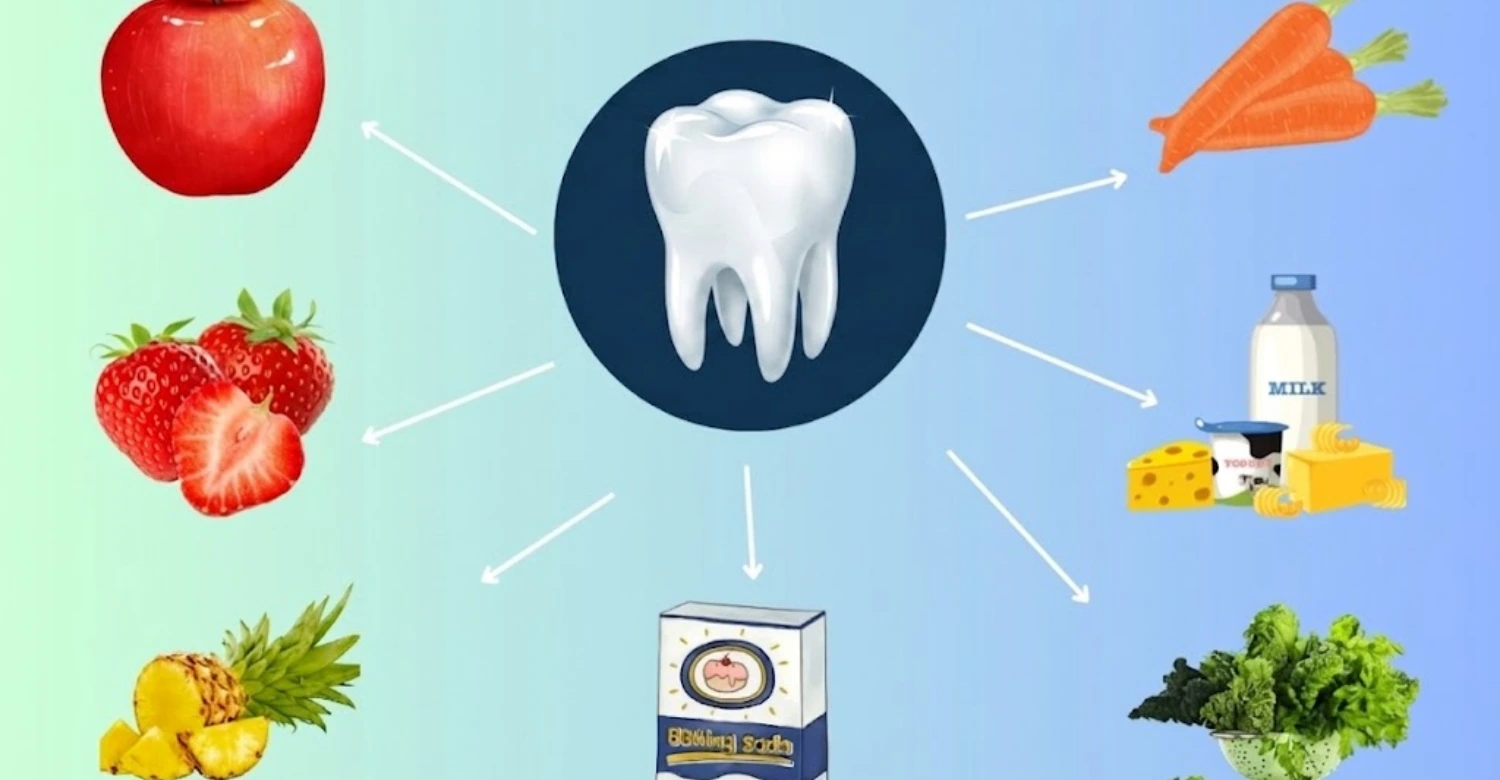
Natural Foods for a Brighter Smile: What Should You Eat Daily?
A tooth-friendly daily diet should emphasize balanced meals rather than individual whitening foods. Crunchy vegetables can provide chewing activity and replace sticky snacks. Whole fruits can contribute fiber and hydration. Dairy foods can provide calcium and phosphorus. Water should remain the main everyday beverage when practical. Limiting frequent sugar and acidic exposures is equally important. The ADA emphasizes dietary patterns and sugar control as important elements of oral health. Food cannot replace brushing, interdental cleaning, fluoride, or professional examinations. Patients should also consider personal dental conditions when selecting foods. Sensitivity, braces, implants, crowns, and gum problems may influence suitable choices. Vitrin Clinic recommends personalized advice when dietary habits interact with dental treatment. A brighter-looking smile is easier to maintain when enamel and gums remain healthy.
A Tooth-Friendly Breakfast
A tooth-friendly breakfast can combine protein, fiber, minerals, and low-sugar choices. Plain yogurt with suitable whole fruit can provide calcium and nutrients. Eggs and vegetables can provide filling alternatives to sugary breakfast foods. Cheese can also fit into a balanced breakfast. Water remains an excellent beverage choice. Sweetened cereals, pastries, and sugary drinks can increase exposure to fermentable carbohydrates. The ADA recommends limiting sugary foods and beverages for better oral health. Breakfast should not be designed around whitening claims. Its primary purpose should be balanced nutrition and reduced unnecessary sugar exposure. Vitrin Clinic recommends choosing foods that support long-term oral health. Patients should still brush with fluoride toothpaste as part of their morning routine.
Smart Snacks for Cleaner-Looking Teeth
Smart snacks can reduce frequent exposure to sticky sugars and highly processed foods. Raw carrots, celery, cucumbers, cheese, and suitable whole fruits can be practical options. These foods encourage chewing and may stimulate saliva. Saliva helps clear food particles and supports the oral environment. Water is useful alongside snacks, especially after acidic or pigmented foods. Patients should avoid grazing continuously throughout the day. Frequent exposure gives teeth repeated contact with sugars and acids. The ADA recommends limiting sugary foods and beverages. Vitrin Clinic recommends planning snacks rather than constantly nibbling. A balanced snack can support both nutritional needs and oral health. However, no snack replaces brushing and interdental cleaning.
Lunch and Dinner Choices for Enamel Health
Balanced lunch and dinner meals can support enamel health through diverse nutrients. Vegetables, lean proteins, whole grains, and suitable dairy products can form useful combinations. Calcium and phosphorus can contribute to the nutritional support of mineralized tissues. Water can accompany meals without adding sugars or acids. Frequent sugary drinks should be limited because sugar exposure contributes to caries risk. Acidic foods should also be consumed thoughtfully. Vinegar-based sauces and acidic beverages can increase enamel exposure to dietary acids. Vitrin Clinic recommends rinsing with water after meals when appropriate. Patients should avoid aggressive brushing immediately after significant acid exposure. Meal-based eating can also reduce constant snacking. These habits support oral health without promising cosmetic bleaching.
Drinks That Support a Brighter Smile
Water is generally the most tooth-friendly everyday beverage. It contains no fermentable sugar and can help rinse food residues. Milk can also provide calcium and phosphorus when consumed without added sugars. Unsweetened beverages are generally preferable to sugary drinks for dental health. Coffee, tea, juices, soft drinks, and energy drinks can introduce pigments, acids, or sugars. Frequent exposure can increase dental risks. The ADA recommends limiting sugary beverages and dietary sugar exposure. Drinking water after staining or acidic beverages can help clear residues. Patients should not assume that adding acidic ingredients creates a whitening effect. Vitrin Clinic recommends evaluating beverage habits when patients report staining or sensitivity. A brighter smile often depends as much on beverage frequency as food selection.
Tips for Patients
Patients should focus on consistent habits rather than searching for a single whitening food. Choose whole foods with useful nutrients and moderate sugar content. Include crunchy vegetables when comfortable and appropriate. Choose plain dairy products when they fit your dietary needs. Drink water regularly throughout the day. Limit frequent sugary and acidic exposures. Maintain fluoride-based brushing twice daily and clean between teeth. These habits provide stronger evidence for oral health than DIY whitening recipes. The ADA supports dietary sugar control and regular oral hygiene as important preventive measures. Vitrin Clinic recommends professional evaluation when stains remain despite good hygiene. Persistent discoloration may require cleaning, whitening, or restorative treatment. Food should support your smile rather than become a substitute for dental care.
Choose Tooth-Friendly Snacks
Choose snacks that provide nutrition without excessive added sugar or prolonged stickiness. Raw vegetables, cheese, plain yogurt, and suitable whole fruits can work well. Crunchy foods encourage chewing and may stimulate saliva. Saliva helps clear food residues and contributes to enamel protection. Sticky candies and sweetened snacks can remain against teeth for longer periods. Frequent sugar exposure can increase the risk of caries. Patients should also consider individual dental conditions. Hard foods may not suit everyone with sensitive teeth or certain restorations. Vitrin Clinic recommends choosing snacks based on both nutrition and dental needs. A tooth-friendly snack does not need to be marketed as a whitening food. Its primary goal should be supporting a healthier oral environment.
Drink Water Regularly
Regular water consumption supports hydration and provides a simple way to clear food residues. Water does not contain fermentable sugars when consumed plain. It can help dilute acids and wash loose particles through the mouth. Saliva also depends on adequate hydration for normal oral function. Drinking water after coffee, tea, acidic foods, or meals can reduce residual exposure. It does not remove established calculus or deeply attached stains. Patients should still maintain normal brushing and interdental cleaning. Vitrin Clinic commonly recommends water as the primary everyday beverage. People with specific medical or dietary requirements should follow appropriate professional advice. Hydration is especially useful when the mouth feels dry. Persistent oral dryness deserves dental assessment rather than simply increasing food-based “cleaning.”
Limit Frequent Sugary and Acidic Foods
Frequency can matter as much as the amount consumed during one occasion. Repeated sugar exposure provides plaque bacteria with recurring fermentable carbohydrates. Repeated acid exposure can also challenge enamel. The ADA recognizes dietary sugars and acids as important oral-health considerations. Try to keep sugary and acidic foods within structured meals. Avoid constantly sipping sweet or acidic beverages throughout the day. Water between meals can support a cleaner oral environment. Patients should also avoid brushing aggressively immediately after acidic exposure. Vitrin Clinic recommends individualized dietary guidance when patients experience frequent sensitivity or erosion. Reducing frequency can be more practical than eliminating every acidic or sweet food. Balanced eating remains important for overall nutrition.
Maintain Daily Oral Hygiene
Daily oral hygiene remains the foundation of plaque control. Food texture cannot reliably reach every tooth surface. Brushing with fluoride toothpaste helps remove plaque and deliver fluoride to enamel. Interdental cleaning reaches areas that toothbrushes cannot clean effectively. NIDCR recommends brushing twice daily and cleaning between teeth. Professional examinations can identify calculus, decay, gum inflammation, and other concerns. Vitrin Clinic recommends maintaining preventive appointments even when dietary habits are excellent. Food choices should complement hygiene rather than replace it. Patients seeking whiter teeth should also identify whether discoloration is surface-based or intrinsic. Appropriate treatment depends on that diagnosis.
How Do Foods That Clean Teeth Naturally Work?
Food can influence oral cleanliness through several indirect mechanisms. Chewing can stimulate saliva and create movement across accessible tooth surfaces. Water-rich foods contribute moisture and may help clear loose residues. Nutrient-rich foods support the body's broader nutritional needs. Crunchy vegetables can replace sticky sugary snacks that remain against teeth. However, food cannot remove all dental plaque. Plaque adheres strongly to tooth surfaces and requires deliberate mechanical cleaning. NIDCR recommends brushing twice daily and cleaning between teeth. This distinction is important when evaluating natural cleaning claims. Food can support a tooth-friendly environment without functioning as a toothbrush. Vitrin Clinic recommends combining smart nutrition with evidence-based oral hygiene. The goal should be cleaner, healthier teeth rather than unrealistic instant whitening.
The Role of Saliva in Oral Cleaning
Saliva is one of the mouth's most important natural protective systems. It lubricates oral tissues and helps clear food particles. Saliva also buffers acids and contains minerals associated with enamel maintenance. Chewing increases stimulated salivary flow compared with resting conditions. Crunchy foods can therefore encourage natural salivary activity. However, saliva alone cannot remove established plaque. Patients with reduced saliva may experience greater difficulty maintaining oral health. NIDCR identifies dry mouth as a condition that can increase dental risks. Vitrin Clinic recommends evaluation when persistent dryness occurs. Hydration can support normal oral moisture but may not correct underlying causes. Saliva supports oral cleaning, but it does not replace brushing.
Mechanical Action During Chewing
Chewing produces repeated contact between food and accessible tooth surfaces. Firm fruits and vegetables require more chewing than many soft foods. This mechanical action can disturb loose food particles. It can also stimulate saliva, increasing natural oral clearance. However, chewing cannot reach every tooth surface or interdental space. Mature plaque remains attached to enamel and gum margins. NIDCR recommends deliberate brushing and interdental cleaning for plaque control. Food should therefore never be described as a complete natural toothbrush. Vitrin Clinic encourages crunchy foods as healthy snack alternatives. Their primary value involves nutrition and chewing activity. Patients should stop eating foods that cause pain or discomfort. Individual dental conditions can change which textures are appropriate.
Food Texture and Plaque Accumulation
Food texture can influence how long food remains in contact with teeth. Sticky foods can adhere to surfaces and remain available to plaque bacteria. Soft sugary foods can also be consumed repeatedly throughout the day. Crunchy foods generally require more chewing and may stimulate saliva. However, texture alone does not determine caries risk. Sugar content, acidity, frequency, and overall diet also matter. The ADA identifies dietary sugars as important contributors to dental caries. Vitrin Clinic recommends considering both food composition and eating frequency. Replacing sticky sweets with nutritious crunchy foods can be a practical change. Nevertheless, brushing and interdental cleaning remain necessary. Food texture should support hygiene rather than attempt to replace it.
How Nutrition Supports Enamel
Nutrition supplies the minerals and vitamins needed for healthy tissues. Calcium and phosphorus are especially relevant to mineralized dental structures. Vitamin D supports calcium metabolism and overall skeletal health. A varied diet helps provide multiple nutrients needed throughout the body. However, eating nutrient-rich foods does not reverse advanced structural enamel damage. Saliva remains essential for maintaining the oral mineral environment. Frequent acidic exposure can undermine enamel regardless of overall nutritional quality. The ADA highlights dietary acids as a consideration in erosive tooth wear. Vitrin Clinic recommends protecting enamel through balanced nutrition and preventive care. Patients with sensitivity or visible enamel changes should receive professional evaluation. Healthy nutrition supports the foundation for a healthier smile.
Why Diet Alone Cannot Remove Dental Plaque
Dental plaque is a structured microbial biofilm attached to tooth surfaces. Food cannot consistently remove this biofilm from every location. The gumline, interdental spaces, and back teeth are especially difficult to clean through chewing. NIDCR recommends brushing twice daily and cleaning between teeth. When plaque remains, bacterial activity can contribute to caries and gum inflammation. Hardened plaque can become calculus and usually requires professional removal. Food choices can reduce sugar exposure and support saliva. They can also replace sticky snacks with healthier alternatives. Vitrin Clinic recommends treating diet as an important supporting factor. It should never replace established oral-hygiene practices. Patients with persistent plaque should discuss their cleaning technique with a dental professional.
Can Certain Foods Support Healthy Tooth Enamel?
Yes, nutritious foods can support enamel health through minerals, hydration, and balanced nutrition. Certain Foods Whiten Teeth Naturally is more accurately understood as supporting healthier-looking teeth. Calcium and phosphorus are especially important for mineralized tooth structures. Saliva also continuously supplies minerals that help maintain enamel balance. Water supports normal saliva production and helps rinse food residues. Vitamins and minerals contribute to overall tissue health and nutritional adequacy. However, food cannot rebuild enamel that has already been significantly lost. Frequent exposure to dietary acids can contribute to erosive tooth wear. The ADA recognizes acidic foods and beverages as contributors to enamel erosion. Therefore, tooth-friendly nutrition should be combined with fluoride toothpaste and professional care. Vitrin Clinic recommends evaluating sensitivity before pursuing cosmetic whitening. Healthy enamel can also improve the appearance and predictability of whitening treatments.
Calcium-Rich Foods
Calcium is an essential mineral associated with strong teeth and bones. Dairy products such as milk, cheese, and plain yogurt provide dietary calcium. Certain fortified foods can also contribute significant amounts. Calcium participates in the mineral structure of enamel and dentin. Saliva also contains calcium that supports the tooth's surrounding mineral environment. However, consuming more calcium does not automatically whiten teeth. Natural tooth color depends on enamel thickness, dentin color, age, and staining. A balanced diet remains more important than focusing on one nutrient. Vitrin Clinic recommends calcium-rich foods as part of comprehensive oral-health nutrition. Patients with dietary restrictions can consider suitable non-dairy sources. Professional advice can help identify appropriate alternatives. Nutritional support works best alongside fluoride exposure and regular plaque removal.
Phosphorus-Rich Foods
Phosphorus works with calcium in maintaining mineralized tissues. It is naturally present in foods such as dairy, fish, meat, eggs, legumes, and nuts. Saliva also contains phosphate that participates in enamel mineral balance. Adequate dietary phosphorus generally occurs through a varied diet. Deficiency is uncommon in many populations consuming sufficient food. Eating phosphorus-rich foods does not bleach tooth enamel. Their importance relates primarily to structural nutrition. Vitrin Clinic recommends balanced meals rather than isolated nutrient-focused strategies. Patients should avoid excessive supplementation without professional guidance. Most healthy individuals can obtain phosphorus through normal dietary patterns. The appearance of teeth depends on factors beyond mineral intake. Surface staining and intrinsic discoloration require different approaches.
Water and Saliva Protection
Water supports hydration and helps maintain normal saliva production. Saliva is essential for lubricating tissues and clearing food particles. It also helps buffer acids and supplies minerals associated with enamel maintenance. Drinking plain water after meals can help rinse food residues. Water is especially useful after acidic or pigmented foods and beverages. It does not remove established plaque or calculus. However, it can reduce the amount of residue remaining in the mouth. Vitrin Clinic recommends water as a practical everyday beverage choice. Patients experiencing persistent dry mouth should seek professional assessment. Reduced salivary flow can increase susceptibility to dental problems. Hydration supports oral function but cannot substitute for dental hygiene.
Vitamins and Minerals for Oral Health
A balanced diet supplies nutrients needed for healthy teeth, gums, and supporting tissues. Calcium and phosphorus contribute to mineralized tooth structures. Vitamin D supports calcium metabolism and skeletal mineral health. Vitamin C supports normal connective tissue function and healthy gums. Other nutrients contribute to overall immune and tissue function. However, supplements should not be considered whitening treatments. Food cannot change natural tooth color simply by supplying vitamins. Vitrin Clinic recommends obtaining nutrients through balanced eating whenever possible. Individual nutritional needs vary according to age, diet, and general health. Patients with restrictive diets may benefit from qualified nutritional guidance. Oral health also depends strongly on plaque control and fluoride exposure. A nutrient-rich diet complements these preventive measures.
Clinical Note
Enamel health should be considered before cosmetic whitening. Patients with erosion, sensitivity, or significant enamel loss may require preventive care first. Acidic dietary habits can contribute to progressive enamel wear. Thin enamel may also make underlying dentin appear more prominent. This can create a naturally yellow appearance that food cannot reverse. Vitrin Clinic recommends identifying the cause of sensitivity or discoloration before treatment. Dietary changes may reduce future damage but cannot rebuild lost enamel completely. Fluoride, saliva, and professional preventive care remain important protective factors. Patients should avoid acidic DIY whitening techniques. These methods can expose enamel to unnecessary chemical challenges. Clinical evaluation provides a safer path toward a brighter smile.
The Worst Foods and Drinks for a White Smile
Some foods and drinks can contribute to staining, enamel erosion, or tooth decay. Coffee, tea, dark beverages, and pigmented sauces can create external stains. Sugary sticky foods can remain attached to teeth for prolonged periods. Acidic foods and drinks can challenge enamel when exposure is frequent. These effects do not mean every potentially staining food must be eliminated. Consumption frequency and overall dietary patterns are important. Water can help rinse the mouth after meals and beverages. The ADA recommends limiting sugary foods and drinks for better oral health. Vitrin Clinic recommends moderation rather than unnecessary dietary restriction. Patients should also understand that natural yellow tooth color differs from surface staining. Professional assessment can identify the underlying cause of discoloration.
Sugary Sticky Foods
Sticky sugary foods can remain on teeth longer than many non-sticky foods. Caramel, gummies, toffee, and similar products can adhere around tooth surfaces. Plaque bacteria metabolize fermentable carbohydrates and produce acids. These acids can contribute to enamel demineralization and tooth decay. The ADA identifies dietary sugars as an important factor in caries development. Frequent snacking can increase the number of daily acid challenges. Water can help clear some food residues after eating. However, rinsing does not replace brushing. Vitrin Clinic recommends reducing sticky sugary snacks when possible. Healthier alternatives can include vegetables, cheese, nuts, or suitable whole foods. Individual dietary needs should guide specific choices. Reducing frequency can be more realistic than completely eliminating sweets.
Acidic Foods and Drinks
Acidic foods and beverages can soften enamel during repeated exposure. Citrus fruits, fruit juices, vinegar-based foods, sodas, and sports drinks can contain dietary acids. The effect depends on concentration, frequency, duration, and individual susceptibility. The ADA identifies dietary acids as contributors to erosive tooth wear. Drinking water afterward can help clear residual acids. Patients should avoid brushing immediately after significant acid exposure. Waiting allows saliva to restore the oral environment naturally. Vitrin Clinic recommends professional evaluation when sensitivity becomes persistent. Acidic foods can remain part of a healthy diet when consumed appropriately. The goal is to manage exposure rather than fear nutritious foods. Food acids should never be used intentionally for tooth whitening.
Coffee and Tea
Coffee and tea are common sources of external tooth staining. Their pigments can accumulate on tooth surfaces over repeated exposure. Frequent sipping can increase the duration of contact with teeth. Drinking water afterward can reduce residual beverage exposure. Good brushing can also help control surface deposits. Professional cleaning may be necessary when stains become established. Whitening can be considered when natural tooth color remains darker after cleaning. Vitrin Clinic recommends evaluating staining before choosing cosmetic treatment. Patients should not attempt to remove coffee stains with abrasive household substances. Excessive abrasion can contribute to enamel wear and sensitivity. Milk may alter beverage composition but does not guarantee stain prevention. The most useful strategy is consistent oral hygiene combined with sensible consumption habits.
Dark-Colored Beverages
Dark beverages can contain pigments that contribute to external discoloration. Examples include cola, black tea, coffee, and certain fruit drinks. Some beverages also contain substantial sugar or dietary acids. These additional factors can increase dental concerns beyond staining. The ADA recommends limiting sugary beverages and dietary sugar exposure. Water can provide a useful alternative between meals. Drinking water after pigmented beverages may also help rinse residual compounds. However, it cannot remove established stains instantly. Vitrin Clinic recommends professional cleaning when discoloration persists. Patients should also consider how frequently they consume staining drinks. Repeated sipping can create prolonged exposure throughout the day. A balanced beverage routine can support both enamel health and smile appearance.
Frequently Snacking on Staining Foods
Frequent snacking can repeatedly expose teeth to pigments, sugars, and acids. The total daily pattern may matter more than one occasional serving. Coffee, tea, berries, sauces, and sweet snacks can all contribute different exposures. Drinking water between meals can help reduce residual material. Structured meals may reduce continuous exposure compared with constant grazing. The ADA emphasizes limiting frequent sugar exposure as part of caries prevention. Vitrin Clinic recommends reviewing eating frequency when patients report repeated staining. Patients should not eliminate nutritious foods solely because they contain natural pigments. Good oral hygiene remains the primary defense against plaque accumulation. Professional cleaning can address stains that dietary changes cannot remove.
Why Frequency Matters
Frequency determines how often teeth encounter sugars, acids, and staining compounds. One exposure may be less concerning than repeated exposure throughout an entire day. Frequent sugar consumption creates repeated opportunities for plaque bacteria to produce acids. Frequent acidic beverages can repeatedly challenge enamel surfaces. Frequent pigmented beverages can also increase opportunities for surface staining. Water between meals can help reduce residual exposure. Vitrin Clinic recommends reducing unnecessary snacking and prolonged sipping. This strategy can be easier than eliminating every favorite food. Patients can still enjoy many foods while improving their overall eating pattern. Consistency matters more than perfection when building tooth-friendly habits.
Why Sticky Foods Stay on Teeth Longer
Sticky foods adhere to tooth surfaces and can remain available to plaque bacteria. Their texture makes them different from foods that clear quickly through chewing and saliva. Caramel, gummy sweets, and chewy candies are common examples. Prolonged carbohydrate contact can support bacterial acid production. The ADA identifies dietary sugars as an important factor in dental caries. Drinking water may help loosen some residues. However, brushing and interdental cleaning remain necessary. Vitrin Clinic recommends limiting sticky sugary foods, particularly between meals. Patients can substitute less adhesive snacks when practical. These changes can support oral health without requiring complete dietary restriction.
How to Eat Foods That Whiten Teeth Naturally Without Damaging Enamel
Food choices should support enamel rather than expose it to unnecessary acids or abrasion. Certain Foods Whiten Teeth Naturally should never involve aggressive scrubbing with acidic fruits. Acidic foods can soften enamel during repeated exposure. Pairing acidic foods with a balanced meal can reduce isolated exposure. Drinking water afterward can help rinse remaining acids and pigments. Patients should avoid brushing immediately after acidic foods or drinks. Saliva needs time to restore the oral environment. Vitrin Clinic recommends gentle oral-hygiene practices rather than abrasive home remedies. Balanced meals can also reduce frequent snacking. Patients with sensitivity should receive professional advice before using whitening products. Healthy dietary habits should protect enamel while supporting a brighter-looking smile.
Pair Acidic Foods With Less Acidic Foods
Pairing acidic foods with less acidic foods can make meals more balanced. For example, acidic fruit can be included alongside protein or dairy foods. This approach reduces the emphasis on consuming acidic foods alone. It does not neutralize all dietary acids immediately. Saliva remains important for restoring the oral environment after eating. Drinking water after meals can further reduce residual acidity. Patients should avoid using alkaline household substances as DIY treatments. Such experiments can create unpredictable oral effects. Vitrin Clinic recommends focusing on balanced meals and regular hygiene. Acidic foods can remain nutritious components of a healthy diet. The goal is controlled exposure rather than unnecessary elimination.
Drink Water After Acidic or Pigmented Foods
Water is one of the simplest ways to reduce residue after eating. It can help rinse food particles, pigments, and acidic residues from oral surfaces. Water also provides hydration without adding sugar or acidity. Saliva continues the cleansing process after eating. Drinking water does not bleach enamel or remove established calculus. Its role is supportive and preventive. Vitrin Clinic recommends keeping water available during and after meals. This can be particularly useful after coffee, tea, sauces, or acidic foods. Patients should still brush twice daily with fluoride toothpaste. Water complements oral hygiene rather than replacing it.
Avoid Brushing Immediately After Acidic Foods
Brushing immediately after acidic exposure can increase mechanical stress on temporarily softened enamel. Saliva needs time to help restore the oral environment. The ADA advises waiting after acidic exposure before brushing. Drinking water can help clear residual acids during this period. Patients should also use gentle brushing techniques rather than excessive pressure. Fluoride toothpaste remains important for enamel protection. Vitrin Clinic recommends individualized advice for patients with significant erosion or sensitivity. Acid exposure differs depending on the food, drink, concentration, and frequency. Professional evaluation can identify whether dietary acids are affecting enamel. Avoiding immediate aggressive brushing is a simple protective habit.
Keep Meals Balanced
Balanced meals can reduce the need for frequent sugary snacks. Combining vegetables, proteins, whole grains, and suitable dairy products supports broader nutritional needs. Water can accompany meals without adding sugar or staining pigments. Structured meals may also reduce repeated acid exposure throughout the day. The ADA recommends limiting sugary foods and beverages as part of oral-health prevention. Vitrin Clinic recommends dietary balance rather than extreme food restrictions. Patients should consider their individual nutritional requirements. A balanced meal can support both oral health and general wellbeing. It does not directly bleach teeth. Cosmetic whitening remains a separate dental treatment.
Do Not Scrub Teeth With Acidic Fruits
Rubbing acidic fruits against teeth is not a safe substitute for professional whitening. Citrus fruits and other acidic foods can expose enamel to dietary acids. Repeated acid exposure can contribute to erosive tooth wear. Adding aggressive scrubbing can increase mechanical stress on enamel. This combination may increase sensitivity rather than improve tooth color. Food should be eaten normally rather than used as a dental polishing agent. Vitrin Clinic recommends evidence-based whitening methods when cosmetic lightening is desired. Patients should avoid online recipes involving lemon, vinegar, or concentrated fruit acids. These methods do not provide controlled bleaching. Professional assessment offers a safer and more predictable approach.
Tips for Patients
Patients should prioritize enamel protection before pursuing cosmetic brightness. Eat balanced meals and choose less sticky snacks. Drink water regularly throughout the day. Limit frequent sugary and acidic exposures. Choose crunchy vegetables when comfortable and appropriate. Avoid rubbing acidic foods directly against teeth. Do not brush aggressively after acidic meals. Maintain fluoride-based brushing and interdental cleaning. Vitrin Clinic recommends professional evaluation when discoloration persists despite good hygiene. A dentist can distinguish surface stains from intrinsic discoloration. This diagnosis helps determine whether cleaning or whitening is appropriate. Food choices can support a healthy smile, but they cannot replace dental treatment. Consistency remains more important than searching for one special food.
Professional Teeth Whitening at Vitrin Clinic
Professional whitening is designed to lighten natural tooth color under controlled dental conditions. Certain Foods Whiten Teeth Naturally can support oral health, but food cannot replicate professional bleaching. Dentists first evaluate the teeth, gums, restorations, and cause of discoloration. This assessment helps determine whether whitening is appropriate. Existing crowns, veneers, fillings, and implants may not change color with bleaching. Surface stains may instead benefit from professional cleaning. Vitrin Clinic can develop an individualized approach based on the patient's smile and dental condition. Treatment may involve professionally supervised whitening depending on clinical findings. Patients receive guidance about sensitivity, food choices, and maintenance. The goal is a brighter smile without compromising oral health. Evidence-based treatment also reduces the risks associated with unregulated DIY whitening methods.
When Natural Foods Are Not Enough
Food choices are useful for supporting oral health but have clear limitations. Persistent staining may remain despite excellent nutrition and hygiene. Coffee, tea, tobacco, sauces, and other pigments can produce established external stains. Professional cleaning may remove some of these deposits. Intrinsic discoloration requires a different assessment. Whitening may be suitable for certain natural teeth after appropriate evaluation. Vitrin Clinic recommends determining the source before starting cosmetic treatment. Patients should not continue experimenting with acidic home remedies when results are absent. Unsuccessful DIY approaches can sometimes increase sensitivity or enamel damage. Professional diagnosis provides a more reliable path toward a brighter smile. Food remains valuable for maintenance rather than dramatic color transformation.
Professional Whitening vs. Natural Whitening Methods
Professional whitening and food-based approaches work through completely different mechanisms. Food supports oral health through chewing, saliva, hydration, and nutrition. Professional whitening uses controlled bleaching chemistry to alter natural tooth color. The ADA distinguishes bleaching from products designed to remove surface stains. Food cannot provide the same predictable concentration or contact conditions. Vitrin Clinic evaluates the patient's dental condition before recommending cosmetic treatment. Professional treatment can also account for sensitivity and existing restorations. Natural foods remain useful for maintaining a balanced diet. They should not be promoted as equivalent to clinical whitening. Patients seeking significant color improvement should discuss their options with a qualified dental professional.
How Your Dentist Determines the Cause of Discoloration
A dental assessment begins by examining tooth surfaces, gums, restorations, and overall oral health. The dentist considers whether discoloration appears external or internal. Surface stains may come from coffee, tea, tobacco, or pigmented foods. Intrinsic changes may involve dentin, trauma, medications, fluorosis, or developmental factors. Existing restorations can also create shade differences. A dentist may recommend professional cleaning before deciding whether whitening is necessary. Vitrin Clinic uses this diagnostic approach to develop appropriate cosmetic plans. Patients should describe their beverage habits and previous whitening experiences. Sensitivity and enamel condition also influence treatment decisions. Correct diagnosis prevents unsuitable whitening methods. It also helps establish realistic expectations about the final shade.
Choosing the Right Whitening Approach
The appropriate whitening method depends on tooth condition, discoloration type, sensitivity, and cosmetic goals. Some patients may benefit from professional cleaning alone. Others may require supervised whitening for natural tooth discoloration. Existing restorations may need separate shade planning. Patients with enamel erosion or significant sensitivity may need preventive care first. Vitrin Clinic recommends individualized treatment rather than a universal whitening protocol. The dentist can explain expected results and possible limitations. Professional assessment is especially important when discoloration appears suddenly. A sudden color change can sometimes indicate an underlying dental problem. Cosmetic treatment should begin only after relevant oral-health concerns are addressed.
Dr. Rifat Alsaman’s Opinion
Dr. Rifat Alsaman emphasizes that whitening should begin with diagnosis rather than assumptions. Food choices can support enamel and help maintain a clean-looking smile. They cannot reliably bleach intrinsic tooth discoloration. Patients should also understand that restorations respond differently from natural enamel. Professional assessment helps identify stains, enamel changes, and restoration-related shade differences. Vitrin Clinic focuses on individualized cosmetic planning and preventive care. Patients are encouraged to maintain good dietary habits after whitening. Water, balanced meals, and sensible snack choices can support maintenance. Aggressive acidic home remedies should be avoided. The safest approach combines evidence-based treatment with consistent oral hygiene. A brighter smile should remain compatible with healthy teeth and gums.
How Vitrin Clinic Helps You Achieve a Brighter, Healthier Smile
Vitrin Clinic approaches smile improvement by combining diagnosis, preventive dentistry, and cosmetic treatment planning. Certain Foods Whiten Teeth Naturally can support the maintenance stage, but professional care may be necessary for significant discoloration. A personalized assessment identifies stains, enamel changes, restorations, and other factors. The dental team can then recommend an appropriate approach. Professional cleaning may address surface deposits before whitening is considered. Whitening can be planned around the patient's natural tooth shade and dental condition. Vitrin Clinic also provides guidance about maintaining results through better daily habits. Patients can continue enjoying nutritious fruits, vegetables, and dairy foods. The emphasis remains on protecting enamel while improving smile appearance. This approach helps distinguish realistic nutrition benefits from unsupported whitening claims.
Personalized Smile Assessment
A personalized smile assessment examines more than tooth color alone. Dentists evaluate enamel condition, gum health, restorations, and visible discoloration. They also consider previous dental treatments and whitening history. This information helps identify realistic cosmetic goals. Some discoloration can improve after professional cleaning. Other cases may require supervised whitening or restorative treatment. Vitrin Clinic uses individualized assessment to avoid applying the same approach to every patient. Patients should disclose sensitivity or previous reactions to whitening products. Existing veneers, crowns, and fillings may affect the final shade balance. A comprehensive assessment creates a more predictable treatment plan. It also helps identify dental problems that should be addressed first.
Identifying Surface vs. Internal Discoloration
Determining whether discoloration is external or internal is essential. Surface stains often develop from coffee, tea, tobacco, sauces, and pigmented foods. Professional cleaning may improve these stains. Internal discoloration occurs within tooth structure or reflects underlying changes. Aging, trauma, medications, fluorosis, and natural dentin visibility can contribute. Whitening may help certain intrinsic discolorations. Other causes may require restorative treatment or monitoring. Vitrin Clinic assesses these differences before recommending cosmetic procedures. Patients should not assume every yellow tooth requires bleaching. The correct diagnosis can prevent unnecessary treatment. It also helps establish realistic expectations about achievable results.
Professional Teeth Whitening Options
Professional whitening options depend on the patient's dental condition and treatment goals. A dentist may recommend supervised whitening after confirming healthy teeth and gums. Surface stains may first require professional cleaning. Existing restorations may require separate cosmetic planning. Sensitivity can influence the treatment protocol and product selection. Vitrin Clinic develops whitening plans according to individual findings. Patients receive instructions about food, beverages, and oral hygiene during maintenance. Professional supervision also helps identify problems that should be treated before whitening. The goal is controlled color improvement rather than excessive bleaching. Patients should follow the dentist's recommendations to reduce sensitivity risks.
Maintaining Whitening Results With Better Food Choices
Maintaining whitening results requires more than repeating bleaching treatments. Limiting frequent exposure to staining beverages can help preserve appearance. Drinking water after coffee or tea can reduce residual exposure. Crunchy vegetables and balanced snacks can replace sticky sugary foods. Dairy foods can contribute calcium and phosphorus to the diet. Regular brushing and interdental cleaning remain essential. Vitrin Clinic recommends combining cosmetic treatment with sensible long-term habits. Patients should not use acidic fruits as maintenance whitening treatments. Professional cleanings can help control surface deposits over time. Individual maintenance schedules depend on oral health and lifestyle. Consistent habits generally provide more sustainable benefits than extreme dietary restrictions.
What We Notice Clinically
Clinically, patients often expect food to create dramatic whitening results. The more realistic benefit involves cleaner surfaces and healthier dietary patterns. Patients with substantial surface deposits may notice improvement after professional cleaning. Those with intrinsic discoloration may see little change from dietary adjustments. This difference can be frustrating without proper explanation. Vitrin Clinic emphasizes education before cosmetic treatment. Patients should understand the distinction between stain removal and bleaching. Food choices can help maintain a cleaner appearance after professional care. They cannot replace diagnosis or controlled whitening. Good nutrition remains valuable because healthy enamel provides a better foundation for cosmetic dentistry.
Certain Foods Whiten Teeth Naturally: What Does the Evidence Really Say?
Evidence supports several oral-health benefits associated with nutritious food choices. Chewing can stimulate saliva, while saliva helps clear food particles and buffer acids. Dairy foods provide calcium and phosphorus relevant to mineralized tissues. Crunchy fruits and vegetables can also replace sticky sugary snacks. However, evidence does not establish ordinary foods as equivalents to professional tooth bleaching. The ADA distinguishes stain removal from chemical whitening. This distinction is essential when evaluating online natural-whitening claims. Acidic fruit should not be used directly as a whitening treatment. Vitrin Clinic recommends evidence-based dental care for patients seeking significant shade changes. Nutrition remains an important supporting factor. Its strongest role is maintaining oral health and reducing behaviors that contribute to staining or enamel damage.
What Foods Can Realistically Do
Foods can contribute to oral cleanliness through chewing, saliva stimulation, hydration, and nutrition. Crunchy produce can help disturb loose food residues during eating. Dairy foods provide calcium and phosphorus as part of balanced nutrition. Water-rich foods contribute moisture and can support hydration. Replacing sticky sugary snacks with whole foods can improve dietary quality. These benefits can help teeth look cleaner over time. However, food does not provide predictable bleaching of natural tooth structure. The evidence supports oral-health mechanisms rather than dramatic whitening effects. Vitrin Clinic recommends realistic expectations when discussing nutrition and smile brightness. Patients should continue fluoride brushing and interdental cleaning. Professional cleaning can address established surface deposits. Whitening may be considered separately for appropriate intrinsic discoloration.
What Foods Cannot Do
Foods cannot reliably remove dental calculus or mature plaque. They also cannot bleach intrinsic tooth discoloration with predictable results. Acidic fruits cannot safely function as homemade bleaching agents. Scrubbing teeth with abrasive food mixtures can increase enamel wear. Food also cannot change the color of crowns, veneers, or fillings. These limitations explain why professional assessment remains important. Vitrin Clinic recommends diagnosis before cosmetic treatment. Patients should avoid replacing evidence-based hygiene with food-based cleaning claims. A healthy diet can support oral health without becoming a whitening treatment. Professional cleaning and whitening address different clinical needs.
Why “Natural Whitening” Claims Can Be Misleading
The term “natural whitening” can describe several completely different outcomes. Some claims refer to removing loose food debris. Others refer to reducing surface stains or simply improving oral cleanliness. True bleaching involves changing the perceived color of natural tooth structure. These mechanisms should not be treated as equivalent. The ADA distinguishes surface stain removal from bleaching products. Acidic fruit remedies are particularly misleading because acidity does not equal safe whitening. Repeated acid exposure can contribute to enamel erosion. Vitrin Clinic recommends evaluating claims according to their evidence and mechanism. Patients should ask whether a method removes stains or actually changes tooth color. This simple distinction can prevent unrealistic expectations and harmful DIY practices.
The Importance of Evidence-Based Dental Care
Evidence-based dental care combines scientific research, clinical expertise, and individual patient needs. Whitening should be recommended after evaluating oral health and discoloration. Dietary advice should support enamel, gums, and general nutrition. Patients should not rely on social-media recipes without understanding their risks. The ADA provides evidence-based information about nutrition, enamel erosion, and whitening. Vitrin Clinic emphasizes individualized assessment before cosmetic procedures. Professional guidance can distinguish safe maintenance habits from potentially damaging home experiments. Food remains an important part of oral health. It simply has a different role from professional whitening. Patients seeking significant shade improvement should discuss appropriate options with their dentist.
Reference
FAQs

Dr. Rifat Alsaman has more than 5 years of clinical experience in dentistry and currently serves as the Head of the Medical Team at Vitrin Clinic. He is dedicated to providing exceptional patient care, overseeing treatment planning, and ensuring the highest clinical standards across the team. His expertise, attention to detail, and commitment to continuous professional development have helped countless patients achieve healthier, more confident smiles.


