General Dentistry
August 30, 2026
Sugar-Free vs Regular Soda: Which Is Worse for Teeth?

Soda is one of the most common drinks in the world. Sugar Free vs Regular Soda for Teeth: Which Is Worse? Almost everyone has asked this at some point. Both types can harm your smile, but they do it through different pathways. Regular soda is loaded with sugar that feeds decay-causing bacteria. Sugar free soda still carries the phosphoric and citric acids that erode enamel. Carbonated drinks generally sit at a pH of 2.7 to 3.0, and enamel begins to demineralize once pH drops below about 5.5. Understanding both mechanisms sugar-driven decay and acid-driven erosion is the key to protecting your teeth, and it is exactly what this guide will help you understand from every angle.
Sugar Free vs Regular Soda for Teeth: Which Is Worse?
This section breaks the topic into its two core dental risks so you can see exactly how each type of soda behaves in the mouth.
Is Regular Soda Bad for Your Teeth?
Yes, it is. A standard 12-ounce can contains roughly ten teaspoons of sugar. That sugar feeds oral bacteria, which produce acid as a byproduct. This fuels plaque formation and cavities. On top of that, regular soda is still acidic itself. It damages enamel through two separate pathways at once, not just one.
Is Sugar Free Soda Bad for Your Teeth?
Is sugar free soda bad for your teeth even without sugar? Unfortunately, yes. Removing sugar removes the bacterial-decay pathway, but the phosphoric and citric acids remain. One in-vitro study even found diet cola caused greater enamel hardness loss than regular cola. Its added acidic flavorings pushed oral pH even lower than standard cola.
Which Causes More Tooth Damage: Sugar or Acid?
Sugar and acid damage teeth differently. Answering Sugar Free vs Regular Soda for Teeth: Which Is Worse? really depends on which mechanism you're measuring. Sugar drives cavities through bacterial fermentation, while acid dissolves enamel directly through chemical erosion. Regular soda combines both risks, while sugar free soda relies on acid alone. Neither beverage is truly safe for long-term oral health.
Clinical Note
Sugar free soda may reduce the sugar-related cavity risk, but its acidity can still contribute to meaningful enamel erosion over time. Patients often assume "diet" means "safe." Yet the sugar free soda and teeth relationship shows that acid exposure alone is enough to weaken enamel structure. This raises long-term sensitivity, regardless of sugar content.
Sugar Free Soda and Teeth: How Does It Affect Enamel?
Here we look specifically at how sugar free soda and teeth interact when sugar is removed but acid remains fully present. This is central to the topic.
Does Sugar Free Soda Damage Tooth Enamel?
Yes, sugar free soda can still damage tooth enamel. Artificial sweeteners don't feed bacteria the way sugar does, but they offer no protective benefit against the acid itself. The erosion risk comes from phosphoric and citric acid content, not from sugar. So sugar free soda and teeth remain vulnerable to the same chemical wear seen with regular varieties.
Diet Soda and Tooth Enamel
The relationship between diet soda and tooth enamel is often underestimated. Diet sodas frequently add citric acid alongside phosphoric acid for flavor balance. Because of this, some formulations can be just as erosive or more erosive than their sugary counterparts. This is a key reason this debate doesn't have one simple answer.
How Acidic Drinks Cause Enamel Erosion
Repeated exposure to acidic beverages gradually strips minerals from the enamel surface. Each sip temporarily lowers oral pH below the demineralization threshold, softening the outer enamel layer. Saliva normally buffers and restores balance, but frequent sipping doesn't give it enough time. This allows soda and tooth enamel erosion to progress steadily with every exposure.
Signs of Enamel Erosion From Soda
Enamel erosion from soda usually shows up gradually rather than all at once. Many patients first notice increased sensitivity, especially to hot or cold foods and drinks. Teeth may also start to look smooth or unusually shiny, sometimes with a slightly yellowish appearance as the enamel thins. Over time, edges can become flattened or worn. This signals that the damage has moved beyond the earliest stage.
Tips for the Patients
Limiting how often soda is consumed makes a real difference for enamel health. It also helps to avoid slowly sipping soda over long periods, since that keeps teeth under acid exposure for much longer. Rinsing with water after drinking acidic beverages helps clear residual acid from the mouth. Just remember not to brush right after an acidic drink, since enamel is temporarily softened.
Is Regular Soda Bad for Your Teeth?
Regular soda's dental impact deserves its own close look. Sugar adds a second layer of risk on top of acidity, which is a key point in this comparison.
How Sugar in Soda Causes Tooth Decay
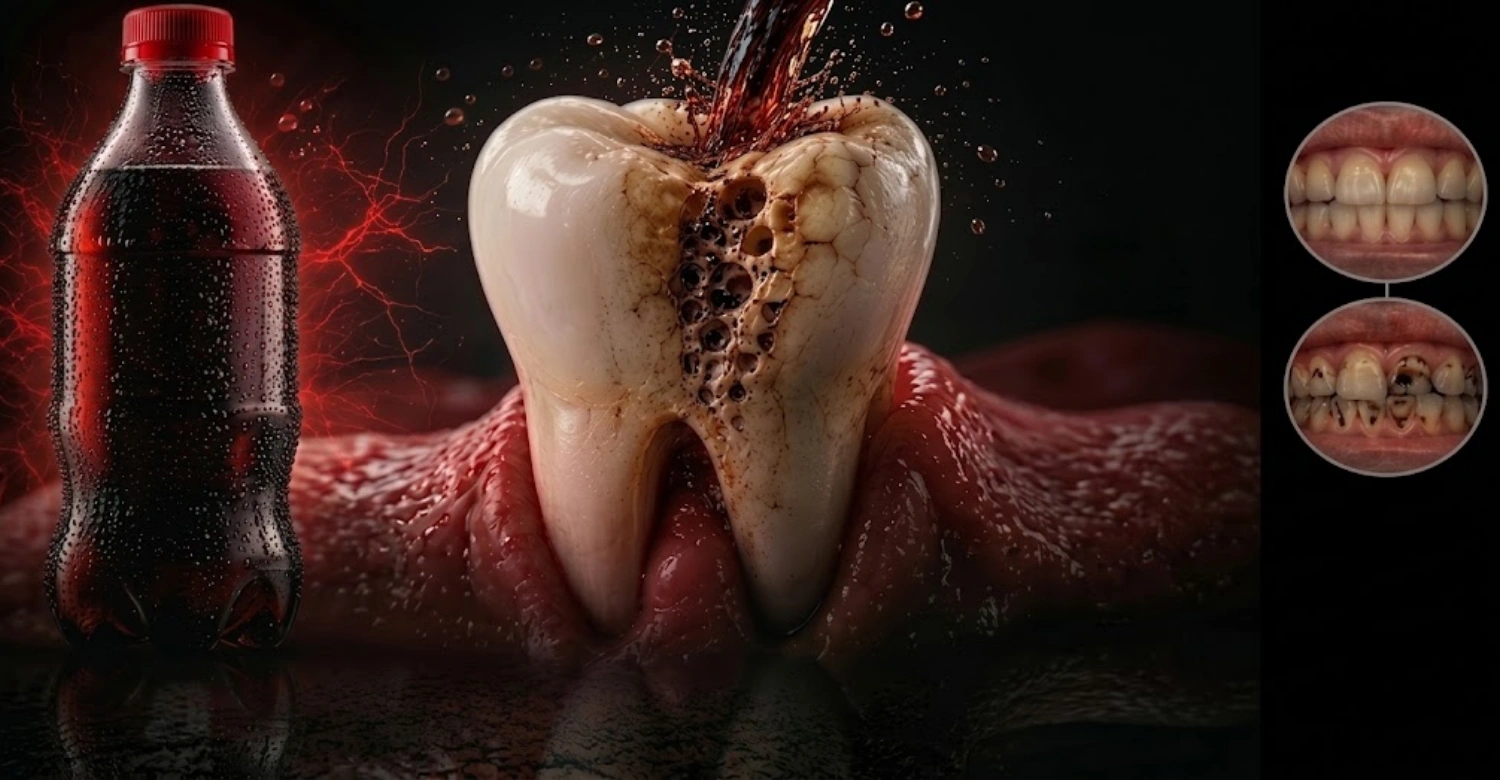
Answering Sugar Free vs Regular Soda for Teeth: Which Is Worse? starts here: sugar in regular soda feeds bacteria living in dental plaque. As these bacteria metabolize sugar, they release acid byproducts that attack enamel from the surface inward. Compared with sugar free soda tooth decay pathways, regular soda's bacterial-fermentation route adds an extra layer of risk that sugar-free versions simply don't carry.
Does Soda Cause Cavities?
Does soda cause cavities? Frequent sugary soda consumption absolutely raises cavity risk, because the sugar-acid-bacteria cycle repeats with every sip. Each exposure gives bacteria fresh fuel and drops oral pH. Over weeks and months, this cycle can create the ideal conditions for cavities to form, especially along the gumline and between teeth.
Why Drinking Soda Frequently Is More Harmful
Frequency matters as much as quantity. Sipping soda throughout the day means teeth stay under constant acid attack, never getting the chance to fully recover. Drinking the same amount in one sitting is comparatively less damaging. That's because saliva gets an uninterrupted window to neutralize acid and remineralize enamel between meals.
Habits That Increase the Risk of Soda-Related Cavities
Certain habits push soda-related cavity risk noticeably higher. Drinking soda throughout the day, rather than at one sitting, keeps oral pH low for extended stretches. Drinking it right before bedtime is especially risky, since saliva flow slows down overnight. Poor oral hygiene, frequent sugary snacks alongside soda, and skipping water afterward all compound the problem further.
Clinical Note
Regular soda presents both a sugar-related decay concern and an acid-related enamel concern simultaneously. This dual risk is exactly why, in this conversation, regular soda is often flagged as the higher-risk option for patients with active cavity history.
Sugar Free Soda Tooth Decay: Can It Cause Cavities?
Even without sugar, questions around sugar free soda tooth decay remain common among patients trying to make a healthier switch. It's another angle on the same question.
Does Sugar Free Soda Cause Tooth Decay?
Sugar-free drinks don't provide the same fermentable sugar exposure that fuels bacterial acid production. So the classic sugar-to-cavity pathway is largely avoided. However, that doesn't make sugar free soda completely risk-free for teeth, since acid erosion can still weaken enamel and indirectly make teeth more vulnerable to decay over time.
Sugar Free Soda vs Regular Soda and Cavity Risk
When comparing sugar-free vs regular soda teeth outcomes for cavities specifically, regular soda generally creates greater sugar-related cavity concerns. This is because of its fermentable sugar content. Sugar free soda reduces this particular risk substantially, which is a genuine benefit, but it does not eliminate every dental concern tied to frequent soda drinking.
Can Acidic Sugar Free Soda Still Damage Teeth?
Yes. Enamel erosion happens separately from bacterial sugar metabolism, driven purely by acid chemistry. So sugar free soda tooth decay may be less likely, but sugar-free vs regular soda teeth comparisons still show measurable enamel softening from sugar-free options. This confirms that acidity alone is enough to cause lasting damage, which is exactly why the topic has no single, one-size-fits-all answer.
Soda Teeth Damage: What Happens If You Drink Soda Every Day?
Daily soda habits compound over time. Understanding soda teeth damage patterns helps explain why frequency is such a critical factor in the broader picture.
Short-Term Effects of Soda on Teeth
In the short term, soda temporarily changes the oral environment right after each drink. This mostly comes down to acid exposure, which briefly lowers pH around the teeth. In more vulnerable teeth, this can already trigger a noticeable spike in sensitivity, even after just one drink.
Long-Term Effects of Soda on Teeth
Over the long term, repeated soda exposure can lead to real enamel erosion and lasting tooth sensitivity. It also increases vulnerability to decay, since weakened enamel offers less natural protection. Some patients notice possible discoloration as enamel thins. In more extensive cases, greater restorative needs become necessary.
Effects of Soda on Teeth: Does Frequency Matter?
Considering this comparison, the effects of soda intensify with repeated exposure rather than total volume alone. Sipping a single can over several hours exposes teeth to many more acid cycles than drinking it quickly with a meal. Occasional consumption paired with good oral hygiene carries far less risk than habitual, all-day sipping patterns.
How Different Soda Habits Affect Teeth
Not every soda habit carries the same risk. Having one serving with a meal is generally the gentlest pattern, since saliva flow is already elevated. Multiple servings spread throughout the day add up to far more total acid exposure. Sipping soda slowly for hours, or drinking it right before bed, tends to cause the most cumulative damage.
Tips for the Patients
Reducing frequency matters more than simply switching from regular to sugar free soda. Drinking water between beverages gives saliva a chance to reset oral pH. Using a straw when appropriate can help reduce direct contact between soda and teeth. On top of these habits, maintaining regular dental checkups makes it much easier to catch early damage.
Soda and Tooth Enamel Erosion: Why Does It Happen?
Understanding soda and tooth enamel erosion at a chemical level explains why both soda types pose a threat regardless of sugar content. It's central to answering this question.
What Is Tooth Enamel Erosion?
Dental erosion is the gradual, irreversible loss of enamel caused by acid exposure rather than bacteria. Unlike cavities, which involve bacterial activity, erosion is a purely chemical process. Acids dissolve the mineral structure of enamel directly, thinning it and leaving the underlying dentin more exposed and vulnerable over time.
How Soda Acidity Affects Enamel
Carbonated drinks diet and regular alike typically have a pH between 2.7 and 3.0, driven by phosphoric acid. Diet colas often add citric acid on top. Since enamel demineralizes below a pH of about 5.5, nearly every soda sits far into erosive territory, regardless of whether it contains sugar.
Can Enamel Grow Back After Soda Damage?
No. Once enamel is permanently lost, it does not regenerate on its own. Early mineral changes can sometimes be partially remineralized with fluoride and saliva. But once structural loss occurs, it is permanent. This is why addressing soda and tooth enamel erosion early matters so much for long-term dental health.
Early vs Advanced Enamel Damage
Enamel damage tends to progress in stages. It typically begins with early mineral loss, which is subtle and often reversible with fluoride support. As exposure continues, increased sensitivity and visible surface changes start to appear. Left unaddressed, this can eventually progress into more significant structural wear that is no longer reversible.
Clinical Note
Preventing repeated acid exposure is important because permanent enamel loss cannot simply be reversed once it occurs. This is a central reason this question matters practically, not just academically, for anyone drinking soda regularly.
How Can You Protect Your Teeth If You Drink Soda?
Practical prevention steps can meaningfully reduce soda teeth damage even if you're not ready to give up soda entirely. This holds true no matter how you personally feel about it.
Drink Soda Less Frequently
Regardless of where you land on this question, reducing how often you drink soda limits repeated acid attacks on enamel. Fewer exposures give saliva more consistent opportunities to neutralize acid and restore a healthy oral pH. This lowers cumulative erosion risk far more effectively than simply switching soda types without changing consumption frequency.
Use Water After Drinking Soda
Rinsing with water after soda helps clear residual acid and sugar components from the mouth. This simple habit shortens the amount of time enamel spends exposed to a low pH environment. It supports faster natural recovery and reduces the overall impact of each soda-drinking episode.
Should You Brush Your Teeth After Soda?
Whichever side of this debate you land on, brushing immediately after an acidic drink isn't ideal. Enamel is temporarily softened and more vulnerable to abrasion. Dental guidance generally recommends rinsing with water first and waiting roughly 30 minutes before brushing. This gives saliva time to help re-harden the enamel surface naturally before mechanical brushing.
Can a Straw Help Reduce Soda Teeth Damage?
A straw can reduce direct contact between soda and the front teeth, which may help limit localized damage in that area. However, it doesn't eliminate exposure entirely, since acid still circulates throughout the mouth. It's a helpful add-on habit, not a substitute for moderation.
Tips for the Patients
Choosing water more often is the single easiest way to protect enamel over time. It also helps to avoid sipping soda continuously throughout the day, since that keeps acid exposure ongoing. Maintaining a fluoride-based oral hygiene routine supports natural remineralization between exposures. Finally, keeping regular dental appointments makes it easier to catch small changes early.
Sugar Free vs Regular Soda for Teeth: Which Is Better?
Weighing the pros and cons helps clarify Sugar Free vs Regular Soda for Teeth: Which Is Worse? in practical, everyday terms.
Benefits of Choosing Sugar Free Soda Over Regular Soda
In the context of Sugar Free vs Regular Soda for Teeth: Which Is Worse?, choosing sugar free soda reduces added sugar exposure. This lowers the bacterial-fermentation pathway that drives classic cavities. For patients prone to decay, this is a meaningful benefit. It doesn't eliminate every dental risk, but it does remove one significant contributor to tooth damage compared with regular soda.
Why Sugar-Free Does Not Mean Tooth-Friendly
Is sugar free soda bad for your teeth despite having no sugar? Acidity remains a real concern regardless of sweetener choice. Phosphoric and citric acids erode enamel the same way in both beverage types. So "sugar-free" should never be mistaken for "harmless" when it comes to long-term oral health.
Is Water Better Than Both Types of Soda?
Research measuring enamel dissolution found plain water, black tea, and coffee caused the least damage of all beverages tested. Among sodas specifically, root beer was the least erosive choice due to its lack of phosphoric and citric acid. Water remains the clear, consistently safer everyday choice for dental health, sitting outside the entire Sugar Free vs Regular Soda for Teeth: Which Is Worse? debate altogether.
Vitrin Clinic: Protecting Your Teeth From Soda Damage
Vitrin Clinic helps patients navigate this question with individualized clinical guidance rather than generic advice.
Dental Evaluation for Soda-Related Damage
Vitrin Clinic can assess the full range of soda-related dental concerns during a routine evaluation. This includes checking for enamel erosion and tooth sensitivity, both of which are common with frequent soda consumption. The evaluation also covers cavities and general tooth wear, along with the condition of any existing restorations that may need monitoring.
Personalized Dental Care at Vitrin Clinic
Because the answer to Sugar Free vs Regular Soda for Teeth: Which Is Worse? varies by patient, treatment and prevention recommendations at Vitrin Clinic depend on each patient's individual dental condition, habits, and risk factors. The clinical team monitors enamel health over time and addresses existing damage when necessary. Advice is tailored around real consumption patterns rather than one-size-fits-all rules.
What We Notice Clinically
Clinically, the team at Vitrin Clinic emphasizes evaluating both erosion and decay together. Switching to sugar free soda doesn't automatically eliminate dental risk. In practice, patients who switch to diet soda but keep sipping frequently often still show measurable enamel wear during routine evaluations.
Clinical Note
A dental examination at Vitrin Clinic can help distinguish between enamel erosion and cavities, because the two conditions have different causes and management approaches. Identifying which process is at play allows for more accurate, effective treatment planning tailored to each patient's specific soda-drinking habits.
Resource:
When comparing Sugar Free vs Regular Soda for Teeth: Which Is Worse?, neither is ideal. Regular soda can promote tooth decay because of its sugar content, while sugar-free options may still contain acids that erode enamel. Research published in the linked study highlights the harmful effects of acidic soft drinks on dental health. Therefore, limiting soda intake, choosing water, and maintaining good oral hygiene are essential for protecting your teeth.
https://pmc.ncbi.nlm.nih.gov/articles/PMC4025425/
FAQs

Dr. Rifat Alsaman has more than 5 years of clinical experience in dentistry and currently serves as the Head of the Medical Team at Vitrin Clinic. He is dedicated to providing exceptional patient care, overseeing treatment planning, and ensuring the highest clinical standards across the team. His expertise, attention to detail, and commitment to continuous professional development have helped countless patients achieve healthier, more confident smiles.


