Dental Implant
October 15, 2026
Cost of Multiple Dental Implants: What Affects Your Total Price?
 Dr. Rifat Alsaman
The cost of multiple dental implants depends on far more than the number of gaps in your smile. Replacing several missing teeth can feel like a major financial and clinical decision, and that concern is understandable. Your total price depends on how many implants you need and the type of restoration. Your bone and gum health also matter, as does the need for any additional procedures. This guide explains treatment options, cost factors, procedural stages, recovery expectations, and questions to ask at your consultation.
Cost of Multiple Dental Implants: What Determines the Total Price?
The cost of multiple dental implants is set by your individual treatment plan, not by a fixed price per tooth. Clinicians consider how many teeth are missing and where they are. They also assess bone volume, gum health, and your bite. The restoration design matters too, since crowns, bridges, and full-arch prostheses involve different materials and laboratory work. Preparatory treatments, such as extractions or bone grafting, may add to the total. Understanding each factor helps you read a quote with confidence.
How many teeth need replacing?
Replacing several adjacent teeth is different from replacing teeth in separate areas of the mouth. Gaps spread across both jaws often need individual implants in each location. Several neighboring gaps, however, can sometimes be restored together. So the number of missing teeth does not always equal the number of implants required. An implant-supported bridge, for example, may replace three adjacent teeth using two implants. Because fewer implants may be needed, this design can change the cost of multiple dental implants significantly.
What type of implant-supported restoration do you need?
There are three main restoration designs. Individual implant crowns replace one tooth per implant. Implant-supported bridges join several replacement teeth across a smaller number of implants. Full-arch restorations replace most or all teeth in one jaw using a group of implants. Each design requires different planning, materials, and laboratory work. A full-arch prosthesis involves more complex design and fabrication than a single crown. For this reason, the restoration you need has a direct effect on the cost of multiple dental implants.
Will you need bone grafting or other preparatory treatment?
After tooth loss, the jawbone can gradually shrink in the area of the gap. If there is not enough bone to support an implant, bone grafting may be recommended. In the upper back jaw, sinus augmentation may create enough height for implants. Gum disease may need treatment first, and failing teeth may need extraction. Each additional procedure adds time and expense. However, these procedures are not necessary for everyone. Many patients have enough healthy bone and gum tissue to proceed without them.
Which materials and implant components affect the price?
An implant treatment involves several components. The implant fixture sits in the bone. An abutment connects it to the visible restoration, which may be a crown, bridge, or full-arch prosthesis. Zirconia restorations are metal-free, strong, and tooth-colored. Porcelain-fused-to-metal restorations combine a metal framework with a porcelain surface and remain a well-established option. Your clinician will recommend materials based on bite forces, aesthetics, and tooth position. Compare the complete treatment plan, not just the implant fixture price, when evaluating the cost of multiple dental implants.
What should a multiple-implant treatment quote include?
A clear quote should list every stage of care. This includes the consultation and any diagnostic imaging, such as X-rays or CBCT scans when indicated. It should also cover implant placement, abutments, temporary restorations where appropriate, and the final prostheses. Follow-up appointments and any preparatory procedures should be shown separately. Read the quote carefully for exclusions. Ask directly whether bone grafting, extractions, or sedation might be charged later. A transparent, itemized estimate makes the true cost of multiple dental implants easier to understand.
What Are Multiple Dental Implants, and When Might You Need Them?
Multiple dental implants are used to replace two or more missing teeth with implant-supported restorations. They may be considered when several teeth have been lost through decay, gum disease, injury, or failed previous dental work. Some people have gaps in different parts of the mouth. Others have several missing teeth side by side. Multiple teeth dental implants can restore function and appearance in suitable candidates. Your clinician will assess whether implants are appropriate after a detailed examination of your oral health.
What does replacing multiple teeth with dental implants mean?
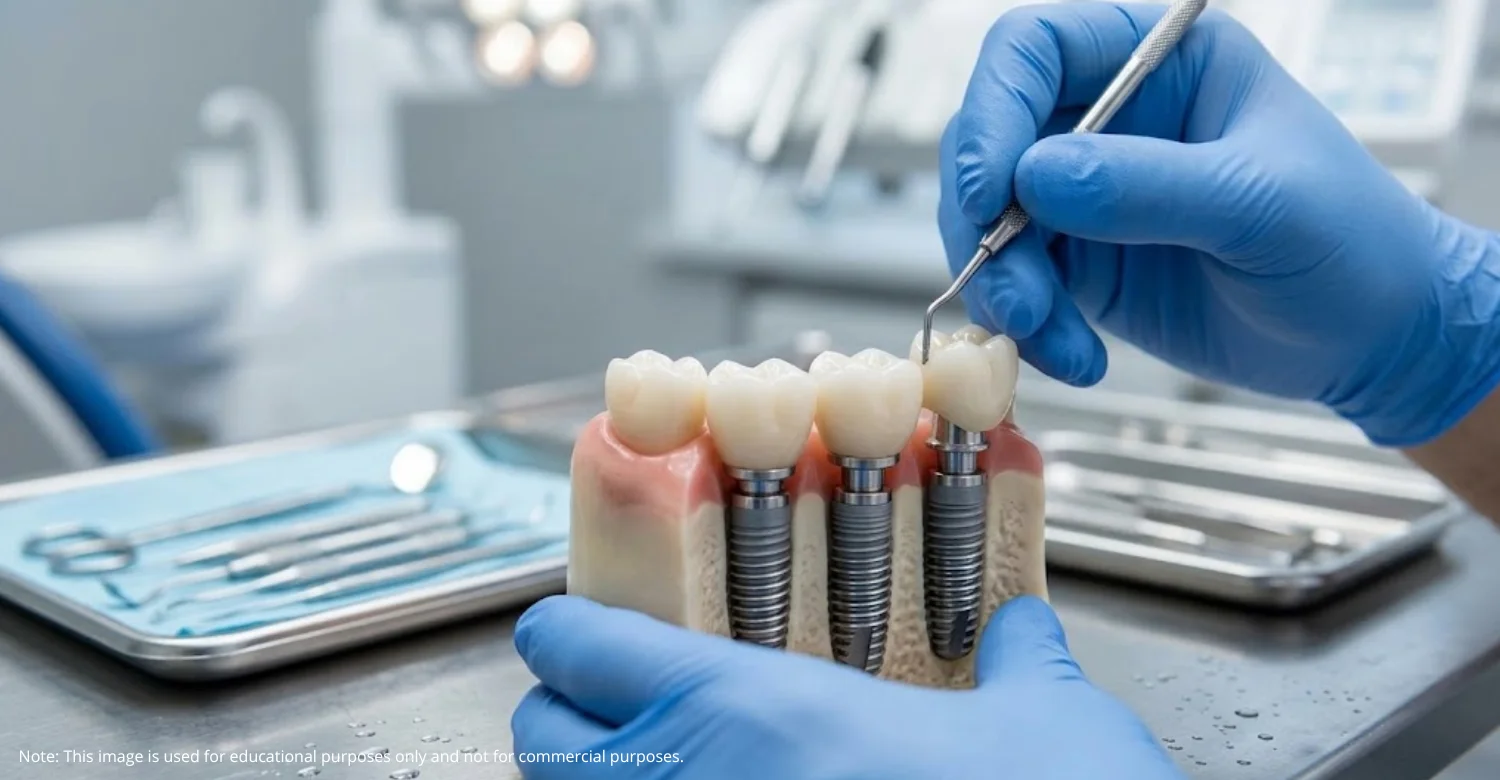
Replacing multiple teeth with dental implants means placing small fixtures, usually made of titanium or zirconia, into the jawbone. These fixtures act as artificial roots for replacement teeth. Over time, the bone bonds to the implant surface through a process called osseointegration. Once the implant is stable, it can support a restoration. Depending on your plan, implants can hold individual crowns or bridges spanning several teeth. They can also support a full-arch restoration replacing an entire upper or lower set of teeth.
What problems can several missing teeth cause?
Several missing teeth can affect daily life in different ways. You may find it harder to chew certain foods, especially firm or fibrous ones. Speech may change, depending on which teeth are missing. Visible gaps can affect how your smile looks. Neighboring teeth may drift or tilt into the spaces, and opposing teeth can over-erupt, changing how your teeth meet. The jawbone in the gap may also gradually lose volume after tooth loss, which can affect future treatment options.
Can dental implants be used to replace multiple missing teeth?
Yes, dental implants can be used to replace multiple missing teeth in suitable candidates. The number and position of implants depend on several factors. These include bone anatomy, bite, spacing between teeth, gum health, and the planned restoration design. Not every gap needs its own implant. In some cases, a conventional bridge, removable denture, or another restoration may be more appropriate. A thorough assessment helps determine which approach best suits your oral health, expectations, and long-term goals.
Note: All images used are for editorial and illustrative purposes only and may not originate from the original news provider or associated company.
What Are the Types of Dental Implants for Multiple Missing Teeth?
The main types of dental implants for multiple teeth are individual implants with crowns, implant-supported bridges, and full-arch implant restorations. Each option suits a different pattern of tooth loss. Separate gaps often suit individual implants. Several adjacent missing teeth may suit a bridge. Extensive tooth loss across a whole jaw may suit a full-arch approach. The choice also affects the treatment timeline, maintenance, and the cost of multiple dental implants. Understanding each type helps you have a more informed consultation.
Individual dental implants for separate missing teeth
Individual implants may be appropriate when missing teeth are spread across different areas. Each implant supports its own crown. One advantage is that each restoration is independent, so the teeth are not joined together. This can make flossing between teeth feel more familiar. If one crown needs repair, the others are usually unaffected. However, each site needs adequate space and enough healthy bone to support an implant. Where bone is limited, grafting or an alternative design may be discussed.
Implant-supported bridges for several adjacent missing teeth
An implant-supported bridge uses strategically positioned implants to hold a row of connected replacement teeth. For example, two implants may support a three-unit or four-unit bridge, depending on the span, bite, and bone. A bridge may therefore need fewer implants than the number of teeth it replaces, which can lower the cost of multiple dental implants. Cleaning requires extra attention, since the bridge cannot be flossed in the usual way. Interdental brushes, water flossers, or floss threaders help keep the area clean.
Full-arch implant restorations
Full-arch implant restorations replace most or all teeth in an upper or lower jaw. A fixed prosthesis is attached to several implants placed along the arch. All-on-4 and All-on-6 are treatment approaches that use four or six implants, respectively, in selected cases. These approaches are not suitable for everyone. Bone volume, bite forces, and general health all influence eligibility. They also do not guarantee immediate permanent teeth. Many patients first receive a temporary prosthesis while the implants heal.
Which option may be the best dental implants for multiple missing teeth?
The best dental implants for multiple missing teeth are those that suit your anatomy, oral health, functional needs, and budget. There is no single design that works for every patient. One person may benefit most from individual implants, while another may be better served by a bridge or full-arch restoration. It is more useful to compare treatment goals than to rank brands or techniques without clinical context. A personalized assessment is needed before selecting the most suitable design.
How Are Multiple Dental Implants Done?
How are multiple dental implants done? The multiple dental implants procedure usually follows a staged pathway. It begins with a consultation and diagnostic assessment. Next comes treatment planning, which may include preparatory care. The implants are then placed surgically. A healing period follows, during which the bone integrates with the implants and temporary teeth may be worn. Finally, the permanent crowns, bridges, or full-arch restoration are fitted. The exact sequence and timing vary for each patient.
Step 1 — Consultation and diagnostic assessment
The first appointment focuses on understanding your oral and general health. Your clinician reviews your medical history, current medications, and smoking status. They examine your gums, remaining teeth, and bite, and discuss your expectations. Digital scans and X-rays help map the treatment area. When three-dimensional information is needed, cone beam computed tomography (CBCT) may be used. CBCT shows bone height and width, as well as the position of nerves and sinuses. This supports safer, more accurate implant planning.
Step 2 — Treatment planning and preparation
Using examination findings and imaging, the clinician determines where each implant should be positioned. They also select the type of final restoration, whether crowns, a bridge, or a full-arch prosthesis. Some patients need preparation first. Gum disease may be treated, failing teeth may be extracted, or bone grafting may be performed when indicated. Planning may involve several appointments. This allows time for healing, further imaging, and a clear discussion of the treatment plan and the cost of multiple dental implants.
Step 3 — Implant placement
The implants are placed surgically under local anesthesia, which numbs the treatment area. Sedation may be offered when clinically indicated or when a patient feels anxious. The clinician prepares a precise site in the bone and places each implant. The number of implants and the complexity of the surgery influence how long the appointment lasts. Additional procedures, such as grafting at the same visit, may also extend it. Individual treatment needs vary, so your clinician will explain your specific plan.
Step 4 — Healing and temporary teeth
After placement, osseointegration develops gradually as bone forms around the implant surface. This process often takes several months. During healing, you may wear temporary teeth so you are not left with visible gaps. In some cases, an immediate provisional restoration can be attached shortly after surgery. However, immediate loading is not appropriate for every patient. It depends on how firmly the implants are anchored at placement, bone quality, bite forces, and the overall treatment design.
Step 5 — Final crowns, bridges, or full-arch restoration
Once healing is complete and the implants are confirmed stable, the final restoration is made. Impressions or digital scans guide its design and fit. The clinician then fits the crowns, bridge, or full-arch prosthesis and checks your bite carefully. Adjustments are made for comfort, appearance, and even contact between teeth. You will receive cleaning instructions specific to your restoration. Follow-up visits remain important, as they allow early detection of gum problems, loose components, or bite changes.
What do Dental Implant packages include?
Our Turkish clinic offers packages that cover the main parts of implant treatment, so you can plan your visit with fewer extra arrangements. Package options include:
Dental consultation
Full dental check-up before implant placement
3D Tomography (CT Scan) & Panoramic X-rays
Local Anaesthesia
Temporary prosthesis during the healing stage
Hotel accommodation for your stay
Airport and clinic transfers
ALL-ON-4 IMPLANTS
FROM: ≈£2,500
Short description of this plan.
4 DENTAL IMPLANTS + FULL ARCH BRIDGE
HOTEL STAY
VIP TRANSFERS (AIRPORT/HOTEL/CLINIC)
3D CT SCAN & PANORAMIC X-RAY
ALL-ON-6 IMPLANTS
FROM: ≈£3,200
Short description of this plan.
6 DENTAL IMPLANTS + FULL ARCH BRIDGE
HOTEL STAY
VIP TRANSFERS (AIRPORT/HOTEL/CLINIC)
3D CT SCAN & PANORAMIC X-RAY
ALL-ON-8 IMPLANTS
FROM: ≈£4,000
Short description of this plan.
8 DENTAL IMPLANTS + FULL ARCH BRIDGE
HOTEL STAY
VIP TRANSFERS (AIRPORT/HOTEL/CLINIC)
3D CT SCAN & PANORAMIC X-RAY
Tips for Patients
A little preparation helps you get clear answers at your consultation:
Ask for an itemized estimate that separates implant surgery, restoration, temporary teeth, and additional procedures.
Bring your current medication list and relevant medical records to your consultation.
Ask whether an implant-supported bridge could replace several adjacent missing teeth in your case.
Confirm whether your quoted price includes the final restoration and follow-up appointments.
Ask how temporary teeth will be managed during healing and what dietary restrictions may apply.
Can I Get Multiple Dental Implants at Once?
Can I get multiple dental implants at once? In many cases, yes. Several implants can often be placed during a single surgical appointment. Whether this is possible depends on your general health, bone condition, gum health, and treatment plan. Some patients need staged treatment instead. This may be because of infection, insufficient bone, or a complex reconstruction. Your clinician will explain which approach suits you and how timing may affect the cost of multiple dental implants.
When can several implants be placed during one appointment?
Multiple implants may be placed in one surgical session when your health, bone volume, and treatment plan allow it. This approach can mean fewer separate surgical visits and a single main healing period. It may also simplify scheduling for patients traveling for treatment. However, more extensive treatment may still require staged procedures. For example, a patient needing grafting in one area might have implants placed elsewhere first. The decision always depends on what is safest and most predictable.
When might implant placement need to be staged?
Staged placement may be recommended when conditions are not yet ideal. An active infection may need to resolve first. Insufficient bone may require grafting and several months of healing before implants are placed. Recent extraction sites sometimes need time to heal. Complex reconstructions may also be planned in phases. Preparatory treatment can lengthen the overall schedule and add to the cost of multiple dental implants. Staging, however, can improve the conditions for long-term implant stability.
What Is the Difference Between Multiple Dental Implants and Other Tooth-Replacement Options?
Multiple dental implants differ from other options mainly in how the replacement teeth are supported. Implants are anchored in the jawbone. Traditional bridges rely on neighboring natural teeth. Removable partial dentures rest on the gums and usually clasp onto remaining teeth. Each option has different implications for stability, maintenance, treatment time, and expense. No single option is right for everyone. Comparing them honestly helps you weigh the cost of multiple dental implants against the alternatives.
Multiple dental implants vs. a traditional dental bridge
A traditional bridge is supported by the natural teeth on either side of a gap. Those teeth usually need to be reshaped to receive crowns, which removes healthy tooth structure. Implants, by contrast, are supported by the jawbone and do not rely on neighboring teeth. A conventional bridge is often quicker to complete and may cost less initially. Implants usually take longer because of healing time. Both options require careful cleaning and regular professional maintenance.
Multiple dental implants vs. removable partial dentures
Removable partial dentures are taken out for cleaning and, usually, at night. They are generally more affordable and less invasive than implants. However, they can move during eating or speaking, and chewing efficiency may be lower. Implant-supported restorations are fixed in place and generally feel more stable. Still, a removable denture remains a reasonable option for some patients. This may apply to those who cannot have surgery, have limited bone, or prefer a lower initial cost.
Multiple dental implants vs. full-arch implant treatment
Replacing selected teeth with implants keeps your healthy natural teeth in place. Full-arch treatment replaces an entire upper or lower arch with an implant-supported prosthesis. The decision depends on the extent of tooth loss and the condition of the remaining teeth. If several remaining teeth are severely compromised, full-arch treatment may offer a more predictable plan. If most teeth are healthy, replacing only the missing ones is usually preferable. Both pathways affect the cost of multiple dental implants differently.
Are Affordable Dental Implants for Multiple Missing Teeth Possible?
Affordable dental implants for multiple missing teeth are possible when planning focuses on value rather than the lowest headline price. A well-designed plan may use fewer implants, such as a bridge instead of individual implants, where clinically appropriate. Treatment can sometimes be staged to spread expenses. The key is to understand exactly what you are paying for. A clear plan helps you control the cost of multiple dental implants without compromising safety or long-term results.
How can you manage the cost without compromising treatment quality?
Start by requesting a clear, itemized treatment plan. This shows how each stage contributes to the cost of multiple dental implants. Ask whether an implant-supported bridge is suitable for adjacent gaps, as it may reduce the number of implants needed. Clarify material choices, temporary restorations, and follow-up arrangements. Ask how additional procedures would be charged if needed. Remember that the lowest advertised price may not represent the full treatment. Some offers exclude the final restoration, imaging, or aftercare.
Can you replace multiple teeth in stages?
Staged treatment can be an option when it is clinically appropriate and financially helpful. For example, one area of the mouth may be treated first, followed by another later. This can spread the cost of multiple dental implants over time. However, delaying treatment can have consequences. Bone may continue to reduce in the gaps, and neighboring teeth can shift. The impact depends on the location and condition of the missing teeth. Discuss timing and interim replacement options with your clinician.
Dental Implant Cost: Vitrin Clinic vs. UK vs. USA
The cost of dental implant treatment varies significantly depending on the procedure scope, implant brand, and country of treatment. The following table provides a transparent comparison of average costs across the United Kingdom, United States, and Vitrin Clinic in Istanbul from a single implant to full-arch restoration allowing patients to evaluate their options with accurate financial context before committing to a treatment plan.
Treatment type | 🇬🇧 UK | 🇺🇸 USA | 🇹🇷 Turkey |
|---|---|---|---|
Single dental implant Implant post + abutment + crown | $2,400 – $5,700 | $3,000 – $6,000 | $500 – $700 |
Implant-supported crown Crown on existing implant | $1,270 – $2,540 | $1,500 – $3,000 | $700 – $900 |
All-on-4 Per arch, fixed full-arch restoration | $10,000 – $22,000 | $18,000 – $30,000 | $3,500 – $7,500 |
All-on-6 Per arch, 6-implant full-arch restoration | $12,700 – $25,400 | $20,000 – $35,000 | $4,000 – $9,000 |
Full mouth reconstruction Both arches, upper + lower | $29,000 – $50,000+ | $36,000 – $70,000+ | $7,000 – $15,000 |
3D CT scan & consultation | Charged separately | Charged separately | Free & included |
Estimated saving | — | — | Up to 70% less |
* Prices are averages for reference only and may vary based on individual case requirements, implant brand, bone condition, and treatment complexity. A personalised quote is provided following your free consultation.
.jpg)
What Benefits and Limitations Should You Expect From Multiple Dental Implants?
Multiple dental implants offer several potential benefits, including stable replacement teeth and improved chewing. However, they also involve surgery, healing time, and ongoing maintenance. Like any medical treatment, they carry some risk of complications. Outcomes depend on your general health, oral hygiene, bone quality, and careful treatment planning. Having realistic expectations is important. Understanding both the advantages and the limitations helps you judge whether the cost of multiple dental implants represents good value for you.
Potential benefits of replacing several missing teeth
Implant-supported teeth can improve chewing function and stability compared with some removable options. Replacement teeth can be designed to complement the color, shape, and proportions of your surrounding smile. When individual implants are suitable, there is no need to reshape adjacent natural teeth for support. Implants may also help preserve bone in areas where they successfully integrate, because they transmit chewing forces into the jaw. Many patients also find fixed teeth more comfortable than removable alternatives.
What might your teeth look and feel like before and after treatment?
Before treatment, gaps may affect your smile, speech, or chewing. After treatment, restorations are designed around your facial features, tooth proportions, and bite. Many patients first wear temporary teeth during healing. These are later replaced with final restorations that are refined for appearance and fit. The final result depends on your starting condition, gum health, bone volume, and treatment design. Your clinician can explain what is realistically achievable in your case before treatment begins.
What are the limitations and possible complications?
Possible complications include infection, delayed healing, and failure of the implant to integrate with the bone. Nerve injury can occur in the lower jaw, and sinus complications can occur in the upper jaw, although careful planning reduces these risks. Mechanical problems, such as loose screws or chipped restorations, may develop over time. Peri-implant disease is inflammation affecting the tissues around an implant. Smoking, poor plaque control, certain medical conditions, and past gum disease may affect outcomes.
How Long Does Multiple Dental Implant Treatment Take?
The total treatment time varies widely. Some patients complete their treatment within a few months. Others need longer, especially when extractions, bone grafting, or staged surgery are required. Key factors include the number of implants, bone quality, healing speed, and the type of final restoration. Eligibility for temporary teeth also affects your experience during treatment. Your clinician will outline an expected timeline after your assessment, along with how scheduling may affect the cost of multiple dental implants.
How long does the implant surgery appointment last?
The length of the surgical appointment depends on the number of implants, the complexity of the surgery, and any additional procedures. Placing a single implant may be relatively quick. Placing several implants, or combining implant placement with extractions or grafting, usually takes longer. Your clinician will estimate the appointment length during planning. You may also need extra time for preparation, anesthesia, and post-operative instructions. Plan the rest of your day accordingly, and arrange support if sedation is used.
How long does implant healing take before the final teeth are fitted?
Healing and integration usually take several months, although this varies considerably between patients. Factors include bone density, the implant's location, general health, and smoking status. Implants in the upper jaw, where bone is often softer, may need longer than those in the lower jaw. Bone grafting or sinus augmentation can extend the schedule further, sometimes by several additional months. Your clinician will confirm implant stability before the final restoration is made and fitted. Each stage is reviewed before the next begins.
Can you receive temporary teeth on the same day?
Sometimes, yes. It helps to understand three related terms. Immediate placement means placing an implant into a fresh extraction socket. Immediate provisional restoration means attaching a temporary tooth shortly after placement. Immediate loading means the implants are put into function within roughly one week of placement. These options depend on implant stability and clinical conditions. Placing an implant immediately after extraction does not automatically mean a permanent tooth can be fitted. Final teeth usually follow integration.
What We Notice Clinically
In clinical practice, two people missing the same number of teeth may need very different implant plans and budgets. Bone volume, gum condition, bite forces, tooth position, and the condition of neighboring teeth all influence planning. Dr. Rifat Alsaman, Head of the Medical Team and cosmetic dentist at Vitrin Clinic, emphasizes that a lower implant count does not automatically mean a better or more affordable long-term solution. A suitable plan balances function, hygiene access, durability, and the cost of multiple dental implants.
Why the number of missing teeth does not determine the number of implants
An implant-supported bridge may replace several teeth using strategically positioned implants. For instance, three adjacent missing teeth might be restored with two implants and a three-unit bridge. Whether this works depends on bite distribution, the length of the restoration span, and the available bone. Strong bite forces or a long span may require more implant support. In other cases, fewer implants can provide adequate stability. The design must protect both the implants and the restoration.
Why the cheapest initial plan may not be the most suitable
A plan with a low initial price may not account for long-term needs. Poorly positioned implants can make cleaning difficult and increase the risk of inflammation. Restorative materials that do not suit your bite may chip or wear sooner. Inadequate planning can also lead to repairs or replacement. These issues add expense over time. Fair comparisons should consider the complete treatment, aftercare, and maintenance, not only the upfront cost of multiple dental implants. Value is measured over years, not at the first appointment.
How clinical findings influence the final treatment recommendation
Examination findings and appropriate imaging guide every major decision. They show whether bone is sufficient, whether grafting is needed, and where implants can be safely positioned. They also reveal gum health and the condition of remaining teeth. These factors shape the restoration design, from individual crowns to full-arch prostheses. This is why recommendations should follow clinical assessment rather than a fixed package. A personalized plan is more likely to match your anatomy, function, and long-term goals.
Clinical Note
Dr. Rifat Alsaman, Head of the Medical Team and cosmetic dentist at Vitrin Clinic, notes that a reliable estimate requires careful assessment. This includes the missing teeth, bone anatomy, periodontal health, bite, medical history, and intended restoration. No implant count, treatment duration, or final price should be confirmed without sufficient diagnostic information. This also applies to the cost of multiple dental implants. Patients should understand benefits, risks, and alternatives before giving informed consent. Realistic expectations, maintenance, and individualized planning remain essential.
How Can You Care for Multiple Dental Implants After Treatment?
Caring for multiple dental implants involves daily home hygiene, sensible food choices during healing, and regular professional checkups. Implants cannot develop decay, but the surrounding gums and bone can become inflamed if plaque builds up. Good care helps protect your investment and supports long-term stability. Your clinician will provide instructions tailored to your restoration, whether you have individual crowns, a bridge, or a full-arch prosthesis. Following these instructions consistently is one of the most important parts of treatment.
Daily cleaning around implants and implant-supported bridges
Brush twice daily using a soft-bristled toothbrush, paying careful attention to where the restoration meets the gum. Clean between teeth every day. Depending on your restoration, this may involve floss, interdental brushes, or specialized tools. Bridges and full-arch restorations need cleaning underneath, where food and plaque can collect. Super floss, floss threaders, or water flossers may help reach these areas. Your clinician or hygienist can demonstrate the most suitable technique for your restoration and check that it works.
Food choices during early healing
Follow your clinician's diet instructions closely after surgery. Soft foods are often recommended during the first days, while the surgical sites heal. You may be advised to avoid hard, crunchy, sticky, or very chewy foods for longer. This is especially important with temporary restorations or immediate-loading protocols, where excessive pressure could disturb healing implants. Avoid chewing directly on surgical areas when advised. Return to your normal diet gradually, and only when your clinician confirms it is safe.
Professional maintenance and long-term monitoring
Regular recall appointments allow your clinician to check the implants, gums, and restorations. The frequency is individualized based on your gum health and risk factors. Professional cleaning removes hardened deposits that home care cannot reach. Your clinician will also assess your bite and the condition of the restoration. Contact your dental team if you notice bleeding, swelling, discomfort, mobility, or changes in your bite. Early assessment allows many problems to be managed before they become more serious.
How Can You Reduce the Risk of Implant Problems?
You can reduce the risk of implant problems by controlling the factors within your influence. These include gum health, oral hygiene, smoking, medical conditions, and teeth grinding. Some risks cannot be removed entirely, but many can be reduced through good planning and consistent care. Sharing accurate health information with your clinician is essential. Attending maintenance appointments also matters. Prevention is usually simpler, more comfortable, and less expensive than treating complications once they have developed.
Manage gum health before and after implant treatment
Active gum disease should be assessed and managed before implants are placed. A history of periodontal disease is associated with a higher risk of peri-implant disease, so ongoing care is important. Good plaque control at home reduces inflammation around both natural teeth and implants. Regular maintenance visits help detect early warning signs. If your gums bleed when brushing, mention this to your clinician. Bleeding can be an early sign of inflammation that needs prompt attention and professional review.
Address smoking, medical conditions, and teeth grinding
Smoking can impair healing and is associated with a higher risk of implant complications. Uncontrolled medical conditions, such as poorly managed diabetes, may also influence outcomes. Excessive bite forces from teeth grinding, known as bruxism, can overload implants and restorations. Tell your clinician about all medications and medical conditions. Some medications, including certain drugs used to treat bone conditions, need careful consideration before surgery. If you grind your teeth, ask whether a protective night guard is recommended.
Follow your individualized maintenance plan
Implants can feel comfortable even when early problems are developing. Inflammation around implants may cause few symptoms at first. That is why professional review remains important, even when everything seems fine. Keep your recall appointments, maintain thorough home care, and follow any specific instructions for your restoration. Replace worn cleaning tools regularly. If your health or medications change, inform your clinician. Consistent maintenance helps protect your implants, restorations, and surrounding gums over the long term.
Takeaway: Planning the Cost of Multiple Dental Implants
The cost of multiple dental implants depends on several key factors. These include the number of implants, restoration design, bone and gum health, materials, and any additional procedures. Several missing teeth do not always require one implant per tooth. Compare complete treatment plans rather than isolated prices. Ask about healing, maintenance, possible complications, and long-term costs. Your next step is to discuss your individual needs with the Vitrin Clinic team and obtain a personalized treatment plan.
Multiple Dental Implant Treatment at Vitrin Clinic
At Vitrin Clinic, multiple dental implant treatment begins with understanding your individual needs. The team evaluates your missing teeth, gum health, bone anatomy, bite, and restorative goals before recommending a plan. Treatment is coordinated so that surgical and restorative stages work together. Patients receive clear explanations of the proposed implant number, restoration design, timeline, and maintenance. The aim is to help you understand your options and the cost of multiple dental implants before making any decision.
Individualized assessment and treatment planning
Every plan at Vitrin Clinic starts with a thorough assessment. The team evaluates your missing teeth, gum health, bone anatomy, bite, and restorative goals. A clinical examination is supported by digital scans and X-rays. When three-dimensional information is needed, CBCT imaging may be used to assess bone volume and nearby anatomical structures. These findings show whether you need preparatory care and which implant design is most suitable. They also shape a realistic cost of multiple dental implants for your case.
Coordinated surgical and restorative planning
Implant treatment works best when surgery and restoration are planned together. Your treatment plan may account for implant placement, temporary teeth, final restorations, and long-term maintenance. Implant positions are chosen with the final teeth in mind. Dr. Rifat Alsaman, Head of the Medical Team and cosmetic dentist at Vitrin Clinic, plays a key role in clinical coordination and aesthetic planning. This approach supports restorations that function well, are easier to clean, and are designed in harmony with your smile.
Understanding your treatment options and expected costs
Before deciding, review the proposed number of implants, restoration design, and expected timeline. Ask about possible additional procedures and follow-up requirements. Understanding these details helps you compare options fairly and plan with confidence. The Vitrin Clinic team aims to explain each stage clearly, without promising a specific price or outcome before assessment. Contact Vitrin Clinic today for an individualized assessment and a FREE treatment plan that clearly explains the cost of multiple dental implants in your case.
Ready to transform your smile?
Talk to our team and get a FREE treatment plan.
References:
FAQs
Dr. Rifat Alsaman has more than 5 years of clinical experience in dentistry and currently serves as the Head of the Medical Team at Vitrin Clinic. He is dedicated to providing exceptional patient care, overseeing treatment planning, and ensuring the highest clinical standards across the team. His expertise, attention to detail, and commitment to continuous professional development have helped countless patients achieve healthier, more confident smiles.


