Dental Implant
October 25, 2026
What Is Hybrid Subperiosteal Implant Rehabilitation, and Who Can Benefit From It?
 Dr. Rifat Alsaman

Hybrid Subperiosteal Implant Rehabilitation is a fixed-teeth option for people with severe jawbone loss. It combines a custom metal framework with conventional implants where bone allows. Many patients are told they need major bone grafting before implants. Hybrid Subperiosteal Implant Rehabilitation may offer another route in selected cases. At Vitrin Clinic, every plan starts with CBCT imaging and a full clinical assessment. Full-arch treatment in Turkey starts from approximately $6,000 per arch, depending on your case. Book a consultation to find out whether this option suits your jaw anatomy.
Starting price: from approximately $6,000 per full arch. Planning: CBCT scan and digital 3D design. Typical treatment window: several months, including healing and final teeth. Follow-up: regular reviews and maintenance visits.
Ready to transform your smile?
Talk to our team and get a personal FREE treatment plan.
What Is Hybrid Subperiosteal Implant Rehabilitation?
Hybrid Subperiosteal Implant Rehabilitation restores missing teeth when bone is too limited for standard implants. It uses digital planning to fit an implant to your exact bone shape. In many cases, it is combined with conventional implants placed in remaining healthy bone. The result is a stable base for a fixed full-arch bridge. Interest is growing because tooth loss remains common worldwide. The WHO estimates complete tooth loss affects about 23% of people aged 60 and older. Many of these patients have lost significant bone volume over the years.
How Does Hybrid Implant-Supported Rehabilitation Work for Severe Bone Loss?
The dentist first maps the jaw using a CBCT scan. Areas with enough bone may receive conventional implants. Areas with thin or shallow bone are supported by a custom framework resting on the bone surface. Both supports then hold one fixed prosthesis. This spreads chewing forces across several anchor points. The design aims to avoid relying on bone that cannot support a screw-type implant.
What Are Patient-Specific Subperiosteal Dental Implants?
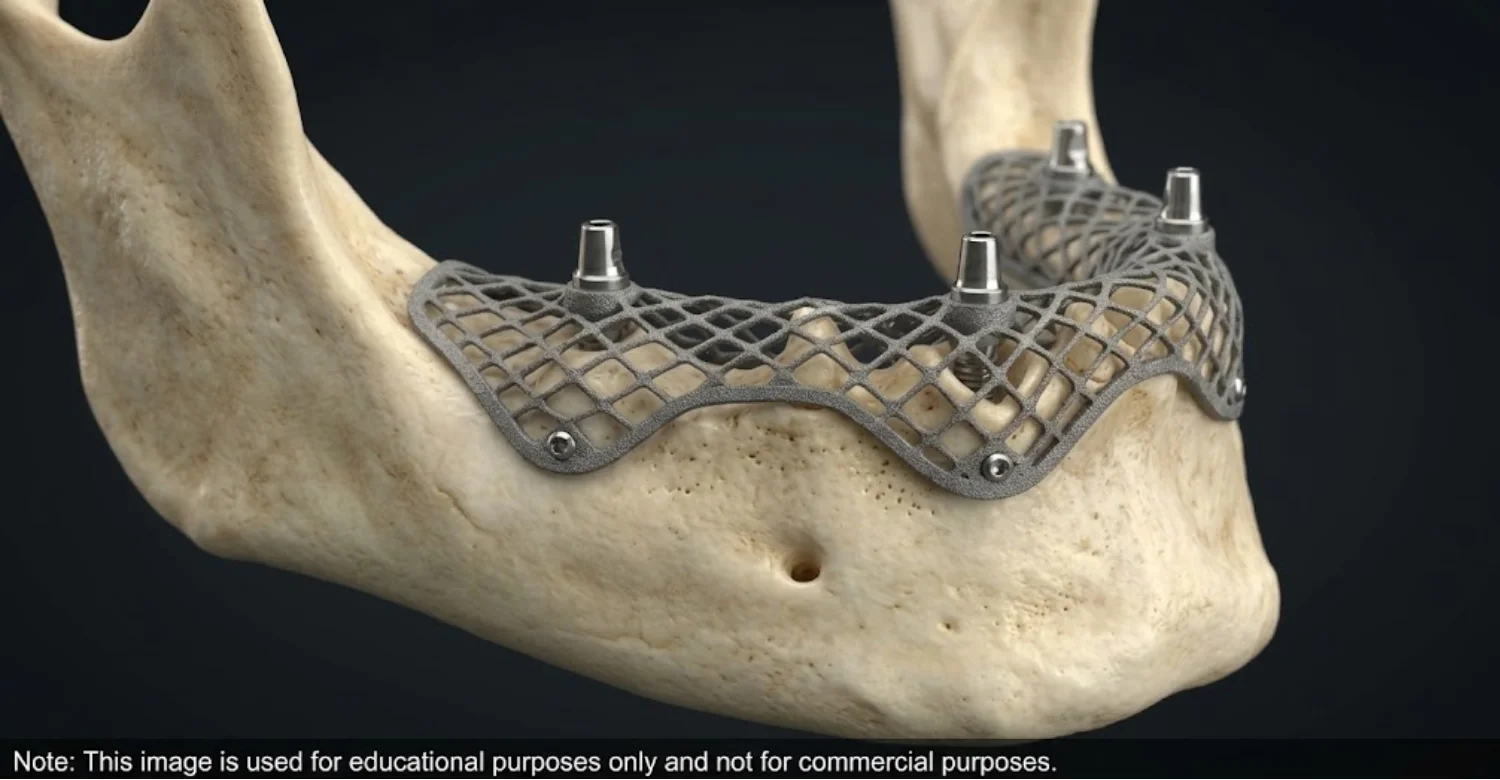
These are titanium frameworks made for one patient only. Engineers design them from 3D scan data, then produce them by additive manufacturing or milling. The framework sits on the jawbone, beneath the gum and its lining tissue. Small screws fix it to stable bone areas. Posts pass through the gum to hold the new teeth. Because the fit is digital, the frame follows the jaw's surface closely.
How Do Subperiosteal Implants Differ From Conventional Dental Implants?
The main difference is where the implant gains support. One type rests on the bone, while the other is placed inside it. Each design suits different bone conditions. Hybrid plans use both when the anatomy varies across the jaw.
Subperiosteal Implants Positioned Over the Jawbone
A subperiosteal implant lies over the bone rather than inside it. It spreads load across a wide surface area. This helps when bone height is too low for a screw implant. The trade-off is a larger contact area with the soft tissues above it.
Conventional Implants Anchored Within the Jawbone
A conventional implant is a titanium screw placed into a drilled bone. Over several months, bone bonds to its surface through osseointegration. This method has decades of research behind it. It needs adequate bone height and width at each implant site.
Hybrid Approaches Combining Different Implant Designs
A hybrid plan uses each design where it works best. For example, conventional implants may go into the front jaw. A custom framework may support the back regions where bone has thinned. The goal is stable support without forcing one technique onto every area.
What Does Full-Arch Restoration With Subperiosteal Implants Involve?
It replaces all teeth in one jaw with a fixed bridge. The process includes scanning, digital design, surgery, and fitting provisional teeth. A definitive bridge follows once the gums have healed and the bite is stable. Treatment usually involves a team of surgeons, prosthodontists, and dental technicians. Each stage is checked before moving to the next.
What Are the Main Goals of Hybrid Full-Mouth Rehabilitation?
The first goal is reliable chewing function with fixed teeth. The second goal is a natural-looking smile and better lip support. Comfortable speech and easy daily cleaning are also important aims. Finally, the plan should protect remaining bone and soft tissue health. A good outcome balances all these goals rather than focusing on looks alone.
.jpg)
.jpg)
.jpg)
.jpg)
What Causes Severe Jawbone Loss and Insufficient Bone for Dental Implants?
Jawbone needs stimulation from tooth roots to keep its shape. When that stimulation stops, the body slowly resorbs the bone. Disease, injury, and past surgery can speed this process. Understanding the cause helps your dentist choose the safest treatment path.
How Does Tooth Loss Lead to Jawbone Resorption?
After an extraction, the bone that held the tooth begins to remodel. A well-known clinical study found that ridge width can shrink by about 50% within 12 months. Roughly two-thirds of that change happened in the first three months. Over years without teeth, both height and width keep decreasing. This is why long-term missing teeth often leave too little bone for standard implants.
Can Advanced Periodontal Disease Cause Severe Jawbone Loss?
Yes, advanced gum disease destroys the bone that supports teeth. The infection triggers inflammation that breaks down bone around the roots. Teeth may loosen and eventually fall out or need removal. The WHO has reported severe periodontal disease in roughly 15–20% of middle-aged adults. By the time teeth are lost, bone damage may already be extensive.
How Can Trauma, Infection, or Previous Jaw Surgery Affect Bone Volume?
A facial injury can fracture or remove sections of the jawbone. Chronic infections, including failed root canals, can dissolve surrounding bone. Tumour removal or cyst surgery may leave large defects behind. Previous failed grafts can also leave scar tissue and irregular contours. Each of these situations creates uneven bone that needs careful mapping.
What Factors Increase the Risk of Severe Jawbone Atrophy?
Several factors combine to speed bone loss over time. Some relate to dental history, while others relate to general health. Knowing your risks helps the team plan safer treatment.
Long-Term Tooth Loss and Poorly Fitting Dentures
The longer teeth are missing, the more bone is usually lost. Loose dentures press unevenly on the gums and underlying bone. This pressure can speed resorption in some areas. Many long-term denture wearers develop flat, narrow ridges over time.
Previous Implant Failure and Complex Dental Reconstruction
A failed implant often leaves a bone defect after removal. Peri-implant infection can also destroy surrounding bone before failure occurs. Earlier grafts that did not integrate may leave reduced volume. These cases often need a fresh, fully digital assessment.
Smoking, Diabetes, and Other Factors Affecting Healing
Smoking reduces blood flow to the gums and bone. A 2022 meta-analysis found implant failure risk about 140% higher in smokers. Poorly controlled diabetes slows healing and raises infection risk. Some medications, including certain bone drugs, also affect bone healing. Your full medical history matters before any surgery.
What Clinical Signs May Suggest Advanced Jawbone Loss?
Bone loss often develops quietly over many years. Some changes are noticed in daily function, while others affect appearance. A scan confirms the true extent of the problem.
Loose Dentures and Difficulty Chewing
Dentures that once fitted well may start to slip or rock. Patients often rely more on adhesive to keep them in place. Chewing harder foods becomes difficult or uncomfortable. These signs suggest the supporting ridge has shrunk.
Changes in Facial Support and Jaw Contours
Bone loss can reduce support for the lips and cheeks. The lower face may look shorter, and wrinkles around the mouth may deepen. The chin can appear more prominent. These changes are common after many years without teeth.
Recurrent Discomfort, Gum Problems, or Difficulty Wearing Prostheses
Sore spots under dentures may keep returning despite adjustments. Gums may become inflamed where the prosthesis presses. Some patients cannot tolerate a denture at all. Persistent discomfort deserves a professional assessment and an updated scan.
Who Is a Suitable Candidate for Hybrid Subperiosteal Implant Rehabilitation?
Suitability for Hybrid Subperiosteal Implant Rehabilitation depends on more than bone volume alone. The dentist reviews your health, gum quality, bite, and hygiene habits. Some patients benefit greatly from a hybrid plan. Others are better served by grafting, zygomatic implants, or removable options. An honest assessment protects you from unsuitable treatment.
Can Dental Implants Be Placed With Severe Jawbone Loss Without Bone Grafting?
In some cases, yes. Graftless options include angled implants, zygomatic implants, and custom subperiosteal frameworks. Each option depends on where usable bone remains. Hybrid Subperiosteal Implant Rehabilitation is one graftless route when bone is uneven across the arch. However, grafting is still the better choice for some patients. Your scan and clinical exam guide this decision.
When Are Custom Subperiosteal Implants Considered for Full-Mouth Rehabilitation?
They are usually considered when bone is too thin or short for conventional implants. They may also suit patients who prefer to avoid extensive grafting. Medically compromised or older patients may benefit from fewer surgical stages. A 2025 systematic review described them as a viable option for severely atrophic jaws. The same review noted they may especially suit elderly or compromised patients.
Which Patients May Benefit From Combining Subperiosteal and Conventional Dental Implants?
Patients with good bone in one region but poor bone elsewhere may benefit. A common example is solid bone at the front with thin bone at the back. Conventional implants use the strong areas, while the framework supports weaker zones. This can reduce the size of the custom framework. A smaller framework may mean less soft-tissue coverage is needed.
When Might Hybrid Implant Rehabilitation Be More Appropriate Than Conventional Implants Alone?
It may be more appropriate when conventional implants would need major grafts first. It may also help when sinus lifts or nerve proximity create added risk. Patients with failed grafts may prefer a different route. In these cases, Hybrid Subperiosteal Implant Rehabilitation can shorten the overall treatment pathway. The decision always depends on individual anatomy and health.
Who May Not Be a Suitable Candidate for Patient-Specific Subperiosteal Implants?
Some conditions raise the risk of complications significantly. These do not always rule out treatment permanently. Many can be improved before surgery is planned.
Active Oral Infections and Uncontrolled Gum Disease
Infections must be treated before any implant surgery. Bacteria around remaining teeth can spread to new implant sites. Uncontrolled gum disease also signals a higher future risk. Stabilising oral health comes first.
Medical Conditions That May Affect Surgical Healing
Uncontrolled diabetes, recent radiotherapy, and some bone medications need careful review. Immune conditions may also affect healing. Your physician may need to confirm surgical safety. In some cases, treatment is delayed until health is stable.
Inadequate Soft-Tissue Coverage or Difficult Oral Hygiene
The framework needs healthy, thick gum tissue covering it. Thin tissue raises the risk of exposure over time. Patients who cannot clean around fixed bridges may face higher complication rates. Limited dexterity should be discussed openly during planning.
What Should Patients Know Before Choosing a Graftless Implant Approach?
Avoiding a graft does not mean avoiding surgery. Placement still involves opening the gum and fixing the framework to bone. Long-term data are still limited compared with conventional implants. Recovery, costs, and maintenance needs should be clear before you consent. Ask how many similar cases the team has treated.
Ready to transform your smile?
Talk to our team and get a personal FREE treatment plan.
What We Notice Clinically: Important Distinctions in Severe Jawbone Loss
Severe bone loss looks different from patient to patient. Two scans with similar measurements can still lead to different plans. Clinical judgement links the scan findings with health, bite, and soft tissue.
Why Similar Bone Loss Patterns Can Require Different Treatment Plans
Two patients may have similar bone height on a scan. One may have thick gums, good hygiene, and a balanced bite. The other may smoke, grind their teeth, and have thin tissue. These differences change the risk profile completely. As a result, their treatment plans may look very different.
Why Bone Volume Alone Does Not Determine Implant Suitability
Bone quality matters as much as bone quantity. Dense bone supports fixation differently from soft, porous bone. Nerve position, sinus anatomy, and jaw shape also affect options. A patient's health and expectations shape the final choice. A good plan considers all of these together.
How Gum Health, Soft-Tissue Coverage, and Prosthetic Design Affect Treatment Decisions
Soft-tissue health is a major factor in framework success. Reviews report partial exposure as one of the most common issues with these implants. One 2025 review found partial exposure in 37% of implants studied. Thick, healthy gums may lower this risk. The bridge design must also allow easy cleaning around every post.
Common Misconceptions About Hybrid Subperiosteal Implant Rehabilitation
Patients often hear simplified claims online. Some claims overstate benefits, while others ignore real limitations. Clear information helps you set realistic expectations.
Does Avoiding Bone Grafting Mean Avoiding Surgery?
No, placement is still a surgical procedure. The gum is opened, the framework is seated, and screws secure it. Swelling and discomfort are expected afterwards. The benefit is often fewer surgical stages, not zero surgery.
Does a Custom Implant Guarantee a Permanent Result?
No implant can guarantee a permanent result. Most published follow-up for modern custom frameworks covers only a few years. Results depend on hygiene, health, bite forces, and regular maintenance. Any clinic promising lifetime success should be questioned carefully.
Does Every Patient With Severe Bone Loss Need a Subperiosteal Implant?
No, many patients have other suitable options. Angled implants, zygomatic implants, grafting, or overdentures may work better. Hybrid Subperiosteal Implant Rehabilitation is one tool among several. The right choice depends on your scan and health profile.
Clinical Note: Dr. Rifat Alsaman on Individualized Implant Rehabilitation
Complex implant cases need careful diagnosis before any technique is chosen. Dr. Rifat Alsaman leads the medical team at Vitrin Clinic. His approach places the scan, the bite, and the patient's health at the centre of planning.
Dr. Rifat Alsaman, Head of the Medical Team at Vitrin Clinic and Cosmetic Dentist, on Assessing Complex Implant Cases
Dr. Alsaman's team reviews every complex case as a whole picture. The aim is not to fit patients into one technique. Instead, the team asks which option gives stable support with the lowest reasonable risk. Sometimes that answer is a hybrid plan, and sometimes it is not.
Why Diagnosis, Prosthetic Planning, and Long-Term Maintenance Matter Before Treatment Selection
The final teeth should be planned before the implants are designed. This "prosthetic-first" thinking guides post positions and cleaning access. Maintenance needs are discussed early, not after surgery. Patients understand the long-term commitment before they agree to treatment.
How Is Hybrid Subperiosteal Implant Rehabilitation Diagnosed and Planned?
Planning Hybrid Subperiosteal Implant Rehabilitation relies on detailed imaging and a full clinical review. Digital tools turn scan data into a precise 3D model of your jaw. The team then designs the implants around your future teeth. Every decision is checked against your health and bite.
What Happens During the Initial Dental Implant Assessment?
The dentist reviews your dental and medical history first. Your gums, remaining teeth, and current prosthesis are examined. Photos and bite records may be taken. A CBCT scan is usually requested if you do not already have one. Afterwards, you discuss goals, options, and possible timelines.
Why Are CBCT Scans Important for Severely Atrophic Jaws?
A CBCT scan shows the jaw in three dimensions. It reveals bone height, width, density, and surface shape. It also maps nerves, sinuses, and other sensitive structures. Standard 2D X-rays cannot show this level of detail. For custom frameworks, the CBCT is the foundation of the design.
How Do Digital Scans and Three-Dimensional Planning Support Custom Implant Design?
Intraoral scans capture the gums and bite surfaces. These are merged with the CBCT data in planning software. Engineers then design the framework to follow the bone's surface. Post positions are matched to the planned teeth. Reviews report good fit for most digitally designed frameworks in published studies.
Which Clinical and Medical Factors Must Be Evaluated Before Surgery?
Several areas are reviewed before a final plan is agreed. Each one can change the design or the timing of surgery.
Jawbone Anatomy and Available Bone Support
The team measures bone in every region of the arch. They identify safe screw locations and areas to avoid. Bone shape determines where conventional implants can go. The remaining regions guide the framework design.
Gum Condition, Oral Hygiene, and Soft-Tissue Thickness
Healthy gums lower the risk of infection and exposure. Tissue thickness over the planned framework is assessed carefully. Hygiene habits are reviewed honestly. Gum treatment may be needed before surgery.
Bite Alignment, Chewing Forces, and Prosthetic Space
The opposing jaw affects how forces reach the new bridge. Teeth grinding increases mechanical stress significantly. The team also checks space for the prosthesis and its materials. A night guard may be recommended later.
Medical History, Medications, Smoking, and Healing Risks
Conditions such as diabetes are reviewed in detail. Medications affecting bone or bleeding are noted. Smokers are strongly advised to stop before surgery. Higher-risk patients may need input from their physician.
How Do Dentists Decide Between Subperiosteal, Conventional, and Combined Implants?
The decision follows the bone map and the planned teeth. Conventional implants are preferred where bone supports them well. Frameworks are considered where bone is too thin or short. A combined plan suits jaws with mixed bone quality. Hybrid Subperiosteal Implant Rehabilitation is chosen only when it offers a clear advantage.
What Should a Personalized Hybrid Implant Treatment Plan Include?
A clear plan includes your diagnosis and the scan findings. It lists each implant type and its planned location. It explains provisional and final prosthesis options. Timelines, follow-up visits, and maintenance needs should be stated. An itemised cost estimate should cover every stage.
What Are the Treatment Options for Severe Jawbone Loss?
Several treatments can restore teeth when bone is limited. Each option has its own strengths, risks, and costs. Comparing them helps you make an informed decision.
Can Conventional Dental Implants Work With Limited Jawbone?
Sometimes, yes. Careful planning can place implants in the remaining good bone. Angled placement can avoid the sinus or nerve. Short implants may work where height is reduced. These options depend on enough bone in key areas of the arch.
What Are the Alternatives to Bone Grafting for Complex Dental Implant Cases?
Several graftless options are available for selected patients. Each relies on a different source of anchorage.
Short or Narrow Dental Implants in Suitable Anatomical Conditions
Short implants need less vertical bone height. Narrow implants fit thinner ridges in some situations. They suit moderate, not extreme, bone loss. Bite forces and bone density must be assessed carefully.
Angled Conventional Implants for Selected Full-Arch Cases
Tilting the back implants lets them reach a better bone. This approach is common in four- or six-implant full-arch designs. It can avoid sinus lifts in many upper-jaw cases. It still needs enough bone in the front jaw.
Zygomatic Implants for Selected Patients With Severe Upper-Jaw Bone Loss
Zygomatic implants anchor into the cheekbone rather than the upper jaw. They suit severe upper-jaw atrophy in selected patients. A narrative review reported similar five-year survival for subperiosteal and zygomatic options. Surgery is advanced and requires an experienced team.
Custom Subperiosteal Implants for Severely Atrophic Jaws
A custom framework rests on the remaining bone surface. It can be used in either jaw. A 2025 review reported survival rates of 94.1–100% across included studies. Follow-up, however, averaged only around 17 months.
Removable Implant-Supported or Conventional Dentures
Overdentures clip onto two to four implants. They are often more affordable and easier to clean. Conventional dentures need no surgery at all. These options may suit patients who prefer simpler treatment.
When Is Bone Grafting Still the Preferred Option?
Grafting may be preferred for younger patients with good healing capacity. It can rebuild bone for long-term conventional implants. It may also suit single-tooth or small-gap cases. Some patients value the long research history behind conventional implants. Grafting takes longer but rebuilds the natural foundation.
What Are the Advantages and Limitations of a Hybrid Implant Approach?
The advantages and limitations should be weighed together. A balanced view leads to better decisions.
Advantages:
Can avoid extensive grafting in selected patients.
Uses digital planning for a precise, patient-specific fit.
Often allows fixed teeth soon after surgery.
Combines strong bone areas with framework support.
Limitations:
Long-term evidence is still limited compared with conventional implants.
Soft-tissue exposure is a common reported complication.
Removal or repair can be complex if problems arise.
Requires experienced surgical and laboratory teams.
How Can Patients Compare Treatment Options Before Making a Decision?
Ask for each option's expected timeline and number of surgeries. Compare the evidence supporting each technique. Review the total cost, including maintenance and possible repairs. Consider your health, age, and hygiene abilities. A second opinion is reasonable for complex full-arch treatment.
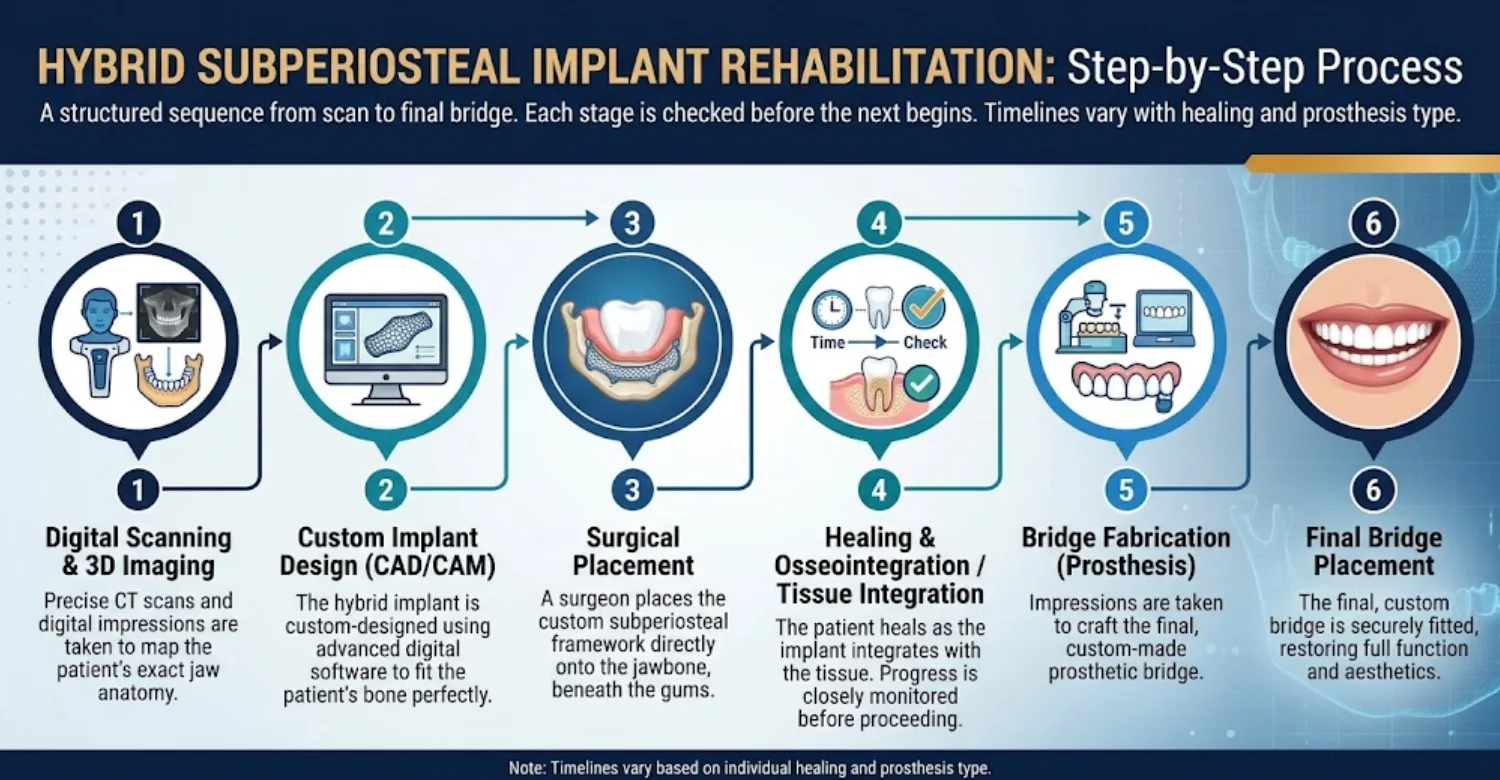
Step 1: Comprehensive Consultation and Diagnostic Assessment
The team reviews your history, scans, and current teeth. Your goals and concerns are discussed openly. A CBCT scan and intraoral scans are taken if needed. Any infections or gum problems are treated first. You receive an outline of suitable options.
Step 2: Digital Design of Patient-Specific Subperiosteal Implants
Engineers merge your scans into a 3D jaw model. The framework is designed to follow your bone surface. Screw positions are placed in stable bone areas. Posts are aligned with the planned teeth. The surgeon reviews and approves the design before manufacturing.
Step 3: Planning the Combination of Subperiosteal and Conventional Implants
Conventional implant positions are planned in the strongest bone zones. The framework is then adapted to work alongside them. Both are linked to one shared prosthesis plan. Surgical guides may be produced for accurate placement. This coordination is central to Hybrid Subperiosteal Implant Rehabilitation.
Step 4: Surgical Placement and Implant Fixation
Surgery is performed under local anaesthesia, often with sedation. The gum is opened to expose the bone surface. Conventional implants are placed first where planned. The framework is then seated and fixed with screws. The gum is closed carefully over the framework. One review reported mean surgery times of around 86 to 146 minutes.
Step 5: Fitting the Provisional or Definitive Dental Prosthesis
A provisional fixed bridge is often fitted within days of surgery. It allows soft eating and normal appearance during healing. The final bridge follows once gums and bone have settled. Materials may include zirconia, acrylic, or composite on a metal bar. Your dentist explains the choice for your bite.
Step 6: Bite Adjustment, Healing Assessment, and Follow-Up
The bite is checked and adjusted at each visit. Gum healing around each post is reviewed closely. X-rays or scans may be repeated over time. Early follow-up helps detect exposure or inflammation quickly. Regular maintenance continues for life.
How Long Does Hybrid Full-Mouth Implant Rehabilitation Take?
Planning and framework manufacturing may take several weeks. Surgery is usually completed in one session per arch. Healing before the final bridge often takes three to six months. Conventional implants may need extra healing time to integrate. Your timeline depends on your health and prosthesis plan.
Can Patients Receive Fixed Teeth During the Initial Treatment Phase?
Many patients receive fixed provisional teeth shortly after surgery. This depends on stability achieved during placement. A soft diet is required during the early weeks. If stability is limited, a removable option may be used temporarily. Your surgeon confirms this on the day of surgery.
What Are the Benefits and Limitations of Digitally Designed Subperiosteal Implants?
Digital design has changed how these implants are made and fitted. Older hand-made frameworks had higher complication rates. Modern versions are more precise but still need long-term study.
How Can Digital Planning Support Customized Jaw Rehabilitation?
Digital planning matches the framework to your exact bone surface. It helps avoid nerves, sinuses, and thin bone zones. Post positions follow the planned teeth for better function. Surgery may be shorter because much of the work is planned beforehand. Planning also improves communication between surgeon and laboratory.
Can Subperiosteal Implants Reduce the Need for Extensive Bone Grafting?
In selected patients, they can reduce or avoid large grafts. This may mean fewer surgeries and a shorter overall timeline. A 2025 review found 97.6% of implants were functional after a mean of 17 months. However, grafting remains the better choice for some anatomies. Your scan decides which path is safer.
How Can Hybrid Implant-Supported Rehabilitation Address Complex Jaw Anatomy?
Complex jaws often have uneven bone across different regions. A hybrid plan uses strong areas for conventional implants. The framework supports areas that cannot hold screws safely. This flexibility suits irregular defects after trauma or failed implants. Hybrid Subperiosteal Implant Rehabilitation adapts to anatomy rather than forcing one method.
What Are the Limitations of Current Evidence on Custom Subperiosteal Implants?
Most studies are small case series or case reports. One 2025 review included 24 articles, with 12 being case reports. Follow-up periods are usually short, often under three years. Study methods vary widely, which limits direct comparisons. More long-term, controlled research is still needed.
Why Are Long-Term Follow-Up and Careful Patient Selection Essential?
Soft-tissue problems may appear months or years after surgery. Regular reviews help catch exposure or inflammation early. Careful selection reduces the risk of these complications. Patients with poor hygiene or uncontrolled health risks may face higher failure rates. Follow-up is part of the treatment, not an optional extra.

What Side Effects Can Occur After Subperiosteal Implant Surgery?
Most side effects appear in the first days after surgery. A 2025 review reported pain in 25% and swelling in 24% of cases. These usually improve within one to two weeks.
Pain, Swelling, Bruising, and Temporary Difficulty Chewing
Swelling often peaks around day two or three. Bruising may spread to the cheeks or neck. Chewing feels awkward at first. A soft diet helps during this stage.
Bleeding, Gum Tenderness, and Postoperative Discomfort
Light oozing is common on the first day. Gums feel tender around the new posts. Discomfort usually responds to prescribed pain relief. Heavy or ongoing bleeding needs urgent review.
Temporary Changes in Speech and Oral Function
New teeth change how the tongue and lips move. Some sounds may feel unusual for a few weeks. Most patients adapt as swelling settles. Speech practice can help speed adjustment.
What Are the Potential Complications of Patient-Specific Subperiosteal Implants?
Complications are less common than side effects but need prompt attention. Many are manageable when found early.
Gum Recession, Wound Opening, and Framework Exposure
Exposure is the most frequently reported complication. The gum may pull back and reveal part of the framework. Small exposures are often managed with cleaning and monitoring. Larger exposures may need minor surgery or adjustment.
Infection and Persistent Soft-Tissue Inflammation
Bacteria can collect around posts and exposed areas. A narrative review reported infection in around 5% of patients. Ongoing inflammation, called mucositis, may also develop. Treatment includes professional cleaning and, sometimes, antibiotics.
Implant Loosening, Mechanical Problems, or Prosthesis Damage
Fixation screws can loosen over time. Bridges may chip, crack, or wear. Conventional implants may lose bone if overloaded or infected. Regular checks help detect these problems early.
Bite Imbalance and Excessive Loading on the Restoration
An uneven bite concentrates force on certain posts. Grinding increases stress on the whole system. This can damage the bridge or loosen components. Bite adjustments and night guards help reduce overload.
What Factors May Increase the Risk of Implant Complications?
Smoking is one of the strongest known risk factors. Smokers face roughly 2.4 times higher implant failure odds in pooled data. Diabetes, poor hygiene, and gum disease history also raise risk. Thin soft tissue and heavy grinding increase framework stress. Peri-implantitis affects about one in five implant patients overall.
How Can Patients Reduce the Risk of Postoperative Problems?
Stop smoking before and after surgery. Follow medication and cleaning instructions exactly. Keep to soft foods during early healing. Attend every scheduled follow-up appointment. Report any unusual symptoms promptly rather than waiting.
Which Warning Signs Require Urgent Dental or Medical Attention?
Some symptoms need prompt assessment. Do not wait for your next routine appointment.
Increasing Pain or Swelling After Initial Improvement
Pain should steadily ease after the first few days. Worsening pain may signal infection. New swelling after improvement also needs review. Contact your clinic the same day.
Persistent Bleeding, Pus, Fever, or Worsening Gum Inflammation
Bleeding that does not stop with pressure needs urgent care. Pus or a bad taste suggests infection. Fever may indicate a spreading problem. Seek prompt professional assessment.
Difficulty Swallowing or Breathing Requiring Emergency Medical Care
Swelling that affects swallowing or breathing is an emergency. Call emergency services or go to the nearest hospital immediately. Do not wait for a dental appointment. Inform the hospital about your recent surgery.
How Can Patients Find Relief After Hybrid Subperiosteal Implant Surgery?
Most discomfort is manageable with simple, guided steps. Your clinic's instructions should always come first. The tips below support, not replace, professional advice.
What Helps Relieve Normal Postoperative Pain and Swelling?
Take prescribed pain relief on schedule during the first days. Rest with your head slightly raised. Use cold compresses if your clinician recommends them. Eat soft, cool foods and drink plenty of water. Most patients feel steady improvement within the first week.
Which Medical Tips Can Support Recovery After Implant Surgery?
Simple habits support healing and comfort. Follow each tip only as advised by your treating team.
Follow the Prescribed Pain-Relief and Medication Instructions
Take medicines at the stated times and doses. Do not skip antibiotics if they were prescribed. Report side effects such as rash or stomach upset. Ask before adding any new medicine.
Use Cold Compresses if Recommended by the Treating Clinician
Cold packs may reduce swelling in the first 24–48 hours. Wrap ice in a cloth to protect the skin. Use short intervals with breaks between them. Follow your clinician's timing advice.
Choose Soft Foods and Maintain Adequate Hydration
Soups, yoghurt, eggs, and mashed foods are good early choices. Avoid very hot foods in the first days. Drink water regularly throughout the day. Good nutrition supports tissue healing.
Keep the Surgical Area Clean According to Professional Instructions
Rinse gently as instructed, usually from the day after surgery. Avoid brushing directly on wounds early on. Your clinic may recommend a specific mouth rinse. Gradually return to full cleaning as advised.
Which Activities Should Patients Avoid During Early Recovery?
Some habits can disturb healing or overload new teeth. Avoiding them protects your result.
Smoking and Nicotine Use
Nicotine reduces blood flow to healing tissue. It raises the risk of infection and exposure. Avoid smoking and vaping completely during healing. Ideally, stop permanently.
Strenuous Exercise During the Initial Recovery Period
Heavy exercise can increase bleeding and swelling. Rest for the first few days after surgery. Light walking is usually fine. Return to full exercise when your clinician agrees.
Hard, Crunchy, or Chewy Foods That May Overload the Restoration
Nuts, crusty bread, and tough meat can stress provisional teeth. Sticky foods may dislodge or damage components. Cut food into small pieces. Reintroduce harder foods gradually.
Can Patients Take Antibiotics or Anti-Inflammatory Medication After Surgery?
Many surgeons prescribe these after implant surgery. The choice depends on your health and the procedure. Some medicines interact with other drugs you take. Kidney, stomach, or bleeding conditions may limit options. Only take what your treating team prescribes.
Why Should Patients Avoid Self-Medicating or Changing Prescribed Doses?
Higher doses do not always mean better relief. Some painkillers can harm the stomach or kidneys. Stopping antibiotics early may encourage resistant bacteria. Mixing medicines can cause harmful interactions. Always ask your clinician before making changes.
When Is Postoperative Pain More Than Expected and Requires Assessment?
Pain that worsens after day three needs review. Severe pain not controlled by medication is a warning sign. Throbbing pain with swelling may suggest infection. Pain with fever or pus needs prompt care. Contact your clinic without delay.
What Is the Recovery Timeline After Hybrid Implant Rehabilitation?
Recovery after Hybrid Subperiosteal Implant Rehabilitation happens in stages over several months. Early symptoms settle within weeks, while tissue maturation takes longer. Your timeline may differ from other patients.
What Happens During the First 24–72 Hours After Surgery?
Swelling and discomfort are usually greatest during this period. Light bleeding may occur on the first day. Rest, cold compresses, and soft foods help. Take medicines as prescribed. Many patients return home with provisional teeth already fitted.
How Do the Gums Heal Around a Custom Subperiosteal Framework?
The gum closes over the framework within the first weeks. Stitches are usually removed or dissolved within one to two weeks. The tissue then matures around each post. This seal helps protect the framework from bacteria. Healthy, stable gums are essential for long-term success.
When Can Patients Resume Normal Eating, Speaking, and Daily Activities?
Most patients return to desk work within a few days. Speech often adapts within one to three weeks. A soft diet continues for several weeks. Firmer foods are added gradually as healing allows. Your clinician will guide each step.
When Is the Final Full-Arch Prosthesis Usually Fitted?
The final bridge is usually fitted after three to six months. This allows gums to stabilize and conventional implants to integrate. New scans are taken for precise fit. The bite is balanced carefully at delivery. Some cases need longer healing.
Why Does Recovery Differ Between Individual Patients?
Age, health, and smoking status affect healing speed. Bone quality and surgical extent also matter. Soft-tissue thickness influences how gums settle. Following instructions closely helps recovery stay on track. No two recoveries are exactly the same.
How Do Follow-Up Appointments Help Identify Early Complications?
Reviews allow the team to check gums, posts, and bites. Small exposures or inflammation can be treated early. Loose screws can be tightened before damage occurs. X-rays help monitor bone levels around conventional implants. Early action usually means simpler treatment.
Ready to transform your smile?
Talk to our team and get a personal FREE treatment plan.
How Can Patients Maintain Hybrid Subperiosteal Implants for Long-Term Oral Health?
Long-term success depends heavily on daily care. Professional maintenance adds another layer of protection. Hybrid Subperiosteal Implant Rehabilitation requires a lifelong partnership between patient and clinic.
How Should Patients Clean a Fixed Full-Arch Implant-Supported Prosthesis?
Brush twice daily with a soft brush. Clean carefully along the gumline and under the bridge. Use floss, threaders, or interdental brushes around each post. A water flosser can help reach hidden areas. Your hygienist will show you the best technique.
Which Oral Hygiene Tools Can Help Clean Around Implant Abutments?
Useful tools include:
Soft manual or electric toothbrushes.
Interdental brushes sized for your gaps.
Implant floss or super floss with stiff ends.
Water flossers for areas under the bridge.
Single-tuft brushes for tight spots.
How Often Should Patients Attend Implant Maintenance Appointments?
Most patients need maintenance visits every three to six months. Higher-risk patients may need more frequent visits. The first year often includes closer monitoring. Your clinician sets the schedule based on your health. Keeping these visits is essential.
Why Are Professional Cleaning and Clinical Monitoring Important?
Plaques can build up in places brushing cannot reach. A 2025 review found about one in five implant patients develop peri-implantitis. Nearly half develop peri-implant mucositis, an earlier reversible stage. Professional cleaning helps prevent progression. Monitoring catches problems before they become serious.
Can Smoking and Poor Oral Hygiene Affect Implant Rehabilitation Outcomes?
Yes, both strongly affect outcomes. Smoking raises infection and failure risk significantly. Poor hygiene allows bacteria to inflame tissues around posts. This can lead to exposure or bone loss. Good habits are among the most important factors you control.
What Should Patients Do if the Prosthesis Feels Loose or the Bite Changes?
Contact your clinic as soon as possible. Avoid chewing on the affected side. Do not try to tighten or adjust anything yourself. A loose screw is often simple to fix early. Delays can lead to more damage.
How Can Early Detection Help Manage Implant-Related Complications?
Early problems are often small and easy to treat. Mild inflammation may resolve with cleaning alone. Minor exposures can be managed before they spread. Mechanical issues can be fixed before parts break. Early detection protects both your health and your investment.
How Much Does Hybrid Subperiosteal Implant Rehabilitation Cost in the USA, UK, and Turkey?
The cost of Hybrid Subperiosteal Implant Rehabilitation varies by country, clinic, surgical complexity, and prosthetic materials. The tables below compare estimated costs per full arch, including the calculated midpoint for the USA and UK. These figures are planning estimates, not guaranteed quotes.
What Is the Average Cost of Custom Subperiosteal Implants per Full Arch?
United Kingdom
$41,275
Midpoint per full arch
Estimated range $25,400–$57,150
Midpoint $41,275
Turkey
From $6,000
Starting price per full arch
Estimated cost From ~$6,000
Starting price $6,000
United States
$37,500
Midpoint per full arch
Estimated range $25,000–$50,000
Midpoint $37,500
USA: Estimated Full-Arch Cost of 25,000–50,000
In the USA, custom subperiosteal implant rehabilitation may cost approximately 25,000–50,000 per arch. The final price depends on the specialist's fees, framework design, prosthesis material, and surgical complexity. Complex cases and premium restorations may increase the total.
UK: Estimated Full-Arch Cost of 25,400–57,150
In the UK, estimated full-arch costs range from approximately $25,400 to $57,150 when expressed in US dollars. Prices may vary by location, specialist expertise, and laboratory fees. NHS funding is not routinely available for this type of complex elective treatment, so patients should confirm their eligibility and payment options.
Turkey: Estimated Full-Arch Cost Starting at Approximately $6,000
In Turkey, full-arch treatment starts at approximately $6,000. This is a starting price rather than a fixed quote or national average. Your final cost depends on your clinical assessment, imaging, framework design, surgical requirements, and prosthetic plan. An itemised estimate should confirm which services are included.
How Do Average Full-Arch Subperiosteal Implant Costs Compare Across Countries?
United States
From $37,500
Estimated range
Minimum cost $25,000
Maximum cost $50,000
Midpoint $37,500
Final price Individual treatment plan
Turkey
From $6,000
Clinic starting price
Minimum cost From $6,000
Maximum cost Not specified
Midpoint Not applicable
Final price Individual treatment plan
United Kingdom
From $41,275
Estimated range in USD
Minimum cost $25,400
Maximum cost $57,150
Midpoint $41,275
Final price Individual treatment plan
These figures are indicative and may not represent directly equivalent treatment packages. Lower treatment prices in Turkey may reflect differences in operating costs, but patients should also account for flights, accommodation, follow-up visits, and aftercare.
What Factors Influence the Total Cost of Hybrid Implant Rehabilitation?
Cost Factor | How It Can Affect the Final Price |
Custom framework design and manufacturing | Personalised engineering, production, materials, and finishing affect the cost. |
Number of arches treated | Treating both jaws generally costs more than treating one arch. |
Combination of implant types | Adding conventional implants or other components changes the treatment cost. |
Surgical complexity | Extractions, infection management, soft-tissue procedures, and anaesthesia may add fees. |
Temporary teeth and definitive prosthetics | Provisional bridges and final restorations vary in material and laboratory cost. |
Diagnostic imaging and digital planning | CBCT scans, digital design, and surgical planning may be billed separately. |
Follow-up and aftercare | Adjustments, maintenance appointments, and additional visits may increase the total. |
Travel and accommodation | Flights, hotel stays, transfers, and time away from work affect the overall treatment budget. |
Does the Quoted Price Include the Complete Implant Rehabilitation?
Not always. Some quotes cover only surgery and framework placement, while others include temporary teeth and the definitive prosthesis. Ask whether imaging, anaesthesia, medications, follow-up visits, and adjustments are included. A written, itemised treatment estimate helps you identify potential additional charges.
Are Travel, Accommodation, and Additional Visits Included in Dental Tourism Packages?
Some dental tourism packages include hotel stays and airport transfers, while flights are usually charged separately. Full-arch treatment may require more than one visit, depending on healing, surgical planning, and prosthetic requirements. Confirm the expected number of trips, the treatment timeline, and the cost of additional visits before booking.
How Can Patients Compare Implant Rehabilitation Quotes Fairly?
What to Compare | Questions to Ask |
Treatment plan | Does the quote cover one arch or both? |
Framework | Is custom design and manufacturing included? |
Prosthetic teeth | Are temporary and final restorations included? |
Diagnostic services | Are scans and digital planning charged separately? |
Surgery | Are anaesthesia, extractions, and additional procedures included? |
Warranty and aftercare | What maintenance, adjustments, or complications are covered? |
Travel expenses | Are accommodation and transfers included? |
Additional fees | What circumstances could increase the final price? |
The key takeaway: Compare the complete treatment plan rather than the headline price. A lower starting price may not include the same surgical procedures, prosthetic materials, or aftercare as a higher-priced quote.
At Vitrin Cilinc Treatment Pricing
Subperiosteal implants are a specialist solution for patients with advanced bone loss who are not suitable candidates for conventional endosseous implants. As a custom-fabricated, digitally designed treatment, costs reflect the complexity of the CBCT imaging, CAD framework design, and surgical placement involved. The following table provides a transparent comparison of average costs across the United Kingdom, United States, and Vitrin Clinic in Istanbul allowing patients to evaluate this treatment option with accurate financial context before their consultation.
United Kingdom
From $3,175
Subperiosteal implants
Single implantCustom framework, per unit $3,175–$5,715
Partial arch2–4 posterior teeth $7,620–$15,240
Full archFixed restoration, per arch $25,400–$57,150
CBCT & CAD design Extra
Consultation Extra
Turkey
From $1,000
Up to 70% less
Single implantCustom framework, per unit From $1,000
Partial arch2–4 posterior teeth From $3,000
Full archFixed restoration, per arch From $6,000
CBCT & CAD design Included
Consultation Free
United States
From $4,000
Subperiosteal implants
Single implant Custom framework, per unit $4,000–$6,000
Partial arch2–4 posterior teeth $10,000–$20,000
Full archFixed restoration, per arch $25,000–$50,000
CBCT & CAD design Extra
Consultation Extra






What Should Patients Know Before Choosing Hybrid Subperiosteal Implant Rehabilitation?
Hybrid Subperiosteal Implant Rehabilitation is a major decision with long-term effects. Good preparation helps you choose safely and confidently. Ask questions until you feel fully informed.
Which Questions Should Patients Ask Their Implant Specialist?
Ask why this option suits you over alternatives. Ask how many similar cases the team has completed. Ask about expected complications and how they are managed. Ask what happens if the framework needs removal. Ask about long-term maintenance and costs.
How Can Patients Evaluate a Clinician's Experience With Custom Subperiosteal Implants?
Ask about training and years of experience with these frameworks. Request before-and-after cases with similar anatomy. Ask which design and manufacturing partners they use. Check whether they discuss limitations openly. Honest clinicians explain risks as clearly as benefits.
What Records Should Patients Request Before Starting Treatment?
Request copies of your CBCT scan and digital plan. Ask for a written treatment plan and itemised quote. Keep consent forms and warranty documents. Ask for implant and framework component details. These records help any future dentist treat you safely.
How Can Patients Plan Follow-Up Care After Returning Home From Dental Treatment Abroad?
Find a local dentist willing to provide maintenance before you travel. Share your records and treatment details with them. Agree how remote reviews will work with the treating clinic. Know who to contact if problems arise. Plan return visits for the final bridge.
Why Should Patients Understand Both the Benefits and the Limitations Before Consent?
Informed consent protects your health and your expectations. Benefits matter, but so do risks and evidence gaps. Patients who understand limitations are often better prepared for maintenance. Clear knowledge helps you spot problems early. A good decision balances hope with realism.
Ready to transform your smile?
Talk to our team and get a personal FREE treatment plan.
Tips for Patients Considering Hybrid Subperiosteal Implant Rehabilitation
Preparation makes treatment smoother and safer. These practical tips help you plan each stage. They also help you assess any clinic you consider.
What Should Patients Prepare Before Their Initial Consultation?
Gather any previous X-rays or CBCT scans. Bring a list of medicines and medical conditions. Write down your main goals and concerns. Note past dental treatments and any failed implants. Photos of your current smile can also help.
Which Medical Conditions and Medications Should Patients Disclose?
Disclose diabetes, heart conditions, and bleeding disorders. Mention any bone medications, including osteoporosis treatments. Report radiotherapy to the head or neck. Include smoking, vaping, and alcohol use honestly. Full disclosure helps the team keep you safe.
What Should Patients Ask About Implant Materials, Design, and Prosthetic Options?
Ask what material the framework is made from. Ask how the design was checked for fit. Ask about provisional and final bridge materials. Ask how easy the bridge will be to clean. Ask about repair options if parts wear or break.
How Can Patients Prepare for Recovery and Arrange Support After Surgery?
Arrange someone to accompany you on surgery day. Stock up on soft foods and drinks. Plan a few days off work. Prepare ice packs and pillows for rest. Keep your clinic's emergency number easy to find.
What Should International Patients Confirm About Aftercare and Emergency Support?
Confirm who handles emergencies after you return home. Ask whether remote consultations are available. Clarify costs for extra visits or repairs. Check warranty terms and what voids them. Get all agreements in writing.
How Can Patients Recognize Unrealistic Promises About Implant Success or Recovery?
Be cautious of guaranteed lifetime results. Watch for claims of painless surgery with no recovery. Avoid clinics that skip CBCT scans or detailed planning. Be wary of pressure to book quickly. Honest clinics discuss risks openly.
At Vitrin Clinic: Exploring Personalized Options for Severe Jawbone Loss
Vitrin Clinic assesses every complex case individually. The team considers all suitable options, not only one technique. Hybrid Subperiosteal Implant Rehabilitation is offered only when it fits your needs.
How Does Vitrin Clinic Assess Patients With Insufficient Jawbone for Conventional Implants?
The assessment starts with your history and existing records. A clinical exam reviews gums, bite, and current prostheses. CBCT imaging maps your bone in three dimensions. The team then compares all suitable options. You receive a clear explanation of each choice.
How Can CBCT Imaging Support Individualized Implant Treatment Planning?
CBCT imaging shows bone volume, density, and surface shape. It identifies nerves and sinuses that must be protected. It shows where conventional implants can be placed safely. It also provides data for framework design. Accurate imaging is the basis of safe planning.
How Are Subperiosteal Implant Options Evaluated for Complex Full-Arch Rehabilitation?
The team checks whether a framework offers clear benefits. Bone shape, soft-tissue thickness, and hygiene are reviewed. Alternatives such as grafting or zygomatic implants are compared. The final choice balances function, risk, and long-term maintenance. Your preferences are part of this discussion.
How Does the Clinical Team Consider Oral Health, Jaw Anatomy, and Prosthetic Requirements?
The team reviews gum health before any surgery is planned. Jaw anatomy guides implant types and positions. Prosthetic needs shape the final design from the start. Bite forces are considered to protect the restoration. All three areas are planned together.
What Should Patients Discuss During a Personalized Implant Consultation?
Discuss your goals, concerns, and past dental experiences. Ask about every suitable option for your case. Discuss timelines, travel plans, and recovery needs. Ask about expected limitations and maintenance. Share any medical updates or medication changes.
How Can Patients Request a Treatment Plan and Itemized Cost Estimate?
Contact Vitrin Clinic and share your existing scans or X-rays. The team reviews your records and may request a new CBCT. You then receive a proposed plan with an itemised estimate. Each stage and its cost are listed clearly. You can ask questions before making any commitment.
Book your consultation at Vitrin Clinic and receive a personalized treatment plan.
How Vitrin Clinic Supports Your Treatment Journey
Treatment abroad needs clear coordination at every stage. Vitrin Clinic supports patients from first contact to long-term follow-up. Hybrid Subperiosteal Implant Rehabilitation is planned with travel and aftercare in mind.
How Can Patients Begin With a Remote Consultation?
You can start by sending photos and existing scans online. The team reviews them and arranges a video or phone call. You discuss your goals and possible options. This helps you decide before planning travel. Remote review saves time and cost.
How Are Medical Records and Existing Dental Imaging Reviewed?
Your records are reviewed by the clinical team. Previous scans help assess bone loss and past treatment. Medical history is checked for healing risks. Missing information is requested before planning continues. A new CBCT may be needed for framework design.
How Does the Team Coordinate Diagnostic Assessment and Personalized Treatment Planning?
Surgeons, prosthetic dentists, and technicians review each case together. Scan data is shared across the team. The plan is designed around your final teeth. Each step is scheduled to fit your travel dates. You receive a clear timeline in advance.
How Are Treatment Options and Expected Limitations Explained Before Surgery?
The team explains each option in plain language. Benefits and risks are discussed openly. Evidence gaps are also explained clearly. You receive written information to review at home. Questions are welcome before consent.
How Can International Patients Coordinate Appointments and Treatment Logistics?
The team helps schedule appointments around your travel. Patients receive guidance on stay length and visit timing. Accommodation and transfer arrangements can be discussed directly with the clinic. Return visits are planned in advance. Clear communication reduces stress during treatment.
How Is Follow-Up Arranged to Monitor Healing and Prosthetic Function?
Follow-up begins before you leave Turkey. The team checks gums, bites, and provisional teeth. Remote reviews may continue after you return home. Return visits are scheduled for the final bridge. Long-term checks continue as part of your plan.
What Should Patients Arrange With a Local Dentist After Returning Home?
Find a local dentist for routine maintenance visits. Share your treatment records and plan details. Agree on hygiene appointments every three to six months. Ask them to contact the Vitrin Clinic with concerns. Shared care protects your long-term result.
Ready to transform your smile?
Talk to our team and get a personal FREE treatment plan.
Key Takeaways About Hybrid Subperiosteal Implant Rehabilitation
Hybrid Subperiosteal Implant Rehabilitation can offer fixed teeth for selected patients with severe bone loss. It is not a universal solution. Careful selection, planning, and maintenance determine success.
What Patients Should Understand About Treatment Suitability
Suitability depends on bone, gums, health, and hygiene. Some patients benefit greatly from a hybrid plan. Others are better served by grafting or alternative implants. A full assessment is the only way to know. Honest advice protects your health.
Why Individualized Diagnosis and Digital Planning Matter
Every jaw has a unique shape and bone pattern. CBCT scans and 3D planning reveal these details. Digital design allows a precise, patient-specific fit. Planning the teeth first improves function and cleaning access. Good planning reduces surgical guesswork.
What Patients Should Know About Alternatives to Bone Grafting
Graftless options include angled, zygomatic, and subperiosteal implants. Each suits different anatomy and health profiles. Grafting remains the best choice for some patients. Hybrid Subperiosteal Implant Rehabilitation is one option among several. Compare evidence, timelines, and costs carefully.
Why Side Effects, Warning Signs, and Long-Term Maintenance Matter
Pain and swelling are common early side effects. Exposure and inflammation are the main reported complications. Warning signs need prompt assessment. Maintenance visits every three to six months help protect results. Daily hygiene is equally important.
How to Compare Treatment Costs and Request a Personalized Assessment
Compare full itemised quotes, not just headline prices. Include travel, aftercare, and maintenance costs. USA and UK estimates often exceed $25,000 per arch. Vitrin Clinic in Turkey starts from approximately $6,000 per arch. Request an assessment to receive your personal plan.
How Does Vitrin Clinic Approach Hybrid Subperiosteal Implant Rehabilitation?
As part of our Dental Implant Treatment, Vitrin Clinic evaluates each patient's jawbone condition and oral health to determine whether Hybrid Subperiosteal Implant Rehabilitation is suitable. A personalized plan considers clinical needs, prosthetic goals, and long-term maintenance.
Ready to Explore Your Dental Implant Options? Contact Vitrin Clinic for your FREE treatment plan .
Reference
FAQs
Dr. Rifat Alsaman has more than 5 years of clinical experience in dentistry and currently serves as the Head of the Medical Team at Vitrin Clinic. He is dedicated to providing exceptional patient care, overseeing treatment planning, and ensuring the highest clinical standards across the team. His expertise, attention to detail, and commitment to continuous professional development have helped countless patients achieve healthier, more confident smiles.


