Endodontie
June 3, 2026
Was verursacht eine Zahnpulpa-Nekrose und wie kann man sie behandeln?
 Dr. Rifat Alsaman
Das Verständnis der Gesundheit der Pulpa ist entscheidend für den Erhalt eines funktionsfähigen Lächelns. In der Vitrin Clinic haben wir uns darauf spezialisiert, die Ursachen für das Absterben des lebenden Gewebes in Ihrem Zahn zu identifizieren. Eine Nekrose tritt auf, wenn die Zahnpulpa stirbt. Dies ist die innerste Schicht, die Nerven und Blutgefäße enthält. Trauma oder Infektionen sind meist die Ursache dafür. Dieser Prozess kann schmerzlos oder extrem schmerzhaft verlaufen. Eine umgehende Behandlung umfasst die Entfernung des abgestorbenen Gewebes. Zudem muss die Infektion bekämpft werden, um die natürliche Zahnstruktur zu erhalten. Eine frühzeitige Intervention in der Vitrin Clinic hilft Ihnen, systemische Komplikationen und Knochenverlust zu vermeiden.
Zahnnekrose verstehen: Die Grundlagen
Die Zahnnekrose markiert das Endstadium einer Entzündung der Zahnpulpa. Wenn Menschen nach der Bedeutung der Zahnpulpa fragen, beziehen sie sich auf die Lebensquelle des Zahns. Wenn diese Versorgung unterbrochen wird, wird der Zahn nekrotisch. In der Vitrin Clinic konzentrieren wir uns auf den Bereich der Endodontie und Pulpaheilkunde. Wir stellen sicher, dass Patienten verstehen, dass ein abgestorbener Zahn nicht nur ein kosmetisches Problem ist. Es handelt sich um ein biologisches Versagen in der Pulpenhöhle. Es erfordert professionelle medizinische Behandlung, um die Ausbreitung von Bakterien zu verhindern. Ein versehentliches Trauma oder tiefe Karies können zu einer schmerzhaften Freilegung der Zahnpulpa führen.
Was ist eine Zahnnekrose?
Um die Nekrose der Zahnpulpa zu definieren, muss man den Stillstand des Blutflusses betrachten. Im Wesentlichen ist es das Absterben der Zahnpulpa innerhalb der Pulpenhöhle des Zahns. Sobald das Gewebe stirbt, kann es keine Immunantwort mehr gegen Bakterien aufbauen. Dies führt zu einem Milieu in der Pulpenhöhle, in dem sich Infektionen ausbreiten. In der Vitrin Clinic erklären wir, dass der harte Zahnschmelz intakt bleibt, die interne Pulpaanatomie des Zahns jedoch ihre Funktion eingestellt hat. Das bedeutet, dass ein sofortiges klinisches Eingreifen erforderlich ist.
Wie entwickelt sich abgestorbene Zahnpulpa?
Die Entwicklung abgestorbener Zahnpulpa folgt gewöhnlich einem vorhersehbaren Ablauf des Verfalls. Sie beginnt mit einer reversiblen Pulpitis, bei der die Zahnpulpa gereizt ist, sich aber noch erholen kann. Hält die Reizung an, wird sie irreversibel. Schließlich wird die Blutversorgung im Wurzelkanal unterbrochen. Ohne Sauerstoff und Nährstoffe stirbt das Gewebe ab (Nekrose). Die Experten der Vitrin Clinic weisen darauf hin, dass dieser Übergang nach einer schweren Verletzung sehr schnell erfolgen kann. Oder er geschieht langsam durch tiefe, unbehandelte Zahnkaries. Die Entzündung dieses Gewebes führt direkt zur Frage von reversibler vs. irreversibler Pulpitis.
Häufige Ursachen für Pulpazerfall
Der Hauptauslöser für den Zerfall der Pulpa ist das Eindringen von Bakterien. Wenn Karies die inneren Schichten erreicht, ernähren sich Bakterien vom organischen Material. Weitere Ursachen sind physische Traumata. Ein Trauma kann die Blutgefäße an der Wurzelspitze durchtrennen. Auch wiederholte zahnärztliche Eingriffe am selben Zahn sind eine Ursache. Sobald die Pulpenkammer beschädigt ist, steigt das Risiko einer Nekrose drastisch an. Die Vitrin Clinic betont, dass selbst kleinste Risse Krankheitserregern den Zugang zur empfindlichen Pulpaanatomie ermöglichen können.
Warnzeichen einer Zahnnekrose erkennen
Das frühzeitige Erkennen von Anzeichen einer Pulpafreilegung oder des Absterbens der Pulpa kann Ihren Zahn retten. Viele Patienten fragen sich, ob die Pulpa Warnsignale sendet. Ja, das tut sie. Allerdings kann ein nekrotischer Zahn manchmal täuschen. Abgestorbene Nerven senden keine Schmerzsignale mehr. Die Vitrin Clinic rät Patienten, auf subtile Veränderungen im Gefühl und Aussehen ihrer Zähne zu achten. Das Erkennen dieser Veränderungen ermöglicht konservativere Behandlungen, bevor sich die Infektion auf den umliegenden Kieferknochen ausbreitet. Wenn dieses vitale Gewebe stirbt, zeigen Patienten typische Symptome einer Zahnnekrose.
Frühe Symptome, auf die Sie achten sollten
Frühe Warnzeichen äußern sich häufig in extremer Temperaturempfindlichkeit. Wenn Sie nach dem Trinken von kaltem Wasser einen anhaltenden Schmerz spüren, könnte Ihre Zahnpulpa geschädigt sein. Möglicherweise bemerken Sie auch einen lokalisierten schlechten Geschmack oder Geruch. Dies kann auf eine Infektion in der Pulpenhöhle hinweisen. In der Vitrin Clinic erklären wir Patienten, dass auch "stumme" Symptome wichtig sind. Ein leichtes Nachlassen des Zahnglanzes ist ein Beispiel dafür. Dies sind die ersten Anzeichen dafür, dass die Pulpenkammer unter erheblichem biologischen Stress steht.
Schmerzmuster und Veränderungen der Empfindlichkeit
Schmerzen im Zusammenhang mit der Pulpenhöhle verändern sich oft mit dem Fortschreiten der Nekrose. Anfänglich treten scharfe, akute Schmerzen auf, während die Nerven absterben. Ist die Zahnpulpa vollständig nekrotisch, kann der Schmerz ganz verschwinden. Das ist ein gefährliches Zeichen. Später kann ein anderer, pochender Schmerz entstehen, wenn sich in der Pulpenhöhle Druck aufbaut. Die Spezialisten der Vitrin Clinic erklären, warum das passiert: Gase und Eiter der Infektion werden in der starren Pulpenkammer eingeschlossen.
Visuelle Anzeichen: Verfärbungen und Schwellungen
Ein abgestorbener Zahn verfärbt sich häufig grau, gelblich oder dunkelbraun. Dies geschieht, wenn die sich zersetzende Zahnpulpa in das poröse Dentin einsickert. Eine Schwellung am Zahnfleischrand ist ein weiteres Zeichen, ebenso wie das Auftreten eines Abszesses. Beides signalisiert, dass die Infektion den Wurzelkanal verlassen hat und in das Weichgewebe eingedrungen ist. In der Vitrin Clinic nutzen wir diese visuellen Merkmale, um das Ausmaß des Schadens schnell einzuschätzen. Ist der Nerv nur leicht freigelegt, kann eine Überkappung der Zahnpulpa ihn oft retten.
Wann Sie einen Zahnarzt aufsuchen sollten
Sie sollten sofort einen Zahnarzt aufsuchen, wenn Sie spontane Schmerzen oder deutliche Verfärbungen bemerken. Zu warten, bis sich ein Abszess bildet, macht die Behandlung komplexer. In der Vitrin Clinic empfehlen wir eine Untersuchung nach jedem Gesichtstrauma. Dies gilt auch dann, wenn der Zahn nicht abgebrochen ist. Schäden an der radikulären Pulpa können intern auftreten, ohne dass sichtbare Risse vorhanden sind. Eine frühzeitige Beratung hilft, die Anatomie der Zahnpulpa zu erhalten und die Infektion einzudämmen.
Diagnostische Ansätze in der modernen Zahnmedizin
Moderne Endodontie stützt sich auf eine Kombination aus Technologie und klinischer Erfahrung. In der Vitrin Clinic überlassen wir nichts dem Zufall. Wir nutzen präzise Messwerte, um die Gesundheit Ihrer Zahnpulpa zu bestimmen. Um festzustellen, ob ein Zahn noch lebt oder abgestorben ist, muss man in die Pulpenkammer blicken. Verschiedene diagnostische Verfahren machen dies möglich. Diese Phase ist entscheidend: Sie bestimmt, ob eine einfache Füllung ausreicht oder ob eine intensivere Behandlung der Pulpenhöhle erforderlich ist.
Klinische Untersuchungsmethoden
Während einer klinischen Untersuchung in der Vitrin Clinic führen wir Perkussions- und Palpationstests durch. Durch leichtes Beklopfen des Zahns können wir feststellen, ob sich die Entzündung über die Zahnpulpa hinaus auf den Zahnhalteapparat ausgebreitet hat. Wir prüfen auch die Zahnbeweglichkeit und eventuellen Zahnfleischrückgang, da beides die radikuläre Pulpa freilegen kann. Diese manuellen Prüfungen liefern uns eine fundierte Basis zum Zustand der Pulpa und helfen uns bei der Erstellung Ihres Behandlungsplans.
Bildgebung und Röntgenaufnahmen für die Pulpagesundheit
Digitales Röntgen ist unerlässlich zur Beurteilung der Pulpenhöhle. Da die Zahnpulpa selbst aus Weichgewebe besteht, ist sie nicht direkt sichtbar. Wir können jedoch dunkle Schatten an der Wurzelspitze erkennen, die auf eine Infektion hinweisen. Röntgenbilder ermöglichen es uns, den Wurzelkanal auf Blockaden oder Verengungen zu untersuchen. Die Vitrin Clinic verwendet bei jedem Fall hochauflösende Bildgebung. So wird sichergestellt, dass vor Beginn eines Eingriffs jeder Winkel der Pulpaanatomie berücksichtigt wird. Die Erforschung und Behandlung dieses inneren Gewebes definiert, was Endodontie in der Zahnmedizin bedeutet.
Pulpavitalitätstests erklärt
Um die Frage zu beantworten "Haben Zähne Pulpa, die noch lebt?", nutzen wir Vitalitätstests. Dazu gehören thermische Tests mit Kälte oder Wärme sowie elektrische Pulpatests. Ein Zahn mit gesunder Pulpa reagiert auf den Reiz. Ein nekrotischer Zahn spürt nichts. In der Vitrin Clinic werden diese Tests mit hoher Präzision durchgeführt, um Exaktheit zu gewährleisten. Die Überprüfung der Pulpahörner und der Nervenreaktion ist der sicherste Weg, um zu bestätigen, ob die Zahnpulpa tatsächlich abgestorben ist.
Behandlungsoptionen für nekrotische Zähne
Sobald eine Nekrose in der Pulpenkammer bestätigt ist, muss gehandelt werden. Abgestorbenes Gewebe darf nicht in einem lebenden Körper verbleiben. Die Vitrin Clinic bietet je nach Ausmaß des Zerfalls verschiedene Behandlungswege an. Dazu gehört die Erhaltung des Zahns durch fortschrittliche Endodontie ebenso wie eine saubere Extraktion. Unser Ziel ist es immer, Ihre Mundgesundheit wiederherzustellen. Wir bevorzugen die konsistent schonendsten Methoden, um die Funktionsfähigkeit der Zahnpulpaanatomie so lange wie möglich zu erhalten.
Wurzelkanalbehandlung: Schritt für Schritt
Die Wurzelkanalbehandlung ist der Goldstandard bei der Behandlung eines Zahns mit abgestorbener Pulpa. Zuerst verschaffen wir uns Zugang zur Pulpenkammer und entfernen das infizierte Gewebe. Anschließend wird der Wurzelkanal gereinigt und desinfiziert, um alle Bakterien zu abzutöten. Schließlich wird die leere Pulpenhöhle mit einem biokompatiblen Material namens Guttapercha gefüllt. Die Vitrin Clinic stellt sicher, dass dieser Prozess schmerzfrei verläuft. Er versiegelt den Zahn und verhindert das künftige Eindringen von Bakterien in die empfindliche Pulpaanatomie.
Überkappung und Pulpaerhaltung
Wenn die Zahnpulpa freigelegt, aber noch gesund ist, können wir eine Pulpaüberkappung durchführen. Dabei wird ein medikamentöses Material auf die freigelegte Stelle aufgetragen. Es regt den Zahn an, sich selbst zu heilen. Dies ist ein wichtiger Teil der Endodontie, der darauf abzielt, eine vollständige Wurzelkanalbehandlung zu vermeiden. In der Vitrin Clinic verwenden wir bioinduktive Materialien, die die Zahnpulpa stimulieren. Dadurch entsteht eine neue Dentinschicht, die die Pulpahörner schützt und die Vitalität des Zahns erhält.
Zahnextraktion: Wann sie notwendig wird
Manchmal ist der Schaden an der Pulpenhöhle zu schwerwiegend oder die Zahnstruktur zu schwach, um eine Wiederherstellung zu tragen. In diesen Fällen ist die Extraktion die sicherste Option. Sie verhindert, dass sich die Infektion auf den Kiefer ausbreitet. Die Chirurgen der Vitrin Clinic führen Extraktionen mit größter Sorgfalt durch. Nach der Entfernung des Zahns besprechen wir Ersatzoptionen wie Implantate. Dies schließt die Lücke und erhält Ihre Gesichtsstruktur sowie die Kufunktion.
Innovative Materialien und Techniken in der Endodontie
Die Vitrin Clinic ist führend in der Zahnmedizin. Wir verwenden biokeramische Sealer und maschinelle Endodontie. Diese Materialien verbinden sich besser mit den Wänden der Pulpenhöhle. Dies bietet einen hervorragenden Schutz gegen Bakterien. Unsere Mikroskoptechnologie ermöglicht uns tiefen Einblick in den Wurzelkanal. So werden keine verborgenen Seitenkanäle der radikulären Pulpa übersehen. Dieser hochmoderne Ansatz erhöht die Erfolgsquote von Behandlungen selbst bei komplexen Fällen der Zahnpulpaanatomie.
Vorteile einer umgehenden Behandlung
Die sofortige Behandlung von Problemen der Zahnpulpa bietet Vorteile, die weit über die Schmerzlinderung hinausgehen. Indem Sie die Zahnpulpa behandeln lassen, sobald Symptome auftreten, sparen Sie Zeit, Geld und bewahren Ihr natürliches Lächeln. Die Vitrin Clinic betont, dass "Abwarten und Beobachten" bei Pulpazerfall niemals eine gute Strategie ist. Schnelles Handeln stoppt den biologischen Countdown des Zahnverlusts. Unsere Patienten machen die Erfahrung, dass eine frühe Intervention zu schnelleren Heilungszeiten führt. Zudem bringt sie wesentlich vorhersehbarere Langzeitergebnisse für die allgemeine Mundgesundheit.
Infektionen und weiteren Verfall verhindern
Ein Zahn mit nekrotischer Pulpa ist ein Nährboden für Bakterien. Wird die Infektion nicht behandelt, kann sie zu einem schmerzhaften Abszess führen. Sie kann sogar systemische Gesundheitsprobleme wie eine Sepsis verursachen. Durch das Reinigen der Pulpenkammer und das Versiegeln des Wurzelkanals beseitigen wir die Infektionsquelle. Die proaktiven Behandlungen der Vitrin Clinic verhindern, dass die Karies auf benachbarte Zähne übergreift oder den umliegenden Knochen schädigt, wodurch Ihr gesamter Mundraum geschützt bleibt.
Erhalt der natürlichen Zahnstruktur
Nichts funktioniert so gut wie Ihr eigener Zahn. Die Behandlung der Zahnpulpa durch eine Wurzelkanalbehandlung anstelle einer Extraktion erhält die natürliche Stimulation Ihres Kieferknochens. Dies beugt dem Knochenabbau vor, der häufig auf einen Zahnverlust folgt. In der Vitrin Clinic widmen wir uns dem Erhalt des anatomischen Gerüsts der Zahnpulpa. Der Erhalt Ihres natürlichen Zahns hilft, Ihre Bissstellung beizubehalten und verhindert, dass sich andere Zähne in die Lücke verschieben.
Erwartete Ergebnisse: Vorher und Nachher
Patienten kommen oft mit starken Beschwerden aufgrund von Pulpazerfall in die Vitrin Clinic. Nach der Behandlung zeichnet sich das "Danach" durch eine vollständige Schmerzfreiheit aus. Der Zahn wird wieder voll funktionsfähig. Optisch kann eine Krone das Erscheinungsbild eines durch Pulpanekrose nachgedunkelten Zahns wiederherstellen. Das langfristige Ergebnis ist ein gesunder Mund, in dem die Pulpenhöhle kein Risiko mehr darstellt. Die meisten Patienten berichten von einer massiven Verbesserung ihrer Lebensqualität und ihres Selbstbewusstseins.
Zahnpflegetipps zum Schutz Ihrer Zahnpulpa
Prävention ist die beste Form der Endodontie. Der Schutz der Zahnpulpa umfasst mehr als nur Zähneputzen. Er erfordert einen ganzheitlichen Ansatz für Mundhygiene und Lebensstil. In der Vitrin Clinic glauben wir daran, Patienten das Wissen zu vermitteln, um ihre Zahnpulpa gesund zu halten. Die Anatomie der Zahnpulpa liegt tief im Inneren. Daher müssen Sie die äußeren Schichten des Zahns schützen. So bleibt das innere Gewebe Ihr Leben lang steril und vital.
Tägliche Mundhygiene-Praktiken
Um die Zahnpulpa zu schützen, müssen Sie den Zahnschmelz intakt halten. Zweimal tägliches Zähneputzen mit Fluoridzahnpasta und tägliche Zahnseide verhindern Wechselwirkungen von Karies und Pulpa, die zu Nekrosen führen. Konzentrieren Sie sich auf den Zahnfleischrand, wo Bakterien eindringen und die radikuläre Pulpa beeinträchtigen können. Die Vitrin Clinic empfiehlt eine Zahnbürste mit weichen Borsten. Dies verhindert das Abtragen des Zahnschmelzes – des primären Schutzschilds für die Pulpenkammer und die darin liegenden Nerven.
Ernährung und Lebensstil
Zucker ist der Feind der Zahnpulpa. Hoher Zuckerkonsum nährt säureproduzierende Bakterien, die Pulpazerfall verursachen. Auch Lebensgewohnheiten wie Rauchen spielen eine Rolle. Rauchen verringert die Durchblutung des Zahnfleisches, was die Gesundheit der Pulpaanatomie schädigen kann. Die Vitrin Clinic rät zu einer kalzium- und vitaminreichen Ernährung zur Stärkung der Zähne. Das Tragen eines Mundschutzes beim Sport ist ebenfalls entscheidend. Es verhindert Traumata, die die Blutversorgung des Wurzelkanals unterbrechen könnten.
Vorsorgeuntersuchungen und frühes Eingreifen
Regelmäßige Besuche in der Vitrin Clinic ermöglichen es uns, winzige Risse oder frühe Karies zu erkennen, bevor sie die Zahnpulpa erreichen. Wir nutzen diagnostische Werkzeuge, um die Pulpenhöhle von zuvor verletzten Zähnen zu überwachen. Ein Problem zu erkennen, solange es sich noch im Zahnschmelz oder Dentin befindet, ist viel einfacher. Die Behandlung einer voll ausgeprägten Infektion der Zahnpulpa ist weit schwieriger. Vorsorge ist der kosteneffizienteste Weg, um den Schmerzen einer Nekrose vorzubeugen.
Patientenaufklärung: Ihre Pulpagesundheit verstehen
Informierte Patienten treffen bessere Entscheidungen für ihr Lächeln. Das Verständnis der zahnmedizinischen Fachbegriffe rund um die Pulpa hilft Ihnen zu verstehen, was während Ihres Termins geschieht. In der Vitrin Clinic nehmen wir uns die Zeit, die Anatomie der Zahnpulpa zu erklären. Auf diese Weise sind Sie nicht nur ein passiver Teilnehmer Ihrer Behandlung. Wenn Sie die Funktion der Pulpenkammer und die Risiken einer Freilegung verstehen, ist es wahrscheinlicher, dass Sie den Gewohnheiten Priorität einräumen, die Ihre Zähne am Leben erhalten.
Was ist die Pulpa und warum ist sie wichtig?
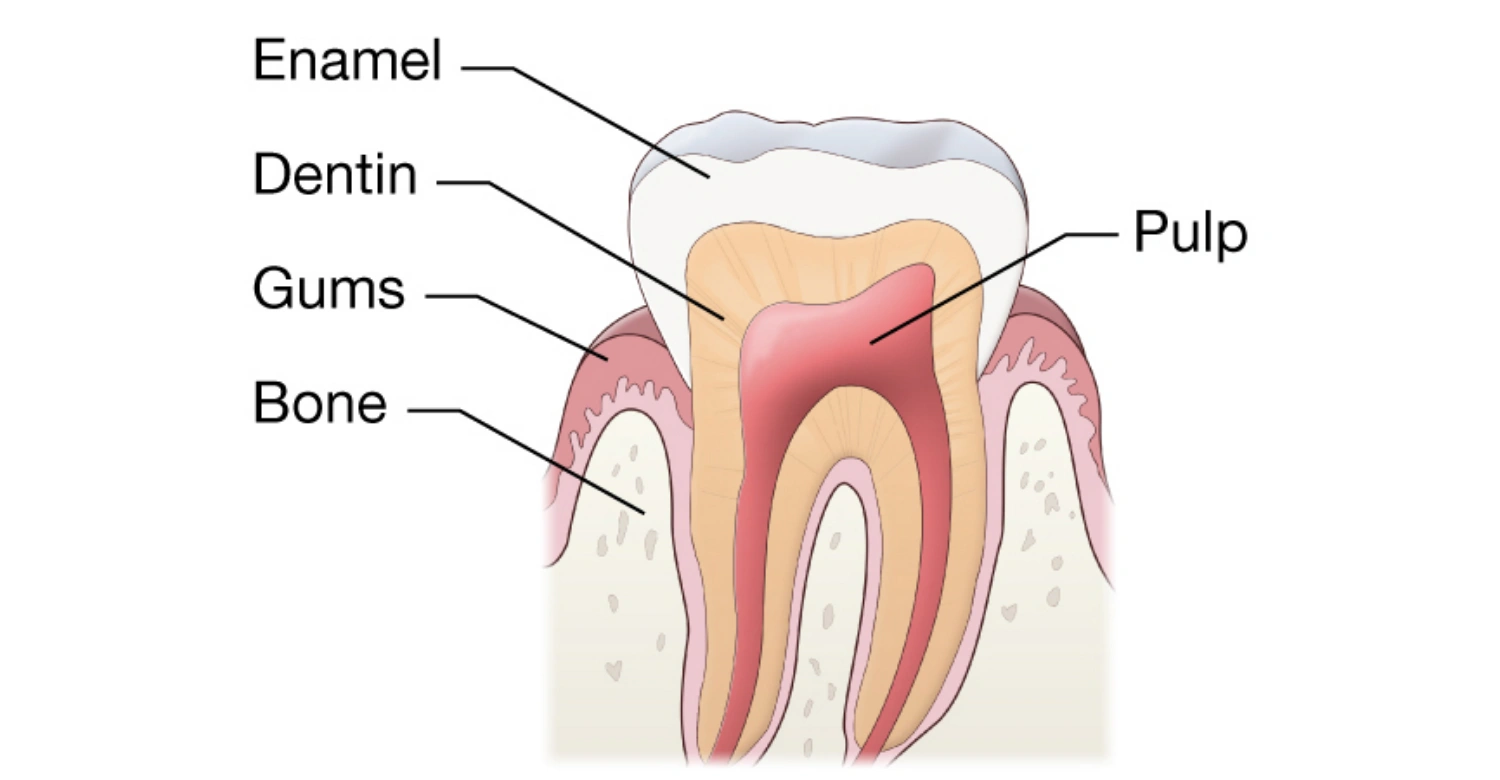
Wenn man fragt "Was ist die Pulpa der Zähne?", kann man sie sich als das Herz des Zahns vorstellen. Sie besteht aus Nerven, Blutgefäßen und Bindegewebe. Ihre Hauptaufgabe ist die Bildung von Dentin während der Zahnentwicklung. Zudem sorgt sie für sensorische Rückmeldungen. Ohne die Zahnpulpa wird ein Zahn spröde. Die Vitrin Clinic betont, dass die Zahnpulpa es Ihnen ermöglicht, Temperatur und Druck wahrzunehmen. Sie dient als frühes Warnsystem für Ihren gesamten Körper.
Pulpaanatomie: Kammern, Kanäle und Hörner
Die Anatomie der Zahnpulpa ist komplex. Die Pulpenkammer liegt in der Zahnkrone. Der Wurzelkanal erstreckt sich hinab in die Wurzeln. Die Pulpahörner sind Ausläufer der Kammer, die in Richtung der Kaufläche reichen. Das Verständnis dieser Strukturen ist entscheidend, da Bakterien über jede dieser Zonen eindringen können. Spezialisten der Vitrin Clinic nutzen dieses anatomische Wissen, um Behandlungen gezielt auszurichten. Jeder Teil der Pulpaanatomie wird bei restaurativen Eingriffen gereinigt und geschützt.
Anzeichen einer Pulpafreilegung und Risikofaktoren
Zu den Anzeichen einer Freilegung der Zahnpulpa gehört das Erkennen eines kleinen roten oder rosafarbenen Punkts in einer tiefen Karies oder einem abgebrochenen Zahn. Dies ist ein zahnmedizinischer Notfall. Zu den Risikofaktoren gehören mangelnde Hygiene und eine zuckerreiche Ernährung. "Bruxismus" bzw. Zähneknirschen ist ein weiterer Risikofaktor. Es kann den Zahn abtragen, bis die Pulpenkammer gefährdet ist. Die Vitrin Clinic warnt, dass nach der Freilegung der Zahnpulpa gegenüber der Mundhöhle Infektion und Nekrose nur eine Frage der Zeit sind.
Wie Wissen Ihre zahnmedizinischen Entscheidungen verbessern kann
Das Verständnis der Pulpa-Definitionen, die Experten verwenden, hilft Ihnen, Vor- und Nachteile von Behandlungen abzuwägen. Wenn Sie beispielsweise wissen, dass die radikuläre Pulpa infiziert ist, werden Sie verstehen, warum eine einfache Füllung nicht ausreicht. Sie werden auch sehen, warum eine Wurzelkanalbehandlung notwendig ist. In der Vitrin Clinic stellen wir fest, dass Patienten, die die Endodontie verstehen, weniger ängstlich sind. Sie sind auch zufriedener mit ihren Ergebnissen. Wissen verwandelt einen beängstigenden Eingriff in einen logischen Schritt zu langfristiger Gesundheit und Beschwerdefreiheit.
Einblicke in die Expertise der Vitrin Clinic
Die Vitrin Clinic ist führend auf dem Gebiet der Endodontie. Wir kombinieren jahrelange klinische Erfahrung mit neuesten technologischen Fortschritten. Wir verstehen, dass die Zahnpulpa ein empfindliches Gewebe ist. Sie erfordert eine behutsame Behandlung und extreme Präzision. Unser Team ist geschult im Umgang mit allen Anliegen – von routinemäßigen Füllungen der Pulpenhöhle bis hin zu komplexen restaurativen Eingriffen bei Nekrosen. Wir sind stolz darauf, Zähne zu retten, die andere aufgeben würden. Unser tiefes Verständnis der Zahnpulpaanatomie macht dies möglich.
Fortschrittliche Pulpadiagnostik und -behandlungen
In der Vitrin Clinic nutzen wir 3D-DVT-Bildgebung, um eine 360-Grad-Ansicht Ihres Wurzelkanals zu erhalten. So können wir anatomische Besonderheiten erkennen, die herkömmliche 2D-Röntgenbilder übersehen. Ob wir einen Zahn mit einer ungewöhnlichen Kanalform behandeln oder eine retrograde Füllung durchführen – unsere fortschrittlichen Werkzeuge garantieren den Erfolg. Unser Engagement für beste Technologie bedeutet, dass Ihre Behandlung der Zahnpulpa so effizient und effektiv verläuft, wie es die moderne Wissenschaft ermöglicht.
Technologiegestützte Lösungen für langanhaltende Ergebnisse
Wir setzen lasergestützte Desinfektion und Ultraschallinstrumente ein, um die Pulpenhöhle zu reinigen. Diese Werkzeuge entfernen Bakterien aus den mikroskopischen Verästelungen der Pulpaanatomie weit besser als traditionelle Methoden. Der technologische Fokus der Vitrin Clinic stellt sicher, dass ein behandelter Zahn über Jahrzehnte gesund bleibt. Wir beheben nicht nur das Problem. Wir bieten eine dauerhafte Lösung, die die biologische Integrität Ihres gesamten Mundraums respektiert.
Patientenzentrierter Ansatz und internationale Betreuung
Die Vitrin Clinic heißt Patienten aus aller Welt willkommen. Wir bieten ein nahtloses Erlebnis, bei dem der Komfort an erster Stelle steht. Wir verstehen, dass Probleme mit der Zahnpulpa belastend sein können, insbesondere auf Reisen. Unser Team ist mehrsprachig und widmet sich der Bereitstellung einer unterstützenden Atmosphäre. Vom ersten Moment an, in dem Sie zu uns kommen, um Anzeichen einer Freilegung der Zahnpulpa zu besprechen, werden Sie mit höchster Sorgfalt behandelt. Wir verbinden erstklassige Endodontie mit einer warmen, patientenorientierten Philosophie.
Machen Sie den nächsten Schritt und schützen Sie Ihr Lächeln
Ihre Reise zu einem gesunden, schmerzfreien Lächeln beginnt mit einem einzigen Schritt. Wenn Sie vermuten, dass Ihre Zahnpulpa geschädigt ist, warten Sie nicht, bis die Schmerzen unerträglich werden. Die Vitrin Clinic ist hier, um Sie bei Ihren Optionen zu beraten und Ihre Gesundheit wiederherzustellen. Wir glauben, dass jeder Zugang zu erstklassiger Endodontie verdient. Indem Sie heute handeln, können Sie Ihre natürlichen Zähne retten. Sie vermeiden zudem die Komplikationen unbehandelter Nekrosen und Infektionen.
In der Vitrin Clinic bieten wir derzeit eine kostenlose Beratung an, um die Gesundheit Ihrer Zahnpulpa zu beurteilen. Während dieses Termins untersuchen wir Ihre Pulpenhöhle und erstellen einen individuellen Behandlungsplan. Ob Sie eine einfache Kontrolluntersuchung oder eine komplexe endodontische Behandlung benötigen – unsere Experten begleiten Sie. Lassen Sie nicht zu, dass der Zerfall der Pulpa Ihr Leben bestimmt. Kontaktieren Sie die Vitrin Clinic noch heute, um Ihre kostenlose Beratung zu vereinbaren und den ersten Schritt zum dauerhaften Schutz Ihres Lächelns zu tun.
Woraus besteht die Zahnpulpa?
Um die Frage "Was ist die Pulpa der Zähne?" vollständig zu beantworten, hilft ein Blick auf ihre histologische Struktur. Die Zahnpulpa ist ein weiches Bindegewebe, das in verschiedenen Schichten organisiert ist. Die äußerste Schicht ist die Odontoblastenschicht, die aus spezialisierten Zellen besteht, die Dentin bilden. Darunter liegt die zellfreie Zone, gefolgt von der zellreichen Zone. Schließlich folgt der Pulpakern, der die größeren Blutgefäße und Nervenstämme beherbergt. In der Vitrin Clinic ermöglicht das Verständnis dieser geschichteten Anatomie unserem Team vorherzusagen, wie tief die Karies vordringen muss, bevor sie die Pulpenkammer gefährdet. Dies hilft uns, die endodontische Behandlung entsprechend zu planen. Dasselbe histologische Detail erklärt auch, warum sich Verkalkungen der Zahnpulpa und Pulpensteine überhaupt erst entwickeln. Verkalktes Gewebe lagert sich im Laufe der Zeit bevorzugt genau in diesen geschichteten Zonen ab.
Spezifische pathologische Zustände der Zahnpulpa
Über einfache Karies hinaus kann die Zahnpulpa von einer Reihe spezifischer pathologischer Zustände betroffen sein. Diese Zustände zeigen nicht immer die klassischen Schmerzmuster, die mit einer Pulpanekrose verbunden sind. Deshalb stützt sich die Vitrin Clinic auf eine Kombination aus klinischen und röntgenologischen Befunden, um sie frühzeitig zu erkennen.
Pulpaverkalkung und Pulpensteine
Verkalkung der Zahnpulpa ist ein häufiger Befund, bei dem sich mineralisiertes Gewebe in der Pulpenkammer oder im Wurzelkanal bildet. Dies kann als diffuse Verkalkung entlang der Pulpawände auftreten. Oder es zeigt sich als diskrete Pulpasteinbildung – kleine, gehärtete Knötchen, die sich im Pulpagewebe selbst entwickeln. Pulpensteine sind oft symptomlos und werden zufällig auf Röntgenbildern entdeckt. In manchen Fällen können sie jedoch den Wurzelkanal verengen und spätere Wurzelkanalbehandlungen erschweren. Die Vitrin Clinic bezieht Pulpaverkalkungen in die Behandlungsplanung ein, sobald sie auf Aufnahmen sichtbar sind. Dies kann verändern, wie ein Kanal lokalisiert und gereinigt wird. Fälle mit Pulpasteinbildung erfordern oft zusätzliche Zeit unter dem Mikroskop, um das Hindernis sicher zu umgehen.
Pulpotomie vs. Pulpektomie: Reversible konservative Schritte
Beim Vergleich von Pulpotomie und Pulpektomie liegt der Hauptunterschied darin, wie viel der Zahnpulpa entfernt wird. Bei einer Pulpotomie wird nur das entzündete Pulpagewebe im Kronenbereich des Zahns entfernt. Die gesunde Pulpa in den Wurzelkanälen bleibt intakt. Dies ist ein konservativerer Schritt, der oft angewendet wird, wenn die Pulpa noch vital ist und die Entzündung begrenzt ist. Eine Pulpektomie hingegen entfernt die gesamte Pulpa sowohl aus der Krone als auch aus den Wurzelkanälen. Sie ist typischerweise der Schritt, der eingeleitet wird, wenn eine irreversible Pulpitis oder Nekrose bestätigt ist. Die Vitrin Clinic bevorzugt den Ansatz der Pulpotomie immer dann, wenn Pulpavitalitätstests zeigen, dass das Gewebe noch Heilungspotenzial besitzt. Dadurch wird so viel natürliche Struktur wie möglich erhalten. Die Entscheidung zwischen Pulpotomie und Pulpektomie hängt letztlich davon ab, wie viel der Zahnpulpa noch lebt und heilungsfähig ist.
Das Regenerationspotenzial von vitalem Gewebe
Eine vollständig nekrotische Pulpa kann sich nicht selbst heilen. Vitales Pulpagewebe besitzt jedoch eine bemerkenswerte Reparaturfähigkeit. Dieses regenerative Potenzial ist ein Hauptgrund, warum die Vitrin Clinic konservativen Behandlungen wie der Pulpaüberkappung und der Pulpotomie den Vorrang gibt, solange das Gewebe noch lebt.
Zahnpulpa-Stammzellen (DPSCs) und Homöostase
Zahnpulpa-Stammzellen, oft als DPSCs abgekürzt, sind undifferenzierte Zellen im Pulpagewebe. Sie spielen eine zentrale Rolle in der reparativen Dentinhomöostase. Bei leichter Reizung der Pulpa können sich diese Zellen in odontoblastenähnliche Zellen differenzieren. Sie lagern neues Reparaturdentin ab, um die Reizung abzuschirmen, und halten so die Homöostase selbst unter leichtem biologischem Stress aufrecht. Dieser Prozess ist ein Hauptforschungsgebiet des zahnmedizinischen Gewebe-Engineerings. Forscher untersuchen, wie Zahnpulpa-Stammzellen eines Tages beschädigtes Pulpagewebe regenerieren könnten, anstatt es durch Füllungsmaterialien zu ersetzen. Die Vitrin Clinic verfolgt die Entwicklungen im Bereich Tissue Engineering aufmerksam, da sie die Zukunft der konservierenden Endodontie darstellen.
Kann Zahnpulpa nach einer Nekrose nachwachsen?
Eine häufig gestellte Frage von Patienten lautet: Kann die Zahnpulpa nach ihrem Absterben wieder nachwachsen? Leider kann sich eine vollständig nekrotische Zahnpulpa nicht mehr regenerieren. Nekrotisches Gewebe besitzt weder Blutversorgung noch lebende Zellen zum Wiederaufbau. Dies unterscheidet sich von einer leicht entzündeten oder teilweise freigelegten Pulpa. Bei rechtzeitiger Behandlung kann sich diese Art von Pulpa noch selbst reparieren. Die Vitrin Clinic betont diesen Unterschied, weil er zeigt, warum eine Früherkennung so wichtig ist. Das Fenster für eine Regeneration schließt sich, sobald eine Nekrose einsetzt. Die Behandlung wechselt dann von der Erhaltung zur Wurzelkanalbehandlung oder Extraktion. Wenn Patienten also fragen, ob die Zahnpulpa nachwachsen kann, sobald die Symptome verstummt sind, lautet die ehrliche Antwort: Nein. Schmerzfreiheit ist in diesem Stadium meist ein Zeichen dafür, dass der Schaden bereits entstanden ist.
Kann ein Zahn ohne vitale Pulpa leben und funktionieren?
Viele Patienten fragen auch: Kann ein Zahn ohne Pulpa leben? Die Antwort lautet: Funktionell ja. Nachdem eine Wurzelkanalbehandlung die nekrotische Zahnpulpa entfernt hat und der Kanal versiegelt ist, enthält der Zahn kein lebendes internes Gewebe mehr. Er kann jedoch weiterhin normal zum Beißen und Kauen genutzt werden. Was er verliert, ist die Fähigkeit, Temperatur und Druck wahrzunehmen. Außerdem wird er im Laufe der Zeit etwas spröder, da er nicht mehr von innen mit Nährstoffen versorgt wird. Deshalb empfiehlt die Vitrin Clinic nach einer Wurzelkanalbehandlung in der Regel eine Krone. Sie schützt die nun nicht-vitale Zahnstruktur vor Frakturen im Alltag. Kurz gesagt: Kann ein Zahn ohne Pulpa leben und seinem Besitzer dennoch über Jahrzehnte dienen? Mit der richtigen Restauration: Ja.
Neurologische Verarbeitung der Zahnpulpaempfindung
Die Zahnpulpa gehört zu den am dichtesten innervierten Geweben des Körpers. Sie wird hauptsächlich von Ästen des Trigeminusnervs versorgt. Zu diesen Nervenfasern gehören schnell leitende A-Delta-Fasern. Sie sind verantwortlich für den scharfen, unmittelbaren Schmerz bei Kältereizen oder einem gebrochenen Zahn. Langsamere C-Fasern erzeugen den dumpfen, anhaltenden Schmerz, der mit fortgeschritteneren Entzündungen einhergeht. Pulpanerven teilen sich Signalwege mit anderen Gesichtsstrukturen. Aus diesem Grund können Schmerzen aus der Zahnpulpa manchmal als ausstrahlender Schmerz in einem Nachbarzahn, im Kiefer oder sogar im Ohr wahrgenommen werden. In der Vitrin Clinic hilft das Verständnis dieser neurologischen Überlappungen unserem Team, vor Behandlungsbeginn genau zu lokalisieren, welcher Zahn tatsächlich die Schmerzquelle ist. Für Patienten, die eine tiefere Erklärung dieses Schmerzweges wünschen, bietet eine Ressource wie die Notiz der Cleveland Clinic zur Zahnpulpa einen nützlichen allgemeinen Überblick über den Aufbau der Pulpanerven.
Was sind die 4 Zonen der Pulpa?
Die Zahnpulpa ist histologisch von der Außenwand der Pulpenkammer nach innen in vier verschiedene Zonen gegliedert:
Odontoblastenzone – die äußerste Schicht, besetzt mit Odontoblasten, den Zellen, die während des gesamten Zahnlebens für die Dentinbildung verantwortlich sind.
Zellfreie Zone (Weil-Zone) – eine dünne Schicht direkt unter den Odontoblasten mit relativ wenigen Zellen, die Kapillar- und Nervennetzwerke enthält.
Zellreiche Zone – dichter besetzt mit Fibroblasten und undifferenzierten Zellen, einschließlich Reservezellen, die bei Reparaturbedarf zu Odontoblasten werden können.
Pulpakern (zentrale Zone) – die innerste Region, die die größeren Blutgefäße, Nervenstämme und das Bindegewebe enthält, die die gesamte Pulpa versorgen.
In der Vitrin Clinic erklärt diese geschichtete Struktur, warum eine frühe Freilegung der Pulpa nicht immer bedeutet, dass die gesamte Pulpa geschädigt ist. Manchmal ist nur die äußere Zone betroffen. Genau das ist das Szenario, für das eine Pulpaüberkappung entwickelt wurde. Auf dieselbe Vier-Zonen-Gliederung wird auch in allgemeinen zahnmedizinischen Bildungsquellen verwiesen, einschließlich der Notiz der Cleveland Clinic zur Zahnpulpa, die dieselbe Schichtanatomie aus Patientenperspektive beschreibt.
Wie die Vitrin Clinic die Gesundheit der Zahnpulpa betreut
Die Vitrin Clinic vereint diagnostische Präzision und konservative Behandlungsplanung für jede Phase der Pulpagesundheit – von früher Pulpaverkalkung bis hin zur vollständigen Nekrose. Anstatt direkt die invasivste Option zu wählen, beurteilt die Vitrin Clinic zunächst gründlich die Vitalität der Pulpa. Wir wählen dann die am wenigsten eingreifende Behandlung, die die langfristige Mundgesundheit des Patienten schützt.
Was wir klinisch beobachten
Laut Dr. Rifat Alsaman, Leiter des medizinischen Teams der Vitrin Clinic und ästhetischer Zahnarzt, fällt in der Praxis ein häufiges Muster auf. Patienten verschieben einen Besuch oft so lange, bis der Schmerz von selbst verschwunden ist, in der fälschlichen Annahme, das Problem habe sich von alleine gelöst. Dr. Rifat Alsaman merkt an, dass in dieser schmerzlosen Phase die Zahnpulpa oft bereits in eine Nekrose übergegangen ist. Abgestorbenes Nervengewebe kann keine Schmerzsignale mehr übertragen. Dr. Rifat Alsaman erklärt, dass dies genau der Grund ist, warum die Vitrin Clinic Patienten dazu ermutigt, jede Vorgeschichte von scharfen Schmerzen mit plötzlicher Linderung als Warnzeichen zu verstehen, dem nachzugehen ist, und nicht als Grund zur Entwarnung. Dr. Rifat Alsaman weist auch darauf hin, dass Fragen wie "Kann Zahnpulpa nachwachsen?" und "Kann ein Zahn ohne Pulpa leben?" in Beratungsgesprächen ständig auftreten. Den Patienten frühzeitig klare, ehrliche Antworten zu geben, hilft ihnen, schnellere und besser informierte Behandlungsentscheidungen zu treffen.
Klinischer Hinweis
Entzündungen der Pulpa verlaufen oft schleichend. Eine frühe Pulpitis kann eine leichte Empfindlichkeit verursachen, die von selbst abklingt und das trügerische Gefühl vermittelt, das Problem sei gelöst. In Wirklichkeit befindet sich das Nervengewebe möglicherweise bereits im Übergang zu einem irreversiblen Schaden. Vitalitätsprüfungen und Röntgenbilder sind das einzige Mittel, um sicher zu bestätigen, ob die Zahnpulpa noch lebt. Ein Zahn kann von außen völlig normal aussehen und sich normal anfühlen, während die Pulpa im Inneren bereits nekrotisch ist.
Tipps für Patienten
Wenn ein Zahn plötzlich empfindlich auf Kälte oder Süßes reagiert und diese Empfindlichkeit länger als einige Sekunden anhält, warten Sie nicht, bis daraus dauerhafte Schmerzen werden, bevor Sie einen Zahnarzt aufsuchen. Diese anhaltende Reaktion ist oft die Art und Weise der Pulpa, eine frühe, behandelbare Entzündung zu signalisieren. Vermeiden Sie festes Aufbeißen auf einen Zahn, der sich bereits "anders" anfühlt. Zusätzlicher Druck auf eine gereizte Pulpa kann eine reversible Entzündung schneller in einen irreversiblen Zustand überführen.
Referenzen:
Am Ende ist die Zahnpulpa der lebendige Kern jedes Zahns. Sie spielt eine entscheidende Rolle für sein Wachstum, seine Ernährung und seine langfristige Funktion. Dies unterstützend hebt die zitierte Studie hervor, dass regenerative endodontische Behandlungen bei noch nicht ausgereiften bleibenden Zähnen mit nekrotischer Pulpa das weitere Wurzelwachstum fördern können. Dies verbessert die Chancen auf den Erhalt natürlicher Zähne und unterstreicht die Bedeutung einer frühzeitigen Diagnose und geeigneten Pulpatherapie.
https://pubmed.ncbi.nlm.nih.gov/25470507/
https://pmc.ncbi.nlm.nih.gov/articles/PMC2837315/
https://pmc.ncbi.nlm.nih.gov/articles/PMC12652750/
https://www.jendodon.com/article/S0099-2399(14)00792-4/abstract
FAQs
Dr. Rifat Alsaman verfügt über mehr als 5 Jahre klinische Erfahrung in der Zahnmedizin und ist derzeit Leiter des medizinischen Teams der Vitrin Clinic. Er setzt sich dafür ein, eine hervorragende Patientenversorgung zu gewährleisten, Behandlungspläne zu koordinieren und die höchsten klinischen Standards im gesamten Team sicherzustellen. Seine Fachkompetenz, seine Liebe zum Detail und sein Engagement für kontinuierliche Weiterbildung haben zahlreichen Patienten zu einem gesünderen und selbstbewussteren Lächeln verholfen.


