.webp&w=3840&q=75)
When navigating dental pain, understanding reversible vs irreversible pulpitis is essential for saving your natural smile. Pulpitis is the inflammation of the dental pulp, the soft tissue that contains nerves and blood vessels.
In its reversible stage, the damage is mild. It can often be fixed with simple interventions. If left ignored, though, it transitions into an irreversible state where the nerve cannot heal. Recognizing the symptoms early ensures you receive the right care at Vitrin Clinic before the condition escalates into a more severe infection.
Reversible vs Irreversible Pulpitis: A Dentist's Perspective
From a clinical standpoint at Vitrin Clinic, pulpitis represents a biological "alarm bell." Dentists view this inflammation as the body's response to bacterial invasion or trauma.
The primary goal of any practitioner is to assess the pulp's vitality. Comparing reversible vs irreversible pulpitis helps determine if the tooth needs a protective filling or more invasive endodontic therapy. Managing patient comfort while preserving the tooth's structure remains our top priority in these complex cases.
What Is Pulpitis and How Does It Affect Your Teeth?
The irreversible pulpitis definition refers to a condition where the inner dental pulp is severely damaged by inflammation. At that point, it can no longer recover. This affects your teeth by causing intense pressure inside the hard enamel shell.
Because the pulp sits inside a rigid space, swelling leads to sharp pain and restricted blood flow. Over time, this can lead to pulp necrosis, where the living tissue dies. Left untreated, it can result in abscesses or total tooth loss. Once the nerve is permanently damaged, the diagnosis shifts entirely to irreversible pulpitis.
Reversible vs Irreversible Pulpitis: Key Differences Explained
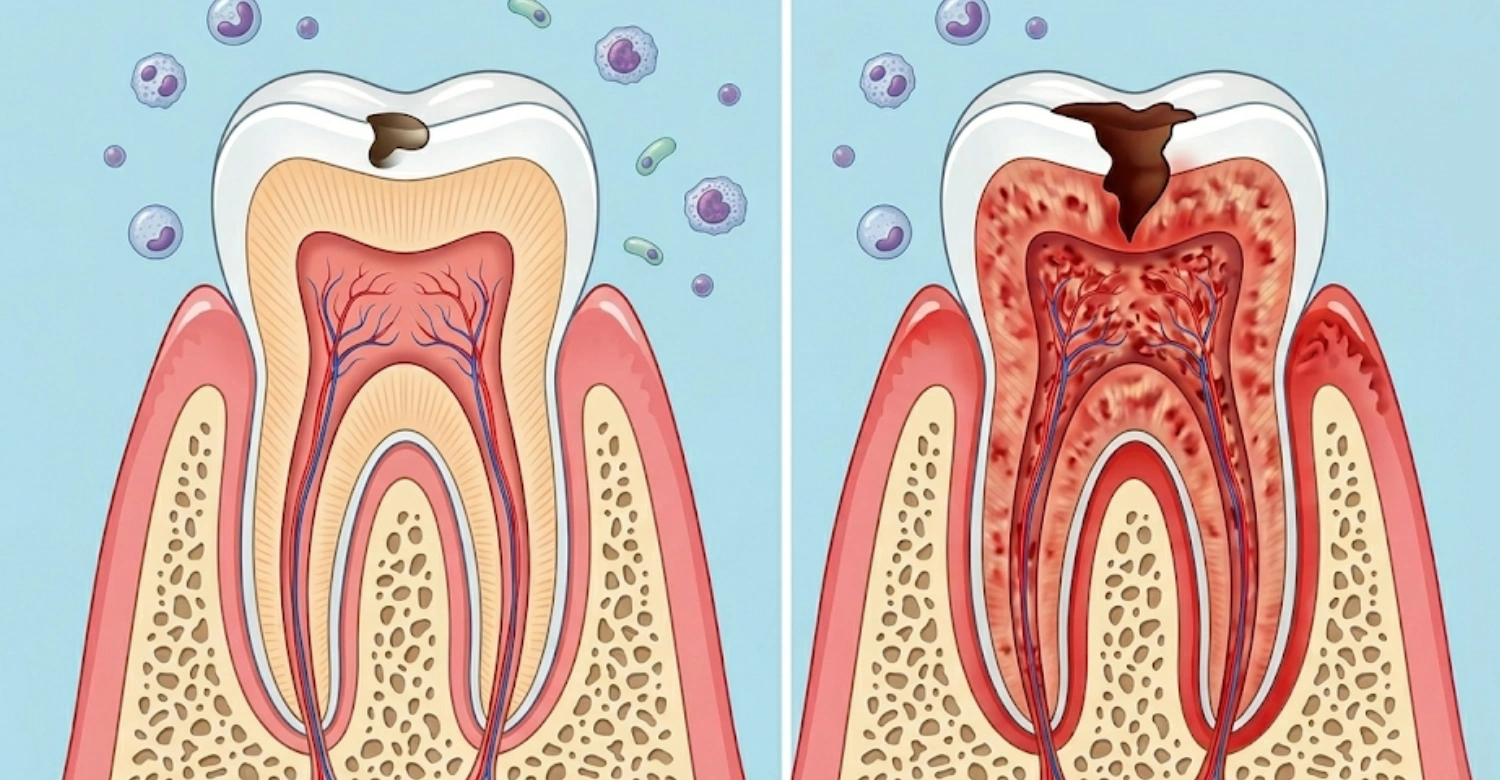
The debate of reversible vs irreversible pulpitis centers on the degree of inflammation. Reversible pulpitis usually presents as a sharp, fleeting pain triggered by cold or sweets. It vanishes almost instantly once the stimulus is removed.
Irreversible pulpitis, in contrast, causes spontaneous, lingering, or throbbing pain. It's the kind of pain that keeps you up at night. Reversible cases only require removing the irritant. Irreversible cases mean the pulp is permanently damaged and need more intensive intervention to stop the infection from spreading.
Causes and Risk Factors of Pulpitis
Understanding why pulpitis occurs is the first step toward prevention. The most common cause is dental caries, where bacteria penetrate the enamel and dentin to reach the pulp.
Mechanical trauma can also trigger inflammation. A cracked tooth, or even repeated dental work on the same tooth, are common culprits. Age, existing restorations, and gum disease all play a role too. At Vitrin Clinic, we weigh these risk factors to reach a full diagnosis.
A key differentiator is whether the patient has symptomatic irreversible pulpitis. This form causes lingering, spontaneous pain rather than a brief reaction to a trigger.
Common Triggers of Tooth Nerve Inflammation
The most frequent trigger is bacterial acid from untreated decay. When comparing reversible vs irreversible pulpitis, thermal sensitivity is a major indicator. Cold often triggers reversible cases, while heat frequently makes irreversible cases worse.
Other triggers include physical trauma from accidents, bruxism (teeth grinding), and chemical irritation from certain dental materials. Identifying these triggers early allows for a more conservative treatment plan. That can mean avoiding complex surgery or extraction later on. Monitoring how long for pulpitis to settle also helps dentists reach the correct diagnosis.
Lifestyle and Oral Habits That Increase Risk
Your daily habits significantly influence your risk for reversible vs irreversible pulpitis. High-sugar diets feed the bacteria that cause decay. Poor brushing and flossing let plaque build up near the gum line.
Habits like chewing ice or using your teeth as tools can create micro-fractures. These small cracks let bacteria reach the pulp chamber. Smoking complicates things further by reducing blood flow to the gums. That makes it harder for your body to fight off minor pulp infections. Both conditions involve varying degrees of inflammation inside the sensitive tooth pulp.
How Early Detection Can Prevent Complications
Early detection is the bridge between a simple filling and a complex root canal. Identifying reversible vs irreversible pulpitis in its early stage prevents inflammation from spreading to the jawbone.
Regular screenings at Vitrin Clinic let us catch silent decay before it reaches the nerve. This proactive approach saves you from intense pain. It also reduces the time and cost of emergency dental care and restorative surgery.
Treatment Options for Reversible and Irreversible Pulpitis
At Vitrin Clinic, we tailor treatment to the severity of the inflammation. For minor cases, removing the decay and placing a sedative filling often lets the pulp heal on its own.
More advanced cases need stronger measures to stop the infection from spreading. Our goal is always to preserve the natural tooth whenever possible. We use the latest endodontic techniques to manage the balance between reversible vs irreversible pulpitis, protecting long-term oral health.
Reversible Pulpitis Treatment: Simple and Effective Solutions
If you're diagnosed early, treatment is fairly simple. Usually, the dentist removes the source of irritation, such as a deep cavity or a faulty filling, and replaces it with a biocompatible material.
Desensitizing agents or medicated liners may help soothe the nerve. This stops the progression from reversible to irreversible pulpitis, letting the pulp return to a healthy state. Follow-up care is minimal mostly just good hygiene to prevent recurrence.
Irreversible Pulpitis Treatment: Why a Root Canal May Be Necessary
The standard irreversible pulpitis treatment is a root canal. Because the pulp can't heal itself, the infected tissue must be removed to prevent an abscess.
During the procedure, the dentist cleans the root canals, disinfects the area, and seals it with a material called gutta-percha. Many people fear root canals, but they're actually the most effective way to eliminate pain and save the tooth structure. At Vitrin Clinic, we use advanced technology to make this process virtually painless.
Alternative or Adjunctive Therapies for Dental Pain
While a root canal remains the primary irreversible pulpitis treatment, some patients need adjunctive therapies. These can include prescription-strength anti-inflammatories or antibiotics, used to manage a localized infection before the procedure.
In specific cases involving young permanent teeth, a "pulpotomy" might be considered to save part of the pulp. These are rarely permanent solutions for adults, though. If a tooth is too damaged to save, extraction followed by a dental implant may be the only option left.
Recovery Expectations and Healing Timeline
Recovery depends on the procedure performed. For reversible cases, sensitivity usually fades within a few days.
After an irreversible pulpitis treatment like a root canal, you may feel mild soreness for 3 to 7 days. This happens while the surrounding ligaments heal. Most patients return to normal activities the next day. At Vitrin Clinic, we give detailed aftercare instructions for a smooth recovery. We also advise avoiding hard foods until your final permanent crown is placed.
The Benefits of Timely Pulpitis Treatment
Treating pulpitis promptly offers benefits well beyond pain relief. Addressing the issue early helps maintain the structural integrity of your jaw and prevents nearby teeth from shifting.
Timely care at Vitrin Clinic also helps prevent bacteria from spreading through the body. This kind of spread has been linked to other health issues. Understanding the stakes of reversible vs irreversible pulpitis helps you make better decisions. It protects your long-term health and keeps your natural smile intact. Ignored irreversible cases eventually lead to severe tooth necrosis symptoms.
Preventing Tooth Loss and Complications
The ultimate goal of distinguishing reversible vs irreversible pulpitis is preventing tooth loss. Untreated irreversible pulpitis leads to necrosis, which can destroy the bone supporting the tooth.
This can result in a painful abscess or a wider infection. Seeking irreversible pulpitis treatment early keeps the tooth in its socket. That preserves your facial structure and chewing ability. Preventing these complications is far easier, and cheaper, than replacing a missing tooth with a bridge or implant.
Relief from Pain and Sensitivity
Perhaps the most immediate benefit of treatment is the end of chronic pain. You might be dealing with the sharp zing of a reversible case, or the dull, constant ache of an irreversible one. Either way, professional care brings rapid relief.
By managing the reversible vs irreversible pulpitis dilemma, Vitrin Clinic can relieve the pressure inside the tooth. That lets you eat, sleep, and speak without discomfort. Eliminating this sensitivity significantly improves your daily quality of life.
Before-and-After Results: What Patients Can Expect
Patients who undergo treatment at Vitrin Clinic often report an immediate transformation. Before treatment, many struggle with debilitating pain and can't tolerate cold or hot foods.
After receiving the right irreversible pulpitis treatment, the tooth is restored to full function. It's usually topped with a durable crown that looks perfectly natural. The result: a healthy, pain-free mouth, and the peace of mind of knowing the infection has been fully cleared.
Dental Care Tips to Protect Your Pulp
Protecting the pulp comes down to proactive maintenance. The pulp is the "heart" of your tooth, and keeping it safe takes a mix of good hygiene and smart lifestyle choices.
At Vitrin Clinic, we emphasize that preventing the shift from reversible to irreversible pulpitis is much easier than treating it. Strong enamel and healthy gums form a barrier that shields the nerve from the bacteria and trauma that cause painful inflammation.
Daily Oral Hygiene Practices That Prevent Pulpitis
A consistent routine is your best defense against reversible vs irreversible pulpitis progression. Brush twice a day with fluoride toothpaste, and floss nightly to remove plaque from between teeth, where many cavities start.
An antibacterial mouthwash can also help reduce the bacterial load in your mouth. These simple steps keep decay from reaching the pulp chamber. That way, any inflammation stays in the reversible stage — or, ideally, never happens at all.
Nutrition and Lifestyle Tips for Strong Teeth
What you eat directly impacts your pulp health. Cutting back on sugary snacks and acidic drinks prevents enamel erosion, which is often a precursor to pulpitis. Calcium-rich foods like dairy or leafy greens help strengthen the tooth structure.
If you play contact sports, a mouthguard can prevent the physical trauma that leads to irreversible damage. These lifestyle adjustments lower your risk of reversible vs irreversible pulpitis and support your body's natural ability to maintain dental health.
When to Schedule Regular Check-Ups
Regular check-ups at Vitrin Clinic should happen every six months. These visits are key for early diagnosis, letting us identify the markers of reversible vs irreversible pulpitis before symptoms even appear.
During these appointments, we perform professional cleanings and X-rays to spot hidden decay. If you feel any sudden sensitivity or pain, don't wait for your scheduled visit. An immediate consultation can be the difference between a simple fix and a complex root canal or extraction.
Why Choose Vitrin Clinic for Pulpitis Care
Vitrin Clinic is a leader in endodontic and restorative care. We understand the nuances of reversible vs irreversible pulpitis and build personalized treatment plans for every patient.
Our facility is designed to be a stress-free environment where your comfort comes first. From the moment you walk in, our team focuses on care that addresses the root cause of your pain, so you leave with a healthy smile and a clear understanding of your oral health.
Expertise of Our Endodontists and Dental Team
Our team at Vitrin Clinic is made up of skilled professionals who specialize in the internal structures of the tooth. When it comes to reversible vs irreversible pulpitis, our endodontists bring the precision and experience needed for delicate procedures like root canals, with a high success rate.
We stay current on the latest clinical guidelines. That means our patients get the most modern, effective treatments available, backed by years of specialized training.
Comprehensive Patient Care and International Services
Vitrin Clinic is proud to offer comprehensive care that extends to international patients. Dental emergencies related to reversible vs irreversible pulpitis can happen anytime, so we provide streamlined services for patients traveling for care.
Our team helps with everything from the initial consultation to post-treatment follow-up, for a seamless experience. We offer multi-lingual support and a patient-centric approach that makes every individual feel at home, no matter where they're traveling from.
State-of-the-Art Equipment and Comfortable Clinic Experience
We use the latest dental technology to accurately diagnose and treat reversible vs irreversible pulpitis. From digital 3D imaging (CBCT) to high-magnification dental microscopes, Vitrin Clinic makes sure no detail is missed.
This advanced equipment allows for more precise irreversible pulpitis treatment, reducing chair time and improving outcomes. Our clinic is also designed for comfort, with modern amenities and sedation options to help anxious patients feel at ease.
How Dentists Distinguish Reversible vs. Irreversible Cases
Symptoms alone can be misleading. An accurate diagnosis of reversible vs irreversible pulpitis relies on a combination of clinical tests, not just the patient's description of pain.
At Vitrin Clinic, dentists correlate several tests before recommending treatment. These include thermal testing (cold vs. heat response), electric pulp testing (EPT), percussion sensitivity, and a periapical radiograph. Each test adds a piece of evidence. Together, they help avoid two mistakes. One is under-treatment, leaving an infected nerve behind. The other is over-treatment — a root canal on a tooth that could have healed on its own. No single test is used in isolation; it's always the combination that confirms the diagnosis.
Cold vs. Heat Response Profiles
Thermal testing (cold vs. heat response) is one of the simplest, most reliable chairside tools for evaluating pulp health. In a reversible case, cold produces a sharp but short-lived twinge that fades within a few seconds.
In irreversible pulpitis, the same cold stimulus often triggers pain that lingers well beyond the trigger. Sometimes it lasts a minute or more. Heat frequently makes the pain worse rather than relieving it. A tooth that hurts more with hot foods, and calms down with cold, shows a classic sign the nerve tissue has likely broken down. Comparing cold vs. heat response is one of the fastest chairside checks. It helps a dentist separate a manageable case from one needing advanced intervention.
Electric Pulp Testing (EPT) and Percussion Sensitivity
Electric pulp testing (EPT) uses a small, controlled electrical current. It checks whether the nerve inside the tooth is still responding. It's a vitality test, not a standalone diagnosis. It tells the dentist if the pulp is alive — not whether the inflammation is reversible or irreversible. That's why it's always read alongside thermal testing and the patient's history.
Percussion sensitivity testing is a separate but equally important step. Gently tapping the tooth checks whether inflammation has spread beyond the pulp into the surrounding ligament and bone. Pain on percussion generally points toward a more advanced, often irreversible, stage. That's because it suggests the tissue around the root is already involved. This is usually confirmed with a periapical radiograph. It lets the dentist see any bone changes or widening around the root tip. Together, EPT, percussion sensitivity, and radiographs form the core diagnostic trio at Vitrin Clinic.
Difficulties in Localizing Pain in Irreversible Pulpitis Cases
One of the more frustrating aspects of irreversible pulpitis is that the pain is often hard to pin down to a single tooth. This is frustrating for patients and dentists alike. Nerve fibers inside the pulp aren't organized for precise localization the way skin fibers are.
As inflammation progresses, the brain can struggle to identify the exact source tooth. Patients frequently point to the wrong side of the jaw, or describe pain that seems to move between teeth. This is one of the main reasons clinical testing matters so much. Relying on the patient's pointing finger alone can lead to treating the wrong tooth.
Systemic Manifestations and Referred Pain
Pulpitis doesn't always stay confined to the mouth. As inflammation intensifies, pain signals can spread along shared nerve pathways. They can surface in areas that seem unrelated to the tooth — a pattern known as referred pain in irreversible pulpitis. It can delay diagnosis if the connection isn't recognized early. That's one reason so many patients ask, "can pulpitis cause headaches?"
Can Pulpitis Cause Headaches and Facial Referred Pain?
Yes pulpitis, particularly the irreversible form, can trigger referred pain. It may show up as a headache, earache, or a dull ache across the cheek, jaw, or temple. This happens because teeth are supplied by branches of the trigeminal nerve. This is the same nerve responsible for sensation across much of the face and head.
When pulp inflammation becomes intense, the pain signal can spill over onto neighboring branches of this shared network. The brain then perceives the pain as coming from a wider area, not one isolated tooth. That's why some patients assume they're dealing with a migraine, sinus pressure, or an ear infection. In reality, the cause is an inflamed tooth. Referred pain in irreversible pulpitis is a well-recognized pattern in dentistry. It's one more reason a professional evaluation matters whenever facial or head pain has no obvious cause. In some cases, referred pain is the dominant symptom, and the tooth itself feels almost normal until it's tested.
Understanding the 3-3-3 Rule for Severe Toothaches
When a severe toothache strikes outside office hours, the 3-3-3 rule is one short-term strategy people use. It helps manage pain while arranging a dental visit. It generally means taking 600 mg of ibuprofen three 200 mg over-the-counter tablets — up to three times a day. This should last no more than three days.
The idea is to maintain steady anti-inflammatory support in the body. Dental pain from pulpitis is largely driven by pressure building up inside a rigid, enclosed tooth structure.
It's important to understand what the 3-3-3 rule is, and isn't. It is not a cure. It doesn't treat the underlying cause, whether that's a deep cavity, a cracked tooth, or an infected nerve. It's simply a bridge to manage discomfort until a dentist can examine the tooth.
Watch for facial swelling, fever, difficulty swallowing, or a foul taste in the mouth. Along with pain that doesn't improve, these are signs of a more serious infection. They call for urgent care rather than waiting out the three days. Anyone with stomach, kidney, or other conditions that make ibuprofen unsuitable should check with a physician first. This approach should never replace a proper diagnostic visit at Vitrin Clinic.
Historical and Classical Dental Perspectives: Grossman's Classification
Long before modern imaging and electronic testing devices, endodontists relied on clinical classification systems to organize how pulp disease was understood and treated. One of the most influential is Grossman's classification of pulpitis, developed by Louis I. Grossman, a foundational figure in endodontic literature.
Even today, dental students and practitioners reference Grossman's classification as a starting point for understanding how pulp disease progresses. His system separated pulp inflammation into broad categories: reversible pulpitis and irreversible pulpitis. The latter was further divided into acute and chronic forms, along with pulp degeneration and necrosis. This gave dentists a shared clinical language to describe how far pulp disease had progressed. It was based on symptoms, pain patterns, and test response rather than guesswork. Diagnostic tools have advanced considerably since then. Still, the core logic behind Grossman's system distinguishing pulp inflammation that can heal from pulp damage that cannot — underpins how dentists at Vitrin Clinic approach reversible vs irreversible pulpitis today.
What Is the 3-3-3 Rule for Toothache?
The 3-3-3 rule is a short-term pain-management approach for severe toothaches: taking 600 mg of ibuprofen (three 200 mg tablets) up to three times a day, for no more than three days, while arranging a dental visit. It helps control inflammation and pressure inside the tooth but doesn't treat the underlying cause, so a professional evaluation at Vitrin Clinic is still needed.
Can Pulpitis Cause Headaches?
Yes. Teeth share nerve pathways with the rest of the face through the trigeminal nerve. Intense pulp inflammation, especially in irreversible pulpitis, can refer pain outward and show up as a headache, earache, or facial ache rather than pain clearly localized to one tooth.
Vitrin Clinic's Approach to Diagnosing and Treating Pulpitis
At Vitrin Clinic, distinguishing reversible from irreversible pulpitis isn't based on a single test result. It's a combination of listening carefully to the patient's description of pain, running thermal and electric pulp testing, checking percussion sensitivity, and reviewing a periapical radiograph before any treatment plan is proposed.
This layered approach exists because pulpitis symptoms can overlap significantly between the two stages. Getting the diagnosis right the first time protects patients from unnecessary procedures on one hand, and delayed treatment on the other.
What We Notice Clinically
Dr. Rifat Alsaman is Head of the Medical Team at Vitrin Clinic and a cosmetic dentist. According to him, one of the most common patterns in daily practice is patients waiting too long to seek care. Early reversible pulpitis is easy to dismiss as ordinary sensitivity.
"What we notice clinically at Vitrin Clinic," says Dr. Rifat Alsaman, "is that patients often describe their pain as 'coming and going,' when in reality the pattern has already shifted from short, cold-triggered twinges to longer, spontaneous episodes." He notes this shift is usually the clearest sign the pulp has crossed into the irreversible stage. It's also why the clinical team relies on objective testing rather than the patient's own timeline. Pain memory can be unreliable after days or weeks of discomfort.
Clinical Note
A tooth that responds to cold with pain lasting only a few seconds, with no lingering ache, no spontaneous pain, and no tenderness on percussion, is generally a strong candidate for conservative management.
Once any one of those signs flips lingering pain, spontaneous throbbing, heat sensitivity, or percussion tenderness the working assumption shifts toward irreversible pulpitis until testing proves otherwise. This conservative-first, verify-second approach avoids two extremes. It skips unnecessary root canals on teeth that could still heal, and it avoids delayed treatment on teeth already beyond recovery.
Tips for Patients
Don't wait for the pain to become constant before booking an appointment — the earlier reversible pulpitis is caught, the simpler the treatment.
Pay attention to whether cold pain lingers after the trigger is removed; that detail alone is useful for your dentist.
Avoid relying on pain relievers as a long-term fix they can mask a worsening infection while the underlying problem keeps progressing.
If pain starts radiating to your ear, jaw, or temple, mention this explicitly during your visit, since it can help pinpoint referred pain patterns.
Keep up with six-month check-ups; many cases of pulpitis are caught on a periapical radiograph before symptoms even appear.
Reference
Understanding the difference between reversible and irreversible pulpitis is essential for choosing the right treatment and protecting natural teeth. Early diagnosis can help preserve pulp vitality when healing is still possible.
Research highlighted in the referenced PMC articles supports a more nuanced understanding of pulp inflammation and conservative vital pulp therapies. It emphasizes that diagnosis and timely intervention are key to better outcomes.
https://pmc.ncbi.nlm.nih.gov/articles/PMC10635780/
https://pmc.ncbi.nlm.nih.gov/articles/PMC10816036/
https://pmc.ncbi.nlm.nih.gov/articles/PMC9700813/
FAQs

Dr. Rifat Alsaman has more than 5 years of clinical experience in dentistry and currently serves as the Head of the Medical Team at Vitrin Clinic. He is dedicated to providing exceptional patient care, overseeing treatment planning, and ensuring the highest clinical standards across the team. His expertise, attention to detail, and commitment to continuous professional development have helped countless patients achieve healthier, more confident smiles.


