Dental Implant
October 14, 2026
What Is a Dental Implant Healing Abutment and How Does It Work?
 Dr. Rifat Alsaman
A dental implant healing abutment is a small metal cap that guides your gums while the implant heals. It sits on top of the implant and keeps a clean opening through the gum. This guide explains how it works, what healing should look like, and when to call your dentist. You will also find typical timelines, common complications, and cost guidance for the US, UK, and Turkey. Implant use keeps growing worldwide. One US projection by Elani and colleagues suggested implant prevalence could reach 23% of adults by 2026.
Ready to transform your smile?
Talk to our team and get a personal FREE treatment plan.
What Is a Dental Implant Healing Abutment?
A dental implant healing abutment is a temporary component screwed into the top of an implant. It passes through the gum and stays visible in the mouth. Its job is to shape a healthy collar of gum tissue before the final crown arrives. Most implant systems supply these parts in several heights and widths to match each patient.
What Does a Healing Abutment Look Like?
A healing abutment looks like a small, smooth, silver cylinder or dome. It usually measures 3 to 7 millimeters wide and 2 to 7 millimeters tall. Most are made from titanium or a titanium alloy. Some newer versions are made from zirconia or tooth-colored PEEK plastic. The top often has a hex opening for the dentist's screwdriver. Patients often describe it as a "metal button" sitting in the gum. Its smooth, polished collar is designed to discourage plaque from sticking.
What Is the Dental Implant Healing Abutment Function?
The main function is to create a ready-made pathway through the gum to the implant. It holds the soft tissue open while the gum heals around it. It also seals the internal screw channel from food and bacteria. Finally, it gives the dentist easy access for impressions or digital scans later. Without it, the gum would close over the implant and need reopening. In short, a dental implant healing abutment prepares the mouth for the final tooth.
How Is a Healing Abutment Different From a Healing Cap?
Many dentists use the terms "healing abutment" and "healing cap" interchangeably. Both describe a temporary part that sits on the implant during healing. Some manufacturers reserve "healing cap" for a shorter, lower-profile version. Others use "cap" for a cover screw that sits level with the bone. If you are unsure, ask your dentist which component you have. The name matters less than its height and purpose. Your treatment notes should record the exact part used.
What Is the Difference Between a Healing Abutment and a Permanent Prosthetic Abutment?
A healing abutment is temporary and is removed before the final crown is fitted. A permanent prosthetic abutment stays in place for years and supports the crown. The healing part is round and smooth to shape the gum. The prosthetic abutment is shaped like a prepared tooth, so the crown can lock onto it. Permanent abutments are also tightened to a higher torque, often 25 to 35 Ncm. Healing abutments, by contrast, are only hand-tightened or lightly torqued.
Why Is a Healing Abutment Used After Dental Implant Surgery?
A healing abutment is used because implants need a healthy gum seal to last. The soft tissue around an implant acts as a barrier against bacteria. This barrier forms best when the gum heals around a stable, smooth surface. The abutment provides that surface during the critical early weeks. Without that seal, bacteria can reach the bone more easily.
How Does a Healing Abutment Help Shape Gum Tissue?
The gum heals by wrapping closely around whatever surface sits through it. A healing abutment acts like a mold for this new tissue. Research shows the soft-tissue seal around implants measures about 3 to 4 millimeters in height. Choosing the right abutment width helps the gum match the shape of the future crown. A wider abutment creates a wider opening for a molar crown. A narrower one suits a front tooth or a premolar.
How Does It Protect Access to the Implant Connection?
The inside of an implant has a precise connection and a threaded screw channel. Food, plaque, or gum tissue entering that channel can cause problems later. The healing abutment screws directly into this connection and seals it. This keeps the threads clean for the final abutment screw. It also prevents gum tissue from growing into the opening. A clean connection also helps the final abutment seat with precision.
Is a Healing Abutment Necessary for Every Dental Implant?
Not every implant uses a healing abutment at every stage. Some implants receive a temporary crown on the same day instead. This approach, called immediate loading, needs strong initial stability. Many protocols require insertion torque of at least 30 to 35 Ncm before a same-day tooth is considered. In most standard cases, however, a healing abutment or cover screw is used first. Your dentist decides based on stability, bite forces, and bone quality.
When Might a Dentist Use a Cover Screw Instead?
A cover screw is a flat cap that sits level with the implant top. The gum is then stitched closed over it, so the implant heals underneath. Dentists often choose this when initial stability is low. It is also common after bone grafting or sinus lifting. In these cases, keeping the implant buried protects it from pressure and bacteria. The healing abutment is placed later, in a second small procedure. Two-stage healing remains a reliable, well-studied option.
How Is a Healing Abutment Placed After Dental Implant Surgery?
Placement is usually a quick, minor procedure under local anesthetic. It happens either during the implant surgery or several months later. The steps depend on whether the implant healed above or below the gum. Most patients describe it as easier than the original implant surgery. A dental implant healing abutment is always placed under clean, controlled conditions.
What Happens During Healing Abutment Placement?
The dentist first confirms that the implant has healed well enough. They then numb the area and access the implant connection. The healing abutment is screwed in by hand or with a small driver. Finally, the dentist checks the fit, the gum, and your comfort. The whole visit often takes 15 to 30 minutes. Most patients return to normal work the same day.
Exposing the Implant When a Second-Stage Procedure Is Needed
If a cover screw was used, the implant lies hidden beneath the gum. The dentist makes a small incision or uses a round tissue punch to uncover it. Some clinics use a dental laser for this step. The cover screw is then removed and the connection is cleaned. This is often called "second-stage surgery" or "implant uncovering." Punch techniques usually need no stitches at all.
Attaching the Healing Abutment to the Implant
The dentist selects a healing abutment of suitable height and width. It is threaded into the implant and tightened gently, usually around 10 to 15 Ncm. This is enough to hold it secure without stressing the healing bone. If the gum was opened, a stitch or two may be placed around it. These stitches usually dissolve or are removed within 7 to 14 days. The dentist records the abutment size in your notes.
Checking the Gum Tissue and Component Stability
Once attached, the dentist checks that the abutment is fully seated. An X-ray may be taken to confirm there is no gap at the connection. The gum margin is checked for tension, blanching, or excessive pressure. The abutment should not rotate or wobble when touched. You will then receive aftercare instructions for the coming weeks. These checks reduce the risk of later loosening.
Can a Healing Abutment Be Placed During the Initial Implant Surgery?
Yes, and this is very common today. It is called a one-stage or non-submerged approach. The dentist places the implant and attaches the healing abutment in the same visit. This avoids a second surgery and can shorten total treatment time. Studies comparing one-stage and two-stage protocols report similar implant survival, often above 95%. The choice depends mainly on bone quality and stability. Fewer surgeries also mean less discomfort overall.
Does Healing Abutment Placement Hurt?
Most patients feel little or no pain during the procedure itself. Local anesthetic numbs the area completely within a few minutes. You may feel light pressure as the abutment is tightened. Afterward, mild soreness can last one to three days. Many patients manage this with standard over-the-counter pain relief. Second-stage procedures usually cause less discomfort than the first implant surgery.
What Should Patients Expect Immediately After Placement?
Right after placement, the area may feel numb for two to four hours. You may notice light oozing of blood and some tenderness. The gum around the abutment may look slightly swollen or red. These signs usually settle within the first week. Your tongue will likely explore the new metal surface, which is normal. Avoid eating until the numbness has fully worn off.
.jpg)
.jpg)
.jpg)
.jpg)
.jpg)
.jpg)
How Does a Dental Implant Healing Abutment Affect Gum Healing?
A dental implant healing abutment directly influences how the gum heals and looks. It determines the shape, height, and thickness of the soft-tissue cuff. This cuff later frames the final crown. Good gum healing at this stage supports both appearance and long-term implant health.
How Does the Healing Abutment Guide Gum Tissue Formation?
New gum cells grow along the smooth surface of the abutment. Over time they form a tight seal called the peri-implant mucosa. Classic animal studies by Berglundh and Lindhe measured this seal at roughly 3 millimeters. About 2 millimeters is a thin epithelial layer, and the rest is connective tissue. The abutment holds this tissue in a stable shape while it matures. Unlike a natural tooth, implants have no ligament fibers attaching to the gum. This makes the soft-tissue seal especially important.
What Should Healthy Gum Tissue Around a Healing Abutment Look Like?
Healthy gum around a healing abutment looks pink, firm, and snug. It should hug the metal without large gaps or pockets. A little redness in the first week is normal. By the second or third week, the tissue should look calm and settled. Light bleeding during gentle brushing may happen early but should fade. Persistent bleeding, pus, or deep red tissue needs a check-up. Comparing photos week by week can help you track progress.
How Long Does Gum Tissue Take to Heal Around the Abutment?
The surface of the gum closes over in about one to two weeks. A mature, stable seal usually takes six to eight weeks to form. Many dentists wait at least two to four weeks before taking final impressions. In aesthetic areas, they may wait longer for the tissue to settle fully. Your dentist will judge readiness at follow-up visits. Healing is often slower in smokers and people with diabetes.
What Factors Affect Soft-Tissue Healing?
Gum healing around an implant varies from person to person. Some factors are within your control, while others depend on your health or anatomy. Understanding these factors helps you support faster, healthier healing. The most important ones are listed below. Your dentist will discuss which apply to you.
Oral Hygiene and Plaque Control
Plaque is the leading cause of gum inflammation around implants. A review by Derks and Tomasi found peri-implant mucositis in about 43% of implant patients. This early inflammation is reversible with good cleaning. Gentle daily brushing around the abutment keeps bacteria levels low. Regular professional checks help catch problems before they spread. Most patients see calmer gums within days of improving their routine.
Smoking and Nicotine Exposure
Smoking reduces blood flow and slows soft-tissue healing. Meta-analyses suggest smokers face roughly double the risk of implant failure. Smoking also raises the risk of peri-implantitis and bone loss. Vaping and nicotine pouches may carry similar risks for healing tissue. Stopping for at least two weeks before and after surgery is commonly advised. Even reducing cigarettes during healing can help tissue recovery.
Existing Gum Disease and General Health
A history of gum disease raises the risk of inflammation around implants. Studies link prior periodontitis to a two- to three-fold higher risk of peri-implantitis. Poorly controlled diabetes can also slow healing and weaken defenses. Certain medicines, such as bisphosphonates, need careful review before treatment. Sharing your full medical history helps your dentist plan safely. Well-controlled conditions usually allow normal healing.
Implant Position and Healing Abutment Design
An implant placed too shallow or too deep affects gum shape. Thin gum tissue over the implant tends to recede more easily. The abutment's width, height, and surface finish also matter. A highly polished surface collects less plaque than a rough one. Your dentist balances these factors when choosing the right component. Correct planning before surgery reduces many of these risks.
What Size and Height of Healing Abutment Is Best?
There is no single best size for every patient. The right healing abutment depends on gum thickness, implant depth, and tooth position. A correct choice supports a natural emergence of the final crown. A poor choice can cause irritation, overgrowth, or a crown that looks unnatural. The choice of dental implant healing abutment is made individually for each site.
How Do Dentists Choose Healing Abutment Size and Height?
Dentists match the abutment to the implant's diameter and connection type first. Then they measure the gum thickness above the implant. The abutment should usually extend about 1 to 2 millimeters above the gum. Width is chosen to mimic the natural tooth being replaced. Many systems offer heights from 2 to 7 millimeters. Diameters typically range from about 3.5 to 7 millimeters.
How Does Gum Thickness Affect Abutment Selection?
Gum thickness strongly affects long-term bone stability around implants. Research by Linkevicius showed thin tissue of 2 millimeters or less was linked to more crestal bone loss. Thicker tissue, around 3 millimeters or more, usually stays more stable. Dentists choose taller abutments where the gum is thicker. In thin tissue, they may suggest a soft-tissue graft first. Grafting can increase tissue thickness before the crown stage.
What Happens if a Healing Abutment Is Too Short or Too Tall?
A short abutment may become covered as the gum swells and heals. This hides the connection and may need a small procedure to reopen it. A tall abutment may take biting forces from the opposite teeth. This pressure can disturb early implant healing. It can also rub the cheek or tongue. The ideal height sits just proud of the gum, clear of the bite. Exchanging the part for a better height is quick and simple.
When Is a Custom Healing Abutment Used for Dental Implants?
Custom healing abutments are often used for front teeth and immediate implants. They copy the exact root shape of the tooth that was removed. This helps preserve the natural gum contour and papillae. They are also helpful when gum shape matters for a highly visible smile. Some are made from CAD/CAM milled zirconia or PEEK. They usually take extra planning time and digital design.
What Is the Difference Between Stock and Custom Healing Abutments?
Stock abutments are prefabricated, round, and come in standard sizes. They are quick to use and cost less. Custom abutments are designed for one patient using digital scans. Their shape follows the natural tooth outline more closely. Small studies suggest custom versions may better preserve soft-tissue volume after extraction. For back teeth, stock abutments usually work very well. Your dentist will explain which option fits your case.
How Long Does a Dental Implant Healing Abutment Stay In?
A dental implant healing abutment usually stays in for about two weeks to six months. The exact time depends on when it was placed and how the bone heals. Gum readiness and implant stability both guide the timing. Your dentist will confirm the plan at each review.
What Is the Typical Healing Abutment Recovery Time After Implant Surgery?
If placed during a second-stage procedure, gums often settle in two to four weeks. If placed at implant surgery, the abutment stays until the implant fully integrates. That process usually takes three to six months. Lower-jaw implants often heal faster than upper-jaw implants because the bone is denser. Grafted sites may need longer healing. Smoking and medical conditions may also slow recovery.
How Long Does Gum Tissue Need Before the Final Crown Is Placed?
Most clinicians wait until the soft tissue has matured and stabilized. This usually means at least four to six weeks after abutment placement. In the smile zone, waiting eight to twelve weeks is sometimes preferred. Taking impressions too early can lead to a crown margin that later shows. Stable tissue gives a more predictable final result. Patience at this stage often improves the final appearance.
Does Bone Healing Take Longer Than Gum Healing?
Yes, bone healing almost always takes longer than gum healing. The gum seal forms in weeks, while osseointegration takes months. Osseointegration is the process where bone bonds directly to the implant surface. Lower-jaw implants commonly need about three months. Upper-jaw implants often need four to six months. Bone grafts can extend this to nine months or more. This is why the final crown cannot be rushed.
When Should a Dental Implant Healing Abutment Be Removed?
A dental implant healing abutment should be removed only by your dentist. Removal happens when the implant is stable and the gum is ready. Usually, this is the day impressions or scans are taken. It may also be removed when the final abutment and crown are fitted. Your dentist may test stability with a device that measures implant stability quotients. ISQ readings above about 65 usually indicate the implant is ready.
Can a Healing Abutment Stay in Place Longer Than Expected?
Yes, a healing abutment can safely stay longer if needed. Delays may follow illness, travel, or waiting for laboratory work. As long as the area stays clean and healthy, this is usually fine. Regular checks remain important during any extended period. Avoid repeatedly removing and replacing it, as research links this to small extra bone loss. Meta-analyses estimate this extra loss at roughly 0.2 to 0.3 millimeters.
Is an Exposed Healing Abutment Normal After Dental Implant Placement?
Yes, an exposed healing abutment is completely normal. It is designed to sit through the gum and remain visible. Seeing a small metal top does not mean anything has gone wrong. What matters is how the surrounding gum looks and feels. A visible dental implant healing abutment is simply doing its job.
Why Is the Healing Abutment Visible Above the Gum?
The abutment must reach through the gum to shape it properly. Its top usually sits 1 to 2 millimeters above the gumline. This height keeps tissue from growing over the opening. It also lets your dentist reach the screw easily later. So a visible abutment is a sign the component is working as intended. It may look odd at first, but most patients quickly get used to it.
Should the Healing Abutment Be Completely Covered by Gum Tissue?
No, the healing abutment should not be fully covered by gum. Full coverage means the tissue has grown over the top. This blocks access and can trap bacteria underneath. If it happens, your dentist may trim the tissue or switch to a taller abutment. A cover screw, by contrast, is meant to stay buried. Tell your dentist if you can no longer see the metal top.
What Does It Mean if Gum Tissue Grows Over the Healing Abutment?
Partial overgrowth usually means the abutment is slightly too short. It may also reflect swelling or thick, fast-growing gum. Sometimes it signals that the abutment has loosened and sunk slightly. In most cases, a simple adjustment solves the problem. Do not try to push the gum back yourself. Book an appointment so your dentist can assess it.
How Can Patients Tell Normal Healing From a Potential Problem?
Normal healing means discomfort improves day by day. The gum gradually looks pinker and firmer around the abutment. Warning signs include pain that worsens after day three, pus, or a bad taste. A loose or rotating abutment also needs prompt review. If in doubt, a short check-up is always safer than waiting. Keeping a short symptom diary can make reviews more useful.
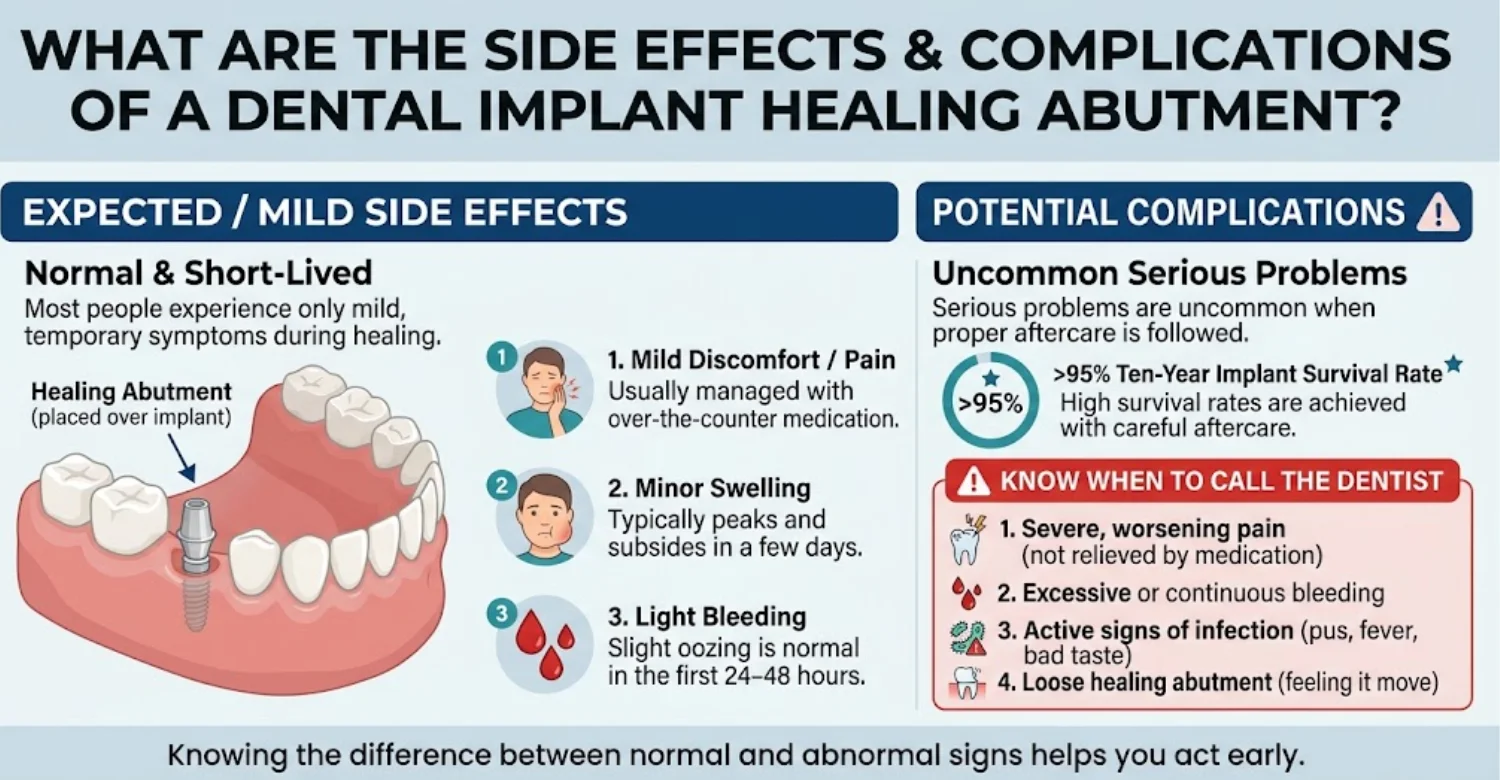
What Mild Symptoms Can Occur During Normal Healing?
Mild symptoms are part of normal soft-tissue healing. They are strongest in the first two to three days. Most fade within one to two weeks. The common ones are described below. Knowing them in advance helps reduce worry.
Temporary Tenderness and Mild Swelling
The gum around the abutment may feel tender to touch. Mild swelling often peaks around 48 to 72 hours. This is a normal inflammatory response to minor surgery. Cold compresses and pain relief usually keep it comfortable. Swelling should then reduce steadily each day. Some patients notice slight bruising on the cheek.
Minor Bleeding Shortly After the Procedure
Light oozing or pink saliva is common for the first 24 hours. Gently biting on clean gauze for 20 to 30 minutes usually stops it. Avoid spitting forcefully or using straws on the first day. These actions can disturb the early clot. Heavy, continuous bleeding is not normal and needs a call. A damp tea bag can also help, as tannins support clotting.
Temporary Gum Sensitivity
The new gum tissue can feel sensitive while brushing. Hot or spicy foods may sting for a few days. This sensitivity improves as the tissue matures. Using a soft brush and lukewarm water helps. Sensitivity that grows worse over time should be checked. Avoid very cold drinks if they cause discomfort.
What Are the Most Common Dental Implant Healing Abutment Complications?
Complications with a dental implant healing abutment are usually minor and treatable. Most relate to looseness, plaque, or gum tissue reaction. Early recognition prevents them from affecting the implant itself. The most frequent issues are listed below.
A Loose or Rotating Healing Abutment
A loose abutment is one of the most frequent problems patients report. It may feel like it wiggles or turns when touched. Chewing forces or tongue pressure can slowly unscrew it. Gaps then allow bacteria and food into the connection. Call your dentist so it can be cleaned and retightened properly. Studies report screw loosening in roughly 5% to 10% of implant restorations over five years.
Persistent Bleeding or Increasing Swelling
Bleeding that continues past the first day may signal irritation or infection. Swelling that grows after day three is also a warning sign. These symptoms may reflect trapped food, plaque, or a poorly seated part. Sometimes they point to early infection around the implant. A prompt examination helps find the cause. Note when symptoms started and share this with your dentist.
Gum Tissue Overgrowth or Irritation
Gum tissue sometimes grows up the sides or over the top of the abutment. This is called tissue overgrowth or hyperplasia. It is more likely with short abutments or thick gums. The tissue may look puffy and bleed easily. Your dentist can trim it or switch to a taller abutment. Better cleaning also helps the tissue shrink back.
Plaque Accumulation and Inflammation Around the Implant
Plaque collects easily around the junction of the gum and abutment. If left, it causes peri-implant mucositis, a reversible gum inflammation. Untreated, it can progress to peri-implantitis with bone loss. The Derks and Tomasi review estimated peri-implantitis affects about 22% of patients. Daily cleaning remains the best prevention. Professional cleaning every three to six months adds extra protection.
Abutment Damage or Implant Connection Problems
Rarely, the abutment screw head or hex may become damaged. This can happen if someone tries to adjust it with the wrong tool. Grinding or clenching can also overload the component. Damage may complicate removal and affect the internal connection. Specialized instruments are then needed to recover the part safely. This is another reason never to adjust the part yourself.
Can a Healing Abutment Cause Implant Failure?
A healing abutment alone rarely causes an implant to fail. However, problems linked to it can contribute to failure. A loose abutment can allow movement during early bone healing. Heavy biting on a tall abutment can overload a fresh implant. Untreated infection around the part can spread to the bone. Prompt care for these issues protects the implant. Overall, early implant failure rates are low, often around 1% to 3%.
Which Symptoms Require Urgent Dental Assessment?
Some symptoms need same-day attention from your dentist. Others may need urgent medical care. Do not wait for a routine appointment if you notice them. The key warning signs are listed below. Acting quickly gives the best chance of a simple fix.
Increasing Pain, Pus, or Persistent Bad Taste
Pain that grows worse after the third day is not typical. Pus around the abutment is a sign of infection. A constant bad taste or smell may point to the same problem. These need examination and often cleaning or antibiotics. Early treatment usually saves the implant. Do not wait for your next scheduled review.
Fever or Spreading Facial Swelling
A fever above 38 °C suggests the infection may be spreading. Swelling that moves into the cheek, jaw, or under the eye is also serious. Contact your dentist the same day or seek urgent care. Spreading infections can progress quickly without treatment. Do not rely on home remedies in this situation. Keep a record of your temperature to share with the clinician.
Difficulty Swallowing or Breathing
Difficulty swallowing or breathing is a medical emergency. It can indicate a severe infection spreading into the neck. Call emergency services or go to the nearest emergency department immediately. Inform the team that you recently had dental implant surgery. Contact your dentist once you are safe. Fortunately, such severe reactions are very rare.
Ready to transform your smile?
Talk to our team and get a personal FREE treatment plan.
What We Notice Clinically
In daily practice, many worried messages concern normal healing signs. Patients often fear the visible metal or slight redness. Clear explanation usually removes this anxiety. Below are patterns our team frequently observes during follow-up visits. Most concerns turn out to be normal parts of healing.
Why a Visible Healing Abutment Does Not Automatically Indicate a Problem
Patients sometimes think a visible abutment means the implant has come out. In fact, visibility is the purpose of the component. The implant itself remains hidden inside the bone. We focus on gum color, firmness, and comfort rather than visibility. A calm, pink cuff around the metal is a reassuring sign. We explain this at placement to reduce later worry.
How Dentists Distinguish Soft-Tissue Irritation From Implant-Related Complications
Soft-tissue irritation stays in the gum and usually responds quickly to cleaning. Implant complications involve the bone or the implant connection. Dentists probe gently, check bleeding, and look for pus. X-rays then show whether bone levels have changed. Mobility of the implant itself is far more serious than abutment looseness. This distinction shapes the entire treatment plan.
Why a Loose Healing Abutment Should Not Be Tightened at Home
Tightening at home can easily cause more harm than good. Without the correct driver, the screw head can strip. Excessive force may stress the implant and the healing bone. Trapped debris inside the connection would also remain in place. Your dentist cleans the connection first and then tightens it to the correct torque. A short professional visit is safer and usually quick.
Common Patient Misconceptions About Healing Abutments
Many patients believe the healing abutment is the final tooth. Others think it must be fully hidden under the gum. Some assume any bleeding means the implant is failing. Another myth is that the part should not be brushed at all. In reality, gentle daily brushing is essential for healthy healing. Understanding these facts makes healing far less stressful.
Clinical Note: Dr. Rifat Alsaman's Perspective on Healing Abutment Assessment
Dr. Rifat Alsaman stresses assessing the whole site, not only the visible metal part. He reviews gum color, tissue thickness, and abutment stability at every visit. He also compares current X-rays with the baseline image taken after surgery. His approach favors keeping the same abutment in place whenever possible. This reduces tissue disturbance and supports stable bone levels.
How Are Dental Implant Healing Abutment Problems Diagnosed?
Dental implant healing abutment problems are diagnosed with a clinical exam and imaging when needed. The dentist looks at the gum, the component, and the bone. Each finding helps separate minor irritation from deeper complications. Early diagnosis keeps treatment simple.
What Does a Dentist Check During a Healing Abutment Examination?
The dentist starts by asking about pain, bleeding, and any changes you noticed. They then inspect the gum color, contour, and swelling. The abutment is checked for looseness or rotation. Your bite is examined to make sure the abutment is not being hit. Plaque levels and cleaning techniques are also reviewed. Each finding is compared with your previous visit.
How Is Gum Inflammation Around the Abutment Evaluated?
Dentists look for redness, swelling, and bleeding on gentle probing. A light plastic probe may measure the depth of the gum cuff. Pocket depths around healthy implants are often 3 to 4 millimeters. Increasing depths alongside bleeding may suggest infection. Pus on pressure is a clear sign of active disease. Probing is gentle and rarely uncomfortable.
When Are Dental X-Rays or CBCT Imaging Necessary?
A small periapical X-ray is the standard tool for checking implant bone levels. It shows whether the abutment is fully seated on the implant. It also reveals any bone loss around the implant neck. CBCT 3D imaging is reserved for complex cases. Examples include suspected nerve contact, sinus problems, or unexplained bone loss. A periapical X-ray uses only a very small radiation dose.
How Do Dentists Assess Implant Stability and Surrounding Bone?
Dentists compare new X-rays with earlier images to detect bone changes. Some use resonance frequency analysis to measure stability. This gives an implant stability quotient, or ISQ, from 1 to 100. Values above about 65 are generally considered good stability. Any movement of the implant itself is a serious finding. Some bone remodeling, often under 1.5 millimeters in the first year, is expected.
How Can a Dentist Identify a Loose Component, Infection, or Tissue Overgrowth?
A loose component rotates or moves under light finger or instrument pressure. An X-ray may show a dark gap between the abutment and implant. Infection is usually marked by pus, swelling, and deeper probing depths. Tissue overgrowth appears as soft, puffy gum covering the abutment edges. Each finding points to a different treatment. Clear diagnosis avoids unnecessary or delayed treatment.
How Are Dental Implant Healing Abutment Problems Treated?
Most dental implant healing abutment problems are treated quickly in the dental chair. Treatments range from simple cleaning to replacing the component. The implant itself is usually unaffected when problems are caught early. Your dentist chooses the least invasive option that solves the issue.
What Should You Do if Your Healing Abutment Becomes Loose?
Call your dentist and arrange a visit within a day or two. Avoid chewing on that side in the meantime. Do not play with the abutment using your tongue or fingers. If it falls out completely, keep it in a clean bag and bring it along. Without the abutment, gum tissue can start closing within hours. Quick action usually means a simple, short appointment.
How Is Gum Irritation Around a Healing Abutment Managed?
Mild irritation usually responds to better plaque control. Your dentist may clean the abutment professionally. They may recommend a chlorhexidine rinse for a short period. Your brushing technique will also be reviewed and adjusted. Most mild inflammation settles within one to two weeks. Follow-up confirms that the tissue has calmed down.
What Happens if Gum Tissue Grows Over the Abutment?
The dentist may simply trim the excess tissue under local anesthetic. Sometimes they replace the abutment with a taller version. In some cases, a laser is used to recontour the gum gently. The procedure is quick and causes little discomfort. Healing after trimming usually takes a few days. Your dentist will advise on cleaning the area afterward.
When Does a Dentist Need to Clean, Retighten, Replace, or Remove the Component?
Cleaning is needed when plaque or debris builds up around the abutment. Retightening is required when the part loosens without damage. Replacement is needed if the abutment is damaged or the wrong height. Removal may be necessary to treat infection or take final impressions. Each step uses sterile parts and proper torque settings. Your dentist will explain which step is needed and why.
Can a Healing Abutment Be Replaced Without Replacing the Dental Implant?
Yes, healing abutments are designed to be easily exchanged. Replacing one is a quick procedure that does not affect the implant. The new abutment simply screws into the same connection. This is common when the gum needs a different height. The implant stays in place throughout. A new dental implant healing abutment can usually be fitted in minutes.
What Treatment Is Needed if an Implant Infection Is Suspected?
Treatment starts with removing plaque and cleaning the implant surface. Antiseptic rinses or local antibiotic gels may be applied. Systemic antibiotics are sometimes prescribed for spreading infection. If bone loss is present, surgical cleaning or regenerative procedures may be needed. Severe, untreated infection can lead to implant removal. Early treatment greatly improves the chance of keeping the implant.
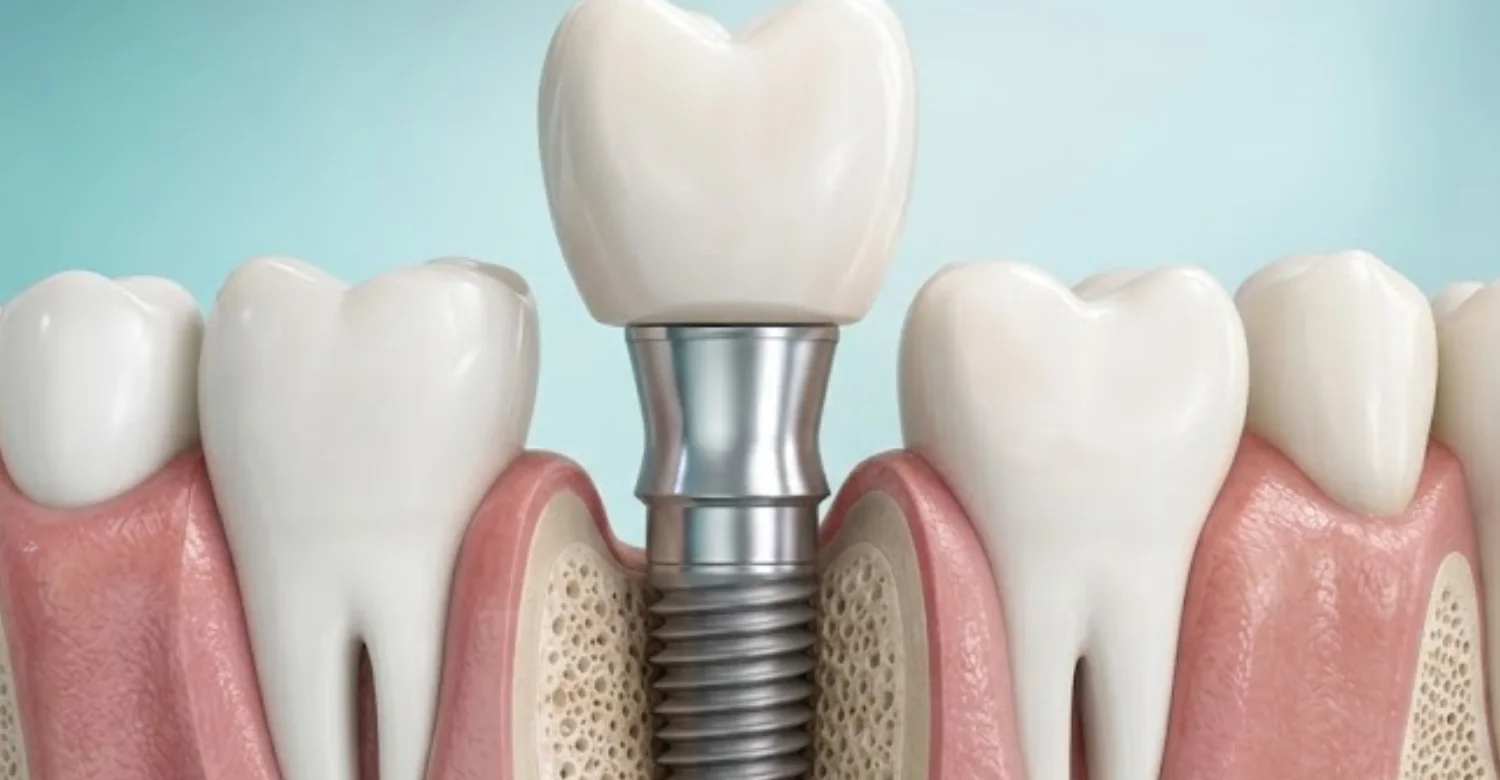
Note : All images used are for editorial and illustrative purposes only and may not originate from the original news provider or associated company.
How Can You Relieve Discomfort From a Healing Abutment?
Discomfort after healing abutment placement is usually mild and manageable. Simple measures can make the first few days easier. Always follow your dentist's specific instructions first. Below are common, safe options most patients can use.
What Provides Safe Relief for Mild Pain After Placement?
Rest and gentle care are the first steps for comfort. Avoid chewing on the treated side for a few days. Keep your head slightly raised when lying down on the first night. Over-the-counter pain relief can help when used as directed. Most pain fades within two to three days. Keeping well hydrated also supports recovery.
Can a Cold Compress Help With Postoperative Swelling?
Yes, cold compresses help reduce swelling in the first 24 to 48 hours. Wrap an ice pack in a cloth and hold it on your cheek. Apply it for 15 to 20 minutes, then remove it for a similar period. Never place ice directly against your skin. After two days, cold usually helps less. Gentle warmth may then feel more soothing.
Which Pain-Relief Medicines May Be Appropriate?
Ibuprofen and paracetamol, also called acetaminophen, are commonly used after dental procedures. Studies show combining them can give better relief than either alone. Always follow the label dose and your dentist's advice. Ibuprofen may not suit people with stomach ulcers, kidney disease, or asthma. Check with your doctor if you take other medicines. Avoid aspirin unless your doctor specifically advises it.
Can Warm Saltwater Rinses Be Used After Implant Surgery?
Warm saltwater rinses are often recommended from the day after surgery. Mix about half a teaspoon of salt in a cup of warm water. Swish gently around the area, then let the water fall from your mouth. Avoid vigorous rinsing that might disturb healing tissue. Two to four rinses a day are common. Ask your dentist when to start, as advice varies.
Why Should Patients Avoid Applying Aspirin, Alcohol, or Home Remedies Directly to the Gum?
Aspirin placed on the gum can cause a chemical burn. Alcohol and strong mouthwashes can irritate and dry healing tissue. Clove oil and other home remedies may also inflame the area. These products do not treat the cause of discomfort. They may even hide signs of a problem that needs care. Ask your dentist before using any product on the gum.
When Is Pain Relief Not Enough and a Dental Examination Is Needed?
Pain that gets worse after the third day needs a dental review. So does pain that wakes you at night or does not respond to medication. Throbbing pain with swelling or pus suggests infection. A loose or moving abutment also needs examination. Do not increase medicine doses beyond the label to cope. Early review usually means simpler treatment.
How Much Does a Dental Implant Healing Abutment Cost in the US, UK, and Turkey?
The cost of a dental implant healing abutment varies depending on the component, placement procedure, and overall implant treatment. Many clinics include the healing abutment in the total implant package rather than listing it separately. The following tables compare estimated costs and calculated midpoints across the US, UK, and Turkey.
Average Dental Implant Healing Abutment Costs by Country
Cost Category | United States | United Kingdom | Turkey |
Healing abutment component alone | 30–150 | Usually bundled | Usually bundled |
Average component cost / midpoint | ~$90 | Not available | Not available |
Second-stage placement procedure | Median negotiated rate: ~$1,455 | Often included or billed separately | Often included |
Complete single implant, abutment, and crown | 3,000–6,000 | 1,800–4,000 | 500–1,800 |
Average complete treatment cost / midpoint | ~$4,500 | ~$2,900 | ~$1,150 |
Note: Midpoints are calculated from the provided price ranges and are not verified national averages. The US procedure figure represents a reported median negotiated rate, not an average healing abutment component price. UK and Turkish standalone component prices were not provided.
What Is the Average Cost of a Healing Abutment in the United States?
In the United States, a stock dental implant healing abutment typically costs approximately 30–150 as a standalone component, giving a calculated midpoint of $90. The placement procedure may be billed separately. The supplied pricing data lists a median negotiated rate of approximately $1,455 for ADA code D6011, which covers second-stage implant surgery.
US Cost Category | Estimated Cost |
Stock healing abutment | 30–150 |
Calculated component midpoint | $90 |
D6011 median negotiated rate | ~$1,455 |
Complete implant, abutment, and crown | 3,000–6,000 |
Complete treatment midpoint | $4,500 |
Actual patient fees depend on the clinic, insurance coverage, implant system, and whether the component and procedure are included in the overall treatment plan.
What Is the Average Cost of a Healing Abutment in the United Kingdom?
In the United Kingdom, private dental clinics rarely list the healing abutment as a separate charge. It is commonly included in the implant or restoration package. A complete single dental implant, abutment, and crown typically costs approximately 1,800–4,000, with a calculated midpoint of $2,900.
UK Cost Category | Estimated Cost |
Standalone healing abutment | Usually not listed separately |
Complete implant, abutment, and crown | 1,800–4,000 |
Complete treatment midpoint | $2,900 |
Second-stage uncovering procedure | May be included or billed separately |
Patients should ask whether the healing abutment, implant uncovering, and follow-up appointments are included in their written quotation.
What Is the Average Cost of a Healing Abutment in Turkey?
In Turkey, the healing abutment is commonly included in dental implant packages. A complete single implant with an abutment and crown typically ranges from approximately 500–1,800, giving a calculated midpoint of $1,150.
Turkey Cost Category | Estimated Cost |
Standalone healing abutment | Usually not listed separately |
Complete implant, abutment, and crown | 500–1,800 |
Complete treatment midpoint | $1,150 |
Placement and follow-up | Often included; confirm with the clinic |
Final costs depend on the implant brand, crown material, clinical requirements, and services included. International patients should also consider travel, accommodation, and any necessary follow-up visits.
What Is Included in the Healing Abutment Placement Fee?
A placement fee may cover the clinician's time, local anaesthesia, and the placement of the healing abutment. When a second-stage procedure is necessary, it may also include uncovering the implant. Sutures, postoperative imaging, and an early review appointment may be included, depending on the clinic.
Potentially Included Service | What to Confirm |
Healing abutment component | Whether it is included in the fee |
Implant uncovering | Whether second-stage surgery is required |
Local anaesthesia | Whether an additional charge applies |
Sutures and postoperative care | Whether these are included |
X-rays and follow-up | Whether imaging and review appointments are covered |
How Do Stock and Custom Healing Abutment Costs Differ?
Stock healing abutments are manufactured in standard sizes and are generally less expensive than customized components. Custom abutments are designed for an individual patient's anatomy and may require digital design and milling.
Healing Abutment Type | Estimated US Component Cost | Average / Midpoint |
Stock healing abutment | 30–150 | ~$90 |
Custom healing abutment | 150–400 | ~$275 |
The custom component midpoint is calculated from the stated range. These are indicative estimates, not standardized prices across all manufacturers or clinics.
Custom components may be considered when anatomy, soft-tissue contours, or restorative requirements call for a personalized design. The appropriate option depends on the implant system and the clinician's treatment plan.
Does the Total Dental Implant Treatment Price Include the Healing Abutment?
In many clinics, the healing abutment is included in the total dental implant treatment price. However, some practices itemize components or charge separately for second-stage surgery. Patients should check the quotation carefully before comparing treatment packages.
Country | Typical Pricing Approach | What to Confirm |
United States | Component or procedure may be billed separately | Component, surgery, and professional fees |
United Kingdom | Commonly included in the implant package | Whether uncovering and restoration are included |
Turkey | Commonly included in implant packages | Which components and follow-up services are covered |
What Factors Affect the Final Cost?
Several factors determine the final price of dental implant treatment, including the implant system, component material, surgical complexity, and follow-up care.
Implant System and Component Material
Premium implant systems may have higher component prices. Titanium stock components are generally economical, while custom-milled components and some alternative materials may cost more. Using components compatible with the implant system is important for proper fit and restoration planning.
Surgical Complexity and Additional Procedures
Patients who require implant uncovering, bone grafting, sinus lifts, or soft-tissue procedures may incur additional fees. Complex cases may also require CBCT imaging, longer appointments, or additional treatment planning.
Additional Procedure | Potential Cost Impact |
Second-stage implant surgery | May add a separate surgical fee |
Bone grafting | Depends on graft material and complexity |
Sinus lift | Depends on the procedure and clinical needs |
CBCT imaging | May be included or charged separately |
Soft-tissue treatment | Depends on the type of treatment required |
Follow-Up Visits and Management of Complications
Routine reviews may be included in the treatment package, but additional visits for a loose component, gum irritation, or prosthetic adjustments can increase the final cost. Ask whether maintenance, repairs, and the management of complications are covered.
Follow-Up Item | What to Check |
Routine review appointments | Number of visits included |
Abutment adjustments | Whether additional fees apply |
Component replacement | Whether replacement parts are covered |
Treatment of complications | What costs may be charged separately |
Key Takeaways
Country | Complete Implant Treatment Range | Calculated Midpoint |
United States | 3,000–6,000 | $4,500 |
United Kingdom | 1,800–4,000 | $2,900 |
Turkey | 500–1,800 | $1,150 |
A standalone healing abutment may cost approximately 30–150 in the US, while UK and Turkish clinics commonly include the component in their implant packages. The complete treatment price provides a broader comparison, but it includes the implant and crown as well as the abutment. Always request an itemized quotation to confirm which components, surgical procedures, and follow-up services are covered.
At Vitrin Clinic Treatment Pricing
The cost of dental implant treatment varies significantly depending on the procedure scope, implant brand, and country of treatment. The following table provides a transparent comparison of average costs across the United Kingdom, United States, and Vitrin Clinic in Istanbul from a single implant to full-arch restoration allowing patients to evaluate their options with accurate financial context before committing to a treatment plan.
Treatment type | 🇬🇧 UK | 🇺🇸 USA | 🇹🇷 Turkey |
|---|---|---|---|
Single dental implant Implant post + abutment + crown | $2,400 – $5,700 | $3,000 – $6,000 | $500 – $700 |
Implant-supported crown Crown on existing implant | $1,270 – $2,540 | $1,500 – $3,000 | $700 – $900 |
All-on-4 Per arch, fixed full-arch restoration | $10,000 – $22,000 | $18,000 – $30,000 | $3,500 – $7,500 |
All-on-6 Per arch, 6-implant full-arch restoration | $12,700 – $25,400 | $20,000 – $35,000 | $4,000 – $9,000 |
Full mouth reconstruction Both arches, upper + lower | $29,000 – $50,000+ | $36,000 – $70,000+ | $7,000 – $15,000 |
3D CT scan & consultation | Charged separately | Charged separately | Free & included |
Estimated saving | — | — | Up to 70% less |
* Prices are averages for reference only and may vary based on individual case requirements, implant brand, bone condition, and treatment complexity. A personalised quote is provided following your free consultation.
Tips for Patients With a Dental Implant Healing Abutment
Living with a dental implant healing abutment for a few weeks is usually easy. Small daily habits make a big difference to healing. These tips help protect the component and the gum. Ask your dentist to adapt them to your situation. Following them consistently improves comfort and results.
How Should You Clean Around a Healing Abutment?
Use an extra-soft toothbrush and brush the abutment gently twice a day. Angle the bristles toward the gumline around the metal. A single-tuft brush helps reach the sides more easily. Rinse with any mouthwash your dentist prescribes. Avoid water flossers on high pressure during the first weeks. Clean the rest of your mouth normally to keep bacteria levels low.
What Foods Should You Eat During the Early Healing Period?
Choose soft, nourishing foods for the first several days. Good options include yogurt, eggs, soups, mashed vegetables, and smoothies eaten with a spoon. Fish, pasta, and soft rice also work well. Lukewarm temperatures are more comfortable than very hot foods. Protein-rich meals support tissue repair. Chew on the opposite side whenever possible.
Which Foods and Habits Should You Avoid?
Avoid hard, crunchy, or sticky foods near the abutment. Nuts, seeds, and popcorn can lodge around the gum. Do not chew ice or hard sweets on that side. Avoid smoking, vaping, and alcohol during early healing. Straws should also be avoided for the first day. These steps protect both the gum and the implant.
How Can You Protect the Abutment While Brushing?
Use light pressure, about the force you would use on a ripe tomato. Brush with small circular motions rather than hard scrubbing. Avoid knocking the abutment with the brush handle. An electric toothbrush in a gentle setting can help. Replace your brush head every three months. Gentle consistency matters far more than force.
What Should You Do if the Abutment Feels Different When Biting?
A change in bite feel may mean the abutment has loosened. It could also mean the opposite tooth is touching it. Stop chewing on that side and check for movement gently with your tongue. Contact your dentist if the feeling persists. Early adjustment prevents overload on the implant. Bring up the change at your next visit, even if it settles.
What Questions Should You Ask at Your Follow-Up Appointment?
Ask whether the gum is healing as expected. Check how long the healing abutment will stay in place. Ask when impressions or scans for the crown will be taken. Clarify any cleaning tools you should use at home. Finally, ask which symptoms should prompt you to call between visits. Writing your questions down beforehand helps you remember them.
Why Should You Never Remove or Adjust the Healing Abutment Yourself?
Removing the abutment exposes the implant connection to bacteria. Gum tissue can begin closing over the opening within hours. Incorrect tools can damage the screw or the implant threads. Reattaching it without sterile cleaning can introduce infection. Any adjustment should always be done by your dental team. Even curiosity can lead to costly damage.
At Vitrin Clinic: How Is Healing Abutment Care Planned?
At Vitrin Clinic, healing abutment care is planned as part of the full implant journey. Each step is matched to your gum, bone, and final crown plan. Our aim is predictable healing and a natural-looking result. Below is how this planning works. Every dental implant healing abutment is chosen with the final crown in mind.
How Is the Implant and Surrounding Gum Tissue Assessed?
We begin with a careful clinical examination of the implant site. Gum thickness, color, and keratinized tissue width are recorded. Healthy implants are often linked to at least 2 millimeters of keratinized tissue. We also review your oral hygiene and bite. These findings guide each healing decision. Baseline photos may also be taken for comparison.
When Are Digital X-Rays or CBCT Imaging Clinically Appropriate?
Digital X-rays are used to confirm abutment seating and check bone levels. They expose patients to much lower radiation than traditional film. CBCT is used only when 3D information changes the treatment plan. Examples include grafted sites or suspected anatomical problems. Every image is chosen for a clear clinical reason. We follow the principle of keeping radiation as low as reasonably achievable.
How Is the Healing Abutment Selected for the Patient's Implant?
The abutment must match the implant brand, diameter, and connection type. We measure gum thickness to choose the right height. Width is chosen to suit the tooth being replaced. For front teeth, a custom abutment may be advised. This careful selection supports a natural emergence profile. Only genuine, compatible components are used.
How Are Gum Healing, Component Stability, and Readiness for Restoration Evaluated?
At follow-up visits, we check gum health, tissue contour, and abutment stability. Bleeding, pocket depth, and comfort are all recorded. Implant stability may be measured before final impressions. The crown stage begins only when tissue and bone are ready. This avoids rushing and protects the long-term result. You will be told clearly when each stage is complete.
When Is Further Treatment or a Specialist Review Recommended?
Further treatment is advised if gum tissue is thin or receding. We may recommend a soft-tissue graft in these cases. Persistent inflammation or bone loss may need a periodontal review. Complex medical histories may require input from your physician. Our goal is always to solve problems before the crown is fitted. We explain every recommendation and its reasons.
How Vitrin Clinic Supports Your Treatment Journey
Vitrin Clinic supports patients from the first consultation through to final crown placement. We combine clinical care with clear communication at every stage. This is especially important for patients traveling from abroad. Here is what that support includes. You are never left unsure about the next step.
Initial Consultation and Review of Dental Implant History
Your first visit includes a full review of any previous implant treatment. We ask about the implant brand, surgery date, and healing so far. Previous X-rays and records are reviewed whenever available. This history helps us plan safe, compatible next steps. Bring any documents from your earlier dentist. Implant passports or brand cards are especially useful.
Personalized Assessment of Gum Tissue and Implant Healing
Every patient receives an individual assessment of gum and implant health. We examine tissue thickness, color, and stability around each implant. Your hygiene routine and lifestyle factors are also discussed. This creates a healing plan tailored to your situation. No two implant sites are treated exactly alike. Your plan is reviewed and updated at each visit.
Digital Diagnostic Planning When Indicated
Digital X-rays and intraoral scans support accurate treatment planning. CBCT imaging is added when 3D information is clinically needed. Digital planning helps align the final crown with the gum shape. It also reduces the number of visits for some patients. Each tool is used only when it adds value. You will always understand why a scan is recommended.
Coordinating Healing Abutment Care With Final Crown Placement
The healing stage and crown stage are planned together from the start. Abutment size is chosen with the final crown shape in mind. Scan or impression timing is matched to tissue readiness. This coordination helps reduce delays and unnecessary adjustments. The result is a smoother transition to your permanent tooth. Fewer adjustments mean fewer trips for international patients.
Follow-Up Guidance for International Patients
International patients receive a clear written timeline for each stage. We explain what to expect between trips and how to care for the abutment. Remote check-ins with photos can help monitor early healing. Patients also receive guidance on local dental support if needed. Travel plans are aligned with key healing milestones. This helps you plan time off and flights with confidence.
Aftercare Instructions and Communication With the Treating Dentist
Every patient receives written aftercare instructions after each procedure. These cover cleaning, diet, pain relief, and warning signs. You can contact the treating dentist directly with questions. Prompt communication helps catch small problems early. We also share records with your home dentist when requested. Clear contact details are provided before you leave.
Ready to transform your smile?
Talk to our team and get a personal FREE treatment plan.
Key Takeaways
A healing abutment is a small but important step in implant treatment. Understanding it helps you heal comfortably and avoid preventable problems. The key points are summarized below. Use them as a quick reference during your recovery.
What Patients Should Know About Healing Abutment Function and Gum Healing
A healing abutment shapes the gum and protects the implant connection. It is meant to stay visible above the gumline. The soft-tissue seal usually matures within six to eight weeks. Bone integration takes longer, often three to six months. Good daily cleaning is the most important thing you can do. Patience during healing supports a lasting result.
Which Symptoms Are Expected and Which May Indicate a Complication?
Mild tenderness, swelling, and light bleeding are expected in the first days. These should improve steadily within one to two weeks. Increasing pain, pus, bad taste, or looseness are warning signs. Fever or spreading swelling needs urgent care. Difficulty breathing or swallowing is an emergency. When unsure, call your dentist for advice.
When to Contact a Dentist About Pain, Swelling, Bleeding, or Looseness
Contact your dentist if pain worsens after the third day. Call if swelling grows rather than shrinks. Bleeding that continues beyond the first day also needs advice. A loose or rotating abutment should be checked within a day or two. Never tighten or remove it yourself. Early contact usually means simpler, faster solutions.
Why Professional Follow-Up Matters Before Final Implant Restoration
Follow-up visits confirm that gum and bone are ready for the crown. They allow early treatment of any irritation or looseness. X-rays track bone levels against your baseline. Skipping reviews can lead to crowns placed on unstable tissue. Regular checks protect your long-term investment. Well-maintained implants show ten-year survival rates above 95% in long-term studies.
At Vitrin Clinic
At Vitrin Clinic, dental implant treatment is planned around each patient's oral health, bone structure, and restorative needs. A dental implant healing abutment helps guide gum tissue healing and shape the area for the final crown. Our team monitors healing, evaluates soft-tissue health, and plans the next restoration stage to support a functional, natural-looking result. Book your FREE consultation for a personalized dental implant assessment.
Reference
FAQs
Dr. Rifat Alsaman has more than 5 years of clinical experience in dentistry and currently serves as the Head of the Medical Team at Vitrin Clinic. He is dedicated to providing exceptional patient care, overseeing treatment planning, and ensuring the highest clinical standards across the team. His expertise, attention to detail, and commitment to continuous professional development have helped countless patients achieve healthier, more confident smiles.


