Dental Implant
September 22, 2026
What Is Hypodontia, What Causes It, and How Is It Treated?
 Dr. Rifat Alsaman
Hypodontia condition describes the developmental absence of one or more teeth. Hypodontia usually results from failure of a tooth to develop before birth or during childhood. It can affect appearance, tooth eruption, bite development, and long-term dental planning. Some people with hypodontia have only one missing tooth, while others have several missing teeth. Genetics can contribute to hypodontia, although environmental and developmental factors may also influence tooth formation. Diagnosis of hypodontia commonly combines clinical examination with dental imaging.
What Is Hypodontia?
Hypodontia is a developmental dental issue involving congenitally missing teeth. The affected tooth never forms during normal dental development in patients with hypodontia. It differs from losing a tooth because of decay, trauma, extraction, or gum disease. Hypodontia most commonly involves permanent teeth. Missing teeth from hypodontia can create spaces and influence neighboring tooth positions. Some patients with hypodontia also have smaller or unusually shaped teeth. Hypodontia severity varies considerably between individuals.
Definition and Meaning
The term hypodontia means that one or more teeth have failed to develop. Hypodontia generally refers to congenitally missing teeth, excluding third molars in many epidemiological studies. Hypodontia differs from losing a tooth after extraction, decay, trauma, or gum disease. The missing tooth in hypodontia was never formed normally during dental development. Hypodontia most commonly affects the permanent dentition. Some hypodontia patients have a single missing tooth, while others have multiple absent teeth.
What Are Congenitally Missing Teeth Called?
The phrase used here generally refers to teeth that are congenitally absent due to hypodontia. These teeth do not appear because their developmental buds failed to form normally. In cases of hypodontia, the most frequently affected teeth include mandibular second premolars and maxillary lateral incisors. However, hypodontia distribution varies between populations and individual patients. A person with hypodontia may have one absent tooth or several missing teeth.
What Does Congenital Tooth Absence Mean?
Congenital tooth absence in hypodontia means teeth are absent because they did not develop normally. The absence in hypodontia originates during dental development rather than from later tooth loss. Genetic factors can have an important role in isolated and syndromic hypodontia cases. Several genes involved in tooth development have been associated with tooth agenesis and hypodontia. However, not every hypodontia patient has an identifiable genetic mutation. Environmental and developmental influences may also contribute to hypodontia.
Is This the Same as Missing Teeth?
The terms are related, but hypodontia and general missing teeth are not interchangeable. Missing teeth can result from congenital absence due to hypodontia, extraction, trauma, severe decay, or periodontal disease. Developmental absence in hypodontia means the tooth never formed. Acquired tooth loss occurs after the tooth developed normally. This distinction affects hypodontia diagnosis and treatment planning. A congenital gap caused by hypodontia may require orthodontic space management or tooth replacement.
Hypodontia vs Tooth Loss From Disease, Trauma, or Extraction
Developmentally absent teeth in hypodontia never complete normal formation. Disease-related tooth loss occurs after a tooth has developed and erupted. Trauma can remove or damage an otherwise normally formed tooth. Extraction intentionally removes a tooth because of disease, crowding, or another indication. Radiographs can help distinguish hypodontia from these situations. A congenital hypodontia gap may show no developing tooth structure underneath.
Is This Condition Common or Rare?
Hypodontia is relatively common compared with many other developmental dental anomalies. However, reported hypodontia prevalence varies significantly by population, age, diagnostic method, and study design. A major systematic review found an overall hypodontia prevalence of approximately 6.4%, excluding third molars. The same review found meaningful geographic differences in hypodontia rates. Most hypodontia patients have mild involvement rather than extensive tooth absence.
How Common Is This Condition?
A systematic review and meta-analysis estimated hypodontia prevalence at 6.4%, excluding third molars. The reported confidence interval for hypodontia was 5.7% to 7.2%. However, hypodontia prevalence differs substantially between studies. Diagnostic criteria, age ranges, radiographic methods, and population characteristics can influence hypodontia results. Some orthodontic populations show higher hypodontia percentages because patients are already seeking dental care.
How Many People Are Affected?
The number of affected people depends on the population size and prevalence estimate. Using the 6.4% pooled estimate, approximately 64 people per 1,000 could have congenital absence of one or more permanent teeth. This is a statistical illustration, not an individual diagnosis. Prevalence can be higher or lower in specific populations.
Prevalence and Population Differences
Prevalence differs across geographic populations. One systematic review reported approximately 13.4% in African populations, 7% in European populations, and 6.3% in Asian and Australian populations. North America was reported at approximately 5%. These figures should not be interpreted as fixed rates for every country or ethnic group. Sampling methods and diagnostic criteria can influence comparisons.
Which Teeth Are Most Commonly Missing in Hypodontia?
The most frequently absent teeth are generally mandibular second premolars and maxillary lateral incisors. Maxillary second premolars are also frequently affected. A large meta-analysis found mandibular second premolars were most commonly missing in most studies. However, the order can vary between populations. Some studies have reported maxillary lateral incisors as the most frequent absence.
Mandibular Second Premolars
Mandibular second premolars are among the most commonly absent permanent teeth. Their absence can leave a space after the primary molar is lost or extracted. The neighboring teeth may drift into the area. Clinicians therefore assess the condition of the primary molar and surrounding teeth.
Maxillary Lateral Incisors
Maxillary lateral incisors are commonly absent and can create visible anterior spaces. Their absence may affect smile symmetry and canine position. Treatment often requires careful orthodontic and restorative planning. Options can include orthodontic space closure or maintaining space for prosthetic replacement.
Maxillary Second Premolars
Maxillary second premolars are another commonly affected tooth group. Their absence may alter posterior spacing and occlusion. The condition of the primary molar can influence the timing of treatment. Orthodontic management may involve space closure or preservation. Restorative replacement becomes relevant when space must be maintained.
Lateral Incisor Absence
Missing lateral incisors can have significant aesthetic consequences. The gap can alter tooth proportions and affect the position of adjacent canines. Orthodontic treatment may close the space or prepare it for replacement. Canine substitution is one established approach in selected patients.
Hypodontia vs Oligodontia vs Anodontia
These terms describe different degrees of congenital tooth absence. This condition generally refers to a smaller number of missing teeth. Oligodontia describes a substantially larger number of congenitally absent teeth. Anodontia refers to complete absence of teeth and is extremely uncommon. Classification can vary slightly between clinical and research sources. The number of missing teeth therefore matters when describing severity.
This Condition vs Oligodontia
This condition generally describes a smaller number of congenitally missing teeth. Oligodontia describes a more extensive developmental absence. Definitions vary slightly between publications. A commonly used clinical distinction describes oligodontia as six or more missing permanent teeth, excluding third molars. Anodontia refers to the complete absence of teeth.
Oligodontia vs This Condition
Oligodontia involves a larger number of developmentally absent teeth. The treatment burden can therefore be considerably greater. Patients may require orthodontics, multiple restorations, removable prostheses, bridges, or implants. Severe cases can also require broader medical assessment when a syndrome is suspected. In contrast, mild forms may involve only one missing tooth.
This Condition vs Anodontia
Anodontia means complete absence of teeth. It is considerably more severe than isolated congenital absence of a few teeth. Complete absence is rare and may occur as part of severe developmental or genetic conditions. Patients require extensive prosthetic and multidisciplinary management. Evaluation can include dental, medical, and genetic assessment.
Anodontia vs Hypodontia vs Oligodontia
These terms describe different degrees of developmental tooth absence. Milder forms usually indicate fewer missing teeth. Oligodontia indicates extensive absence, often six or more permanent teeth. Anodontia describes complete absence. The terminology helps clinicians communicate severity and treatment needs.
Severity Classification: Mild, Oligodontia, and Anodontia
Classification helps describe the extent of tooth agenesis. The number of absent teeth is the most straightforward factor. Clinicians also consider whether primary or permanent teeth are affected. The distribution across the upper and lower arches is relevant. Associated dental anomalies may also influence severity.
How the Number of Missing Teeth Changes the Classification
The number of missing teeth generally determines whether a case is described as mild or extensive. Many publications define the milder category as fewer than six missing teeth. Oligodontia is commonly used for six or more missing permanent teeth, excluding third molars. Anodontia indicates complete tooth absence.
Tooth Agenesis and Terminology
Tooth agenesis describes failure of a tooth to develop. The clinical term used most often for a limited number of congenitally absent teeth overlaps with this broader concept. These terms overlap considerably in dental literature. Tooth agenesis can also be discussed in relation to oligodontia and anodontia.
This Condition vs Hyperdontia
Hyperdontia means having extra teeth beyond the normal number. The two conditions represent opposite tooth-number abnormalities. One involves fewer teeth, while the other involves additional teeth. Hyperdontia may produce crowding or eruption problems. The absent-tooth condition more commonly creates spaces or altered tooth movement.
Can Missing and Extra Teeth Occur Together?
Yes, although the combination is uncommon. A patient may have developmentally absent teeth and supernumerary teeth simultaneously. This pattern is sometimes described as hypohyperdontia. Diagnosis requires a complete tooth count and appropriate imaging. A panoramic radiograph may identify unerupted supernumerary teeth.
Hypohyperdontia and Mixed Tooth-Number Abnormalities
Mixed tooth-number abnormalities can complicate diagnosis. A patient may have several missing teeth alongside one or more supernumerary teeth. Such patterns require careful radiographic assessment. The clinician must distinguish congenital absence from an unerupted tooth. Treatment can involve extraction, orthodontic movement, or restoration.
What Causes Hypodontia?
The causes are usually multifactorial. Genetic influences play an important role in many nonsyndromic cases. Tooth development depends on complex interactions between genes and developmental signaling pathways. Environmental influences may also contribute in some situations. Certain genetic syndromes can produce more extensive tooth absence. However, many patients have isolated missing teeth without another diagnosed condition. Family history can provide useful information during dental assessment.
Hypodontia Causes
The causes are usually multifactorial. Genetic influences play an important role in many nonsyndromic cases. Several genes involved in tooth development have been linked with dental agenesis. Environmental influences may also affect tooth development. Developmental disturbances, systemic conditions, and syndromes can contribute in selected patients.
Is It Genetic?
Genetics can play an important role in tooth agenesis. Variants affecting tooth-development pathways have been associated with isolated and syndromic cases. Genes such as PAX9 and MSX1 have been investigated extensively.
Is It Hereditary?
Some cases can run in families. Familial patterns suggest genetic inheritance in selected patients. Inherited cases can involve dominant, recessive, or X-linked mechanisms depending on the underlying condition. However, many patients have no obvious family history.
Genetics and Tooth Development
Normal tooth formation depends on coordinated molecular signaling. Genes involved in epithelial and mesenchymal interactions guide tooth initiation and development. PAX9 and MSX1 are among the genes associated with human tooth agenesis. Other pathways may also be involved.
Nonsyndromic Cases
Nonsyndromic cases occur without an identifiable broader syndrome. These cases can involve one or several missing teeth. Genetic factors may still contribute even when no medical condition is present. The distribution often follows recognizable patterns.
Syndromic Hypodontia
Syndromic tooth agenesis occurs alongside other medical or developmental findings. Ectodermal dysplasia is a well-known example. Other reported associations include Down syndrome and several rare genetic syndromes. The presence of multiple missing teeth does not automatically establish a syndrome.
Environmental Factors
Environmental influences have been investigated alongside genetic factors. Dental development is sensitive to disturbances during specific developmental periods. Certain systemic illnesses, nutritional problems, and local developmental disturbances have been discussed in the literature. However, evidence does not support attributing every case to one environmental exposure.
Why More Than One Cause Can Be Involved
Tooth development involves multiple biological pathways. Genetic susceptibility may interact with developmental and environmental influences. This multifactorial model explains why patients can have different patterns despite similar clinical findings. Some families show clear inheritance. Other patients have isolated cases without an obvious family history.
Can It Run in Families?
Yes, familial cases have been documented. Family members can show similar patterns of congenitally absent teeth. The inheritance pattern depends on the underlying genetic mechanism. However, a person can also develop an isolated case without affected relatives. A family history is therefore useful but not diagnostic.
When Genetic Counseling May Be Considered
Genetic counseling may be considered when tooth absence is extensive or occurs alongside other developmental findings. It can also be useful when several family members have similar patterns. Counseling can explain possible inheritance patterns and testing limitations. Genetic testing is not automatically required for every patient.
Hypodontia Associated Syndromes and Medical Conditions
Multiple missing teeth can sometimes occur alongside genetic or developmental conditions. Ectodermal dysplasia is a recognized example involving abnormal tooth development. Other syndromes may produce tooth agenesis as part of broader clinical findings. However, the presence of one missing tooth does not automatically indicate a syndrome. Conditions such as Down syndrome can also show increased dental developmental abnormalities.
Which Syndromes Are Associated With It?
Several genetic and developmental syndromes can include congenital tooth absence. Ectodermal dysplasia is one of the best-known associations. Other reported conditions include Down syndrome, Rieger syndrome, Kabuki syndrome, and Wolf-Hirschhorn syndrome.
Hypodontia and Ectodermal Dysplasia
Ectodermal dysplasia includes a group of inherited disorders affecting ectodermal structures. Teeth can be missing, small, or abnormally shaped. Patients may also have changes involving hair, nails, skin, or sweat glands. The dental pattern can therefore be part of a broader syndrome.
Down Syndrome and Tooth Development
Down syndrome can be associated with differences in dental development. Delayed eruption, altered tooth shape, and congenital tooth absence have been reported. However, not every person with Down syndrome has missing teeth. Dental findings vary between individuals.
Ehlers-Danlos Syndrome
Ehlers-Danlos syndromes are connective-tissue disorders with variable clinical features. Some dental and oral findings have been reported in affected individuals. However, the relationship with congenital tooth absence is not as straightforward as established syndromic associations.
Other Genetic Conditions
Congenital tooth absence occurs in several genetic conditions. Examples include ectodermal dysplasia and other craniofacial or developmental syndromes. Some cases involve mutations affecting tooth-development genes. The pattern of missing teeth can sometimes provide a clinical clue.
When Multiple Missing Teeth May Require Broader Medical Assessment
Multiple missing teeth can occur as an isolated dental finding. However, extensive absence combined with other abnormalities may suggest a broader condition. Clinicians may review growth, skin, hair, nails, facial development, and family history.
Autism and Missing Teeth
Current evidence does not establish autism as a direct cause of congenital tooth absence. Children with autism may have different oral-health needs or dental-care challenges. These factors can affect access to examinations and treatment.
Hypodontia and ADHD
There is no established basis for treating ADHD itself as a direct cause of congenital tooth absence. Children with ADHD may have oral-health challenges involving hygiene, diet, or appointment adherence. These factors differ from developmental tooth formation.
Cancer and Missing Teeth
Congenital tooth absence is not generally considered a direct sign of cancer. Some genetic syndromes can involve both dental abnormalities and increased cancer risks. In such situations, the underlying syndrome rather than the missing tooth itself explains the association.
Ovarian Cancer and Missing Teeth
Some genetic conditions associated with cancer risk can also involve dental abnormalities. However, isolated congenital tooth absence does not establish ovarian cancer risk. A dental finding should not be used as a cancer screening test.
Infertility and Missing Teeth
There is no general evidence that isolated congenital tooth absence directly causes infertility. Some rare genetic syndromes can involve multiple body systems, potentially affecting reproductive health. In such cases, the underlying disorder may explain both findings.
What Is Known About These Reported Associations?
Some medical associations reported online can be stronger than the available evidence supports. Congenital tooth absence has established relationships with several developmental and genetic conditions. Other proposed associations require more research or may reflect rare syndromic cases.
What Are the Signs and Symptoms of Hypodontia?
This condition often appears as an unexplained gap where a permanent tooth should develop. A primary tooth may also remain longer than expected. Permanent tooth eruption can become delayed when the underlying tooth is absent. Neighboring teeth may drift toward the empty space. Some patients develop smaller or unusually shaped teeth. Changes in tooth position can also affect the bite.
Common Signs of Missing Teeth
The most obvious sign is an unexplained gap where a tooth should develop or erupt. Children may retain a baby tooth longer than expected. Permanent teeth may fail to appear at the expected developmental stage. Adjacent teeth can drift into space.
Gaps Between Teeth
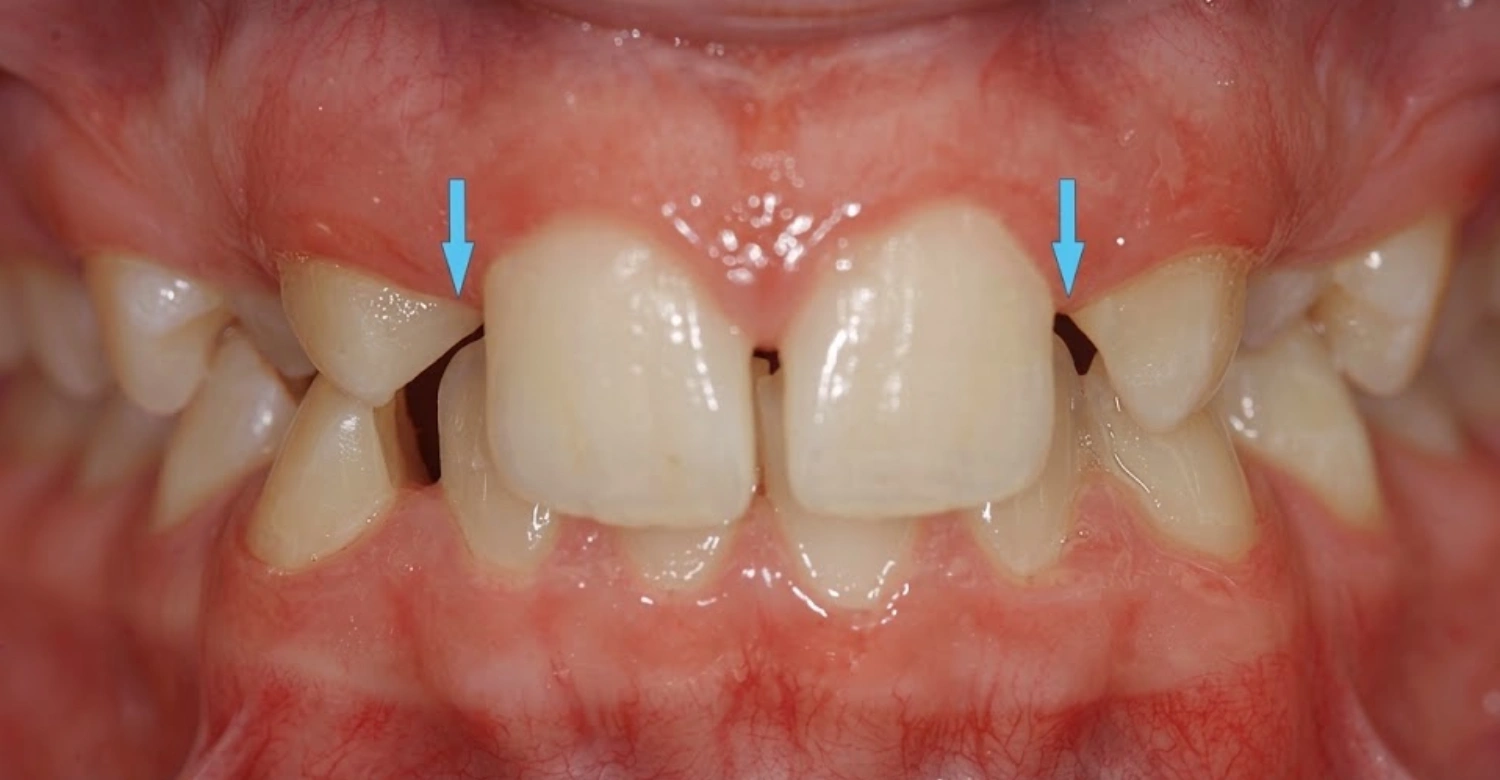
Gaps can occur when a permanent tooth fails to develop. The size of the space depends on the missing tooth and neighboring tooth positions. Front gaps can be particularly noticeable. Posterior spaces may become less obvious because adjacent teeth can drift.
Delayed Eruption of Permanent Teeth
Delayed eruption does not always mean a tooth is absent. A permanent tooth may simply be developing or erupting later than expected. Radiographs help distinguish delayed eruption from developmental absence.
Smaller or Abnormally Shaped Teeth
Patients can have small or unusually shaped teeth alongside missing teeth. Peg-shaped maxillary lateral incisors are one recognized example. Such abnormalities can complicate restorative and orthodontic planning.
Retained Baby Teeth
A primary tooth may remain when its permanent successor is absent. This can delay normal replacement and alter space distribution. Some retained primary teeth can remain functional for many years.
Changes in Bite and Tooth Position
Missing teeth can alter the position of neighboring teeth. Teeth may tilt, rotate, or drift toward the empty space. The dental arch can also become narrower in some patients.
Signs in Adults
Adults may discover congenital tooth absence during orthodontic, restorative, or routine dental assessment. Some adults have retained primary teeth. Others may have longstanding spaces or altered tooth positions.
Hypodontia in Children and Teenagers
Children and teenagers require careful timing because the jaws and teeth are still developing. A missing permanent tooth may not be immediately replaced. Clinicians may preserve a primary tooth or maintain space until growth is sufficient.
Signs Involving the Upper Lateral Incisors
Congenital absence of upper lateral incisors can affect smile symmetry. The canines may drift into the missing spaces. Orthodontists may close the spaces through canine substitution or preserve them for restorative replacement.
Signs Involving the Lower Teeth
Missing lower teeth can affect space, tooth-size relationships, and occlusion. Mandibular second premolars are among the most frequently affected teeth. Lower incisor absence can create different orthodontic challenges. Treatment can involve space closure or preservation.
Can Hypodontia Affect Oral Function and Appearance?
Missing teeth can influence both dental function and appearance. The effect depends strongly on the number and location of absent teeth. Front-tooth absence may create visible spaces during speaking or smiling. Posterior tooth absence can affect chewing efficiency and tooth contacts. Neighboring teeth may tilt or drift into available spaces. These changes can alter the developing dental arch and occlusion.
Bite Development
Missing teeth can influence occlusion and the development of dental arches. Neighboring teeth may drift into spaces. Opposing teeth may over-erupt when an antagonist is absent. These changes can complicate later restoration.
Missing Teeth and Chewing Function
A single missing tooth does not always cause noticeable chewing problems. Multiple missing posterior teeth can have greater functional consequences. The effect depends on the location and number of absent teeth.
Speech Effects
Speech effects depend strongly on which teeth are missing. Anterior tooth absence can sometimes affect airflow and articulation. Not every patient develops speech difficulties. Children may adapt as they grow.
Hypodontia and Facial and Dental Aesthetics
Aesthetic effects are more noticeable when front teeth are absent. Gaps can alter smile symmetry and tooth proportions. Small neighboring teeth can further influence the appearance. Treatment may combine orthodontics and restorative dentistry.
Tooth Movement Around Congenitally Missing Teeth
Adjacent teeth may drift toward an empty developmental space. This can reduce the space available for future restoration. Teeth can also rotate or tip. Orthodontics can correct these movements and establish appropriate space.
Effects on Dental Arch Development
Multiple absent teeth can influence arch width and tooth alignment. Studies have reported reduced intercanine and intermolar widths in affected groups. The effect varies according to which teeth are absent.
How Is Hypodontia Diagnosed?
Diagnosis begins with a detailed dental examination and developmental history. Dentists assess tooth eruption, spacing, retained primary teeth, and tooth shape. Dental radiographs can determine whether an unerupted tooth actually exists. Imaging is particularly useful when eruption is delayed. A panoramic radiograph may provide an overview of developing permanent teeth. CBCT may be considered when three-dimensional information is clinically necessary.
Dental Examination
Diagnosis begins with a detailed dental examination. The dentist reviews tooth eruption, spacing, tooth shape, and retained primary teeth. Medical and family histories can provide additional information. The clinician also considers the patient's dental age.
Why Dental X-Rays Are Important
Dental radiographs can show whether a developing permanent tooth exists. They can also identify impacted teeth and abnormal eruption paths. Panoramic imaging is commonly useful for evaluating multiple teeth.
Radiograph and X-Ray Findings
A typical radiographic finding is the absence of a developing tooth germ where a permanent tooth would normally be expected. The dentist also evaluates neighboring roots and eruption pathways. Retained primary teeth can be assessed at the same time.
When Is a CBCT Scan Considered?
CBCT is not automatically required for every case. It may be considered when three-dimensional information is necessary. Examples include complex implant planning or impacted teeth.
Distinguishing True Absence From Delayed Eruption
The key question is whether the permanent tooth exists. Radiographs can usually help answer this question. If the tooth is present but unerupted, delayed eruption or impaction may be involved.
Diagnosing Hypodontia in Children
Diagnosis in children requires attention to dental development. A missing tooth should not be labeled absent simply because it has not erupted. Radiographs can help determine whether development is occurring. The condition of primary teeth also matters.
Diagnosing Missing Teeth in Adults
Adult diagnosis is often more straightforward because tooth development is complete. Dental records can also clarify previous extractions. Radiographs show whether an unerupted successor remains. The dentist evaluates bone, gums, adjacent teeth, and occlusion.
Why Age and Dental Development Matter Before Confirming Tooth Agenesis
Tooth development follows a predictable sequence but varies between individuals. Younger patients may have developing teeth that are not yet easy to identify. A diagnosis based only on eruption timing can therefore be premature.
Types and Severity of Hypodontia
The severity depends mainly on the number of congenitally missing teeth. Mild cases usually involve only a small number of absent teeth. Moderate cases involve more extensive tooth absence and greater spacing concerns. Severe cases can involve numerous missing permanent teeth. A systematic review reported approximately 81.6% mild, 14.3% moderate, and 3.1% severe cases. These proportions vary between populations and diagnostic criteria.
Mild Cases
Mild cases usually involve only one or two missing teeth. A systematic review reported that approximately 81.6% of cases were classified as mild. These patients may need limited orthodontic or restorative treatment.
Moderate Cases
Moderate cases involve more missing teeth and greater treatment complexity. Orthodontics may be required to manage several spaces. Restorative treatment can involve bridges, removable appliances, or implants. Treatment may require coordination between several dental disciplines.
Severe Cases
Severe cases involve extensive tooth absence. A systematic review estimated severe cases at approximately 3.1%. These patients often require multidisciplinary planning. Treatment may involve orthodontics, prosthodontics, oral surgery, and preventive dentistry.
Single-Tooth Hypodontia
A single missing tooth is often easier to manage than multiple absences. However, location matters considerably. An absent upper lateral incisor can create an obvious aesthetic concern.
Multiple Missing Teeth
Multiple missing teeth can produce complex space and occlusal changes. Adjacent teeth may drift into several spaces. Treatment can require staged orthodontic and restorative procedures. Maintaining healthy remaining teeth becomes particularly important.
Congenital Absence in the Primary Dentition
Congenital absence can also affect primary teeth. Primary tooth absence is less common than permanent-tooth absence. Reported prevalence varies considerably between studies. When a primary tooth is absent, the permanent successor may also be affected.
Absence in the Permanent Dentition
Permanent-tooth absence is the most clinically recognized pattern. Mandibular second premolars and maxillary lateral incisors are common sites. Most patients have one or two absent teeth.
How Is Hypodontia Treated?
Treatment depends on age, tooth position, severity, oral health, and patient goals. Some patients require no replacement when function and appearance remain satisfactory. Orthodontics can close spaces or redistribute them for future restoration. Bridges can replace selected missing teeth without implant surgery. Removable prostheses may provide temporary or longer-term replacement. Dental implants can be considered when growth is complete and suitable bone exists.
Treatment Options Overview
Treatment can include orthodontic space closure, orthodontic space opening, bridges, dentures, or implants. Some patients can retain a healthy primary tooth temporarily or long-term. The appropriate option depends on age, growth, tooth position, and occlusion.
How Treatment Generally Proceeds
Treatment begins with diagnosis and treatment planning. The dentist determines which teeth are absent and assesses the remaining dentition. Orthodontic evaluation establishes whether spaces should be closed or maintained.
How to Fix Hypodontia
There is no single procedure that permanently resolves congenital tooth absence. Treatment aims to manage the missing teeth and restore function or appearance. Orthodontics can close spaces or create suitable spaces. Bridges and dentures can replace missing teeth.
Does Every Patient Need Treatment?
No. Some patients have small gaps that cause little functional or aesthetic concern. Others may have healthy retained primary teeth that remain useful. Treatment becomes more important when missing teeth affect function, occlusion, appearance, or tooth position.
Treatment Based on Age, Tooth Position, and Number of Missing Teeth
Age strongly influences treatment timing. Children are still developing facial and dental structures. Adults may have completed growth and therefore have different restorative options. Tooth position determines aesthetic and functional consequences.
Multidisciplinary Treatment Planning
Complex cases often require coordinated care. Orthodontists manage tooth movement and space. Restorative dentists plan crowns, bridges, and other replacements. Oral surgeons may assist with implant placement or other procedures.
Orthodontist, Restorative Dentist, Prosthodontist, and Oral Surgeon
Each specialist contributes a different part of the plan. The orthodontist establishes tooth positions and spaces. The restorative dentist evaluates tooth shape and restoration needs. Prosthodontists can manage complex tooth replacement.
Braces for Hypodontia and Orthodontic Treatment
Orthodontic treatment can reposition teeth around congenitally missing spaces. Dentists may choose to close a space or preserve it for replacement. Space closure can sometimes create a natural-looking arrangement using existing teeth. Space opening may create room for a bridge or dental implant. The decision depends on tooth position, facial profile, occlusion, and restorative possibilities. Treatment duration varies according to complexity and patient development stage.
How Braces Help
Braces can move neighboring teeth into controlled positions. They can close spaces when replacement is unnecessary or undesirable. Alternatively, orthodontics can create precise spaces for bridges or implants.
Orthodontic Treatment Approach
Orthodontic treatment can improve alignment, spacing, and occlusion. Treatment may occur before restorative replacement. In some patients, orthodontics alone can close the missing-tooth space. Others require carefully maintained spaces for future restorations.
Braces at Different Ages
Braces may be used during childhood, adolescence, or adulthood. Treatment timing depends on dental development and the selected strategy. Adolescents may benefit from treatment while remaining teeth are erupting.
Closing Gaps Versus Creating Space for Replacement Teeth
Two major orthodontic strategies exist. Space closure moves adjacent teeth into the missing-tooth area. Space opening preserves or creates room for a replacement tooth. Both strategies can be effective in selected patients.
Can Braces Close a Missing-Tooth Gap?
Yes, braces can close some congenital spaces. Space closure is especially useful when tooth movement produces an acceptable functional and aesthetic result. For missing lateral incisors, canine substitution may be considered.
Hypodontia Before and After Braces
Before treatment, patients may show gaps, rotated teeth, or altered bite relationships. After orthodontics, spaces can be closed or organized for future replacement. The final appearance depends on tooth shape and restorative treatment.
How Long Can Orthodontic Treatment Take?
Treatment duration varies according to complexity. A single-space correction may require less time than multiple missing teeth. Severe cases can require several orthodontic phases. Growth, eruption, tooth movement, and restorative sequencing can extend treatment.
Why Treatment Time Varies Between Patients
Treatment time depends on the number of missing teeth and the amount of tooth movement required. Growth stage can also influence timing. Impacted teeth or complex bite relationships may extend treatment.
Replacing Missing Teeth Caused by Hypodontia
Missing teeth can be replaced using several restorative approaches. Dental implants provide a fixed replacement when suitable bone and development exist. Bridges can replace missing teeth while relying on neighboring teeth for support. Adhesive bridges may provide a conservative option in selected cases. Removable dentures can replace several missing teeth and may suit developing patients.
Dental Implants
Dental implants can replace missing teeth in suitable adults. They provide a fixed foundation for an implant crown. However, congenital absence can be associated with limited bone width. Bone augmentation may sometimes be required.
Dental Bridges
Bridges can replace missing teeth without implant surgery. Traditional bridges may require preparation of neighboring teeth. Resin-bonded bridges can provide a more conservative alternative in selected cases.
Adhesive Bridges for Missing Teeth
Adhesive bridges can replace selected single missing teeth. They generally require less tooth preparation than conventional bridges. Resin-bonded bridges may also serve as interim or longer-term solutions.
Dentures and Removable Options
Removable prostheses can replace several missing teeth. They may be particularly useful during growth when definitive implants are unsuitable. Dentures can restore some function and aesthetics. However, retention and comfort vary between patients.
When Is a Dental Implant Appropriate?
Implants are considered when growth is sufficiently complete and bone conditions are suitable. Adequate space must exist around the planned implant. Adjacent roots should be appropriately positioned. Gum and bone health also matter.
Can Adults Get Dental Implants?
Adults can often be considered for dental implants when growth is complete. Bone volume, gum health, space, and occlusion must be evaluated. Previous orthodontic treatment can affect the available space.
Bone Development and Implant Timing
Implants behave differently from natural teeth during growth. A growing jaw can continue developing around an implant. This can produce positional or aesthetic discrepancies. Therefore, definitive implant placement is generally planned after appropriate growth completion.
Choosing Between an Implant, Bridge, and Orthodontic Space Closure
The choice depends on clinical and aesthetic factors. Space closure avoids a prosthetic replacement but changes tooth positions. A bridge provides replacement without implant surgery. An implant offers an independent fixed replacement when suitable.
Note : All images used are for editorial and illustrative purposes only and may not originate from the original news provider or associated company.
Hypodontia Treatment for Different Age Groups
Treatment timing changes significantly between children, teenagers, and adults. Children may require monitoring rather than immediate permanent tooth replacement. Orthodontic planning can guide eruption, space management, and future restoration. Teenagers may require coordinated orthodontic and restorative planning during dental development. Adults can often consider definitive restorative options after growth is complete. Dental implants may become appropriate when bone development and local conditions permit treatment.
Treatment in Children
Children often need monitoring rather than immediate permanent replacement. Healthy primary teeth can sometimes maintain space and bone. Orthodontic intervention may guide eruption and space development. Definitive implants are generally postponed during active growth.
Hypodontia Treatment in Teenagers
Teenagers may enter the active orthodontic planning stage. Remaining permanent teeth are still erupting. Orthodontics can establish final spaces and improve occlusion. Temporary replacement may be used when aesthetics are important.
Treatment in Adults
Adults may have completed dental development. Orthodontics can prepare spaces or close them. Bridges, resin-bonded restorations, and implants may then be considered. Existing restorations, periodontal health, and bone volume influence treatment.
Why Treatment Timing Matters
Timing affects tooth position, bone development, and restoration choices. Treating too early with definitive implants can create problems during continued growth. Delaying all assessment can allow unwanted tooth movement.
Growth, Orthodontics, and Future Tooth Replacement
Growth should be considered before definitive replacement. Orthodontics can prepare spaces during development. Temporary restorations can support aesthetics while growth continues. Definitive implants can be considered later when appropriate.
Hypodontia Before and After Treatment
Before treatment, patients may show spaces, retained primary teeth, tooth displacement, or altered occlusion. Treatment can change tooth position, spacing, and the appearance of the smile. Orthodontics may close selected spaces or prepare sites for replacement teeth. Bridges and implants can restore missing-tooth spaces when appropriate. The final result depends on the original dental anatomy and treatment plan. Bone and gum conditions can also influence restorative outcomes considerably.
What Can Change With Orthodontic Treatment?
Orthodontics can improve alignment, spacing, and bite relationships. Spaces can be closed or prepared for restorations. Tooth angulation can also be corrected. The final result depends on the original tooth positions and treatment goals.
What Can Change With Tooth Replacement?
Replacement can restore visible tooth structure and improve functional contacts. Bridges and implants can also help restore dental symmetry. The result depends on tooth proportions, gum contours, and surrounding teeth.
Before and After Braces
Before braces, patients may have visible gaps and displaced neighboring teeth. After treatment, spaces may be closed or precisely prepared. Tooth positions can become more symmetrical.
What Results Depend on the Individual Treatment Plan?
Results depend on age, bone, gum health, tooth position, and treatment choice. Patient cooperation can also influence orthodontic progress. Restorative materials and laboratory design affect final appearance. Long-term maintenance is necessary for many replacement options.
Why Before-and-After Photos Should Not Be Treated as a Guarantee
Before-and-after images show individual clinical outcomes. They do not predict exactly how another patient will respond. Tooth anatomy and facial proportions differ substantially. Treatment duration and restoration choices also vary.
What Are the Benefits of Treating Hypodontia?
Treatment can improve dental function, spacing, occlusion, and appearance. Restoring missing teeth may improve chewing in patients with functional limitations. Orthodontic treatment can improve tooth alignment and control unwanted tooth movement. Space management can protect future restorative options. Replacing missing teeth may also support balanced dental contacts. Aesthetic improvements can be particularly relevant when front teeth are absent.
Improving Tooth Function
Treatment can restore missing tooth contacts when absence affects chewing. Orthodontic alignment can also improve functional relationships. Replacement teeth can distribute chewing forces more effectively. However, treatment is not always required when function remains adequate.
Improving Occlusion and Tooth Position
Orthodontics can reduce unwanted drifting and improve bite relationships. Correct tooth positions can also simplify future restorations. Maintaining appropriate spacing can protect long-term treatment options. Occlusal improvement should be assessed alongside facial aesthetics.
Restoring Missing Tooth Spaces
Space can be closed or replaced depending on the treatment strategy. Orthodontics can close gaps in selected patients. Alternatively, space can be maintained for a bridge or implant.
Supporting Dental Aesthetics
Replacing or closing anterior spaces can improve smile symmetry. Tooth proportions and gum contours also influence the final appearance. Restorative treatment can reshape teeth when necessary.
Protecting the Long-Term Dental Plan
Early planning can reduce unwanted tooth movement. It can also preserve space and bone for future treatment. Healthy remaining teeth should be protected carefully. A staged plan can avoid unnecessary procedures during growth.
Are There Side Effects or Risks From Hypodontia Treatment?
Every treatment option has potential risks and limitations. Orthodontic treatment can cause temporary discomfort and requires good oral hygiene. Tooth movement may also require careful periodontal monitoring. Bridges can place functional demands on supporting teeth. Implant treatment involves surgical risks and depends on adequate bone and soft tissue. Bone deficiency may require additional procedures before implant placement. Restorations can also require future maintenance or replacement over time.
Orthodontic Treatment Considerations
Orthodontics can involve temporary discomfort and other treatment-related effects. Root resorption, gum changes, and enamel decalcification are recognized considerations. Risk depends on treatment duration, force levels, oral hygiene, and individual susceptibility.
Risks Associated With Dental Bridges
Bridges can place additional load on supporting teeth. Conventional designs may require tooth preparation. This can affect otherwise healthy tooth structure. Resin-bonded designs can reduce preparation in selected cases.
Dental Implant Risks and Limitations
Implants involve surgical and biological considerations. Infection, bone loss, mechanical complications, and failure can occur. Limited bone may require additional procedures. Congenital tooth absence can create narrow ridges.
Bone and Gum Considerations
The missing-tooth area may have reduced bone development. Gum thickness can also affect the aesthetic result. Orthodontic movement can change the available space. Bone augmentation may be required before implant placement.
Why Treatment Planning Is Important
Treatment planning coordinates orthodontic and restorative goals. Moving teeth without considering the final restoration can create unsuitable spaces. Implant placement also requires adequate root separation and bone.
Balancing Aesthetics, Function, Tooth Preservation, and Long-Term Maintenance
A successful plan must consider more than appearance. Function, tooth preservation, periodontal health, and maintenance are equally important. Patients may prefer different treatment approaches. The clinician should explain advantages and limitations clearly.
Is There Relief for Hypodontia?
The condition itself usually does not cause pain because it reflects missing tooth development. Pain in an empty space may indicate another dental problem. Gum inflammation, decay, infection, or neighboring tooth movement can cause discomfort. Orthodontic treatment can also create temporary pressure or tenderness. Patients should not automatically attribute new pain to missing teeth. A dental examination can identify the actual source of discomfort.
Can Missing Teeth Cause Pain?
Congenital tooth absence itself usually does not cause pain. Discomfort may develop from associated problems. These can include decay, gum inflammation, impacted teeth, or orthodontic movement. Pain should therefore be investigated separately.
Does This Condition Itself Usually Cause Pain?
Developmental absence is generally painless. Patients may notice gaps or delayed eruption instead. Pain usually suggests another dental issue. Infection, retained teeth, gum disease, or orthodontic treatment can cause discomfort.
Managing Discomfort During Orthodontic Treatment
Mild soreness can occur after orthodontic adjustments. It usually relates to pressure on the teeth rather than the developmental absence itself. Patients should follow their orthodontist's instructions. Soft foods may help temporarily.
What to Do if a Missing-Tooth Area Becomes Painful
New pain deserves dental evaluation. The clinician may examine neighboring teeth, gums, and any retained primary tooth. Imaging may be required when an impacted tooth is suspected. Treatment depends on the underlying cause.
Why New Pain Should Be Evaluated Rather Than Assumed to Be Hypodontia
Pain is not a defining feature of developmental tooth absence. A new symptom can indicate decay, infection, gum inflammation, or another condition. Prompt assessment can identify the cause.
Hypodontia Treatment Cost: US, UK, and Turkey
Treatment costs vary because management can involve several different procedures. Orthodontics, bridges, crowns, implants, imaging, and consultations can all affect the total. There is no single universal price for treating missing teeth. United States costs generally vary considerably between private providers and regions. UK costs differ between NHS arrangements and private dental care. Turkish private-clinic prices also vary according to treatment complexity and materials.
What Determines the Cost of Treatment?
Cost depends on the number of missing teeth and the treatment selected. Orthodontics, bridges, implants, crowns, and diagnostic imaging have different fees. Bone grafting can add another expense when implants are planned.
Average Treatment Cost in the United States
There is no single standardized national price. Costs can vary substantially between orthodontic and restorative treatments. A single implant and crown may cost several thousand dollars. Orthodontic treatment can also range into several thousand dollars.
Average Treatment Cost in the United Kingdom
UK costs vary between NHS and private care. Orthodontic eligibility can affect access through the NHS. Private orthodontic and restorative fees vary by clinic. Implant treatment is generally privately funded in many circumstances.
Average Treatment Cost in Turkey
Turkey offers different pricing structures depending on the clinic and treatment plan. Orthodontics, implants, bridges, and crowns are priced separately. International packages may combine several services.
Hypodontia Cost Comparison: US vs UK vs Turkey
Treatment Component | United States | United Kingdom | Turkey Orthodontics | Varies by complexity | Varies by provider | Varies by clinic Dental Bridge | Varies by design | Varies by material | Varies by material Single Implant | Often several thousand USD | Often several thousand GBP | Commonly lower than US/UK Crown | Varies by material | Varies by material | Varies by material CBCT | May be separate | May be separate | May be included or separate
International comparisons should be treated as indicative only. Treatment packages may include different components. Currency fluctuations also affect comparisons. A complete quotation is more useful than comparing procedure prices alone across different countries.
Orthodontics, Bridges, Implants, Crowns, and Diagnostic Costs
The final cost depends on the combination of procedures. Orthodontics may prepare the space before restoration. A bridge may require laboratory fabrication and supporting teeth. Implants can involve surgery, abutments, and crowns.
Is Treatment Covered by Insurance?
Coverage depends on the country, insurer, policy, and treatment purpose. Congenital dental conditions may receive different coverage from elective cosmetic procedures. Orthodontic benefits can have age restrictions. Implant coverage may also be limited.
Is Treatment Covered by the NHS?
NHS dental and orthodontic eligibility depends on clinical need and applicable rules. Orthodontic treatment for children can involve specific eligibility criteria. Restorative treatment and implants have separate considerations.
What Should Be Included in a Treatment Quote?
A detailed quote should identify examination and diagnostic costs. It should also specify orthodontic fees and restorative procedures. Implant quotations should state whether surgery, abutment, crown, and imaging are included.
Consultation, X-Rays or CBCT, Orthodontics, Restorations, Implants, and Follow-Up
A complete plan may involve several stages. Initial consultation and imaging establish the diagnosis. Orthodontics may create or close spaces. Restorative treatment replaces missing teeth when necessary. Implant surgery can require separate planning and follow-up.
Why Treatment Cost Can Vary Significantly
Treatment complexity is the main reason prices differ. A single missing tooth may need limited orthodontic or restorative care. Multiple missing teeth can require several specialists and procedures. Bone deficiencies can increase implant costs.
Does Treating More Missing Teeth Increase the Cost?
Generally, more missing teeth can require more procedures. However, cost does not increase in a simple one-to-one relationship. One orthodontic treatment plan may address several spaces simultaneously.
What We Notice Clinically
Clinically, the number and location of missing teeth strongly influence treatment planning. A missing lateral incisor creates different considerations from an absent premolar. Retained primary teeth may sometimes remain useful for longer-term space management. Neighboring teeth can drift when an empty space remains untreated for too long. Patients may also have smaller teeth alongside congenitally absent teeth. These findings can complicate aesthetic and orthodontic planning.
Common Clinical Patterns in Patients With Hypodontia
Clinicians frequently see missing mandibular second premolars and maxillary lateral incisors. Retained primary teeth can accompany permanent tooth absence. Smaller or peg-shaped teeth may also occur. These patterns can affect orthodontic space management.
Why the Number and Location of Missing Teeth Matter
One missing posterior tooth creates different challenges from several missing anterior teeth. Front spaces can affect smile aesthetics. Multiple posterior spaces can affect chewing and occlusion. The number of missing teeth also determines treatment complexity.
Why This Differs From an Extracted or Lost Tooth
Congenital absence means the tooth never developed. An extracted tooth developed normally before being removed. Trauma and disease can also cause acquired tooth loss. The distinction changes treatment planning.
Common Misconceptions About Congenitally Missing Teeth
A common misconception is that every missing tooth must be replaced. Some patients function well without replacement. Another misconception is that every case requires implants. Orthodontic closure, bridges, or observation may be appropriate instead.
Why Early Assessment Can Help With Long-Term Planning
Early assessment can identify missing permanent teeth before unwanted tooth movement occurs. It can also help clinicians decide whether a primary tooth should be preserved. Orthodontic and restorative teams can coordinate treatment timing.
Clinical Note
Congenitally absent teeth require individualized planning. The presence of a retained primary tooth can sometimes preserve space and bone. The absence of a permanent successor changes the usual eruption pathway.
Dr. Rifat Alsaman's Clinical Perspective
Dr. Rifat Alsaman, Head of the Medical Team at Vitrin Clinic and cosmetic dentist, emphasizes individualized planning. The number of missing teeth alone does not determine the ideal treatment. Tooth position, occlusion, bone condition, and patient age also matter.
Medical Tips for Hypodontia
Patients with several missing teeth should discuss their complete dental and medical history. Family history can provide useful information when congenital tooth absence occurs. Multiple missing teeth may justify broader assessment for associated developmental conditions. Previous radiographs can help confirm tooth development and previous clinical findings. Patients should ask whether spaces should be closed or preserved carefully.
When a Genetic or Syndromic Assessment May Be Appropriate
Genetic assessment may be considered when many teeth are missing. It can also be relevant when other developmental findings are present. Family history may provide additional clues.
Why Multiple Missing Teeth May Need Broader Evaluation
Extensive tooth absence can sometimes occur within genetic syndromes. Broader assessment may therefore be appropriate when additional systemic findings exist. The evaluation should consider the complete clinical picture. Dental findings alone cannot diagnose a syndrome.
Why Patients Should Bring Previous Dental X-Rays to a Consultation
Previous radiographs can show tooth development over time. They may also demonstrate earlier eruption patterns or retained primary teeth. Comparing older and newer images can clarify changes. This information can prevent unnecessary repeat imaging.
Questions to Ask an Orthodontist or Restorative Dentist
Patients can ask which teeth are developmentally absent. They can also ask whether spaces should be closed or preserved. Other questions include restoration timing, implant suitability, and expected maintenance.
Why Treatment Should Be Individualized
Patients have different tooth patterns, ages, facial profiles, and dental histories. The same missing tooth can require different treatment in different patients. Bone and gum conditions also vary.
Tips for Patients
Regular dental examinations help monitor existing teeth and developing dentition. Parents should discuss delayed eruption or persistent primary teeth with a dentist. Patients should maintain excellent hygiene around congenital spaces and neighboring teeth. Changing tooth position should be assessed before substantial displacement develops further. Ask whether orthodontic space closure or replacement is more appropriate for the situation. Discuss future implant placement before permanently changing available space.
Keep Regular Dental Examinations
Regular examinations help monitor remaining teeth and eruption. They can also identify decay or gum disease early. Patients with missing teeth should maintain preventive care.
Ask When Missing Teeth Should Be Evaluated
Parents should discuss delayed eruptions with a dentist. The appropriate evaluation age depends on the child's development. Imaging can be considered when clinical findings raise concern.
Keep Existing Teeth Healthy
Healthy remaining teeth provide important support for function and future treatment. Daily brushing and interdental cleaning remain essential. Fluoride toothpaste can help prevent decay. Regular professional examinations complement home care effectively for long-term oral health.
Do Not Delay Assessment of Changing Tooth Position
Teeth can drift into spaces when a permanent successor is absent. Early movement can reduce space needed for future restoration. Orthodontic evaluation can identify these changes. Treatment does not necessarily need to begin immediately.
Ask Whether Space Should Be Closed or Preserved
Space management is one of the central treatment decisions. Closure can eliminate the need for replacement in selected cases. Preservation can support a future bridge or implant.
Discuss Long-Term Options Before Choosing a Restoration
A temporary restoration may influence later treatment. An implant requires adequate bone and completed growth. A bridge may involve supporting teeth. Patients should therefore discuss future options before choosing a restoration.
Bring Your Dental History and Previous Radiographs to Your Consultation
Previous records can provide valuable information about dental development. They can also show previous orthodontic or restorative treatment. This history helps clinicians understand current tooth positions.
When Should You See a Dentist About Hypodontia?
Dental assessment is appropriate when a permanent tooth fails to erupt as expected. Persistent primary teeth can also require evaluation. Unexplained spaces may indicate developmental tooth absence or delayed eruption. Several apparently missing teeth warrant comprehensive examination and imaging. Pain, swelling, or gum inflammation requires assessment regardless of the underlying developmental condition. Children benefit from monitoring because treatment timing can affect future options.
A Permanent Tooth Has Not Erupted as Expected
Delayed eruption should be assessed when the timing appears unusual. The tooth may be developing normally but erupting late. Alternatively, it may be impacted or absent.
A Child Has a Persistent Baby Tooth
A retained primary tooth may remain because the permanent successor is absent. The tooth should be evaluated for health and stability. Some retained primary teeth can remain functional.
There Are Unexplained Gaps Between Teeth
Unexplained spaces can indicate missing teeth or normal developmental spacing. A dental examination can determine the cause. Imaging may be recommended when a permanent tooth is not visible clinically.
Several Teeth Appear to Be Missing
Multiple missing teeth deserve comprehensive evaluation. The dentist can document the number and location of absent teeth. Medical and family history may also be reviewed.
There Is Tooth Pain, Swelling, or Gum Inflammation
Pain and swelling are not typical features of congenital tooth absence. They may indicate infection, decay, or gum disease. Prompt dental assessment is appropriate. Facial swelling or breathing difficulty requires urgent medical attention right away.
Red Flags That Require Prompt Dental Assessment
Urgent assessment is appropriate for facial swelling, fever, or rapidly worsening dental pain. Difficulty swallowing or breathing requires emergency care. These symptoms can indicate spreading infection.
At Vitrin Clinic: Hypodontia Assessment and Treatment Planning
At Vitrin Clinic, assessment begins with a detailed dental examination and treatment discussion. Digital X-rays can help identify missing teeth and evaluate surrounding structures. CBCT may be considered when three-dimensional information is clinically necessary. The team can assess tooth position, available space, occlusion, and bone conditions. Digital treatment planning can help coordinate orthodontic and restorative possibilities together. Depending on individual findings, options may include orthodontics, bridges, crowns, or dental implants.
Initial Dental Examination and Medical History
At Vitrin Clinic, assessment begins with a detailed dental examination. The team reviews missing teeth, retained primary teeth, spacing, occlusion, and previous treatment. Medical and dental history can provide important planning information.
Digital X-Rays and CBCT When Clinically Appropriate
Digital dental imaging can help evaluate tooth development and surrounding structures. CBCT may be considered when three-dimensional information is clinically necessary. It can assist with complex implant and bone assessment.
Evaluating Missing Teeth, Occlusion, and Available Space
Treatment planning considers the number and location of absent teeth. The team also evaluates available space and neighboring tooth positions. Occlusion is reviewed before restorative decisions are made.
Digital Treatment Planning for Orthodontic and Restorative Options
Digital workflows can support visualization of tooth positions and proposed treatment stages. Intraoral scanning can provide detailed information about the existing dentition. Digital planning may help coordinate orthodontic and restorative objectives together.
Assessing Whether Orthodontics, Bridges, or Implants May Be Appropriate
Treatment options depend on age, growth, bone, gums, occlusion, and available space. Orthodontics may close or prepare spaces. Bridges can replace selected missing teeth.
Clinical Note
The presence of missing teeth does not automatically determine the treatment. Vitrin Clinic evaluates the complete dental situation before planning restoration. Digital diagnostics can support assessment when clinically appropriate.
Dr. Rifat Alsaman's Perspective on Personalized Planning
Dr. Rifat Alsaman's clinical perspective emphasizes preserving healthy dental structures whenever possible. Treatment planning considers tooth position, occlusion, bone, gum health, and aesthetic proportions. Orthodontic and restorative stages should support the same final objective.
How Vitrin Clinic Supports Your Treatment Journey
Vitrin Clinic supports patients through coordinated consultation, diagnostics, treatment planning, and follow-up. Digital workflows can organize clinical information before restorative decisions are made. Imaging can help clinicians evaluate missing teeth and surrounding anatomical structures. Treatment planning can coordinate orthodontic preparation with restorative procedures when necessary. Patients may receive personalized recommendations based on their dental findings. International patients can also receive coordinated appointment planning and treatment guidance.
Consultation and Diagnostic Coordination
Vitrin Clinic coordinates consultation and diagnostic assessment according to the patient's treatment needs. Dental imaging and digital records can support treatment planning. The team reviews the findings before discussing available options.
Creating a Personalized Treatment Plan
Each patient can require a different combination of orthodontic and restorative procedures. The treatment plan reflects missing-tooth location, available space, and oral health. Digital information can support communication between treatment stages.
Coordinating Orthodontic and Restorative Care
Orthodontics may prepare spaces before restorative replacement. Restorative treatment can then follow the planned tooth positions. Coordination helps ensure that space dimensions match the intended restoration.
Digital Workflow and Treatment Visualization
Digital scanning and imaging can support accurate treatment records. Digital workflows can help visualize tooth positions and restorative objectives. These tools can also improve communication between clinicians.
Treatment Coordination for International Patients
International patients may require organized scheduling across consultation and treatment stages. Vitrin Clinic can coordinate treatment planning and appointments according to the patient's case. Patients should receive clear information about procedures and expected timelines.
Follow-Up and Aftercare Planning
Long-term maintenance remains important after orthodontic or restorative treatment. Follow-up can monitor restorations, tooth position, and oral health. Implant patients may require regular professional maintenance.
Related Dental Treatments and Internal-Link Opportunities
Relevant internal links should connect readers with treatments addressing missing teeth and related dental concerns. Dental implants can provide fixed replacement options for suitable adult patients. Orthodontic treatment can manage spacing, alignment, and occlusion. Dental bridges can replace selected missing teeth without implant surgery. Crowns may support restorative treatment when existing teeth require protection or reshaping. Full-mouth rehabilitation may become relevant when numerous teeth are absent or compromised.
Dental Implants for Missing Teeth
Dental implants can provide fixed replacement for suitable patients. They may be considered after growth completion and adequate bone assessment. Implant planning should account for adjacent roots and restorative space.
Orthodontic Treatment and Braces
Orthodontics can close missing-tooth spaces or prepare them for restoration. It can also improve tooth angulation and occlusion. Treatment timing depends on dental development.
Dental Crowns and Bridges
Crowns can restore individual damaged teeth. Bridges can replace selected missing teeth using adjacent support. The appropriate restoration depends on tooth condition and space. Material selection should follow functional and aesthetic requirements identified during planning.
Full-Mouth Dental Rehabilitation When Multiple Teeth Are Missing
Patients with extensive tooth absence may require comprehensive rehabilitation. Treatment can combine orthodontics, implants, bridges, and crowns. Planning should proceed in stages.
Related Articles About Missing Teeth and Tooth Development
Educational content about congenital tooth absence can support patient understanding. Related topics may include oligodontia, anodontia, tooth agenesis, dental implants, and orthodontic space management.
Internal Links Should Point Only to Existing Vitrin Clinic Treatment or Educational Pages
Internal links should match the actual content available on the website. Links should not point to unpublished or unrelated treatment pages. Relevant anchors can include dental implants, orthodontics, bridges, and missing teeth.
Conclusion
This is a developmental condition involving teeth that fail to form. Genetic factors can contribute, while some cases occur without an identified cause. The number and location of missing teeth influence treatment complexity. Diagnosis usually combines clinical examination with dental imaging. Treatment can involve observation, orthodontics, space closure, bridges, dentures, or implants. Complex cases often benefit from multidisciplinary planning.
Developmentally Missing Teeth
The condition refers to teeth that fail to develop normally. It differs from tooth loss caused by extraction, trauma, decay, or periodontal disease. Diagnosis usually requires clinical assessment and appropriate imaging.
Genetics Can Play an Important Role, but Hypodontia May Be Isolated or Syndromic
Genetic factors contribute to many cases. Some patients have isolated dental findings. Others may have broader genetic or developmental conditions.
The Number and Location of Missing Teeth Influence Treatment
A single missing tooth may require limited intervention. Multiple missing teeth can create more complex orthodontic and restorative needs. Front and back teeth can also produce different functional and aesthetic effects.
Diagnosis Usually Combines Clinical Assessment With Dental Imaging
Clinical examination identifies spacing and eruption concerns. Radiographs can establish whether developing teeth are present. CBCT may provide three-dimensional information when clinically justified. Age and dental development must be considered before confirming tooth agenesis definitively.
Treatment May Include Orthodontics, Space Closure, Bridges, Dentures, or Implants
Treatment options depend on age, growth, tooth position, and patient goals. Orthodontics can close or create spaces. Bridges and dentures can replace missing teeth. Implants can be considered when growth and bone conditions are appropriate.
Early Assessment Can Help With Long-Term Treatment Planning
Early diagnosis can prevent unwanted tooth movement and help preserve treatment options. It does not necessarily mean immediate treatment. Monitoring can be appropriate while growth continues.
Statistics and Insights: Prevalence, Commonly Missing Teeth, and Severity
A systematic review estimated prevalence at 6.4%, excluding third molars. Mandibular second premolars were the most commonly affected teeth. Approximately 81.6% of cases were classified as mild. Population differences remain substantial across regions.
When Professional Evaluation Is Recommended
Professional assessment is appropriate when permanent teeth fail to erupt as expected. Persistent primary teeth and unexplained spaces also warrant evaluation. Multiple missing teeth may require broader assessment beyond the dental exam.
Reference
FAQs
Dr. Rifat Alsaman has more than 5 years of clinical experience in dentistry and currently serves as the Head of the Medical Team at Vitrin Clinic. He is dedicated to providing exceptional patient care, overseeing treatment planning, and ensuring the highest clinical standards across the team. His expertise, attention to detail, and commitment to continuous professional development have helped countless patients achieve healthier, more confident smiles.


