Dental Bridge
November 8, 2026
Implant-Supported Dental Bridge in Turkey: Prices, Procedure & Results
 Dr. Rifat Alsaman

Picture the Bosporus Bridge in Istanbul. It doesn't drop a pillar into the water every few metres. Instead, two massive towers carry the whole roadway across the strait. An implant supported dental bridge borrows a similar idea.
The comparison is loose, not exact. A suspension bridge hangs from cables, while a dental bridge is a rigid structure. But the principle holds. Instead of one implant for every missing tooth, a few implants anchor a fixed row of replacement teeth.
Many patients assume that three or four missing teeth need three or four implants. In suitable cases, they don't. Extra implants can add cost and complexity without adding benefit. Turkey has become a leading destination for this treatment. Clinics combine computer-guided surgery with in-house dental labs, at lower prices than in the UK or US.
This guide explains how an implant supported dental bridge in Turkey works. It covers materials, what each trip involves, the risks, and how costs compare with other countries.
Key Takeaways
No grinding of healthy teeth: A traditional bridge needs the neighbouring teeth filed down. An implant bridge is anchored in the jawbone, so those teeth stay untouched.
Fewer implants than missing teeth: In suitable cases, two implants can support a bridge of three or four teeth. Your CBCT scan and surgeon decide this, not a general rule.
Helps protect the jawbone: Implants pass chewing forces into the bone. This helps reduce the bone loss that follows tooth loss.
Two-trip timeline: Trip 1 places the implants (3 to 4 days). After about 3 months of healing, Trip 2 fits the final bridge (5 to 7 days).
Cost: A 3 to 4 unit zirconia implant supported dental bridge in Turkey typically costs $1,100 to $2,200. The same treatment costs £3,200 to £7,000 in the UK and $4,500 to $10,500 in the US (see the full table below).
Prices from £200 per tooth
Full mouth restoration from
£1,600
Timescale
5 to 7 days
Hotel + transfers available
Airport-Hotel-Clinic
coordination included
Ready to transform your smile?
Talk to our team and get your Free Treatment plan.
What Is an Implant Supported Dental Bridge?
An implant supported dental bridge replaces several missing teeth with one fixed restoration. Dental implants hold it in place, not natural teeth. Every bridge uses poetics (replacement teeth) suspended between support points. The difference lies in the support:
Traditional dental bridge: The healthy teeth on either side of the gap are filed down and capped. If one anchor tooth fails, the whole bridge fails.
Implant-supported bridge: Titanium or ceramic implants fuse with the jawbone. The adjacent teeth stay intact.
The Three Components
Implants (artificial roots): Threaded posts placed in the jawbone. They bond with the bone through osseointegration.
Abutments (connectors): Titanium or zirconia pieces attached to the implants. They rise just above the gumline.
Ceramic bridge (restoration): A single structure holding the crowns and pontics. It is shaped and shaded to match your smile.
Who Is a Good Candidate for an Implant Supported Dental Bridge?
Not every gap needs the same solution. Find the profile closest to yours:
Missing 2 to 4 teeth in a row: A bridge anchored by 2 or 3 implants is usually the ideal match. The exact number depends on span length, bone density and bite force. Five missing teeth in a row usually need three or more implants.
Missing a whole arch: Full-arch protocols such as All-on-4 or All-on-6 work better here. They offer stronger support and better aesthetics than several separate bridges.
Thin or depleted jawbone: You may need a bone graft or sinus lift before implant placement. A 3D CBCT scan shows whether extra bone volume is needed.
Severe grinding or clenching (bruxism): A monolithic (solid) zirconia bridge is strongly recommended, paired with a custom night guard. Layered porcelain can fracture under heavy night-time forces.
Who Needs Specialist Clinical Clearance
Some patients face a higher risk of implant failure or slow healing. These include people with uncontrolled diabetes, active gum disease or a heavy smoking habit. Certain medications, such as bisphosphonates for bone density, also raise the risk. Your dentist should review your full medical and prescription history before treatment.
Zirconia vs Porcelain-Layered Zirconia: Which Bridge Material Is Best?
Your bridge must handle daily chewing forces and still look natural. The two main options for a zirconia dental bridge are:
Feature | Solid (monolithic) zirconia | Porcelain-layered zirconia |
|---|---|---|
Structure | Milled from a single block of dental-grade zirconia | Zirconia core layered with porcelain |
Strength | Very high (roughly 1,000 to 1,200 MPa) | High core; outer porcelain is less fracture-resistant |
Aesthetics | Natural, slightly more opaque | Greater translucency, closest to natural enamel |
Best for | Molars, premolars, people who clench or grind | Front teeth and highly visible smile areas |
Chipping risk | Very low | Low to moderate on the porcelain layer |
Screw-Retained vs Cement-Retained Implant Bridges
How the bridge is secured affects your gum health, the final look and how easily it can be repaired.
1. Screw-Retained Bridges (The Modern Gold Standard)
Tiny screws fasten the bridge directly to the implants. The small access holes are then sealed with tooth-coloured composite.
Pros:
Safer for gums: No dental cement sits under the gumline. This removes the risk of cement-related infection and bone loss.
Easy to service: The dentist can unscrew the bridge in minutes. Deep cleaning or porcelain repairs are then possible without harming the implants.
Cons:
The access holes sit on the biting surface. They are barely visible on back teeth but need careful angling on front teeth.
2. Cement-Retained Bridges (Traditional Crown Style)
Custom abutments are screwed into the implants first. The bridge is then cemented over them, like a crown on a natural tooth.
Pros:
Seamless look: There are no screw holes or composite plugs on the biting surface. Light reflects evenly, which matters on front teeth.
Handles awkward angles: It is easier to align when implants sit at uneven angles.
Cons:
Risk of infection (peri-implantitis): Excess cement can be pushed below the gumline. If it isn't fully removed, it traps bacteria and can cause bone loss.
Hard to remove: A loose screw or chipped porcelain often means cutting the bridge off and replacing it.
Summary of Key Differences
Feature | Screw-Retained | Cement-Retained |
|---|---|---|
Gum health | Safest (no cement under the gum) | Risk of inflammation from hidden cement |
Removal / repair | Simple to unscrew and re-tighten | Very difficult; usually requires cutting off |
Appearance | Tiny sealed holes on biting surfaces | Smooth, intact chewing surfaces |
Best used for | Back teeth and most modern restorations | Difficult front-tooth angles |
Neither option fully removes the risk of peri-implantitis. Good hygiene and regular check-ups remain essential.
Implant Supported Dental Bridge Cost in Turkey vs UK and US
An implant supported dental bridge in Turkey costs less mainly because of lower operating costs, favourable exchange rates and in-house milling labs. The prices below are indicative ranges. They vary by clinic, implant brand and case complexity.
UK
$1,200–$2,000
Single implant (post + abutment).
3-unit zirconia implant bridge: about $4,300–$7,400
4-unit zirconia implant bridge: about $5,600–$9,400
CBCT 3D scan and surgical guide: about $200–$470
Turkey
$350–$600
Single implant (post + abutment), value-tier systems.
3-unit zirconia implant bridge: $1,100–$1,800
4-unit zirconia implant bridge: $1,400–$2,200
CBCT 3D scan and surgical guide: often included in packages
USA
$1,500–$2,500
Single implant (post + abutment).
3-unit zirconia implant bridge: $4,500–$8,000
4-unit zirconia implant bridge: $6,000–$10,500
CBCT 3D scan and surgical guide: $300–$600
Why Patients Choose Vitrin Clinic in Istanbul
At Vitrin Clinic, your surgeon and prosthodontist plan each implant bridge together:
Specialist-led care: Experienced oral and maxillofacial surgeons perform the surgery. Prosthodontists and cosmetic dentists design the bridge.
Guided digital surgery: 3D CBCT planning and milled surgical guides help position each implant accurately.
Certified materials: Implants come from internationally recognised brands, with implant passports.
International patient support: Airport transfers, hotel coordination and multilingual guides.
Aftercare: Scheduled remote check-ins and clinical guidance after you return home.
Your Implant Supported Dental Bridge Journey at Vitrin: Two Trips
Quality implant treatment relies on natural bone healing, not shortcuts. That is why predictable results follow a two-stage protocol. Splitting your visits lets the implants settle firmly in the jaw before they carry chewing loads.
Trip 1: Surgical Placement and Healing Foundation (3 to 4 Days)
Your first visit focuses on precise planning, gentle surgery and protecting the treated area.
Day 1 -Digital diagnostics
High-resolution 3D CBCT scans map your bone volume, sinus boundaries and nerve pathways. Your surgical team then builds a custom computer-guided placement plan.
Day 2 -Guided surgery
The implants are placed under local anaesthesia, using a custom 3D-printed surgical guide. The guide controls angle, depth and direction while keeping tissue trauma low.
Day 3 -Soft tissue check and temporary restoration
The team checks how the surgical sites are healing. A discreet temporary appliance then protects the area and keeps chewing forces off the implants.
Day 4 -Clearance and departure
You get a final check, your medication plan and detailed aftercare instructions. Then you're cleared to fly home.
The Osseointegration Phase (Around 3 Months)
During this time at home, your jawbone fuses with the textured titanium surface of each implant. This process, called osseointegration, creates a permanent root-like foundation.
Healing times vary: Standard cases need about 3 months. If you had substantial bone grafting or a sinus lift, expect 4 to 6 months.
Trip 2: Custom Fabrication and Final Bridge Placement (5 to 7 Days)
Once the implants have fully integrated, you return to Istanbul for the final stage.
Day 1 -Digital impressions
An intraoral scanner maps the exact 3D position of your implants and gum contours. No messy impression trays are needed.
Days 2 to 4 -In-house CAD/CAM milling
Digital ceramists mill your zirconia framework on a 5-axis machine. They then hand-finish it and match the shade to your natural smile.
Day 5 -Try-in and bite balancing
The bridge is seated to check contact points, bite, speech and smile symmetry. Fine adjustments are made chairside.
Days 6 to 7 - Final fixation and aftercare
The bridge is fixed in place with screws or cement. You receive your implant passport, a maintenance kit and personal hygiene guidance before flying home.
Risks and Possible Complications
An honest guide should cover the downsides:
Failed osseointegration: The implant does not fuse properly with the bone. This is uncommon, but more likely in smokers and people with uncontrolled diabetes.
Peri-implantitis: Infection and bone loss around an implant, usually linked to poor hygiene or smoking.
Infection, swelling or bleeding after surgery.
Nerve or sinus issues in the lower or upper jaw. Guided planning is designed to reduce this risk.
Ceramic chipping or screw loosening over the years.
Problems after you return home: Ask the clinic to confirm in writing how it handles complications. Check who pays for any repeat travel. Also ask whether a local dentist can service your implant system. Common brands make this easier.
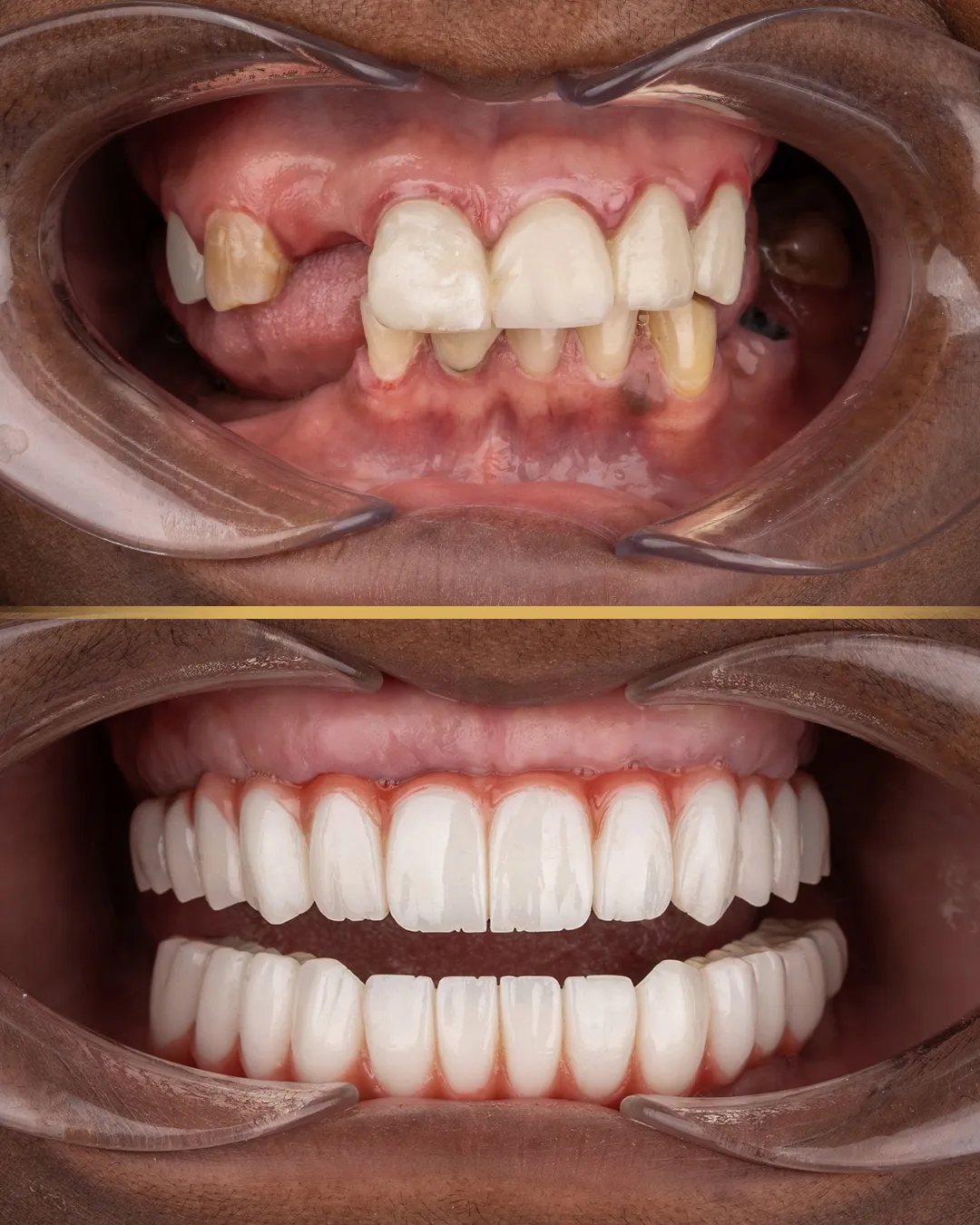
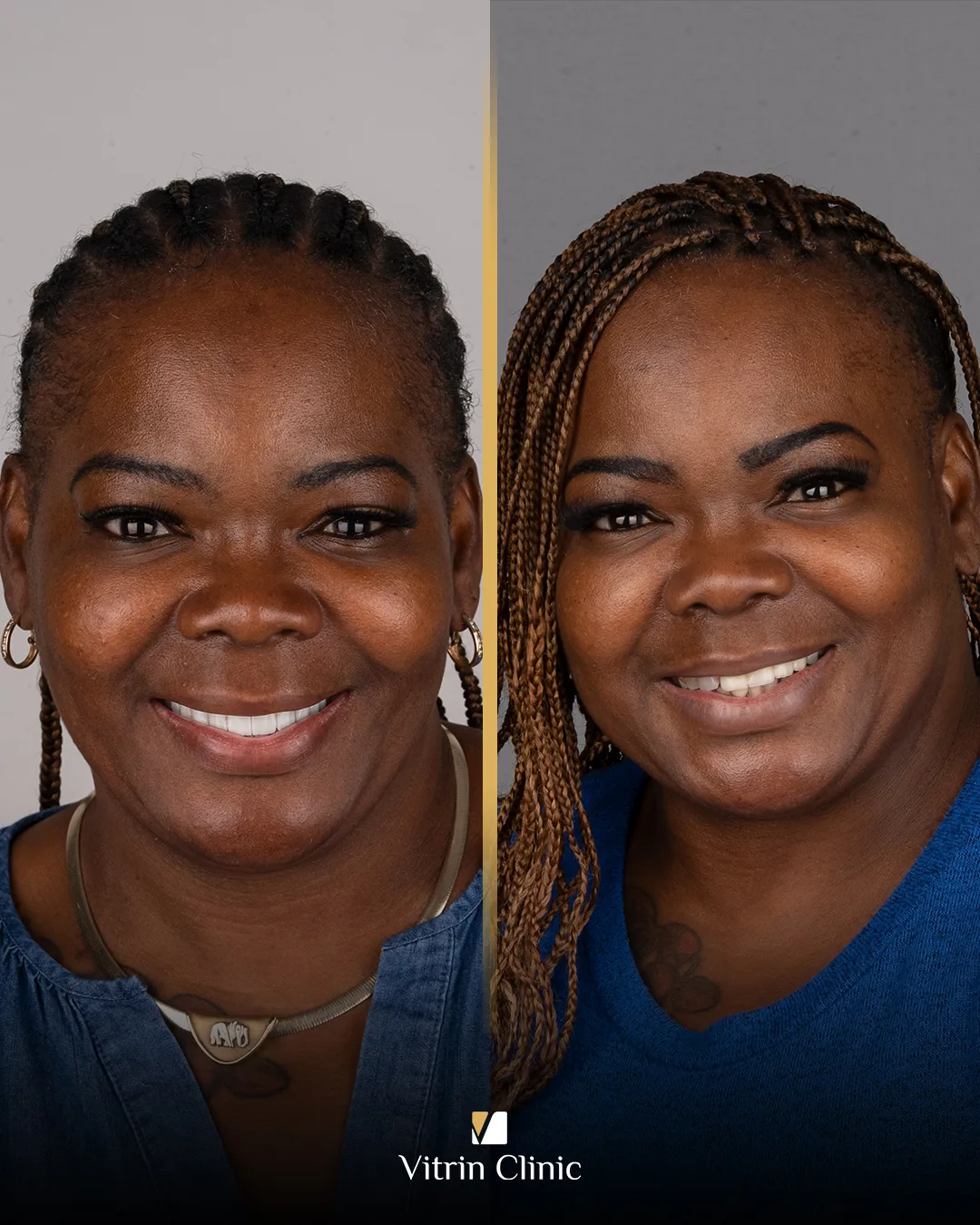
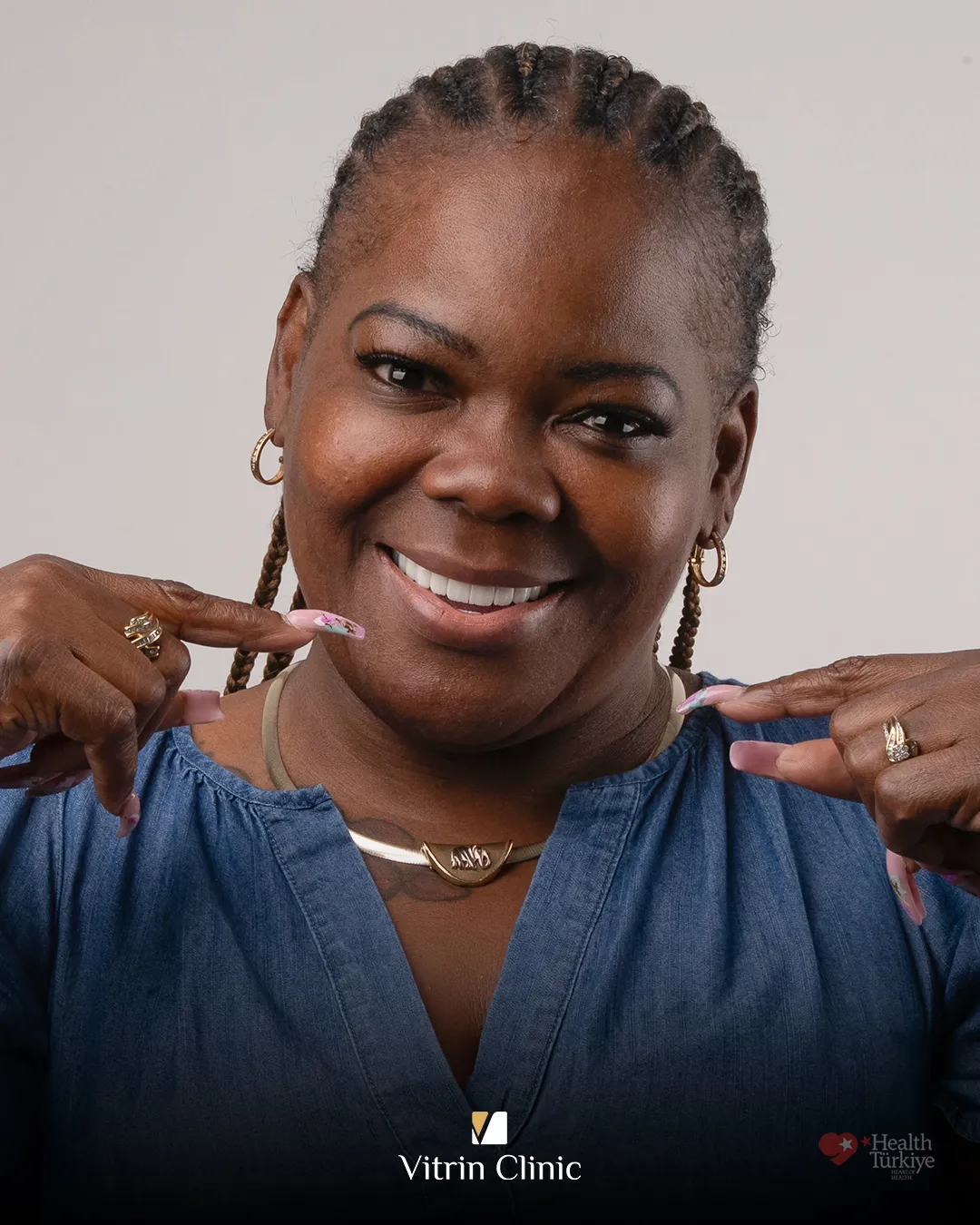
How Vitrin Clinic Prevents Complications and Secures Predictable Results
Replacing several teeth in a row takes careful biological planning. That planning keeps your implant supported dental bridge healthy for decades. The lower dental bridge cost in Turkey draws many international patients, but price alone does not secure success. Success depends on avoiding bite overload, preventing bone loss and building an accurate framework. Our surgical and restorative teams tackle each risk together:
Balancing bite forces with guided planning: Implants bond directly to the jawbone. Unlike natural teeth, they have no ligament to cushion pressure. Uneven loads can loosen screws or cause bone loss. Our prosthodontists analyse your bite in 3D digital articulation software. They then spread chewing loads evenly across the whole bridge.
Preventing peri-implantitis with cleanable poetics: Healthy gums around the implants are key to long-term survival. Our ceramists give each zirconia bridge smooth, convex poetics on the gum-facing side. This shape stops food from collecting and makes daily flossing easier. It also helps your gums resist bacterial plaque.
In-house 5-axis CAD/CAM fabrication: We mill every restoration in our on-site lab from premium multi-layered zirconia blocks. This helps rule out hidden structural defects. Our ceramists hand-finish and glaze each margin for a precise fit, lifelike translucency and strong fracture resistance.
Cross-border traceability with implant passports: Support continues after you fly home. Every patient receives an international implant passport. It lists exact batch numbers, dimensions and torque settings from manufacturers such as Straumann and Nobel BioCare. Your local dentist can then service or inspect your bridge anywhere in the world.
Medical Disclaimer
This article is for general information only. It does not replace a personal assessment by a qualified dentist. Prices are approximate 2026 averages. Turkey and US prices are shown in US dollars and UK prices in pounds sterling. Costs may vary by clinic and case.
Book your free consultation with Vitrin Clinic and get a personal assessment and treatment plan from our dental team.


References
FAQs
Surgery is done under local anaesthesia, so you should feel pressure and vibration but not pain. Discomfort afterwards is commonly described as similar to or milder than a tooth extraction and is usually managed with over-the-counter or prescribed pain relief for a few days.
Dr. Rifat Alsaman has more than 5 years of clinical experience in dentistry and currently serves as the Head of the Medical Team at Vitrin Clinic. He is dedicated to providing exceptional patient care, overseeing treatment planning, and ensuring the highest clinical standards across the team. His expertise, attention to detail, and commitment to continuous professional development have helped countless patients achieve healthier, more confident smiles.


