Dental Bridge
November 9, 2026
Ceramic Dental Bridge in Turkey: The Metal-Free Way to Replace a Missing Tooth
 Dr. Rifat Alsaman

Hold a natural tooth up to the light and something surprising happens: the edge glows. Light passes into the enamel, scatters, and comes back out softly. That glow is a big part of why real teeth look alive.
Now picture an older bridge with a metal core. However good the porcelain on top, the metal underneath blocks that light. Up close, the tooth can look a little flat, and if the gum shrinks over the years, a thin grey line can appear at the edge.
A ceramic dental bridge in Turkey removes the metal altogether, at a fraction of UK and US prices. It is made entirely from tooth-coloured ceramic, so light behaves more like it does in a natural tooth. This guide explains which ceramic suits which patient, follows your bridge from the first scan to the final fitting, and shows what it costs in Turkey compared with the UK and US.
Key Takeaways
A ceramic bridge is metal-free: the frame and the visible surface are both made from ceramic.
The two main options are zirconia, which is very strong, and lithium disilicate (E-max), which is the most translucent.
E-max bridges are limited by the manufacturer to three units, ending no further back than the second premolar, and are not advised for people who grind their teeth.
Solid zirconia handles back teeth and heavy bites well; zirconia layered with porcelain looks more lifelike but can chip.
Ceramic bridges suit people with metal sensitivities, thin gums or a high smile line, where a grey edge would show.
A standard ceramic bridge is usually completed in one trip of about 5–7 days in Istanbul.
A zirconia ceramic dental bridge in Turkey typically costs about $450–$830, compared with roughly $3,200 in the UK.
Prices from £200 per tooth
Full mouth restoration from
£1,600
Timescale
5 to 7 days
Hotel + transfers available
Airport-Hotel-Clinic
coordination included
Ready to transform your smile?
Talk to our team and get your Free Treatment plan.
Ceramic Dental Bridge in Turkey: Cost vs. the UK and US
According to Bookimed’s November 2026 data, a zirconia ceramic dental bridge in Turkey typically costs about $450–$830, compared with roughly $3,200 in the UK. At Vitrin Clinic, conventional bridges start from $350 per unit, with the final price depending on the ceramic chosen.
UK
From : $3,200
Zirconia bridge.
Zirconia, per unit: about $940–$1,600
E-max, per unit: about $1,070–$1,900
Turkey
From : $450–$830
Zirconia bridge.
Zirconia, per unit: about $200–$310
E-max, per unit: about $240–$350
USA
From :$4,600
Zirconia bridge, for similar procedures.
Zirconia, per unit: not available
E-max, per unit: not available
Zirconia bridge totals are from Bookimed (November 2026). Per-unit figures are published by an Antalya clinic for 2026. Vitrin prices are from the clinic's 2026 price list. All prices are approximate and confirmed after examination.
What changes the price of a ceramic dental bridge in Turkey:
The ceramic: solid zirconia, layered zirconia and E-max are priced differently.
The number of units: each crown and each false tooth counts as one unit.
Custom shading: hand-layered ceramic for front teeth takes more laboratory time.
Preparatory treatment: fillings, root canal treatment or gum care for the supporting teeth.
Costs to plan for besides treatment: flights, about a week of accommodation, travel insurance and meals.
What Defines an All-Ceramic Dental Bridge?
Every bridge has the same basic parts: a crown on each tooth beside the gap, and a false tooth joined between them. What makes a bridge ceramic is that the whole structure, inside and out, is made of ceramic. There is no metal core.
That sets it apart from the traditional porcelain-fused-to-metal bridge, where porcelain is baked onto a metal frame. Both can be called "porcelain" or "ceramic" in marketing, so it is worth asking one direct question: is there any metal in this bridge?
The Light Test: Why Metal-Free Looks More Natural
Think of a lampshade. A paper shade lets light through and glows; a metal shade blocks it and casts a shadow. Natural teeth behave like the paper shade. Ceramic, especially E-max, lets light pass in a similar way, so the bridge picks up the colour of the teeth around it. A metal core behaves more like the metal shade, which is why metal-ceramic bridges can look slightly flatter and may show a grey line at the gum.
Who can Benefit From a Metal-Free Bridge?
People with a high smile line, who show a lot of gum and the edges of their teeth when they smile.
People with thin gums or a tendency to gum recession, where a metal edge would become visible over time.
People with a sensitivity or allergy to metals used in dental alloys.
Anyone replacing a front tooth, where colour and translucency matter most.
People who already have ceramic crowns or veneers and want a matching finish.
A metal-ceramic bridge can still be a sensible choice for long bridges at the back of the mouth, or when cost is the main concern. Metal-free is a preference for appearance and biocompatibility, not a rule for every case.
How to Choose the Right Fit: E-Max, Solid Zirconia, or Layered Porcelain?
There is no single best ceramic. There is the one that fits your gap, your bite and your smile. Find the profile closest to you.
I'm missing a front tooth and I want it to look completely natural. Likely match: E-max (lithium disilicate) or layered zirconia. E-max has the most lifelike translucency. The manufacturer limits E-max bridges to three units, with the supporting teeth no further back than the second premolar, so it is ideal for short front gaps.
I'm missing a back tooth and I chew hard. Likely match: solid (monolithic) zirconia. It is milled from a single block with no porcelain layer to chip, so it handles strong chewing forces well. It looks slightly more opaque, which matters less at the back.
I grind or clench my teeth at night. Likely match: solid zirconia, plus a night guard. The manufacturer advises against E-max bridges for people who grind, and layered porcelain is more likely to chip under heavy forces.
I want metal-free, but my gap is in the visible side area. Likely match: zirconia layered with porcelain on the visible surface. A strong zirconia frame carries the load, while the porcelain on top gives a more natural look.
My gap is wide, or more than one tooth is missing. Likely match: solid zirconia, or an implant-supported option. Longer spans put more stress on the joints between crowns, where zirconia's strength matters most.
What the Research Says
A 2015 systematic review in Dental Materials estimated five-year survival of 90.4% for zirconia bridges and 89.1% for reinforced glass-ceramic bridges, compared with 94.4% for metal-ceramic bridges. Zirconia bridges with a porcelain layer had more fractures of that veneering ceramic. This is one reason many clinics now prefer solid zirconia at the back of the mouth and reserve layered ceramics for areas where appearance matters most.
Bridge or Implant? Decide in 3 Questions
1. Is the gap at the front or the back of your mouth?
Front → E-max or layered zirconia. Back → solid zirconia.
2. Do you grind or clench your teeth?
Yes → solid zirconia and a night guard. No → more translucent ceramics are an option.
3. Are the teeth beside the gap healthy and untouched?
Yes → ask whether an implant would protect them better than a bridge. No → a ceramic bridge can restore and protect them at the same time.
The Journey of Your Ceramic Dental Bridge in Turkey: From Scan to Smile
Most guides describe what happens to you. This one follows your bridge. A standard ceramic dental bridge in Turkey usually completes the journey in about 5–7 days.
Stop 1 – The first look (before you travel). Your photos, X-rays and dental history are reviewed online, and you receive a provisional plan and estimate.
Stop 2 – The examination (Day 1). The supporting teeth and gums are checked with digital X-rays and scans. The ceramic and shade are chosen with you, in natural light, against your own teeth.
Stop 3 – The preparation (Day 2). Under local anaesthetic, the supporting teeth are shaped and scanned digitally. You leave with a temporary bridge, so there is never a gap.
Stop 4 – The digital design (Days 2–3). A technician designs the bridge on screen, planning the shape of each tooth, the thickness of the ceramic and the size of the joints between units, which decides how strong it will be.
Stop 5 – Milling and firing (Days 3–4). The bridge is milled from a ceramic block, then fired in a furnace to reach its final strength. For layered or front-tooth bridges, colour and translucency are added by hand.
Stop 6 – The try-in (Days 5–6). The bridge is tried in your mouth. Fit, bite and colour are checked and adjusted before it is bonded or cemented in place.
Stop 7 – The final check (Day 7). A short review of your bite and comfort, plus cleaning instructions, before you fly home.
If the supporting teeth need root canal treatment first, or if the bridge is held by implants, the journey is longer and may involve a second trip.
Does Ceramic Dental Bridge in Turkey Hurt?
The preparation is done under local anaesthetic, so most people feel pressure rather than pain. Some gum tenderness and temperature sensitivity for a few days afterwards is common and usually settles on its own
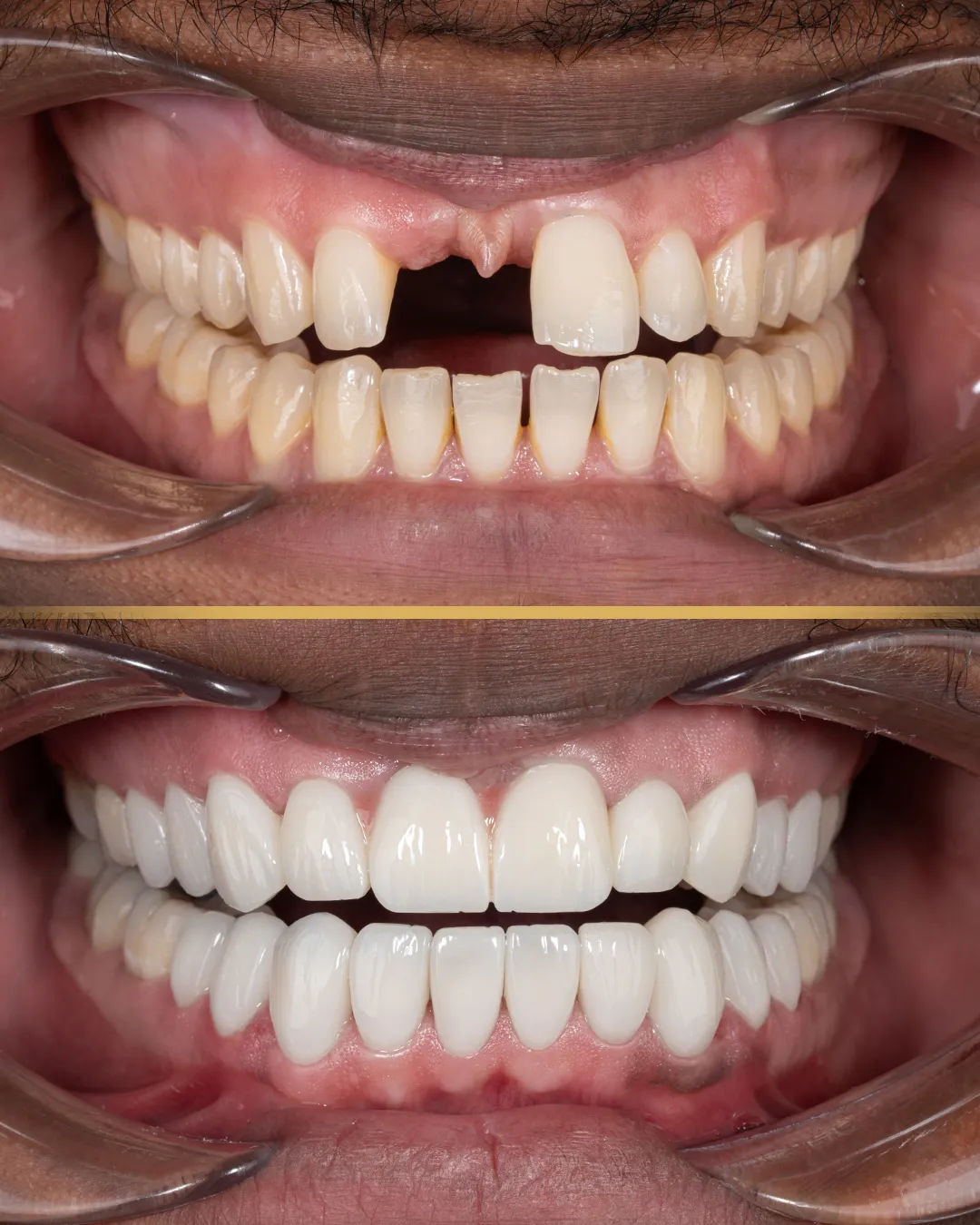
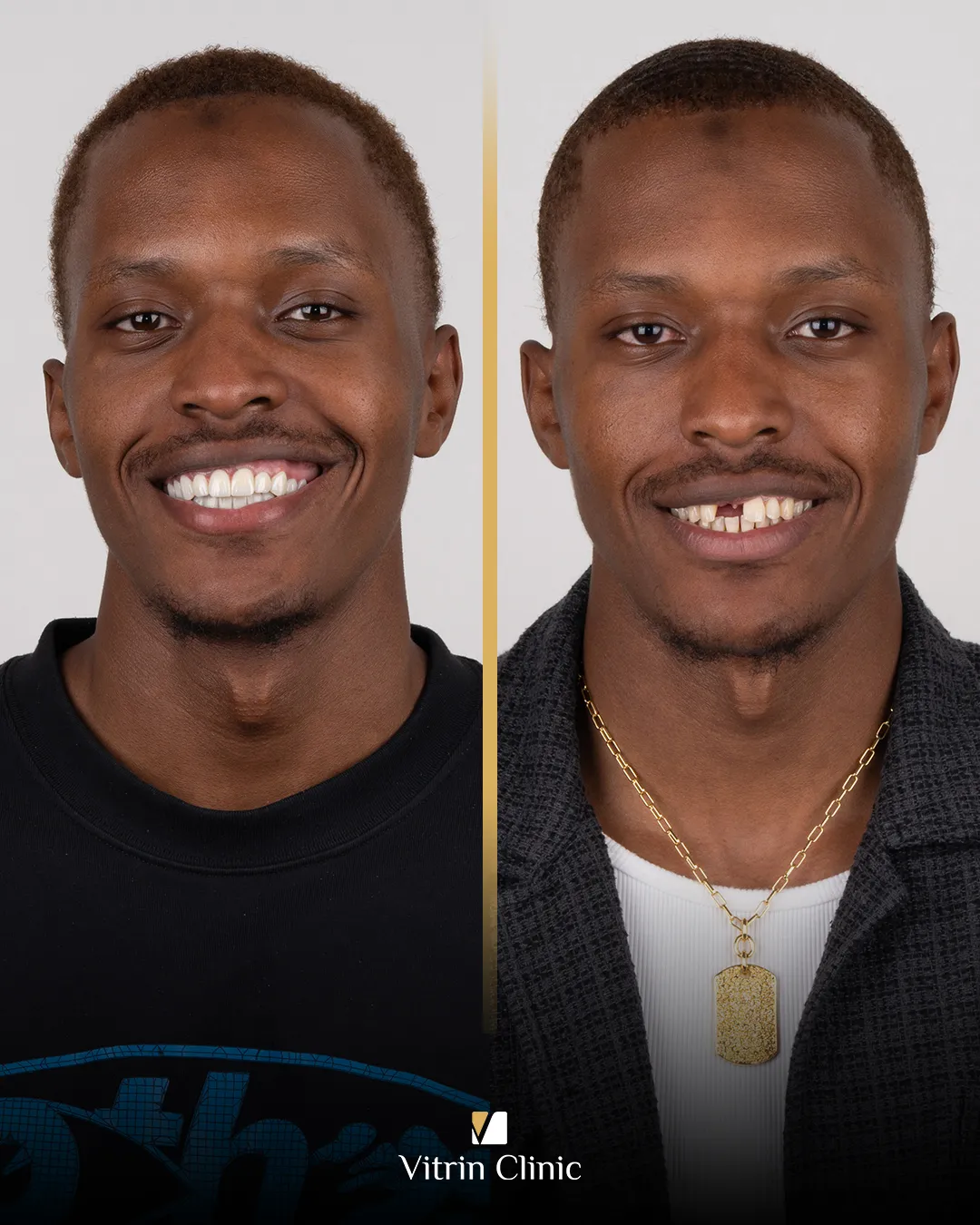
Before and After a Ceramic Bridge: What Changes
Before treatment
A visible gap, or an old metal-ceramic bridge with a grey edge at the gum.
Chewing shifted to one side.
Neighbouring teeth starting to tilt into the space.
Food trapping around the gap.
After treatment
A metal-free replacement that reflects light like the teeth around it.
No dark line at the gumline, even if the gum changes slightly over time.
More even chewing on both sides.
The gap closed, so neighbouring teeth stop drifting.

How Long Does a Ceramic Bridge Last?
In the 2015 Dental Materials review, roughly nine in ten all-ceramic bridges were still in place after five years. Most bridges that fail do so because of the supporting teeth, through decay at the crown edge or gum disease, rather than because the ceramic breaks. Grinding, very hard foods and poor cleaning under the false tooth are the main avoidable risks.
Keep it lasting:
Clean under the false tooth every day with floss threaders or small interdental brushes.
Brush twice a day with fluoride toothpaste, especially along the gumline of the supporting teeth.
Wear a night guard if you grind or clench.
Avoid biting ice, nut shells or other hard objects with the bridge.
Have regular check-ups and professional cleaning.
Is It Really a Quality Ceramic Bridge? 5 Things to Check
Is it fully metal-free? Ask directly whether there is any metal in the frame.
Which ceramic, and why? You should hear a reason linked to your gap, bite and smile, not just a brand name.
Was the shade matched in person? Colour is best chosen in natural light, against your own teeth.
Will there be a try-in? A good bridge is checked in your mouth before it is fixed in place.
How do you clean under it? You should leave knowing exactly how to clean beneath the false tooth.
Why International Patients Choose Vitrin Clinic
A ceramic bridge is a piece of craftsmanship, but it is only as good as the planning behind it. When you get a ceramic dental bridge in Turkey at Vitrin Clinic, we choose the ceramic for your mouth, not the other way round: your bite, the position of the gap and the health of the supporting teeth decide the material.
Ceramic and Prosthodontic Specialists
Specialists who work with ceramics every day. Our team includes prosthodontists Dr. Faisal Kayali and Dr. Uğur Sazlıkoğlu, who specialise in crowns and bridges, and cosmetic dentists who focus on shade and smile design, with Dr. Rifat Alsaman leading the medical team. If a supporting tooth needs root canal treatment, our endodontist Dr. Melih Kaya treats it in the same clinic; if an implant would serve you better, our oral and maxillofacial surgeons are on hand.
A clear reason for every material. You will not be offered "zirconia" or "E-max" as a label. We explain why one suits your gap better than the other, where the trade-offs are, and when a metal-ceramic bridge or an implant would be the more sensible choice.
A shade you choose with us. Your colour is selected with you, in natural light, against your own teeth. Your bridge is tried before it is fixed, so fit, bite and colour can be adjusted while you are still in the clinic.
Clear Planning and Support for International Patients
A plan you can see before you fly. It starts with a free, no-obligation online consultation. You send photos, your dental history and any X-rays you have, and our team reviews them. You then receive a personalized plan with the recommended ceramic, the expected timeline and a transparent quotation, so there are no surprises in Istanbul.
Care that fits around your trip. Our patient team helps arrange your hotel and your airport, hotel and clinic transfers, offers multilingual support during your stay, and stays in touch after you return home with aftercare advice.
Recognised standards. Vitrin Clinic is licensed by the Turkish Ministry of Health, is part of the HealthTürkiye and Turkey Destination Health programmes for international patients, and holds ISO certification for its quality management.
Your Journey With Vitrin Clinic
Getting a ceramic bridge abroad should feel simple from start to finish. At Vitrin Clinic, every step of your journey is planned in advance, so you always know what comes next.
Before you travel. It starts with a free, no-obligation online consultation. You send your photos, X-rays and dental history, and our team reviews your case. You then receive a personalized plan with the recommended ceramic, the expected timeline and a transparent quotation, so you know exactly what to expect before booking your flight.
Arriving in Istanbul. Our patient team helps arrange your hotel and meets you at the airport. Your transfers between the airport, hotel and clinic are taken care of, and multilingual support is available throughout your stay.
During your treatment. Over about 5–7 days, you meet your specialists, choose your shade with us in natural light, and wear a temporary bridge between appointments. Your final bridge is tried in and adjusted before it is fixed, so you leave fully satisfied with the fit, bite and colour.
After you return home. You fly home with clear instructions for caring for your bridge, and our team stays in touch with aftercare advice whenever you need it.
Your journey starts with a single step: book your free online consultation, and let our team plan your new smile with you.
Conclusion: Let the Light Through
A ceramic bridge does more than fill a gap. Without a metal core, it lets light behave the way it does in your natural teeth, so the result looks like part of your smile rather than something added to it. The key is matching the ceramic to your mouth: translucent E-max for short front gaps, strong solid zirconia for the back, and careful planning around the teeth that will hold it.
If you are unsure which ceramic suits you, start with a free online consultation at Vitrin Clinic. Send us your photos and X-rays, and our team will recommend the right material and a clear plan before you travel.
Medical Disclaimer
This article is for general information and does not replace a personal assessment by a qualified dentist. Prices are approximate 2026 averages, with UK and Turkey figures converted to US dollars, and may vary by clinic and case.
Book your free consultation with Vitrin Clinic and get a personalized assessment and treatment plan from our dental team.
References
PubMed / National Library of Medicine – Survival of All-Ceramic Multiple-Unit FDPs
HealthTürkiye – Republic of Türkiye Official Health Tourism Platform
FAQs
Porcelain is often used for any tooth-coloured bridge, including ones with a metal core. A ceramic bridge, in the sense used here, is fully metal-free, with both the frame and the visible surface made of ceramic such as zirconia or E-max.
Dr. Rifat Alsaman has more than 5 years of clinical experience in dentistry and currently serves as the Head of the Medical Team at Vitrin Clinic. He is dedicated to providing exceptional patient care, overseeing treatment planning, and ensuring the highest clinical standards across the team. His expertise, attention to detail, and commitment to continuous professional development have helped countless patients achieve healthier, more confident smiles.


