Invisalign
October 25, 2026
Invisalign Treatment Duration: How Long It Really Takes (By Case, Trays & Age)
 Dr. Rifat Alsaman

You want straighter teeth, but you also want to know how long aligners will be part of daily life. Invisalign treatment duration depends on your bite, your teeth and how consistently you wear your aligners. Most Invisalign treatments take about 12 to 18 months. Mild cases can finish in around 6 months. Complex bite or crowding cases can take 2 years or more. Refinement aligners, which many patients need, can add a few extra months.
Get a free personal timeline estimate from your smile photos.
Ready to transform your smile?
Talk to our team and get a personal FREE treatment plan.
How Long Is a Normal Invisalign Treatment?
A normal Invisalign course lasts about 12 to 18 months, but the average timeline hides a wide range. Simple touch-ups may take a few months. Combined bite and crowding problems can take two years or longer.
Case | Typical duration | Typical aligner count |
Minor relapse or touch-up | 3–6 months | 7–14 |
Small gaps | 4–8 months | 10–20 |
Mild crowding | 6–12 months | 14–26 |
Moderate crowding | 12–18 months | 25–40 |
Severe crowding | 18–24+ months | 40+ |
Overbite, underbite or crossbite | 12–24+ months | 30–50+ |
Combined complex cases | 18–30 months | 50+ |
Invisalign treatment duration for mild crowding often falls in the 6–12 month range. These are illustrative ranges, not promises. Your orthodontist's digital plan sets your real timeline.
.jpg)
Invisalign Timeline Phase by Phase
Invisalign treatment duration runs from first scan to final refinement, followed by long-term retention.
Consultation and scan: an exam, X-rays when needed and a 3D digital scan.
Planning and fabrication: you approve the plan, and aligners are made within a few weeks.
Attachments and IPR: small tooth-coloured bumps are bonded. Gentle enamel polishing between teeth (IPR) may create space.
Active aligner phase: you wear each set full-time and switch as directed.
Check-ins: your clinician reviews progress at set intervals, in person or remotely.
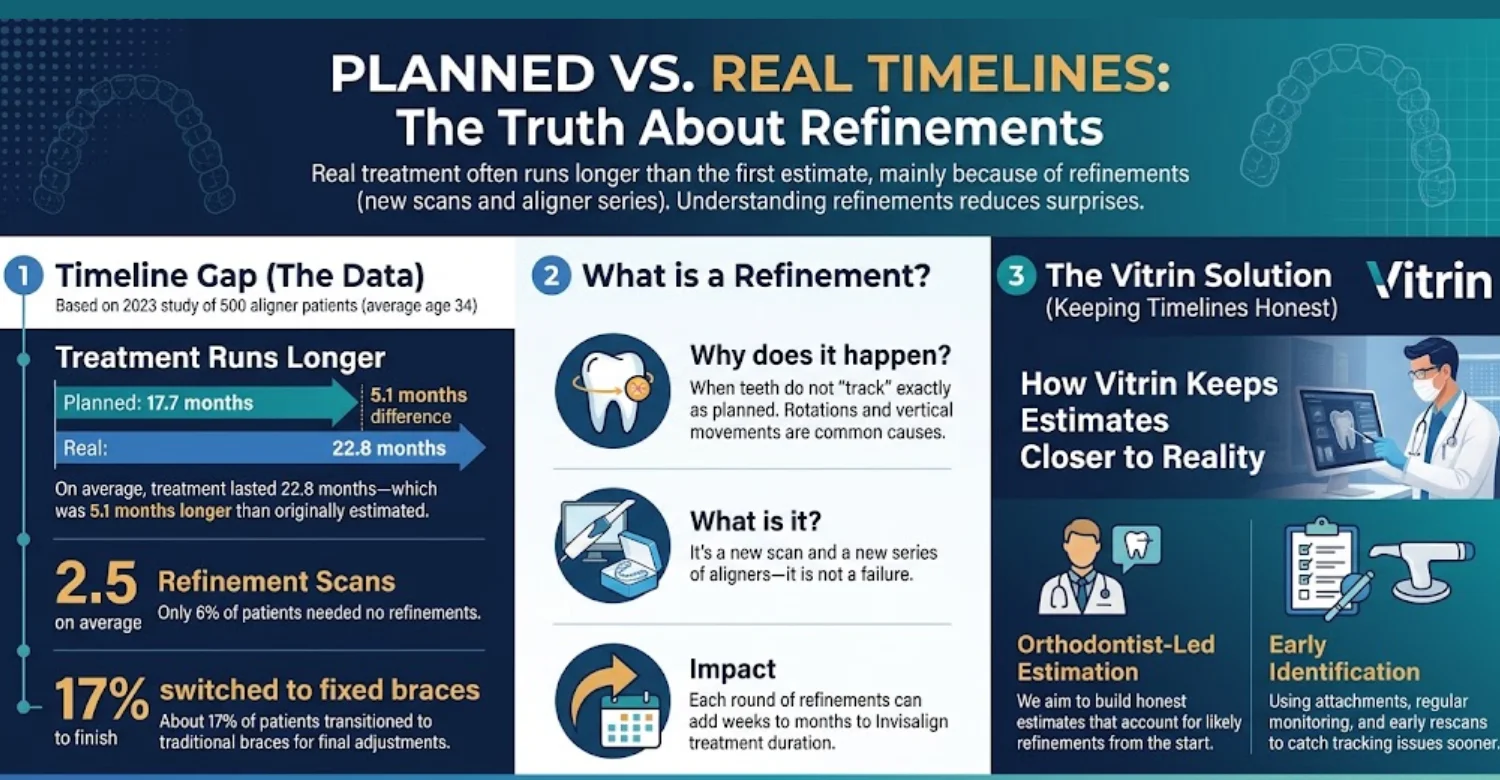
Refinements: if teeth lag behind the plan, a rescan produces extra aligners.
Retention: retainers hold teeth in their new positions.
This is why total Invisalign treatment duration is longer than the active aligner phase alone.
When Will I See Results?
Most people notice small changes within a few weeks of starting. Gaps and mild rotations often look different within the first few months. Bigger bite changes take longer to show. Monthly progress photos help you see changes that are hard to notice day to day. Early visible change does not mean your total treatment time will be shorter than planned.
Can Invisalign Move Teeth in 2 Days?
Teeth start responding to pressure within days, which is why new aligners feel tight. Visible movement takes weeks, not days. Each aligner moves teeth only a fraction of a millimetre. That small step helps protect roots and gums. The tight feeling usually eases after two or three days. If you need pain-relief medicine, follow the label. A pharmacist can advise what suits your health and other medicines. This short adjustment period does not change your overall timeline.
How Long Will 20 Trays of Invisalign Take?
Twenty trays take about 9 months on a two-week schedule and about 4.5 months on a weekly schedule. Refinement aligners, if needed, add time on top. Use this table as a simple Invisalign treatment duration estimator.
Trays | 7 days per tray | 10 days per tray | 14 days per tray |
10 | ~2.3 months | ~3.3 months | ~4.6 months |
14 | ~3.2 months | ~4.6 months | ~6.4 months |
20 | ~4.6 months | ~6.6 months | ~9.2 months |
30 | ~6.9 months | ~9.9 months | ~13.8 months |
40 | ~9.2 months | ~13.2 months | ~18.4 months |
These figures cover the active aligner phase only. They exclude planning time, refinements and retention. Your real timeline depends on the schedule your clinician sets.
Weekly vs. Two-Weekly Changes
Your dentist decides the tray schedule, based on how your teeth respond. Weekly changes may suit simple movements, good aligner fit and excellent wear time. Two-week changes give teeth more time for complex movements, such as rotations or bite correction. Changing early on your own can make aligners stop fitting. Teeth that fall behind usually need refinements. That can make your treatment longer overall, not shorter.
How Long Do You Wear Invisalign Each Day, and for How Many Years?
You wear aligners about 20 to 22 hours a day during active treatment. Take them out only to eat, drink anything other than plain water and clean your teeth. For most people, active aligner treatment is measured in months rather than years. Retainers then take over, and that stage is long term. Daily wear is the factor you control most. Every missed hour can stretch your overall timeline.
Retainers After Invisalign
Retainers are worn often at first, then less often, usually for the long term. One NHS orthodontic service advises nightly wear for the first year. It then advises alternate nights, continuing indefinitely to keep teeth straight. Your clinician may give a different schedule. Without retainers, teeth can drift back toward old positions. This is called relapse. So the honest answer to "how many years" is short active treatment, then ongoing retention. Retention time sits outside your active treatment phase.
Factors That Affect Invisalign Treatment Duration
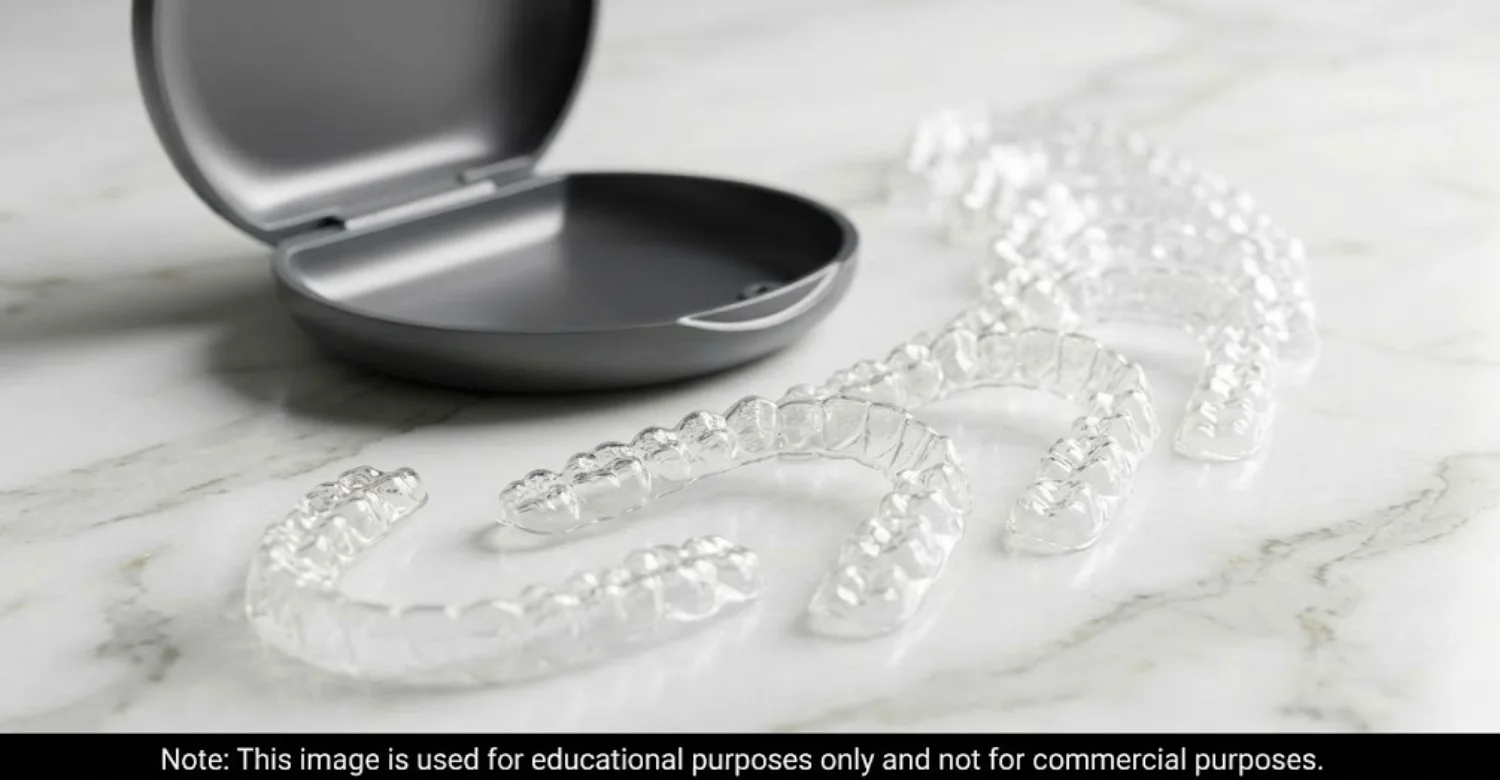
Nine main factors decide whether you finish early, on time or late. Understanding them helps you protect your Invisalign treatment duration estimate.
Case complexity: bite correction and severe crowding need more aligners.
Daily wear time: under 20 hours a day lets teeth lag behind the plan.
Tray schedule: switching late or early disrupts planned movements.
Refinements: each extra round can add weeks to months.
Age and bone response: adult bone may respond more slowly.
Attachments and IPR: delays in placing them can stall key movements.
Oral health: decay or gum disease must be treated first.
Missed check-ins or lost aligners: both can pause progress.
Product tier: limited-aligner tiers suit short, simple cases only.
Ready to transform your smile?
Talk to our team and get a personal FREE treatment plan.
Invisalign Treatment Duration by Age
Age affects Invisalign treatment duration less than case complexity and wear time do. Still, growth stage, bone response and habits all play a part. The sections below explain what adults, teens and children can expect.
Adults
Typical Invisalign treatment duration for adults is around 12 to 18 months for mild to moderate cases. There is no upper age limit. Adult bone is denser and may respond a little more slowly. Gum health, crowns, implants and missing teeth also affect planning. Your orthodontist checks these before giving a timeline.
Teens
Invisalign treatment duration for teens is often similar to adults, and sometimes shorter. Growing jaws can help some bite corrections. Compliance is the biggest risk at this age. Teen aligners can include compliance indicators that fade with wear. These help parents and clinicians check whether aligners are worn enough.
Children (Invisalign First)
Invisalign First is designed for children with a mix of baby and adult teeth. Dentists call this mixed dentition. This early phase usually aims to create space or guide arch development. It is often shorter than a full course. A second phase may follow once all adult teeth erupt. Not every child needs early treatment, so Invisalign treatment duration for children varies widely.
What Age Is Best for Invisalign?
There is no single best age. Teens and adults with fully erupted adult teeth are ideal candidates. Many adults start treatment in their 30s, 40s and beyond. Healthy teeth and gums matter more than age itself. A dentist may assess a child earlier if a developing bite problem appears. Starting age rarely decides Invisalign treatment duration on its own.
Is Invisalign Faster Than Braces?
For mild to moderate cases, Invisalign is often as fast as braces. For complex cases, braces may be more predictable and sometimes quicker. A 2024 systematic review found no significant duration difference in mild to moderate crowding. The authors rated that evidence as low certainty. More research is needed for severe cases. Invisalign treatment duration in complex cases depends heavily on tracking and refinements.
Factor | Invisalign | Fixed braces |
Mild to moderate cases | Often 6–18 months | Often similar |
Severe cases | Can be longer; refinements likely | Often more predictable |
Check-ins | Some can be remote | Regular in-person adjustments |
Speed factors | Wear time, tracking, refinements | Case type, wire changes |
Delay risks | Low wear time, lost aligners | Broken brackets, missed visits |
The right choice depends on your case, not speed alone. A clinician can compare likely Invisalign treatment duration with a braces timeline for you.
How to Finish Invisalign Faster (Safely)
The safest way to keep your Invisalign treatment duration on track is to follow your orthodontist’s instructions consistently. These specific habits can help reduce avoidable delays.
1. How Many Hours a Day Should You Wear Invisalign?
Wear your Invisalign aligners for 20–22 hours per day, removing them only for meals, drinks other than water, and oral hygiene. Wearing them less than recommended can delay tooth movement and extend treatment.
2. Do Invisalign Chewies Help Teeth Move Faster?
Invisalign chewies can help seat aligners firmly against your teeth and improve their fit. Use them only as directed by your clinician. They do not automatically accelerate tooth movement.
3. Should You Change Invisalign Trays Earlier?
No. Change aligners according to your prescribed schedule, which may vary depending on your case and tracking progress. Switching trays early without approval can interfere with planned tooth movements.
4. Can Skipping Invisalign Check-Ups Delay Treatment?
Yes. Missing appointments or remote progress checks may allow tracking problems to go unnoticed. Regular reviews help your orthodontist identify poor aligner fit, delayed movement, or the need for adjustments.
5. Why Should You Keep Your Previous Invisalign Tray?
Keep your previous aligner as a backup in case your current tray is lost or damaged. Ask your orthodontist which tray to wear if you cannot use your current aligner; do not automatically switch back without guidance.
6. How Does Oral Hygiene Affect Invisalign Treatment?
Brush your teeth after meals when possible, floss daily, and clean your aligners as instructed. Good oral hygiene helps reduce plaque buildup, cavities, and gum inflammation that could require treatment and interrupt your orthodontic plan.
7. What Should You Do If Your Invisalign Attachments Come Loose?
Contact your orthodontist promptly if an attachment detaches or your aligner no longer fits properly. Attachments help control specific tooth movements, so a loose attachment may affect how effectively your aligners work.
8. Do Invisalign Acceleration Devices Really Shorten Treatment?
Some devices claim to accelerate orthodontic tooth movement, but the evidence for meaningful improvements in treatment time is limited and varies by device. Consult your orthodontist before using one, and never change your aligner schedule to speed up results.
Remember: Consistent wear, good oral hygiene, and following your prescribed plan are more reliable ways to help your Invisalign treatment progress as expected.
Ready to transform your smile?
Talk to our team and get a personal FREE treatment plan.
Invisalign Timeline for International Patients at Vitrin
International patients can often complete most of the treatment at home after a first visit to Istanbul. Assessment comes before any aligner plan. A clinical exam and digital dental X-rays, when appropriate, check for decay, gum disease, bone levels and root problems. These are treated first, because aligners cannot fix them.
A typical pathway looks like this:
Trip 1: exam, scan, digital plan review, attachments, IPR and first aligners.
At home: aligners can be supplied in batches, with remote photo check-ins.
Refinements: a rescan, arranged remotely where possible, or a short return visit.
Finishing: a final review and retainers.
Your Invisalign treatment duration and travel plan are discussed before you commit. Your written estimate states what is included, such as refinements and retainers.
How Many Trips Are Needed and for How Long?
Many international patients need one or two trips, but your plan decides this. The first visit usually takes a few days. That allows time for examination, scanning, planning and attachment placement. A shorter visit may be needed for refinements or finishing. Complex cases may need more visits. Vitrin confirms the number and length of trips in your written plan. This helps you match travel to your Invisalign treatment duration.
What If I Travel, Lose an Aligner, or Fall Behind?
Contact the clinic as soon as a problem occurs. A lost aligner is often handled by moving forward or back one set, as directed. A replacement can be ordered when needed. Falling behind is reviewed through photos or a scan. Your clinician may extend the current stage rather than pushing ahead. Sudden pain, a broken tooth or facial swelling should be checked promptly by a local dentist. Quick reporting limits the effect on your Invisalign treatment duration.
What Affects Invisalign Treatment Duration at Vitrin Clinic?
The time needed to straighten crowded teeth with Invisalign varies from patient to patient. Mild crowding may require less time than cases involving significant tooth rotations, limited space, or bite problems. The number of aligners alone does not determine the total treatment duration.
At Vitrin Clinic, treatment planning should consider the severity of crowding, the complexity of the required tooth movements, and how consistently aligners are worn. Some patients may also need refinement aligners to improve the final alignment.
Your estimated timeline will depend on your individual dental assessment and response to treatment. Regular progress checks help identify whether your teeth are moving as planned and whether adjustments are needed.
.jpg)
Does a Longer Invisalign Treatment Cost More?
The cost of Invisalign depends mainly on case complexity, the treatment package, and the number of aligners required. Longer treatment may involve additional aligners or refinement stages, but a longer timeline does not automatically mean a higher price.
Average Invisalign Cost: US vs UK vs Turkey
The following table compares published cost estimates for full-course Invisalign or clear-aligner treatment. UK and Turkish prices have been converted to approximate US dollars for easier comparison.
United Kingdom
$4,200
Average estimated cost
Average $4,200
Published range $2,500–$6,000
Turkey
$4,150
Average estimated cost
Average $4,150
Published range $2,700–$6,000
United States
$5,108
Average estimated cost
Average $5,108
Published range $1,800–$8,100
The US average and range are based on published in-office clear-aligner cost data. The UK estimate is converted from a reported average of $3,157, while the Turkish average is based on reported clinic pricing data. These figures come from different datasets and should be treated as broad comparisons, not directly equivalent prices.
Average Invisalign Cost in the UK by Treatment Type
UK Invisalign prices vary according to how much tooth movement is needed. The following figures are approximate USD conversions of a published 2026 UK price guide.
Express / Go / Lite
~$3,700
Typical cost
Suitable for minor alignment corrections
Full Invisalign
~$5,300
Typical cost
Suitable for more complex alignment or bite correction
The same UK guide reports a typical price of $2,750 for shorter courses and $3,950 for full treatment. Actual tier availability and inclusions vary by provider.
What Should an Invisalign Quote Include?
Before comparing clinics, ask whether the quoted price covers:
Initial consultation and dental examination
Digital scans and necessary X-rays
All prescribed aligners and attachments
Interproximal reduction (IPR), if required
Refinement aligners
Retainers after treatment
Progress reviews and follow-up appointments
Additional charges for refinements, retainers, or diagnostic procedures can increase the final cost. Fillings and gum treatment needed before orthodontics may also be charged separately.
What Extra Costs Should International Patients Consider?
For patients travelling to Turkey, the total budget may include flights, accommodation, local transport, and time away from work. Ask how follow-up appointments will be arranged after returning home and whether additional visits may be necessary.
A lower initial treatment fee does not always mean a lower overall cost. Compare the written treatment plan, included services, and follow-up arrangements before making a decision.
Get Your Personal Invisalign Timeline and Price Contact Vitrin Clinic to discuss your alignment needs and request a personalized treatment plan with an estimated timeline and itemized quote.
Ready to transform your smile?
Talk to our team and get a personal FREE treatment plan.
Your Timeline Depends on Your Smile
Your timeline depends on your smile, your bite and your daily habits. Most cases take 12 to 18 months, but your own plan may be shorter or longer. A proper assessment gives a realistic Invisalign treatment duration, including likely refinements. It also identifies any dental problems to treat first.
Medical Disclaimer
This article is for general information only. It does not replace a personal examination by a qualified dentist or orthodontist. Invisalign treatment duration, aligner counts and prices vary between patients and clinics. Seek urgent care for facial swelling, fever, or difficulty breathing or swallowing.
References
FAQs
Dr. Rifat Alsaman has more than 5 years of clinical experience in dentistry and currently serves as the Head of the Medical Team at Vitrin Clinic. He is dedicated to providing exceptional patient care, overseeing treatment planning, and ensuring the highest clinical standards across the team. His expertise, attention to detail, and commitment to continuous professional development have helped countless patients achieve healthier, more confident smiles.


