Orthodontics
April 9, 2026
Clear Aligners: How They Work and What to Expect From Treatment
 Dr. Sami Assani

Clear aligners are transparent, removable trays that straighten teeth step by step. You switch to a new set every one to two weeks. Each tray follows a digital plan designed by an orthodontist. They suit mild to moderate cases. Success depends on wearing them 20 to 22 hours a day under specialist supervision.
Key Takeaways
Clear Aligners and Their Uses: Clear aligners are transparent, removable trays that gradually straighten teeth and help correct crowding, gaps, and certain bite problems.
Types of Clear Aligners: Clear aligners are available from different brands and manufacturers, including Invisalign and other professionally supervised systems. The most suitable option depends on the patient's orthodontic needs and treatment plan.
Recovery After Getting Clear Aligners: Mild pressure or soreness is common during the first few days of wearing a new tray and usually improves as the mouth adjusts. Wearing aligners for 20–22 hours daily and following the dentist's instructions helps keep treatment on track.
Cost of Clear Aligners: The cost depends on the complexity of the case, the number of trays required, the aligner system used, and whether attachments, refinements, and retainers are included in the treatment plan.
What Are Clear Aligners?
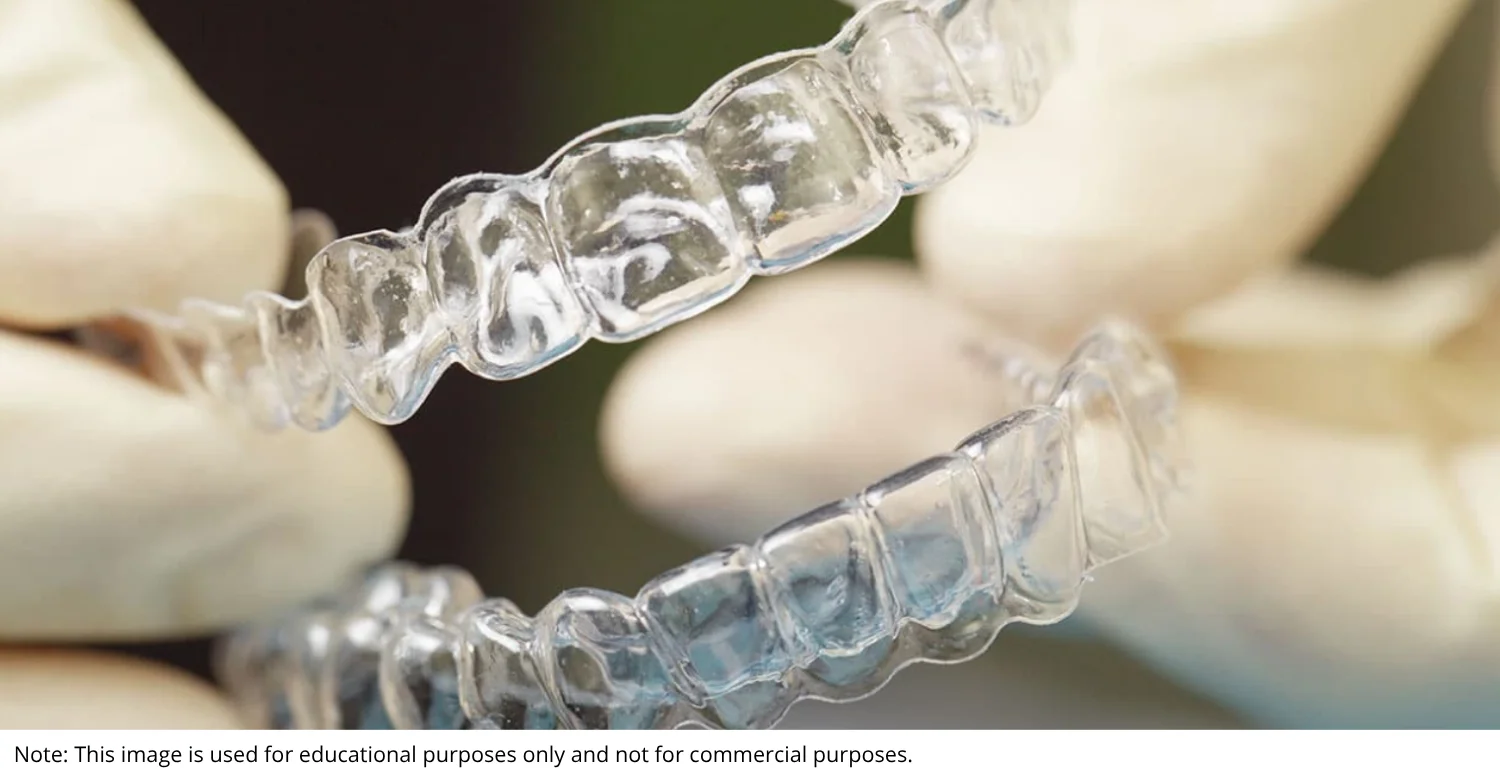
Clear aligners are a series of thin plastic trays made to fit your teeth exactly. Each tray is slightly different from the one before. Together, they guide your teeth into a planned position. You remove them to eat, drink anything except water, and brush. Because they are transparent, most people won't notice you are wearing them.
The term describes a whole treatment category, not one product. Several manufacturers make them, and your orthodontist chooses the system that suits your bite.
.jpg)
.jpg)
.jpg)
.jpg)
Ready to transform your smile?
Talk to our team and get a FREE treatment plan.
How Do Clear Aligners Move Teeth?
Teeth are not fixed rigidly in bone. Each tooth sits in a socket and is held by the periodontal ligament, a thin layer of fibres that acts like a shock absorber. When a tray pushes gently on a tooth, the ligament compresses on one side and stretches on the other.
This triggers bone remodeling. Cells on the pressure side break down bone, while cells on the tension side build new bone. The tooth slowly travels through the jaw. Each tray moves a tooth only a fraction of a millimetre. That's why treatment takes months, not weeks. Moving teeth faster would risk root damage and gum recession.
Why Healthy Gums Matter First
Gums and bone are the foundation that teeth move through. If that foundation is inflamed, movement becomes unpredictable and can make gum problems worse. That's why any decay, gum inflammation or tartar buildup is treated first. Your start date may be postponed until your mouth is ready.
Any fillings, crowns or other dental work should also be finished before your scan. Your trays are made to the exact current shape of your teeth. A new filling or crown placed later can change that shape, and the trays may no longer fit properly.
Attachments, IPR and Refinements Explained
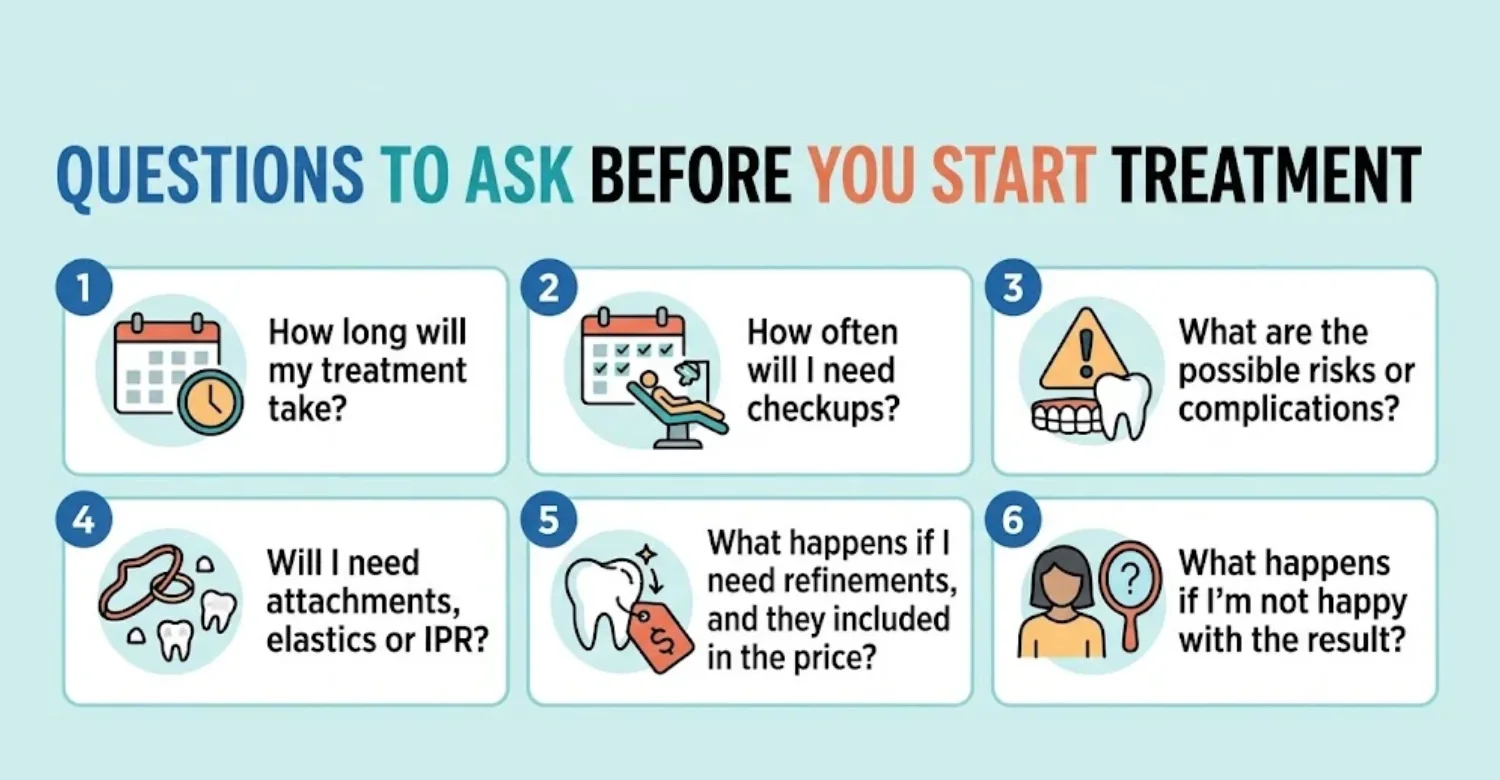
These three terms often surprise patients after the first consultation. They are not signs that something went wrong. They are standard tools that help aligners do more complex work. Understanding them before you start helps you set realistic expectations and ask better questions.
Attachments help trays grip teeth. IPR creates small amounts of space. Refinements fine-tune the result near the end. Elastics add extra force when the bite needs correcting. Your treatment plan should explain which of these you need and why.
What Are Attachments and Why Do You Need Them?
Attachments are small bumps of tooth-coloured composite bonded to certain teeth. They work like handles. The tray grips them to push or rotate a tooth with more precision. Without them, smooth tooth surfaces would let the plastic slip.
Their shapes and sizes vary depending on the movement needed, such as rotating, raising or tipping a tooth. Not every patient needs them. Your orthodontist decides during digital planning. They blend in with your teeth and are polished off painlessly once treatment ends.
IPR (Interproximal Reduction): Is It Safe?
IPR means gently polishing a tiny amount of enamel from between certain teeth. It creates space to relieve crowding without extracting teeth. The amount removed is very small, usually a fraction of a millimetre per contact point.
When planned and done correctly, IPR is considered safe. Enamel remains thick enough to protect the tooth. The procedure is quick and usually painless, since enamel has no nerves. Your orthodontist may smooth the surfaces afterwards. Not everyone needs IPR; it depends on how much space your teeth need.
Refinements: Why You Might Need Extra Trays
Teeth don't always follow the digital plan perfectly. Some move faster, and others lag behind. Near the end of treatment, your orthodontist compares your actual result with the plan. If a few teeth need fine-tuning, a new scan is taken and extra trays are made.
These additional trays are called refinements. They are common and expected. They are not a sign of failure. Ask at the start whether refinements are included in your treatment fee, so there are no surprises later.
Elastics With Aligners
Some bite problems need more force than trays alone can provide. In these cases, small rubber bands called elastics are hooked between the upper and lower trays. They help pull the jaws into better alignment.
Elastics are often used to correct overbites and underbites. The AAO notes that aligners can be combined with traditional elastics. Some cases even use a hybrid plan with aligners and fixed braces. Wearing elastics exactly as instructed is essential. Skipping them can stall your bite correction.
Who Is a Candidate for Clear Aligners?
Many teens and adults are good candidates for clear aligners. They work best for mild to moderate problems. You may be a candidate if you have:
Mild to moderate crowding
Gaps between your teeth
A mild overbite, underbite or crossbite
A mild open bite
Some cases of deep bite
Teeth that shifted back after previous braces
The type of problem alone is not enough to decide. Your orthodontist also looks at how severe the misalignment is, the shape of your roots, your gum health and how consistently you are likely to wear the trays.
Who Isn't Eligible?
Medical/Dental: active gum disease, untreated decay or very short roots
Severe cases: severely rotated teeth, impacted or unerupted teeth, a large difference between jaw positions, or severe crowding that needs a lot of space
Compliance: difficulty wearing trays for 20–22 hours every day
In these cases, your orthodontist may suggest fixed braces, a hybrid plan, tooth extraction or, for major skeletal problems, jaw surgery.
Clear Aligners for Adults
Adults are now one of the largest groups seeking orthodontic treatment. Many want straighter teeth but don't want visible brackets at work. Aligners fit busy schedules well. They need fewer emergency visits, and remote monitoring can reduce clinic trips.
Adult bone is denser, so movement can be slightly slower. Adults are also more likely to have crowns, fillings or past gum issues that need checking first. On the plus side, adults tend to be very consistent with wear time.
Clear Aligners for Teens
Teenagers can also benefit from aligners, as long as they wear them consistently. Treatment for a growing jaw raises different questions than adult treatment. Parents often want to know about compliance, growth timing and how aligners compare with braces for teens. We cover all of this in a dedicated article.
Clear Aligner Treatment Step by Step
Every treatment follows the same basic path, even though each plan is personal. Here is the typical journey:
Consultation & X-rays - examination of teeth, gums and bite
3D scan - a digital model of your teeth
Simulation - a preview of planned tooth movement
Attachments - bonded where needed
Trays - a new set every one to two weeks
Checkups - progress visits; some clinics offer remote monitoring to reduce appointments
Refinement - extra trays if needed
Retainer - to hold the final result
Knowing these steps helps you plan ahead and understand what clear aligners can realistically deliver at each stage.
Your First Consultation and 3D Scan
Your first visit starts with a full examination. X-rays show your roots, the surrounding bone and any teeth that haven't erupted yet. Photos of your face and teeth may also be taken.
Next comes a digital scan. A small wand captures a 3D model of your teeth in about 10 to 15 minutes. If a scanner isn't available, traditional impressions can be used instead. Your orthodontist then builds a plan, which may include aligners, fixed braces or both.
How Long Does Treatment Take?
Treatment time depends on how far your teeth need to move.
Case type | Typical duration |
Mild (minor crowding or spacing) | 6–12 months |
Moderate (crowding plus mild bite issues) | 12–18 months |
Complex (bite correction, rotations) | 18–24+ months |
Your timeline depends on the amount of crowding or spacing, your bite type, how many teeth must move, how your bone responds, your wear time, changing trays on schedule, attending checkups and whether refinements are needed. Aligners aren't necessarily faster than braces.
What Affects Whether Clear Aligners Work?
Aligners work well when the right conditions are in place. Four factors matter most.
The first is wear time. Trays only move teeth while they're in your mouth, so 20 to 22 hours a day is essential. The second is case complexity, since simpler cases are more predictable. The third is the provider's experience and how closely they supervise you. The fourth is realistic expectations. Knowing what trays can and can't do from day one leads to better satisfaction.
Does It Hurt?
Most people describe the feeling as pressure, not pain. It is strongest for the first two or three days of each new tray. Your mouth usually adjusts within about a week of starting treatment.
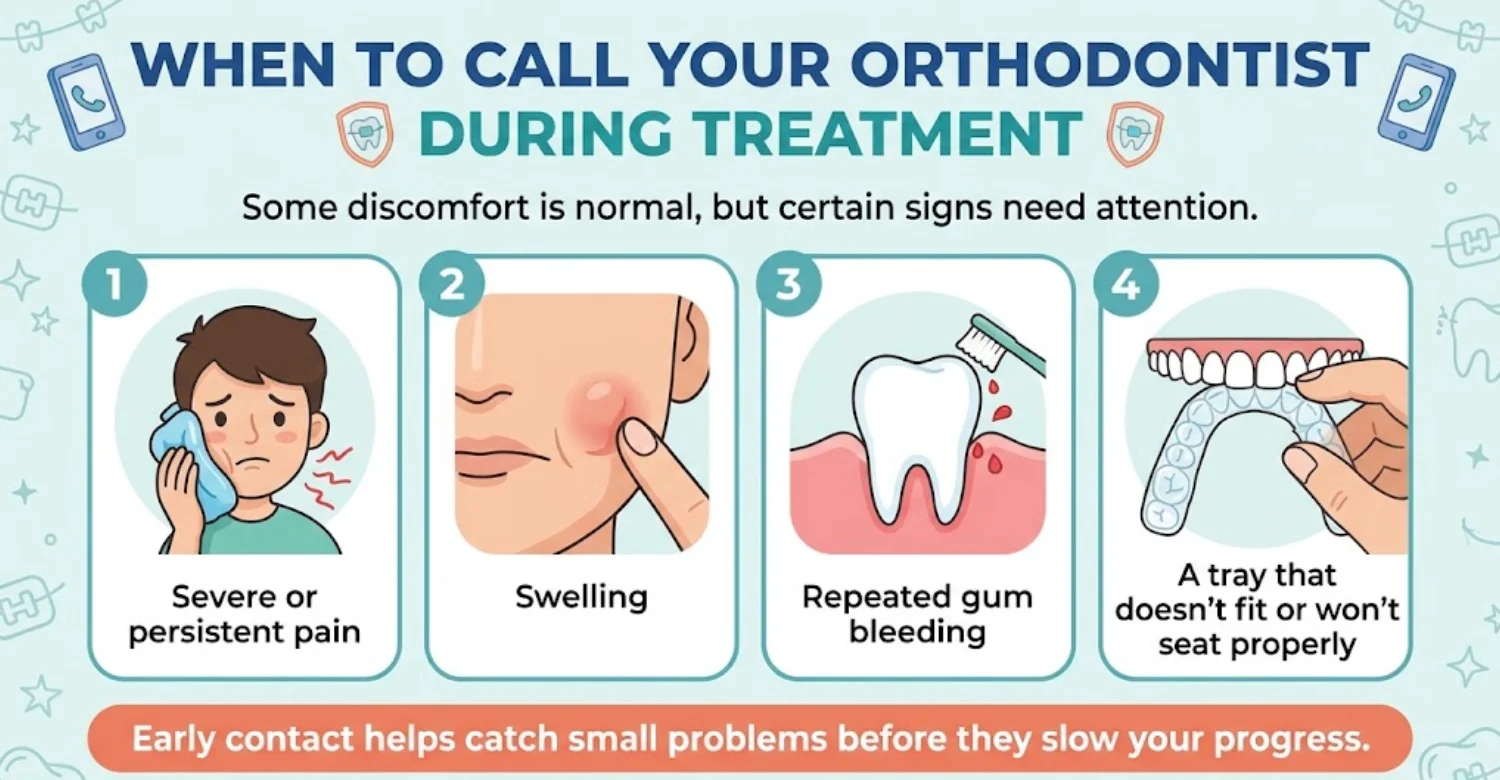
Mild soreness can be eased with cold water, soft foods and over-the-counter pain relief if needed. If a tray has a sharp edge that rubs your cheek or tongue, tell your orthodontist. They can smooth it quickly.
Dr. Sami’s Invisalign Excellence: Top 1% Recognition and 500+ Successful Cases
Dr. Sami received the prestigious Invisalign Apex Award, recognizing his position among the top 1% of Invisalign providers across Europe, the Middle East, and Africa (EMEA), alongside achieving Blue Diamond status and completing over 500 Invisalign cases.
.jpg)
Ready to transform your smile?
Talk to our team and get a FREE treatment plan.
Clear Aligners vs Braces
Both options straighten teeth, but they work and feel very different.
Feature | Aligners | Braces |
Appearance | Nearly invisible | Visible brackets and wires |
Removability | Removable | Fixed |
Compliance | Depends on the patient | Works all the time |
Oral hygiene | Easy brushing and flossing | Needs extra care around brackets |
Food | No restrictions (remove trays to eat) | Avoid hard and sticky foods |
Suitable cases | Mild to moderate, some complex | Wide range, including complex |
What Are Aligner Trays Made Of?
Most trays are made from medical-grade thermoplastic polymers. These materials are thin, flexible and strong enough to hold steady pressure. They are free from BPA in reputable systems.
Trays are designed with CAD/CAM technology, so each one matches a precise stage of movement. Most are produced by thermoforming, where heated plastic is pressed over a 3D-printed model of your teeth. Some newer systems print the trays directly with 3D printing, which can allow more control over thickness.
.jpg)
Ready to transform your smile?
Talk to our team and get a FREE treatment plan.
Living With Clear Aligners
Daily life with clear aligners is simple once you build a routine. The main changes involve cleaning, eating and keeping your trays safe. Most patients adapt within the first two weeks.
The golden rule is that trays only work while they're in your mouth. Every hour out counts against your progress. Planning meals, carrying a case and keeping a travel toothbrush with you makes it much easier to hit your daily wear target.
How to Clean Your Aligners
Rinse your trays every time you take them out. Brush them gently with a soft toothbrush and mild, clear soap. Avoid toothpaste, because it is abrasive. It scratches the plastic and makes trays look cloudy.
You can also soak them in a cleaning solution made for retainers. Never use very hot water, since heat can warp the plastic and ruin the fit. Neglected trays build up bacteria, which can cause bad breath and staining.
Eating and Drinking
Drink only plain water while your trays are in. Coloured or sugary drinks get trapped between the plastic and your teeth. This raises the risk of staining and cavities.
Remove your trays before every meal or snack. Then brush your teeth before putting them back in. If you snack often, this adds up, so many patients eat fewer, planned meals. Carrying a travel toothbrush and small toothpaste makes eating out much easier.
Oral Hygiene During Treatment
Removable trays make brushing easier than with braces, but good habits still matter. Brush at least twice a day and after meals. Floss every day, because food left between teeth sits under the plastic for hours.
Keep up with your regular dental checkups and professional cleanings. Your orthodontist monitors tooth movement, while your dentist checks for decay and gum problems. Both visits protect your result.
Lost or Broken Aligner: What to Do
Don't panic, and don't skip ahead without advice. Contact your orthodontist first. Depending on your progress, they may tell you to wear your previous tray, move to the next one early or order a replacement.
Keep your previous trays as a backup. The best prevention is simple. Always put trays in their case, and never wrap them in a napkin. That is the most common way trays end up in the bin.
Clinical Note
Clear aligners can treat selected orthodontic issues, including crowding, spacing, and some bite irregularities. Success depends on case complexity, proper planning, and patient compliance. Clinical examination and digital scans help guide treatment, though some cases may require attachments, elastics, or additional aligners.
At-Home vs Dentist-Supervised Aligners
At-home aligner companies offer treatment by mail, often after a scan or impression kit with limited in-person checks. They can cost less upfront. However, no one examines your gums or takes X-rays before teeth start moving.
Supervised treatment includes a full diagnosis, X-rays and regular checkups. Problems such as root issues, gum disease or a tooth that isn't tracking can be caught early.
Misconception: Aligners Require No Supervision
Moving teeth is a medical procedure. Without supervision, hidden problems can be missed and bite issues can get worse. Fixing them later often costs more than doing it right the first time.
How Much Do Clear Aligners Cost?
Treatment typically ranges from $3,000 to $8,000 in the US, UK, and Europe. At Vitrin Clinic in Turkey, prices range from $800 to $3,500, depending on the patient's individual case and treatment complexity.
The main cost factors include:
How complex your case is
How many trays and refinements you need
Which aligner system is used
The level of supervision and follow-up
Retainers after treatment
Ready to transform your smile?
Talk to our team and get a FREE treatment plan.
After Treatment: Retainers and Keeping Results
Finishing your last tray isn't the end of treatment. Teeth have a natural tendency to drift back. The fibres around them need time to settle in their new positions. Retainers hold your teeth in place while that happens.
If you don't wear your retainer as instructed, your teeth can shift again. Treating gum disease early, wearing a mouthguard during contact sports and seeing your orthodontist if your bite feels different all help protect your result.
Types of Retainers After Aligners
Essix: a clear removable retainer that looks like an aligner
Hawley: wire and acrylic; more durable but more visible
Bonded (fixed): a thin wire glued behind the teeth; always working but harder to clean
Clean removable retainers with a soft brush and mild soap, not toothpaste. Keep them in their case when they're out.
Combining Clear Aligners With Whitening or Veneers
Clear aligners are often the first step in a full smile makeover. Straightening teeth first can reduce how much enamel needs to be prepared for veneers. In some cases, it removes the need for veneers altogether.
Your trays can even double as whitening trays during treatment, using a gel your dentist recommends. Veneers or bonding are usually placed after alignment is complete.
Myths vs Facts About Clear Aligners
Myth: They only work for very minor cases.
Fact: They treat mild to moderate crowding, spacing and many bite issues. With attachments and elastics, they can handle some complex movements too.
Myth: They can fix any crooked teeth.
Fact: Some cases are treated more predictably with braces or a hybrid plan.
Myth: They're always faster than braces.
Fact: Not necessarily. Timing depends on your case and your wear time.
Myth: You can wear them whenever it suits you.
Fact: Clear aligners need 20–22 hours of daily wear to work.
What We Notice Clinically
At Vitrin Clinic, Dr. Sami Assani, our orthodontic specialist, evaluates tooth alignment, bite relationships, gum health, and patient compliance before recommending clear aligner treatment. He emphasizes that consistent aligner wear and regular orthodontic monitoring are essential for keeping tooth movement on track. When teeth do not respond as expected, Dr. Sami may recommend adjustments, additional aligners, or alternative orthodontic techniques to help achieve the planned results.
How Vitrin Clinic Approaches Patient Care
Vitrin Clinic in Istanbul, Türkiye, takes an individualized, diagnosis-first approach to Invisalign and clear aligner treatment. Before recommending a treatment plan, the team assesses tooth alignment, bite relationships, gum health, existing restorations, and each patient’s orthodontic and aesthetic goals. This evaluation helps determine whether clear aligners are suitable and what results may be realistically achievable.
Invisible Braces Treatment at Vitrin Clinic
Vitrin Clinic offers Invisalign and clear aligner treatment to address selected orthodontic concerns, including:
Mild to Moderate Crowding - Clear aligners can gradually move crowded teeth into better alignment when the case is suitable.
Gaps Between Teeth (Diastema) - Aligners can help close spaces between teeth through controlled orthodontic movement.
Selected Bite Problems - Depending on the diagnosis, clear aligners may help correct certain overbites, underbites, crossbites, and open bites.
Crooked or Misaligned Teeth - A series of custom-made aligners can gradually improve tooth positioning without traditional metal brackets.
Relapse After Previous Orthodontic Treatment - Clear aligners may help manage teeth that have shifted after braces or earlier orthodontic treatment, depending on the extent of movement required.
Personalized Clear Aligner Treatment Planning
Vitrin Clinic personalizes Invisalign and clear aligner treatment based on each patient’s tooth alignment, bite, and oral health. Digital scans and treatment planning help guide tooth movement, while treatment duration depends on case complexity and aligner wear. Request a consultation for an individualized assessment and treatment plan.






Book your FREE treatment plan with Vitrin Clinic and get a personalized treatment plan from our dental team.
Patients Reviews
Medical Disclaimer:
This article is for general information and does not replace a personal assessment by a qualified dentist. Prices are approximate 2026 averages, with UK and Turkey figures converted to US dollars, and may vary by clinic and case.
Ready to transform your smile?
Talk to our team and get a FREE treatment plan.
References
FAQs
Yes, when used for the right case and worn as directed. They reliably treat mild to moderate crowding, gaps and many bite problems. Results depend on wear time, case complexity and the orthodontist's supervision.
Dr. Sami Assani leads clear aligner treatment at Vitrin Clinic. He is an Invisalign Apex Award recipient (top 1% of providers in EMEA) and a Blue Diamond provider with 500+ completed Invisalign cases. He is known for precise digital planning and long-term, stable results.


