
Understanding the intersection between restorative dentistry and alignment correction is a major area of discussion in modern dental care. When addressing the structural and aesthetic layout of your mouth, you might find yourself asking: is a crown considered orthodontic?
To give you a direct and definitive answer: no, a dental crown is not traditionally considered an orthodontic treatment. Orthodontics specifically deals with the movement of teeth, jaw alignment, and the correction of malocclusions (bad bites) over time using sustained physical force. A dental crown, on the other hand, is classified as a restorative or cosmetic treatment designed to cap a damaged tooth or alter its individual shape and appearance.
However, in the advanced landscape of modern dentistry especially when looking at the philosophy practiced by global brands like Vitrin Clinic the lines between these dental disciplines frequently blur. While a crown does not move a tooth, it can radically alter how a tooth fits into your overall bite and how straight your smile appears. Below, we will break down why this distinction matters, how crowns play a secondary role in structural alignment, and the expert perspectives on utilizing these treatments effectively. Whether you want to protect a damaged tooth structure or alter its shape, exploring our guide to dental crowns shows how these custom caps function.
The Core Differences: Orthodontics vs. Restorative Crowns
To truly understand why the question is a crown considered orthodontic arises, one must look at what each procedure sets out to accomplish.
Orthodontic treatments, such as traditional metal braces, ceramic braces, or modern clear aligners like Invisalign, focus on the mechanics of bone remodeling. When a patient undergoes orthodontic care, continuous gentle pressure is applied to the teeth. This pressure signals the jawbone to dissolve slightly ahead of the moving tooth and rebuild itself behind it, physically shifting the tooth's root structure into a new position. This process addresses complex genetic alignment issues, severe crowding, overbites, underbites, and crossbites. To understand the full scope of how teeth are physically moved using physical force, check out our resource on orthodontic treatments.
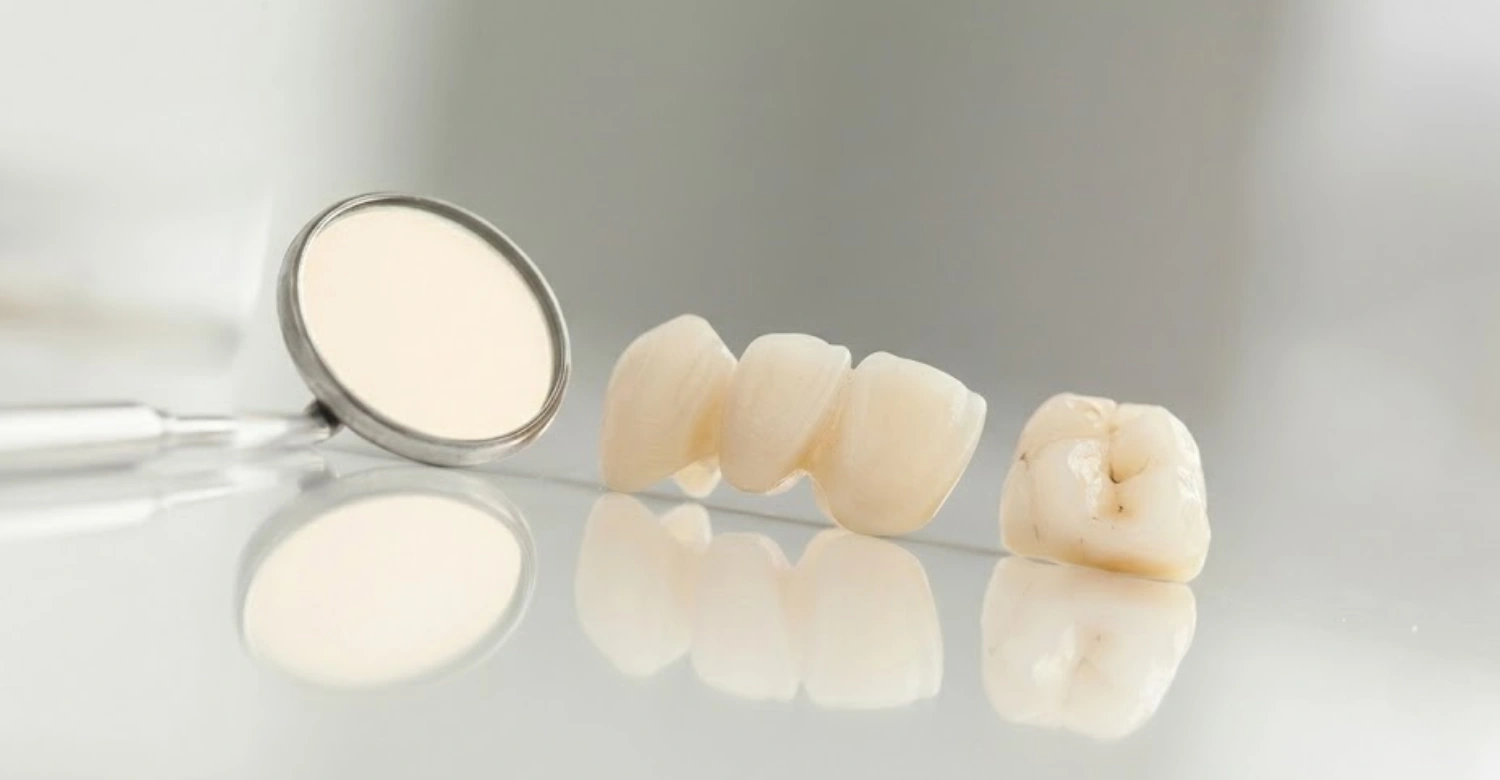
Conversely, a dental crown is an entirely localized restoration. A crown is a custom-made cap placed over an existing tooth that has been structurally compromised by deep decay, fractures, or root canal therapy. Instead of moving the root of the tooth, a crown reshapes the visible portion above the gumline.
At Vitrin Clinic, a premier destination for world-class dental restorations, crowns are crafted from highly durable, biocompatible materials such as zirconia or E-Max porcelain. They protect the weak internal structure of a tooth, restore its full chewing function, and match the natural color of the surrounding dentition. While a crown can technically make a slightly rotated or misshapen tooth look perfectly straight in relation to its neighbors, it does not alter the underlying bone or the position of the root.
Dr. Rifat Alsaman's Opinion on Crowns and Alignment
When exploring complex multi-disciplinary dental questions, clinical leadership provides the most reliable clarity. Dr. Rifat Alsaman, the esteemed Head of the Medical team at Vitrin Clinic and a highly accomplished cosmetics dentist, offers a balanced and patient-centric perspective on this topic. For patients looking for a discreet, removable option to fix severe crowding, our detailed guide to Invisalign clear aligners breaks down the process.
According to Dr. Rifat Alsaman, treating a dental crown purely as an orthodontic tool is a misconception, yet dismissing its alignment capabilities entirely overlooks the nuances of cosmetic smile design. Dr. Rifat Alsaman, in his extensive experience as a cosmetics dentist, notes that patients frequently approach his team asking if they can bypass years of braces by simply getting crowns to fix crooked teeth.
As the Head of the Medical team at Vitrin Clinic, Dr. Rifat Alsaman explains that crowns can sometimes function as what dentists call "instant orthodontics." If a patient has minor spacing issues, slight overlapping, or uneven tooth sizes, Dr. Rifat Alsaman can strategically prepare the outer enamel of those specific teeth and place custom-designed porcelain or zirconia crowns over them. The final result is a visually flawless, symmetrical smile achieved in a matter of days rather than months or years.
However, Dr. Rifat Alsaman always emphasizes a strict boundary: "Instant orthodontics" using crowns is purely a cosmetic solution, not a structural one. Dr. Rifat Alsaman cautions that if a patient suffers from severe skeletal malocclusion or significant crowding, trying to mask the issue with crowns without addressing the root cause can lead to uneven bite forces, premature wear, and potential jaw joint issues down the road. Therefore, Dr. Rifat Alsaman and his medical team at Vitrin Clinic always conduct a comprehensive digital assessment to determine whether structural orthodontics or cosmetic restorations are the healthiest path forward for the individual. When evaluating how teeth meet and how misaligned jaws affect daily comfort, our article on malocclusion types details the mechanics.
The Role of Crowns in Support of Orthodontic Treatment
While a crown itself is not an orthodontic device, the two treatments frequently intersect during comprehensive smile makeovers. Navigating how a crown behaves during or after an alignment process is a key part of specialized treatment planning.
Getting Orthodontic Treatment with Existing Crowns
Many patients wonder if they can wear braces or clear aligners if they already have dental crowns. The answer is yes. While bonding orthodontic brackets to a porcelain or zirconia crown requires specialized conditioning agents and specific dental adhesives, it is entirely possible to move a crowned tooth. Because orthodontics applies force to the root embedded in the jawbone, the crown simply moves along with it as a single unit.
Post-Orthodontic Crowning
In other scenarios, orthodontic treatment is completed first to align the roots of the teeth properly, creating the necessary space for a crown to be placed afterward. For instance, if a tooth is severely microdontic (abnormally small) or heavily broken down, an orthodontist will first move the surrounding teeth into their correct positions, leaving the exact ideal gap. Once the alignment is stable, the cosmetic dentistry team can step in to place a beautifully proportioned crown that seamlessly completes the bite. If you prefer a highly durable bracket system for severe structural crowding, our overview of traditional fixed braces outlines the benefits of metal systems.
Financial Considerations: Average Costs at Vitrin Clinic
When evaluating choices between long-term orthodontic treatments and restorative options like crowns, financial investment is a major deciding factor for international and local patients alike.
In many Western nations, including the United States and the United Kingdom, dental crowns can be financially prohibitive, often ranging from $1,000 to $2,500 per tooth depending on the material used. This reality leads many individuals to seek high-quality care abroad.
At Vitrin Clinic, patients receive premium, Swiss and German-engineered materials alongside state-of-the-art digital dentistry workflows at a fraction of the cost found in their home countries. The average cost of a dental crown at Vitrin Clinic typically ranges from $130 to $25 per tooth, depending on whether a patient selects premium Zirconia or high-translucency E-Max porcelain.
This exceptional affordability allows patients to achieve comprehensive restorative and cosmetic transformations without compromising on material longevity or clinical expertise. By centralizing operations and catering to a vibrant global community in Istanbul, Vitrin Clinic ensures that top-tier care remains accessible.
Conclusion: Making the Right Strategic Choice for Your Smile
Ultimately, when determining if a crown is considered orthodontic, the answer rests on whether your primary goal is shifting the underlying foundation of your teeth or transforming their external presentation. For true structural issues, skeletal imbalances, and severe crowding, traditional or clear orthodontics remain irreplaceable. For rebuilding damaged structures, correcting localized shape imperfections, or achieving rapid cosmetic alignment, a dental crown is an elite alternative. Patients interested in a more subtle fixed appliance can learn about the discreet look of ceramic braces that blend with enamel.
Choosing the ideal path requires an experienced eye that understands both functional biomechanics and elite facial aesthetics. Under the medical guidance of Dr. Rifat Alsaman, the Head of the Medical team at Vitrin Clinic, patients are never subjected to a one-size-fits-all approach. Whether your smile requires the foundational movement of dedicated orthodontics or the artistic precision of custom crowns, a personalized consultation ensures your health, comfort, and confidence always come first.
References:
FAQs

Dr. Rifat Alsaman has more than 5 years of clinical experience in dentistry and currently serves as the Head of the Medical Team at Vitrin Clinic. He is dedicated to providing exceptional patient care, overseeing treatment planning, and ensuring the highest clinical standards across the team. His expertise, attention to detail, and commitment to continuous professional development have helped countless patients achieve healthier, more confident smiles.


