Oral Dentistry
September 15, 2025
What Is Malocclusion and Why Does It Matter for Oral Health in 2026?
 Dr. Rifat Alsaman
Malocclusion is a dental condition where the teeth and jaws do not align properly when the mouth is closed. This misalignment affects oral health by causing problems with chewing, speaking, oral hygiene, and jaw function. If left untreated, Crooked teeth can lead to tooth wear, gum disease, and jaw pain. It also impacts aesthetics, affecting your smile and confidence.
What Are the Main Causes of Malocclusion?
Malocclusion can be caused by a combination of genetic and environmental factors. Genetics can determine jaw size, shape, and tooth size, while habits like thumb-sucking or tongue thrusting, missing or extra teeth, and jaw size differences also play a role.
Are Crooked teeth genetic or inherited?
Yes, malocclusion is often inherited from parents because genes influence jaw and tooth development.
Which genes are linked to jaw and teeth alignment?
Genes such as MSX1 and PAX9 are linked to jaw bone growth and tooth formation, affecting how teeth align.
Can Crooked teeth skip generations?
Yes, genetic traits for malocclusion can skip generations, meaning a child may inherit misalignment even if parents don't show it.
Can thumb-sucking cause malocclusion?
Yes, prolonged thumb-sucking can exert pressure on the teeth and jaws, causing misalignment.
At what age does thumb-sucking become harmful?
Thumb-sucking becomes harmful if it continues beyond age 3-4 when permanent teeth start erupting.
What types of Crooked teeth are caused by prolonged thumb-sucking?
It often causes anterior open bite and protruding upper front teeth (overjet).
How does jaw size affect malocclusion?
Jaw size impacts how teeth fit in the mouth. A mismatch between upper and lower jaw size can cause malocclusion.
Can a small jaw cause overcrowding?
Yes, a small jaw may not have enough space, leading to crowding of teeth.
Why does a large jaw lead to spacing problems?
A large jaw may create extra space, causing gaps between teeth.
Do missing or extra teeth lead to malocclusion?
Yes, missing teeth cause neighboring teeth to shift; extra teeth can crowd or push teeth out of alignment.
How do wisdom teeth contribute to malocclusion?
Impacted wisdom teeth can push adjacent molars forward, causing crowding.
Can supernumerary teeth push other teeth out of alignment?
Yes, extra teeth occupy space needed for normal teeth, causing misalignment.
How do habits like tongue thrusting contribute to malocclusion?
Tongue thrusting puts pressure on teeth, pushing them forward and affecting bite development.
How does tongue position affect bite development?
An improper tongue position can prevent proper closure of teeth, causing open bite or other misalignments.
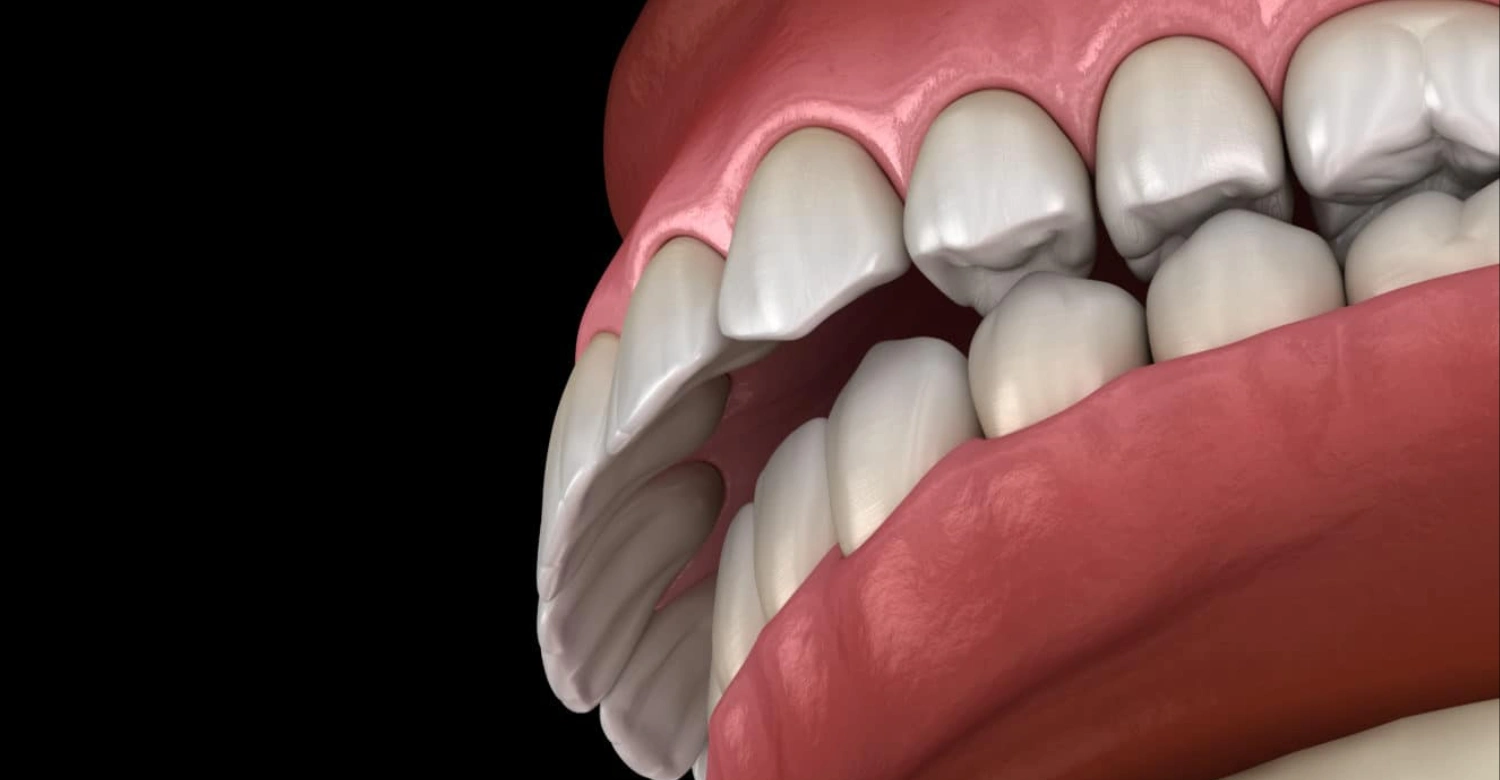
What Are the Different Types of Malocclusion?
Type | Description |
Class I | Normal bite, but teeth are misaligned or crowded |
Class II | Overbite – upper jaw/teeth protrude |
Class III | Underbite – lower jaw/teeth protrude |
Crossbite | Upper teeth sit inside lower teeth |
Open Bite | Front teeth don't touch when biting |
Deep Bite | Upper front teeth cover lower teeth too much |
Crowding | Not enough space for proper alignment |
Spacing | Gaps between teeth |
Impacted Teeth | Teeth stuck in bone or gum |
What is Class I malocclusion?
Class I Crooked teeth is when the bite is normal but there is crowding, spacing, or Crooked teeth.
What is Class II Crooked teeth (overbite)?
Class II Crooked teeth occurs when the upper teeth significantly overlap the lower teeth.
What are the subtypes of Class II malocclusion?
Division 1: Upper front teeth protrude outward.
Division 2: Upper front teeth tilt backward.
What is Class III Crooked teeth (underbite)?
Class III is when the lower teeth protrude beyond the upper teeth, causing an underbite.
Why is Class III Crooked teeth more complex to treat?
Because it often involves jaw bone discrepancies requiring surgery in addition to orthodontics.
What is an open bite and why does it happen?
An open bite is when front or back teeth do not touch when biting down. It happens due to habits or jaw growth problems.
What are the differences between anterior and posterior open bite?
Anterior open bite involves front teeth not touching; posterior open bite involves back teeth not touching.
What is a crossbite?
A crossbite occurs when the upper teeth sit inside the lower teeth instead of outside. It can affect one tooth, several teeth, or an entire side of the mouth. Crossbites may lead to uneven wear, gum problems, and jaw discomfort if left untreated.
What is the difference between unilateral and bilateral crossbite?
A unilateral crossbite affects teeth on only one side of the mouth, while a bilateral crossbite impacts both sides. Unilateral cases often cause asymmetrical jaw growth, while bilateral crossbites may affect overall bite function and alignment more extensively.
What is a deep bite?
A deep bite occurs when the upper front teeth excessively overlap the lower front teeth vertically. This condition can cause gum irritation, tooth wear, and even jaw strain. Severe deep bites may also affect appearance and lead to functional problems when chewing.
What is crowding and spacing in malocclusion?
Crowding happens when there isn't enough space in the jaw, causing teeth to overlap or twist. Spacing is the opposite, where excessive gaps exist between teeth. Both issues are types of Crooked teeth that can affect chewing, aesthetics, and overall dental health.
Clinical Note
Early cavities frequently cause no pain or visible change, so they are missed during self-checks at home. A dental examination with X-rays detects decay between teeth and under the enamel before it reaches the stage where a patient would feel it.
What Are the Common Symptoms of Malocclusion?
Common symptoms include crooked or crowded teeth, difficulty chewing, speech issues, frequent biting of cheeks, jaw pain, and headaches. Some patients also notice uneven tooth wear and dissatisfaction with their smile. Symptoms vary depending on severity and type of malocclusion.
How does Crooked teeth affect chewing?
Malocclusion can make chewing inefficient by misaligning the teeth, preventing them from meeting properly. This leads to uneven pressure, incomplete food breakdown, and digestive strain. Severe cases may also cause discomfort or jaw fatigue when eating harder foods.
Can Crooked teeth cause difficulty biting into food?
Yes. When teeth are misaligned, the front teeth may not meet properly, making it hard to bite into foods like apples or sandwiches. Overbites, underbites, or open bites often cause this issue, affecting both function and comfort while eating.
Can Crooked teeth cause speech problems?
Yes. Crooked teeth can interfere with tongue placement and airflow during speech. This may cause lisping, unclear pronunciation, or difficulty with certain sounds. Severe malocclusion can make communication challenging and may impact confidence in speaking situations.
What speech sounds are affected by malocclusion?
Sounds requiring precise tongue and teeth coordination are most affected, especially "s," "z," "t," "d," and "th." Malocclusion may cause lisping or distortion, as the tongue cannot properly contact teeth or palate, leading to unclear or altered speech production.
Why does Crooked teeth lead to jaw pain or headaches?
Crooked teeth strain the jaw muscles and temporomandibular joint (TMJ). Over time, this imbalance causes tension, leading to jaw pain, clicking sounds, and headaches. Chronic clenching or uneven chewing pressure further worsens discomfort in patients with malocclusion.
Can Crooked teeth cause aesthetic concerns?
Yes. Crooked teeth often results in crooked, protruding, or uneven teeth, affecting smile appearance. It can also change facial balance, making the jawline look asymmetrical. Many patients seek treatment not only for function but also for improved aesthetics and confidence.
How does Crooked teeth affect smile symmetry?
Uneven or crooked teeth create an unbalanced smile.
How does Crooked teeth affect oral hygiene?
Crowded or crooked teeth trap food and plaque, making cleaning difficult.
Why is tooth crowding harder to clean?
Overlapping teeth create hard-to-reach areas where plaque accumulates.
How Is Malocclusion Diagnosed?
Diagnosis involves clinical exams, imaging, and sometimes specialized analysis.
What role do dental exams play in diagnosis?
Dentists assess bite, alignment, and jaw movement during exams.
How are X-rays used in Crooked teeth assessment?
X-rays reveal bone structure, tooth position, and impacted teeth.
What is cephalometric analysis?
A specialized X-ray measuring jaw relationships and growth patterns.
What does cephalometric analysis reveal about jaw growth?
It shows jaw size, angle, and growth trends critical for planning treatment.
Can digital scans help in identifying malocclusion?
Yes, digital 3D scans provide precise images of teeth and jaws.
How accurate are 3D digital scans compared to traditional impressions?
3D scans are more accurate, faster, and less uncomfortable than traditional molds.
What Are the Best Treatments for Malocclusion?
Treatment depends on severity and type but mainly involves orthodontics and sometimes surgery.
How do braces correct malocclusion?
Braces apply continuous pressure to shift teeth gradually into correct position.
What types of braces are available today?
Metal, ceramic, lingual, and clear aligners.
How do metal braces compare to ceramic braces?
Metal braces are more durable; ceramic braces are less visible but more fragile.
What role do clear aligners (Invisalign) play?
Aligners straighten teeth discreetly and are removable.
Are aligners effective for severe Crooked teeth cases?
They work best for mild to moderate cases; severe cases may need braces or surgery.
Can retainers help fix malocclusion?
Retainers mainly keep teeth in place after treatment; some mild corrections are possible.
When is orthodontic surgery required for malocclusion?
Surgery is needed when jaw bone discrepancies cause severe bite problems.
How long does Crooked teeth treatment usually take?
Treatment ranges from 6 months to 3 years based on complexity.
What Are the Surgical Options for Severe Malocclusion?
Surgical Procedure | Purpose | Used For | Notes |
Maxillary Osteotomy | Repositions the upper jaw (maxilla) | Overbite, open bite, crossbite, midface deficiency | Often improves facial symmetry and nasal airflow |
Mandibular Osteotomy | Repositions the lower jaw (mandible) | Underbite, receding chin/lower jaw | Can cause temporary numbness in the lower lip and chin |
Bimaxillary Osteotomy | Adjusts both upper and lower jaws simultaneously | Complex Class III malocclusion, severe asymmetry | Most comprehensive; longer recovery time |
Genioplasty | Reshapes or repositions the chin | Chin deficiency or excess; facial balance | Often combined with other jaw surgeries |
SARPE (Surgically Assisted Rapid Palatal Expansion) | Widens the upper jaw | Crossbite, severe crowding, narrow upper arch | Used when the growth plates have fused (mainly in adults) |
Distraction Osteogenesis | Gradually lengthens jawbone using a mechanical device | Severe jaw underdevelopment, congenital defects | Slower process but avoids bone grafts |
Surgical Tooth Extraction | Removes impacted or overcrowded teeth | Preparation for orthodontic treatment or to relieve crowding | Often done before braces or jaw surgery |
What is orthognathic surgery?
Orthognathic surgery corrects jaw irregularities to improve bite and facial appearance.
How is orthognathic surgery performed step by step?
Pre-surgical orthodontics and planning
Surgical repositioning of jaw bones
Fixation with plates/screws
Post-surgical orthodontics and healing
How does jaw surgery correct malocclusion?
By repositioning jaws for proper alignment and bite.
When is tooth extraction needed in Crooked teeth treatment?
Extraction creates space for crowded teeth to align properly.
How Does Malocclusion Affect Children and Adults Differently?
Aspect | Children | Adults |
Jaw Growth Potential | Jawbones are still growing, allowing easier correction with orthodontics | Growth is complete, limiting non-surgical options |
Early Intervention Benefits | Orthodontic appliances can guide jaw development | Missed early treatment may require surgery in severe cases |
Tooth Eruption Issues | Malocclusion may cause or result from delayed/misaligned tooth eruption | May have impacted, worn, or missing teeth from long-term issues |
Treatment Options | Often involves interceptive orthodontics (e.g., expanders, headgear) | Requires full braces, aligners, or surgical correction |
Compliance with Treatment | May need more parental involvement and motivation | Adults are typically more consistent, but may have time/work constraints |
Psychosocial Impact | Can lead to bullying, speech issues, or self-esteem problems | Affects confidence, professional interactions, or social anxiety |
Functional Problems | May cause issues with chewing, speech, or facial development | Can cause jaw pain (TMJ), headaches, tooth wear, or gum disease |
Habits That Influence It | Thumb sucking, pacifier use, tongue thrusting | Bruxism (teeth grinding), tooth loss, or poorly fitting dental work |
Treatment Time & Cost | Often shorter and less costly if treated early | Longer and more expensive; insurance may not always cover adult care |
How common is Crooked teeth in children?
Very common; early detection is important for best outcomes.
When is the best age to treat malocclusion?
Treatment often begins around age 7 when permanent teeth start to erupt.
What are the benefits of early orthodontic intervention?
It guides jaw growth, prevents worsening, and shortens later treatment.
Can Crooked teeth develop in adults?
Yes, Crooked teeth can develop or worsen in adulthood.
What are the risks of untreated Crooked teeth in adults?
Risks include tooth wear, gum disease, TMJ disorders, and aesthetic issues.
What Are the Health Risks of Untreated Malocclusion?
Increased risk of tooth decay and gum disease due to poor oral hygiene.
Jaw pain and TMJ disorders from uneven bite pressure.
Chewing and speech difficulties affecting nutrition and communication.
Excessive tooth wear, cracking, or even tooth loss over time.
Negative impact on self-esteem and mental well-being.
Can Crooked teeth cause tooth decay and gum disease?
Yes, because crowded teeth trap plaque harder to remove.
How does Crooked teeth affect digestion?
Poor chewing leads to inadequate food breakdown, impacting digestion.
Can Crooked teeth lead to temporomandibular joint disorder (TMJ)?
Yes, Crooked teeth stresses the TMJ causing pain and dysfunction.
What are the early signs of TMJ caused by malocclusion?
Jaw pain, clicking sounds, headaches, and difficulty opening mouth.
How does Crooked teeth impact facial aesthetics and confidence?
It can cause facial asymmetry and reduced self-esteem due to an unattractive smile.
How Can Malocclusion Be Prevented or Controlled?
Early dental checkups - Regular visits help detect and manage jaw or tooth alignment issues early.
Address oral habits early - Stop thumb sucking, pacifier use (past age 2–3), tongue thrusting, or nail biting.
Proper oral hygiene - Prevents premature tooth loss from decay, which can lead to shifting teeth.
Timely orthodontic evaluation - Children should be assessed by age 7 to catch issues while the jaw is still growing.
Use of space maintainers or expanders - These devices guide proper jaw growth and tooth eruption when baby teeth are lost early.
Manage injury risks - Wear mouth guards during sports to prevent trauma that could misalign the jaw.
Avoid prolonged bottle feeding - Prolonged bottle use or poor feeding posture can affect bite development.
Treat dental issues promptly - Untreated cavities or infections can lead to tooth loss and misalignment.
Can early orthodontic intervention prevent malocclusion?
Yes, early treatment guides jaw development and reduces severity.
How can parents help prevent Crooked teeth in children?
By monitoring habits and ensuring regular dental check-ups.
Which childhood habits should parents monitor?
Thumb-sucking, prolonged pacifier use, tongue thrusting, and mouth breathing.
Does breaking oral habits reduce Crooked teeth risk?
Yes, stopping harmful habits allows normal jaw and teeth development.
Can regular dental check-ups control Crooked teeth development?
Early detection during check-ups allows timely intervention.
How Do Turkish Clinics Treat Malocclusion?
Treatment Type | Description & Use |
Traditional Metal Braces | Standard, effective treatment using metal brackets and wires. Powerful and cost-effective. |
Ceramic (Clear) Braces | Tooth-colored or translucent braces offer a more subtle appearance. Comparable efficacy to metal braces. |
Lingual Braces | Brackets placed on the interior surfaces of teeth are completely hidden. Ideal for aesthetics, though trickier to clean. |
Self-Ligating Braces (e.g., Damon) | Use sliding mechanisms to reduce friction and potentially shorten treatment times. |
Clear Aligners (e.g., Invisalign, ClearCorrect) | Removable, nearly invisible trays that are especially popular among teens and adults. Comfortable, low maintenance. |
Palatal Expanders & Functional Appliances | Used mainly in growing children to widen the upper jaw or modify jaw positioning (e.g., twin-block appliances). |
Orthognathic (Jaw) Surgery | For severe skeletal malocclusion collaboration between orthodontists and oral surgeons to realign jaws. |
What orthodontic treatments are available in Turkey?
Braces, clear aligners, orthodontic surgery, and digital treatment planning.
How affordable is Crooked teeth treatment in Turkey compared to Europe?
Treatment in Turkey is generally 40-70% cheaper while maintaining high quality.
Why do international patients choose Turkey for orthodontic care?
Lower cost, experienced doctors, advanced technology, and comprehensive care.
What advanced technologies do Turkish clinics use for malocclusion?
3D digital imaging, CAD/CAM technology, laser treatments, and computer-guided surgery.
Do Turkish clinics use 3D imaging for treatment planning?
Yes, 3D imaging is widely used for precise diagnosis and personalized treatment.
Tips for the Patients
Use a toothpaste with 1,450 ppm fluoride, and after brushing spit rather than rinse with water, so the fluoride stays on the teeth longer. If you snack on something sugary, have it with a meal instead of spreading sweets across the day, since it is the frequency of acid attacks, not the total amount, that drives a tooth cavity.
Outlook & Prognosis: What Can I Expect Long-Term with Dental Malocclusion?
Malocclusion prognosis depends heavily on when the condition is identified and treated. In children, moving the jaw while it is still growing usually leads to a stable, long-term outcome, since bone can be guided into a healthier position. In adults, the jaw has stopped growing, so treatment relies more on orthodontic movement of the teeth or, for skeletal cases, combined surgical-orthodontic correction. Mild to moderate Crooked teeth that is treated correctly rarely returns, provided the patient wears a retainer as instructed. Severe or untreated cases tend to progress: crowding gets tighter, bite pressure becomes less even, and the risk of tooth wear, gum recession, and jaw joint strain increases with age. Long-term outlook is best described as manageable at nearly every stage, but the earlier a case is addressed, the shorter and more predictable the treatment path tends to be.
Navigating Your Clinical Consultations: When Should You See Your Healthcare Provider?
Most cases of malocclusion do not need emergency care, but certain signs call for a consultation sooner rather than later. See your dentist or orthodontist if you notice sudden changes in your bite, difficulty closing your mouth fully, jaw locking or clicking that is new, or pain that does not resolve within a few days. Children showing early loss of baby teeth, mouth breathing, or a visibly retreating jaw should also be seen promptly, since early intervention often shortens later treatment. Adults who develop worsening TMJ symptoms, unexplained tooth wear, or shifting teeth after years of stability should not wait for the next routine check-up.
Critical Diagnostic Questions to Ask Your Orthodontist Before Treatment
Coming prepared with the right questions helps you understand the full scope of your treatment plan before committing to it:
What class or type of malocclusion do I have, and how severe is it?
Will treatment involve teeth movement alone, or will jaw surgery be needed?
What imaging, such as X-rays, cephalometric analysis, or 3D scans, will be used to plan treatment?
How long is the expected treatment timeline, and what factors could extend it?
What are the risks of root resorption, decalcification, or relapse with this specific plan?
What retention plan will be used once active treatment finishes?
How will my progress be monitored throughout treatment?
Clinical Classification Protocols and Epidemiological Distribution Data
Malocclusion is classified using standardized protocols that let clinicians compare cases consistently across populations. Angle's classification, Class I, II, and III, remains the baseline system, refined further with indices such as the Index of Orthodontic Treatment Need and the Peer Assessment Rating index, which score severity and treatment priority. Epidemiological data shows Crooked teeth affects a large share of the global population to some degree, with Class I patterns being the most common, followed by Class II presentations. Distribution varies by region and is influenced by genetics, feeding patterns in infancy, and access to early orthodontic care. Recognizing where a case falls within these classification systems helps determine both urgency and the most appropriate treatment protocol.
Measurement Models for Malocclusion, Oral Trauma, and Congenital Anomalies
Clinicians use structured measurement models to grade malocclusion alongside related conditions such as oral trauma and congenital anomalies. These models score factors like overjet, overbite, crowding, and midline deviation on standardized scales, allowing consistent comparison between patients and over time. When trauma or a congenital jaw anomaly is present, measurement models are adapted to account for asymmetry, bone loss, or growth restriction, giving a more complete picture than dental alignment scores alone.
Traumatic Complications: Postoperative CT Analysis of the Mandible Following Facial Trauma
When facial trauma affects the mandible, postoperative CT imaging is used to confirm that the jaw has healed in correct alignment and that fixation hardware is positioned properly. CT analysis can reveal complications such as malunion, hardware displacement, or a traumatic mandibular condyle injury that was not fully corrected, any of which can lead to new or worsened malocclusion after healing. Follow-up imaging is typically scheduled at set intervals after surgery to catch these issues while they are still easier to correct.
Neonatal and Pediatric Development: Neonatal Science Patterns and Infant Jaw Underdevelopment
Jaw development begins before birth, and several neonatal patterns can set the stage for later malocclusion. Infant jaw underdevelopment, sometimes linked to feeding position, tongue-tie, or prolonged bottle use, can restrict the space available for erupting teeth. Pediatric dentists monitor these patterns during early well-child visits, since guiding jaw growth in infancy and early childhood is far more effective than correcting a fully formed misalignment later on.
Secondary Pathologies: Dental Neglect in Children and Its Impact on Malocclusion Severity
Dental neglect, meaning a consistent failure to address a child's basic oral health needs, is directly linked to more severe malocclusion later on. Untreated childhood cavities can cause early tooth loss, allowing neighboring teeth to drift and reducing the space available for permanent teeth. Chronic gum inflammation from poor hygiene can also affect the bone that supports developing teeth. Children who miss routine dental visits are more likely to reach adolescence with a Crooked teeth that requires braces, expanders, or in severe cases, surgical correction, rather than the simpler interventions available if problems are caught early.
What We Notice Clinically
Dr. Rifat Alsaman, Head of the Medical Team at Vitrin Clinic and a cosmetic dentist, notes that the malocclusion cases he sees most often at Vitrin Clinic are patients who delayed treatment into adulthood, believing the misalignment was purely cosmetic. Dr. Rifat Alsaman explains that by the time these patients seek care, uneven wear and gum recession have often already begun, which can extend treatment time. Dr. Rifat Alsaman recommends that patients treat a consultation as a diagnostic step rather than a commitment to surgery, since many cases that look severe respond well to orthodontics alone once properly assessed.
About Vitrin Clinic
Vitrin Clinic is a cosmetic dental clinic in Istanbul, Turkey, treating international patients from around the world. The clinic combines experienced clinicians, digital diagnostic technology, and a multilingual support team to make dental and orthodontic care accessible to patients traveling from abroad. Every treatment plan at Vitrin Clinic, including care for malocclusion, is overseen by the clinic's Head of the Medical Team, Dr. Rifat Alsaman, to ensure consistent clinical standards from the first consultation through post-treatment follow-up.
References:
FAQs
Dr. Rifat Alsaman has more than 5 years of clinical experience in dentistry and currently serves as the Head of the Medical Team at Vitrin Clinic. He is dedicated to providing exceptional patient care, overseeing treatment planning, and ensuring the highest clinical standards across the team. His expertise, attention to detail, and commitment to continuous professional development have helped countless patients achieve healthier, more confident smiles.


