Dental Bridge
September 28, 2026
Maryland Bridge vs Traditional Bridge: Which Option Could Suit My Smile?
 Dr. Rifat Alsaman
Maryland bridge vs traditional bridge is a comparison many people face when replacing a missing tooth. You may wonder whether a conventional fixed bridge or a less invasive Maryland option suits your smile. Either could work, but only in the right case. The choice depends on where the missing tooth is, how healthy the nearby teeth are, your bite, your appearance goals, and how much tooth preparation is appropriate.
Neither option is automatically suitable for everyone. A dental examination is needed first. It assesses the supporting teeth, gums, bite, available space, and aesthetic needs before any bridge type is recommended. This article explains how Maryland and traditional bridges differ and what each involves. It covers their advantages, limitations, expected longevity, and costs. It also shows how a dentist decides which option may be right for you.
Maryland Bridge vs Traditional Bridge: What Is the Difference?
Maryland bridge vs traditional bridge comes down to how the replacement tooth is held in place. A Maryland bridge is bonded to the back of the neighboring teeth with thin wings. A traditional bridge uses crowns that fully cover the neighboring teeth. This one design difference affects how much tooth structure is removed. It also affects how the bridge handles chewing forces and where in the mouth it works best. Both fill the gap with an artificial tooth, and both need good care to last.
What Is a Maryland Bridge?
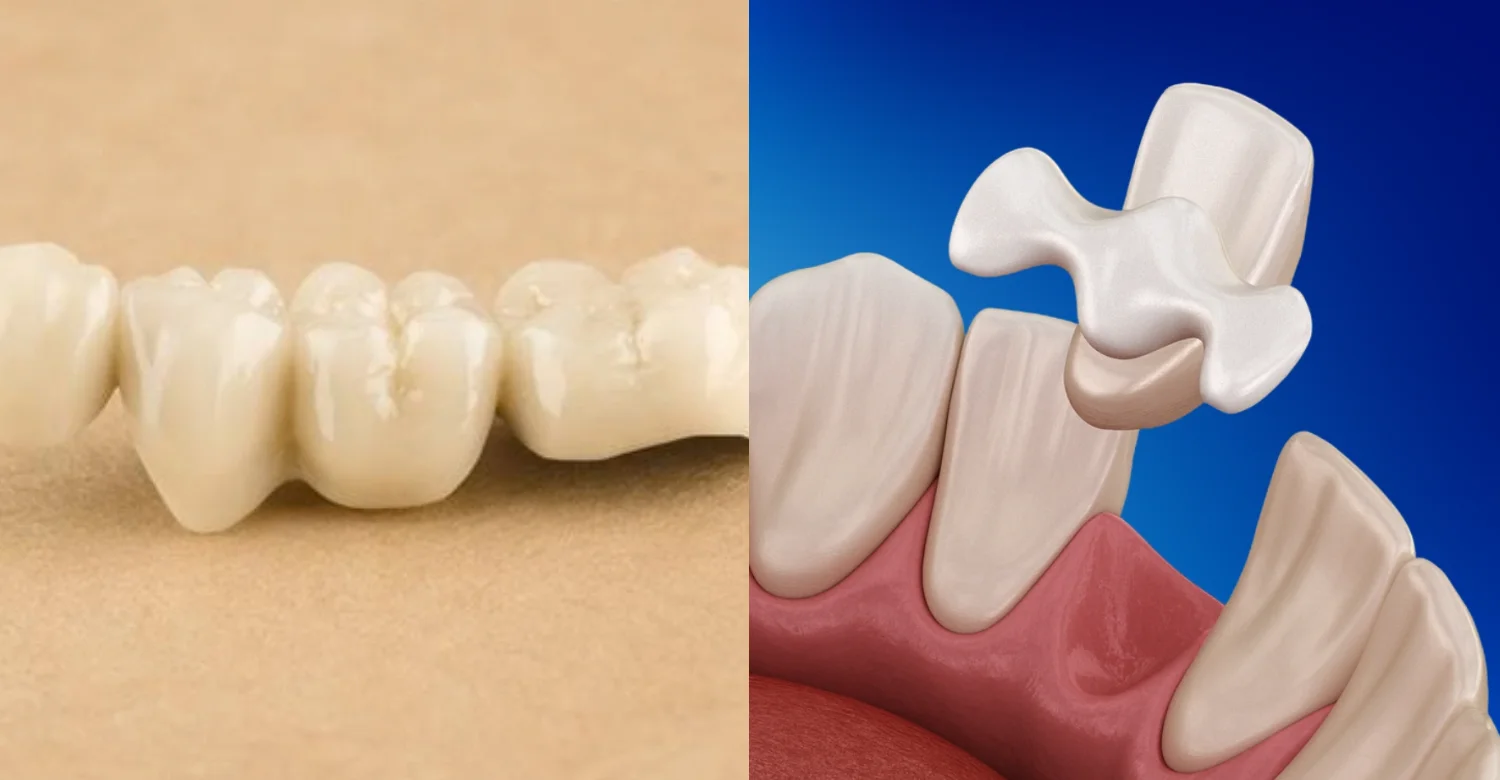
A Maryland bridge, also called a resin-bonded bridge, is a replacement tooth attached to adjacent teeth using thin supporting wings or a framework. These wings are bonded to the back surfaces of the neighboring teeth. As a result, the supporting teeth usually need much less preparation than with a conventional bridge. However, whether it suits you depends heavily on tooth position, bite forces, enamel condition, and available bonding surfaces. It is a conservative design, but it does not fit every case.
What Is a Traditional Dental Bridge?
A traditional bridge usually uses crowns placed over prepared teeth on either side of the gap. Its basic structure has three parts:
Supporting or abutment teeth: the natural teeth that hold the bridge.
Dental crowns: caps fitted over those abutment teeth.
Pontic: the artificial replacement tooth that fills the space.
This design can provide strong support. The trade-off is that the adjacent teeth usually need more preparation. Enamel must be reduced on all sides so the crowns can fit.
Maryland vs Conventional Bridge: How the Designs Differ
Looking at Maryland vs conventional bridge designs side by side makes the choice clearer:
Tooth preparation: minimal for Maryland; full crown preparation for traditional.
Retention method: bonding versus crowns covering the teeth.
Stability: traditional designs generally resist heavier forces.
Appearance: both can look natural; wings may show through thin teeth.
Bite forces: Maryland suits lighter, favorable bites.
Maintenance: both need cleaning under the pontic.
Potential reversibility: Maryland preparation is often more conservative.
Location: Maryland is more often considered for front teeth.
These differences can affect which option is appropriate for you.
When Could a Maryland Bridge Be Considered?
A Maryland bridge could be considered when the case suits a bonded design. This usually means healthy neighboring teeth, good enamel for bonding, and a bite that does not put heavy stress on the gap. In the Maryland bridge vs traditional bridge decision, these conditions tip the balance toward the more conservative option. Your dentist looks at the whole picture, not just the missing tooth. The sections below explain where this design often fits and where it may not.
Replacing a Missing Front Tooth
Maryland bridges are often considered for selected front-tooth spaces. Front teeth usually take lower chewing forces than back teeth. That matters, because a bonded bridge relies on adhesion rather than full crowns. The front of the mouth is also highly visible. A Maryland design can replace the tooth while leaving the front surfaces of neighboring teeth untouched. For many front-tooth gaps, this is where the Maryland bridge vs traditional bridge question begins. Your bite is still checked carefully.
When Preserving Healthy Neighboring Teeth Matters
A Maryland bridge usually requires less alteration of adjacent teeth. This is a real advantage when those teeth are healthy and have no fillings or damage. Crowning a healthy tooth removes enamel permanently, and enamel cannot grow back. If the neighboring teeth do not otherwise need crowns, keeping their structure becomes an important consideration. In the Maryland bridge vs traditional bridge comparison, tooth preservation is often the strongest argument for the bonded design. It also keeps future options more open.
When a Maryland Bridge May Not Be Suitable
A Maryland bridge has clear limits. It may not be suitable in cases of:
Strong or unfavorable bite forces
Limited bonding surfaces
Certain back-tooth spaces
Significant enamel damage
Poor oral hygiene
Active gum disease
Certain cases of teeth grinding
Each factor can weaken the bond or overload the wings. Suitability is decided individually, not by the missing tooth alone. Two people missing the same tooth may receive different recommendations.
Read more about Dentinogenesis Imperfecta and Tooth Loss
When Could a Traditional Bridge Be Considered?
A traditional bridge could be considered when stronger mechanical support is needed. Crowns wrap around the supporting teeth, so the bridge does not depend on bonding alone. This makes it useful when the neighboring teeth are already restored, when the bite is heavy, or when the gap is in a high-load area. In the Maryland bridge vs traditional bridge choice, the conventional design often wins where strength matters more than preservation. The following situations show when this may apply.
When Adjacent Teeth Already Need Crowns
Sometimes the neighboring teeth already have large fillings, cracks, or structural damage. In these cases, crowning them may already be part of their treatment plan. A traditional bridge could then meet two goals in one treatment. It restores the weakened teeth and replaces the missing tooth at the same time. Here, the usual drawback of tooth preparation matters less, because the teeth needed protection anyway. This is one of the clearest cases where a conventional design makes practical sense.
When Greater Stability Is Needed
Traditional bridges gain retention through crowns placed over prepared abutment teeth. The crowns grip the teeth from all sides. This creates mechanical support that does not depend only on adhesion. A resin-bonded design, by contrast, relies on the bond between thin wings and enamel. That difference can matter in demanding situations. When your dentist expects higher stress on the restoration, a conventional bridge may offer more predictable stability over time. The decision still depends on your specific findings.
Replacing a Tooth in a Higher-Load Area
Chewing forces differ across the mouth. Back teeth, such as premolars and molars, usually handle stronger forces than front teeth. A bonded bridge in these areas may face more stress than it can reliably resist. Your bite also plays a role. Deep bites, heavy contacts, or grinding can increase the load even on front teeth. For these reasons, the location of the missing tooth and your bite pattern strongly influence the Maryland bridge vs traditional bridge decision.
Tips for Patients
Ask why a Maryland or traditional design is being recommended for your specific missing tooth.
Ask whether your neighboring teeth are healthy enough to support the proposed restoration.
Tell your dentist if you grind or clench your teeth, even if you do not notice it every night.
Ask how you should clean underneath the replacement tooth before leaving the appointment.
Request a clear explanation of what the quoted treatment cost includes.
Learn more about Tooth Autotransplantation in Young Patients
Resin Bonded Bridge vs Traditional Bridge: How Do They Compare in Everyday Use?
The resin bonded bridge vs traditional bridge comparison looks different once you think about daily life. Technical details matter less than how the bridge feels, looks, and behaves over months and years. You want to know how much of your natural tooth is changed and whether the bridge stays secure. You also want to know how it looks when you smile and how easy it is to clean. The points below compare both options in practical terms.
Tooth Preparation
Maryland bridges generally require less preparation of the supporting teeth. Often, only a small amount of enamel is adjusted on the back surfaces. Conventional bridges usually require crown preparation. This means reducing the neighboring teeth on all sides so the crowns can fit over them. The difference is significant when those teeth are healthy. Once enamel is removed for a crown, that tooth will likely need a crown for life. This makes preparation a key factor in the Maryland bridge vs traditional bridge decision.
Stability and Retention
A Maryland bridge stays in place through bonding between its wings and the enamel. A traditional bridge stays in place through crowns cemented over the supporting teeth. Bite forces affect long-term retention for both, but bonded designs are more sensitive to them. A Maryland bridge can sometimes become detached. Often, the supporting tooth itself is not damaged when this happens. In many cases, the bridge can be assessed and rebonded. This is an important point when you weigh Maryland bridge vs traditional bridge options.
Appearance
Modern dental materials can produce natural-looking replacement teeth with either design. However, the final look depends on more than the material. Tooth position, shade matching, and gum contours all play a role. Framework design matters too, since metal wings may show through very thin front teeth. The condition of neighboring teeth also affects the result. A crowned tooth can be reshaded, while a bonded design keeps your natural tooth visible. Your dentist can explain which approach suits your smile best.
Cleaning and Maintenance
You still need to clean beneath and around any bridge. Food and plaque can collect under the pontic, where a toothbrush alone may not reach. Floss threaders, interdental brushes, or water flossers can help. With a traditional bridge, the crown edges near the gums need attention. With a Maryland bridge, the bonded wings should be checked for staining or looseness. Professional monitoring helps spot early changes. Regular reviews protect both the bridge and the supporting teeth.
.jpg)
.jpg)
.jpg)
Maryland Bridge vs Dental Bridge Cost: What Determines the Price?
The Maryland bridge vs dental bridge cost comparison is not simply about the bridge type. A bonded bridge may seem simpler, but the final price reflects your whole case. Materials, preparation, laboratory work, and any treatment needed beforehand all affect the figure. Two patients choosing the same design can receive very different quotes. Understanding what drives the price helps you compare offers accurately. It also helps you judge value rather than looking only at the headline number.
Factors That Can Change the Cost
Several factors can raise or lower the cost of either design:
Number of missing teeth
Materials selected
Condition of supporting teeth
Need for preliminary treatment
Gum health
Bite assessment
Laboratory requirements
Digital scanning and planning
Complexity of the case
For example, treating decay or gum disease first adds to the overall plan. Premium materials may cost more but offer aesthetic benefits. Your dentist can explain which factors apply to you.
Why a Lower Initial Cost Does Not Always Mean Lower Overall Cost
The initial price is only part of the picture. You should also consider expected maintenance, possible repairs, and replacement needs over time. A bridge that detaches repeatedly may need several rebonding visits. A bridge placed on weakened teeth may fail sooner. The condition of the supporting teeth affects long-term costs too. When comparing Maryland bridge vs traditional bridge prices, think in years rather than appointments. There is no universal price, because costs depend on individual clinical findings.
What Should Be Included in a Dental Bridge Quote?
A clear quote helps you avoid unexpected charges. You can ask whether it includes:
Consultation and examination
X-rays or 3D imaging when indicated
Digital impressions or scanning
Temporary restorations when needed
Laboratory work
Fitting and adjustments
Follow-up appointments
Asking these questions early makes it easier to compare quotes fairly. It also shows exactly what you are paying for at each stage. If something is excluded, ask what it would cost separately.
Understand the details of Folate Deficiency and Oral Health
How Long Does Each Bridge Option Take?
Treatment time depends on the complexity of your case and the laboratory workflow. Both designs need planning, a scan or impression, and custom fabrication. A traditional bridge often involves extra steps, such as full crown preparation and a temporary bridge. A Maryland bridge may need fewer steps when preparation is minimal. Still, the Maryland bridge vs traditional bridge timeline is never fixed. Preliminary treatment, adjustments, and healing can all change how many visits you need.
Maryland Bridge Treatment Timeline
A Maryland bridge usually follows these stages:
Examination and treatment planning
Tooth preparation when required
Digital impression or scan
Laboratory fabrication
Try-in and adjustment
Bonding
Bite and comfort check
Because preparation is often limited, some patients do not need a temporary restoration. The laboratory stage usually takes the most time. Final bonding is followed by a careful bite check to reduce stress on the wings.
Traditional Bridge Treatment Timeline
A traditional bridge follows similar planning and scanning stages, but it adds extra steps. The supporting teeth must be prepared so crowns can fit over them. This removes more enamel, so the teeth need temporary protection. A temporary bridge is usually placed while the laboratory makes the final bridge. At the next visit, the dentist removes the temporary, tries in the final bridge, and adjusts the fit and bite. Cementation follows once fit, appearance, and comfort are confirmed.
Why Your Timeline May Be Different
Your timeline may be longer if other problems need attention first. Existing decay must be treated before a bridge is placed. Gum disease may need management so the tissues are stable. Previous restorations may need replacing. Bite problems can require assessment or adjustment. Some patients also need extra procedures, such as root canal treatment on a supporting tooth. Each step adds time, but it gives the bridge a healthier foundation. Rushing these stages can compromise the result.
What Should You Expect Before and After Getting a Dental Bridge?
Knowing what to expect makes treatment easier. Before placement, your dentist gathers detailed information about your mouth. After placement, there is a short adjustment period as you get used to the new tooth. Over the longer term, the bridge needs ongoing care. Realistic expectations help you tell what feels normal and what needs attention. This applies to both options in the Maryland bridge vs traditional bridge decision. The stages below explain each phase clearly.
Before Treatment
Before recommending a bridge, your dentist may evaluate:
Missing-tooth space
Neighboring teeth
Gum condition
Bite
Tooth alignment
Bone and supporting structures when clinically relevant
Smile aesthetics
This assessment may include a clinical exam, X-rays, and digital scans. Each finding shapes the Maryland bridge vs traditional bridge recommendation. Be open about your medical history, habits, and expectations. The more your dentist knows, the better your plan will be.
Immediately After Treatment
You may notice some differences at first. Your bite may feel slightly different. Speech can change briefly, especially with front-tooth bridges. The replacement tooth may feel unfamiliar against your tongue. These sensations usually settle as you adapt. Minor adjustment may be needed if the bite feels high or uneven. Do not ignore a bridge that feels loose or causes pain. Contact your dentist so the fit can be checked. Small corrections early can prevent larger problems later.
Longer-Term Expectations
Bridge longevity varies from person to person. It depends on oral hygiene, bite forces, the health of supporting teeth, and the material used. Regular maintenance and professional follow-up also make a difference. Some bridges last many years, while others need repair or replacement sooner. No dentist can promise a specific lifespan for every patient. What you can do is follow care advice, attend check-ups, and report changes early. These habits give your bridge the best chance of lasting well.
Explore the facts on Tirzepatide Dental Side Effects
What Happens If the Supporting Teeth Are Not Healthy?
The supporting teeth are the foundation of any bridge. If they are weak, decayed, or affected by gum disease, even a well-made bridge may fail. This is why their condition is checked before a design is chosen. Sometimes problems must be treated first. In other cases, the findings change which bridge is suitable. The Maryland bridge vs traditional bridge choice only makes sense once the foundation is sound. The following conditions are especially important.
Decay or Large Existing Restorations
Decay weakens the supporting teeth and must be treated before a bridge is placed. Large existing fillings can also reduce the amount of healthy enamel available. This matters greatly for a Maryland bridge, which needs sound enamel for bonding. When supporting teeth are heavily restored, a traditional bridge may be more appropriate, because crowns can protect them. In some cases, a supporting tooth may need further treatment first. Your dentist will explain how these findings affect your plan.
Gum Disease
Active periodontal disease can loosen teeth and damage the bone that supports them. Placing a bridge on unstable teeth raises the risk of problems later. For this reason, gum disease may need to be managed before definitive restorative treatment begins. This could include professional cleaning, deep cleaning below the gums, and better home care. Once the gums are stable, your dentist can reassess the supporting teeth. Healthy gums also help the bridge look natural along the gumline.
Bite Problems and Teeth Grinding
Bruxism, meaning teeth grinding or clenching, can increase forces on dental restorations. These forces may loosen a bonded bridge or chip porcelain on either design. Many people grind at night without realizing it. Signs include a tired jaw, worn teeth, or morning headaches. Your dentist may check your bite and look for wear patterns. If needed, they may recommend a night guard or other bite protection. Managing these forces helps protect both the bridge and your natural teeth.
Clinical Note
Bridge selection should be based on a clinical examination rather than a simple checklist. The Maryland bridge vs traditional bridge question should follow the examination, not come before it.
A Clinical Note from Dr. Rifat Alsaman, Head of the Medical Team and cosmetic dentist at Vitrin Clinic: "Preserving healthy tooth structure is valuable, but it is not the only goal. A restoration must also be stable and function predictably. The same bridge design may suit one person and be inappropriate for another. Tooth anatomy, bite, enamel condition, gum health, and missing-tooth location can differ significantly between patients."
How Can You Care for Your Dental Bridge?
Good care helps your bridge stay comfortable and work well. Daily hygiene removes plaque from around the bridge and supporting teeth. Cleaning under the pontic prevents food buildup and gum irritation. Professional check-ups catch problems early. Care routines are similar for both designs, though tools and techniques may differ slightly. Whatever you chose in the Maryland bridge vs traditional bridge decision, consistent care is essential. The steps below outline a practical routine.
Daily Cleaning
Brush twice daily with a soft-bristled toothbrush and fluoride toothpaste. Pay attention to the gumline around the supporting teeth, where plaque tends to collect. For traditional bridges, focus on the crown edges. For Maryland bridges, clean gently around the bonded wings on the back surfaces. Clean between your teeth daily with floss or interdental brushes. A fluoride mouthwash may be recommended in some cases. These simple habits help keep the gums healthy and reduce the risk of decay.
Cleaning Under the Pontic
The area beneath the artificial tooth needs special attention. Food and plaque can collect there, leading to bad breath, gum inflammation, or decay on the supporting teeth. Regular floss cannot pass through a fixed bridge in the usual way. Floss threaders, super floss, interdental brushes, or water flossers may be recommended instead. The best option depends on the bridge design and your anatomy. Ask your dentist to demonstrate the technique before you leave the appointment.
Professional Follow-Up
Regular dental examinations help identify problems at an earlier stage. Your dentist can check the bridge for wear, chips, or loosening. They can examine the supporting teeth for decay and the gums for inflammation. They can also assess your bite for signs of grinding or uneven contact. X-rays may be taken when needed. Professional cleaning removes hardened deposits that home care cannot. Most patients benefit from check-ups at the intervals their dentist recommends.
Check out the connection between X-linked Hypophosphatemia and Dental Damage
Prevention: How Can I Protect My Bridge and Supporting Teeth?
Long-term protection focuses on the bridge and the teeth holding it, not just on preventing another missing tooth. Helpful habits include:
Maintaining consistent brushing and interdental cleaning
Managing gum inflammation early
Avoiding using teeth to open packages or bite hard objects
Following professional advice if you grind or clench your teeth
Attending recommended dental examinations
Reporting looseness, sensitivity, bleeding, or discomfort promptly
Good maintenance cannot guarantee a specific lifespan. However, it may help protect the restoration and the structures supporting it.
Maryland Bridge or Traditional Bridge: How Do I Decide?
Choosing a Maryland bridge or traditional bridge is not about finding a universal winner. Each design has strengths in the right situation. A Maryland bridge favors tooth preservation. A traditional bridge favors mechanical strength. The best choice depends on your supporting teeth, bite, gap location, and goals. Bringing the Maryland bridge vs traditional bridge comparison together shows which factors matter most in your case. The summaries below outline when each option may be considered.
A Maryland Bridge May Be Considered When...
A Maryland bridge may be considered when:
The supporting teeth are healthy
Minimal tooth preparation is important
The missing tooth is in a suitable location
Bite forces are favorable
Adequate bonding surfaces are available
When all these conditions are met, a bonded design can offer a conservative and natural-looking solution. If one or more is missing, your dentist may suggest another option. Meeting these criteria is important for long-term retention.
A Traditional Bridge May Be Considered When...
A traditional bridge may be considered when:
Supporting teeth already require crowns
Greater mechanical retention is needed
The location and bite make a conventional design more appropriate
The neighboring teeth have enough structure for the planned restoration
In these cases, the extra tooth preparation brings clear benefits. The crowns protect weakened teeth and provide strong support. This design is often preferred for back teeth or heavier bites. Your dentist will confirm whether your teeth can support it.
Why a Clinical Examination Matters
Online comparisons can explain the basics, but they cannot examine your mouth. A dentist needs to assess your teeth, gums, bite, and bone directly. X-rays and scans reveal details you cannot see yourself. The right Maryland bridge vs traditional bridge choice depends on clinical findings, your treatment goals, and the long-term condition of the supporting teeth. An examination turns general information into a personal plan. It also gives you the chance to ask questions directly.
Discover how Peri-Implant Bone Loss is Detected
What We Notice Clinically
Dr. Rifat Alsaman, Head of the Medical Team and cosmetic dentist at Vitrin Clinic, would consider the location of the missing tooth, the health of neighboring teeth, occlusion, aesthetics, and long-term maintenance when assessing the options. The focus is on individualized diagnosis. A bridge should not be chosen only because it is less invasive or initially cheaper. In the Maryland bridge vs traditional bridge decision, the right answer comes from the findings.
Vitrin Clinic's Approach to Dental Bridge Planning
Treatment planning at Vitrin Clinic can involve an individualized assessment of the missing tooth, neighboring teeth, gums, bite, and aesthetic requirements. Digital tools such as intraoral scanning and 3D imaging may be used when clinically indicated to support diagnosis and planning. Dr. Rifat Alsaman, Head of the Medical Team and cosmetic dentist at Vitrin Clinic, can oversee treatment planning with attention to both function and aesthetics. The aim is to match the Maryland bridge vs traditional bridge decision to clinical findings rather than preference alone.
Find out the link in Peripheral Artery Disease and Periodontitis
Takeaway: Choosing the Right Bridge for My Smile
The Maryland bridge vs traditional bridge comparison has no universal winner. A Maryland bridge preserves more tooth structure and can suit healthy teeth in low-force areas. A traditional bridge offers stronger mechanical support and suits teeth that already need crowns. Your decision should weigh supporting-tooth health, bite forces, tooth location, aesthetics, preservation, maintenance, function, and overall cost. If you are unsure which bridge may be appropriate, a professional dental assessment can help determine which options are clinically suitable for you.
Ready to transform your smile?
Talk to our team and get a FREE treatment plan.
References:
FAQs
Dr. Rifat Alsaman has more than 5 years of clinical experience in dentistry and currently serves as the Head of the Medical Team at Vitrin Clinic. He is dedicated to providing exceptional patient care, overseeing treatment planning, and ensuring the highest clinical standards across the team. His expertise, attention to detail, and commitment to continuous professional development have helped countless patients achieve healthier, more confident smiles.


