Can I Get Dental Implants in Turkey If I Have Gum Disease?
Dental implants with gum disease are possible for many patients, but timing matters. Many people with a history of gum disease can get implants, provided the condition is treated and stabilized first.

Dental implants with gum disease are possible for many patients, but timing matters. Many people with a history of gum disease can get implants, provided the condition is treated and stabilized first. Active gum disease needs attention before surgery. Inflamed gums and harmful bacteria can damage the bone that holds an implant in place.
Your suitability depends on three things: gum health, jawbone support, and your general health. This patient guide to dental implants with gum disease explains each step in plain language. It covers diagnosis, treatment, implant candidacy, and long-term care. It also explains how dental tourism patients plan treatment at Vitrin Clinic in Istanbul.
Key Takeaways
Dental implants with gum disease may be possible once active infection is treated and periodontal health is stabilized. Implants replace missing teeth, including teeth lost to periodontitis.
Periodontitis can cause gum and bone damage that affects implant candidacy. Gingivitis usually settles quickly, while advanced periodontitis needs fuller treatment.
Periodontal treatment and bone grafting may be necessary before implant placement. Healing time varies between patients.
The total cost depends on the number of implants, periodontal care, grafting, and the final restorations.
Long-term maintenance and regular check-ups help reduce the risk of peri-implantitis and implant complications.
A single dental implant in Turkey typically costs approximately $500–$1,800, including the implant and crown. The final price depends on the implant brand, number of implants, periodontal treatment, bone grafting, and the type of final restoration.
How Does Gum Disease Affect Your Ability to Get Dental Implants?
Understanding dental implants with gum disease starts with what gum disease does. Periodontal disease is a bacterial infection of the tissues that hold your teeth. These include the gums, the ligament attaching each tooth, and the jawbone.
Untreated gum infection slowly breaks down this support. Over time, it can lead to bone loss. An implant needs solid bone to fuse with, so this damage can weaken its foundation. The table below shows how the two main stages differ.
Feature | Gingivitis | Periodontitis |
What is affected | Gums only | Gums, ligament, and jawbone |
Common signs | Red, swollen, bleeding gums | Deep pockets, recession, loose teeth |
Bone loss | No | Yes |
Reversible? | Yes, with good cleaning | Damage is permanent, but disease can be controlled |
Effect on implants | Usually settles quickly before surgery | Needs periodontal treatment before implants |
What Are the Signs of Gum Disease?
Gum disease is often painless in its early stages. Many patients only notice it when it is already advanced. Look out for these signs:
Gums that bleed when you brush or floss
Red, swollen, or tender gums
Bad breath or a bad taste that does not go away
Gums pulling back, making teeth look longer
Teeth that feel loose or have shifted
Pus between the teeth and gums
Changes in how your teeth fit together when you bite
If you notice any of these, a gum assessment is the right next step before considering dental implant with gum disease.
What Causes Gum Disease and Who Is Most at Risk?
Gum disease begins with plaque, a sticky film of bacteria on the teeth. When plaque is not removed, it hardens into tartar and irritates the gums. Your body's response to these bacteria causes tissue damage. Many of these factors also affect dental implants with gum disease. Key risk factors include:
Poor or irregular brushing and interdental cleaning
Smoking or tobacco use
Diabetes, especially when poorly controlled
A family history of gum disease
Hormonal changes, such as pregnancy
Certain medications that cause dry mouth or gum overgrowth
Stress and a weakened immune system


Ready to transform your smile?
Talk to our team and get a FREE treatment plan.
Can You Get Dental Implants with Different Stages of Gum Disease?
Gum disease is not one condition with one outcome. Each stage shapes implant planning differently. However, the goal is always the same: no active infection, stable gums, and enough healthy bone.
Some patients only need a professional clean before treatment. Others need several months of periodontal care, and sometimes grafting, first. The sections below explain what each stage usually means for dental implants with gum disease.
Dental Implants with Mild Gum Disease (Gingivitis)?
Yes, patients with gingivitis can usually become suitable candidates. Gingivitis causes red, swollen gums that bleed easily, but it has not destroyed bone. A professional cleaning removes plaque and tartar above and just below the gumline. With better home care, the gums usually settle within a few weeks.
Controlling inflammation before surgery matters for dental implant with gum disease. Placing an implant into inflamed gums raises the risk of gum infection and slower healing. So your dentist will want the bleeding under control first.
What gets rid of gum disease fast?
There is no instant cure. Gingivitis often improves within about two weeks of professional cleaning and good home care. Periodontitis needs professional deep cleaning. Mouthwash alone cannot remove tartar below the gumline.
Dental Implants with Moderate to Advanced Periodontitis?
At these stages, periodontal treatment is essential before any implant is placed. Periodontitis creates periodontal pockets, which are gaps between the gums and teeth. These pockets trap bacteria that you cannot reach at home. Gum recession and bone deterioration often follow.
Bacteria from untreated pockets can also spread to a new implant. For this reason, dental implants with gum disease at this stage are planned only after treatment. Pockets must be reduced, bleeding stopped, and the remaining bone stable.
Can You Get Dental Implants After Losing Teeth Due to Gum Disease?
Yes, many patients who lost teeth to periodontitis can still qualify. Losing teeth does not cure the infection, so any remaining teeth and gums must be treated first. Bacteria around them could otherwise affect the new implant.
When planning dental implants with gum disease, your dentist will assess how much bone is left where teeth were lost. Periodontitis often leaves the jaw thinner or shorter. Where bone volume is limited, grafting may help. The quality of the gum tissue matters too, because firm gums help seal and protect an implant.
Does gum disease go away once you get all implants?
No. This is a common myth about dental implants with gum disease. Removing teeth removes their pockets, but the bacteria and your susceptibility remain. Implants can still develop peri-implantitis, so daily cleaning and maintenance stay essential.
What Does a Dentist Check Before Approving You for Dental Implants?
A comprehensive gum assessment is the most important step before implant approval. Your dentist will not approve dental implants with gum disease based on your history alone. Instead, they look at your current gum condition, the bone available, and your general health.
This gum assessment helps predict how well an implant will heal. It also shows whether you need treatment first. For international patients, a thorough examination prevents surprises once treatment has started.
Gum Health and Periodontal Pocket Depth?
Your dentist gently measures the space between each tooth and gum using a thin probe. Healthy pockets are usually 1–3 mm deep. Deeper pockets, especially ones that bleed, suggest active disease.
The examination also checks for bleeding, inflammation, infection, gum recession, and loose teeth. Before dental implants with gum disease are placed, the aim is shallow pockets with little or no bleeding. Healthy gums for implants also depend on you. You need to keep plaque levels low at home, because clean gums heal far more reliably.
Jawbone Density and Bone Loss?
Bone loss is a common concern with dental implants with gum disease. An implant needs enough bone height, width, and density to stay stable. Standard dental X-rays show bone levels around your teeth. When more detail is needed, a CBCT scan creates a 3D image of your jaw. It shows bone volume and the position of nerves and sinuses.
If the bone is not enough, your dentist may suggest a bone graft. This rebuilds the area using bone or a bone-substitute material. It can be done before implant placement or, in suitable cases, at the same time.
Medical History and Other Implant Risk Factors?
Your general health affects how your gums and bone heal. Being open about your medical history helps your team plan dental implants with gum disease safely. Key implant risks to discuss include:
Diabetes: Poorly controlled blood sugar slows healing and worsens gum disease. Well-controlled diabetes is usually manageable.
Smoking: It reduces blood flow to the gums and increases the risk of implant problems.
Medications: Some bone-strengthening drugs, blood thinners, and immune-suppressing medicines need careful planning.
Radiotherapy: Past radiation to the head or neck can affect jawbone healing.
Healing capacity: Conditions that weaken immunity may slow recovery.
Who cannot get a dental implant?
Implants may be delayed or unsuitable with uncontrolled gum disease or diabetes, heavy smoking, or bone loss that cannot be grafted. Recent head or neck radiotherapy, certain bone medications, and a still-growing jaw also matter. Many of these barriers are temporary.

Ready to transform your smile?
Talk to our team and get a FREE treatment plan.
How Is Gum Disease Treated Before Dental Implant Surgery?
Periodontal treatment aims to control infection and create a stable environment for implant placement. Most patients begin with non-surgical care, and this works well for many cases. More advanced cases may need surgery or grafting.
Your plan for dental implants with gum disease depends on the stage of disease and the condition of your gums and bone. The table below summarizes the common options.
Treatment | Purpose |
Scaling and Root Planing | Removes plaque and tartar below the gumline. |
Periodontal Maintenance | Helps control bacterial buildup and inflammation. |
Antibiotic Therapy | May be prescribed in selected cases to support infection management. |
Periodontal Surgery | Addresses certain advanced periodontal conditions. |
Gum Grafting | May help restore lost soft tissue when clinically indicated. |
Bone Grafting | May rebuild insufficient jawbone for implant support. |
How painful is a periodontal cleaning?
Deep cleaning is usually done under local anaesthetic, so most patients feel pressure rather than pain. The gums may feel tender or sensitive for a few days. Over-the-counter pain relief usually helps.
How Long After Gum Disease Treatment Can You Get Dental Implants?
Implant placement is not usually scheduled right after periodontal treatment. Your gums need time to heal, and your dentist must confirm that the disease is stable. A re-evaluation often takes place around 6–12 weeks after deep cleaning. If some pockets remain deep, further treatment may be needed.
The waiting period depends on how severe the disease was, how well you heal, and whether you need extra procedures. For example, a bone graft may need several months to mature. With dental implants with gum disease, there is no universal waiting period that applies to every patient.
What Are the Risks of Getting Dental Implants with a History of Gum Disease?
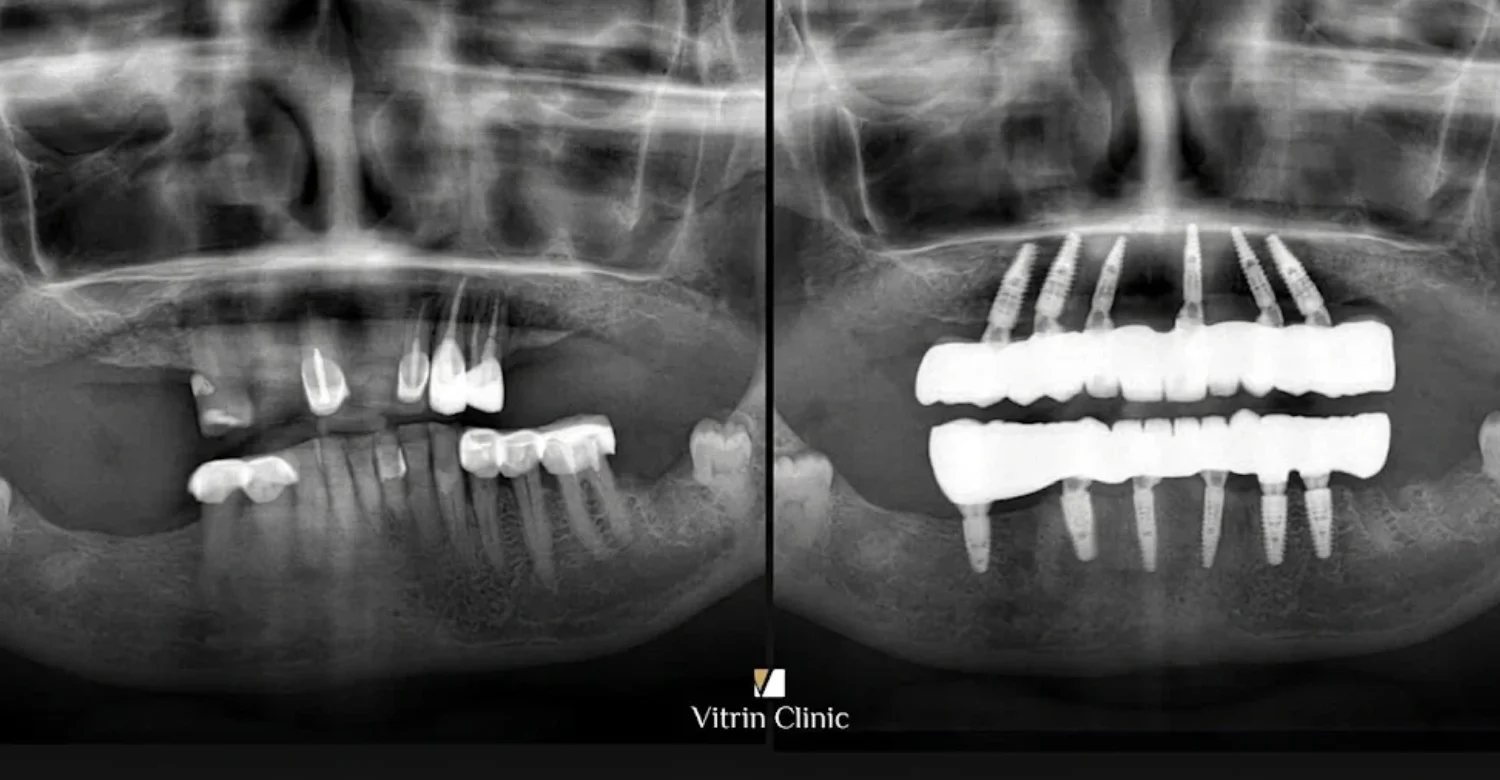
A history of periodontitis can remain a risk factor even after successful treatment. The bacteria linked to gum disease can return if plaque builds up again. Research shows that implants in treated patients generally have good survival rates. However, the link between periodontitis and implants means complications are more likely than in people who never had gum disease.
Knowing the implant risks linked to dental implants with gum disease helps you prevent them. The main potential complications are below.
Peri-Implantitis
Peri-implantitis is inflammation and infection of the gum and bone around an implant. It usually starts as peri-implant mucositis, which affects only the gums and is reversible with professional cleaning. If ignored, it can progress and cause bone loss around the implant. Signs to watch for include:
Bleeding or swelling around the implant
Pus or a bad taste near the implant
Gums pulling back from the implant
Looseness, which usually appears only in late stages
Implant Failure or Poor Osseointegration?
Osseointegration is the process where bone grows tightly around the implant. It usually takes about three to six months. Infection, smoking, or poor healing can interrupt this bond.
When integration fails, the implant may feel loose or uncomfortable and may need removal. This is uncommon when the gums are healthy and the bone is adequate. If an implant does fail, the area can often heal and be treated again after a new assessment.
Gum Recession Around Dental Implants?
Gum recession happens when the gumline shrinks back. Around implants, thin gum tissue, previous bone loss, and inflammation raise this risk. Recession can expose the metal part of the implant. This may cause a grey shadow or make the tooth look longer.
It matters most in the front of the mouth, where it affects your smile. It can also make cleaning harder. Careful implant positioning and soft-tissue grafting, when needed, help keep the gumline stable.
When is it too late for gum grafts?
Gum grafts work best before recession becomes severe. If bone between the teeth is lost, full root coverage is less predictable. For very loose teeth, grafting may not help. Grafts can still thicken thin gums around implants.
Approximate Dental Implant Prices at Vitrin Clinic
Dental implant prices at Vitrin Clinic depend on the number of implants required, the implant brand, the type of restoration, and whether additional procedures such as bone grafting or sinus lifting are needed. Below are approximate prices for common dental implant treatments in Istanbul, Turkey.
Price at Vitrin Clinic
Single dental implant (including abutment and crown) = $500–$700
Implant-supported crown = $700–$900
All-on-4 dental implants (per arch) = $3,500–$7,500
All-on-6 dental implants (per arch) = $4,000–$9,000
Full-mouth dental implant rehabilitation = $7,000–$15,000
Note: Vitrin Clinic offers dental treatments at approximately 60–70% less than the average costs in the USA and UK, while maintaining high standards of dental care.
Note on Dental Sedation Costs
Conscious sedation or general anesthesia can be arranged for severe dental anxiety. These options and costs are discussed openly and itemized separately, so you know the fee before giving consent. A medical history review confirms that sedation is safe for you.
Ready to transform your smile?
Talk to our team and get a FREE treatment plan.
How Can You Protect Dental Implants If You Have a History of Gum Disease?
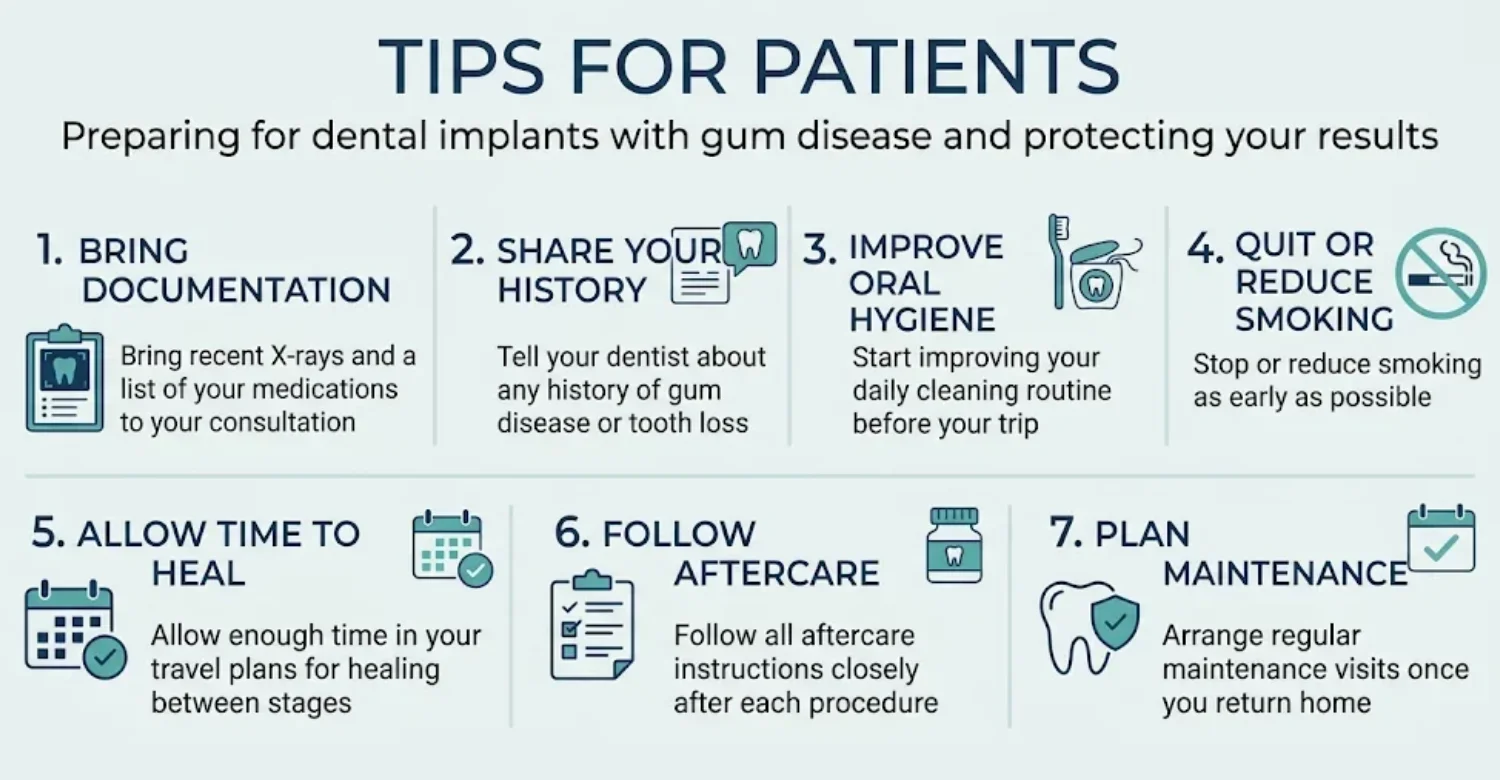
Long-term periodontal maintenance is especially important after dental implants with gum disease history. Your tendency towards gum infection does not disappear after treatment. Implants cannot decay, but the tissues around them can still become infected.
The good news is that most problems are preventable. A simple daily routine, regular check-ups, and healthy habits protect both your implants and your natural teeth.
Regular Dental and Periodontal Check-Ups?
Professional monitoring helps spot early signs of inflammation or infection before they cause damage. Most patients with a history of periodontitis need maintenance visits every three to six months. Your dentist will advise the right interval for you.
At each visit, your dental team checks your gums and measures the areas around your implants. They also remove hardened deposits you cannot clean at home. X-rays may be taken periodically to check bone levels. If you live abroad, a local dentist can continue this care.
Lifestyle Changes That Support Implant Health?
Your daily habits strongly influence how long your implants last. These changes support healthy gums and bone:
Stopping smoking, ideally before treatment begins
Keeping diabetes and other medical conditions well controlled
Eating a balanced diet that supports healing
Wearing a night guard if you grind your teeth
Keeping up your daily cleaning routine, even when your gums feel fine
What If Dental Implants with Gum Disease Are Not Suitable for You?
Implant treatment may need to be postponed if gum disease remains uncontrolled or bone support is inadequate. Sometimes it may need to be reconsidered altogether. If dental implants with gum disease are not suitable right now, you still have options.
Several reliable alternatives can restore your smile and chewing ability. Some, like implant-supported dentures, may become possible later once your gums are stable. The table below compares the main options.
Option | Need Implant Surgery? | Usually Suited For |
Dental Bridge | No | One or a few missing teeth with strong neighbouring teeth |
Removable Denture | No | Several or all missing teeth |
Implant-Supported Denture | Yes, fewer implants | Many or all missing teeth, once gums are stable |
Dental Bridges
A dental bridge replaces missing teeth by attaching a false tooth to crowns on the neighbouring teeth. It does not require surgery into the jawbone. However, the supporting teeth must be strong and periodontally healthy.
In patients with past gum disease, these teeth are carefully checked for bone support. A bridge also means reshaping the neighbouring teeth. You will need to clean under the false tooth daily with floss threaders or small interdental brushes.
Removable Partial or Full Dentures
A partial denture replaces some missing teeth and clips onto your remaining natural teeth. A full denture replaces all the teeth in one jaw and rests on the gums. Their suitability depends on how many teeth are missing and the health of the remaining teeth.
Dentures are non-surgical and often lower in cost. However, they can feel less stable, especially in the lower jaw. Over time, the jawbone beneath them may shrink, so they may need adjusting.
Implant-Supported Dentures
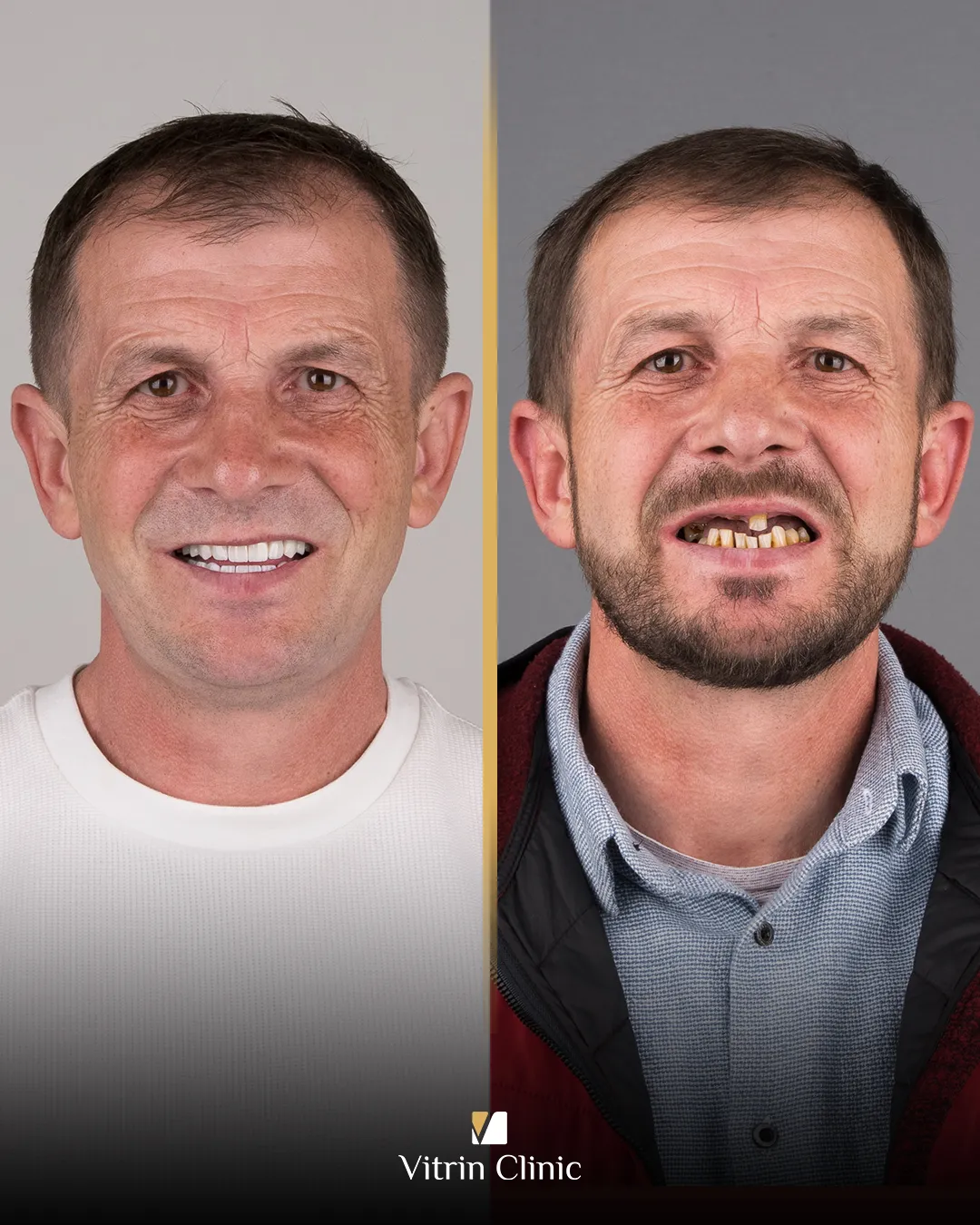
Implant-supported dentures attach to a small number of implants in the jaw. They are much more stable than conventional dentures. They may be considered after periodontal stabilisation and an assessment of available bone and implant suitability.
A lower overdenture is often supported by two implants. Upper dentures usually need more. Because fewer implants are used, this option can sometimes reduce the need for extensive grafting. It also helps patients who lost many teeth to gum disease.


When Should You Seek Urgent Dental Care?
Most healing after gum and implant treatment is smooth. However, some symptoms need prompt attention. Contact your dentist straight away if you notice:
Swelling that spreads to your face, eye, or neck
Fever or feeling generally unwell after treatment
Pus or a persistent bad taste near the treated area
Pain that worsens after the first few days instead of easing
Bleeding that does not stop with gentle pressure
An implant that feels loose or moves
Seek emergency care immediately if you have difficulty swallowing or breathing.
Clinical Note
By Dr. Rifat Alsaman, Head of the Medical Team at Vitrin Clinic
"Implant candidacy should never be decided by a history of gum disease alone. What matters is the current periodontal condition, the extent of bone loss, how stable the tissues are, and whether the patient can maintain good oral hygiene.
Treating active periodontal disease before implant placement is essential. Placing implants into an infected mouth may look quicker, but it puts long-term results at risk. When we stabilise the gums first, we build a healthier foundation that supports implants for many years."
Your Dental Implant Journey at Vitrin Clinic
Your dental implant journey begins with understanding your oral health and ends with a personalized treatment plan designed to restore missing teeth, function, and smile aesthetics. At Vitrin Clinic, every stage is carefully coordinated, combining individualised implant planning, modern dental technology, international patient support, and attention to clinical detail to make your experience in Istanbul as smooth and comfortable as possible.
1. Your Initial Dental Implant Assessment
Successful dental implant treatment starts with a comprehensive evaluation of your oral health. Share your smile photographs, available dental records, and relevant medical history with our team. Our dentists assess your teeth, gum condition, bite, and available bone volume to determine your initial implant requirements and identify whether additional procedures, such as bone grafting, may be needed.
2. Your Personalized Dental Implant Treatment Plan
Every patient has different implant needs, depending on the number of missing teeth, bone condition, gum health, and overall oral health. Following your initial assessment, we prepare a personalized proposal outlining the recommended implant system, number of implants, any necessary preparatory procedures, treatment stages, estimated duration, and expected costs. This helps you understand your options and make informed decisions before travelling to Istanbul.
3. Your Stay in Istanbul, Seamlessly Arranged
From your arrival to your dental appointments, our international patient coordination team helps organize the practical details of your visit. Depending on your treatment arrangement, this may include hotel accommodation and airport, hotel, and clinic transfers. Our team also assists with appointment coordination and communication, allowing you to focus on your dental implant treatment throughout your stay.
4. Your Dental Implant Treatment and Ongoing Care
Your implant treatment follows the agreed clinical plan, beginning with implant placement and any required preparatory procedures. Depending on your case, a healing period may be necessary to allow the implants to integrate with the surrounding bone before the final restorations are attached. Once healing and clinical assessments confirm readiness, your custom-made crowns, bridges, or other restorations can be fitted. Before your departure, you receive personalized aftercare instructions and guidance on maintaining your implants, alongside follow-up support after returning home.
What We Notice Clinically
At Vitrin Clinic, we often meet patients who believe that losing their teeth ended their gum disease. In reality, bacteria can remain around the remaining teeth and spread to new implants.
Many patients considering dental implants with gum disease also see bleeding gums as normal. Bleeding is usually a sign of inflammation that needs attention. In smokers, gums may bleed less, which can hide active disease. Finally, we see that patients who attend regular maintenance visits generally keep healthier tissues around their implants over time.
Why Choose Vitrin Clinic for Your Dental Implants?
Vitrin Clinic providesdental implant treatmentfor international patients in Istanbul, from the first assessment to the final restoration. For dental implants with gum disease, periodontal care and implant planning are coordinated by one team. The medical team headed by Dr. Rifat Alsaman, Head of the Medical Team at Vitrin Clinic, puts long-term gum stability before speed. Patients receive a clear, staged plan, an individualised quotation, and guidance on maintenance after they return home.






Book your FREE treatment plan with Vitrin Clinic and get a personalized treatment plan from our dental team.
Ready to transform your smile?
Talk to our team and get a FREE treatment plan.
References:

Medically reviewed by
Dr. Rifat AlsamanDr. Rifat Alsaman has more than 5 years of clinical experience in dentistry and currently serves as the Head of the Medical Team at Vitrin Clinic. He is dedicated to providing exceptional patient care, overseeing treatment planning, and ensuring the highest clinical standards across the team. His expertise, attention to detail, and commitment to continuous professional development have helped countless patients achieve healthier, more confident smiles.
More in Dental Treatments
View all 19 min readIs It Possible to Get Dental Implants If I Smoke?Dental implants for smokers are possible in many cases. Yes, you can usually get dental implants if you smoke. Smoking does not automatically rule you out of treatment.
 47 min readWhat Makes You Eligible for Immediate Dental Implants?Immediate dental implant eligibility depends on bone availability, gum health, infection control, and initial implant stability.
 22 min readWill I Need a Bone Graft Before Getting Dental Implants, or Can I Avoid It?Do I need bone graft for dental implant treatment? Many patients ask this when planning to replace a missing tooth. The honest answer is: not always. Some people have enough healthy jawbone for direct implant placement.
 19 min readCan I Get a Dental Implant If I Have Been Missing the Tooth for Many Years?A dental implant after years of missing tooth is possible for most patients. Time alone rarely rules you out. What matters is how much jawbone remains, how healthy your gums are, and whether your bite has shifted.
Still have a question?
Our patient coordinators answer every day of the week: before, during and long after your treatment.