How Long Does It Take to Recover From Different Dental Treatments in Turkey?
Dental Treatment Recovery Time differs depending on the dental procedure, oral health, and individual healing response. A filling may cause minimal disruption, while implant surgery requires several months of healing.

Dental Treatment Recovery Timediffers depending on the dental procedure, oral health, and individual healing response. A filling may cause minimal disruption, while implant surgery requires several months of healing. Initial discomfort usually improves before deeper tissues finish recovering. Understanding these stages helps you plan meals, work, exercise, and international travel. This guide explores typical recovery periods, aftercare, warning signs, and treatment costs. It also explains All-on-6 dental implants in Turkey and their recovery stages.
Key Takeaways
Dental recovery can range from several days to several months.
Fillings and crowns generally involve less downtime than surgical procedures.
Dental implants commonly require three to six months for bone integration.
All-on-4 and All-on-6 involve initial surgical healing and longer integration.
Smoking, diabetes, gum disease, and bone grafting can affect recovery.
Follow individual aftercare instructions and report worsening symptoms promptly.
Vitrin Clinic provides treatment planning, recovery guidance, and follow-up coordination.
Confirm treatment costs, expected healing, and travel arrangements before booking.
Ready to transform your smile?
Talk to our team and get a personal FREE treatment plan.
What Factors Determine How Long Dental Recovery Takes?
Dental Treatment Recovery Time depends on the procedure, affected tissues, treatment complexity, and general health. A filling affects less tissue than an extraction or implant operation. Surgical procedures may involve gums, bone, and surrounding structures. Each tissue requires a different healing period. Your dentist should explain expected recovery after examining your teeth and reviewing your treatment requirements.
How Does Initial Recovery Differ From Complete Healing?
Initial recovery describes the period when pain, swelling, and daily discomfort begin improving. Complete healing means the treated tissues have recovered sufficiently for their intended function. These stages do not necessarily happen simultaneously. You might return to work while deeper tissues continue healing. Dental implants demonstrate this difference because bone integration takes longer than initial gum recovery.
Why Do Surgical and Cosmetic Procedures Have Different Recovery Times?
Surgical procedures generally affect deeper tissues than restorative or cosmetic treatments. Extractions and implants can involve surgical wounds, gums, and jawbone. Crowns and veneers usually involve tooth preparation and surrounding gum tissue. Their recovery may involve temporary sensitivity rather than surgical healing. Treatment complexity and existing dental conditions also influence individual timelines.
Which Personal Health Factors Can Slow Dental Healing?
Several health and lifestyle factors can influence recovery:
Existing gum disease or untreated infection.
Smoking or nicotine consumption.
Diabetes or poorly controlled blood glucose.
Certain medications and underlying medical conditions.
Poor nutrition or inadequate oral hygiene.
Complex surgery or additional procedures.
Previous infections or delayed wound healing.
Tell your dentist about your medical history and current medications. Never stop prescribed medication without consulting your prescribing clinician.
How Does Vitrin Clinic Estimate Individual Recovery Periods?
Vitrin Clinic considers the diagnosed dental problem and proposed treatment when discussing recovery. A clinical examination helps identify inflammation, infection, damaged teeth, and bite-related concerns. Digital dental X-rays may provide additional information when clinically indicated. The team can then explain treatment stages and expected follow-up requirements. Individual timelines remain estimates because healing varies between patients.
.jpg)
.jpg)
.jpg)
How Long Does Recovery Take After Different Dental Procedures?
Dental Treatment Recovery Time can range from several hours to several months. The procedure and individual healing response determine the timeline. The following periods provide general guidance rather than personal guarantees. Your dentist should explain restrictions relevant to your treatment.
How Long Does Dental Implant Recovery Usually Take?
Initial recovery after implant placement commonly takes several days to two weeks. Swelling and tenderness are often more noticeable during the first few days. However, the implant needs additional time to integrate with the jawbone. This biological process commonly takes three to six months. Bone grafting or additional surgery may extend the timeline. Your dentist determines when the implant can support its final restoration.
What Is the Typical All-on-4 Recovery Period?
All-on-4 recovery involves healing after several implants support a fixed full-arch restoration. Swelling, bruising, and tenderness may occur during the first week. Many patients gradually resume light activities as symptoms improve. However, the implants still require time to integrate with the jawbone. Follow your clinician's instructions about chewing and temporary teeth. Final restorations are fitted after the required healing period.
How Long Does All-on-6 Recovery Take in Turkey?
All-on-6 recovery includes initial surgical healing and longer implant integration. Six implants support a full-arch restoration, although suitability depends on bone anatomy and oral health. Swelling and tenderness may improve within one to two weeks. Bone integration commonly requires several months. Some patients receive temporary fixed teeth, depending on clinical suitability and implant stability. Avoid hard chewing until your dentist confirms sufficient healing.
How Long Does a Tooth Extraction Take to Heal?
Healing begins immediately after extraction when a protective blood clot forms inside the socket. Pain and swelling may increase during the first 72 hours. Symptoms should generally begin improving afterward. Many patients feel better within several days. Complex extractions may require additional recovery time. Gum closure and deeper bone healing continue beyond the initial recovery period. Contact your dentist if pain increases instead of improving.
What Are the Worst Days After a Tooth Extraction?
For most patients, the first two to three days are the most uncomfortable. Swelling and tenderness usually peak around 48 to 72 hours after extraction. Symptoms should then gradually improve. Surgical and wisdom tooth extractions may remain uncomfortable for longer. Pain that suddenly increases around days three to five, rather than improving, may indicate dry socket and requires dental review.
Can a Tooth Extraction Heal in 7 Days?
Initial healing often progresses well within about seven days. By then, most patients have less pain and swelling, and early healing tissue usually covers the socket. However, the extraction site is not fully healed after one week. Gum tissue commonly takes a few weeks to close, while the bone inside the socket continues remodelling for several months. Surgical extractions usually take longer.
What's the Worst Tooth to Get Pulled Out?
Impacted lower wisdom teeth are often considered the most difficult to remove. They may be partly covered by bone and can lie close to the nerve that supplies sensation to the lower lip and chin. Their removal may require surgical access, and recovery often involves more swelling and jaw stiffness than a simple extraction. Upper wisdom teeth can also sit close to the maxillary sinus. Imaging helps the dentist plan these extractions and estimate recovery.
How Long Does Recovery After Porcelain Veneers Take?
Porcelain veneer treatment generally involves limited recovery compared with surgical procedures. Some patients experience temporary sensitivity to temperature or pressure. Gum tenderness may also follow tooth preparation. These symptoms often improve within several days, although sensitivity can last longer. Persistent pain, bite discomfort, or a loose veneer requires dental review. Existing decay or gum disease should be addressed before treatment.
What Is the Normal Dental Crown Recovery Time?
Most patients resume normal activities shortly after crown placement. Mild gum tenderness or tooth sensitivity may continue for several days. Temperature sensitivity can sometimes persist longer. A crown should not cause ongoing pain or feel excessively high when biting. Contact your dentist if your bite feels uneven or discomfort increases. Temporary crowns require extra care because they may loosen or become damaged.
How Long Does Full Mouth Rehabilitation Recovery Take?
Full mouth rehabilitation recovery depends on the procedures included in the treatment plan. Treatment may involve crowns, implants, extractions, or gum procedures. Each stage has different healing requirements. Temporary restorations may remain necessary while tissues recover. Implant-supported restorations can require several months before final placement. Your dentist should provide a staged schedule rather than one general recovery estimate.
How Long Does Recovery Take After Fillings and Root Canal Treatment?
Dental fillings usually involve minimal recovery time. Temporary numbness disappears as the local anaesthetic wears off. Some teeth experience sensitivity for a short period. Root canal treatment may cause tenderness for several days, particularly when infection existed beforehand. The tooth may require a permanent filling or crown afterward. Persistent or worsening pain requires dental review.
Which Is Better, a Root Canal or an Extraction?
When a tooth can be predictably restored, root canal treatment is generally preferred because it preserves the natural tooth. Recovery after root canal treatment is usually short, often with tenderness for a few days. Extraction may be necessary when a tooth is severely damaged, fractured, or cannot be restored. Extraction recovery involves socket healing, and the missing tooth may later need an implant, bridge, or denture. Your dentist should explain the prognosis, recovery, and costs of each option.
How Long Does Dental Abscess Treatment Take to Heal?
Recovery depends on the infection's source, severity, and treatment method. Treatment may involve drainage, root canal therapy, or extraction. Pain and swelling should improve after effective treatment. However, the underlying dental problem still requires appropriate care. Antibiotics may be prescribed in selected cases, but they do not replace treating the infection source. A dental abscess requires urgent professional attention.
What Does the Dental Surgery Recovery Timeline Look Like?
The first week often brings the most noticeable changes following dental surgery. However, recovery patterns differ according to the procedure. This timeline provides general guidance rather than a fixed schedule. Your dentist's instructions should always take priority.
What Happens During the First 24–48 Hours After Surgery?
The first 24–48 hours are important for protecting the treated area. Some bleeding, swelling, tenderness, or bruising may occur. Rest and follow your written aftercare instructions carefully. Avoid strenuous exercise and smoking. Do not disturb extraction sockets or surgical wounds. Contact your dental team if bleeding continues or symptoms become concerning.
What Should You Expect Between Days Three and Seven?
Swelling may reach its peak during the first few days following surgery. It should gradually begin settling afterward. Bruising and jaw stiffness may remain temporarily. Soft foods reduce pressure on the treated area. Continue gentle oral hygiene according to your dentist's instructions. Increasing pain, fever, or new swelling requires prompt dental advice.
When Do Dental Swelling and Sensitivity Usually Disappear?
Swelling often develops during the first 48 hours and may last five to seven days. More complex surgical procedures can require longer recovery. Sensitivity after restorative treatment may also continue beyond several days. The direction of change matters more than one isolated symptom. Symptoms should generally improve rather than steadily worsen. Contact your dentist if swelling spreads or pain increases.
When Can You Return to Your Normal Daily Routine?
Many patients resume light activities within one or two days after minor procedures. More complex surgery may require additional rest. Avoid strenuous exercise until your dental team approves it. Returning to work depends on discomfort, medication effects, and job requirements. Do not drive if prescribed medication affects your alertness.
How Long Should I Rest After Dental Surgery?
Most patients should rest for the remainder of the surgery day. Strenuous activity, heavy lifting, and intense exercise are usually avoided for about 24 to 72 hours, depending on the procedure. Simple extractions often allow light activities the next day. Wisdom tooth removal, multiple implants, or full-arch surgery may require two or more days of reduced activity. Keep your head slightly raised when resting during the first nights. Follow your surgeon's specific instructions.
How Long Does Bone Integration Take After Dental Implant Surgery?
Bone integration commonly takes three to six months after implant placement. This process is known as osseointegration. It describes the stable connection forming between the implant surface and surrounding bone. Bone grafting or additional surgery may extend the timeline. Your dentist uses clinical checks and appropriate imaging to determine when restoration can proceed.
How Does Recovery Differ Between Cosmetic and Surgical Dental Treatments?
Dental Treatment Recovery Time mainly depends on how much tissue each procedure affects. Restorative treatments may cause temporary sensitivity or gum tenderness. Surgery can involve wounds, swelling, stitches, and bone healing. Your treatment plan should determine aftercare instructions and activity restrictions.
Do Crowns and Veneers Have Similar Recovery Periods?
Crowns and veneers can both cause temporary sensitivity after tooth preparation. Crowns cover more of the tooth and may require more extensive preparation. Gum tenderness can occur following either procedure. Neither treatment usually requires the bone-healing period associated with implants. Persistent bite discomfort should be checked rather than ignored.
Why Does Implant Recovery Take Longer Than Crown Treatment?
An implant is placed inside the jawbone and requires biological integration. A conventional crown attaches to an existing prepared tooth. Crown treatment does not usually involve the same bone-healing process. Implant treatment may therefore require several months before final restoration. Bone quality and additional grafting also influence the timeline.
Is All-on-4 Recovery Different From Individual Implant Recovery?
All-on-4 involves several implants supporting a full-arch restoration. Individual implant treatment may replace only one missing tooth. Both procedures require surgical healing and implant integration. Full-arch treatment can involve more extensive planning and temporary restoration management. All-on-4 and All-on-6 protocols depend on anatomy, implant distribution, and clinical stability.
How Does Extraction Healing Compare With Implant Healing?
Extraction healing begins with a protective blood clot and gradual socket closure. Implant treatment requires healing around an implant placed inside the jawbone. Immediate implant placement after extraction introduces additional surgical considerations. Your dentist determines whether this approach is suitable. Infection or bone grafting may change the treatment schedule.
Which Dental Treatments Allow the Quickest Return to Daily Activities?
Simple fillings and routine crown appointments usually involve the least downtime. Many patients return to normal activities on the same day. Root canal treatment may cause temporary tenderness. Extractions and implant surgery often require additional recovery time. Complex full-mouth treatment may involve several stages. Your symptoms and clinical instructions should guide your schedule.
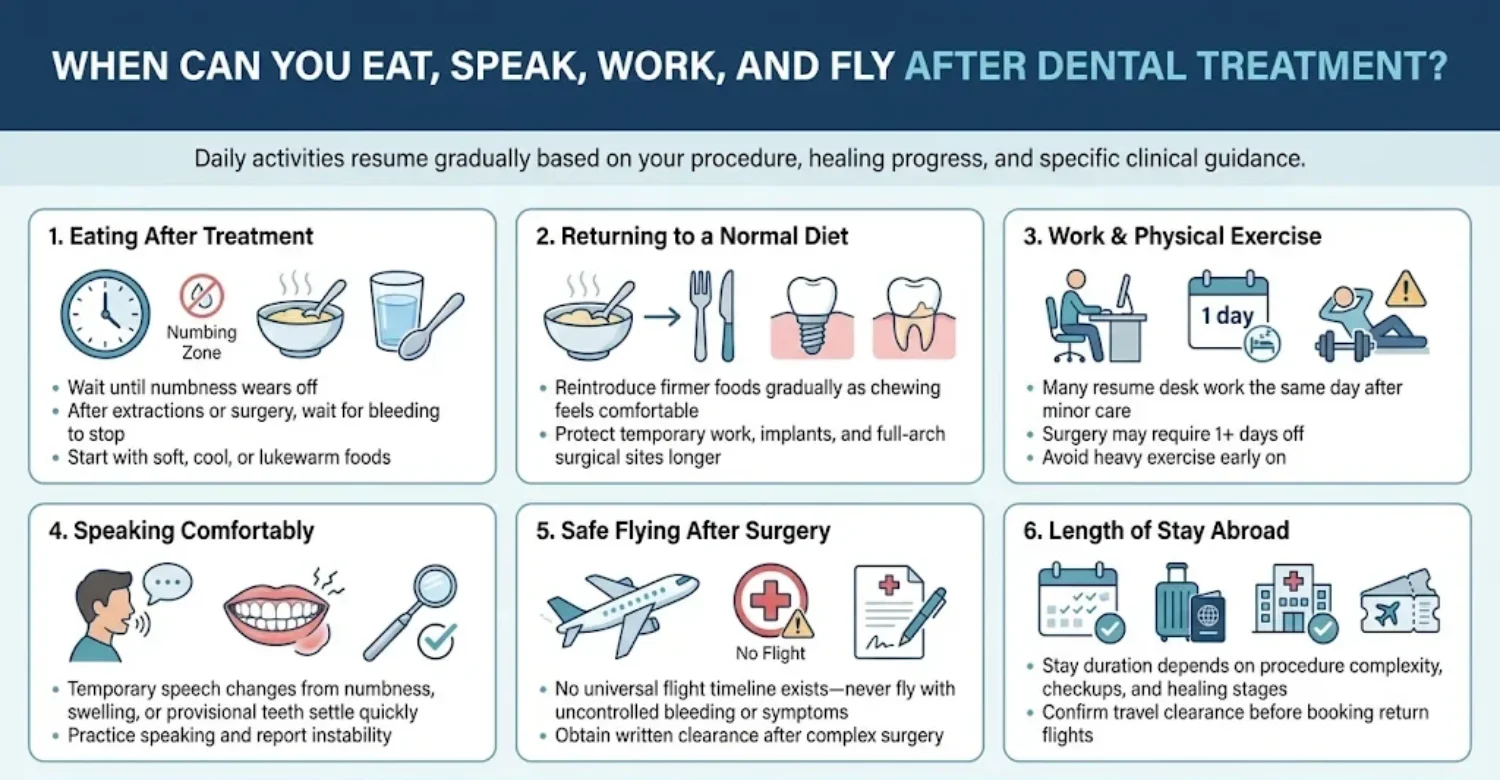
When Can You Eat, Speak, Work, and Fly After Dental Treatment?
Daily activities can gradually resume as discomfort improves. Timing depends on the procedure and individual restrictions. General recovery estimates should never replace specific surgical instructions.
How Long After Dental Treatment Can You Eat?
Most patients can eat once the local anaesthetic has worn off and normal sensation returns, often after a few hours. After a composite filling, eating is usually possible once feeling returns. Some other filling materials may require you to avoid chewing on the tooth for longer. After an extraction or oral surgery, wait until bleeding is controlled, then begin with soft, cool, or lukewarm foods. Follow your dentist's specific timing.
When Can You Eat Normally After Dental Treatment?
You can gradually return to a wider diet as chewing becomes comfortable. After surgery, begin with soft foods and avoid the treated area. Avoid very hot foods while numbness remains. Follow restrictions involving temporary restorations and implants. Your dentist may recommend a softer diet for longer after full-arch surgery.
How Soon Can You Return to Work and Exercise?
Many patients return to work on the same day after minor treatment. Surgical procedures may require one or more days away. Avoid heavy exercise during early healing. Physical activity can increase bleeding or discomfort after surgery. Ask your dentist when strenuous training can safely resume.
How Long Does It Take to Speak Comfortably Again?
Speech may temporarily change because of swelling, numbness, or temporary restorations. Most changes improve as swelling settles and you adapt. Full-arch temporary teeth may initially affect pronunciation. Practising normal speech can help you adjust. Contact your dentist if difficulties persist or your restoration feels unstable.
When Is It Safe to Fly After Dental Surgery?
There is no universal safe flight interval for every dental procedure. Your dentist should consider the operation, symptoms, complications, and planned follow-up. Avoid flying with uncontrolled bleeding or significant complications. Request written clearance before booking a return flight after complex surgery. Keep travel arrangements flexible until your dental team confirms suitability.
How Long Should You Stay in Turkey for Dental Treatment?
Your stay should match the planned procedures and required clinical checks. Minor restorative treatment may require fewer appointments than implant surgery. Full-arch treatment can involve temporary restorations and follow-up reviews. Some implant plans require a later visit for final teeth. Confirm appointments, review requirements, and travel clearance with Vitrin Clinic before booking flights.
Ready to transform your smile?
Talk to our team and get a personal FREE treatment plan.
What Can Delay Dental Treatment Recovery?
Dental Treatment Recovery Time may take longer when surgery is complex or healing conditions are less favourable. Complications can also change expected recovery periods. Your dentist should review relevant risk factors before treatment. Discuss ways to reduce avoidable healing problems.
Can Smoking and Diabetes Affect Dental Healing?
Smoking can impair blood flow and increase the risk of healing complications. Poorly controlled diabetes can also affect wound healing and infection risk. Tell your dentist about tobacco use and blood glucose management. Provide accurate medical information before surgery. Your medical team may need to coordinate care when necessary.
How Do Bone Density and Gum Health Influence Recovery?
Jawbone volume and quality influence implant planning and stability. Gum inflammation can affect tissues surrounding natural teeth and implants. Active gum disease may need treatment before restorative procedures. Your dentist may recommend periodontal care before implant placement. Clinical examination and appropriate imaging help guide treatment decisions.
Do Bone Grafts and Sinus Lifts Require Longer Recovery?
Bone grafting introduces another healing stage into implant treatment. Selected upper-jaw cases may also require a sinus lift. The graft must heal before or alongside implant integration, depending on technique. This can extend the overall treatment schedule. Your surgeon should explain the planned sequence and review appointments.
Can Combining Dental Procedures Extend Recovery Time?
Combining procedures can increase the amount of tissue treated during one appointment. Extractions, implants, grafting, and full-arch restorations may create overlapping healing periods. A combined plan may reduce separate visits, but it is not suitable for everyone. Clinical priorities and patient safety should guide scheduling.
How Does Vitrin Clinic Schedule Treatment to Manage Recovery?
Vitrin Clinic plans treatment around clinical requirements, laboratory stages, and necessary follow-up. The team can explain which procedures may be combined or require separate visits. Temporary restorations and healing intervals must influence scheduling. International patients should receive a clear proposed schedule before travelling. Final dates depend on examination findings.
Which Dental Recovery Symptoms Are Normal, and Which Need Attention?
Mild discomfort, swelling, bruising, and sensitivity can occur after dental procedures. Their expected duration depends on the treatment. Symptoms should generally improve rather than worsen. Severe or spreading symptoms require prompt professional attention.
Are Pain, Swelling, Bruising, and Sensitivity Normal?
These symptoms can follow extractions, implants, and other surgical procedures. Mild tenderness may also occur after crowns, veneers, and root canal treatment. Some patients experience bruising around the jaw or cheek. However, severe pain or increasing swelling should not be dismissed as routine healing.
How Long Should Postoperative Discomfort Continue?
Discomfort often improves over several days following minor surgery. Complex procedures can cause symptoms for longer. Root canal tenderness may continue for several days. Crown-related sensitivity can sometimes persist for a couple of weeks. Contact your dentist if symptoms worsen or interfere with eating and sleeping.
When Can Persistent Pain or Swelling Indicate Complications?
Increasing pain several days after extraction may indicate dry socket or another complication. Fever, pus, worsening swelling, or a persistent bad taste may suggest infection. A loose restoration or painful bite also requires review. Do not attempt to diagnose the cause yourself. Arrange prompt dental care.
When Should You Contact Your Dental Team?
Contact your dental team promptly if you experience:
Pain that worsens or does not respond to recommended care.
Swelling that increases or spreads.
Fever, pus, or persistent unpleasant taste.
Bleeding that continues despite instructed pressure.
A loose implant restoration or damaged temporary tooth.
Worsening difficulty opening your mouth.
Breathing or swallowing difficulty, rapidly spreading facial swelling, or swelling near the eye requires emergency medical attention. Do not wait for a routine dental appointment.
.jpg)
.jpg)
.jpg)
How Can You Support a More Comfortable Dental Recovery?
Good aftercare supports healing and reduces avoidable irritation. However, it cannot guarantee faster recovery or replace professional treatment. Follow instructions specific to your procedure.
Which Foods Are Suitable During Dental Healing?
Choose soft foods requiring minimal chewing during early recovery. Suitable options include yoghurt, eggs, mashed vegetables, and lukewarm soup. Avoid chewing directly over surgical sites. Drink enough water unless your medical team restricts fluids. Follow specific dietary instructions for implants and temporary restorations.
Which Foods and Habits Should You Avoid During Recovery?
Avoid hard, crunchy, sticky, and very hot foods when advised. Do not smoke or use nicotine during healing. Avoid alcohol when it conflicts with medication or clinical instructions. Do not use straws after extraction unless your dentist approves. Avoid touching wounds or disturbing stitches.
What Helps Tooth Extraction Heal Faster?
Healing follows its own biological pace, but several habits support a smooth recovery:
Bite on gauze as instructed so a stable blood clot can form.
Rest and avoid strenuous exercise for the first day or two.
Avoid smoking, vaping, and alcohol during early healing.
Do not use straws, spit forcefully, or rinse vigorously during the first day.
Eat soft foods and chew on the opposite side.
Keep your mouth clean and use gentle salt water rinses when your dentist advises.
Take prescribed medication as directed.
These measures support normal healing but cannot replace professional review when problems develop.
How Should You Maintain Oral Hygiene After Dental Surgery?
Continue cleaning your mouth carefully throughout recovery. Follow instructions about brushing near the surgical site. Avoid scrubbing wounds or disturbing the protective blood clot. Your dentist may recommend a specific rinse after an appropriate interval. Attend follow-up appointments so healing can be reviewed.
Can Cold Compresses and Prescribed Medication Relieve Discomfort?
A cold compress may help manage early swelling when used correctly. Take prescribed medication according to the label and clinician's instructions. Medication safety depends on your health, other medicines, and individual circumstances. Ask a clinician before taking pain relief if you have liver or kidney problems. Also seek advice during pregnancy, breastfeeding, or heavy alcohol consumption. Suspected overdose requires immediate professional advice, even without symptoms. Never exceed the recommended dose.
How Should You Care for Temporary Crowns and Implant Restorations?
Temporary restorations require careful handling until final restorations are fitted. Avoid hard or sticky foods that could loosen or damage them. Clean around restorations according to your dentist's instructions. Do not test implant stability by biting hard foods. Contact your dentist if a temporary tooth becomes loose, fractured, or uncomfortable.
What Side Effects Can Occur After Dental Treatment?
Possible short-term effects include tenderness, swelling, bruising, numbness, and sensitivity. Surgical procedures may also cause temporary bleeding or jaw stiffness. These effects should follow the expected pattern explained by your dentist. Persistent numbness, worsening pain, fever, or spreading swelling requires prompt review. Breathing or swallowing difficulty requires emergency attention.
What Can Help Relieve Discomfort During Dental Recovery?
Rest, suitable soft foods, careful oral hygiene, and cold compresses may help. Use only pain relief appropriate for your circumstances. Follow the product label and your clinician's instructions. Never place aspirin, alcohol, or irritating substances directly onto teeth or wounds. Home care cannot treat an abscess source or replace dental review.
Clinical Note: What Should Patients Monitor During Healing?
Changes in symptoms often provide more useful information than isolated symptoms. Swelling and tenderness should generally settle after their early peak. Sudden changes or steady deterioration require attention. Monitor bite comfort, temporary restoration stability, wound cleanliness, and eating or drinking ability. Report concerns early to your dental team.
Dr. Rifat's Opinion: Why Should Recovery Planning Begin Before Treatment?
Dr. Rifat Alsaman's clinical perspective prioritises identifying the cause before selecting treatment. Toothache may result from decay, infection, gum disease, cracks, or bite pressure. Each cause requires a different clinical approach. Patients should understand expected healing stages before agreeing to treatment. Recovery planning forms an important part of informed decision-making.
What Do Dentists Monitor During Dental Recovery?
Clinicians monitor improving symptoms, restoration stability, soft tissue health, and appropriate wound healing. They also check whether bite pressure affects treated teeth or implants. Patient feedback remains important alongside clinical findings. Follow-up appointments help identify problems that may not be obvious at home.
How Does Vitrin Clinic Support Dental Recovery for International Patients?
International treatment requires organised planning before travel and communication afterward. Vitrin Clinic can explain treatment stages, temporary restorations, expected reviews, and aftercare arrangements. Final recommendations depend on clinical findings during examination in Istanbul.
How Does Individual Treatment Planning Establish Realistic Recovery Expectations?
Planning begins by identifying the actual cause of the dental problem. Toothache may involve decay, pulp inflammation, infection, fractures, or gum disease. Examination helps identify which tissues require treatment. Fillings, root canals, extractions, and implants involve different recovery requirements. Patients should understand alternatives, risks, and expected follow-up.
How Are Digital Scans Used During Dental Treatment Planning?
Digital dental X-rays can reveal problems that clinical examination alone may not identify. Three-dimensional imaging may help with implant planning or complex anatomy when indicated. Not every patient needs every imaging method. The dentist selects appropriate technology according to the clinical question. Imaging supports diagnosis but does not replace examination.
How Does Vitrin Coordinate Dental Procedures and Laboratory Work?
Vitrin Clinic coordinates appointments with the stages required to prepare dental restorations. Scheduling depends on treatment type and laboratory requirements. Implant treatment may involve temporary teeth before final restorations. The team should explain essential appointments and healing-dependent stages. This helps international patients arrange realistic travel periods.
How Are Temporary Restorations Managed During Treatment?
Temporary restorations may protect prepared teeth or provide function during implant healing. However, they are not always suitable for unrestricted chewing. Patients should follow recommended dietary and cleaning instructions. The dentist checks fit, comfort, and stability before departure. Report any damage or looseness promptly.
What Follow-Up Support Is Available After Returning Home?
Patients should receive written aftercare instructions and details of planned reviews. These should explain expected symptoms, oral hygiene, dietary guidance, and warning signs. Remote communication may help patients report concerns. However, some complications require an in-person dental examination. Seek urgent local care if serious symptoms develop.
How Much Does Dental Treatment Cost at Vitrin Clinic Compared With the USA and UK?
Dental Treatment Recovery Time costs vary according to the procedure, tooth location, complexity, and materials. The following tables compare indicative private treatment prices in the USA, UK, and Turkey. Vitrin Clinic reference prices are included where available. These figures are not guaranteed quotations, and final costs depend on individual clinical requirements.
How Much Do Dental Examinations, X-Rays, Fillings, Root Canals, and Extractions Cost?
Routine dental treatment prices vary between countries and clinics. The following comparison provides indicative costs for common procedures.
UK
From $60
UK private dental benchmark
Examination and X-rays: $60–$120
Dental filling: $90–$260
✓ Root canal treatment: $250–$1,025
Simple extraction: $85–$300
Dental abscess treatment: $100–$500
Vitrin Clinic
From 30
General & urgent dental care
Examination and X-rays: 30–100
Dental filling: From $40
Root canal treatment: From $100
Simple extraction: From $50
Dental abscess treatment: 100–300
USA
From 50
US private dental benchmark
xamination and X-rays: 50–350
Dental filling: 90–450
Root canal treatment: 500–1,500
Simple extraction: 75–800
Dental abscess treatment: 604–1,048
How Much Do Dental Implants and All-on-6 Cost at Vitrin Clinic?
Dental implant costs depend on implant numbers, the implant system, bone condition, and restoration materials. A single implant usually costs less than a full-arch restoration. More complex cases may require extractions, bone grafting, or sinus augmentation.
UK
From $2,400
UK private dental benchmark
Single dental implant: $2,400–$5,700
All-on-4, per arch: $10,000–$18,000
All-on-6, per arch: $12,700–$25,400
Full-mouth reconstruction: $29,000–$50,000+
Vitrin Clinic, Turkey
From 500
Implant & full-mouth pricing
Single dental implant: 500–865
All-on-4, per arch: From $2,000
All-on-6, per arch: 4,000–9,000
Full-mouth reconstruction: 7,000–15,000+
USA
From 3,000
US private dental benchmark
Single dental implant: 3,000–6,000
All-on-4, per arch: 18,000–30,000
All-on-6, per arch: 20,000–35,000
Full-mouth reconstruction: 36,000–70,000+
How Do Dental Implant Prices Compare Across Turkey, the USA, and UK?
The comparison shows why patients often consider treatment in Turkey. However, advertised prices may cover different treatment stages and components.
A single implant quote may include only the implant fixture. A more comprehensive package may also include the abutment, temporary restoration, and final crown. Full-arch prices may include several implants and a fixed prosthesis.
Before comparing prices, confirm the number of implants, restoration material, temporary teeth, imaging, and additional surgical procedures. This helps patients compare equivalent treatment plans rather than headline prices alone.
How Much Do Dental Crowns Cost at Vitrin Clinic?
Dental crown prices depend on the restoration material, tooth condition, and laboratory requirements. Vitrin Clinic's supplied reference prices include several crown options.
Dental crown type | Vitrin Clinic reference price |
Zirconia crown | From $150 per tooth |
E-max crown | From $180 per tooth |
CEREC same-day crown | From $200 per tooth |
24 screw-retained zirconia teeth | $4,200 listed package |
The $4,200 package covers 24 screw-retained zirconia teeth as a full-arch restoration. It is not an individual crown price. Patients should confirm the package's clinical scope, laboratory work, fittings, and included appointments.
Individual crown prices may differ according to preparation requirements and the condition of the supporting tooth. An itemised quotation should identify the selected material and any additional procedures.
What Is the Cost of Full Mouth Rehabilitation at Vitrin Clinic?
Full-mouth rehabilitation can involve several procedures to restore missing, damaged, or severely worn teeth. The treatment plan may include implants, crowns, extractions, temporary restorations, and bone grafting when clinically necessary.
UK
Indicative full-mouth cost: $29,000–$50,000+
Provider or country
Indicative full-mouth cost: $29,000–$50,000+
Private UK specialist full-mouth benchmark
Scans & consultations often billed separately
Vitrin Clinic, Turkey
Indicative full-mouth cost: 7,000–15,000+
Provider or country
Indicative full-mouth cost: 7,000–15,000+
Up to 50–70% lower than UK & US benchmarks
Includes free consultation & 3D CBCT scan
USA
Indicative full-mouth cost: 36,000–70,000+
Provider or country
Indicative full-mouth cost: 36,000–70,000+
US private full-mouth rehabilitation benchmark
Highest total private treatment expenditure
Which Additional Procedures Can Increase Dental Treatment Costs?
Some patients need additional procedures before or during implant treatment. These can increase the overall cost and affect the treatment schedule.
Diagnostics & Reports
From 30
Indicative Turkey price
CBCT scan: 150–350
Additional specialist report: 30–100
3D bone density & nerve mapping
Surgical & Prep
From 100
Indicative Turkey price
Bone grafting: 200–800 per
Sinus lift: 300–1,000 per
Complex tooth extraction: 100–300
Temporary Care
From 100–300
Indicative Turkey price
Temporary restoration: 100–300
Protects prepared teeth & implant sites
Maintains aesthetics during healing phase
What Should Vitrin Clinic's Dental Treatment Estimate Include?
An itemised estimate helps patients understand the planned treatment and identify possible additional expenses. Before paying a deposit or arranging travel, confirm the following details.
Planning item | What patients should confirm |
Clinical examination | Included appointment and examination scope |
Digital imaging | X-rays or CBCT, when clinically indicated |
Implant surgery | Number of implants and implant system |
Temporary teeth | Restoration type and fitting schedule |
Final restoration | Material, number of teeth, and laboratory costs |
Additional procedures | Extractions, bone grafts, and sinus lifts |
Travel support | Hotel, transfers, and included nights |
Aftercare | Review appointments and remote communication |
How Much Could Patients Save With All-on-6 Treatment at Vitrin Clinic?
The supplied All-on-6 price ranges show a difference between the listed Vitrin, USA, and UK references. The following table compares the lower and upper endpoints for the USA and Vitrin ranges.
Why Choose Vitrin Clinic for Dental Treatment in Turkey?
Choosing a clinic involves clinical suitability, transparent planning, and reliable communication. Patients should compare treatment details rather than prices alone. Vitrin Clinic can explain proposed procedures and practical arrangements for international patients.
How Does Vitrin Create Individualised Dental Treatment Plans?
A suitable treatment plan begins by identifying the cause of the dental problem. Clinical examination, dental history, and appropriate imaging guide treatment selection. The plan should explain alternatives, limitations, expected healing, and follow-up. A preliminary digital plan cannot replace an in-person examination.
How Does Digital Technology Support Diagnosis and Treatment Coordination?
Digital X-rays and scans provide information for selected dental procedures. Three-dimensional imaging may support implant planning when clinically indicated. Digital records can also coordinate restoration design and laboratory stages. The dentist decides which technologies are necessary for each patient.
How Are Treatment Appointments Organised for International Patients?
Appointments should follow the clinical sequence and required treatment stages. Coordinators can help arrange consultations, treatment visits, and practical travel details. The schedule may change if examination findings require additional care. Patients should receive updates before confirming flights.
How Does Vitrin Support Patients Throughout Their Dental Journey?
International patients need clear instructions before treatment and after returning home. Vitrin Clinic can explain appointment arrangements, temporary restorations, and aftercare guidance. Patients should understand how to contact the clinic with questions. Urgent symptoms still require appropriate local emergency care.
Why Are Coordinated Treatment and Aftercare Important for International Patients?
Coordinated care helps patients understand treatment stages and expected reviews. Written instructions clarify eating, cleaning, and temporary restoration care. Clear communication also helps patients recognise symptoms requiring attention. Follow-up remains important after patients return home.
What Does Your Dental Treatment Journey With Vitrin Clinic Look Like?
A planned treatment journey helps international patients understand each stage before travelling. The exact sequence depends on diagnosis and treatment complexity. These steps describe a general process rather than a guaranteed schedule.
Step 1: How Can You Request a Free Digital Treatment Plan?
Patients can share dental photographs, X-rays, and relevant medical information for an initial review. Vitrin Clinic can use available records to discuss possible treatment options. This preliminary plan is not a final diagnosis. An in-person clinical examination remains necessary.
Step 2: What Happens During Your First Clinical Examination in Turkey?
The dental team examines your teeth, gums, bite, and relevant oral structures. Additional X-rays or scans may be taken when clinically indicated. The dentist reviews the findings and discusses suitable treatment options. Your final plan should explain risks, alternatives, stages, and costs.
Step 3: How Are Dental Procedures Scheduled?
The team schedules procedures according to clinical priorities and laboratory requirements. Some treatments can be completed during one visit. Implant treatment may require staged appointments. The schedule should allow sufficient time for clinical checks and necessary adjustments.
Step 4: What Should You Expect During Treatment and Recovery?
Your dentist explains the procedure, anaesthesia, and aftercare before treatment begins. Surgery may cause temporary discomfort or swelling. Rest, follow instructions, and attend planned reviews. Report unexpected or worsening symptoms instead of waiting for another appointment.
Step 5: How Are Final Restorations Checked Before Departure?
The dentist checks restoration fit, bite, comfort, and appearance. Implant-supported restorations also require appropriate clinical checks. Patients should receive cleaning and maintenance instructions. Request copies of relevant records and details about future reviews.
Step 6: What Happens After Returning Home?
Continue the recommended oral hygiene routine and attend dental reviews when advised. Keep treatment records and follow-up instructions accessible. Contact Vitrin Clinic with questions about planned care. Seek urgent local treatment if severe symptoms develop.
Ready to transform your smile?
Talk to our team and get a personal FREE treatment plan.
How Can You Plan Dental Treatment Around Recovery Time?
Planning begins with a realistic treatment schedule and flexibility for healing. Ask how many visits are expected and whether temporary restorations are planned. Confirm when you can eat normally, exercise, work, and fly. Allow time for clinical checks before departure. Avoid scheduling important events immediately after complex surgery. A written plan helps coordinate treatment, recovery, and travel. Remember that individual healing rates differ.
.jpg)
.jpg)
.jpg)
What Should You Remember About Dental Treatment Recovery Time?
Dental Treatment Recovery Time depends on the procedure, general health, and treatment complexity. Fillings and crowns often involve limited downtime, while implants require longer healing. All-on-6 includes initial surgical recovery and several months of implant integration. Follow your dentist's instructions and attend planned reviews. Seek prompt care for worsening symptoms. Breathing or swallowing difficulties require emergency attention. Before travelling, confirm your treatment plan, costs, recovery expectations, and follow-up arrangements with Vitrin Clinic.
Reference

Medically reviewed by
Dr. Rifat AlsamanDr. Rifat Alsaman has more than 5 years of clinical experience in dentistry and currently serves as the Head of the Medical Team at Vitrin Clinic. He is dedicated to providing exceptional patient care, overseeing treatment planning, and ensuring the highest clinical standards across the team. His expertise, attention to detail, and commitment to continuous professional development have helped countless patients achieve healthier, more confident smiles.
More in After Care
View all 13 min readWhen Can I Brush My Teeth and Resume My Normal Oral Hygiene Routine?Brushing teeth after dental treatment is usually safe the same day, as long as you are gentle and avoid any surgical area at first. When you can return to your full routine depends on your treatment, from right away after veneers to about a week after extractions or implants. This guide explains what to do after each treatment at Vitrin Clinic and what a good daily routine looks like.
 18 min readWhen Can I Fly After Dental Treatment in Turkey?Flying after dental treatment is something every international patient should think about before booking a ticket. Your return date shapes the whole trip, from hotel nights to follow-up visits.
 35 min readWhat Can I Eat After Dental Treatment in Turkey?Knowing what to eat after dental treatment can make recovery more comfortable. Suitable foods can also protect healing tissues and reduce unnecessary chewing pressure.
Still have a question?
Our patient coordinators answer every day of the week: before, during and long after your treatment.