What Can I Eat After Dental Treatment in Turkey?
Knowing what to eat after dental treatment can make recovery more comfortable. Suitable foods can also protect healing tissues and reduce unnecessary chewing pressure.

Knowing what to eat after dental treatment can make recovery more comfortable. Suitable foods can also protect healing tissues and reduce unnecessary chewing pressure. However, dietary requirements vary according to the procedure and your recovery progress. Some treatments require soft foods for several days. Others allow an earlier return to normal meals. Choosing nutritious options helps maintain protein, vitamin, mineral, and fluid intake. This guide explains suitable foods after common dental procedures. It also covers foods to avoid, recovery timelines, and practical meal plans. You will also find treatment cost comparisons and information about aftercare at Vitrin Clinic in Istanbul.
Key Takeaways
Understanding what to eat after dental treatment helps protect sensitive areas during recovery.
Soft foods include yoghurt, scrambled eggs, mashed potatoes, smooth soups, and tender fish.
Dietary restrictions depend on the procedure, surgical site, and restoration type.
Extraction patients must protect the blood clot, while implant patients must limit pressure around surgical sites.
Temporary crowns and fillings require care around sticky, hard, and chewy foods.
Very hot, spicy, acidic, and crunchy foods may irritate sensitive tissues.
Alcohol and straws may also be restricted after certain oral surgeries.
Return to normal chewing gradually, following your dentist's instructions.
Vitrin Clinic provides procedure-specific aftercare guidance for international patients.
Increasing pain, swelling, persistent bleeding, fever, or pus requires professional attention.
Ready to transform your smile?
Talk to our team and get a personal FREE treatment plan.
Why Does Your Diet Matter After Dental Treatment?
Food choices influence comfort, chewing pressure, and the protection of healing tissues. Understanding what to eat after dental treatment helps you avoid unnecessary irritation. Appropriate nutrition also supports normal recovery and general health.
How Can Food Choices Influence Healing After Dental Procedures?
Food affects recovery through its texture, temperature, nutritional content, and chewing demands. Hard foods may irritate surgical areas or damage temporary restorations. Soft, protein-rich meals provide nutrients without excessive chewing. Fruits and vegetables supply vitamins and minerals needed for normal tissue function. Adequate hydration also supports general health. However, food alone cannot prevent infection or guarantee successful healing. Your dentist's aftercare instructions remain essential.
How to Speed Up Healing After Dental Surgery?
Healing follows its own biological pace, but several habits can support a smooth recovery:
Rest for the remainder of the surgery day and avoid strenuous activity at first.
Keep your head slightly raised when lying down during the first nights.
Apply a cold compress to the outside of the face during the first day if advised.
Eat soft, nutritious foods with enough protein and drink water regularly.
Avoid smoking, vaping, and alcohol during the recommended period.
Keep the mouth clean using the brushing and rinsing instructions your dentist provides.
Take prescribed medicines exactly as directed.
Attend follow-up appointments.
No food or home remedy can replace professional treatment if complications develop.
Why Do Different Dental Procedures Require Different Diets?
Each procedure affects different oral structures and requires specific precautions. Extractions create sockets containing protective blood clots. Implants involve surgical tissues and underlying bone healing. Crowns require attention to restoration stability and bite comfort. Root canal treatment may leave temporary sensitivity or temporary fillings. Gum surgery can involve delicate tissues and surgical wounds. Therefore, what to eat after dental treatment depends on the procedure and individual healing progress.
Can Eating the Wrong Foods Damage Dental Work?
Yes, certain foods can create avoidable problems during recovery. Hard nuts may place excessive pressure on new restorations. Sticky sweets can pull at temporary crowns. Sharp food fragments may irritate surgical wounds. Very hot meals can increase discomfort while tissues remain sensitive. Eating while your mouth remains numb also risks accidental biting or burns. Follow your dentist's instructions before introducing challenging textures.
.jpg)
.jpg)
What What to Eat After Dental Treatment Immediately ?
The safest initial choices are generally soft, nutritious foods requiring minimal chewing. Choosing what to eat after dental treatment also involves considering temperature and the treated area. Never eat while significant numbness remains.
How Long After Dental Treatment Can You Eat?
Most patients can eat once the local anaesthetic has worn off and normal sensation returns. Numbness commonly lasts a few hours, although this varies with the anaesthetic and treated area. After a composite filling, eating is usually possible once feeling returns. Some other filling materials may require you to avoid chewing on the tooth for longer. After an extraction or oral surgery, wait until bleeding is controlled and follow your dentist's timing. Start with soft, cool, or lukewarm foods.
Which Soft Foods Are Suitable During Early Recovery?
Consider these options when your dentist permits eating:
Plain yoghurt without crunchy toppings.
Mashed potatoes or sweet potatoes.
Soft scrambled eggs.
Smooth porridge or oatmeal.
Applesauce or banana puree.
Blended vegetable soup.
Well-cooked soft pasta.
Cottage cheese.
Mashed avocado.
Tender steamed fish.
Smooth hummus.
Soft, seed-free puddings.
These foods provide different combinations of protein, carbohydrates, and essential nutrients. Choose smooth textures when chewing causes discomfort. Avoid seeds, hard toppings, and sharp fragments near surgical areas.
Should You Choose Cold, Cool, or Warm Foods?
Cool or lukewarm foods are often more comfortable immediately after oral surgery. Avoid very hot meals while numbness persists. Excessive heat may increase discomfort in sensitive tissues. Cool yoghurt, smooth pudding, and room-temperature mashed vegetables are practical options. Ice cream may feel soothing, but avoid hard pieces and sticky toppings. Follow individual instructions after implant surgery or gum procedures.
Which Nutrients Support Recovery After Dental Treatment?
A balanced recovery diet should contain protein, vitamins, minerals, and sufficient calories. Eggs, yoghurt, soft fish, and blended lentils provide protein. Mashed vegetables and fruit purees supply vitamins and fibre. Dairy products provide calcium and protein. Avocados contribute energy and healthy fats. Iron-rich foods also support normal nutritional requirements. Supplements are not automatically necessary. Discuss them with a healthcare professional when appropriate.
How Can You Prepare Meals That Require Less Chewing?
Cooking, blending, and mashing can make meals easier to tolerate. Cook vegetables until completely tender. Blend soups until no hard pieces remain. Remove bones and skin from fish. Cook pasta until soft. Mash bananas and ripe avocados with a fork. Prepare individual portions before surgery when possible. Avoid nuts, seeds, toasted bread, and crunchy garnishes. These adjustments maintain nutritional variety while reducing chewing demands.
What Should You Eat After Different Dental Procedures?
The procedure determines suitable foods and how quickly textures can progress. Understanding what to eat after dental treatment requires considering the treated tissues and restoration type.
What Should You Eat After Dental Implant Surgery?
After implant surgery, choose soft foods that minimise pressure around the surgical site. Your surgeon may recommend dietary restrictions during early healing. This becomes particularly important after extensive implant procedures.
Which Foods Are Suitable During Initial Implant Healing?
Suitable options include smooth soups, yoghurt, scrambled eggs, and mashed potatoes. Soft fish and blended lentils provide additional protein. Avoid chewing directly over the surgical site. Patients receiving multiple implants may need further dietary adjustments. Follow your surgeon's instructions concerning temperature, texture, and meal timing.
Advantages
Soft meals reduce chewing demands and improve comfort. Nutrient-rich options help maintain adequate dietary intake.
Disadvantages
Restricted menus can become repetitive. Poor meal planning may reduce protein, fibre, and calorie intake.
Possible side effects
Temporary tenderness, swelling, and chewing discomfort may affect food tolerance. Contact your dentist if symptoms worsen unexpectedly.
Practical relief
Choose smaller meals, drink sufficient water, and avoid unnecessary pressure around the implant area.
Clinical Note
Implant healing involves both gum tissue and surrounding bone. Dietary restrictions depend on surgical complexity and loading arrangements.
Dr. Rifat's Opinion
Patients should prioritise gentle chewing and adequate nutrition. Food progression should follow clinical healing rather than an arbitrary calendar.
Which Foods Should You Avoid After Implant Surgery?
Avoid nuts, popcorn, hard bread, raw vegetables, and tough meat during restricted periods. Crunchy snacks may also irritate surgical areas. Sticky sweets can create cleaning difficulties. Do not chew directly over the surgical site. Avoid very hot foods immediately after surgery. Your surgeon may recommend additional restrictions following bone grafting or extensive implant placement.
When Can You Chew Normally After Dental Implant Surgery?
There is no universal return-to-chewing date. Some patients gradually introduce firmer foods within days. Others need longer restrictions following extensive surgery. Implant integration with bone takes several months. However, this does not automatically require avoiding every solid food throughout that period. Your dentist determines when chewing pressure can increase. Never test implant stability by biting hard objects.
What Should You Eat After All-on-6 Dental Implants?
All-on-6 treatment uses six implants to support a full-arch restoration. Surgery may involve several sites and temporary teeth. Patients generally need soft foods during initial recovery. Suitable options include smooth soups, scrambled eggs, mashed vegetables, and soft fish. Well-cooked pasta may also be appropriate. Avoid hard crusts, nuts, tough meat, and forceful biting. Fixed temporary teeth do not automatically permit unrestricted chewing. Your surgeon must confirm when the restoration can tolerate increased pressure.
Advantages
Six strategically positioned implants can support a fixed full-arch restoration when clinically suitable.
Disadvantages
Treatment involves surgery, healing time, and careful maintenance. Some patients require additional procedures or staged treatment.
Possible side effects
Temporary swelling, bruising, discomfort, and chewing changes may occur after surgery.
Practical relief
Follow prescribed aftercare, maintain hydration, and choose nutrient-rich meals with soft textures.
Clinical Insight
Full-arch patients sometimes underestimate the importance of protecting temporary restorations. Eating normally too early can place unnecessary pressure on the treatment.
What Should You Eat After Tooth Extraction?
After extraction, choose soft foods that do not disturb the blood clot. This clot protects the socket and supports normal wound healing.
What Can You Eat During the First 24 Hours?
Choose cool or lukewarm foods once eating is safe. Suitable options include yoghurt, applesauce, smooth soup, and mashed potatoes. Soft eggs may also be suitable. Avoid eating until you can safely feel your mouth. Do not chew near the extraction site. Follow your dentist's instructions concerning drinking, rinsing, and eating after surgery.
Which Foods Help Protect the Extraction Blood Clot?
Soft foods reduce direct irritation around the extraction socket. Mashed vegetables, smooth porridge, yoghurt, and soft pasta are useful choices. Avoid rice grains, seeds, popcorn, and foods that fragment easily. Do not use straws during the recommended restriction period. Suction may disturb the clot and contribute to dry socket.
When Can You Return to Solid Foods After Extraction?
Many patients gradually introduce firmer foods over several days. Surgical extractions may require longer dietary restrictions. Start with soft foods and increase texture when comfortable. Avoid chewing directly over the socket until your dentist permits it. Increasing pain after initial improvement requires dental attention.
How Many Days Should a Person Rest After a Tooth Extraction?
Most people should rest for the remainder of the extraction day. Strenuous exercise and heavy lifting are usually avoided for about 24 to 48 hours. Simple extractions often allow a return to light daily activities the next day. Surgical or wisdom tooth extractions may require two to three days of reduced activity, sometimes longer. Your dentist should advise based on the procedure and your general health.
What Is the Fastest Way to Heal Gums After Tooth Extraction?
The gums heal fastest when the blood clot stays undisturbed. Bite gently on gauze as instructed and avoid rinsing, spitting forcefully, or using straws during the first day. Avoid smoking and alcohol. From the following day, gentle salt water rinses may be recommended after meals. Keep brushing nearby teeth carefully, eat soft foods, and stay hydrated. Gum tissue usually closes over the socket within a few weeks, while the bone underneath takes longer.
What Happens If You Don't Rinse With Salt Water After Extraction?
Skipping salt water rinses does not automatically cause complications. However, gentle rinsing can help remove food debris and keep the area cleaner during healing. Poor cleaning may allow food to collect around the socket, which can increase irritation or infection risk. Rinsing too early or too forcefully can also disturb the blood clot. Follow your dentist's instructions about when and how to rinse.
Does Salt Water Heal a Dry Socket?
No, salt water does not heal a dry socket on its own. Dry socket occurs when the blood clot is lost or fails to form, exposing the bone. Gentle salt water rinses may help keep the area clean and provide some comfort. However, a dentist usually needs to clean the socket and may place a medicated dressing. Contact your dentist if severe pain develops a few days after extraction.
Do Dry Sockets Ever Fully Heal?
Yes, dry sockets do heal. Pain usually improves within a few days after professional treatment. The socket then continues healing over the following weeks. Dry socket can delay recovery, but it does not normally cause permanent damage when managed appropriately. Attend any recommended review appointments until the area heals.
What Should You Eat After Dental Veneer Placement?
Food recommendations depend on the veneer material and restoration stage. Temporary restorations may require stricter precautions. This section provides general educational guidance about veneers. Vitrin Clinic does not offer veneer treatment.
Which Foods Are Suitable Immediately After Veneer Placement?
Choose softer foods if your teeth or gums feel sensitive. Eggs, yoghurt, pasta, mashed vegetables, and soft fish are practical options. Avoid biting directly into hard foods. If temporary restorations remain in place, follow the stricter temporary-restoration instructions provided by your treating dentist.
Can Hard Foods Damage or Dislodge Dental Veneers?
Yes, excessive biting pressure can damage or dislodge a veneer. Avoid biting ice, hard sweets, nuts, and very hard crusts. Do not use restored teeth to open packaging. Sticky foods may also place unnecessary pulling forces on restorations. Contact your dentist if a veneer feels loose or changes position.
When Can You Eat Normally After Veneer Placement?
Many patients resume their usual diet after their dentist confirms proper placement and comfort. Persistent sensitivity may require temporary dietary adjustments. Follow instructions concerning temporary veneers and newly bonded restorations. Avoid unnecessarily hard biting habits even after recovery.
What Should You Eat After Dental Crown Placement?
Eating recommendations depend on whether you have a temporary or permanent crown. Temporary restorations usually require greater care.
What Can You Eat While Wearing Temporary Crowns?
Choose soft pasta, eggs, yoghurt, mashed potatoes, and tender fish. Chew on the opposite side when possible. Avoid caramel, chewing gum, toffee, and sticky sweets. Hard foods can loosen or damage temporary crowns. Cut food into small pieces instead of biting directly.
Which Foods Should You Avoid After Permanent Crown Placement?
Avoid very hard foods if the crown or surrounding tooth feels sensitive. Ice, hard sweets, and unpopped popcorn kernels can create excessive pressure. Sticky foods may also cause discomfort. Your dentist may recommend temporary restrictions while your bite settles.
When Can You Chew Normally After Receiving a Crown?
Most patients gradually return to normal chewing after successful crown placement. However, numbness must disappear before eating safely. Bite discomfort or a crown that feels unusually high needs professional adjustment. Do not attempt to correct the bite yourself.
What Should You Eat After Root Canal Treatment?
After root canal treatment, choose soft foods until numbness disappears and chewing feels comfortable. Suitable meals include eggs, soup, yoghurt, mashed potatoes, and soft pasta. Avoid chewing on a tooth with a temporary filling or unprotected restoration. A treated tooth may need permanent restoration for protection.
Advantages
Soft meals minimise unnecessary pressure on a recently treated tooth.
Disadvantages
Temporary restrictions may make normal eating inconvenient.
Possible side effects
Mild chewing tenderness can occur. Severe or worsening pain should not be ignored.
Practical relief
Chew on the opposite side and follow your restoration instructions. Contact your dentist if discomfort persists or increases.
What Are 50 Soft Foods I Can Eat After a Root Canal?
The following soft foods can help you avoid pressure on the treated tooth while maintaining a varied diet:
Dairy and eggs: plain yoghurt, Greek yoghurt, cottage cheese, ricotta, cream cheese, milk, kefir, scrambled eggs, poached eggs, soft omelette, and egg custard.
Grains and starches: oatmeal, cream of wheat, soft pasta, macaroni and cheese, mashed potatoes, mashed sweet potatoes, soft polenta, risotto, soft pancakes, soft bread without crusts, and couscous.
Proteins: steamed fish, flaked salmon, tuna mixed with mayonnaise, finely shredded chicken, soft meatloaf, tender meatballs, silken tofu, smooth hummus, refried beans, and blended lentils.
Fruit and vegetables: banana, applesauce, mashed avocado, ripe peaches, tinned pears, melon, seed-free smoothies, steamed carrots, steamed courgette, pumpkin puree, cauliflower mash, and cooked spinach.
Soups and desserts: blended vegetable soup, chicken broth, pudding, jelly, ice cream without hard pieces, and rice pudding.
If the tooth feels sensitive, avoid very hot or very cold options. Chew on the opposite side until the tooth receives its permanent restoration.
What Should You Eat After Gum Surgery?
Gum surgery often requires soft foods that avoid friction against healing tissues. Suitable options include smooth soups, yoghurt, scrambled eggs, and mashed vegetables. Soft fish can also provide protein. Avoid sharp foods, seeds, spicy meals, and crunchy snacks. Gum graft patients may have specific restrictions around the surgical site. Do not pull your lip to inspect the wound. Follow your surgeon's cleaning and dietary instructions.
Which Foods and Drinks Should You Avoid After Dental Treatment?
Some foods irritate healing tissues or damage temporary restorations. Knowing what to eat after dental treatment also means recognising unsuitable options.
Can Hard and Crunchy Foods Interfere With Recovery?
Yes, hard foods can place excessive pressure on sensitive teeth and surgical areas. Avoid nuts, popcorn, raw carrots, hard crackers, and ice. Sharp fragments may irritate healing tissues. Patients with new implants or temporary crowns need particular care. Reintroduce harder textures only when your dentist permits them.
Why Should You Avoid Sticky and Chewy Foods?
Sticky foods can pull at temporary crowns and restorations. Chewing gum, caramel, toffee, and chewy sweets are common examples. They may also become trapped around surgical areas. Choose softer alternatives during the restricted period.
Can Spicy and Acidic Foods Irritate Treated Areas?
Yes, spicy or acidic foods may increase discomfort around sensitive tissues. Citrus fruits, vinegar-based sauces, and chilli-heavy meals can irritate some healing mouths. Tolerance varies between patients. Avoid these foods if they cause burning or discomfort. Reintroduce them gradually when symptoms improve.
Should You Avoid Hot Drinks After Oral Surgery?
Avoid very hot drinks immediately after oral surgery. Heat can cause discomfort, particularly while anaesthesia is wearing off. Lukewarm water and cooled drinks are generally more suitable. Follow procedure-specific instructions concerning the first postoperative day.
Can Alcohol Affect Healing After Dental Surgery?
Alcohol may interfere with recovery and interact with prescribed medicines. It can also increase bleeding risks in certain circumstances. Avoid alcohol for the period recommended by your dentist or surgeon. Never combine alcohol with medicines without checking their safety instructions. Ask a healthcare professional about individual medical considerations.
Ready to transform your smile?
Talk to our team and get a personal FREE treatment plan.
How Long Should You Follow a Soft-Food Diet?
The duration depends on the procedure, healing progress, and individual clinical instructions. There is no single timeline suitable for every patient.
What Should You Eat During the First 24 Hours?
Choose smooth, cool, or lukewarm foods when eating becomes safe. Suitable options include yoghurt, mashed potatoes, applesauce, and smooth soup. Avoid hard chewing and very hot foods. Following extraction or implant surgery, protect the surgical area carefully. Never eat while significant numbness remains.
Which Foods Can You Introduce During Days Two and Three?
If your dentist permits, introduce soft pasta, scrambled eggs, tender fish, and well-cooked vegetables. Continue avoiding foods requiring forceful chewing. Monitor discomfort and swelling. If symptoms worsen, contact your dental team rather than simply changing your diet.
When Can You Gradually Introduce Firmer Foods?
Introduce firmer textures when chewing becomes comfortable and your dentist approves. Start with tender foods cut into small pieces. Avoid testing the treated area with hard or sticky foods. Your recovery may progress differently from another patient's experience.
Why Might Implant Patients Need Longer Dietary Restrictions?
Implant surgery involves healing of surrounding gum tissue and bone. Extensive procedures may include extractions, grafting, or full-arch restorations. These factors can extend dietary restrictions. Temporary restorations may also need protection from excessive biting forces. Your surgeon determines the appropriate progression.
When Is It Safe to Return to Your Normal Diet?
You can return gradually when your dentist confirms normal chewing is appropriate. Pain, swelling, wound condition, and restoration stability all matter. Do not use the absence of pain as your only indication of healing. Ask for guidance before resuming particularly hard foods.
.jpg)
.jpg)
What Should You Drink During Dental Recovery?
Hydration supports normal body function and helps maintain comfort. Choose drinks that do not irritate treated tissues.
Can You Drink Coffee or Tea After Dental Treatment?
You may need to avoid hot coffee and tea immediately after surgery. Allow drinks to cool before consuming them. Caffeine may also affect individual comfort or sleep. Follow your dentist's instructions, especially after extractions and extensive surgery. Avoid drinking through a straw when suction is restricted.
Are Smoothies and Protein Drinks Suitable During Recovery?
Smoothies and protein drinks can provide convenient nutrition. Blend ingredients until completely smooth. Avoid seeds, nuts, and crunchy additions. Do not use a straw after extraction unless your dentist confirms it is safe. Check ingredients for allergies and dietary restrictions. Commercial products may contain substantial added sugar.
How Much Water Should You Drink After Dental Surgery?
Drink water regularly unless a healthcare professional has restricted your fluid intake. Your needs depend on body size, activity, climate, and medical conditions. Take small sips if your mouth feels uncomfortable. Avoid dehydration, particularly when eating less than usual.
Why Should You Avoid Straws After Tooth Extraction?
Straw use creates suction inside the mouth. This pressure may disturb the blood clot protecting the extraction socket. A disturbed clot can contribute to dry socket. Drink directly from a cup during the restriction period. Follow your surgeon's instructions about resuming normal drinking habits.
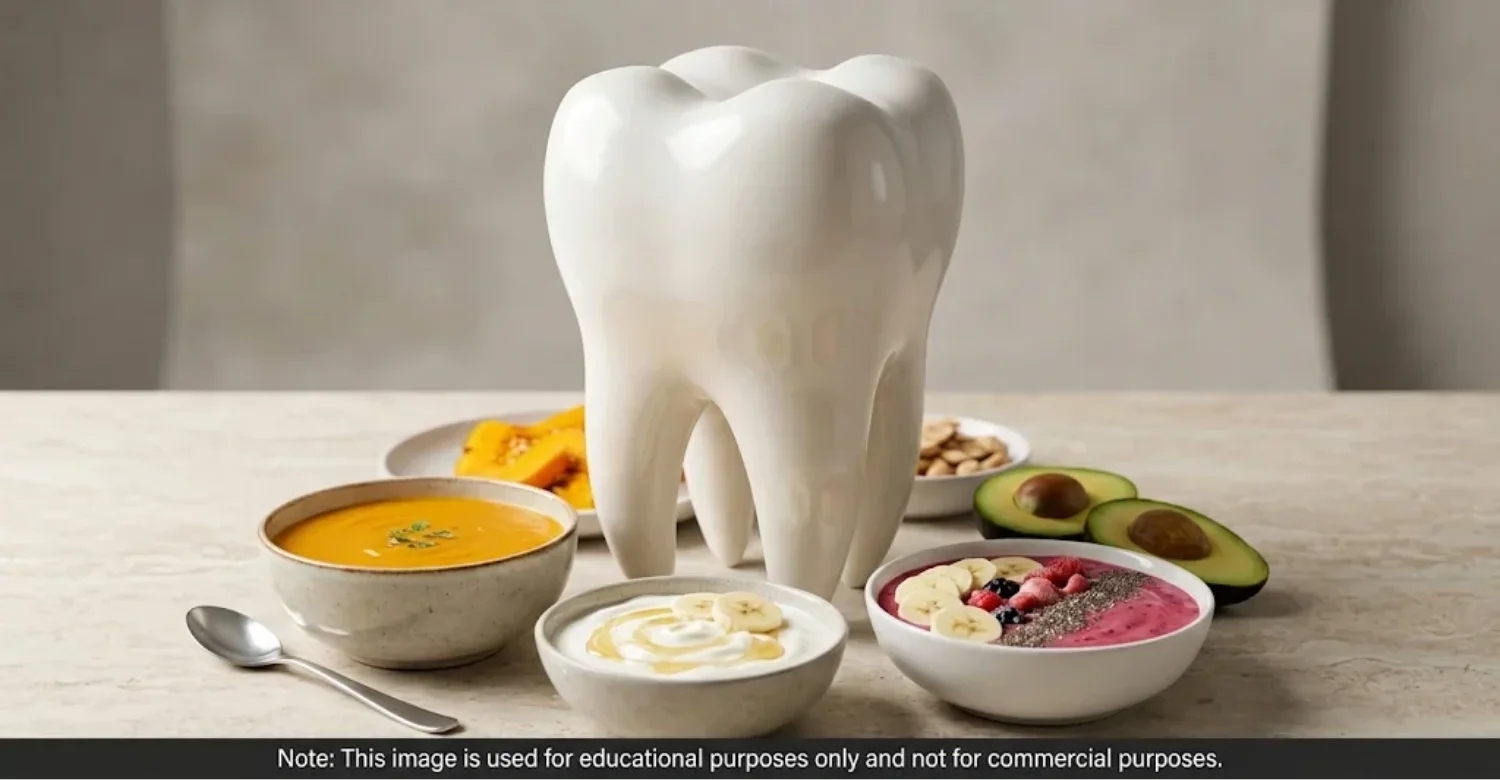
What Does a Seven-Day Dental Recovery Meal Plan Look Like?
A seven-day menu can help maintain balanced nutrition while food textures gradually change. This example is a general meal-planning guide, not a universal recovery schedule. Your procedure may require longer restrictions.
What Can You Eat for Breakfast During Recovery?
Breakfast options can include:
Plain Greek yoghurt with mashed banana.
Smooth oatmeal prepared with milk.
Soft scrambled eggs.
Cottage cheese.
Soft pancakes without crunchy toppings.
Mashed avocado.
These meals provide protein and energy. Choose temperatures and textures suitable for your recovery instructions. Avoid toasted bread and hard granola during early healing.
Which Soft Lunches Provide Protein and Nutrients?
Suitable lunches include blended lentil soup, mashed sweet potatoes, and tender fish. Soft chicken may also work when thoroughly cooked and finely shredded. Ensure pieces cannot irritate surgical areas. Add well-cooked vegetables for additional nutrients. Blend meals when chewing remains uncomfortable.
What Are Suitable Dinner Options After Dental Treatment?
Dinner should provide protein, energy, and vegetables without excessive chewing. Consider these options:
Soft pasta with smooth vegetable sauce.
Mashed potatoes with tender fish.
Blended chicken and vegetable soup.
Soft omelette with mashed avocado.
Well-cooked lentils blended into soup.
Avoid hard crusts and crunchy toppings. Choose smaller portions if chewing causes fatigue.
Which Snacks Are Suitable Between Meals?
Suitable snacks include smooth yoghurt, banana puree, applesauce, and soft cheese. Pudding and smooth custard can provide additional energy. Choose unsweetened options when possible. Avoid nuts, seeds, popcorn, and sticky sweets during restricted periods.
How Should You Adapt Meals After Multiple Dental Procedures?
Follow the most restrictive postoperative instructions when several procedures occur together. Patients receiving implants and extractions may need different menus from crown patients. Prioritise soft protein sources and adequate fluids. Ask your dentist whether specific areas require additional protection.
What Could a Seven-Day Soft-Food Meal Plan Include?
Day | Breakfast | Lunch or dinner |
1 | Yoghurt and banana puree | Smooth soup and mashed potatoes |
2 | Soft oatmeal | Blended lentils and soft eggs |
3 | Scrambled eggs | Tender fish and mashed vegetables |
4 | Greek yoghurt | Soft pasta and vegetable soup |
5 | Soft pancakes | Finely shredded chicken and puree |
6 | Cottage cheese | Soft fish and well-cooked vegetables |
7 | Oatmeal and banana | Tender pasta and mashed sweet potato |
How Does Vitrin Clinic Guide Patients About Eating After Dental Treatment?
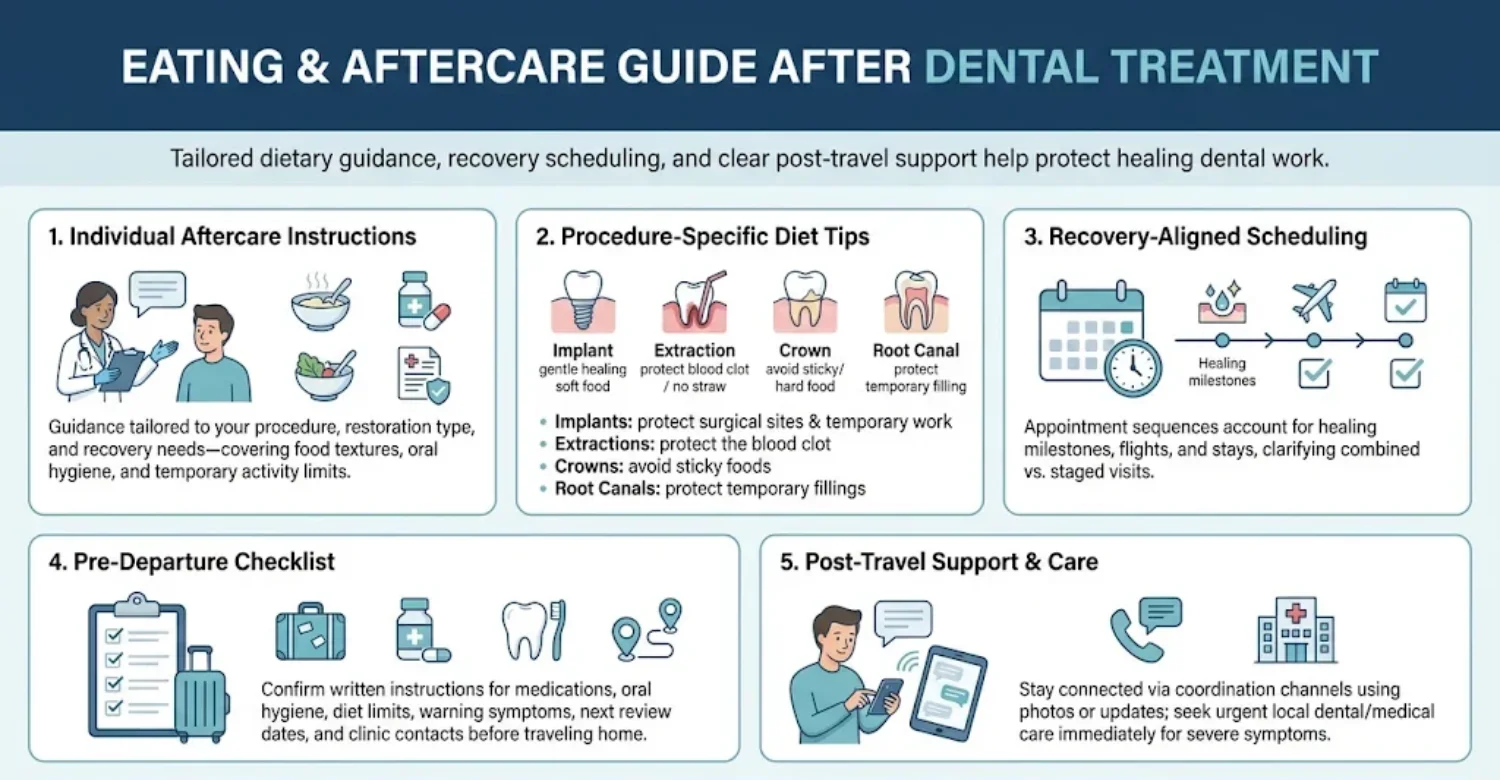
Individual dietary guidance should reflect the actual procedure and the patient's clinical condition. At Vitrin Clinic, aftercare discussions form part of treatment planning for international patients.
How Does Vitrin Clinic Provide Individual Aftercare Instructions?
Vitrin Clinic considers the procedure, restoration type, and expected recovery requirements when discussing aftercare. Patients receive guidance about suitable food textures, oral hygiene, and temporary activity restrictions. Instructions should also address temporary restorations and surgical sites. Patients should clarify uncertainties before leaving the clinic. Dietary advice must remain consistent with the treating dentist's clinical instructions.
How Are Dietary Recommendations Adapted to Different Procedures?
Recommendations differ according to the treatment performed. Implant patients may need to protect surgical areas and temporary restorations. Extraction patients must protect the blood clot. Crown patients may need to avoid sticky foods. Root canal patients may need to protect temporary fillings. Understanding what to eat after dental treatment therefore requires procedure-specific instructions.
How Can Vitrin Clinic Coordinate Appointments Around Recovery?
Treatment scheduling should consider healing requirements, travel arrangements, and planned procedures. Vitrin Clinic discusses appointment sequences with international patients before treatment begins. Patients should understand which procedures can occur together and which require separate visits. Recovery time should be considered when arranging flights and accommodation. Any clinical plan changes should be explained before proceeding.
What Should Vitrin Patients Know Before Leaving Istanbul?
Before travelling home, patients should understand their treatment details and aftercare requirements. This includes medication instructions, oral hygiene, dietary restrictions, and warning symptoms. Patients should know when their next review is required. They should also understand how to contact the clinic about postoperative concerns. Written instructions make recommendations easier to follow after returning home.
How Can International Patients Contact Vitrin Clinic After Returning Home?
International patients should have clear communication arrangements for postoperative questions. Vitrin Clinic can discuss follow-up requirements through its patient coordination channels. Patients may need to provide photographs or clinical information when requested. Remote communication cannot replace an examination when complications are suspected. Severe symptoms require local urgent medical or dental care.
How Can You Manage Your Diet During Dental Treatment in Turkey?
International patients should plan meals around appointments and recovery requirements. Understanding what to eat after dental treatment before travelling can make daily arrangements easier.
Which Foods Can International Patients Find Easily in Istanbul?
Istanbul offers familiar and traditional foods suitable for modified diets. Patients may consider:
Mercimek çorbası: Turkish lentil soup, preferably blended smoothly.
Yoğurt: Plain Turkish yoghurt without crunchy toppings.
Patates püresi: Mashed potatoes.
Yumuşak omlet: A soft omelette.
Well-cooked vegetables: Choose tender preparations without hard pieces.
Sütlaç: Turkish rice pudding, if its texture is suitable.
Check the texture and temperature before eating. Avoid foods containing hard nuts or seeds during restricted periods.
How Can You Choose Suitable Hotel Breakfasts After Surgery?
Choose plain yoghurt, soft eggs, smooth porridge, and mashed fruit when available. Avoid toasted bread, hard pastries, seeds, and crunchy cereals. Ask hotel staff about ingredients when necessary. Choose foods that do not require forceful biting. A simple breakfast is often easier during early recovery.
Should You Prepare Special Meals Before Dental Appointments?
Preparing suitable meals can reduce unnecessary stress after treatment. Buy yoghurt, eggs, bananas, soup ingredients, and soft vegetables beforehand. Check whether your hotel provides suitable food preparation facilities. Patients receiving extensive surgery should discuss nutritional arrangements with their clinical team. Do not assume every hotel restaurant accommodates postoperative dietary restrictions.
How Should You Plan Meals Between Multiple Procedures?
Plan meals according to the recovery stage of each procedure. Patients undergoing several visits may experience changing dietary requirements. Keep soft food options available between appointments. Avoid introducing challenging textures immediately before another surgical procedure. Ask your dentist about fasting requirements if sedation or general anaesthesia is planned.
When Can You Safely Fly Home After Dental Surgery?
There is no universal waiting period for every dental procedure. Travel suitability depends on surgery, anaesthesia, recovery, and possible complications. Extensive implant procedures may require additional planning. Your surgeon should confirm whether you are fit to fly. Consider access to follow-up care after returning home. Never fly simply because your planned holiday schedule requires it.
How Much Does Dental Treatment at Vitrin Clinic Cost in Turkey?
Dental prices vary according to treatment complexity, materials, and clinical requirements. The following figures are based on the supplied published-price information. They are indicative references, not guaranteed quotations.
How Much Does All-on-6 Treatment Cost at Vitrin Clinic?
The supplied Vitrin Clinic pricing information lists an All-on-6 first-visit package starting at $3,600. Its listed second-visit zirconia crown package costs $4,200. These prices relate to different treatment stages and inclusions. Request a complete, itemised quotation before comparing packages.
UK
All-on-6, per arch – first visit: $12,700–$25,400
First visit per arch benchmark
All-on-6, per arch – first visit: $12,700–$25,400
Second-visit final restoration: $2,000–$4,500*
UK private dental clinic reference
Vitrin Clinic
All-on-6, per arch – first visit: From $3,600
All-on-6 staged visit pricing
All-on-6, per arch – first visit: From $3,600
Second-visit final restoration: $4,200
Two-stage full-arch implant & bridge protocol
USA
All-on-6, per arch – first visit: 20,000–35,000
First visit per arch benchmark
All-on-6, per arch – first visit: 20,000–35,000
Second-visit final restoration: 3,000–6,000*
US private dental clinic reference
How Much Do Dental Crowns Cost at Vitrin Clinic?
Vitrin Clinic lists a $4,200 restoration package for 24 screw-retained zirconia teeth. This is a full-arch restoration package, not the price of individual dental crowns. Individual crown prices depend on the material, number of teeth, and clinical requirements.
For reference, Vitrin Clinic's listed starting prices include:
E-max Crown
Vitrin Clinic reference price: From $180 per tooth
Dental crown type.
itrin Clinic reference price: From $180 per tooth
Lithium disilicate all-ceramic aesthetics
Natural light translucency for smile zones
Zirconia Crown
Vitrin Clinic reference price: From $150 per tooth
Dental crown type
Vitrin Clinic reference price: From $150 per tooth
High-strength, metal-free durability
Suitable for both front & posterior molars
CEREC Same-Day Crown
Vitrin Clinic reference price: From $200 per tooth
Dental crown type
Vitrin Clinic reference price: From $200 per tooth
3D CAD/CAM digital scan, mill & placement
Completed in a single visit without temporaries
24 Screw-Retained Zirconia Teeth
Vitrin Clinic reference price: $4,200 per arch
Dental crown type
Vitrin Clinic reference price: $4,200 per arch
Full-arch implant-supported zirconia bridge
Screw-retained for clinical retrievability
Which Factors Influence the Final Dental Treatment Cost?
The final quotation depends on several clinical and logistical factors:
Number and position of treated teeth.
Implant system and restoration material.
Bone grafting or additional surgery.
Existing infections and required extractions.
Diagnostic imaging and specialist involvement.
Temporary and permanent restorations.
Number of visits and accommodation requirements.
An individual clinical examination helps determine which procedures are necessary. A written quotation should explain the proposed treatment and its inclusions.
Do Vitrin Clinic Treatment Packages Include Accommodation and Transfers?
Published package inclusions vary by treatment and visit. The supplied first-visit All-on-6 package includes five hotel nights, VIP transfers, temporary teeth, and extractions. The listed second-visit restoration package includes seven hotel nights, flights, and VIP transfers. Confirm current availability and contractual inclusions directly before booking.
Are Aftercare Instructions and Follow-Up Support Included?
Aftercare planning should explain dietary restrictions, oral hygiene, medication, and follow-up requirements. Ask whether remote support, clinical reviews, and additional visits are included. Understand the arrangements before accepting a quotation. Confirm how urgent concerns will be handled after returning home.
What Should International Patients Check Before Accepting a Quotation?
Request an itemised written treatment plan. Check implant components, restoration materials, temporary teeth, imaging, surgery, and additional procedures. Confirm package inclusions and exclusions. Clarify the number of visits and expected travel duration. Compare equivalent treatments rather than headline prices.
How Much Could You Save With All-on-6 Treatment in Turkey?
Potential savings depend on the complete treatment scope and final quotation. The supplied comparison ranges suggest differences between Turkish and overseas prices.
UK vs Turkey
Indicative difference: Approximately 29%–84%
Comparison
Overseas reference: 12,700–25,400
Turkey planning reference: 4,000–9,000
Indicative difference: Approximately 29%–84%
USA vs Turkey
Indicative difference: Approximately 55%–89%
Comparison
Overseas reference: 20,000–35,000
Turkey planning reference: 4,000–9,000
Indicative difference: Approximately 55%–89%
How Can You Compare All-on-6 Treatment Packages Before Travelling?
Compare the complete treatment rather than the advertised implant surgery price. This checklist highlights important package details.
Package component | What should you confirm? |
Implant surgery | Six implants and their components |
Temporary teeth | Type, material, and fitting date |
Permanent restoration | Material and number of teeth |
Bone procedures | Whether grafting is included |
Extractions | Number and complexity |
Imaging | Consultation and CBCT inclusion |
Accommodation | Hotel category and included nights |
Transfers | Airport and clinic transportation |
Follow-up | Reviews and remote support |
Additional visits | Timing and extra costs |
Why Does All-on-6 Treatment Usually Require More Than One Visit?
Implants need time to integrate with the surrounding bone. Temporary teeth may be provided during the initial stage when clinically appropriate. Permanent restorations are fitted according to healing and stability. Some patients require additional procedures or longer healing periods. Immediate fixed teeth are not suitable for everyone.
What Should You Eat During All-on-6 Recovery?
Patients usually need soft, easy-to-chew meals after surgery. Suitable options include blended soup, yoghurt, scrambled eggs, and mashed vegetables. Soft fish can provide additional protein. Avoid hard bread, nuts, tough meat, and crunchy foods. Follow your surgeon's instructions about chewing and temporary restorations.
What Are the Advantages and Disadvantages of All-on-6 Treatment?
Advantages: Six implants can support a full-arch restoration when clinically suitable. This may provide a fixed alternative to removable dentures.
Disadvantages: Surgery, healing time, maintenance, and financial commitment are involved. Bone availability and general health influence suitability.
Clinical Note: Implant number alone does not determine treatment success. Bone quality, implant positioning, bite forces, and prosthetic design also matter.
Ready to transform your smile?
Talk to our team and get a personal FREE treatment plan.
What Can You Expect During Dental Recovery at Vitrin Clinic?
Your recovery journey should include clear instructions before, during, and after treatment. Vitrin Clinic's international patient process involves treatment planning and coordination.
What Happens During Your Initial Consultation?
The initial consultation helps establish your dental concerns and treatment objectives. Your medical and dental history should be reviewed. Clinical examination and appropriate imaging help identify existing problems. The dentist then discusses suitable treatment options. Final decisions should follow an individual clinical review rather than photographs alone.
How Does Vitrin Clinic Organise Treatment Appointments?
Appointment scheduling depends on the treatment plan and clinical requirements. The team coordinates consultations, procedures, and laboratory stages where necessary. Patients should receive a clear explanation of expected appointment durations. Healing time must be considered before arranging return flights.
Which Digital Technologies Can Support Treatment Planning?
Digital dental X-rays can help examine tooth roots and surrounding structures. CBCT imaging provides three-dimensional information when clinically indicated. Intraoral scanning captures digital impressions of teeth and oral structures. Digital Smile Design may help visualise proposed restorative changes. Each technology should be selected according to diagnostic needs.
How Are Treatment Instructions Explained Before You Leave?
Patients should receive instructions covering oral hygiene, eating, medication, and activity restrictions. The team should explain expected recovery changes and warning symptoms. Written information makes instructions easier to follow after travelling home. Ask questions about anything that remains unclear.
How Does Vitrin Clinic Support International Patients After Treatment?
International patients need clear arrangements for postoperative communication. Follow-up discussions can help identify concerns requiring further attention. However, remote support cannot replace an examination when complications are suspected. Patients should know where to obtain urgent local dental care.
.jpg)
.jpg)
.jpg)
How Much Do Common Dental Treatments Cost in the USA, UK, and Turkey?
The following estimates provide a general comparison of common dental treatment expenses. Exact Turkish fees require individual clinic quotations. Prices vary according to location, clinical complexity, and treatment requirements.
UK
From 40
UK private dental benchmark.
Examination and X-rays: 40–120 plus imaging
Filling: 100–250
Root canal: 250–1,025
Simple extraction: 85–300
Dental abscess treatment: Variable
Turkey
From 30
General & urgent dental care
Examination and X-rays: 30–100
Filling: 40–120
Root canal: 100–250
Simple extraction: 50–150
Dental abscess treatment: 100–300
US
From 50
US private dental benchmark
Examination and X-rays: 50–350
Filling: 90–450
Root canal: 500–1,500
Simple extraction: 75–300
Dental abscess treatment: 604–1,048
When Should You Contact Your Dentist About Problems After Eating?
Mild tenderness can occur during recovery, but worsening symptoms need attention. Knowing what to eat after dental treatment cannot replace professional examination when complications develop.
Is Persistent Pain After Eating Normal During Recovery?
Some tenderness during chewing can occur after dental procedures. However, persistent or worsening toothache needs dental review. Pain that increases after initial improvement deserves particular attention. Avoid repeatedly testing the affected tooth. Contact your dentist for examination and appropriate treatment.
What Should You Do If Food Gets Stuck Around an Implant?
Do not use sharp objects or forceful cleaning movements. Follow the implant cleaning instructions provided by your dentist. Gentle cleaning may be appropriate once permitted. Contact your dental team if food remains trapped, bleeding develops, or the area becomes painful. Do not disturb healing tissue.
Can Bleeding After Eating Indicate a Recovery Problem?
Small amounts of blood-stained saliva can occur after oral surgery. However, persistent or heavy bleeding requires attention. Follow your surgeon's bleeding-control instructions. If bleeding continues despite these measures, seek urgent dental care. Do not delay professional advice when bleeding is substantial.
Which Symptoms Require Urgent Dental Attention?
Seek urgent dental attention for:
Increasing swelling or pain.
Persistent bleeding.
Pus or an unpleasant discharge.
Fever accompanying dental symptoms.
A loose or displaced restoration.
Difficulty opening your mouth.
Emergency warning: Difficulty breathing or swallowing requires immediate emergency medical care. Rapidly spreading facial or neck swelling also requires emergency attention. Severe swelling near the eye should never wait for a routine dental appointment.
How Can You Manage Pain Safely During Dental Recovery?
Pain relief should follow professional advice and medicine instructions. Medication suitability depends on formulation, age, health conditions, and other medicines.
What Should You Check Before Taking Pain Relief?
Read the product label and follow prescribed instructions. Do not combine medicines without checking for overlapping ingredients or interactions. Children require age-appropriate advice and dosing. Ask a pharmacist or clinician about pregnancy, breastfeeding, kidney disease, liver disease, or heavy alcohol consumption. Never exceed recommended amounts.
What Should You Do If You Suspect a Medication Overdose?
Seek immediate professional medical advice, even if no symptoms are present. Do not wait for discomfort or other warning signs. Contact emergency services or an appropriate poison information service. Keep the medicine packaging available for healthcare professionals.
When Should You Seek Professional Advice Instead of Managing Pain at Home?
Contact your dentist when pain persists, becomes severe, or worsens. Fever, increasing swelling, pus, and difficulty opening your mouth also need attention. Home remedies cannot treat an underlying infection. Breathing or swallowing difficulties require emergency medical care.
How Can You Maintain Healthy Eating Habits After Dental Treatment?
Long-term eating habits should protect your teeth while maintaining balanced nutrition. Understanding what to eat after dental treatment also provides an opportunity to improve everyday food choices.
Which Foods Support Long-Term Oral Health?
Choose a varied diet containing vegetables, fruits, dairy or suitable alternatives, whole grains, and protein sources. Drink water regularly. Limit frequent sugary snacks and sweetened drinks. Choose foods matching your dental condition and chewing ability. A balanced diet supports general health and normal oral tissue function.
How Can You Protect Your New Dental Restorations?
Avoid using teeth to open packages or bite non-food objects. Do not chew ice or excessively hard materials. Maintain regular brushing and interdental cleaning. Attend recommended dental reviews. Patients with implants and crowns need appropriate professional maintenance.
Why Should You Maintain Regular Dental Check-Ups?
Regular examinations help identify changes affecting teeth, gums, and restorations. Your dentist can review your oral hygiene and bite. Early investigation may prevent minor concerns from becoming more complicated. Follow-up frequency depends on your dental health and treatment history.
How Can You Build a Balanced Diet After Recovery?
Gradually return to a varied diet when your dentist permits. Include adequate protein, vegetables, fruit, and whole grains. Maintain hydration and avoid excessive sugar consumption. If chewing remains difficult, discuss nutritional alternatives with a qualified healthcare professional.
Ready to transform your smile?
Talk to our team and get a personal FREE treatment plan.
What Should You Remember About Food Choices After Dental Treatment?
The best food choices depend on your procedure and recovery progress. Soft, nutritious meals are useful during many early recovery periods. However, extractions, implant surgery, gum treatment, crowns, and other procedures require different precautions. Always follow your treating dentist's instructions rather than relying on a fixed recovery timetable.
At Vitrin Clinic, international patients can discuss procedure-specific aftercare and follow-up arrangements. Before travelling, clarify your treatment schedule and expected recovery requirements. Seek professional attention for persistent pain, worsening swelling, fever, or unusual bleeding. Breathing or swallowing difficulties require immediate emergency care.
Reference

Medically reviewed by
Dr. Rifat AlsamanDr. Rifat Alsaman has more than 5 years of clinical experience in dentistry and currently serves as the Head of the Medical Team at Vitrin Clinic. He is dedicated to providing exceptional patient care, overseeing treatment planning, and ensuring the highest clinical standards across the team. His expertise, attention to detail, and commitment to continuous professional development have helped countless patients achieve healthier, more confident smiles.
More in After Care
View all 13 min readWhen Can I Brush My Teeth and Resume My Normal Oral Hygiene Routine?Brushing teeth after dental treatment is usually safe the same day, as long as you are gentle and avoid any surgical area at first. When you can return to your full routine depends on your treatment, from right away after veneers to about a week after extractions or implants. This guide explains what to do after each treatment at Vitrin Clinic and what a good daily routine looks like.
 30 min readHow Long Does It Take to Recover From Different Dental Treatments in Turkey?Dental Treatment Recovery Time differs depending on the dental procedure, oral health, and individual healing response. A filling may cause minimal disruption, while implant surgery requires several months of healing.
 18 min readWhen Can I Fly After Dental Treatment in Turkey?Flying after dental treatment is something every international patient should think about before booking a ticket. Your return date shapes the whole trip, from hotel nights to follow-up visits.
Still have a question?
Our patient coordinators answer every day of the week: before, during and long after your treatment.