When Can I Fly After Dental Treatment in Turkey?
Flying after dental treatment is something every international patient should think about before booking a ticket. Your return date shapes the whole trip, from hotel nights to follow-up visits.

Flying after dental treatment is something every international patient should think about before booking a ticket. Your return date shapes the whole trip, from hotel nights to follow-up visits. Several factors decide when flying is appropriate: the procedure performed, bleeding, swelling, pain, the anaesthesia used and your individual healing. Two people can recover differently from the same surgery.
Routine dental work, such as fillings and veneers, places little stress on the tissues. Surgical procedures create a wound that needs time to settle. This is why oral surgery carries more travel considerations than cosmetic care. The safest approach to flying after dental treatment is to plan your return flight with your treating dentist, ideally before treatment begins. This keeps your dental tourism recovery calm and well organized.
Key Takeaways
Flying after dental treatment means timing your journey home around healing. This guidance helps dental tourists choose a departure date that protects their results.
Fillings, whitening, crowns, veneers and root canals rarely restrict travel. Extractions, dental implants and sinus lifts need planned recovery days.
Safe flying after dental treatment depends on healing. Watch bleeding, swelling and pain, attend your post-treatment review and get dental clearance before boarding.
The cost of flying after dental treatment goes beyond the ticket. Build them into your budget from the start.
How Soon Can You Fly After Dental Treatment?
Flying after dental treatment can range from the same day to around two weeks later. Non-surgical care usually needs no waiting period at all. Extractions and implants commonly need two to three days. Sinus lift surgery needs the longest pause because it involves the sinus cavity. The table below gives general planning estimates. These figures help you book your stay, but they are not medical clearance. Only your dentist can confirm you are ready to fly.
Recommended Waiting Time Before Flying After Different Dental Treatments
Dental Procedure | General Planning Estimate |
Fillings and routine dental work | Usually no special waiting period |
Teeth whitening | Usually no special waiting period |
Root canal treatment | Often possible soon after treatment |
Simple tooth extraction | Around 24–48 hours |
Surgical tooth extraction | Commonly 48–72 hours or longer |
Dental implant placement | Commonly 48–72 hours |
Multiple implants or bone grafting | Several days, depending on complexity |
Sinus lift surgery | Often 7–14 days |
Your dentist's assessment always takes priority over these timelines for flying after dental treatment. They examine the actual wound, not an average patient. A clot that is forming slowly or swelling that is still rising can change the plan, even after a simple procedure.
Can I fly after dental treatment?
Yes. Flying after dental treatment is safe for most patients once the dentist confirms healing is on track. Non-surgical care rarely needs a wait. Surgery needs a short recovery period, depending on the procedure.
.jpg)
.jpg)
Ready to transform your smile?
Talk to our team and get a FREE treatment plan.
Does the Type of Dental Procedure Matter When Flying After Dental Treatment?
Yes, the type of procedure matters more than anything else. Dental treatment flight restrictions mainly apply to surgery, because surgery leaves an open wound in the gums or bone. Non-surgical treatments work on the tooth surface and leave nothing that needs to heal. This is why advice on flying after dental treatment differs so much between patients. The bigger and deeper the surgery, the longer your body needs before a long journey. The sections below explain what to expect after each common procedure, from extractions to sinus lifts.
Flying After Tooth Extraction
Flying after tooth extraction is usually safe within one to three days. The exact timing depends on how the tooth was removed and how the socket is healing.
Feature | Simple Extraction | Surgical Extraction |
How it is done | Visible tooth loosened and lifted out | Gum opened; bone or tooth may be sectioned |
Stitches | Rarely needed | Often needed |
Typical swelling | Mild | Moderate, peaks around day two or three |
Planning estimate | Around 24–48 hours | Commonly 48–72 hours or longer |
Can I fly the day after a tooth extraction?
Flying after tooth extraction is often possible the next day after a simple extraction, once bleeding has stopped. Surgical extractions usually need 48–72 hours. Your dentist confirms this after checking the socket.
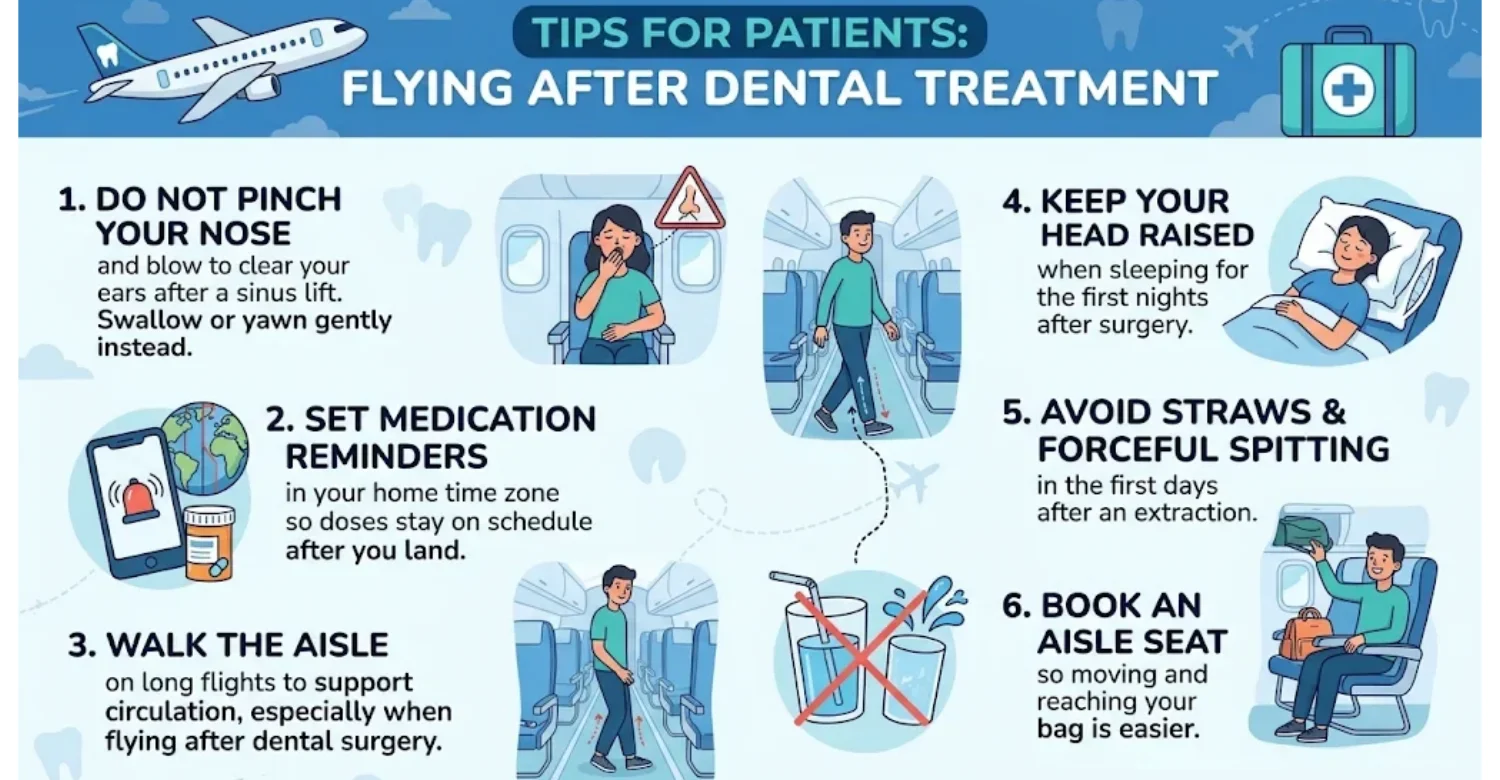
After removal, a blood clot fills the socket. This clot works like a natural bandage that protects the bone and nerves underneath. It must stay stable for healing to begin. Protecting this clot is the main goal when flying after dental treatment that involved an extraction. Avoiding smoking, straws and hard spitting helps it stay in place.
Dry socket happens when the clot breaks down or dislodges too early. It usually appears two to four days after extraction, with throbbing pain that may spread towards the ear. It is treatable, but it is better managed near your dentist.
Is it safe to fly 5 days after tooth extraction?
For most patients, yes. By day five, the clot is usually stable and dry socket is less likely, because it tends to develop within the first four days. If you still have pain, swelling or bleeding, see your dentist before flying.
You may need longer if you have:
Wisdom tooth removal, especially lower impacted teeth
Several extractions in one session
Extractions combined with bone grafting
Flying After Dental Implants
Flying after dental implants is commonly possible 48 to 72 hours after an uncomplicated single implant. By then, bleeding has usually stopped and swelling has started to settle. The implant itself is a small titanium post placed into the jawbone. It fuses with the bone over the following months, a process called osseointegration. Your flight does not interrupt this process. What needs attention in the first days is the gum wound around the implant, not the implant itself.
Multiple implants, full-mouth implant procedures and added surgery create a larger healing area. Swelling and discomfort can last longer, and stitches may need checking. If temporary teeth are fitted on the implants, the dentist also checks your bite. These cases often need several days to a week or more in Istanbul.
Cabin pressure does not affect a newly placed implant, because the titanium post contains no air. Upper back implants placed close to the sinus need more care.
Early monitoring matters because most post-operative problems, such as bleeding or swelling, show up in the first 48 hours. For this reason, flying after dental treatment involving implants is best planned after an in-person review.
How long should I stay in Turkey for dental implants?
For an uncomplicated implant, plan at least two to three days after surgery. Multiple implants or full-mouth treatment often need a week or more.
Flying After Sinus Lift and Bone Grafting
Flying after sinus lift surgery usually needs the longest wait, often 7 to 14 days. A sinus lift adds bone beneath the sinus floor, so an implant has enough support in the upper back jaw. To do this, the dentist gently raises the thin sinus membrane and places graft material below it. The membrane and the graft need time to stabilise before they face pressure changes during air travel.
When cabin pressure drops and rises, air moves in and out of the sinus. In the early days, this can strain the healing membrane or disturb the graft. Most dentists advise you to:
Avoid blowing your nose
Sneeze with your mouth open
Avoid heavy lifting and strenuous exercise
Take any prescribed decongestants exactly as directed
Bone grafting and combined implant procedures add to the surgical area. A larger graft, or placing implants in the same session, can push your safe departure date further back. This is the one area where flying after dental treatment needs the most patience, because rushing can affect the graft and the future implant.
What is the difference between flying after implants and after a sinus lift?
Flying after dental implants is often possible within 48–72 hours. Flying after sinus lift surgery usually needs a longer wait, often 7–14 days, because the sinus membrane must heal.
Flying After Other Dental Procedures
Most restorative and cosmetic treatments do not create a surgical wound, so air travel after dental work of this kind is usually straightforward. These treatments carry far fewer restrictions on flying after dental treatment than oral surgery does. Mild sensitivity or tenderness can happen, but it is not usually a reason to delay your journey. The main step is a final check to confirm the restorations fit well and your bite feels comfortable before you leave.
Procedure | What to Expect When Flying |
Crowns, veneers and dental bridges | Usually no waiting period once the final restorations are fitted and the bite is checked |
Root canal treatment | Often possible soon after; finishing treatment before travel reduces pressure-related discomfort |
Fillings and routine restorative dentistry | Usually no special waiting period |
Whitening and other non-surgical cosmetic procedures | No flight restrictions; short-term sensitivity may occur |
Is it safe to fly after a dental filling?
Yes. A filling does not need a waiting period, and you can usually fly the same day. If a deep filling causes sharp pain during the flight, tell your dentist, because the tooth may need a check.
Can I fly after a root canal?
Yes, usually soon after treatment. If your root canal is done over several visits, flying with a temporary filling is generally fine. Finishing the treatment before a long flight reduces the chance of pressure-related discomfort.
Ready to transform your smile?
Talk to our team and get a FREE treatment plan.
What Can Make You Wait Longer Before Flying?
Some situations extend the time you need before flying after dental treatment. These factors can extend dental treatment flight restrictions, but they are not reasons for alarm. They simply mean your mouth needs more time to settle before a long journey. Your dentist reviews each factor during your follow-up visit and adjusts your departure advice. Factors that may delay your flight include:
Extent of surgery: more treated teeth or deeper surgery means a larger healing area.
Bleeding: persistent bleeding or a slowly forming blood clot.
Swelling: swelling that is still increasing rather than settling.
Pain: severe or worsening pain despite prescribed medication.
Infection: an active dental infection or fever.
Sinus involvement: complications affecting the sinus or surrounding tissues.
Sedation or general anaesthesia: most guidance advises against flying, driving or making important decisions for at least 24 hours.
Health conditions and medications: diabetes, smoking, blood thinners or certain bone medications can slow healing.
Signs You Should Postpone Your Flight?
Most patients recover smoothly. Still, flying after dental treatment should never mean ignoring warning signs. Certain symptoms mean you should contact your dentist before going to the airport. Postpone your flight and seek a clinical review if you notice:
Uncontrolled or recurring bleeding
Increasing facial or gum swelling
Severe pain that is getting worse
Fever or unusual discharge from the surgical site
Difficulty swallowing or other concerning symptoms
These symptoms need a dentist's assessment. Trying to manage them alone on a plane, far from dental care, is not a safe option. A short delay allows quick treatment and protects your final result. Most of these problems respond well to simple care, such as a socket dressing, a change of medication or an extra review. Once the issue settles, your dentist can confirm a new, safe travel date.
Is it okay to fly with a tooth infection?
It is best to treat the infection before you fly. Pressure changes can make the pain worse, and antibiotics alone do not remove the source. Get urgent care if you have facial swelling, fever or difficulty swallowing.
What We Notice Clinically
At Vitrin Clinic, our clinical team notices that flying after dental treatment is smoothest when travel plans stay flexible. Patients who leave a buffer day after surgery tend to travel more comfortably than those who fly straight after their last appointment. We also see that most concerns appear in the first two to three days. That is why we prefer to review surgical patients in person before departure. Sinus lift patients who follow nose-blowing and sneezing instructions carefully generally heal without surprises.
.jpg)
Can Cabin Pressure Affect Your Teeth After Dental Treatment?
Commercial aircraft cabins are pressurised to roughly the level found at 6,000–8,000 feet. As pressure drops, any trapped air in the body expands slightly. Healthy teeth and well-fitted restorations are not affected. Problems mainly appear when a tooth already has an underlying issue, such as decay, infection or an unfinished root canal. Flying after dental treatment is therefore usually more comfortable when existing dental problems are treated before the journey.
Barodontalgia is tooth pain triggered by changes in air pressure. It is uncommon and usually points to an existing problem rather than a new one. The most frequent causes are untreated infections, abscesses and incomplete root canal treatment, because air or fluid inside the tooth reacts to pressure changes.
Does flying make dental pain worse?
It can, but usually only when a tooth already has a problem. Decay, infection or an unfinished root canal can react to pressure changes. Healthy teeth and well-fitted restorations are not normally affected.
Can you fly if you have a toothache?
You can, but the pain may get worse during the flight. Have the tooth checked before travelling if possible. Take pain relief only as directed, and seek care if the pain is severe or comes with swelling.
Pressure-Related Tooth Discomfort | Healing Surgical Site Complication |
Appears during ascent or descent | Develops gradually over hours or days |
Often eases after landing | Persists or worsens after landing |
Linked to an existing tooth problem | Linked to clot loss, infection or swelling |
Cabin pressure does not affect dental implants or well-cemented crowns, veneers and bridges. Temporary crowns held by temporary cement can occasionally loosen. Sinus procedures need extra care, as explained above. For most patients, cabin pressure is only a minor part of flying after dental treatment.
Can I fly with temporary crowns or temporary teeth?
Yes. You can fly safely with temporary restorations. Carry Vitrin Clinic's contact details in case one loosens during the trip.
Approximate Dental Treatment Prices at Vitrin Clinic
Initial consultations at Vitrin Clinic are free and include a written treatment plan with clear, fixed pricing and no hidden fees. Final costs depend on clinical diagnostics and chosen materials. You can review the plan or decline before paying for any treatment.
Estimated Price Breakdown by Procedure
Treatment
Hollywood Smile
Dental Implants
Subperiosteal Implants
Invisalign
Veneers
Dental Crowns
Dental Bridge
Periodontics
Gingival Esthetics
Endodontics (Root Canal Treatment)
Same Visit Dentistry
Teeth Whitening
Approximate Price at Vitrin Clinic
$3,500–$5,500 per full smile makeover
$500–$865 per implant, depending on the system
Price upon request
$800–$3,500
$200–$250 per tooth
From $150 per tooth
$500–$1,200 for a traditional 3-unit bridge
Depends on gum treatment required
Price upon request
Approximately $150–$200 per tooth
Depends on the procedures included in treatment plan
Approximately $150–$350 per session
Note: Vitrin Clinic offers dental treatments at approximately 60–70% less than the average costs in the USA and UK, while maintaining high standards of dental care.
Note on Dental Sedation Costs
Conscious sedation or general anesthesia can be arranged for severe dental anxiety. These options and costs are discussed openly and itemized separately, so you know the fee before giving consent. A medical history review confirms that sedation is safe for you.
Ready to transform your smile?
Talk to our team and get a FREE treatment plan.
Clinical Note
According to Dr. Rifat Alsaman, Head of the Medical Team and cosmetic dentist at Vitrin Clinic, the key question in flying after dental treatment is not simply how many days have passed since surgery. The real question is whether the surgical site is stable. A calm, closed wound with no active bleeding is usually ready for travel. Dr. Rifat Alsaman, Head of the Medical Team and cosmetic dentist at Vitrin Clinic, advises patients to treat every timeline as a guide and every clinical review as the final decision.
How to Prepare for Your Flight After Dental Treatment?
Good preparation makes flying after dental treatment far more comfortable. Most of the work happens before you reach the airport. You confirm healing, collect your documents, pack a small recovery kit and understand your medication plan. These simple steps help you feel in control during the journey. They also make it easier for your local dentist to continue your care at home.
Before Leaving the Dental Clinic?
Your final visit is the most important step in dental tourism recovery and safe flying after dental treatment. Before you leave, make sure you:
Attend the recommended post-treatment examination
Confirm the surgical site is stable and bleeding is controlled
Receive written aftercare instructions and a treatment summary
Understand your medication schedule and any restrictions
Confirm whether further appointments or suture checks are needed
What to Pack in Your Hand Luggage?
Keep your essentials with you, not in checked baggage. If a question comes up during the journey or after landing, everything you need is within reach. This also helps any dentist who sees you later understand exactly what was done. Your hand luggage should include:
Prescribed medications in their original packaging
Written post-operative instructions
Dental treatment records and Vitrin Clinic's contact details
Soft snacks, where needed
Water and any permitted recovery supplies
How to Stay Comfortable During the Flight?
Small habits on board make flying after dental treatment more comfortable and support healing. Air travel after dental work can dry the mouth, so a few simple steps go a long way. During the flight:
Drink water regularly to stay hydrated
Follow your prescribed medication schedule
Choose soft foods if chewing feels uncomfortable
Avoid alcohol, especially with pain medication or antibiotics
Avoid smoking during the healing period
Follow your sinus precautions if your treatment involved the sinus
Planning Your Return Flight After Dental Tourism in Turkey
Planning for flying after dental treatment starts before your treatment, not after it. Share your preferred travel dates with your dentist during the first consultation. Your treatment schedule and expected recovery decide how long you stay in Istanbul. Routine cosmetic work may need only a few days, while flying after dental surgery needs extra recovery days. The more surgical steps your plan includes, the more time you should allow. Complex procedures, such as full-mouth implants or sinus lifts, may need additional accommodation nights.
Keep your plans flexible with these points in mind:
Flexible tickets: a changeable return booking removes pressure if healing needs another day.
Connections and long-haul flights: longer journeys with layovers are more tiring, so a little more recovery time helps.
Local follow-up: arrange an appointment with your local dentist for after you return.
Staged treatment: some implant plans need a second visit after the bone heals, often months later.
Does a longer recovery stay increase the cost of dental tourism?
Your treatment fees are set by your treatment plan, but extra hotel nights and flexible tickets add to your travel costs. Plan these into your budget early.
Discover Our Dental Treatment Options
Hollywood Smile - Full smile makeover with premium materials and design.
Dental Implants - Long-lasting, natural-feeling tooth replacement.
Subperiosteal Implants - Fixed implants for low bone volume, no grafting needed.
Invisalign - Clear aligner treatment, no metal brackets.
Veneers - Ceramic shells fixing stains, chips, and gaps, lasting 15-20 years.
Dental Crowns - Durable, natural-looking crowns, including same-day CEREC options.
Dental Bridge - Traditional and zirconia bridges to restore missing teeth.
Periodontics - Treatment for gum disease, recession, and bone loss.
Gingival Esthetics - Gum reshaping to fix a "gummy smile."
Endodontics - Root canal treatment using laser and 3D imaging, often in one session.
Same Visit Dentistry - Fillings, root canals, and implants completed within your stay.
Teeth Whitening - Fast, professional whitening in a single visit.
Your Dental Treatment and Travel Timeline at Vitrin Clinic
At Vitrin Clinic, your travel dates are considered from the beginning of your dental treatment plan. During the initial consultation, our team discusses your arrival and departure dates, dental concerns, and expected treatment needs. This helps organise your appointments while allowing sufficient time for recovery and any necessary follow-up before you return home.
Here is how the process works:
Initial Review: Our team reviews your dental photographs, X-rays, and relevant medical information to understand your needs and estimate the treatment schedule.
Clinical Evaluation: Upon arrival, the medical team examines your teeth, gums, bite, and overall oral health to confirm the proposed treatment plan and make any necessary adjustments.
Treatment and Recovery Planning: Appointments are scheduled according to the procedures required, their expected healing periods, and any additional clinical visits needed before departure.
Post-Operative Review: Before leaving Istanbul, your dentist checks your recovery, assesses the treated areas, and provides individual advice on whether you are ready to fly.
Aftercare Guidance: You receive written instructions on oral hygiene, medication when prescribed, dietary precautions, and follow-up care after returning home.
About Vitrin Clinic
Vitrin Clinic is a cosmetic dental clinic in Istanbul, Turkey, welcoming patients from around the world. The medical team, led by Dr. Rifat Alsaman, Head of the Medical Team and cosmetic dentist at Vitrin Clinic, provides treatments including dental implants, veneers, crowns, smile design and restorative dentistry. Each plan is built around the patient's oral health, goals and travel needs. The team supports international patients from their first message to their final review, so they can return home feeling confident and well informed.






Book your FREE treatment plan with Vitrin Clinic and get a personalized treatment plan from our dental team.
Ready to transform your smile?
Talk to our team and get a FREE treatment plan.
References:

Medically reviewed by
Dr. Rifat AlsamanDr. Rifat Alsaman has more than 5 years of clinical experience in dentistry and currently serves as the Head of the Medical Team at Vitrin Clinic. He is dedicated to providing exceptional patient care, overseeing treatment planning, and ensuring the highest clinical standards across the team. His expertise, attention to detail, and commitment to continuous professional development have helped countless patients achieve healthier, more confident smiles.
More in After Care
View all 13 min readWhen Can I Brush My Teeth and Resume My Normal Oral Hygiene Routine?Brushing teeth after dental treatment is usually safe the same day, as long as you are gentle and avoid any surgical area at first. When you can return to your full routine depends on your treatment, from right away after veneers to about a week after extractions or implants. This guide explains what to do after each treatment at Vitrin Clinic and what a good daily routine looks like.
 30 min readHow Long Does It Take to Recover From Different Dental Treatments in Turkey?Dental Treatment Recovery Time differs depending on the dental procedure, oral health, and individual healing response. A filling may cause minimal disruption, while implant surgery requires several months of healing.
 35 min readWhat Can I Eat After Dental Treatment in Turkey?Knowing what to eat after dental treatment can make recovery more comfortable. Suitable foods can also protect healing tissues and reduce unnecessary chewing pressure.
Still have a question?
Our patient coordinators answer every day of the week: before, during and long after your treatment.