Dental Crowns
October 19, 2026
Physiological Tooth Movement and Digital Bite Registration: How Do They Affect Bite Alignment?
 Dr. Rifat Alsaman

Physiological tooth movement and digital bite registration are two linked topics that shape how dentists read your bite. Teeth are not fixed in bone like posts in concrete. They shift slightly every day under chewing forces, and they drift gradually across a lifetime. Digital bite registration records how upper and lower teeth meet, using an intraoral scanner and software. When a bite feels different, both factors matter. This guide explains how natural tooth movement works, why bites change, and how digital records are interpreted. It also covers warning signs, treatment options, relief tips and typical costs in the US, UK and Turkey. At Vitrin Clinic, we combine digital records with careful clinical examination before recommending any treatment.
.jpg)
.jpg)
.jpg)
.jpg)
What Is Physiological Tooth Movement in Dentistry?
Physiological tooth movement describes the normal, small shifts teeth make throughout life. It is not a disease. It allows teeth to adapt to wear, growth and chewing loads. Dentists usually describe three main types: eruption, mesial drift and functional mobility. Eruption brings teeth into the mouth and continues slowly to compensate for wear. Mesial drift moves teeth gradually towards the front of the mouth. Functional mobility is the tiny movement each tooth makes when you bite. Understanding physiological tooth movement and digital bite registration shows why a bite record is a snapshot, not a permanent map.
How Do Teeth Move Naturally Throughout Life?
Teeth move in several directions over decades. Upper and lower teeth keep erupting slowly to maintain contact as enamel wears. Contact points between neighbouring teeth also wear, and teeth drift forward to close tiny spaces. Long-term studies show lower front teeth often become more crowded between the late teens and middle age. This change happens even in people who never had braces. Research on untreated adults shows incisor irregularity keeps increasing gradually after age 20. These movements are usually slow, measured in fractions of a millimetre each year. Most people never notice them until a gap or overlap finally appears.
What Is the Difference Between Normal Tooth Adaptation and Abnormal Tooth Migration?
Normal adaptation is slow, balanced and painless. The teeth remain firm, gums stay healthy, and the bite keeps working comfortably. Abnormal migration is different. It often happens faster and is linked to a clear cause, such as gum disease, tooth loss or a habit. Pathologic tooth migration is common in periodontitis. Studies report it in roughly 30% to 56% of patients with periodontal disease. Signs include new gaps between front teeth, flaring, rotation or teeth that look longer. Abnormal migration needs diagnosis because the underlying cause usually continues until it is treated.
How Do the Periodontal Ligament, Alveolar Bone, and Occlusal Forces Influence Tooth Position?
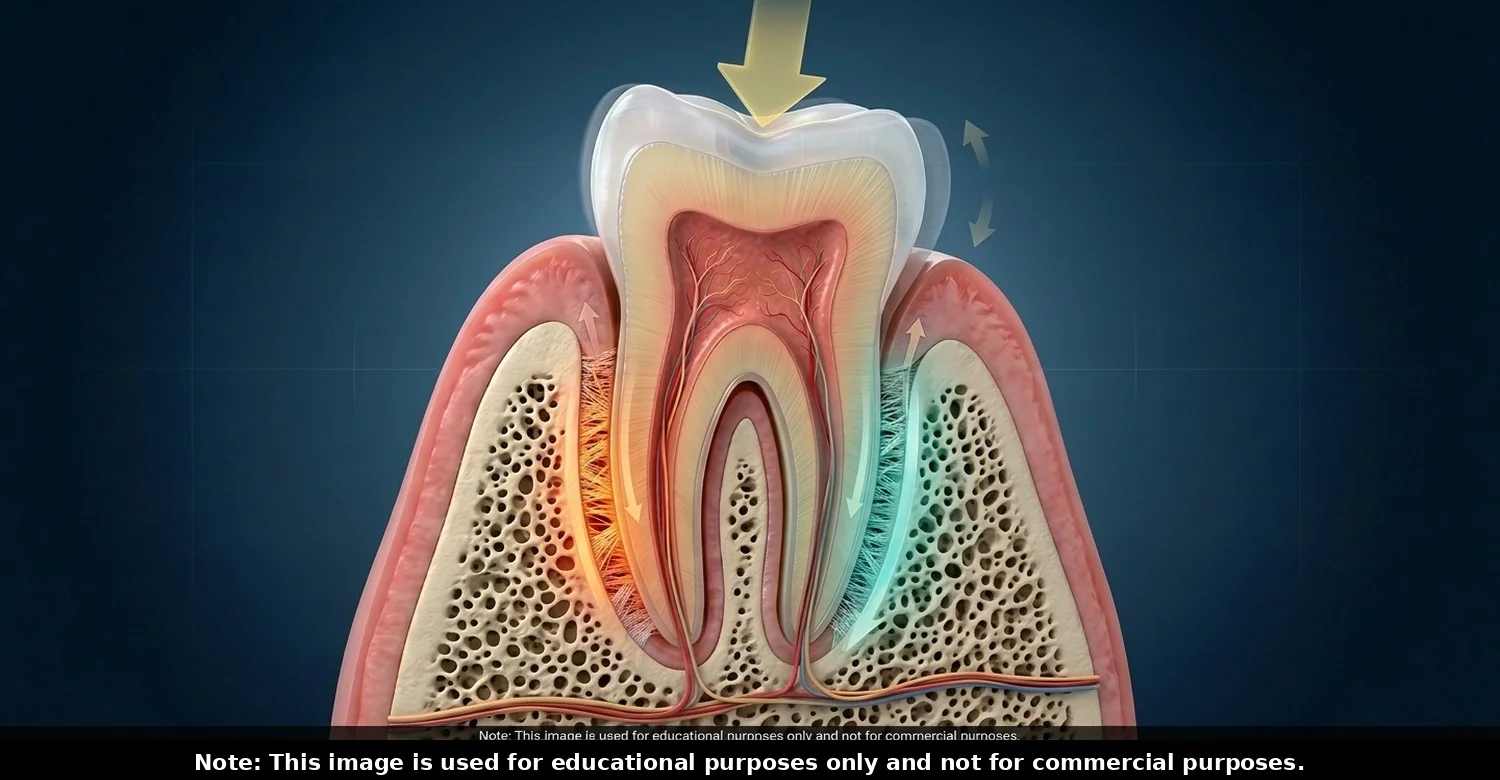
Each tooth is suspended in its socket by the periodontal ligament. This ligament is a thin layer of fibres, usually about 0.15 to 0.38 mm wide. It acts like a shock absorber when you chew. The surrounding alveolar bone constantly remodels in response to pressure and tension. Bone tends to form on the tension side and resorb on the pressure side. Orthodontists use this same biological principle to move teeth deliberately. Occlusal forces from chewing, swallowing and clenching therefore guide where teeth settle over time. Balanced forces support stability, while uneven forces can encourage drift.
What Is the Relationship Between Physiological Tooth Movement and Bite Alignment?
Bite alignment, or occlusion, depends on how teeth fit together when the jaws close. Because teeth move slightly, occlusion is a living relationship rather than a fixed one. Small changes are normally absorbed without symptoms. The ligament, bone and jaw muscles adapt together. Problems arise when movement outpaces adaptation, or when a new restoration ignores the existing bite. This is why physiological tooth movement and digital bite registration should always be considered together. A bite recorded today reflects the current position of teeth, not where they were years ago.
Ready to transform your smile?
Talk to our team and get a personal FREE treatment plan.
What Causes Natural Tooth Movement and Occlusal Changes?
Several factors drive tooth movement and bite changes. Some are normal parts of aging, while others signal a problem. The main influences include age-related changes, missing teeth, gum disease, grinding habits and dental treatment. Often, more than one factor acts at the same time. For example, a patient with mild gum disease who also clenches may notice faster changes. Identifying each factor matters because treatment depends on the cause. Simply adjusting the bite without understanding why it changed can make the situation worse.
Age-Related Changes in Tooth Position and Dental Arch Alignment
Dental arches change shape gradually with age. Arch length tends to decrease slightly, and lower front teeth often become more crowded. Contact points wear flat, allowing teeth to drift forward. Enamel wear can reduce tooth height, especially in people who grind. Facial growth also continues slowly into adulthood, affecting how the jaws relate. These changes are typically small and slow. However, over 20 or 30 years they can noticeably alter how teeth meet. Many adults first notice them as overlapping lower incisors or food trapping between teeth.
Tooth Migration Caused by Missing Teeth or Uneven Occlusal Contacts
A missing tooth leaves a space that neighbouring teeth tend to fill. Teeth behind the gap may tip forward into it. The opposing tooth may over-erupt because nothing stops it. These changes can create uneven contacts and food traps. According to the American College of Prosthodontists, about 178 million Americans are missing at least one tooth. Many never replace it, which increases the risk of drifting. Uneven contacts from a high filling or crown can also push teeth slightly. Replacing missing teeth promptly helps preserve the existing bite.
How Do Gum Disease and Periodontal Bone Loss Affect Tooth Stability?
Gum disease destroys the ligament and bone that hold teeth in place. As support decreases, normal chewing forces can move teeth more easily. CDC data suggest that about 42% of US adults aged 30 and over have periodontitis. Around 8% of them have severe forms. The World Health Organization estimates severe periodontal disease affects about 19% of adults worldwide. Teeth with reduced support may fan out, develop gaps or feel loose. These changes are not normal aging. They signal active or past disease that needs professional treatment and long-term maintenance.
How Can Bruxism, Clenching, and Chewing Forces Influence Tooth Position?
Bruxism means grinding or clenching the teeth, either while awake or asleep. A 2024 meta-analysis estimated global bruxism prevalence at about 22%. Sleep bruxism affected around 21% and awake bruxism around 23% of people studied. Clenching forces can be several times stronger than normal chewing forces. Over time, these forces cause wear, cracked enamel and sore muscles. They may also increase tooth mobility, especially where gum support is reduced. Heavy forces on a single tooth can encourage slight shifting. Managing bruxism protects both natural teeth and restorations.
How Can Orthodontic Treatment, Crowns, and Dental Implants Change Occlusion?
Dental treatment intentionally or unintentionally changes how teeth meet. Orthodontics moves teeth to new positions, and relapse can follow if retainers are not worn. Classic long-term studies found unsatisfactory lower incisor alignment in about 70% of cases ten years after treatment. Crowns and veneers alter tooth shape, contact points and bite height. Implants behave differently because they lack a periodontal ligament. They move only about 3 to 5 microns under load. Natural teeth, by comparison, move roughly 25 to 100 microns. Careful bite planning is therefore essential whenever restorations or implants are placed.
Which Risk Factors Increase the Likelihood of Unwanted Tooth Movement?
Some patients face a higher risk of unwanted movement than others. Common risk factors include:
• Untreated gum disease or a history of periodontitis.
• Missing teeth that have not been replaced.
• Heavy grinding or clenching habits.
• Previous orthodontic treatment without consistent retainer wear.
• Smoking, which can raise periodontitis risk two to three times.
• Poorly controlled diabetes, which affects gum health and healing.
• Tongue thrusting or persistent lip habits.
• High or poorly fitting restorations.
Recognising these factors early allows dentists to monitor changes more closely. It also helps patients take preventive steps before problems progress.
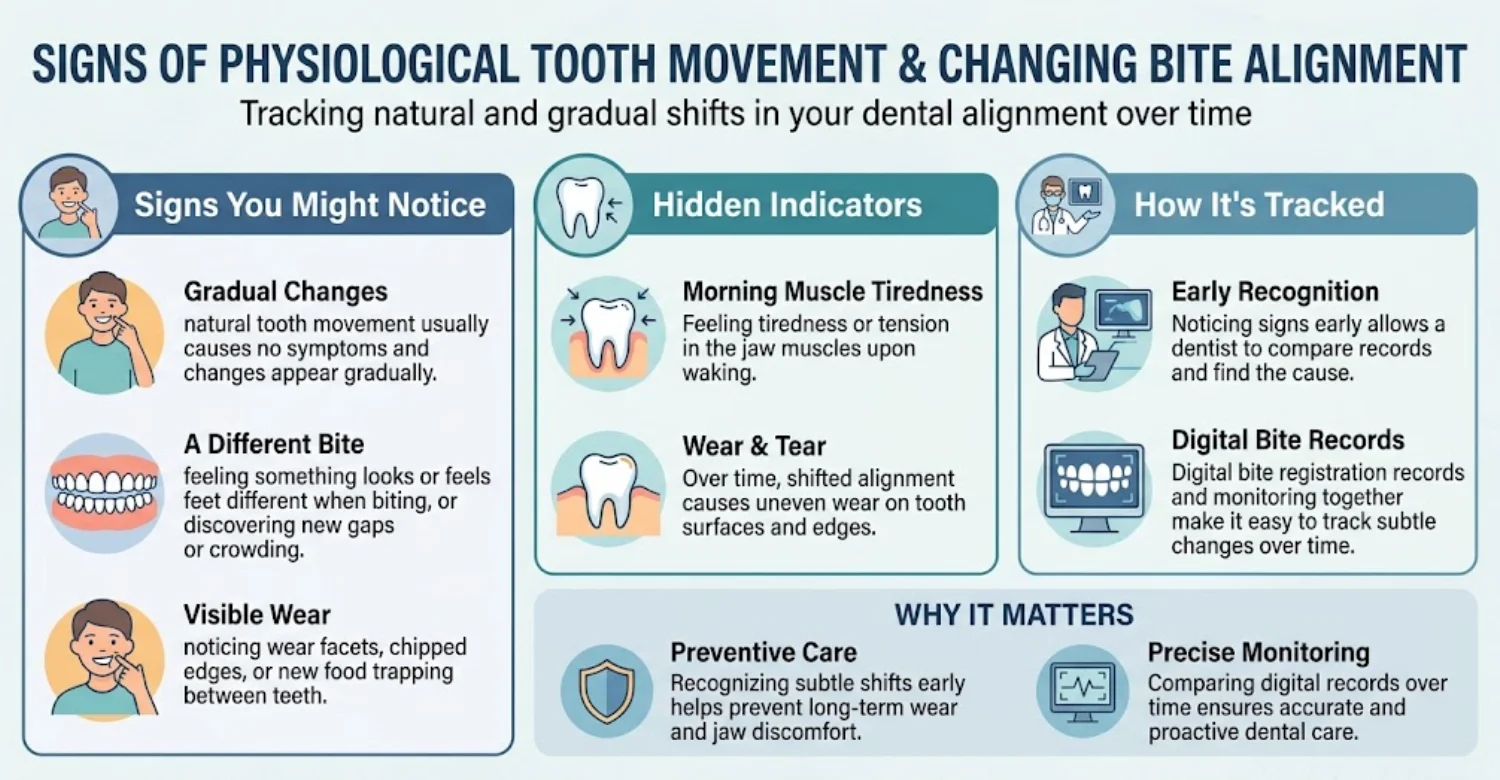
How Can Patients Recognize Changes in Their Bite?
Patients often describe the bite as feeling “off” or uneven. Teeth may meet on one side before the other. You may notice that floss snaps or shreds where it never did before. Food may start catching between specific teeth. Looking in a mirror, you might see a new gap or overlapping front teeth. Old photographs can reveal gradual changes that are not visible day to day. Keep a short note of when changes started and whether they are worsening. This information helps your dentist interpret examination and scan findings accurately.
Why Might Teeth Feel Different When Biting or Chewing?
Teeth contain sensitive receptors in the periodontal ligament. Studies show these receptors can detect differences as small as 10 to 20 microns. That is several times thinner than a human hair. Because of this sensitivity, even slight changes can feel significant. A new filling, a small chip or brief inflammation can alter the sensation. Sinus congestion can also make upper back teeth feel tender when biting. Muscle tension may change how the jaw closes, especially when you are tired or stressed. Not every new sensation means teeth have actually moved.
Can Tooth Movement Cause Gaps, Crowding, or Changes in Tooth Contacts?
Yes, tooth movement can cause all three. Forward drift and wear often produce crowding of the lower front teeth. Gum disease and lost support may cause gaps or flaring of the upper front teeth. A missing tooth can create spaces as neighbouring teeth tip. Contact points may open, leading to food impaction and gum irritation. Contact changes can also alter how the bite feels during chewing. A gap that develops quickly in an adult deserves examination. It may signal periodontal disease rather than simple natural movement.
When Does Tooth Mobility Suggest a Dental Problem Rather Than Normal Adaptation?
All healthy teeth move very slightly under pressure. Normal horizontal mobility is around 0.05 to 0.1 mm and is usually invisible. Mobility becomes a concern when a tooth moves visibly or feels loose to the tongue. Increasing mobility over weeks or months is another warning sign. Mobility combined with bleeding, swelling, pus or pain suggests infection or disease. Loosening after trauma also needs prompt assessment. Dentists usually grade mobility clinically on a scale from 0 to 3. Higher grades often indicate reduced support that needs treatment.
What Is Digital Bite Registration in Modern Dentistry?
Digital bite registration records how upper and lower teeth meet using digital technology. Instead of biting into wax or silicone alone, the patient bites while a scanner captures the relationship. Software then aligns three-dimensional models of both arches. The result is a virtual bite that dentists can rotate, measure and analyse. It supports crowns, veneers, implants, orthodontics and night guards. Physiological tooth movement and digital bite registration must be read together, because scans capture teeth under real biting forces.
How Does Digital Bite Registration Work?
The process usually takes only a few minutes. First, the dentist scans the upper and lower arches separately with an intraoral scanner. Next, the patient closes into their usual bite. The dentist then scans the cheek-side surfaces of the teeth on one or both sides. Software matches these buccal scans to the separate arch models. This creates a digital model showing the teeth in contact. Contact areas are displayed using colour maps. Red often indicates close contact, while blue indicates more distance between surfaces.
What Is the Difference Between Digital and Conventional Bite Registration?
Conventional registration uses materials such as wax, silicone or bite registration paste. The patient bites into the material, which sets and records the relationship. Models are then mounted on a physical articulator. Digital registration replaces these steps with scans and software. It avoids material distortion, storage problems and broken models. Digital records can be shared instantly with dental laboratories. Many patients also find scanning more comfortable than impression trays. However, both methods have limitations, and neither is perfect in every situation.
How Does Intraoral Scanning Capture the Relationship Between the Upper and Lower Teeth?
An intraoral scanner projects light onto the teeth and captures many images every second. Software stitches these images into a detailed 3D surface. For the bite, the scanner captures the outer surfaces of upper and lower teeth together. Software uses these overlapping areas to position both arches correctly. Research shows modern scanners typically achieve accuracy of about 20 to 50 microns in short spans. Accuracy decreases across full arches, where deviations can exceed 100 microns. Correct technique and scanning sequence strongly influence the final bite record.
What Is the Difference Between Static Occlusion and Dynamic Occlusion?
Static occlusion describes how teeth meet when the jaws are closed and still. It is often recorded in maximum intercuspation, where teeth fit together most fully. Dynamic occlusion describes contacts during jaw movement. This includes moving the jaw forward and from side to side. Most intraoral scans capture static occlusion only. Dynamic contacts often require clinical testing, articulating paper or specialised systems. Some newer systems combine scans with jaw-tracking data to simulate movement. Both static and dynamic contacts matter for comfortable, durable restorations.
How Do Digital Occlusal Registration Techniques Support Restorative and Orthodontic Treatment?
Digital bite records help laboratories design crowns, veneers and bridges that fit the existing bite. They guide implant crown height and contact strength. In orthodontics, they support treatment planning and clear aligner design. They also assist in making night guards and occlusal splints. Digital records allow dentists to compare the bite before and after treatment. Reviews suggest well-executed digital workflows can reduce chairside adjustment time for single crowns. Physiological tooth movement and digital bite registration remain linked throughout, since teeth may shift between scanning and fitting.
How Does Physiological Tooth Movement Affect Digital Bite Registration Accuracy?
Teeth are not rigid in their sockets. When a patient bites during a scan, teeth move slightly within the ligament. The scanner records them in this displaced position. Software, however, treats teeth as rigid objects. This mismatch can create apparent overlaps or exaggerated contacts on the virtual model. Studies comparing digital and conventional records often report differences in contact number and intensity. Understanding physiological tooth movement and digital bite registration explains why virtual contacts need clinical confirmation.
Why Can Teeth Displace Slightly Under Normal Biting Forces?
The periodontal ligament allows each natural tooth to move under load. Under light biting, teeth intrude into their sockets by roughly 20 to 30 microns. Under heavier clenching, displacement can be greater. The lower jaw itself also flexes slightly during firm biting and wide opening. Teeth with reduced gum support move even further. These tiny movements are normal and protective. However, they mean the scanned bite depends partly on how hard the patient bites. A relaxed, consistent closing pressure usually gives the most reliable record.
How Can Tooth Displacement Affect Virtual Occlusal Contacts and Digital Articulation?
When teeth displace during scanning, the software may show them overlapping. These overlaps are often called virtual penetrations. They can make contacts appear heavier or larger than they really are. Some studies report interocclusal discrepancies of roughly 50 to 150 microns in digital records. If a laboratory designs a crown on this record, it may be slightly too high or low. Many systems apply automatic corrections, but these vary between scanners. Clinical verification therefore remains important before a final restoration is fitted.
How Do Scan Quality, Bite Position, and Software Alignment Influence Digital Bite Accuracy?
Several technical factors shape bite accuracy. Missing data, saliva or moving soft tissue can reduce scan quality. Bite position matters, because a patient may close differently when nervous or tired. Scanning only one side may tilt the virtual bite slightly. Bilateral buccal scans usually provide better stability. Software alignment algorithms also differ between manufacturers. Studies show accuracy varies by scanner model, software version and operator experience. Calibrated equipment and trained clinicians reduce these errors substantially.
Can Digital Bite Registration Detect Every Occlusal Interference?
No technology detects every interference perfectly. Standard intraoral scans record static contacts, not full jaw movements. Interferences during side-to-side movement may therefore be missed. Very light contacts may not appear if the teeth are not fully closed. Conversely, displacement can create contacts that do not truly exist in the mouth. Computerised occlusal analysis systems measure timing and force, but they have their own limitations. Physiological tooth movement and digital bite registration are best viewed as complementary information, not a complete answer.
Why Should Digital Occlusion Assessment Be Combined With Clinical Examination?
A digital bite shows where teeth appear to touch. A clinical examination shows how the patient actually functions. The dentist can feel muscle tenderness, test jaw movement, assess mobility and check gum health. Articulating paper and shimstock foil confirm real contacts in the mouth. Patient symptoms add essential context to every finding. Combining both approaches reduces the risk of unnecessary adjustment. It also improves confidence that a restoration will feel natural. Technology supports clinical judgement, but it does not replace it.
Contact Location Versus Contact Intensity and Area
Digital maps show where contacts occur reasonably well. They are less reliable at showing how hard teeth press together. Colour intensity reflects the distance between surfaces, not actual force. A large red area might represent displacement rather than heavy loading. Articulating paper has similar limits, since mark size does not reliably indicate force. Computerised force sensors measure relative force and timing more directly. Dentists therefore interpret contact location, intensity and area cautiously, using several sources of information.
Limitations of Intraoral Scanners in Patients With Missing Teeth
Scanners rely on stable tooth surfaces to align upper and lower arches. When many teeth are missing, there are fewer reference points. Soft gum tissue can move and distort during scanning. Long gaps without teeth reduce full-arch accuracy. In patients with very few teeth, the bite may rotate or collapse on the virtual model. Additional aids, such as scan bodies, bite rims or conventional records, are often required. Fully edentulous cases usually need a dedicated workflow.
When May Conventional Bite Records or Additional Occlusal Tests Be Needed?
Conventional records remain useful in several situations. These include extensive missing teeth, unstable bites or full-mouth rehabilitation. They also help when the dentist plans to change the height of the bite. Patients with jaw-joint problems may need careful jaw relation records. Facebow transfers or jaw tracking can provide information that standard scans cannot. Articulating paper, shimstock and computerised analysis may confirm suspected interferences. The best approach often combines digital and conventional methods.
Ready to transform your smile?
Talk to our team and get a personal FREE treatment plan.
What We Notice Clinically
In everyday practice, bite complaints are common and varied. Some patients notice a high spot after new dental work. Others describe gradual changes over several years. Many arrive worried that their teeth are moving quickly. After examination, the cause is often simpler than expected. Physiological tooth movement and digital bite registration help us explain these findings clearly to patients. We always combine digital records with symptoms, history and a hands-on examination.
Common Patient Patterns in Changing Bite Alignment
Several patterns appear repeatedly in practice. Patients in their 30s and 40s often report crowding of the lower front teeth. People who had braces as teenagers may notice relapse after stopping retainers. Patients with gum disease frequently describe new gaps between upper front teeth. Those with new crowns sometimes report one tooth hitting first. Heavy grinders often show flattened edges and tired jaw muscles. Each pattern points towards different causes and different solutions.
Why a New Bite Sensation Does Not Always Mean Teeth Have Moved Significantly
A changed sensation is not proof of major movement. Inflamed ligaments around a tooth can make it feel high. Recent dental work, minor trauma or sinus pressure can produce similar feelings. Jaw muscles tighten with stress, changing how the jaw closes. Within days or weeks, many of these sensations settle without treatment. Comparing current scans with earlier records helps confirm whether real movement occurred. This prevents unnecessary adjustment of healthy teeth.
Distinguishing Tooth Migration, Restoration-Related High Contacts, and Jaw-Muscle Symptoms
These three problems can feel similar but have different causes. Tooth migration usually develops slowly and may show gaps or crowding. High restoration contacts typically appear soon after new dental work. They often cause tenderness on one specific tooth. Jaw-muscle symptoms include morning stiffness, tired cheeks, temple headaches or clicking. A 2021 meta-analysis found temporomandibular disorders affect roughly 31% of adults. Careful history and examination usually separate these causes. Treatment then targets the actual source of the problem.
Why Digital Contact Maps Must Be Interpreted Alongside Symptoms and Examination Findings
A contact map can look alarming without causing any problem. Many healthy, comfortable bites show uneven contacts on scans. Conversely, a patient may have symptoms despite a normal-looking map. Muscle pain, joint problems and gum disease do not appear on contact maps. Interpreting physiological tooth movement and digital bite registration together prevents overtreatment. We treat the patient, not the image. Every finding is checked against symptoms and clinical tests.
Clinical Note
Bite complaints deserve a methodical approach rather than quick adjustments. Our team reviews history, examines teeth and gums, and checks muscles and jaw joints. Digital scans and X-rays are added when they help answer a specific question. Findings are explained clearly, together with treatment options and their limitations. Patients are encouraged to ask questions before any irreversible step is taken.
Dr. Rifat Alsaman on Evaluating Tooth Movement and Bite Changes
Dr. Rifat Alsaman’s approach starts with understanding when the change began and what preceded it. Recent dental work, trauma, stress and gum symptoms all provide valuable clues. Mobility, periodontal pockets and wear patterns are assessed before any scan is interpreted. Digital contact maps are viewed as supporting evidence, not as a diagnosis. Where findings are uncertain, monitoring is often preferred over immediate adjustment. Irreversible changes to tooth surfaces are considered only when a clear cause is confirmed.
How Is Physiological Tooth Movement Diagnosed?
Diagnosis starts with a detailed conversation and a clinical examination. The dentist asks about symptoms, timing, dental history, habits and general health. Teeth, gums, bite and jaw function are then examined systematically. X-rays, scans and photographs are added when they are needed. Comparing records over time is especially useful. Physiological tooth movement and digital bite registration records provide measurable evidence of change. The goal is to separate normal adaptation from conditions that need treatment.
What Happens During a Dental Occlusion Examination?
An occlusion examination checks how teeth meet and how the jaw moves. The dentist observes opening, closing and side-to-side movements. They feel the jaw muscles and joints for tenderness or clicking. Contacts are checked using articulating paper and sometimes shimstock foil. The dentist looks for wear facets, fractures and mobile teeth. They also assess whether the jaw slides when the teeth first touch. The examination is painless and usually takes 15 to 30 minutes.
How Do Dentists Assess Tooth Mobility, Gum Health, and Bite Contacts?
Mobility is tested by gently pressing each tooth between two instruments. Gum health is assessed by measuring pocket depths with a fine probe. Healthy pockets usually measure 1 to 3 mm. Deeper pockets, bleeding or recession suggest periodontal disease. Bite contacts are marked with thin articulating paper, often 40 microns or less. Shimstock foil, about 8 to 12 microns thick, confirms whether teeth hold contact. Together, these tests show the condition of the supporting tissues and the bite.
How Are Intraoral Scans Used to Compare Changes in Tooth Position Over Time?
Intraoral scans create precise digital models that can be stored indefinitely. Software can superimpose two scans taken months or years apart. Colour maps then show where teeth or gums have changed. This helps detect drift, wear, gum recession or orthodontic relapse. Studies show superimposition can detect changes of around 0.1 mm in suitable conditions. Comparisons are most reliable when scans use similar technique and equipment. Serial scans are particularly helpful after orthodontic treatment.
When Are Dental X-Rays or CBCT Imaging Clinically Appropriate?
X-rays show bone levels, root shape, infection and hidden decay. Bitewing and periapical X-rays are commonly used for bite-related complaints. They help identify bone loss behind mobile or migrating teeth. CBCT provides three-dimensional images and is reserved for specific needs. Examples include implant planning, complex root problems or certain jaw-joint assessments. Dental X-ray doses are low, but every image should still be justified. Dentists follow the principle of keeping radiation as low as reasonably achievable.
How Do Digital Bite Analysis Systems Evaluate Occlusal Stability?
Some clinics use computerised occlusal analysis systems. The patient bites on a thin sensor that records contact timing and relative force. Software displays which teeth touch first and how force is distributed. This adds information that scans and paper alone cannot provide. These systems are useful for complex restorative cases and implant crowns. However, sensor thickness and repeated bites can affect readings. Results are always interpreted alongside clinical examination and patient symptoms.
Can Digital Bite Registration Identify the Cause of Jaw Pain or Uneven Biting?
Digital bite registration can show contact patterns but cannot diagnose jaw pain alone. Jaw pain often comes from muscles, joints, stress or habits. Uneven biting may relate to inflammation, a high restoration or tooth movement. A scan cannot show muscle tension, joint inflammation or nerve problems. Physiological tooth movement and digital bite registration provide useful context within a full assessment. Diagnosis requires history, examination and, sometimes, specialist referral.
Clinical Findings That Require Further Investigation
Some findings call for a more detailed assessment:
• Rapidly increasing tooth mobility.
• Deep periodontal pockets or bone loss on X-rays.
• New gaps forming over weeks or months.
• A sudden bite change without recent dental work.
• Persistent jaw locking, pain or limited opening.
• Numbness, unexplained swelling or ulcers that do not heal.
These signs may indicate disease that requires specialist care. Early investigation usually leads to simpler treatment.
Why Imaging and Digital Scans Cannot Replace a Comprehensive Dental Examination
Images show structures, but they do not show function or symptoms. A scan cannot test tooth sensitivity or muscle tenderness. X-rays may miss early gum inflammation. Clinical touch, observation and patient history fill these gaps. Technology increases precision, but interpretation depends on clinical experience. A comprehensive examination brings all findings together into one accurate diagnosis.
Note : All images used are for editorial and illustrative purposes only and may not originate from the original news provider or associated company.
What Treatment Options Can Help Manage Tooth Movement and Occlusal Changes?
Treatment depends on the cause, the severity and the patient’s goals. Many cases need only monitoring and preventive care. Others require orthodontics, restorations, periodontal therapy or night guards. Some benefit from carefully limited bite adjustment. Often, several treatments are combined in a planned sequence. Physiological tooth movement and digital bite registration records help plan and track each step. The guiding principle is to treat the cause first, then restore function.
When Is Monitoring Sufficient Without Active Treatment?
Monitoring is appropriate when changes are small, slow and symptom-free. Healthy gums, firm teeth and a comfortable bite support this approach. Mild crowding that does not affect cleaning or function may simply be observed. Dentists may compare scans or photographs at routine visits. If changes progress or symptoms appear, treatment can be reconsidered. Monitoring avoids unnecessary intervention while keeping the situation under review.
How Does Orthodontic Treatment Correct Unwanted Tooth Movement?
Orthodontics uses controlled, gentle forces to move teeth into better positions. Options include fixed braces and clear aligners such as Invisalign. Treatment can close gaps, relieve crowding and improve bite relationships. Adult orthodontics is increasingly common. The American Association of Orthodontists reports that roughly one in four orthodontic patients is an adult. Gum disease must be controlled before orthodontic treatment starts. Retainers are essential afterwards to maintain the results.
When Are Dental Restorations Needed to Correct Bite-Related Problems?
Restorations may be needed when teeth are worn, broken or missing. Crowns can rebuild worn teeth and restore proper contacts. Bridges or implants replace missing teeth and prevent further drifting. Onlays can protect cracked teeth from heavy forces. In severe wear, a full-mouth rehabilitation may be planned. Restorations should only be placed after gum disease and active habits are managed. Otherwise, new work may fail under the same forces.
How Is Periodontal Disease Treated When It Contributes to Tooth Migration?
Periodontal treatment starts with thorough cleaning above and below the gumline. This is often called scaling and root planing. Oral hygiene instruction and risk-factor control, such as quitting smoking, are essential. Deeper pockets may require surgical treatment. Mobile teeth can sometimes be splinted together for stability. After gum health improves, orthodontics may reposition migrated teeth. Long-term periodontal maintenance, usually every three to four months, keeps disease under control.
When Might Occlusal Adjustment Be Considered?
Occlusal adjustment means selectively reshaping tooth surfaces to improve contacts. It is irreversible because enamel does not grow back. Adjustment is mainly considered for new restorations that are clearly high. It may also help when a specific interference causes trauma to a tooth. Current evidence does not support routine adjustment to treat jaw pain. Dentists should confirm the problem clinically before removing any tooth structure. Conservative, minimal changes are always preferred.
How Can Night Guards Help Manage Bruxism-Related Tooth Wear?
A night guard is a custom appliance worn over the teeth during sleep. It protects enamel and restorations from grinding forces. It may also reduce morning muscle soreness for some patients. Hard acrylic guards are commonly used for heavy grinders. Digital scans allow precise fabrication without traditional impressions. A guard does not cure bruxism, but it limits the damage. Regular checks ensure the guard still fits and has not changed the bite.
How Is Digital Bite Registration Used in Crown, Veneer, and Dental Implant Planning?
For crowns, the bite record guides the height and contacts of the new tooth. For veneers, it ensures front teeth guide jaw movements comfortably. For implants, it helps design lighter contacts to protect the implant. Implant crowns are often designed with slightly reduced contacts compared with natural teeth. Physiological tooth movement and digital bite registration explain this difference, since implants lack ligament cushioning. Accurate records reduce chairside adjustments and help protect restorations.
Why Should Dentists Identify the Underlying Cause Before Changing Occlusal Contacts?
Changing contacts without knowing the cause can create new problems. If gum disease causes migration, grinding teeth smooth will not stop further movement. If muscle tension changes the bite, adjustments may become wrong once the muscles relax. Unnecessary reshaping can increase sensitivity and weaken teeth. Identifying the cause first keeps treatment logical and reversible where possible. It also protects healthy tooth structure for the long term.
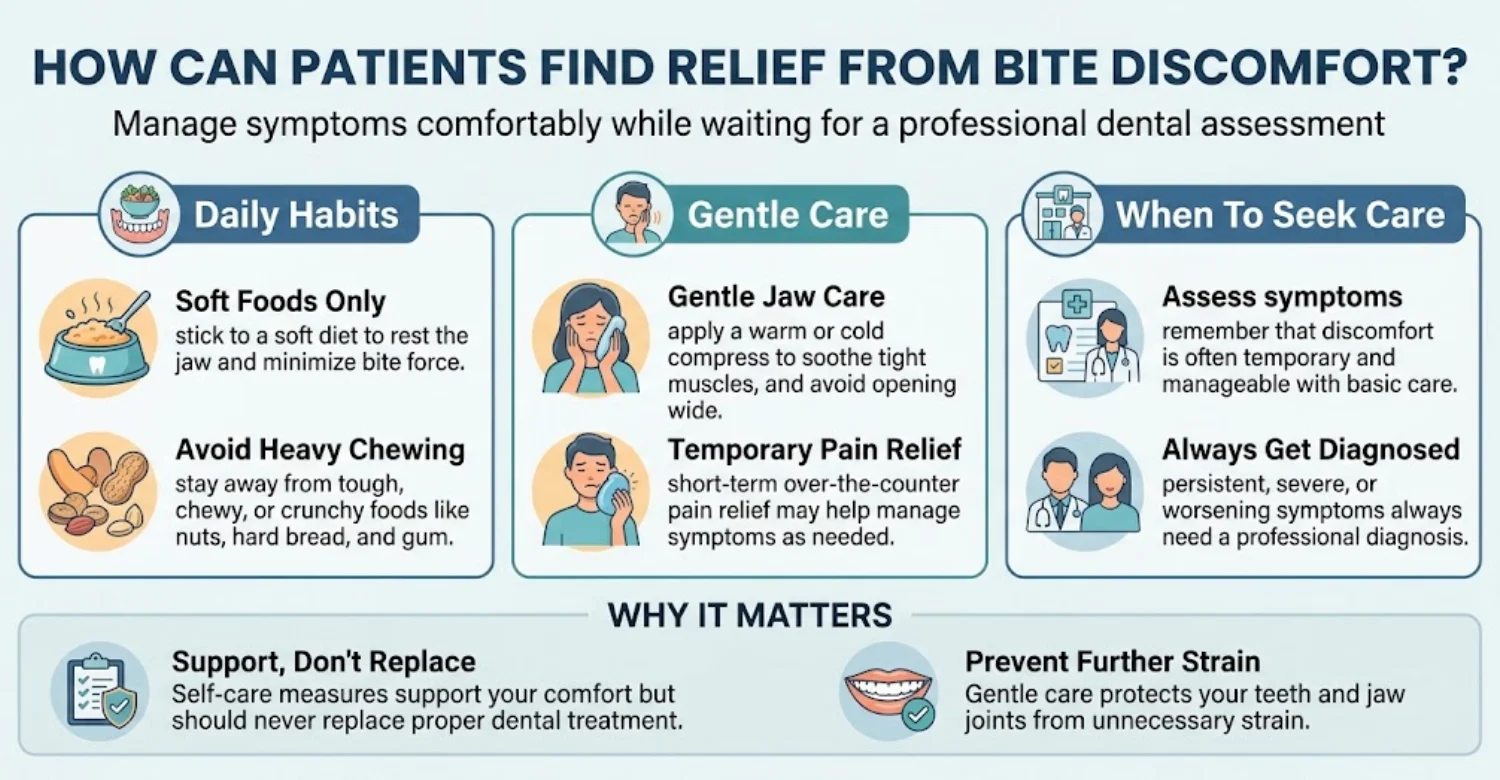
What Can Patients Safely Do When Their Bite Feels Different?
First, avoid testing the bite repeatedly by tapping or grinding. This habit can irritate the ligaments and worsen tenderness. Keep teeth apart when not chewing, with lips together and jaw relaxed. Note which tooth feels high and when symptoms occur. Maintain gentle but thorough brushing and flossing. If symptoms start after new dental work, contact your dentist promptly. Most high restorations can be checked quickly and simply.
Can Soft Foods and Temporary Chewing Modifications Help Reduce Discomfort?
Yes, short-term diet changes often help. Choose soft foods such as soups, yogurt, eggs, pasta and cooked vegetables. Cut food into small pieces and chew on the more comfortable side. Avoid hard, sticky or chewy foods like nuts, ice, toffee and tough meat. Limit chewing gum, as it overworks the jaw muscles. These measures give irritated teeth and muscles time to settle. Return to a normal diet gradually as symptoms improve.
Which Medical Tips Can Help Patients Manage Jaw-Muscle Discomfort?
Warm compresses on the jaw muscles for 10 to 15 minutes can ease tension. Gentle jaw stretching, guided by a professional, may also help. Stress management techniques reduce clenching in some people. Good sleep habits support muscle recovery. Avoid wide yawning and very chewy foods during flare-ups. Many jaw-muscle symptoms improve within weeks using conservative care. Persistent symptoms should be assessed for temporomandibular disorders.
Why Should Patients Avoid Self-Adjusting Teeth, Crowns, or Bite Surfaces?
Never file, grind or reshape teeth or crowns at home. Tooth enamel cannot regenerate, so any damage is permanent. Home adjustment can expose dentine, causing sensitivity and decay risk. It can also crack crowns or veneers. Household tools and over-the-counter kits are not designed for this purpose. Even small errors can make the bite worse. Bite adjustments must be performed by a dentist after proper diagnosis.
Are Pain Relievers Appropriate for Temporary Dental or Jaw Discomfort?
Over-the-counter pain relievers can help with short-term dental or jaw discomfort. Common options include paracetamol and ibuprofen. Ibuprofen also reduces inflammation, which may help tender ligaments. Always follow the dose on the package or your doctor’s advice. Pain relievers manage symptoms only, and they do not treat the cause. They should be used for a few days, not weeks. Seek a dental review if pain persists.
Medication Safety, Contraindications, and Potential Side Effects
Ibuprofen may not suit people with stomach ulcers, kidney disease or certain heart conditions. It can interact with blood thinners and some blood pressure medicines. Some people with asthma react to anti-inflammatory drugs. Paracetamol can harm the liver if maximum doses are exceeded. Avoid combining products that contain the same active ingredient. Pregnant patients should seek medical advice first. Always ask a pharmacist or doctor if you are unsure.
Why Persistent Pain Requires Diagnosis Rather Than Repeated Self-Medication
Repeated pain relief can hide a worsening problem. Infection, cracked teeth or active gum disease may progress silently. Long-term painkiller use also carries risks for the stomach, kidneys and liver. Pain lasting more than a few days deserves a dental assessment. Early diagnosis usually means simpler, less expensive treatment. Ignoring pain often leads to more complex procedures later.
What Are the Warning Signs That Require Urgent Dental Care?
Some symptoms need prompt or emergency attention. These include sudden bite changes after injury, rapidly loosening teeth and spreading swelling. Severe pain that keeps you awake also needs quick review. Fever with dental pain may indicate a spreading infection. Difficulty swallowing or breathing is a medical emergency. Knowing these signs helps patients seek the right level of care quickly.
Sudden Changes in Bite After Dental Trauma
A sudden bite change after a fall, accident or blow needs urgent assessment. Teeth may be displaced, fractured or partly knocked out of position. The jaw itself may also be fractured. Signs include pain on closing, numbness, bleeding or teeth that no longer meet. Prompt treatment improves the chances of saving displaced teeth. Seek dental or emergency care on the same day.
Increasing Tooth Mobility, Gum Swelling, or Persistent Pain
Teeth that become looser over days or weeks need prompt attention. Gum swelling, bleeding or pus suggests infection or active periodontal disease. Persistent pain may indicate a cracked tooth or a nerve problem. These issues rarely resolve without treatment. Early care can often save teeth that would otherwise be lost. Book a dental appointment within a few days.
Facial Swelling, Fever, or Difficulty Swallowing or Breathing
Facial swelling with fever may signal a spreading dental infection. Swelling under the jaw or around the eye is especially concerning. Difficulty swallowing, breathing or opening the mouth is a medical emergency. Go to the nearest emergency department immediately. Dental infections can occasionally spread to deeper spaces of the neck. Do not wait for a routine dental appointment.
What Are the Possible Complications of Untreated Abnormal Tooth Movement?
Untreated abnormal movement can affect function, appearance and long-term tooth survival. Teeth may drift further, gaps may widen and bites may collapse. Restorations can fail under uneven forces. Gum disease may progress, causing more mobility and eventual tooth loss. Physiological tooth movement and digital bite registration records help detect these changes early. Early intervention is usually simpler, cheaper and more predictable.
How Can Progressive Tooth Migration Affect Chewing and Bite Alignment?
Progressive migration changes how forces spread across the teeth. Fewer teeth may share the load, increasing stress on each one. Chewing efficiency can decrease, especially with gaps or tipped teeth. Food traps develop, increasing the risk of decay and gum inflammation. Front teeth may flare, changing appearance and lip support. Over time, the bite may collapse and reduce lower face height. These changes become harder to reverse the longer they continue.
Can Periodontal Bone Loss Contribute to Increasing Tooth Mobility?
Yes, bone loss is one of the main causes of increasing mobility. As bone support decreases, the same chewing forces produce more movement. This creates a cycle where mobility further stresses the remaining support. Periodontitis is a leading cause of tooth loss in adults. Long-term studies show maintained periodontal patients lose far fewer teeth than untreated ones. Consistent periodontal care can stabilize many mobile teeth for years.
How Can Uncorrected Occlusal Problems Affect Dental Restorations?
Restorations placed in an unstable or uneven bite face a higher risk of failure. Heavy contacts can chip porcelain or crack ceramic crowns. Implant components may loosen under excessive sideways forces. Veneers can debond if front teeth take too much load. Studies on implant crowns link occlusal overload with screw loosening and ceramic chipping. Correcting the bite before or during restoration helps protect your investment. Night guards may also be recommended for grinders.
Why Can Unnecessary Occlusal Adjustment Cause Additional Problems?
Removing enamel without a clear indication can cause lasting damage. Teeth may become sensitive, weaker or more prone to decay. Adjusting one contact often shifts the load onto others. Patients can become more aware of their bite, leading to repeated requests for changes. Systematic reviews have not shown that routine occlusal adjustment prevents or cures jaw disorders. Conservative, reversible treatments should generally come first. Any adjustment must be minimal and well justified.
When Should Patients Seek a Second Dental Opinion?
A second opinion is reasonable before extensive or irreversible treatment. This includes full-mouth crowns, major bite adjustments or multiple extractions. It also helps when symptoms persist after several adjustments. Patients may seek one if the diagnosis is unclear or explanations feel rushed. Bring existing X-rays, scans and treatment records to the appointment. A good dentist welcomes informed questions and second opinions.
Ready to transform your smile?
Talk to our team and get a personal FREE treatment plan.
How Can Patients Help Maintain Stable Tooth Position and Occlusion?
Patients play a central role in keeping their teeth stable. Good oral hygiene protects the gums and bone support. Regular dental visits allow early detection of changes. Managing grinding habits reduces destructive forces. Wearing retainers maintains orthodontic results. Physiological tooth movement and digital bite registration records provide a baseline for future comparison. Small daily habits make a meaningful long-term difference.
How Does Regular Dental Care Help Identify Changes in Tooth Position?
Routine check-ups allow dentists to spot small changes before patients notice them. They measure gum pockets, check mobility and assess the bite. X-rays taken at appropriate intervals reveal bone changes. Comparing records over time highlights gradual drift or wear. Most adults benefit from check-ups every six to twelve months. Higher-risk patients may need more frequent visits.
Why Are Periodontal Maintenance and Oral Hygiene Important for Tooth Stability?
Healthy gums and bones keep teeth firmly in place. Brushing twice daily with fluoride toothpaste removes plaque from tooth surfaces. Cleaning between teeth with floss or interdental brushes reaches areas that brushing misses. Patients with previous gum disease need regular professional maintenance. Studies show regular maintenance significantly reduces tooth loss in periodontal patients. Not smoking also improves gum health and treatment outcomes.
How Can Patients Reduce the Effects of Bruxism and Clenching?
Become aware of daytime clenching and gently relax the jaw. Keep teeth apart except when chewing or swallowing. Reduce caffeine and alcohol, especially in the evening. Practise stress-reduction techniques such as exercise or slow breathing. Wear a custom night guard if one is recommended. Discuss sleep problems, such as loud snoring, with your doctor. Some bruxism is linked to sleep-disordered breathing.
When Should Retainers Be Reviewed After Orthodontic Treatment?
Retainers should be checked at every routine dental visit. Removable retainers wear, crack or warp over time. Fixed retainers can debond without the patient noticing. A loose wire may allow teeth to shift quickly. Many orthodontists now recommend retainer wear indefinitely, often only at night. Replace removable retainers when they no longer fit snugly. Report any tightness or new gaps promptly.
How Can Follow-Up Scans Help Monitor Restorations and Bite Changes?
Follow-up scans can be compared with earlier records to track change. They show wear on crowns, veneers and natural teeth. They help detect subtle orthodontic relapse or periodontal drift. For implant patients, they help monitor neighbouring teeth and contact points. Physiological tooth movement and digital bite registration records make these comparisons more objective. Scans are quick and do not involve radiation.
How Much Does Digital Bite Registration Cost in the US, UK, and Turkey?
The cost of digital bite registration varies by country, clinic, technology, and treatment requirements. Basic intraoral scans are often included in restorative or orthodontic packages. Computerised occlusal analysis may incur an additional fee because it requires specialised equipment and clinical interpretation. The following 2026 estimates are planning guides, not guaranteed prices or verified national averages. Your final cost depends on the diagnostic services you need and whether they are bundled with treatment.
What Is the Average Cost of Digital Bite Registration in the United States?
In the United States, a standalone intraoral scan may cost approximately 150–350. Computerised occlusal analysis can add 200–500, depending on the equipment and assessment required. A comprehensive occlusal examination may cost 150–400. These services may be included in crown, implant, or clear-aligner treatment fees. Insurance coverage for standalone digital bite analysis varies by plan.
Estimated US costs in 2026
Service | Estimated price range | Midpoint estimate |
Standalone intraoral scan | 150–350 | $250 |
Computerised occlusal analysis | 200–500 | $350 |
Occlusal examination or consultation | 150–400 | $275 |
CBCT scan, when indicated | 200–600 | $400 |
What Is the Average Cost of Digital Bite Registration in the United Kingdom?
In UK private practice, a standalone intraoral scan may cost approximately $75–$200. Computerised bite analysis can cost more, especially when a specialist uses T-Scan technology. One London clinic lists its Mini T-Scan analysis at $290 and its Full T-Scan analysis at $490. Consultation fees depend on the clinician and the complexity of the assessment. NHS care generally does not provide standalone digital bite analysis as a routine service.
Estimated UK costs in 2026
Service | Estimated price range | Midpoint estimate |
Standalone intraoral scan | $75–$200 | $138 |
Computerised occlusal analysis | $150–$490 | $320 |
Occlusal examination or consultation | $150–$300 | $225 |
CBCT scan, when indicated | $150–$350 | $250 |
What Is the Average Cost of Digital Bite Registration in Turkey?
In Turkey, digital scanning may be included in crown, veneer, implant, or orthodontic treatment packages. When charged separately, the price depends on the clinic, scanner, and purpose of the examination. The ranges below are indicative estimates rather than a standard national tariff. For context, a Turkish clinic's published 2026 fee schedule lists an intraoral digital scan at ₺2,750, including VAT, and an occlusal control examination at ₺5,280, including VAT. These are listed fees from a clinic, not guaranteed prices at every practice.
Estimated Turkey costs in 2026
Service | Indicative price range | Midpoint estimate |
Standalone intraoral scan | $30–$100 | $65 |
Computerised occlusal analysis | $80–$200 | $140 |
Occlusal examination or consultation | Free–$75 | Not a reliable average |
CBCT scan, when indicated | $50–$120 | $85 |
Turkey is an established health-tourism destination. Official figures report that 1,398,580 people visited the country for healthcare in 2025. This covers healthcare tourism broadly and is not a count of dental patients alone.
Average Cost Comparison for Digital Bite Registration and Occlusal Assessment
The table below brings the estimated costs together for easier comparison. Because the currencies differ, prices should be compared within each service category and converted using current exchange rates when needed.
Service | United States | United Kingdom | Turkey |
Intraoral scan or digital bite record | 150–350 | $75–$200 | $30–$100* |
Computerised occlusal analysis | 200–500 | $150–$490** | $80–$200* |
Occlusal examination or consultation | 150–400 | $150–$300 | Free–$75* |
CBCT scan, when clinically indicated | 200–600 | $150–$350 | $50–$120* |
Scan included in restorative treatment | Often included | Often included | Often included |
Indicative estimates to confirm with the provider.
*Includes a wider range of analysis options; one London clinic lists Mini T-Scan at $290 and Full T-Scan at $490.
Patients may find lower quoted prices in Turkey, but a reliable percentage-saving claim requires comparable services, equivalent clinical scope, and current quotations from all three countries. A low standalone scan fee is not directly comparable with a package that includes consultations, radiographs, analysis, and follow-up.
Standalone Digital Bite Records Versus Registration Included in Restorative Treatment
A standalone digital bite record is charged separately for diagnosis, monitoring, or a second opinion. Registration included in restorative treatment forms part of a broader treatment plan, such as crown, implant, or aligner planning.
Billing arrangement | Typical pricing approach | What to confirm |
Standalone digital bite record | Separate scanning fee | Whether interpretation is included |
Digital scan within crown treatment | Often included in the crown fee | Whether bite verification and adjustments are included |
Digital scan within implant treatment | Often included in the treatment package | Whether implant-position records and additional diagnostics cost extra |
Scan for unexplained bite symptoms | May be charged separately | Whether an occlusal examination or dynamic analysis is also required |
Follow-up or repeat scan | Included in some packages; additional fee in others | Number of included reviews and repeat records |
Always confirm what the quotation covers before booking. A scan alone does not necessarily include an explanation of the findings or a full occlusal assessment.
Factors That Influence Digital Bite Registration Costs
The final fee depends on the technology used, the complexity of the bite, and the clinician's time. Computerised analysis and jaw tracking may add cost beyond a basic digital record.
Cost factor | How it can affect the fee |
Scanner type and software | Advanced systems or specialist software may increase costs |
Computerised dynamic analysis | Adds sensors, recording, and interpretation |
Clinician expertise | Specialist assessment may cost more than a routine scan |
Number of teeth or restorations | More extensive treatment may require additional records |
Complexity of the bite | Unusual contacts or changes in bite height may require more planning |
Additional diagnostics | X-rays, CBCT, photographs, or jaw-function tests can increase the total |
Repeat appointments | Monitoring or new records may be billed separately |
Physiological tooth movement and digital bite registration assessment can become more involved when the clinician needs to evaluate changing tooth contacts, multiple restorations, or a complex bite. Not every patient requires advanced analysis.
How Intraoral Scanning, Computerised Occlusal Analysis, and Additional Diagnostics Affect the Total Price
A basic intraoral scan records the shape and position of teeth. Computerised occlusal analysis evaluates contact timing and relative force during biting or jaw movement. Additional imaging may be recommended when the examination identifies a clinical reason for it.
Diagnostic service | Indicative cost | When it may be considered |
Intraoral digital scan | US: 150–350; UK: $75–$200; Turkey: $30–$100* | Recording tooth surfaces and bite relationships |
Computerised occlusal analysis | US: 200–500; UK: $150–$490; Turkey: $80–$200* | Assessing contact timing and relative force |
CBCT scan | US: 200–600; UK: $150–$350; Turkey: $50–$120* | When three-dimensional imaging is clinically justified |
Additional dental X-rays | Varies by clinic and image type | When needed to assess teeth, roots, or supporting structures |
Clinical photographs | May be included or charged separately | Treatment documentation and planning |
Indicative estimates; confirm whether each service is included in the proposed treatment fee. US and UK CBCT benchmarks vary with field of view and reporting requirements.
Combining appropriate diagnostics may give the clinician a clearer picture of the bite. However, more tests do not automatically mean better care. Each additional investigation should have a clinical purpose.
Are Consultation, Dental X-Rays, Digital Scans, and Follow-Up Appointments Charged Separately?
Clinics use different pricing models. Some itemise every diagnostic service, while others provide a combined assessment fee or include scanning in a treatment package.
Item | Possible billing arrangement | Question to ask |
Initial consultation | Separate fee or package inclusion | Does the fee include a written treatment plan? |
Dental X-rays | Separate charge or included when required | How many images are included? |
Digital bite registration | Separate fee or bundled | Is the scan fee inclusive of analysis? |
Computerised occlusal analysis | Usually a separate or specialist service fee | Which system is used, and what will the results show? |
Follow-up appointment | Included or charged separately | How many review visits are covered? |
Night guard review or adjustment | May be billed separately | Are checks and adjustments included in the appliance fee? |
Request a written breakdown before treatment begins. Confirm whether follow-up appointments and any required adjustments are included.
Why Published Prices Are Estimates Rather Than Individual Treatment Quotes
Published prices provide a general guide, but they cannot account for every clinical requirement. Your actual fee may depend on the findings, the number of records needed, the technology used, and whether the assessment is part of a larger treatment.
Pricing consideration | Why it matters |
Clinical findings | Determines which assessments are appropriate |
Treatment scope | A single crown may require less planning than full-mouth rehabilitation |
Technology and software | Can affect the service fee |
Clinic location and policy | Fees differ between providers and regions |
Exchange rates | Affect the final converted price for international patients |
Package inclusions | A lower initial price may exclude necessary services |
Follow-up requirements | Repeat records and reviews may add costs |
A personalised written estimate is the most reliable way to understand the expected cost of physiological tooth movement and digital bite registration assessment.
What Factors Influence the Cost of Digital Bite Registration?
Digital bite registration costs depend on the equipment, the diagnostic purpose, the complexity of treatment, and the amount of clinical interpretation required. A simple record for one crown may involve fewer steps than a full-mouth rehabilitation. Understanding these differences helps patients compare quotations more accurately.
Assessment type | Relative cost tendency | Reason |
Basic digital bite record | Lower | Primarily captures the static relationship between teeth |
Scan for a single restoration | Lower to moderate | Usually focused on a limited treatment area |
Computerised dynamic analysis | Moderate to higher | Requires specialised sensors and interpretation |
Full-mouth bite planning | Higher | May require multiple records and extensive planning |
Complex restorative or occlusal assessment | Higher | May involve specialist input and additional diagnostics |
These are relative cost tendencies, not fixed price categories. The same service can be priced differently across clinics.
Does the Cost Depend on the Type of Intraoral Scanner?
Yes. Scanner prices and related software costs vary by brand, features, and configuration. These are clinic equipment costs, not the amount a patient should automatically be charged for a scan.
Scanner-related expense | Approximate practice cost |
New intraoral scanner | 10,000–50,000 |
Mid-range scanner | Often around 15,000–25,000 |
Software subscriptions or service plans | Varies by system and contract |
Computer, cart, or accessories | May be charged separately to the clinic |
Published 2026 scanner guides place new intraoral scanners across a broad price range, with many mid-range systems costing approximately 15,000–25,000. These prices are for dental practices purchasing equipment, not patient fees.
A more expensive scanner does not automatically guarantee better clinical outcomes. Results also depend on correct technique, scan quality, software workflow, and clinician experience.
Is Computerised Dynamic Occlusal Analysis More Expensive Than a Basic Digital Bite Record?
Generally, yes. Dynamic analysis requires specialised sensors and software to assess the timing and relative force of tooth contacts. A basic digital record captures the static bite relationship but does not provide the same dynamic measurements.
Service | Typical pricing indication | Main difference |
Basic digital bite record | US: 150–350; UK: $75–$200; Turkey: $30–$100* | Records tooth surfaces and bite relationships |
Computerised dynamic analysis | US: 200–500; UK: $150–$490; Turkey: $80–$200* | Adds measurement of contact timing and relative force |
Indicative cost ranges; the exact fee depends on the provider and the scope of analysis. A London clinic's published Mini and Full T-Scan fees are $290 and $490, respectively.
Dynamic analysis is not necessary for every patient. The clinician should explain why it is appropriate for your symptoms or treatment plan.
How Do Treatment Complexity and the Number of Restorations Affect Pricing?
The number of restorations and the complexity of the bite can increase planning time. A single crown may need a straightforward record, while full-mouth rehabilitation may require multiple records and verification stages.
Treatment scenario | Likely planning needs | Cost implication |
Single crown | Localised scan and bite verification | Usually lower |
Several crowns or veneers | More extensive records and contact checks | May increase the fee |
Implant-supported restoration | Accurate records of the restoration and bite | May involve extra diagnostic steps |
Full-mouth rehabilitation | Broader records, planning, and verification | Often higher |
Complex bite or suspected occlusal disorder | Detailed assessment and possible specialist review | Depends on additional diagnostics |
These categories describe relative complexity, not guaranteed fees. Physiological tooth movement and digital bite registration planning should be tailored to the patient's actual findings.
Can Digital Bite Registration Reduce the Need for Repeated Adjustments?
Accurate digital records can help clinicians plan restorations and evaluate tooth contacts. This may reduce some avoidable adjustments, but it cannot guarantee that no adjustments will be needed. The final result still depends on the scan, the restoration, the laboratory workflow, and clinical verification.
Workflow | Potential benefit | Important limitation |
Digital bite registration | Documents the bite for planning | Incorrect or incomplete records can still occur |
Computerised occlusal analysis | Provides additional contact-timing and force information | Not required in every case |
Clinical bite verification | Checks how the restoration functions in the mouth | May identify a need for adjustments |
Follow-up assessment | Helps monitor comfort and function | May involve additional fees if not included |
Before treatment, ask whether bite verification and any necessary adjustments are included in the quoted restoration fee.
What Should Patients Ask Before Paying for Digital Occlusal Assessment?
Patients should understand the purpose, scope, and expected cost of the assessment before proceeding.
Question to ask | Why it matters |
What problem is this assessment intended to investigate? | Clarifies the clinical purpose |
Is a basic scan sufficient, or is dynamic analysis needed? | Helps avoid unnecessary services |
Which technology will be used? | Explains what the assessment can measure |
Does the fee include interpretation and a report? | Clarifies what is delivered |
Are X-rays or CBCT included if clinically necessary? | Identifies possible additional costs |
Are follow-up comparisons included? | Helps estimate the total cost |
How could the findings change my treatment plan? | Connects the test to a clinical decision |
A useful assessment should have a clear purpose and produce information the clinician can apply to your care.
Requesting an Itemised Estimate for Scanning, Analysis, and Treatment
An itemised estimate separates the costs of each proposed service. It helps patients understand what they are paying for and compare clinics fairly.
Estimate item | What the quote should clarify |
Consultation | Examination and treatment-planning inclusions |
Intraoral scan | Whether the digital record is charged separately |
Computerised analysis | Type of system and interpretation included |
Dental imaging | Which X-rays or scans are necessary and their fees |
Proposed treatment | Separate price for each restoration or appliance |
Follow-up care | Number of reviews and included adjustments |
Additional charges | Any potential fees not included in the package |
Request the estimate in writing before treatment starts. If you are travelling internationally, confirm the currency and whether any quoted package includes services beyond the clinical assessment.
Comparing Prices Based on the Same Diagnostic and Treatment Services
A fair comparison requires matching the services included in each quotation. One clinic may include the scan, consultation, and follow-up visits, while another may charge for each separately.
Comparison point | What to check |
Scan type | Are both clinics providing the same kind of record? |
Occlusal analysis | Is dynamic analysis included or charged separately? |
Imaging | Are the same clinically indicated images included? |
Clinician expertise | Who performs and interprets the assessment? |
Treatment materials and laboratory work | Are the same types and quality levels specified? |
Follow-up care | Are review visits and adjustments included? |
Written pricing | Are exclusions and potential additional charges listed? |
The lowest initial fee is not necessarily the best value. Compare the complete diagnostic and treatment scope, verify the clinician's qualifications, and choose an assessment that is appropriate for your clinical needs.






How Vitrin Clinic Approaches Digital Bite Registration and Occlusal Assessment
At Vitrin Clinic, we use digital tools to support clinical decisions, not replace them. Every assessment begins with listening to the patient’s concerns. We examine teeth, gums, mobility and jaw function carefully. Digital scans are added when they improve planning or monitoring. Physiological tooth movement and digital bite registration findings are always interpreted together. Our aim is accurate diagnosis and conservative, well-planned treatment.
How Digital Records Can Support Personalized Restorative Treatment Planning
Digital records allow us to view the bite from every angle. We can measure space, assess contacts and plan restoration shape. Digital models also support smile design and mock-ups. Patients can preview proposed changes before treatment begins. Records are shared efficiently with our dental laboratory. This helps create restorations designed around each patient’s individual bite.
Assessing Tooth Position, Existing Restorations, and Occlusal Contacts Before Treatment
Before treatment, we review how the teeth currently fit together. We check existing crowns, fillings and veneers for wear or defects. Contact points and bite patterns are recorded. Mobility and gum health are assessed for every relevant tooth. Physiological tooth movement and digital bite registration baselines help us measure future changes. This careful start reduces surprises later in treatment.
When Intraoral Scanning May Be Useful for Crown and Veneer Planning
Intraoral scanning is useful when planning crowns and veneers. It captures precise tooth shapes and bite relationships. Designers can adjust thickness, length and contacts digitally. Scans also reduce the need for traditional impression materials. For veneers, they help confirm front-tooth guidance during jaw movement. Clinical try-ins then confirm fit, comfort and appearance.
How Digital Records Can Support Dental Implant Restoration Planning
Implant planning often combines CBCT images with intraoral scans. This helps position implants safely relative to bone and nerves. The bite record guides crown height and contact design. Implant crowns usually receive lighter contacts than natural teeth. Differences in physiological tooth movement and digital bite registration between teeth and implants guide this design. Careful planning helps protect implants from overload.
Why Treatment Recommendations Depend on Clinical Findings Rather Than Scan Images Alone
Scan images are valuable but incomplete. They cannot show gum inflammation, muscle tenderness or joint function. They may also exaggerate contacts because of tooth displacement. Recommendations therefore depend on examination, history and diagnostics together. Physiological tooth movement and digital bite registration data support treatment decisions but never decide them alone. Patients receive explanations based on all findings.
Understanding Individual Treatment Costs After Clinical Assessment
Treatment costs become clear after a full clinical assessment. We provide a written plan showing each recommended procedure. Optional treatments are separated from essential ones. Patients can ask questions before making any decision. Transparent pricing helps international patients plan travel and budgets. No treatment begins without the patient’s informed consent.
How Vitrin Clinic Supports Your Treatment Journey
Our support covers every step from first contact to aftercare. We review your concerns, examine carefully and plan treatment around your needs. International patients receive coordinated scheduling and guidance. Follow-up support continues after you return home. Physiological tooth movement and digital bite registration records help us monitor results over time.
Initial Consultation and Review of the Patient’s Dental Concerns
Your journey begins with a consultation. We discuss your symptoms, dental history, medical history and goals. International patients can share photos, X-rays and previous records online. This helps us prepare before your visit. We explain which assessments may be needed and why.
Clinical Examination of Teeth, Gums, Tooth Mobility, and Bite Alignment
The examination covers teeth, gums, mobility and bite. We check for decay, wear, cracks and problems with existing restorations. Gum pockets are measured to assess periodontal health. Bite contacts and jaw movements are evaluated. Muscles and jaw joints are examined for tenderness or clicking.
Digital Scanning and Additional Diagnostics When Clinically Appropriate
Digital scans are taken when they support diagnosis or planning. X-rays are used to assess bone levels and hidden problems. CBCT is reserved for implant planning and complex cases. Physiological tooth movement and digital bite registration records are added when bite analysis is needed. Every diagnostic step has a clear clinical purpose.
Personalized Treatment Planning Based on Oral Health and Functional Needs
Each plan addresses oral health first, then function and appearance. Gum disease and decay are treated before cosmetic work. Bite problems are planned carefully before crowns or veneers. Options are explained with their benefits, limitations and costs. Patients then choose the approach that suits their needs.
Treatment Coordination for International Patients
International patients receive help with scheduling and treatment sequencing. Our team can advise on appointment timing and length of stay. Treatment is planned to allow adequate healing between stages. Clear communication is maintained before, during and after travel. Records are provided for your home dentist.
Follow-Up Guidance and Monitoring After Restorative or Orthodontic Treatment
Aftercare instructions are provided for every treatment. Patients learn how to clean restorations and care for retainers or night guards. Follow-up checks confirm comfort and bite stability. International patients can share photos for remote review. Physiological tooth movement and digital bite registration records support long-term monitoring.
Relevant to Vitrin Clinic Treatment
The following treatments relate closely to tooth movement and bite alignment.
Dental Implants and Implant-Supported Restorations
Dental implants replace missing teeth and help prevent neighbouring teeth from drifting. Implant crowns are designed with carefully planned bite contacts. Digital planning supports safe placement and accurate restoration.
Dental Crowns and Zirconia Crowns
Crowns restore damaged or worn teeth. Zirconia crowns offer high strength for back teeth and heavy bites. Accurate bite records help crowns feel natural from the first day.
Dental Veneers
Veneers improve the shape, colour and alignment of front teeth. Bite assessment ensures veneers can handle jaw movements safely. Careful planning reduces chipping and debonding risk.
Orthodontic Treatment and Invisalign
Braces and clear aligners correct crowding, gaps and bite problems. Invisalign uses digital scans for planning and aligner fabrication. Retainers maintain the results after treatment.
Gum Disease Treatment and Periodontal Care
Periodontal treatment controls infection and protects bone support. Healthy gums are essential for stable tooth position. Regular maintenance reduces the risk of future tooth migration.
Related Articles on Bruxism, Tooth Mobility, Bite Alignment, and Digital Dentistry
Explore our related guides on bruxism, loose teeth, bite problems and digital dentistry. These articles explain causes, symptoms and treatment options in more detail.
Ready to transform your smile?
Talk to our team and get a personal FREE treatment plan.
Key Takeaways about Physiological Tooth Movement and Digital Bite Registration
Teeth move slightly throughout life, and bites change gradually. Most changes are normal, but some signal disease. Digital bite registration offers valuable detail about contacts. Physiological tooth movement and digital bite registration must be interpreted together with clinical findings. Personalised assessment guides safe, appropriate treatment.
What Patients Should Know About Natural Tooth Movement and Bite Alignment
Natural tooth movement is slow and usually painless. Lower front crowding often increases with age. Rapid gaps, loosening or bite changes are not normal ageing. Gum disease, missing teeth and grinding accelerate movement. Early assessment usually leads to simpler treatment.
Why Digital Bite Registration Can Help Assess Occlusal Contacts
Digital registration records the bite quickly and comfortably. It shows contact locations in three dimensions. Records can be stored, shared and compared over time. It supports crowns, veneers, implants, orthodontics and night guards. Physiological tooth movement and digital bite registration records together provide a useful baseline.
Why Digital Measurements Must Be Interpreted With Clinical Findings
Teeth displace slightly when patients bite during scanning. This can exaggerate contacts on virtual models. Scans do not show muscle, joint or gum conditions. Clinical tests confirm what digital maps suggest. Combined assessment reduces unnecessary treatment.
Which Symptoms Require Professional Dental Evaluation?
Seek evaluation for loose teeth, new gaps or sudden bite changes. Persistent pain, gum swelling or bleeding also need review. Jaw locking, limited opening or frequent headaches deserve assessment. Facial swelling with fever needs urgent care. Do not rely on self-medication for ongoing symptoms.
How Personalized Assessment Helps Determine the Appropriate Treatment
Every bite is unique. Personalised assessment identifies the true cause of changes. Treatment can then target that cause directly. Physiological tooth movement and digital bite registration findings help tailor each plan. This approach protects healthy teeth and improves long-term results.
.jpg)
.jpg)
.jpg)
.jpg)
At Vitrin Clinic
At Vitrin Clinic, choosing dental crowns starts with understanding your teeth and what they need. Our team checks your tooth structure, gum health, bite, and overall oral condition before recommending a suitable crown. We’ll explain your options, including materials, appearance, and treatment steps, so you know what to expect. From your first consultation to the final fitting, our focus is on a natural-looking result that works comfortably with your bite. Contact Vitrin Clinic today to book your consultation and find the right dental crown for your smile.
Reference
FAQs
Dr. Rifat Alsaman has more than 5 years of clinical experience in dentistry and currently serves as the Head of the Medical Team at Vitrin Clinic. He is dedicated to providing exceptional patient care, overseeing treatment planning, and ensuring the highest clinical standards across the team. His expertise, attention to detail, and commitment to continuous professional development have helped countless patients achieve healthier, more confident smiles.


