Dental Crowns
November 14, 2026
Dental Crown Replacement Turkey: Cost, Options & Treatment Guide
 Dr. Rifat Alsaman

Dental crown replacement Turkey is a common search for patients whose old crowns have become loose, chipped, discoloured, or uncomfortable. Replacing a crown is not just a matter of choosing a new material. The dentist must first check the tooth underneath, the gums, and your bite. The key decision factors are the condition of the tooth, the crown material, how complex the treatment is, the price, and the clinic's expertise. This guide explains what international patients should compare before they travel.
Key Takeaways
Dental crown replacement removes a failed or outdated crown, treats the tooth beneath, and fits a new custom crown to restore protection, function, and appearance.
Options include zirconia, E.max, porcelain-fused-to-metal, and same-day CAD/CAM crowns, chosen by tooth position, bite forces, and remaining tooth structure.
Recovery is usually quick. Mild sensitivity or gum tenderness may last a few days, and normal eating resumes after the final crown is fitted.
Dental crown replacement Turkey prices are often a fraction of UK, US, or German private fees, depending on material, crown count, and extra treatment.
Prices from £200 per tooth
Full mouth restoration from £1,600
Timescale
5 to 7 days
Hotel + transfers available
Airport-Hotel-Clinic coordination included
When Should You Consider Dental Crown Replacement?
When patients research dental crown replacement Turkey, the first question is usually whether their crown truly needs replacing. Some crowns fail clearly, while others show subtle warning signs. The sections below explain the symptoms to watch for, the most common causes of failure, and why an old crown is not automatically a failed crown.
Signs That Your Existing Crown May Need Replacement
Persistent Sensitivity or Discomfort: Pain or sensitivity when chewing or consuming hot and cold foods may indicate an underlying issue.
Loose or Moving Crown: A crown that shifts or feels unstable may have lost its proper fit or cement seal.
Visible Cracks or Chips: Fractures or damaged edges can compromise the crown's strength and protection.
Dark Margins: Dark lines near the gumline may indicate exposed underlying tooth structure or changes around the crown.
Food Trapping: Food frequently getting stuck around or beneath the crown may suggest poor fit or open margins.
Gum Irritation or Bleeding: Redness, swelling, or bleeding around the crown may indicate irritation or an underlying gum problem.
Common Reasons for Replacing Old Dental Crowns
Decay Beneath the Crown: Tooth decay may develop around the margins, particularly where plaque accumulates.
Poor Marginal Fit or Cement Failure: Gaps or weakened cement can allow bacteria and fluids to leak beneath the crown.
Gum Recession: Receding gums may expose crown edges or previously covered tooth structure.
Bruxism and Heavy Bite Forces: Teeth grinding and excessive biting pressure can chip, crack, or fracture ceramic crowns.
Does Every Old Dental Crown Need Replacement?
No. Age alone does not decide whether a crown should be replaced. A well-fitting crown with healthy margins and gums can remain in service for many years. Minor issues may only need monitoring, polishing, a small repair, or recementing. Full replacement is more appropriate when there is decay underneath, a fracture, an open margin, or a poor fit that cannot be corrected. If your crown has only come loose, read how to fix a loose dental crown.
Ready to transform your smile?
Talk to our team and get a FREE treatment plan.
Dental Crown Repair vs Replacement: Which Option Is Better?
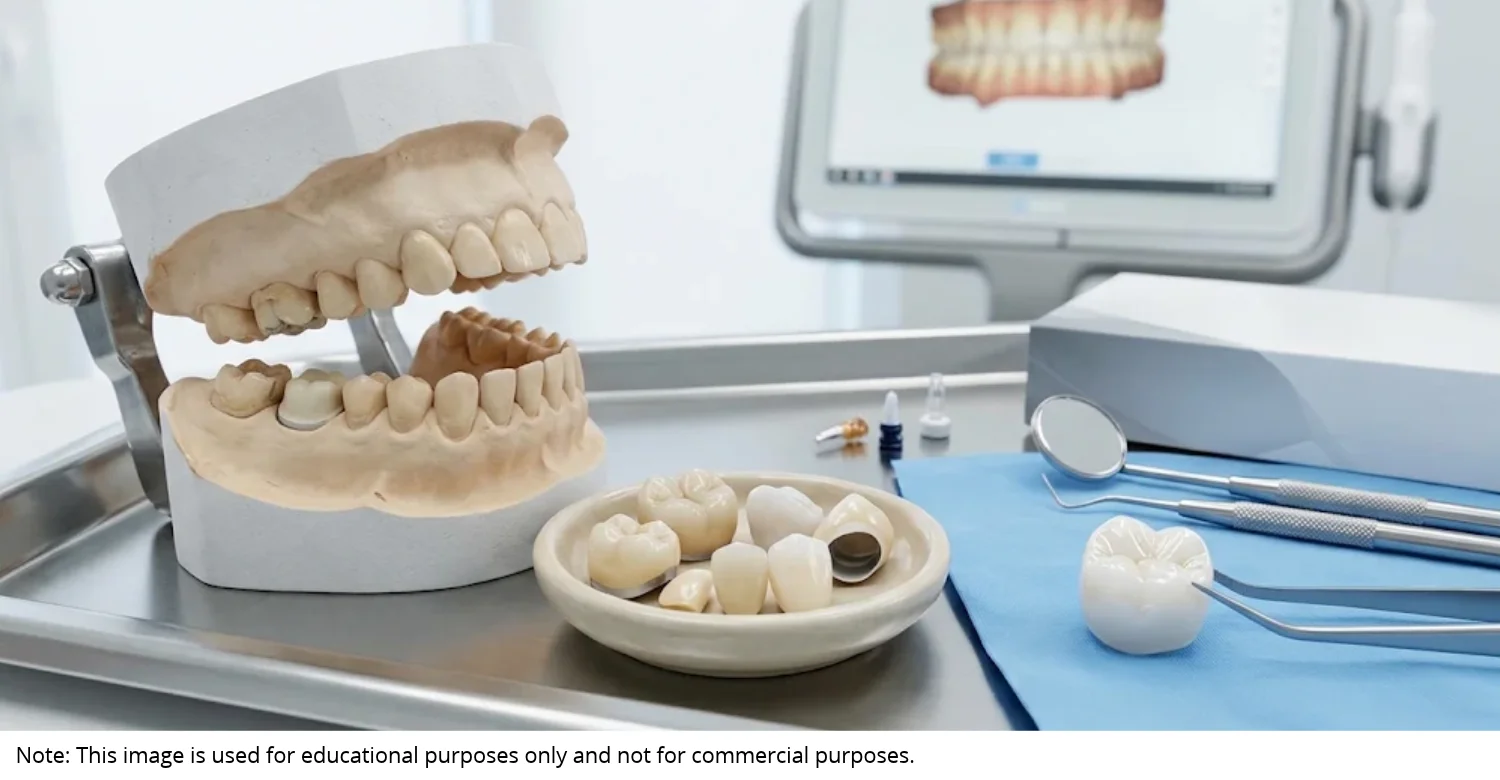
Not every damaged crown needs a new one. Repair treats a limited problem while keeping the existing crown. Recementing may be possible when an intact crown comes off and the tooth beneath is sound. Small ceramic chips can sometimes be repaired with bonded composite, although this is often a short-term solution. Decay, fractures, or defective margins usually require a new crown. Dental crown replacement Turkey planning should always start with this decision. Compare the dental crown repair cost in Turkey.
Treatment option | When it may be suitable |
Crown repair | Minor surface damage |
Recementing | An intact crown that has become detached |
Full replacement | Extensive damage, decay, or poor fit |
How Dentists Evaluate an Existing Crown Before Replacement
A new crown only lasts if the problem beneath it is solved. That is why every dental crown replacement Turkey plan starts with evaluation, before any decision about material or price. Dentists assess the crown itself, the natural tooth, the gums, and the bite, using imaging where it is clinically justified.
Examining the Existing Crown and Its Margins
The dentist checks whether the crown is stable and structurally intact. Margins, where the crown meets the tooth, are examined with a fine probe for gaps, ledges, or overhangs. Contact points with neighbouring teeth are tested, because open contacts trap food. Signs of leakage, such as staining or decay at the margin, and chips or cracks in the ceramic help decide between repair and replacement. Learn what to do about a cracked dental crown.
Assessing the Natural Tooth Beneath the Crown
The tooth under the crown determines the long-term outcome. The dentist estimates how much healthy structure remains to support a new crown. Hidden decay or cracks are often found only after the old crown is removed. A previously root-treated tooth may need a new post or core. Sometimes additional treatment, such as a build-up, root canal treatment, or retreatment, is required first. Find out whether a dental crown can get a cavity.
Evaluating Gum Health and Bite Alignment
Healthy gums are essential for a lasting crown. The dentist checks for gum recession, bleeding, and periodontal pockets around the restoration. The bite is also assessed, including how teeth meet when chewing and moving sideways. Signs of teeth grinding, such as worn surfaces or fractured restorations, influence both material selection and crown design. Learn how to shrink periodontal pockets.
When Are Dental X-rays or 3D Imaging Necessary?
X-rays reveal what cannot be seen clinically. Periapical and bitewing radiographs show decay at crown margins, bone levels, and infection around the root tip. Three-dimensional CBCT imaging is reserved for specific indications, such as complex root anatomy or suspected lesions. Imaging should follow clinical needs, at the lowest effective radiation dose.
What Are the Best Options for Replacing Old Dental Crowns?
There is no single best material for every patient. Each option for dental crown replacement Turkey has strengths and limitations. The right choice depends on the tooth's position, the remaining structure, the bite, and your aesthetic goals.
Zirconia Crown Replacement
Zirconia is a very strong ceramic, making it well suited to molars and premolars that take heavy chewing forces. Monolithic zirconia resists fracture and suits many patients who grind. Modern multilayer and high-translucency zirconia offers better aesthetics than older versions. Crown thickness, design, and careful polishing matter, because rough zirconia surfaces can wear opposing teeth. Read our full guide to zirconia crowns.
E.max Crown Replacement
E.max is lithium disilicate glass-ceramic, valued for its translucency and natural appearance. It is a popular choice for front and other visible teeth. It is usually bonded to the tooth, which needs good isolation and enough healthy enamel or dentine. E.max is less strong than zirconia. It may be unsuitable where little tooth remains or where biting forces are very heavy.
Porcelain-Fused-to-Metal Crown Replacement
Porcelain-fused-to-metal crowns combine a metal substructure with a porcelain exterior. They have a long clinical track record and work well functionally, especially on back teeth. However, the metal blocks light, so these crowns can look less natural. If the gum recedes, a dark line may appear at the gumline. Many patients replace old metal-based crowns for this reason. Learn more about metal dental crowns.
Same-Day CEREC Crown Replacement
CEREC is a chairside CAD/CAM system. The tooth is scanned digitally, the crown is designed on a computer, and a ceramic block is milled in the clinic. This can allow single-visit treatment. Same-day replacement may not be suitable when the tooth needs root canal treatment, major rebuilding, or gum healing, or when several complex restorations need careful laboratory work.
How to Choose the Right Replacement Crown Material
In dental crown replacement Turkey planning, material choice should follow clinical needs. Tooth location matters: back teeth need strength, while front teeth need natural translucency. The amount of remaining tooth structure affects whether a crown can be bonded. Gumline appearance favours metal-free options. Bite alignment and bruxism may favour zirconia. Expectations and budget should also be discussed openly.
Dental Crown Replacement Procedure: What Happens During Treatment?
The dental crown replacement Turkey procedure follows clear steps. Most patients find it similar to having their first crown, with extra care taken to remove the old restoration safely and treat the tooth beneath it.
Step 1 - Examination and Personalised Treatment Planning
The dentist examines the old crown and the tooth beneath it, using X-rays where indicated. Together, you confirm whether replacement is truly needed or whether repair is enough. The restorative material is then selected according to tooth position, bite, and aesthetics.
Step 2 - Removing the Existing Dental Crown
Local anaesthesia is used where appropriate, so the procedure is usually comfortable. Most old crowns cannot be lifted off intact. The dentist cuts a groove through the crown with a fine bur and gently separates it from the tooth. This sectioning protects the underlying tooth from unnecessary force. Removed crowns generally cannot be reused.
Step 3 - Treating and Preparing the Underlying Tooth
Once the crown is removed, any decay or damaged tissue is cleaned away. If much tooth structure is lost, the dentist rebuilds it with a core material. When the nerve is affected, root canal treatment may be needed before the new crown. The tooth is then reshaped to create the space and form needed for the chosen crown material. Understand the difference between a cavity vs root canal.
Step 4 - Digital Scanning and Crown Fabrication
The dentist records the tooth's dimensions and your bite relationships. This is done with an intraoral digital scanner or traditional impressions. The data is sent to a dental laboratory, or used for chairside CAD/CAM milling. The crown is designed to match your neighbouring teeth. Compare digital scans with a traditional dental impression for a crown.
Step 5 - Temporary Crown Placement
While the final crown is being made, a temporary crown protects the prepared tooth. It reduces sensitivity, keeps the gums healthy, and maintains chewing function and appearance. It is weaker than the final crown, so it needs gentle care. See how a temporary dental crown is made.
Step 6 - Final Crown Fitting and Bite Adjustment
The temporary crown is removed and the new crown is tried in. The dentist checks the margins, fit, and contacts. Colour and shape are evaluated with you before final placement. The bite is carefully adjusted so the crown does not hit first when you close or chew. The crown is then cemented or bonded permanently.
Clinical Note
Dr. Rifat Alsaman - Head of the Medical Team at Vitrin Clinic
Before any dental crown replacement Turkey patients undergo, we evaluate the natural tooth first. We assess the remaining tooth structure and the condition of previous restorations. We check gum health and the bite. We also confirm whether decay treatment, root canal treatment, or periodontal care is needed. The material is then chosen according to clinical needs, tooth location, and bite forces. Above all, we prioritise preserving natural tooth structure wherever possible.
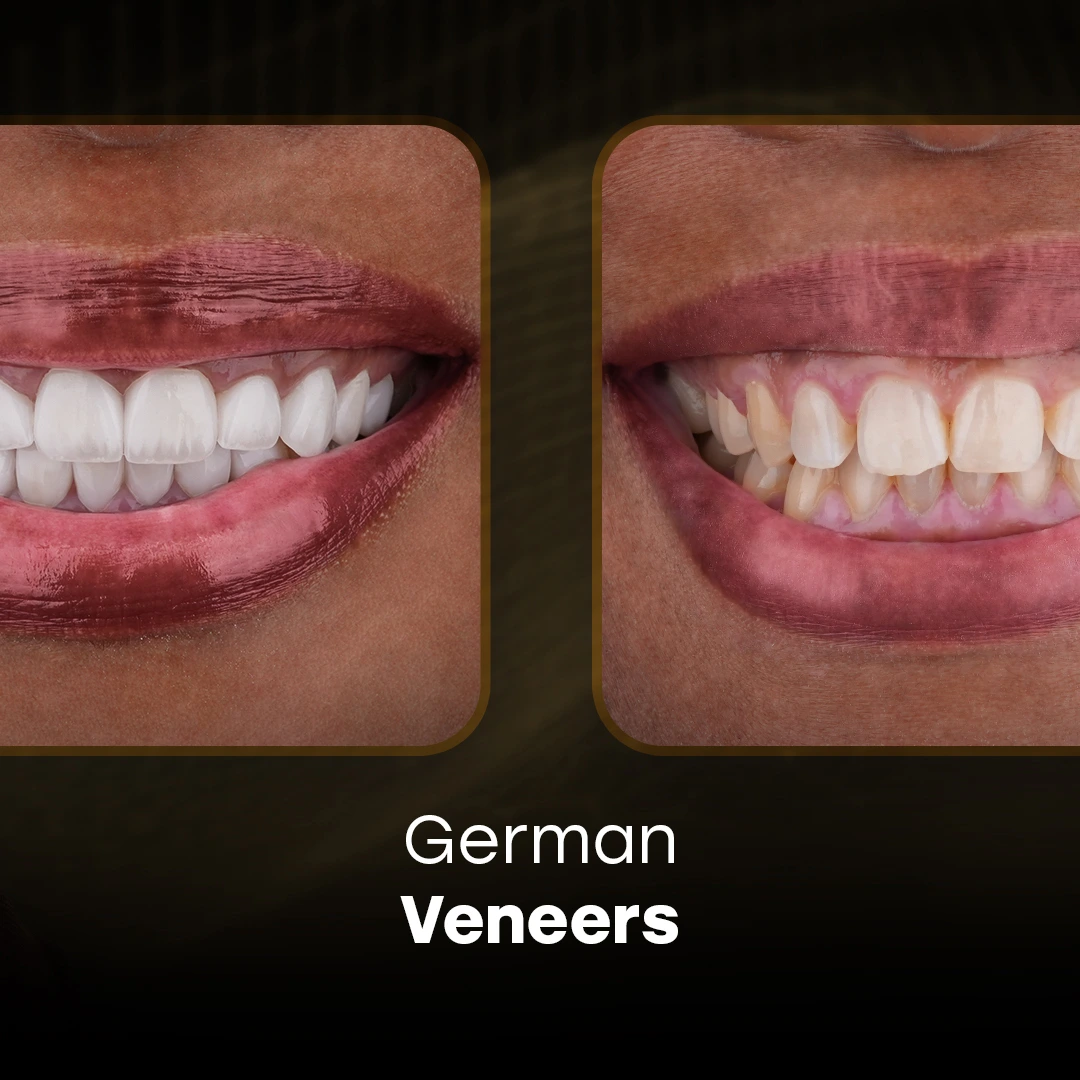
Results by Vitrin Clinic
.jpg)
.jpg)
.jpg)
.jpg)
Ready to transform your smile?
Talk to our team and get a FREE treatment plan.
Dental Crown Replacement Turkey Cost vs UK, USA and Europe
Cost is a major reason patients consider dental crown replacement Turkey. However, comparing prices only makes sense when you compare the same material, the same work, and the same included services.
How Much Does Dental Crown Replacement Cost in (Vitrin Clinic) Turkey?
Dental crown replacement Turkey prices vary by material and clinic. The table shows typical market ranges reported in 2026. Additional treatment, such as a core build-up or root canal treatment, is quoted separately. A final price is confirmed only after examination. See how much it costs to replace a dental crown.
(Vitrin Clinic), Turkey
Zirconia = approx. $150–$400
E. max = approx. $250–$500
Porcelain-fused-to-metal (PFM) =
Same-day CEREC = Quoted individually after assessment
Dental Crown Cost: (Vitrin Clinic),Turkey vs UK, USA and Europe
What Factors Affect the Final Replacement Cost?
Several factors influence the final dental crown replacement Turkey cost:
Crown material: Zirconia, porcelain, and E.max crowns have different costs.
Number of crowns: Replacing multiple crowns increases the overall treatment cost.
Removal complexity: Removing an existing zirconia crown or a crown attached to a post may require additional time and care.
Tooth condition: Additional reconstruction or build-up may be necessary if the underlying tooth is damaged.
Additional treatments: Root canal treatment or periodontal care may increase the total cost.
Diagnostic and laboratory work: Imaging, digital scans, and custom crown fabrication can also affect the final price.
What Is Included in a Dental Crown Replacement Package in Turkey?
Dental crown replacement Turkey packages vary between clinics. Before booking, check whether the following are included:
Initial consultation: Clinical examination and assessment of the existing crowns.
Diagnostic imaging: X-rays or other imaging when clinically indicated.
Crown removal: Removal of the existing restoration, where included.
Temporary crowns: Temporary restorations while the permanent crowns are being prepared.
Permanent crowns: Fabrication and placement of the new crowns.
Additional procedures: Tooth build-ups, root canal treatment, or periodontal care, which may be charged separately.
Travel arrangements: Hotel accommodation and airport transfers, only when explicitly confirmed by the clinic in writing.
Ready to transform your smile?
Talk to our team and get a FREE treatment plan.

How Long Does Dental Crown Replacement Take in Turkey?
Dental crown replacement Turkey treatment time depends on the crown type, the number of teeth, and the health of the tooth beneath the old crown.
How Many Appointments Are Needed?
Traditional Laboratory-Made Crowns: Usually require at least two main appointments:
First Visit: Removal of the old crown, tooth preparation, and digital or physical impressions.
Second Visit: Fitting, adjusting, and cementing the new crown.
Additional Try-In Visits: May be needed when replacing multiple crowns or completing aesthetic restorations to check fit, bite, and appearance before final cementation.
Same-Day CEREC Crowns: Can often be designed, milled, and fitted in a single visit.
Complex Cases: Additional appointments may be necessary if root canal treatment, gum therapy, or further tooth reconstruction is required.
How Many Days Should International Patients Stay in Istanbul?
Many patients begin with a preliminary online assessment using photographs and X-rays. Then comes the in-person examination and treatment in Istanbul. For laboratory-made crowns, a dental crown replacement Turkey stay of around five to seven days is commonly planned, covering fabrication and final fitting. Same-day crowns may need less time, while complex cases may need extra days. Flying home soon? Find out whether you can fly after a dental crown.
What Can Delay Crown Replacement?
Delays usually come from problems discovered beneath the old crown. Extensive decay may require rebuilding the tooth first. Root canal treatment or retreatment adds appointments. Active gum disease should be treated before final impressions. Complex bite adjustments, especially across several crowns, may also extend the schedule.
Recovery and Aftercare Following Dental Crown Replacement
Recovery after dental crown replacement Turkey treatment is usually straightforward. Good aftercare protects both the new crown and the natural tooth beneath it.
Is Sensitivity Normal After Replacing a Crown?
Yes, mild temporary sensitivity to hot or cold is common. The gums may feel tender for a few days, particularly around the margins. These symptoms usually settle gradually. Persistent pain, throbbing, swelling, or pain when biting should be assessed. These may signal a high bite or nerve irritation. Learn what causes tooth sensitivity after a crown.
Eating After Crown Replacement
Avoid chewing until the local anaesthetic wears off to prevent biting your cheek or tongue. With a provisional crown, avoid sticky foods such as toffee and chewing gum, and very hard foods such as nuts or ice. Return to normal eating according to your dentist's advice after the final crown is fitted. Find out whether you can drink alcohol after a dental crown.
How to Maintain Your New Dental Crown
Brush twice daily with fluoride toothpaste, paying attention to where the crown meets the gum. Clean between teeth daily with floss or interdental brushes. Attend routine dental examinations and professional cleaning. If you grind or clench your teeth, a night guard may help protect your new restoration. Read our tips on how to take care of crowned teeth.
How Long Does a Replacement Dental Crown Last?
Many well-made crowns last ten years or more, but no specific lifespan can be guaranteed. Longevity depends on the material and the accuracy of the crown's fit. Oral hygiene is critical, because new decay at the margins is a common cause of failure. Bite forces, grinding, and regular check-ups also matter. Read more about dental crown lifespan.
What We Notice Clinically About Dental Crown Replacement
A new crown cannot compensate for an unhealthy underlying tooth. Decay, cracks, or infection must be treated first.
Replacing a crown without identifying why the original failed often leads to repeated problems.
Gum recession may expose crown margins even when the restoration itself remains intact.
A stronger material does not automatically mean a better clinical choice. Aesthetics, bonding, and tooth structure also matter.
Bite adjustment and bruxism management are important for protecting replacement restorations.
Sometimes preserving the natural tooth requires additional treatment, such as root canal therapy, before a new crown is fitted.
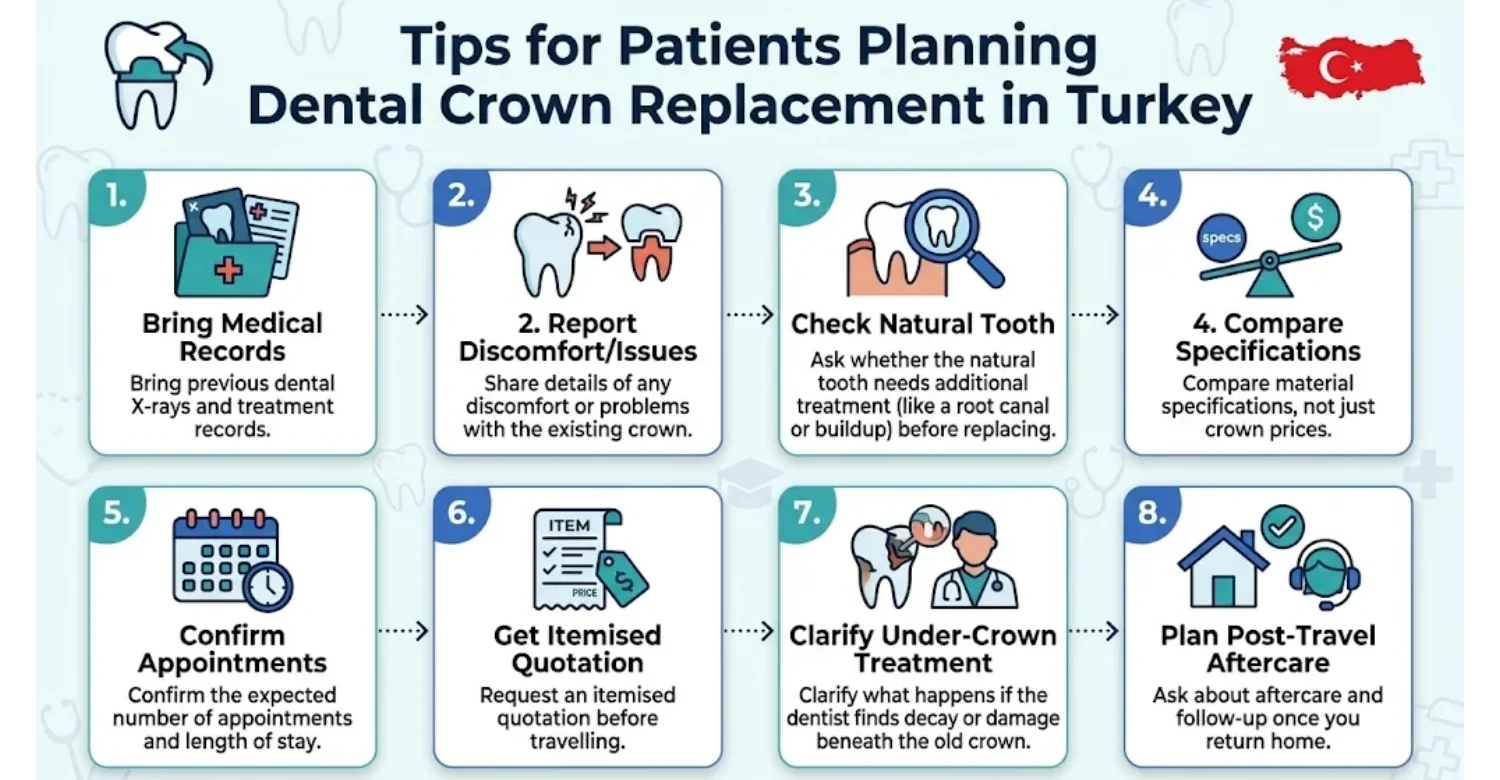
How to Choose the Right Dental Clinic for Crown Replacement in Turkey
Choosing a clinic for dental crown replacement Turkey requires more than comparing prices. The questions below help you assess clinical quality, transparency, and support.
Dentist Experience and Clinical Responsibility
Ask who will evaluate your existing crown and who makes the restorative decisions. Confirm that a qualified dentist examines your teeth, not only a coordinator. Ask who supervises the treatment from start to finish. Clear clinical responsibility matters, especially if unexpected problems appear once the old crown is removed.
Crown Materials and Laboratory Standards
Ask for the material specifications and manufacturers used for your crowns. Ask how the laboratory controls quality and how crowns are customized for colour, shape, and fit. A well-made crown should seal accurately at the margins and match your neighbouring teeth.
Digital Dentistry and Diagnostic Technology
Digital scanning can improve comfort and accuracy compared with some traditional impressions. Appropriate dental imaging helps detect problems before and during treatment. CAD/CAM systems, where available, can shorten fabrication time.
Transparent Pricing and Treatment Planning
Request a written, itemised dental crown replacement Turkey quotation before you travel. It should identify the crown material, the number of crowns, and any additional procedures that may be needed. Ask what happens to the price if decay or damage is found beneath the old crown.
Patient Reviews and Before-and-After Cases
Look for crown replacement cases relevant to your situation, not only general smile makeovers. Read patient feedback about communication, comfort, and aftercare. Reviews across independent platforms give a broader picture than testimonials on a single website.
Aftercare and International Patient Support
Ask for written post-treatment instructions before you leave. Confirm what follow-up arrangements exist and how the clinic communicates after you return home. Ask what happens if a crown needs adjustment or develops a problem later. For gum irritation at home, see swollen gums around a crown.
Why Choose Turkey for Dental Crown Replacement?
Many patients choose dental crown replacement Turkey because of potential cost differences compared with the UK, USA, and Europe. Turkish clinics offer access to modern crown materials and restorative techniques, and many are experienced in treating international patients. Istanbul is also well connected by direct flights from many countries. However, the decision should be based on clinical quality, treatment details, and aftercare, not price alone. Learn what to look for in a dental hospital in Turkey.
Discover Your Smile Journey at Vitrin Clinic
Your journey to a new smile begins with understanding your dental needs and ends with a treatment plan designed around your goals. At Vitrin Clinic, every stage is carefully coordinated, combining personalized dental care, international patient support, and attention to detail to make your experience in Istanbul as smooth and comfortable as possible.
1. Your Initial Smile Assessment
Every successful treatment begins with a thorough understanding of your dental condition. Share your smile photographs, available dental records, and relevant medical history with our team. Our dentists review your case, assess your initial requirements, and identify potential treatment options based on your teeth, gum health, and bite.
2. Your Personalized Treatment Plan
Your dental needs deserve an individual approach, not a standard treatment package. Following your initial assessment, we prepare a personalized proposal outlining the recommended procedures, treatment stages, estimated duration, and expected costs. This gives you a clearer understanding of your treatment journey and allows you to make informed decisions before travelling to Istanbul.
3. Your Stay in Istanbul, Seamlessly Arranged
From your arrival to your clinic appointments, our international patient coordination team helps organize the practical details of your visit. Depending on your treatment arrangement, this may include hotel accommodation and airport, hotel, and clinic transfers. Our team also assists with appointment coordination and communication, allowing you to focus on your treatment throughout your stay.
4. Your Smile Transformation and Ongoing Care
Your treatment takes place according to the agreed clinical plan, with each procedure tailored to your dental condition and desired outcome. Our team considers both aesthetics and function throughout the process. Before your departure, you receive personalized aftercare instructions and guidance on maintaining your results, alongside follow-up support to help address questions after returning home.
Dental Crown Replacement at Vitrin Clinic, Istanbul
Vitrin Clinic in Istanbul offers dental crown treatment, Turkey patients can plan step by step, from the first online review to aftercare.
Individualized Assessment and Restorative Planning
At Vitrin Clinic, treatment begins with a detailed examination of existing crowns. The dentist assesses the teeth beneath them, the gums, and the bite, using imaging where clinically indicated. Recommendations are then personalized.
Medical Team Led by Dr. Rifat Alsaman
The medical team is led by Dr. Rifat Alsaman, Head of the Medical Team at Vitrin Clinic. He is involved in clinical leadership and treatment planning. The team focuses on the condition of the underlying tooth and long-term restorative considerations. This approach aims to make each dental crown replacement Turkey plan durable, not only cosmetically pleasing.
Digital Technology and In-House Laboratory Capabilities
Vitrin Clinic uses digital dental technology where appropriate, such as intraoral scanning and digital imaging. In-house laboratory capabilities may be used where applicable, allowing closer communication between dentist and technician. Crown fabrication options are selected according to the treatment requirements of each case.
A Clear Treatment Plan Before Travelling
Before you travel for dental crown replacement Turkey treatment, Vitrin Clinic offers an online consultation and preliminary assessment. You can share photographs and existing dental records, including X-rays. You then receive a transparent quotation and a proposed treatment schedule. The plan is confirmed in person after a clinical examination in Istanbul, before any final treatment begins.
Support Throughout Your Dental Journey
International patient coordinators help with treatment scheduling and communication. Accommodation and airport transfers are arranged where included in the confirmed arrangement. After treatment, you receive aftercare instructions and follow-up support once you return home.





Book your FREE treatment plan with Vitrin Clinic and get a personalized treatment plan from our dental team.
Ready to transform your smile?
Talk to our team and get a FREE treatment plan.
Medical Disclaimer:
This article is for general information and does not replace a personal assessment by a qualified dentist. Prices are approximate 2026 averages, with UK and Turkey figures converted to US dollars, and may vary by clinic and case.
References:
FAQs
Dental crown replacement Turkey prices are typically around $150–$500 per crown, depending on material. Private UK fees are often £500–£1,500 per crown.
Dr. Rifat Alsaman has more than 5 years of clinical experience in dentistry and currently serves as the Head of the Medical Team at Vitrin Clinic. He is dedicated to providing exceptional patient care, overseeing treatment planning, and ensuring the highest clinical standards across the team. His expertise, attention to detail, and commitment to continuous professional development have helped countless patients achieve healthier, more confident smiles.


