General Dentistry
September 15, 2025
O que são as gengivas e por que são importantes para a saúde bucal em 2026?
 Dr. Rifat Alsaman
Nossas gengivas são muito mais do que apenas o tecido rosa que segura nossos dentes no lugar; elas são a base de uma boca saudável. Elas podem não ser tão visíveis quanto o seu sorriso, mas sua saúde é crucial para prevenir problemas dentários e manter o equilíbrio bucal geral. Gengivas fortes e saudáveis não apenas mantêm seus dentes firmemente no lugar, mas também atuam como um escudo contra bactérias e doenças.
De que são feitas as gengivas e como elas funcionam?
As gengivas, também conhecidas como gengivas ou tecido gengival, são um tipo de tecido mole que cobre o osso alveolar, o osso que sustenta os seus dentes. Este tecido é resistente e fibroso, projetado para suportar as forças da mastigação e da fala. É rico em vasos sanguíneos e nervos, razão pela qual as gengivas podem ser tão sensíveis e propensas a sangramentos quando não estão saudáveis. Gengivas saudáveis têm uma aparência firme e rosa-coral, e abraçam os dentes firmemente, formando uma barreira natural.
Onde sua gengiva termina e a mucosa da sua boca começa
Compreender a diferença entre a gengiva e a mucosa oral ajuda os pacientes a reconhecer tecidos normais.
Gengivas saudáveis envolvem os dentes firmemente, criando uma vedação protetora contra bactérias e substâncias nocivas.
As gengivas são os tecidos rosados e firmes fixados ao redor dos dentes e suportados por estruturas ósseas subjacentes.
A mucosa alveolar começa além da gengiva inserida e parece mais macia, suave e flexível.
Saber a diferença entre a gengiva e a mucosa alveolar ajuda a identificar alterações incomuns.
Vermelhidão, inchaço ou mudanças na textura podem indicar irritação ou problemas gengivais precoces.
Na Clínica Vitrin, os especialistas avaliam os tecidos gengivais cuidadosamente durante exames odontológicos.
Essa abordagem ajuda a detectar sinais precoces de inflamação antes que se tornem condições periodontais avançadas.
Nota Clínica
O Dr. Rifat Alsaman, Chefe da Equipe Médica da Clínica Vitrin e dentista cosmético, explica que gengivas saudáveis são essenciais para tratamentos odontológicos duradouros.
O Dr. Rifat Alsaman enfatiza que a avaliação da gengiva deve sempre fazer parte do planejamento da odontologia estética.
Bases gengivais saudáveis melhoram tanto a aparência quanto a estabilidade das transformações do sorriso.
O Que Notamos Clinicamente
Na Clínica Vitrin, notamos que muitos pacientes confundem a aparência normal da gengiva com alterações não saudáveis.
Nossa equipe odontológica verifica a cor, textura, pontos de sangramento e níveis de inserção da gengiva durante os exames.
O Dr. Rifat Alsaman observa que as alterações gengivais precoces costumam ser mais fáceis de tratar quando diagnosticadas rapidamente.
Avaliações profissionais regulares ajudam a manter gengivas mais saudáveis e apoiam resultados estéticos odontológicos de sucesso.
Como as gengivas suportam os dentes e o osso maxilar?
A definição de gengiva é simples: são tecidos moles que formam um selo protetor ao redor dos dentes. Ao se fixarem firmemente ao esmalte e cobrirem o osso maxilar, as gengivas proporcionam estabilidade e evitam que os dentes se soltem. Sem elas, até os dentes mais fortes careceriam de suporte.
Quais tecidos e vasos sanguíneos são encontrados nas gengivas?
As gengivas são compostas por tecido conjuntivo, camadas epiteliais e um rico suprimento de vasos sanguíneos. Esses vasos nutrem o tecido e fornecem células imunes que combatem bactérias. É por isso que gengivas inchadas ou inflamadas frequentemente parecem vermelhas e sangram facilmente, pois o fluxo sanguíneo aumenta para combater a infecção.
Como as gengivas protegem contra bactérias?
A vedação firme formada pelas gengivas impede que bactérias e resíduos alimentares atinjam estruturas ósseas mais profundas. Quando essa barreira enfraquece, condições como gengivite ou doença periodontal podem se iniciar. Gengivas fortes são a primeira linha de defesa do seu corpo na saúde bucal.
Quais São os Diferentes Tipos de Tecido Gengival?
Nem todas as partes da sua gengiva são iguais. Existem dois tipos principais de tecido gengival, cada um com sua própria estrutura e finalidade: a gengiva inserida e a gengiva livre. Juntas, elas formam um sistema de proteção coeso e eficaz.
Qual é a diferença entre gengiva inserida e gengiva livre?
A gengiva inserida é o tecido firme e rosado que está firmemente preso ao osso subjacente. Você pode ver esse tecido se puxar o lábio para trás; é a parte imóvel. Essa seção da gengiva é uma camada resistente e resiliente, projetada para suportar o atrito dos alimentos e a pressão da escovação.
A gengiva livre, ou gengiva marginal, é a própria borda das gengivas que forma um colar ao redor da base de cada dente. Ao contrário da gengiva inserida, esta seção não está presa ao osso e pode ser movida delicadamente com uma sonda dentária.
Como funcionam as gengivas interdentais entre os dentes?
Gengivas em formato triangular que preenchem o espaço entre dois dentes adjacentes. Essas pequenas seções pontiagudas são essenciais para evitar que alimentos e resíduos fiquem presos entre os dentes. Elas também ajudam a evitar que bactérias colonizem áreas de difícil acesso. Manter a gengiva interdental saudável e livre de inflamação é vital, razão pela qual o uso do fio dental é tão importante.
Por que as texturas e cores das gengivas variam?
Gengivas saudáveis são tipicamente de cor rosa-coral, firmes e têm uma textura pontilhada semelhante à casca de laranja. Essa aparência indica uma forte estrutura fibrosa subjacente. No entanto, as gengivas podem variar de cor dependendo do tom de pele e da etnia da pessoa. Elas podem variar de um rosa claro a um tom castanho ou até arroxeado.
Quais São os Problemas Gengivais Comuns que as Pessoas Enfrentam?
Infelizmente, muitas pessoas enfrentam problemas nas gengivas, muitas vezes devido à má higiene bucal ou a outros fatores de saúde. Esses problemas podem variar de um leve desconforto a condições graves que ameaçam a estabilidade dos seus dentes.
O que causa gengivas inchadas?
O acúmulo de placa e tártaro ao longo da linha da gengiva desencadeia a resposta imune do corpo, levando à inflamação.
Gengivas inchadas frequentemente parecem volumosas, macias e doloridas devido às bactérias que irritam a gengiva.
Alterações hormonais, como a gravidez, podem tornar as gengivas mais sensíveis e propensas a inchaços.
Deficiências vitamínicas, especialmente de vitamina C, podem enfraquecer o tecido gengival.
Hábitos inadequados de escovação e uso de fio dental permitem que as bactérias prosperem, tornando esta a causa mais comum.
Como o tabaco afeta a cicatrização após procedimentos odontológicos. Saiba mais sobre o fumo.
Por que as gengivas sangram ao escovar?
Se suas gengivas sangram quando você escova ou passa fio dental, é um sinal de alerta claro. Isso não é normal e é um dos sinais mais precoces e comuns de gengivite ou gengivas inflamadas. Gengivas saudáveis não devem sangrar, mesmo com uma escovação firme. O sangramento é um sinal de que os tecidos delicados estão irritados e inflamados pelas bactérias da placa. Muitas pessoas pensam erroneamente que devem parar de escovar determinada área porque está sangrando, mas, na verdade, este é o momento de ser ainda mais diligente, pois a escovação ajuda a remover os irritantes.
O que é retração gengival e por que ela acontece?
A retração gengival ocorre quando o tecido da gengiva se afasta do dente, expondo a raiz. Esta condição geralmente se desenvolve gradualmente e pode passar despercebida até que os dentes pareçam mais longos ou se tornem sensíveis. A doença periodontal é a principal causa, pois destrói o tecido gengival e o osso. Escovação agressiva, escovas de dentes com cerdas duras, genética e mordidas desalinhadas também contribuem. Quando as gengivas se retraem, a raiz exposta fica vulnerável à sensibilidade, cáries e danos adicionais.
O que são infecções gengivais e como elas começam?
Infecções gengivais, como gengivite e periodontite, são causadas por bactérias na placa. Quando a placa não é removida de forma eficaz, as bactérias liberam toxinas que irritam as gengivas. Isso leva à inflamação, que é a tentativa do corpo de combater a infecção. Se a infecção não for tratada, ela pode progredir, levando à destruição dos tecidos e do osso que sustentam seus dentes.
O que é Doença Periodontal e Como Ela Progride?
A doença gengival, ou Doença Periodontal, é um espectro de condições que começam com inflamação e podem levar a sérios danos e perda de dentes. É uma grande preocupação de saúde que afeta uma parcela significativa da população adulta.
O que é gengivite e como é tratada?
A gengivite é o estágio inicial da doença gengival, causando vermelhidão, sangramento e, às vezes, mau hálito característico de gengivite. Geralmente pode ser revertida com melhor higiene e limpeza profissional.
O que é periodontite e por que é perigosa?
A doença periodontal é uma forma avançada de doença gengival que danifica o osso. Pode levar à perda de dentes se não for controlada com raspagem, alisamento radicular ou tratamentos cirúrgicos.
Como a doença gengival não tratada afeta a saúde geral?
Pesquisas associam gengivas não saudáveis a doenças cardíacas, diabetes e até complicações na gravidez. A saúde da gengiva está profundamente conectada à saúde sistêmica.
Quais São as Principais Causas de Problemas Gengivais?
Embora a má higiene bucal seja a causa mais comum de problemas gengivais, não é o único fator. Uma combinação de escolhas de estilo de vida e condições de saúde subjacentes pode aumentar significativamente o seu risco.
Como a má higiene bucal leva a problemas gengivais?
A má higiene bucal permite que a placa, uma película pegajosa de bactérias, se acumule. Essas bactérias liberam toxinas que irritam suas gengivas, causando inflamação e, eventualmente, doença gengival. Escovar duas vezes ao dia e usar fio dental uma vez pode prevenir a maioria dos problemas gengivais. Lentes de contato ou implantes? Encontre a opção certa para o seu sorriso. Saiba mais sobre procedimentos estéticos.
Como o tabagismo danifica as gengivas?
O hábito de fumar contrai os vasos sanguíneos nas gengivas, reduzindo o fluxo sanguíneo e tornando-as propensas a doenças. Também mascara sinais precoces, como sangramento. Fumantes enfrentam um risco muito maior de doença gengival grave e perda de dentes.
Qual papel a diabetes desempenha na doença gengival?
Diabetes e doença gengival têm uma relação de via dupla. O alto nível de açúcar no sangue danifica os vasos sanguíneos nas gengivas, aumentando o risco de infecção. Por sua vez, a doença gengival torna mais difícil controlar os níveis de açúcar no sangue.
A genética pode aumentar o risco de doença gengival?
A genética pode tornar algumas pessoas mais suscetíveis a doenças gengivais graves devido a uma resposta inflamatoria mais forte. Embora você não possa mudar seus genes, saber desse risco pode incentivá-lo a ser extra diligente com sua higiene bucal.
Como o estresse afeta a saúde das gengivas?
O estresse crônico enfraquece seu sistema imunológico, tornando mais difícil combater infecções gengivais. Também pode levar a hábitos como o rangimento dos dentes (bruxismo), que pode danificar suas gengivas e causar retração.
Quais São os Sintomas de Gengivas Não Saudáveis?
Reconhecer os sinais de gengivas não saudáveis é crucial para uma intervenção precoce. Não ignore esses sinais de alerta; eles são a maneira do seu corpo dizer que algo está errado.
Como gengivas vermelhas ou inchadas indicam problemas?
Gengivas vermelhas e inchadas são um dos sinais mais comuns de inflamação. Quando suas gengivas são irritadas pela placa e pelo tártaro, elas ficam inflamadas e volumosas. Este é o sintoma característico da gengivite e um indicador inicial de que você precisa melhorar sua rotina de higiene bucal.
Por que as gengivas sangram durante o uso do fio dental?
Como mencionado anteriormente, gengivas que sangram ao usar fio dental são um sinal de inflamação. Gengivas saudáveis são firmes e resilientes; elas não devem sangrar com os cuidados adequados. Se você notar sangue no fio dental ou na escova de dentes, não é um sinal para parar, mas sim um sinal de que você precisa ser mais consistente com sua limpeza para remover a fonte de irritação.
O que significa dor ou sensibilidade na gengiva?
Dor ou sensibilidade nas gengivas pode ser um sintoma de um problema mais profundo. Pode ser de uma infecção gengival, uma linha gengival retraída expondo raízes sensíveis ou até mesmo um abscesso dentário. Se você tem dor crônica, é essencial consultar um dentista para determinar a causa. Se suas gengivas doem, não ignore. Dor aguda ao comer ou beber? Nós podemos ajudar. Saiba mais sobre sensibilidade dentária.
Como o mau hálito pode estar ligado à doença gengival?
Mau hálito persistente, ou odor de gengivite, é um sintoma comum de doença gengival. As bactérias que causam infecções gengivais produzem compostos voláteis de enxofre que cheiram mal. Embora o mau hálito possa ter outras causas, se for acompanhado por outros problemas gengivais, é um forte indicador de que você tem uma infecção.
Quando ir ao Dentista: Uma Lista de Autoavaliação para Emergências Gengivais
Saber quando procurar ajuda profissional pode prevenir complicações gengivais graves.
Os pacientes devem monitorar sinais de alerta que possam indicar infecção ou problemas periodontais.
Sintomas comuns incluem sangramento gengival persistente, inchaço, dor, mau hálito e retração gengival.
Dentes moles ou sensibilidade repentina também podem exigir avaliação odontológica imediata.
A questão de quando se preocupar com o sangramento das gengivas depende da frequência e da gravidade.
Sangramentos ocasionais podem resultar de irritação, mas sangramentos repetidos precisam de avaliação profissional.
A Clínica Vitrin recomenda entrar em contato com especialistas odontológicos quando os sintomas continuarem, apesar da melhora nos hábitos de higiene bucal.
Lista de Verificação de Sinais de Alerta de Doença Gengival
Gengivas sangrando durante a escovação ou alimentação.
Vermelhidão ou inchaço gengival persistente.
Aparência de gengiva retraída.
Mau hálito contínuo.
Mobilidade ou desconforto nos dentes.
Aumento da sensibilidade ao redor dos dentes.
Nota Clínica
O Dr. Rifat Alsaman, Chefe da Equipe Médica da Clínica Vitrin e dentista cosmético, destaca que os problemas gengivais não devem ser ignorados.
O Dr. Rifat Alsaman explica que a intervenção precoce protege os dentes, melhora a saúde bucal e evita tratamentos complexos.
Dicas para Pacientes
Os pacientes devem acompanhar as mudanças em suas gengivas durante as rotinas diárias de escovação.
O uso de espelhos e boa iluminação pode ajudar a identificar inchaços incomuns ou alterações de cor.
Agendar visitas regulares à Clínica Vitrin apoia a detecção precoce e planos personalizados de cuidados gengivais.
Como Prevenir Problemas nas Gengivas?
Escove duas vezes ao dia e use fio dental regularmente.
Use um irrigador oral se suas gengivas doerem ou sangrarem facilmente.
Agende limpezas profissionais duas vezes por ano.
Consuma alimentos ricos em vitaminas C e D para ter gengivas saudáveis.
Pare de fumar para reduzir os riscos de retração gengival e doenças.
Por que a escovação e o uso do fio dental diários são essenciais?
A coisa mais importante que você pode fazer pelas suas gengivas é manter uma rotina diária consistente de escovação e uso de fio dental. Escovar duas vezes ao dia remove a placa das superfícies dos seus dentes, enquanto o fio dental uma vez ao dia alcança os espaços entre os dentes e abaixo da linha da gengiva, onde a escova não consegue chegar. Essa combinação é a base de uma boca e gengivas saudáveis.
Como a limpeza profissional ajuda as gengivas?
As limpezas dentárias profissionais são tão importantes quanto a sua rotina diária. Dentistas e higienistas usam ferramentas especializadas para remover o tártaro, a placa endurecida que não pode ser removida com a escova de dentes. Consultas regulares também permitem que seu dentista identifique sinais precoces de um problema antes que ele se torne grave.
Quais Alimentos Ajudam a Saúde da Gengiva?
Frutas e vegetais crocantes (como maçãs, cenouras e aipo) atuam como esfoliantes naturais, limpando suavemente os dentes e estimulando as gengivas.
Alimentos ricos em vitamina C (como laranjas, morangos e pimentões) fortalecem os tecidos conjuntivos nas gengivas e ajudam a prevenir o inchaço gengival.
Vegetais folhosos (como espinafre e couve) fornecem vitaminas e minerais essenciais que apoiam gengivas saudáveis.
Nozes e sementes oferecem ácidos graxos ômega-3, que reduzem a inflamação nas gengivas.
O chá verde contém antioxidantes que combatem bactérias e ajudam na saúde geral da gengiva.
Bastar de água mantém a boca hidratada, limpa partículas de alimentos e reduz o acúmulo de bactérias.
Limpe entre os dentes com facilidade e eficácia. Saiba mais sobre o irrigador oral.
Como parar de fumar melhora a condição da gengiva?
Parar de fumar é uma das melhores coisas que você pode fazer pela sua saúde bucal e geral. Assim que você para, o fluxo sanguíneo para as gengivas melhora e seu sistema imunológico pode funcionar de forma mais eficaz para combater infecções.
Quais São os Melhores Tratamentos para Doenças Gengivais?
A doença gengival pode ser tratada com métodos cirúrgicos e não cirúrgicos. A escolha depende de quão avançada está a condição, com o objetivo de controlar a infecção e salvar as gengivas.
O que são tratamentos gengivais não cirúrgicos?
Os tratamentos não cirúrgicos para doenças gengivais normalmente envolvem limpeza profunda e controle da infecção. O objetivo é remover as bactérias e o tártaro que estão causando a inflamação e ajudar as gengivas a se fixarem novamente aos dentes. Esses tratamentos são frequentemente a primeira linha de defesa para condições como gengivite e periodontite inicial.
O que é raspagem e alisamento radicular?
A raspagem e o alisamento radicular é um procedimento de limpeza profunda não cirúrgico. A raspagem envolve o uso de uma ferramenta especializada para raspar a placa e o tártaro acima e abaixo da linha da gengiva. O alisamento radicular é o polimento das raízes dos dentes, o que dificulta a readesão das bactérias e ajuda as gengivas a cicatrizarem e se fixarem com mais segurança aos dentes. Essa é uma maneira muito eficaz de salvar suas gengivas de danos adicionais.
Como os antibióticos ajudam nas infecções gengivais?
Os antibióticos combatem as bactérias que causadoras de infecções gengivais. Eles podem ser tomados por via oral ou aplicados diretamente nas bolsas gengivais e frequentemente são combinados com raspagem e alisamento radicular.
Quando a cirurgia gengival é necessária?
A cirurgia é necessária na periodontite avançada quando a perda óssea e de tecido é grave. Procedimentos como cirurgia a retalho ou enxerto ósseo visam reduzir a profundidade da bolsa, restaurar o tecido e salvar os dentes.
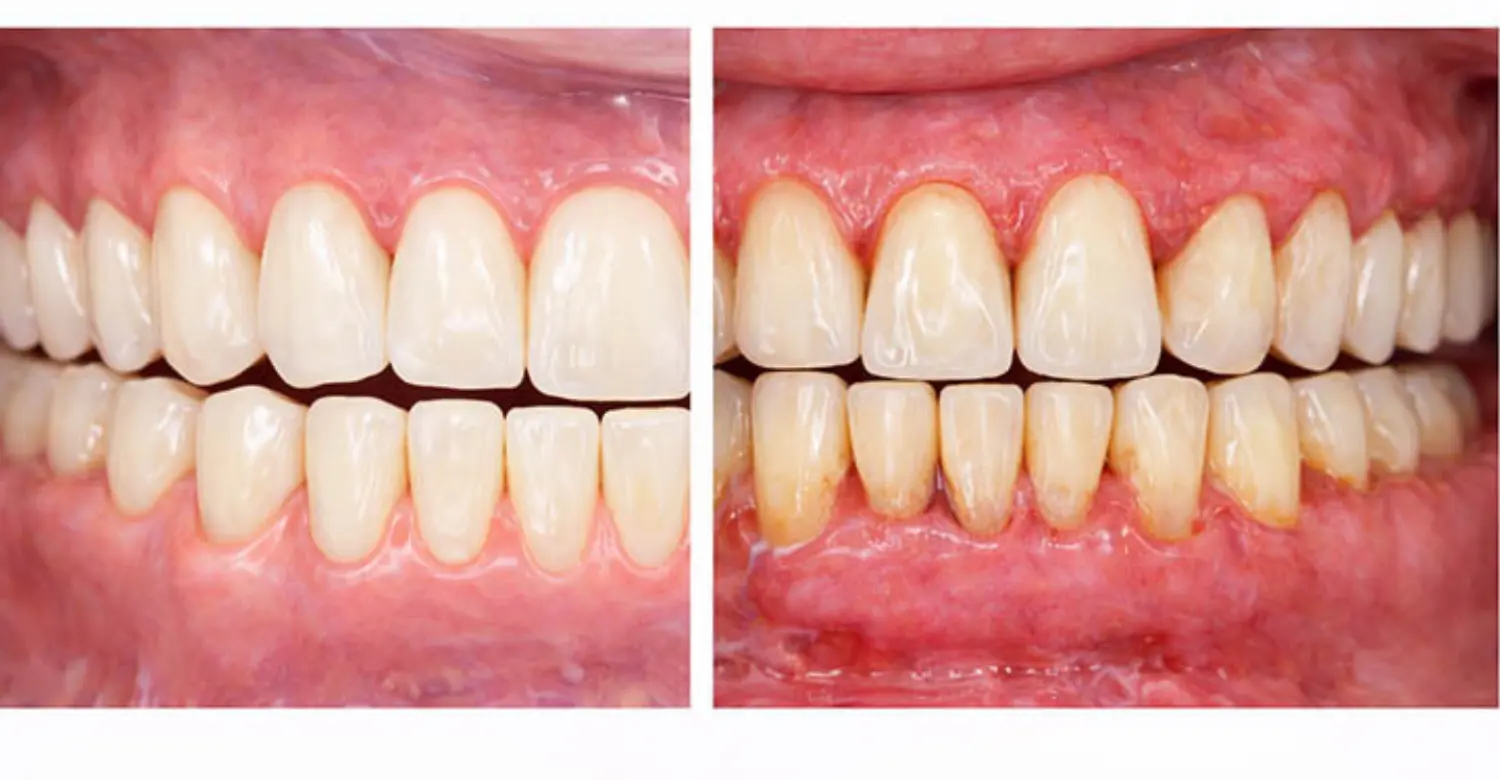
Quais São os Tratamentos Estéticos para as Gengivas?
Além da saúde, a aparência das suas gengivas também desempenha um papel importante no seu sorriso. Tratamentos estéticos podem ajudar a melhorar o visual das suas gengivas e criar um sorriso mais equilibrado.
O que é contorno gengival?
O contorno gengival, ou plástica gengival, é um procedimento estético que remodela a linha da gengiva para criar um sorriso mais simétrico e esteticamente agradável. Pode ser usado para tratar o "sorriso gengival", onde as gengivas cobrem uma grande parte dos dentes, fazendo com que pareçam curtos.
Como o tratamento a laser melhora o formato da gengiva?
A tecnologia a laser tornou os tratamentos gengivais mais precisos e menos invasivos. O tratamento a laser para gengivas pode ser usado para remodelar a gengiva, remover o excesso de tecido ou tratar doenças gengivais. O laser selas os vasos sanguíneos enquanto trabalha, o que minimiza o sangramento e promove uma cicatrização mais rápida.
O que é um enxerto de gengiva e quando ele é necessário?
O enxerto gengival é um procedimento cirúrgico usado para tratar a retração das gengivas. Envolve retirar uma pequena quantidade de tecido gengival do céu da boca ou de outra fonte e enxertá-la na área onde a gengiva retraiu. Este procedimento cobre as raízes expostas, reduz a sensibilidade e protege os dentes de danos adicionais. Interrompa os problemas antes que eles comecem com exames de rotina. Saiba mais sobre cuidados preventivos.
Como as Gengivas Afetam a Saúde Geral?
A saúde das suas gengivas é um espelho da sua saúde geral. A conexão entre gengivas não saudáveis e doenças sistêmicas é um campo de pesquisa ativa, mas as ligações estão se tornando cada vez mais claras.
Como as gengivas estão conectadas a doenças cardíacas?
As bactérias de gengivas inflamadas podem entrar na corrente sanguínea e contribuir para a inflamação e o acúmulo de placas nas artérias, uma condição conhecida como aterosclerose. Esse processo é um grande fator de risco para ataques cardíacos e derrames.
A doença gengival pode aumentar o risco de diabetes?
Como discutido anteriormente, a ligação entre Doença Periodontal e diabetes é forte. A inflamação crônica causada pela doença gengival pode interferir na capacidade do corpo de usar a insulina, tornando mais difícil o controle dos níveis de açúcar no sangue.
Como gengivas não saudáveis afetam a gravidez?
Alterações hormonais durante a gravidez tornam a mulher mais suscetível à gengivite, uma condição frequentemente chamada de “gengivite gravídica”. A doença gengival não tratada também foi associada a um maior risco de parto prematuro e baixo peso ao nascer.
Como as Gengivas Mudam ao Longo das Fases da Vida?
As gengivas das crianças são delicadas e propensas a inchaços durante a dentição.
Com a idade, a retração gengival é mais comum devido ao desgaste natural.
Durante a gravidez, mudanças hormonais frequentemente levam a gengivas inchadas e sensíveis.
Como as gengivas das crianças diferem das dos adultos?
As gengivas das crianças costumam ser mais sensíveis do que as de um adulto. Elas também são propensas a inflamações durante o nascimento dos dentes de leite e permanentes. Os pais devem estar atentos a isso e garantir que seus filhos desenvolvam bons hábitos de higiene bucal desde cedo.
Como as gengivas mudam com o envelhecimento?
À medida que envelhecemos, nossas gengivas podem se tornar mais suscetíveis à retração e a doenças. Os tecidos podem se tornar menos resilientes e o risco de desenvolver periodontite aumenta. Consultas odontológicas regulares tornam-se ainda mais importantes para adultos mais velhos para monitorar e tratar quaisquer problemas gengivais.
Quais problemas gengivais são comuns durante a gravidez?
Flutuações hormonais durante a gravidez podem causar uma resposta inflamatória exagerada à placa, levando à gengivite e gengivas inchadas. O aumento do fluxo sanguíneo também pode fazer com que as gengivas sangrem mais facilmente.
Quais São os Melhores Remédios Caseiros para a Saúde da Gengiva?
Embora os remédios caseiros não substituam os cuidados profissionais, eles podem ser usados para apoiar sua rotina diária de higiene bucal e aliviar pequenas irritações na gengiva.
O bochecho com água e sal pode reduzir o inchaço da gengiva?
O bochecho com água morna e sal é um remédio caseiro clássico e eficaz. O sal atua como um desinfetante natural, ajudando a reduzir bactérias e inflamações. Bochechar com uma solução de água morna e sal pode acalmar gengivas inchadas e promover a cicatrização.
A técnica de "oil pulling" traz benefícios para as gengivas?
O "oil pulling" é uma prática ancestral que envolve bochechar um óleo, como o óleo de coco ou de gergelim, na boca por vários minutos. Os defensores acreditam que isso pode ajudar a extrair bactérias e toxinas, embora as evidências científicas sejam mistas. Muitas pessoas relatam que suas gengivas parecem mais saudáveis após o uso consistente.
Como os remédios fitoterápicos apoiam a cicatrização da gengiva?
Acredita-se que alguns remédios fitoterápicos possuem propriedades anti-inflamatórias e antibacterianas. Por exemplo, bochechar com uma solução contendo óleo de melaleuca (tea tree) ou aplicar uma pasta de açafrão pode ajudar a reduzir a inflamação e apoiar a cicatrização.
Como as Clínicas Turcas Tratam Problemas Gengivais?
Clínicas na Turquia oferecem procedimentos avançados, como terapia a laser, enxertos e raspagem.
Cirurgias gengivais costumam ser mais acessíveis do que na Europa, sem sacrificar a qualidade.
A Turquia tornou-se popular para o turismo odontológico, oferecendo clínicas modernas e especialistas experientes para salvar suas gengivas com eficácia.
Quais tratamentos gengivais avançados são oferecidos na Turquia?
As clínicas turcas estão na vanguarda da tecnologia odontológica, oferecendo uma ampla gama de tratamentos avançados para doenças gengivais. Isso inclui raspagem e alisamento radicular de última geração, terapia gengival assistida por laser e procedimentos cirúrgicos complexos, como enxertos ósseos e gengivais. Essas clínicas usam equipamentos e técnicas modernas para garantir um tratamento eficaz e confortável. O uso de irrigadores orais para gengivas que sangram também se tornou mais comum nas clínicas de lá como ferramenta para os pacientes manterem a higiene bucal adequada.
Quão acessíveis são as cirurgias gengivais na Turquia em comparação com a Europa?
A acessibilidade é um dos maiores atrativos das clínicas odontológicas turcas. O custo de cirurgias gengivais avançadas na Turquia é significativamente menor do que em muitos países europeus, frequentemente entre 50% e 70% mais barato. Isso torna o atendimento odontológico de alta qualidade acessível a um público mais amplo que talvez não pudesse arcar com esses custos de outra forma. Os menores custos operacionais e uma taxa de câmbio favorável contribuem para esses preços competitivos.
Por que a Turquia é popular para tratamentos dentários e gengivais?
Além do custo, a popularidade da Turquia decorre dos altos padrões de atendimento, dentistas experientes e um foco no conforto do paciente. Muitas clínicas atendem especificamente a pacientes internacionais, oferecendo serviços como traslados de aeroporto e tradução. A combinação de atendimento especializado, tecnologia avançada e preços competitivos faz da Turquia a principal escolha para quem deseja salvar suas gengivas e melhorar sua saúde bucal.
Suas gengivas são mais do que apenas o tecido rosa ao redor dos dentes; elas são a base de um sorriso saudável e um reflexo da sua saúde geral. Reconhecer os sinais de gengivas não saudáveis, praticar a prevenção e buscar tratamento oportuno ajudará você a manter suas gengivas saudáveis por toda a vida. Para explorar tratamentos especializados para doenças gengivais ou cuidados estéticos com a gengiva, visite vitrinclinic.com hoje mesmo e agende sua Consulta Gratuita.
Hábitos Diários para Gengivas Fortes: Passos Práticos Além da Escovação e do Fio Dental
Gengivas fortes dependem de hábitos diários consistentes e suporte odontológico profissional.
Escovar e usar fio dental continuam sendo essenciais, mas as escolhas de estilo de vida também influenciam a saúde da gengiva.
Uma dieta equilibrada fortalece os tecidos gengivais, fornecendo vitaminas e minerais importantes.
Beber água suficiente ajuda a manter a produção de saliva e protege contra bactérias nocivas.
Os pacientes podem fortalecer as gengivas naturalmente por meio de nutrição adequada e práticas consistentes de higiene bucal.
Alimentos ricos em vitamina C e cálcio apoiam estruturas gengivais saudáveis e a função imunológica.
Evitar o fumo e reduzir a ingestão excessiva de açúcar também melhora a saúde da gengiva.
Limpezas dentárias regulares ajudam a remover o acúmulo que não pode ser eliminado através dos cuidados em casa.
Como Fortalecer as Gengivas Naturalmente
Hábitos para gengivas saudáveis incluem:
Comer alimentos ricos em nutrientes.
Limpar entre os dentes diariamente.
Beber água suficiente.
Gerenciar os níveis de estresse.
Ir a consultas odontológicas de rotina.
A Clínica Vitrin foca na odontologia preventiva, ajudando os pacientes a desenvolver rotinas eficazes de cuidados bucais a longo prazo.
O Que Notamos Clinicamente
Na Clínica Vitrin, notamos que pacientes com hábitos consistentes geralmente mantêm condições gengivais mais saudáveis.
O Dr. Rifat Alsaman acredita que a prevenção cria bases mais fortes para tratamentos odontológicos estéticos e restauradores.
O Dr. Rifat Alsaman, Chefe da Equipe Médica da Clínica Vitrin e dentista cosmético, recomenda combinar cuidados em casa com monitoramento profissional.
Nota Clínica
Gengivas saudáveis são a base de toda transformação de sorriso bem-sucedida.
Antes de lentes de contato, coroas ou procedimentos estéticos, a Clínica Vitrin avalia a saúde da gengiva com cuidado.
O Dr. Rifat Alsaman explica que sorrisos bonitos exigem tanto planejamento estético quanto tecidos de suporte saudáveis.
Dicas para Pacientes
Crie uma rotina diária simples focada na proteção e prevenção da gengiva.
Use técnicas de escovação suaves e evite pressão agressiva que possa danificar os tecidos gengivais.
Visite a Clínica Vitrin regularmente para avaliações profissionais e recomendações personalizadas.
Estatísticas de Saúde Gengival e Principais Informações em 2026
A saúde da gengiva continua sendo uma das partes mais importantes do bem-estar bucal geral.
Pesquisas odontológicas recentes mostram que a doença gengival afeta milhões de pessoas em todo o mundo.
De acordo com dados de saúde pública disponíveis, a doença periodontal é uma das condições bucais mais comuns entre adultos.
Nos Estados Unidos, cerca de 42% dos adultos com 30 anos ou mais têm alguma forma de periodontite.
A periodontite grave afeta aproximadamente 8% dos adultos, tornando a detecção precoce essencial para prevenir a perda de dentes.
Pesquisas também mostram que a doença gengival se torna mais comum com a idade.
Adultos mais velhos têm um risco maior por causa da exposição acumulada à placa e outros fatores de saúde.
O fumo e a diabetes estão entre os principais fatores associados ao aumento do risco de doença periodontal.
Pacientes com esses fatores de risco exigem monitoramento mais frequente e cuidados odontológicos personalizados.
Aspectos-Chave da Saúde Gengival
Gengivas saudáveis protegem os dentes criando uma barreira forte contra bactérias nocivas.
Gengivas sangrando não devem ser consideradas normais durante a escovação diária.
A inflamação gengival precoce muitas vezes pode ser tratada com cuidados profissionais.
A doença gengival avançada pode afetar as estruturas ósseas de suporte ao redor dos dentes.
Consultas odontológicas preventivas melhoram as chances de manter gengivas saudáveis.
Na Clínica Vitrin, essas estatísticas destacam a importância de exames preventivos e intervenções precoces.
A equipe odontológica se concentra em identificar problemas gengivais antes que afetem a estética do sorriso ou a estabilidade do dente.
O Que Notamos Clinicamente Sobre a Saúde da Gengiva
Na Clínica Vitrin, notamos que muitos pacientes subestimam os sintomas gengivais precoces.
Alguns pacientes consideram gengivas sangrando algo normal, embora possam indicar uma inflamação subjacente.
O Dr. Rifat Alsaman, Chefe da Equipe Médica da Clínica Vitrin e dentista cosmético, explica que a saúde da gengiva é a base de toda transformação de sorriso bem-sucedida.
O Dr. Rifat Alsaman enfatiza que gengivas saudáveis sustentam melhores resultados de odontologia estética, incluindo lentes de contato, coroas e procedimentos de harmonização do sorriso.
Exames clínicos permitem que os dentistas avaliem a condição da gengiva, níveis de inflamação e possíveis riscos.
O diagnóstico precoce ajuda os pacientes a receberem tratamento adequado antes que os problemas se tornem mais complexos.
Nota Clínica: Por Que a Prevenção Gengival Importa na Odontologia Moderna
A odontologia moderna se concentra em proteger os dentes naturais e apoiar a saúde bucal a longo prazo.
Os cuidados com a gengiva não se resumem mais a apenas tratar infecções depois que elas aparecem.
Hoje, a prevenção, o monitoramento e o planejamento de tratamento personalizado são partes essenciais dos cuidados odontológicos.
O Dr. Rifat Alsaman, Chefe da Equipe Médica da Clínica Vitrin e dentista cosmético, destaca que gengivas saudáveis criam o ambiente ideal para tratamentos estéticos e restauradores.
Uma base gengival forte melhora a aparência do sorriso, o conforto e a durabilidade do tratamento.
A Clínica Vitrin combina tecnologia odontológica avançada com avaliações personalizadas para manter a saúde gengival ideal.
Dicas para Pacientes para Manter Gengivas Saudáveis
Manter gengivas saudáveis exige hábitos simples realizados de forma consistente todos os dias.
Os pacientes devem escovar suavemente duas vezes ao dia e limpar entre os dentes regularmente.
Consultas odontológicas regulares permitem que os profissionais identifiquem sinais de alerta precoces antes que ocorram danos graves.
Uma dieta equilibrada com nutrientes essenciais fortalece os tecidos gengivais e a função bucal geral.
Os pacientes devem evitar o fumo porque ele aumenta o risco de complicações periodontais.
O monitoramento de alterações como inchaço, sangramento ou retração gengival pode ajudar os pacientes a buscar tratamento mais cedo.
Lista de Verificação Prática para Cuidados com a Gengiva
✓ Escove os dentes com a técnica adequada.
✓ Limpe entre os dentes diariamente.
✓ Agende exames odontológicos de rotina.
✓ Mantenha hábitos alimentares saudáveis.
✓ Procure orientação quando surgirem alterações na gengiva.
Conclusão: Gengivas Saudáveis São a Base de um Sorriso Saudável
As gengivas desempenham um papel crítico na proteção dos dentes e na manutenção da saúde bucal a longo prazo.
Compreender a anatomia gengival, reconhecer sinais de alerta e seguir hábitos preventivos pode reduzir complicações futuras.
Estatísticas mostram que a doença gengival continua sendo muito comum, mas o atendimento profissional precoce pode melhorar significativamente os resultados.
Na Clínica Vitrin, proteger a saúde da gengiva é considerado um passo essencial antes de qualquer procedimento odontológico estético ou restaurador.
O Dr. Rifat Alsaman, Chefe da Equipe Médica da Clínica Vitrin e dentista cosmético, acredita que todo sorriso bonito começa com tecidos de suporte saudáveis.
Um forte compromisso com os cuidados gengivais ajuda os pacientes a manterem a confiança, o conforto e resultados odontológicos duradouros.
Referências
Gengivas Dentárias & Saúde Periodontal (Periodontia)
Pesquisas sobre anatomia gengival, gengivite, periodontite e cirurgia mucogengival enquadram-se na periodontia.
Principais Periódicos Acadêmicos Internacionais
Journal of Clinical Periodontology — Periódico oficial da Federação Europeia de Periodontia (EFP).
The International Journal of Periodontics & Restorative Dentistry — Foca em periodontia, estética de tecidos moles e cirurgia mucogengival.
Journal of Periodontal Research — Pesquisa de alto impacto sobre fisiopatologia periodontal, microbiologia e mecânica tecidual.
Principais Departamentos Universitários Internacionais
Harvard School of Dental Medicine – Departamento de Medicina Oral, Infecção e Imunidade (EUA)
Karolinska Institutet – Departamento de Medicina Dentária (Suécia)
University College London (UCL) Eastman Dental Institute (Reino Unido)
Artigos e Bancos de Dados de Referência Essenciais Revisados por Pares
NCBI StatPearls: Anatomia, Cabeça e Pescoço, Gengiva Oral — Análise detalhada revisada por pares sobre a estrutura gengival, epitélio juncional e composição de colágeno.
NCBI StatPearls: Doença Periodontal & Fisiopatologia — Guia clínico abrangente sobre gengivite e periodontite.
Gomas Naturais & Biopolímeros (Ciência dos Alimentos e Materiais)
Se estiver estudando gomas de origem vegetal (como Goma Arábica, Goma Xantana, Goma Guar e Goma de Jataí) e seu comportamento hidrocolóide:
Principais Periódicos Acadêmicos Internacionais
Food Hydrocolloids (Elsevier) — Periódico de maior impacto para gomas naturais, polissacarídeos e gelificação.
Carbohydrate Polymers (Elsevier) — Foca na estrutura, química e aplicações industriais de gomas vegetais naturais.
International Journal of Biological Macromolecules — Abrange polímeros de base biológica, exsudatos de plantas e polissacarídeos estruturais.
Principais Centros de Pesquisa & Instituições
Universidade & Pesquisa de Wageningen – Engenharia de Processos Alimentares (Holanda) — Líder mundial em pesquisa de hidrocolóides.
Universidade Purdue – Centro Whistler para Pesquisa de Carboidratos (EUA) — Centro líder em gomas vegetais e propriedades funcionais de polissacarídeos.
INRAE – Instituto Nacional de Pesquisa para Agricultura, Alimentação e Meio Ambiente (França)
FAQs
O Dr. Rifat Alsaman possui mais de 5 anos de experiência clínica em odontologia e atualmente atua como Chefe da Equipe Médica da Vitrin Clinic. Ele é dedicado a oferecer um atendimento de excelência aos pacientes, supervisionando os planos de tratamento e garantindo os mais altos padrões clínicos em toda a equipe. Sua experiência, atenção aos detalhes e compromisso com o desenvolvimento profissional contínuo têm ajudado inúmeros pacientes a conquistar sorrisos mais saudáveis e confiantes.


