
Have you ever wondered if your teeth are alive? Most people don't think of a tooth as a living organ, yet every healthy tooth houses an active nerve. Dental nerve death occurs when this nerve stops functioning due to infection, trauma, or deep decay. This article explains the causes, symptoms, diagnosis, and treatment options available at Vitrin Clinic to treat dental nerve death and save the natural tooth before extraction becomes necessary.
What Causes Dental Nerve Death?
Several factors can lead to dental nerve death. In all cases, the mechanism is similar: blood supply to the pulp is cut off, depriving the nerve of oxygen. Without circulation, the nerve can no longer fight off bacteria and eventually dies. The most common causes of dental nerve death include bacterial infection, physical trauma, untreated deep decay, and repeated dental procedures. An accurate diagnosis helps determine the exact cause and guides the appropriate treatment.
Infection
An untreated dental infection is one of the leading causes of dental nerve death. Poor oral hygiene encourages bacterial growth around the tooth. Initially, bacteria cause an abscess accompanied by swelling and localized pain. Left untreated, the dental infection progresses and eventually reaches the pulp, cutting off blood flow. This loss of oxygen gradually leads to dental nerve necrosis, making a root canal treatment or extraction unavoidable if the condition isn't addressed in time.
Trauma
Trauma, whether visible or not, can rupture the blood vessels supplying the tooth. Even when partial blood flow persists after the injury, the dental nerve often eventually dies from prolonged lack of oxygen. Sports injuries, falls, and household accidents are common causes of dental trauma. Sometimes, symptoms of dental nerve death don't appear until weeks or even months after the incident, which makes regular dental checkups essential after any oral injury, even without immediate pain.
Tooth Decay
When decay reaches the innermost layer of the tooth, it opens a direct path for bacteria to reach the dental pulp. The resulting infection spreads quickly, disrupts blood circulation, and deprives the nerve of oxygen. This process leads to dental nerve death if the decay isn't treated at an early stage. Neglected deep decay remains one of the most preventable causes of dental nerve necrosis, which is why regular dental checkups and prompt treatment at the first signs are so important.
Repeated Dental Procedures
Preparing a tooth for a crown or repeating multiple procedures on the same tooth involves significant removal of tooth structure. This repeated exposure can seriously damage the pulp and cause dental nerve death, much like direct trauma. Patients who have undergone multiple treatments on the same tooth face an increased risk of dental nerve necrosis. That's why every procedure is planned with precision at Vitrin Clinic, to preserve the vitality of the dental nerve as much as possible.
How to Recognize a Dead Tooth
The signs of dental nerve death aren't always obvious at first. The most common symptom is darkening of the tooth, which gradually turns gray or brown. Other signs include gum swelling, persistent bad breath, and sometimes the formation of an abscess. Contrary to popular belief, a dead tooth can still cause pain, since the surrounding tissues remain sensitive. Recognizing these symptoms early allows action to be taken before the infection worsens.
How Do Dentists Diagnose Dental Nerve Death?
Diagnosing dental nerve death relies on several complementary examinations. An X-ray allows visualization of the pulp's condition and detection of any infection at the root level. A vitality test, performed with cold or electrical stimuli, measures the dental nerve's response. Clinical observation of the tooth's color and surrounding tissue completes the evaluation. These examinations confirm dental nerve necrosis and determine whether a root canal treatment is still possible.
What Happens If Dental Nerve Death Is Left Untreated?
Untreated dental nerve death carries serious risks. The dental infection can spread to surrounding tissue, causing a painful abscess and significant swelling. Without intervention, the dead tooth is often eventually lost, and the infection can reach the jawbone or other parts of the body. In some cases, untreated dental nerve necrosis also leads to complications in the temporomandibular joints. Early treatment remains the best way to avoid these consequences.
Treating Dental Nerve Death at Vitrin Clinic
At Vitrin Clinic, treatment for dental nerve death begins with a full evaluation including X-rays and a scan. Depending on the severity of the dental nerve necrosis, the medical team generally recommends a root canal treatment to preserve the natural tooth. In more advanced cases, extraction may be considered. Each protocol is individually tailored to effectively treat dental nerve death while prioritizing tooth preservation whenever medically possible.
What Is a Root Canal Treatment?
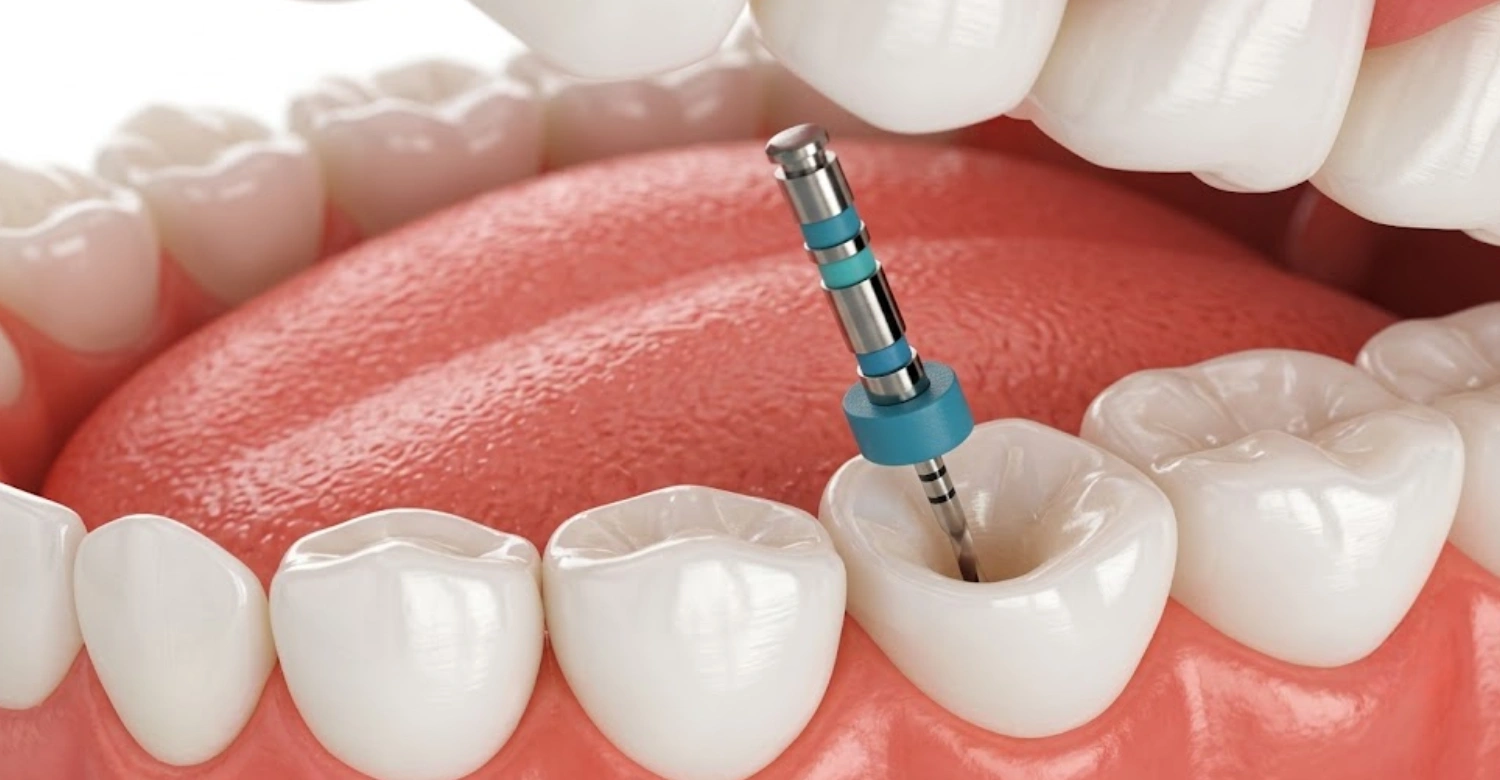
Root canal treatment addresses dental nerve death while preserving the natural tooth. The dentist creates an opening in the tooth to access the infected pulp and carefully remove it. Once the dental infection is eliminated, the root canals are cleaned, disinfected, and sealed with a permanent filling material. If the tooth becomes fragile after the procedure, a crown may be placed to reinforce its structure and extend its long-term lifespan.
Root Canal Treatment: Step-by-Step Process at Vitrin Clinic
Root canal treatment remains the gold-standard solution for treating dental nerve death while preserving the natural tooth. At Vitrin Clinic, this procedure follows a precise protocol designed to maximize long-term success.
Step 1 - Diagnosis and Anesthesia: Before any procedure, an X-ray and scan assess the extent of the dental infection and the condition of the dental pulp. Local anesthesia is then administered to ensure complete comfort throughout the treatment.
Step 2 - Accessing the Tooth: The dentist creates a small opening in the crown of the tooth to directly access the infected pulp responsible for the dental nerve death.
Step 3 - Removing the Infected Pulp: Using specialized instruments, the damaged pulp is carefully removed from the root canals, eliminating the source of the dental infection.
Step 4 - Cleaning and Disinfection: The canals are thoroughly cleaned and disinfected to remove all traces of the bacteria responsible for dental nerve necrosis, significantly reducing the risk of recurrence.
Step 5 - Filling: Once the canals are completely clean, they are filled with a permanent biocompatible material, sealing the tooth and preventing any new infection.
Step 6 - Restoration: If the tooth is weakened after treatment, a dental crown is recommended to reinforce its structure and extend its lifespan.
Dr. Rifat Alsaman, Head of the Medical Team and cosmetic dentist at Vitrin Clinic, emphasizes that the success of a root canal treatment depends above all on the precision of each step, from initial diagnosis through final restoration. According to Dr. Rifat Alsaman, incomplete cleaning of the root canals is the most common cause of treatment failure, which is why an experienced team and advanced imaging equipment both available at Vitrin Clinic are essential.
At Vitrin Clinic, every root canal treatment performed to address dental nerve death follows a rigorous protocol, overseen by an experienced medical team. Dr. Rifat Alsaman, Head of the Medical Team and cosmetic dentist at Vitrin Clinic, ensures that every patient receives an accurate diagnosis before any procedure begins. According to Dr. Rifat Alsaman, precision in cleaning the root canals is essential to prevent any recurrence of the dental infection and to guarantee the long-term longevity of the treated tooth.
Root Canal vs. Tooth Extraction: How to Choose?
The choice between root canal treatment and extraction depends on the severity of the dental nerve death. When the tooth structure remains solid enough, root canal treatment is preferred, as it saves the dead tooth and avoids the complications associated with extraction. However, if the dental infection has too severely damaged the root or surrounding bone, extraction becomes the safer solution. A precise X-ray evaluation always guides this decision on a case-by-case basis.
How to Prevent Dental Nerve Death
Preventing dental nerve death relies primarily on good daily oral hygiene and regular dental checkups. Promptly treating any tooth decay before it reaches the dental pulp significantly reduces the risk of dental nerve necrosis. Wearing a mouthguard during sports activities also helps prevent trauma. Finally, never ignore persistent dental pain or a change in tooth color, since early diagnosis remains the best protection against dental nerve death.
Recovery and Aftercare Following a Root Canal Treatment
After a root canal treatment performed to address dental nerve death, mild sensitivity may persist for a few days. It's recommended to avoid chewing on the treated side until a permanent crown is placed, if needed. Good oral hygiene, combined with gentle rinsing, supports optimal healing. Follow-up checkups confirm that the dental infection has been fully eliminated and that the treated tooth remains stable and functional over the long term.
What We Notice Clinically
Dr. Rifat Alsaman, Head of the Medical Team and cosmetic dentist at Vitrin Clinic, observes that most patients seek care too late, once the pain has become difficult to bear. According to Dr. Rifat Alsaman, a change in tooth color or unusual sensitivity should always be taken seriously, since an early diagnosis of dental nerve death significantly increases the chances of preserving the natural tooth through a timely root canal treatment, before the infection progresses further.
Why Choose Vitrin Clinic for Your Dental Treatment?
Vitrin Clinic offers comprehensive care for dental nerve death, from X-ray diagnosis through post-treatment follow-up. The medical team uses advanced imaging technology to precisely detect dental nerve necrosis and recommend the most suitable protocol for each patient. Vitrin Clinic also supports international patients with free online consultations, making access to modern dental care easier. Every root canal treatment or procedure is carried out with rigor, in line with the strictest hygiene and safety standards.
References:
https://wfwendodontics.com/blog/pulp-necrosis-what-happens-when-the-tooth-nerve-dies
https://www.colgate.com/en-us/oral-health/root-canals/dead-nerve-in-a-tooth-causes-and-treatment
FAQs

Dr. Rifat Alsaman has more than 5 years of clinical experience in dentistry and currently serves as the Head of the Medical Team at Vitrin Clinic. He is dedicated to providing exceptional patient care, overseeing treatment planning, and ensuring the highest clinical standards across the team. His expertise, attention to detail, and commitment to continuous professional development have helped countless patients achieve healthier, more confident smiles.


