Dental Implant
August 5, 2026
Subperiosteal Implants vs All-on-4: Which Implant Option Is Better for Severe Bone Loss?
 Dr. Rifat Alsaman
Choosing the right implant solution for severe bone loss depends on several factors, including jawbone volume, oral health, and long-term treatment goals. Subperiosteal Implants vs All-on-4 compares two advanced techniques designed for patients who may not qualify for traditional dental implants. While All-on-4 uses four strategically placed implants within the available bone, subperiosteal implants use a customized framework positioned above the jawbone beneath the gum tissue. Each option offers unique advantages and limitations depending on the patient's anatomy. A comprehensive clinical evaluation, including CBCT imaging and oral examination, helps determine the most suitable approach. At Vitrin Clinic, every treatment plan is personalized to restore function, aesthetics, and long-term oral health using evidence-based implant solutions.
Understanding Subperiosteal Implants vs All-on-4 for Patients With Bone Loss
Severe jawbone loss can make traditional dental implant treatment more challenging. Patients with advanced bone deficiency often need alternative solutions that provide stable support for fixed teeth. Choosing the right approach depends on bone condition, oral health, treatment goals, and clinical evaluation.
Subperiosteal implants and All-on-4 implants are advanced treatments designed for patients who may not qualify for conventional implants. However, they use different methods to achieve tooth replacement. Subperiosteal implants rely on a customized framework placed above the jawbone, while All-on-4 uses strategically positioned implants inside available bone areas.
Studies show that implant-supported full arch treatments can achieve high survival rates when proper planning is performed. Research reports All-on-4 implant survival rates commonly above 95% in suitable patients. Advanced digital planning has also improved outcomes for complex implant cases.
At Vitrin Clinic, specialists evaluate bone structure, facial anatomy, and patient expectations before recommending a personalized implant solution.
Why Bone Loss Changes Dental Implant Treatment Options
Jawbone loss occurs when the bone supporting teeth gradually decreases after tooth loss, infection, trauma, or long-term denture use. Reduced bone volume can limit the placement of traditional dental implants because implants require sufficient bone support.
When bone loss becomes severe, dentists must consider alternative treatment approaches. Some patients may require bone grafting, while others may benefit from advanced implant designs that avoid extensive rebuilding procedures.
Bone quality is also important because weak or insufficient bone can affect implant stability and healing. According to clinical research, untreated tooth loss can lead to significant changes in jawbone dimensions within the first months after extraction.
A detailed examination using digital scans helps determine the safest treatment path. At Vitrin Clinic, advanced imaging technology allows dentists to analyze bone availability before creating a customized treatment plan.
Quick Comparison: Subperiosteal Implants vs All-on-4 Dental Implants
Subperiosteal implants and All-on-4 implants both provide fixed teeth solutions, but their placement methods are different. Understanding these differences helps patients make informed decisions.
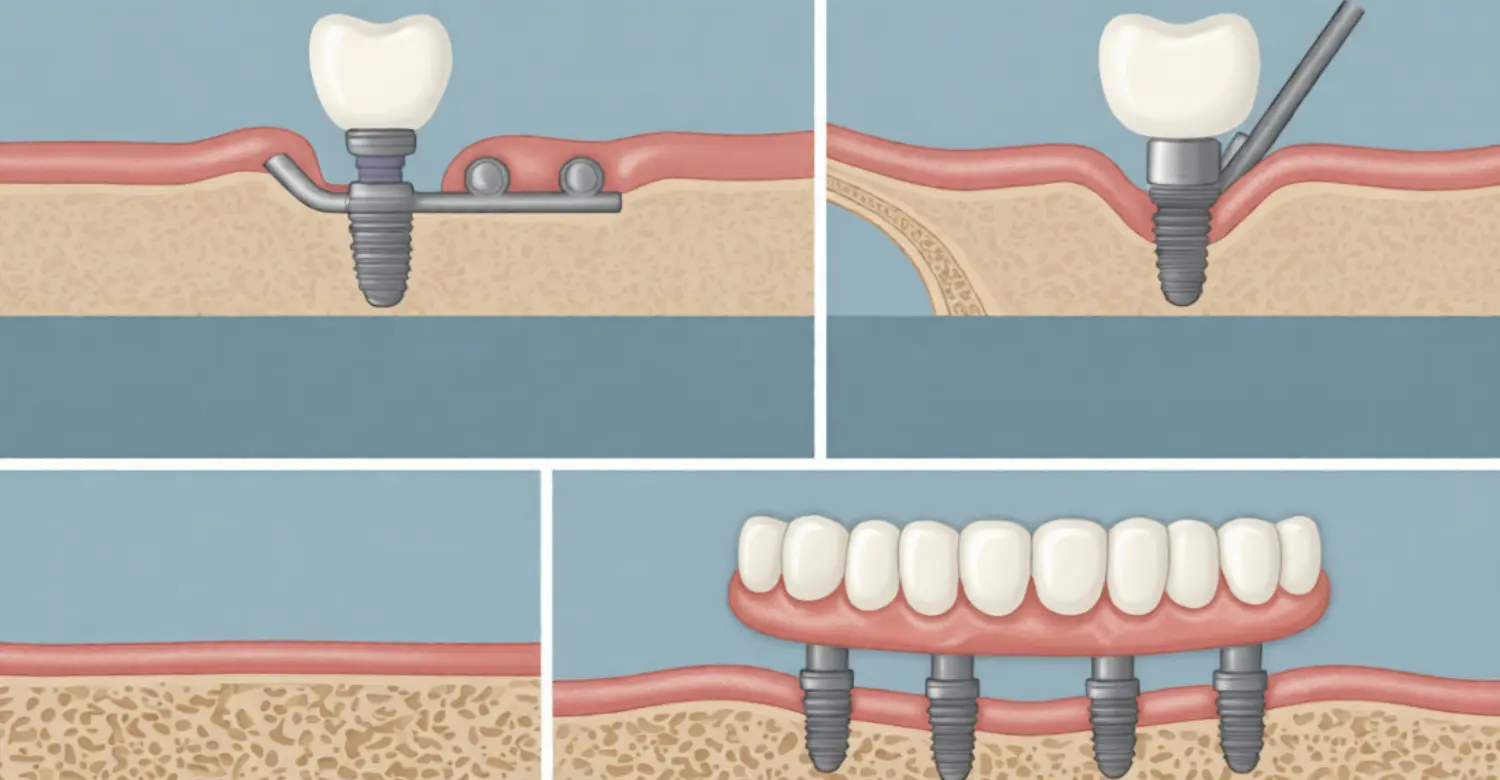
Subperiosteal implants use a personalized metal framework positioned between the gum tissue and jawbone surface. This option may benefit patients with severe bone loss who cannot support traditional implants.
All-on-4 implants use four strategically placed implants to support a complete dental arch. The technique often uses angled posterior implants to maximize existing bone availability.
Clinical studies show All-on-4 treatments can provide predictable full-mouth rehabilitation when patients have enough suitable bone structure. However, patients with extreme bone deficiency may require alternative approaches.
The ideal choice depends on individual anatomy, bone condition, and long-term expectations. A professional evaluation is essential before selecting either treatment. Sugar alternatives: Erythritol Vs Xylitol For Teeth
What Are Subperiosteal Implants?
Subperiosteal implants are a specialized dental implant option designed for patients with insufficient jawbone volume. Unlike traditional implants placed directly into the bone, these implants sit above the jawbone and underneath the gum tissue.
The treatment uses a customized framework that follows the patient’s jaw anatomy. Artificial teeth are attached to this framework, creating a fixed restoration that improves chewing ability and appearance.
This approach was historically used before modern bone grafting techniques became widely available. Today, digital technology has improved subperiosteal implant accuracy through advanced scanning and computer-designed frameworks.
Research into customized implant solutions shows that patient-specific designs can improve adaptation and treatment planning. However, candidacy depends on factors such as bone condition, gum health, and overall medical status.
At Vitrin Clinic, complex implant cases are assessed carefully to determine whether this solution matches the patient’s needs.
How Subperiosteal Implants Work for Severe Jawbone Atrophy
Severe jawbone atrophy reduces the amount of bone available for conventional implant placement. In these cases, subperiosteal implants provide support by using the remaining jaw structure rather than requiring deep bone placement.
The process begins with digital imaging to evaluate the jaw shape and available support areas. A customized framework is then designed according to the patient’s anatomy.
During placement, the framework is positioned beneath the gum tissue and above the jawbone. After healing, prosthetic teeth are attached to restore function and aesthetics.
Clinical advancements in digital dentistry have improved customization and precision for complex implant procedures. These technologies help dentists create treatment plans with better anatomical understanding.
Subperiosteal implants can be an alternative for selected patients who have severe bone loss and limited options for conventional implant therapy.
Custom Subperiosteal Implant Framework Design and Placement
Custom framework design is one of the most important parts of successful subperiosteal implant treatment. Each framework is created according to the patient’s unique jaw anatomy.
Modern digital workflows allow dentists to use three-dimensional scans for accurate planning. This reduces uncertainty and helps improve the adaptation between the framework and supporting structures.
The customized design considers bone shape, soft tissue condition, bite relationship, and final smile requirements. This personalized approach is different from standard implant placement methods.
Clinical evidence suggests that customized implant planning can improve treatment predictability in complex cases. However, proper patient selection remains essential for long-term success.
At Vitrin Clinic, digital evaluation and personalized planning help patients receive implant solutions designed around their specific oral conditions.
Who Is a Candidate for Subperiosteal Implants?
Patients who experience severe jawbone loss may need alternative implant solutions when traditional implants are not possible. Subperiosteal implants are generally considered for individuals with insufficient bone height or width for conventional implant placement.
The decision between treatments such as Subperiosteal Implants vs All-on-4 depends on the patient’s anatomy, oral health, and rehabilitation goals. Candidates usually require healthy gums, controlled dental infections, and realistic expectations.
Dentists evaluate bone condition, bite function, medical history, and aesthetic requirements before recommending treatment. Advanced imaging helps identify whether the remaining jaw structure can support a customized implant framework.
At Vitrin Clinic, every complex implant case receives a personalized evaluation to determine the safest and most predictable restoration approach.
Subperiosteal Implant Candidacy Factors Before Treatment
Before treatment, dentists examine several factors to confirm whether subperiosteal implants are suitable. Severe bone deficiency is one of the main reasons patients consider this advanced option.
The evaluation includes digital scans, gum assessment, bite analysis, and overall oral health review. These steps help compare solutions like Subperiosteal Implants vs All-on-4 based on individual needs.
Patients with uncontrolled gum disease, poor healing ability, or untreated infections may require additional preparation before implant treatment. Maintaining good oral hygiene is also essential for long-term implant success.
Clinical studies emphasize that proper diagnosis and patient selection significantly influence implant outcomes. Digital planning has become an important tool for improving accuracy in complex rehabilitation cases.
Clinical Note: When Subperiosteal Implants Are Recommended
Subperiosteal implants are commonly considered when patients have advanced jawbone loss that limits traditional implant options. They may provide fixed teeth support without requiring extensive bone rebuilding procedures.
In cases where bone volume is severely reduced, comparing Subperiosteal Implants vs All-on-4 helps dentists identify the most suitable approach.
Clinically, specialists assess whether enough bone remains for angled implant placement or whether an external framework provides better support. Each patient requires an individualized evaluation.
According to implant rehabilitation principles, treatment success depends on stability, healthy tissues, accurate planning, and proper maintenance.
Dr. Rifat Alsaman’s Opinion on Customized Implant Solutions
Dr. Rifat Alsaman, Head of the Medical Team at Vitrin Clinic, emphasizes that advanced implant treatments should always begin with detailed diagnosis.
“When patients have severe bone loss, selecting between Subperiosteal Implants vs All-on-4 requires understanding the complete clinical picture, not only the missing bone amount.”
He explains that digital imaging, patient expectations, and functional requirements are essential parts of treatment planning.
Customized solutions can help patients regain confidence, chewing ability, and smile aesthetics. However, the correct implant approach depends on individual anatomy rather than choosing a single option for every patient. Infectious risks: Meningococcal Disease And Oral Health
What Are All-on-4 Dental Implants?
All-on-4 dental implants are a full-arch restoration technique designed to replace an entire set of missing teeth using four strategically positioned implants.
The treatment uses available jawbone areas to support a fixed prosthetic arch. This approach can reduce the need for traditional bone grafting in selected patients.
When comparing Subperiosteal Implants vs All-on-4, the main difference is that All-on-4 depends on implant placement inside existing bone structures.
Clinical research has reported high success rates for All-on-4 rehabilitation when proper patient selection and surgical planning are performed. The technique has become popular for patients seeking fixed teeth with fewer implants.
At Vitrin Clinic, specialists use advanced diagnostics to determine whether All-on-4 treatment matches the patient’s bone condition and smile goals.
How All-on-4 Implants Restore a Full Arch With Limited Bone Support
All-on-4 implants restore a complete dental arch by strategically placing four implants in areas with stronger available bone. This method maximizes existing support while avoiding unnecessary procedures.
The concept behind comparing Subperiosteal Implants vs All-on-4 is understanding how each method solves different bone challenges.
The front jaw often provides better bone density, allowing implants to achieve stability. Posterior implants are commonly angled to improve contact with available bone.
Studies have shown that properly planned full-arch implant treatments can provide reliable function and patient satisfaction. However, severe bone loss may require different approaches depending on anatomy.
A detailed examination helps dentists determine whether All-on-4 can provide predictable long-term support.
How Angled Implant Placement Helps Maximize Available Bone
Angled implant placement is a key feature of the All-on-4 concept. Tilting posterior implants allows dentists to use longer implants while avoiding certain anatomical limitations.
This technique can increase bone contact and improve support for a fixed full-arch restoration. The decision between Subperiosteal Implants vs All-on-4 depends on whether available bone can safely support angled placement.
Digital planning helps identify implant positions before surgery. Three-dimensional imaging allows dentists to evaluate nerves, sinus areas, and bone dimensions.
Research indicates that accurate planning contributes to improved implant stability and reduced surgical complications. Proper case selection remains essential for successful outcomes.
Who Is Eligible for All-on-4 Dental Implants?
All-on-4 implants may be suitable for patients missing most or all teeth who have enough remaining bone structure for implant stabilization.
Eligibility depends on bone quality, gum health, bite relationship, and general health conditions. The choice between Subperiosteal Implants vs All-on-4 requires a complete clinical assessment.
Patients with moderate bone loss may benefit from All-on-4 because angled implants can utilize available bone areas. However, extremely advanced bone deficiency may require alternative treatments.
At Vitrin Clinic, dentists evaluate each patient individually using digital imaging and comprehensive treatment planning before recommending full-arch rehabilitation.
Can I Get All-on-4 Implants With Severe Bone Loss?
Some patients with severe bone loss may still qualify for All-on-4 implants, but eligibility depends on the remaining bone anatomy.
The comparison of Subperiosteal Implants vs All-on-4 helps explain why some patients require different approaches for successful rehabilitation.
All-on-4 may work when enough strategic bone areas remain for stable implant placement. In other cases, additional procedures or alternative implant designs may provide better results.
Clinical evaluation using three-dimensional scans helps identify whether implant placement is predictable. Dentists consider bone density, facial structure, and functional demands before making recommendations.
A personalized consultation is the most accurate way to determine the appropriate solution. Structural support: What Is Alveolar Bone And Why Do Teeth Need It
Subperiosteal Implants vs All-on-4: Key Differences Explained
Choosing the right full-mouth implant solution requires understanding how each treatment addresses bone loss, stability, and long-term function. The comparison between Subperiosteal Implants vs All-on-4 depends on the patient’s jaw anatomy, remaining bone structure, and treatment expectations.
Subperiosteal implants and All-on-4 implants follow different placement techniques. One uses a customized framework above the jawbone, while the other relies on strategically placed implants inside available bone.
Clinical studies show that advanced implant treatments can provide predictable results when proper diagnosis and planning are performed. Factors such as bone quality, oral hygiene, and professional maintenance influence long-term outcomes.
At Vitrin Clinic, specialists evaluate each patient using digital imaging and advanced planning methods to recommend the most suitable implant approach.
Bone Requirements and Implant Placement Approach
Bone availability is one of the most important factors when selecting a dental implant treatment. Traditional implants usually require enough healthy jawbone volume for stable placement and long-term support.
When comparing Subperiosteal Implants vs All-on-4, the main difference is how each solution manages limited bone availability. Subperiosteal implants use a customized framework placed above the bone surface, while All-on-4 uses remaining bone areas.
All-on-4 often depends on strategic implant positioning, including angled placement in specific regions. This allows dentists to maximize available bone without always requiring major grafting procedures.
Subperiosteal implants may be considered when bone loss is too advanced for conventional implant placement. The final decision depends on digital scans, clinical findings, and the patient’s rehabilitation goals.
Dental Implants Without Bone Grafting: Which Option Works Better?
Many patients with bone loss search for implant options that may reduce the need for traditional bone grafting procedures. The best approach depends on the severity and location of bone deficiency.
The choice between Subperiosteal Implants vs All-on-4 requires evaluating whether existing bone can support implant placement or whether a customized framework is more suitable.
All-on-4 can sometimes avoid grafting by using stronger bone regions and angled implants. However, it is not suitable for every patient with severe bone loss.
Subperiosteal implants may provide an alternative for selected cases where bone volume is insufficient. A detailed examination helps determine the safest treatment pathway.
At Vitrin Clinic, specialists focus on preserving function, comfort, and predictable results through personalized implant planning.
Stability, Function, and Long-Term Results Comparison
Implant stability plays an important role in achieving successful long-term tooth replacement. Both subperiosteal implants and All-on-4 treatments aim to provide fixed teeth solutions for patients with missing teeth.
The clinical evaluation of Subperiosteal Implants vs All-on-4 focuses on support, adaptation, maintenance requirements, and patient-specific conditions.
All-on-4 implants achieve stability through direct bone integration. Subperiosteal implants rely on a customized framework supported by the jaw structure.
Research shows that implant-supported restorations can achieve high survival rates when patients receive proper diagnosis and maintenance. Regular follow-up appointments help monitor tissue health and prosthetic function.
The most successful outcomes occur when treatment selection matches the patient’s anatomy rather than applying one solution to every case.
Fixed Teeth Solutions Without Sufficient Jawbone Support
Patients with severe jawbone loss often worry that fixed teeth may no longer be possible. Modern implant dentistry provides several advanced solutions designed for challenging cases.
Understanding Subperiosteal Implants vs All-on-4 helps explain why different patients require different rehabilitation strategies.
All-on-4 may provide fixed teeth when enough bone remains for implant stabilization. Subperiosteal implants may offer another pathway when traditional implant placement is limited.
Advanced imaging allows dentists to evaluate available support areas before treatment. This improves accuracy and helps create realistic expectations.
At Vitrin Clinic, treatment planning focuses on creating stable, functional, and natural-looking smiles for patients with complex bone conditions.
Recovery Time Comparison: Subperiosteal Implants vs All-on-4 Implants
Recovery time depends on surgical complexity, patient healing ability, and the selected implant procedure. Each treatment has different healing requirements because the placement methods are not identical.
The recovery differences between them are influenced by bone condition, surgical preparation, and soft tissue response.
All-on-4 treatments may provide faster functional restoration because temporary teeth can often be attached shortly after surgery in suitable cases. However, complete healing still requires several months.
Subperiosteal implants may require careful tissue healing around the customized framework before final restoration.
Patients should follow professional instructions, maintain oral hygiene, and attend follow-up visits. Good aftercare supports better comfort and long-term implant performance.
Tips for Patients After Implant Surgery to Support Healing
Proper aftercare is essential after advanced implant procedures. Following professional instructions can support healing and reduce the risk of complications.
Patients researching Subperiosteal Implants vs All-on-4 should understand that recovery success depends not only on surgery but also on daily care.
Important recommendations include maintaining gentle oral hygiene, avoiding harmful habits, attending follow-up appointments, and following dietary instructions during early healing.
Adequate nutrition and hydration can support the body’s recovery process. Patients should also report unusual swelling, discomfort, or changes immediately.
At Vitrin Clinic, patients receive guidance throughout recovery to help protect their new fixed smile and maintain implant health. Tooth layers: Dentin
Subperiosteal Implants vs All-on-4 for Severe Jawbone Atrophy
Severe jawbone atrophy creates unique challenges because traditional implant placement may become difficult. Advanced solutions require careful assessment of bone structure and treatment goals.
The decision between Subperiosteal Implants vs All-on-4 depends on how much usable bone remains and whether implant stability can be achieved safely.
Some patients may benefit from All-on-4 when strategic bone areas remain available. Others with extreme bone deficiency may require customized solutions.
Clinical evaluation includes digital imaging, bite analysis, and assessment of soft tissue conditions. These factors help dentists create predictable rehabilitation plans.
At Vitrin Clinic, complex implant cases are reviewed carefully to identify the most suitable option for each patient.
Which Implant Solution Is Better When There Is Not Enough Bone?
When patients have insufficient jawbone, selecting an implant solution requires detailed clinical evaluation. There is no universal treatment that works for every individual.
The comparison of Subperiosteal Implants vs All-on-4 helps dentists understand which approach matches the patient’s anatomical limitations.
All-on-4 may work when available bone allows secure implant anchoring. Subperiosteal implants may be considered when traditional implant support is severely limited.
Dentists also consider patient expectations, facial aesthetics, chewing requirements, and long-term maintenance.
Modern implant dentistry provides more options than before, allowing specialists to design personalized solutions for complex bone loss situations.
Implant Options When There Is Not Enough Bone for All-on-4
Patients who lack sufficient bone for All-on-4 may need alternative implant strategies. The correct choice depends on the severity of bone deficiency and overall oral condition.
A detailed review of Subperiosteal Implants vs All-on-4 helps explain why some patients require different approaches.
Possible options may include bone reconstruction procedures, customized implant frameworks, or other advanced implant techniques. Each method has specific indications and limitations.
Digital technology allows dentists to visualize bone anatomy before treatment. This improves decision-making and helps avoid unsuitable procedures.
A professional consultation remains essential for determining the safest and most effective pathway.
Advanced Dental Implant Options for Patients With Jawbone Deficiency
Modern implant dentistry offers several solutions for patients with advanced jawbone deficiency. Treatment depends on bone volume, bone density, medical history, and long-term functional goals. Comparing Subperiosteal Implants vs All-on-4 helps dentists determine whether existing bone can support conventional implant placement or whether customized alternatives are necessary.
Additional options may include zygomatic implants, pterygoid implants, bone grafting, or custom-made subperiosteal frameworks. Studies report that digital planning has improved implant accuracy and reduced surgical complications in complex rehabilitation cases. Three-dimensional imaging allows precise assessment before surgery.
At Vitrin Clinic, specialists combine CBCT imaging, digital smile planning, and multidisciplinary consultations to create individualized treatment plans. Every recommendation focuses on restoring function, comfort, and long-term oral health rather than selecting a single implant solution.
What We Notice Clinically: Choosing the Right Implant Strategy
Our clinical experience shows that successful treatment depends on diagnosis rather than implant preference. Evaluating Subperiosteal Implants vs All-on-4 begins with understanding the patient's anatomy, chewing forces, soft tissue health, and remaining bone support.
Patients with moderate bone loss often qualify for All-on-4 treatment. Patients with extensive jawbone resorption may benefit from customized implant solutions after comprehensive assessment. Clinical literature consistently shows that accurate planning improves long-term implant success and reduces complications.
At Vitrin Clinic, we notice that digital workflows improve communication between surgeons, prosthodontists, and laboratory teams. This coordinated approach increases treatment precision and allows patients to understand every stage before surgery begins. Anatomy focus: Tooth Root Attachment
Full Mouth Rehabilitation Options for Severe Bone Loss
Full-mouth rehabilitation restores oral function, facial support, and smile aesthetics for patients with extensive tooth loss. Choosing between available treatments requires careful diagnosis because every patient presents unique anatomical challenges. The comparison of Subperiosteal Implants vs All-on-4 forms an important part of planning when severe bone loss affects implant selection.
Modern rehabilitation may involve implant-supported prostheses, bone augmentation procedures, zygomatic implants, or customized frameworks. Research indicates that implant-supported full-arch restorations improve chewing efficiency and patient satisfaction compared with conventional removable dentures.
At Vitrin Clinic, treatment planning considers oral health, facial proportions, speech, bite stability, and long-term maintenance to deliver predictable full-mouth rehabilitation.
Comparing Subperiosteal Implants, All-on-4, and Other Full Mouth Solutions
Several implant solutions can restore a complete smile, but each has different indications. Comparing Subperiosteal Implants vs All-on-4 alongside other advanced treatments helps identify the most appropriate rehabilitation strategy.
All-on-4 uses four strategically positioned implants within the existing bone. Subperiosteal implants use a customized framework resting above the jawbone. Zygomatic implants anchor into the cheekbone when upper jaw bone is severely deficient. Bone grafting rebuilds lost bone before conventional implant placement.
Scientific evidence suggests that treatment success depends more on patient selection and surgical planning than on choosing a specific implant system. Every option offers advantages when applied under appropriate clinical conditions.
Factors Dentists Consider Before Choosing an Implant Method
Dentists evaluate many variables before recommending a full-mouth implant solution. The decision involving Subperiosteal Implants vs All-on-4 depends on more than bone quantity alone.
Important considerations include bone density, jaw anatomy, gum condition, medical history, bite alignment, smoking habits, and patient expectations. Three-dimensional CBCT imaging provides detailed information about anatomical structures before surgery.
Studies indicate that comprehensive treatment planning significantly improves implant survival and prosthetic performance. Patient commitment to oral hygiene and follow-up care also influences long-term outcomes.
At Vitrin Clinic, every rehabilitation plan is personalized to maximize safety, function, aesthetics, and long-term stability.
Clinical Evaluation Before Full Mouth Rehabilitation
Comprehensive evaluation is the foundation of successful implant rehabilitation. Before recommending Subperiosteal Implants vs All-on-4, specialists perform detailed clinical and radiographic examinations.
Assessment includes CBCT imaging, digital impressions, gum evaluation, bite analysis, facial symmetry, and remaining bone measurements. Medical conditions, medications, and previous dental treatments are also reviewed because they may influence healing.
Research supports digital diagnostics as an effective method for improving treatment accuracy and reducing surgical risks. Careful evaluation allows clinicians to anticipate challenges before treatment begins.
At Vitrin Clinic, every patient receives a customized diagnostic workflow designed to achieve predictable and long-lasting rehabilitation outcomes. Protective tissue: Cementum
Cost Difference Between Subperiosteal Implants and All-on-4
Treatment costs vary because every implant case requires different surgical procedures, laboratory work, and prosthetic designs. Understanding Subperiosteal Implants vs All-on-4 includes recognizing how customization influences overall investment.
Subperiosteal implants often require individualized framework fabrication using advanced digital technology. All-on-4 treatment may involve fewer customized components but still requires precise surgical planning and high-quality prosthetic materials.
Clinical complexity, diagnostic imaging, surgeon experience, implant brand, and restoration type all affect final treatment costs. Patients should evaluate value rather than focusing only on the initial price.
At Vitrin Clinic, transparent treatment planning helps patients understand every stage before beginning rehabilitation.
Factors That Influence Subperiosteal Implant and All-on-4 Costs
Several variables influence implant treatment costs beyond the surgical procedure itself. Comparing Subperiosteal Implants vs All-on-4 requires considering planning, materials, laboratory fabrication, and long-term maintenance.
Customized implant frameworks generally require advanced manufacturing processes. Diagnostic imaging, temporary restorations, anesthesia, and follow-up appointments may also contribute to total expenses.
International studies show that treatment complexity is one of the strongest predictors of overall implant costs. Patients requiring additional procedures may experience higher investment than straightforward cases.
At Vitrin Clinic, personalized treatment plans clearly explain expected procedures, allowing patients to make informed financial and clinical decisions.
Are Higher-Cost Implant Options Always Better?
Higher treatment costs do not automatically indicate superior outcomes. Evaluating Subperiosteal Implants vs All-on-4 should focus on clinical suitability instead of price alone.
The best implant solution is the one that safely addresses the patient's anatomy, restores function, and supports long-term oral health. Unnecessary procedures may increase costs without improving results.
Research consistently shows that careful diagnosis, experienced clinicians, and proper maintenance contribute more to treatment success than selecting the most expensive option available.
At Vitrin Clinic, recommendations are based on evidence, patient needs, and predictable long-term outcomes rather than cost alone.
Understanding Long-Term Value of Advanced Implant Treatments
Long-term value extends beyond the initial procedure. Patients comparing Subperiosteal Implants vs All-on-4 should consider durability, maintenance, comfort, and quality of life.
Successful implant rehabilitation improves chewing efficiency, speech, facial support, and confidence. Regular maintenance and professional follow-up protect these benefits for many years.
Clinical research demonstrates that implant-supported restorations can maintain high survival rates when patients follow oral hygiene recommendations and attend routine reviews. Preventive care remains essential regardless of implant type.
At Vitrin Clinic, treatment planning focuses on creating lasting functional and aesthetic outcomes that provide value throughout the patient's lifetime. Outer layer facts: Tooth Enamel
Why Choose Vitrin Clinic for Subperiosteal Implants and All-on-4 Treatments?
Choosing the right clinic is as important as selecting the appropriate implant technique. Successful treatment depends on experienced specialists, accurate diagnosis, and advanced digital technology. Understanding Subperiosteal Implants vs All-on-4 requires comprehensive evaluation because every patient's bone anatomy is unique.
Vitrin Clinic combines implant surgeons, prosthodontists, and digital dentistry experts to create personalized treatment plans. Every case begins with CBCT imaging, facial analysis, and bite evaluation before any procedure is recommended.
Research indicates that multidisciplinary treatment planning improves communication between clinicians and supports predictable outcomes. Our team follows evidence-based protocols designed to maximize safety, function, and long-term implant success for patients with severe bone loss.
Personalized Treatment Planning for Severe Bone Loss Patients
Every patient presents different anatomical challenges, making personalized planning essential. Comparing Subperiosteal Implants vs All-on-4 begins with understanding bone quality, medical history, and long-term treatment objectives.
At Vitrin Clinic, specialists collect detailed diagnostic information before recommending any implant procedure. Digital scans, intraoral photographs, and functional assessments help create individualized rehabilitation plans.
Clinical studies show that customized treatment planning reduces surgical uncertainty and improves prosthetic accuracy. Personalized planning also allows patients to understand every treatment stage before surgery.
Our goal is to restore chewing function, facial harmony, and smile aesthetics while selecting the safest implant solution for each individual.
Digital Imaging and Customized Implant Solutions at Vitrin Clinic
Digital technology has transformed modern implant dentistry. Evaluating Subperiosteal Implants vs All-on-4 becomes more accurate through detailed three-dimensional imaging and computer-guided treatment planning.
Vitrin Clinic uses CBCT scans, digital impressions, and smile design software to analyze bone anatomy with precision. These technologies improve implant positioning and reduce the risk of unexpected surgical findings.
Research demonstrates that digital workflows increase treatment accuracy and enhance communication between surgeons and dental laboratories. Better planning often leads to improved prosthetic adaptation and patient satisfaction.
Customized implant solutions provide predictable rehabilitation by matching treatment to each patient's unique anatomical structure.
Advanced Implant Technology and Expert Dental Care
Advanced technology supports better diagnosis, but experienced clinicians remain the foundation of successful implant treatment. Understanding Subperiosteal Implants vs All-on-4 requires combining scientific evidence with clinical expertise.
Vitrin Clinic continuously adopts modern implant technologies that improve precision and treatment efficiency. Digital planning, guided surgery, and customized prosthetics contribute to predictable rehabilitation outcomes.
Studies report that guided implant surgery may improve placement accuracy while preserving surrounding anatomical structures. Continuous professional education also helps clinicians apply the latest evidence-based techniques.
Patients benefit from comprehensive care that prioritizes safety, long-term stability, and natural-looking functional results.
Complete Support From Consultation to Final Smile
Successful rehabilitation extends beyond implant surgery. Patients considering Subperiosteal Implants vs All-on-4 benefit from continuous professional guidance throughout every treatment phase.
Vitrin Clinic provides support from the first consultation through diagnosis, surgery, prosthetic restoration, and long-term maintenance. Every appointment focuses on patient education and personalized care.
Regular follow-up visits allow clinicians to monitor healing, adjust restorations when necessary, and reinforce oral hygiene practices. Clinical evidence shows that structured maintenance programs improve long-term implant success.
Our coordinated team remains available throughout the rehabilitation journey to provide confidence and consistent patient support. Erosion risks: Is Diet Soda Bad For Teeth
Why International Patients Choose Vitrin Clinic for Complex Implant Cases
Patients from many countries seek advanced implant treatment combined with personalized care. Choosing between Subperiosteal Implants vs All-on-4 often requires specialized experience that combines digital planning with multidisciplinary expertise.
Vitrin Clinic offers comprehensive treatment planning, modern technology, and coordinated patient services for complex rehabilitation cases. International patients receive clear communication before, during, and after treatment.
Studies suggest that patient education and structured follow-up improve satisfaction and long-term maintenance. Our team focuses on transparency, realistic expectations, and individualized care throughout every treatment stage.
Full Mouth Rehabilitation Experience for Patients With Bone Deficiency
Complex rehabilitation requires careful coordination between diagnosis, surgery, and prosthetic restoration. Comparing Subperiosteal Implants vs All-on-4 helps determine the most appropriate pathway for restoring oral function.
Patients with bone deficiency often require advanced imaging, customized planning, and close collaboration between dental specialists. Every rehabilitation plan aims to improve chewing efficiency, speech, facial support, and smile aesthetics.
Clinical evidence indicates that multidisciplinary treatment improves decision-making and supports predictable implant outcomes. Continuous monitoring also contributes to healthier peri-implant tissues over time.
At Vitrin Clinic, every rehabilitation journey is designed around individual clinical needs and long-term success.
Comprehensive Care, Follow-Up, and Patient Support
Long-term implant success depends on continuous maintenance after treatment. Patients researching Subperiosteal Implants vs All-on-4 should understand that professional follow-up remains essential regardless of implant type.
Vitrin Clinic provides structured maintenance programs that include routine examinations, professional cleaning, prosthetic evaluation, and oral hygiene guidance. These appointments help identify concerns before they become significant complications.
Research shows that regular maintenance contributes to healthier implants and improved prosthetic longevity. Patient participation also plays a major role in preserving treatment outcomes.
Our team remains committed to supporting every patient long after the final restoration is delivered.
Creating Fixed Smile Solutions for Challenging Implant Cases
Patients with severe bone loss often believe fixed teeth are impossible. Modern dentistry offers multiple solutions, and evaluating Subperiosteal Implants vs All-on-4 allows specialists to choose the most appropriate treatment.
Successful rehabilitation combines scientific evidence, digital diagnostics, surgical precision, and customized prosthetic design. Every stage contributes to restoring confidence and daily function.
Clinical studies continue to demonstrate excellent outcomes when treatment planning matches the patient's anatomy and long-term needs. Personalized rehabilitation reduces unnecessary procedures and improves patient satisfaction.
At Vitrin Clinic, our objective is to provide durable, comfortable, and natural-looking smiles for even the most challenging implant cases.
Additional Section: Latest Advances in Digital Implant Dentistry
Digital innovation continues to improve outcomes for patients with severe bone loss. Understanding Subperiosteal Implants vs All-on-4 now involves technologies that were unavailable only a few years ago.
Artificial intelligence-assisted planning, dynamic surgical navigation, CAD/CAM manufacturing, and 3D printing have increased diagnostic precision. These technologies support customized treatment while reducing planning errors.
Recent research suggests that digital workflows improve communication between clinicians and dental laboratories, enhancing prosthetic accuracy. Future developments may further personalize implant rehabilitation for complex cases.
At Vitrin Clinic, modern digital dentistry supports evidence-based treatment planning and predictable patient outcomes.
Final Thoughts: Choosing the Best Implant Solution for Severe Bone Loss
Selecting the most appropriate implant treatment requires individualized assessment rather than general recommendations. Comparing Subperiosteal Implants vs All-on-4 provides valuable information, but the final decision depends on each patient's anatomy and clinical findings.
Advanced imaging, comprehensive diagnosis, and multidisciplinary planning allow dentists to recommend treatments that balance safety, function, and long-term stability. No single implant solution is ideal for every patient.
Clinical evidence consistently supports personalized treatment planning as the foundation of successful rehabilitation. Long-term maintenance and patient commitment remain equally important after treatment.
At Vitrin Clinic, every recommendation is based on scientific evidence, clinical experience, and the patient's unique rehabilitation goals.
Why Professional Evaluation Is Essential Before Implant Treatment
Professional evaluation reduces uncertainty before advanced implant procedures. Patients considering Subperiosteal Implants vs All-on-4 should complete a comprehensive examination before selecting any treatment.
The assessment includes CBCT imaging, gum evaluation, bite analysis, medical history review, and discussion of patient expectations. These findings guide safe treatment planning.
Research demonstrates that accurate diagnosis improves implant survival and reduces preventable complications. Personalized evaluation also helps identify the most conservative and predictable rehabilitation strategy.
At Vitrin Clinic, every treatment begins with detailed diagnostics because successful outcomes start with informed clinical decisions.
Book Your Free Implant Consultation at Vitrin Clinic
Beginning treatment starts with understanding your available options. Learning about Subperiosteal Implants vs All-on-4 is only the first step toward restoring your smile.
Vitrin Clinic offers a free implant consultation that includes an initial assessment, discussion of treatment goals, and personalized recommendations. Our specialists explain every stage using clear and evidence-based information.
Patients receive guidance regarding diagnosis, rehabilitation options, expected recovery, and long-term maintenance. This consultation helps build realistic expectations before treatment begins.
Schedule your free consultation today and discover a customized implant solution designed around your individual oral health needs.
Reference
FAQs
Dr. Rifat Alsaman has more than 5 years of clinical experience in dentistry and currently serves as the Head of the Medical Team at Vitrin Clinic. He is dedicated to providing exceptional patient care, overseeing treatment planning, and ensuring the highest clinical standards across the team. His expertise, attention to detail, and commitment to continuous professional development have helped countless patients achieve healthier, more confident smiles.


