Oral Dentistry
September 17, 2026
Tongue Tie: What Is It, What Are the Symptoms, and How Is It Treated?

Tongue tie is a condition present from birth. A short or tight band of tissue beneath the tongue limits how freely it can move. It is also known as ankyloglossia. It can affect feeding in babies, speech in older children, and oral movements in adults. Not every case requires treatment. The impact varies depending on how much the tissue restricts movement, and whether it causes real functional problems. This guide explains what tongue tie is. It covers how it may present in babies, older children, and adults. It also covers diagnosis and typical treatment options.
What Is Tongue Tie?
Ankyloglossia occurs when the lingual frenulum, the band of tissue connecting the underside of the tongue to the floor of the mouth, is shorter or tighter than usual. This can restrict how far the tongue extends, lifts, or moves from side to side, though the degree of restriction varies significantly from person to person.
What Causes This Condition?
The exact cause is not fully understood. It appears to run in families and occurs more often in males. It develops before birth. The tissue connecting the tongue to the floor of the mouth does not separate or thin out as much as usual.
How Does It Affect Tongue Movement?
This restriction can limit how far the tongue extends. It can also limit how high the tongue lifts and how easily it moves side to side. The extent of restriction depends on where the frenulum attaches and how tight or thick the tissue is.
Tongue Tie in Babies and Newborns
A baby with tongue tie is often identified during early feeding attempts. Restricted tongue movement can interfere with forming a good seal around the nipple. This can lead to feeding difficulties for both baby and parent.
In Newborns
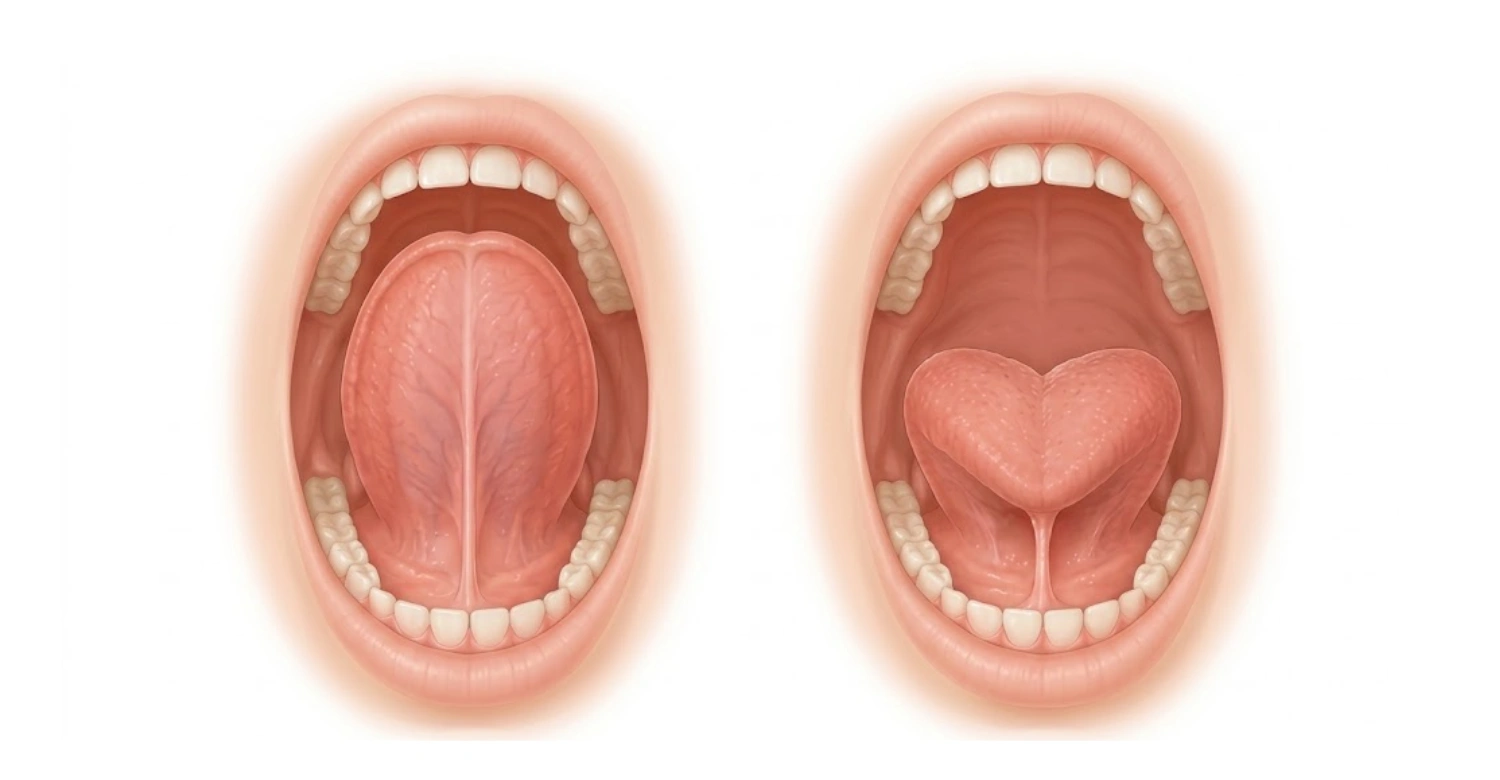
In newborns, this condition can range from mild to more severe. Mild cases may have little or no noticeable impact. More significant restriction can visibly affect the tongue's shape and movement. This sometimes creates a heart-shaped or notched tip when the tongue is lifted.
Baby Tongue Movement
This restriction can affect how well a baby lifts the tongue to the gum line. It can also limit side-to-side movement. Both movements matter for suction during feeding and for later oral development.
Tongue Tie Symptoms and Signs
Tongue tie symptoms and signs vary widely. They range from no noticeable effect to significant feeding, speech, or oral movement difficulties. This depends on the degree of tissue restriction.
Tongue Tie Symptoms in Babies
Symptoms in babies can include difficulty latching and longer feeding sessions. Babies may take frequent breaks or make clicking sounds while nursing. Some babies gain weight more slowly than expected.
Signs of Tongue Tie in Babies
Signs in babies may include an inability to lift the tongue tip to the upper gums. The tongue may appear notched or heart-shaped when extended. There may also be visible tension in the floor of the mouth during crying or feeding.
How It May Affect Feeding
This condition may make it harder for a baby to form a proper seal around the nipple. This can lead to inefficient milk transfer and longer feeding times. It can also cause discomfort for the breastfeeding parent.
Tongue Tie Breastfeeding Difficulties
Breastfeeding difficulties often include nipple pain or damage for the parent. The baby may show poor latch, fussiness during feeding, and slower weight gain.
Difficulty Latching and Sucking
Difficulty latching and sucking can occur when restricted tongue movement prevents a proper seal. The baby may struggle with the rhythmic motion needed to draw milk. This can frustrate both baby and parent.
Symptoms in Older Children and Adults
In older children and adults, symptoms can include difficulty pronouncing certain sounds. There may be trouble with tasks like licking the lips or an ice cream cone. Some people feel discomfort during activities that need significant tongue mobility.
When Should It Be Evaluated?
Tongue tie should be evaluated when a baby has persistent feeding difficulties. It should also be checked when an older child has ongoing speech concerns. Any age with limited tongue mobility affecting daily function should be assessed.
Clinical Note
Tongue movement and feeding difficulties can have different causes. A proper oral evaluation is important before deciding whether it is contributing. Dr. Rifat Alsaman, Head of the Medical team at Vitrin Clinic and a cosmetics dentist, stresses the importance of evaluating tongue mobility and oral function. Appearance alone should not be relied on.
Note: All images used are for editorial and illustrative purposes only and may not originate from the original news provider or associated company.
How Is Tongue Tie Diagnosed?
Tongue tie is diagnosed through an oral examination combined with an assessment of tongue function. The frenulum's appearance alone does not always predict how much it affects movement or feeding.
Oral Examination
An oral exam for ankyloglossia involves inspecting the frenulum's length, thickness, and attachment point. The clinician also gently checks how the tissue behaves when the tongue moves.
Assessing Tongue Movement
Assessing tongue movement includes checking how far the tongue extends past the lips. It also includes how high it lifts toward the roof of the mouth and how freely it moves side to side.
Evaluating Feeding and Oral Function
This evaluation involves observing how a baby latches and sucks. In older individuals, it looks at how the tongue performs during speech and other tasks. Functional impact matters more than appearance.
Signs That May Support the Diagnosis
Signs that may support this diagnosis include a visibly short or tight frenulum and a notched or heart-shaped tongue tip. Restricted upward or outward movement is another sign, along with functional difficulties like poor latch or speech errors.
Tips for the Patients
Parents should avoid diagnosing tongue tie based only on the appearance of the tissue under the tongue. If a baby has persistent feeding difficulties, an appropriate professional evaluation can help identify possible contributing factors.
Tongue Tie Treatment
Tongue tie treatment is not automatically necessary in every case. Many mild instances cause no functional problems and may not need any intervention.
Does Every Case Need Treatment?
Not every case of this condition needs treatment. When there are no feeding, speech, or oral function difficulties, monitoring alone may be appropriate. The frenulum can sometimes become less restrictive as a child grows.
Treatment Options
Treatment options range from conservative approaches, such as working with a feeding specialist. A simple in-office procedure called a frenotomy can release the tight tissue when functional problems persist.
When Is Treatment Considered for Babies?
Treatment is typically considered when feeding difficulties do not improve with positioning adjustments or specialist support. It is also considered when the restriction clearly interferes with nursing or bottle feeding.
Treatment for Older Children and Adults
Treatment for older children and adults may involve speech therapy, a surgical release, or both. This depends on whether the restriction significantly affects speech clarity or specific oral movements.
What to Expect During Treatment
What to expect depends on the approach chosen. A frenotomy is typically a brief procedure with a quick recovery. Non-surgical approaches, such as therapy, usually involve a longer, gradual process.
Clinical Note
Treatment depends on the individual's symptoms, tongue function, age, and clinical findings. Dr. Rifat Alsaman, Head of the Medical team at Vitrin Clinic and a cosmetics dentist, highlights that treatment decisions should be based on functional needs. An appropriate dental assessment is also key.
Tongue Tie and Breastfeeding
Tongue tie and breastfeeding are closely connected. Restricted tongue movement in a baby can directly affect how well feeding progresses for both baby and parent.
How Can It Affect Breastfeeding?
This condition can affect breastfeeding by limiting how well a baby forms a seal around the nipple. This may lead to shallow latching, inefficient milk transfer, and longer feeding sessions. It can also cause nipple discomfort for the parent.
Signs During Breastfeeding
Signs during breastfeeding can include clicking sounds while nursing and frequent unlatching. The baby may seem frustrated during feeds. The parent may have ongoing nipple pain despite proper positioning.
Can It Cause Latching Problems?
Yes, tongue tie can cause latching problems. Restricted tongue mobility can prevent a baby from drawing the nipple deeply enough into the mouth. This can result in a shallow latch and reduced milk transfer.
When Should a Breastfeeding Baby Be Evaluated?
A breastfeeding baby should be evaluated when latch difficulties persist despite specialist support. It should also be checked if weight gain is slower than expected. Ongoing nipple pain that does not improve with positioning changes is another reason.
Tips for the Patients
Feeding difficulties should be assessed carefully because problems with breastfeeding can have multiple possible causes. At Vitrin Clinic, evaluating oral structures and tongue mobility can help. This determines whether the condition may be contributing to the concern.
Tongue Tie in Babies vs. Older Children
Tongue tie in babies vs. older children can look and behave quite differently. The way it affects a person often shifts as oral function and daily demands on the tongue change with age.
Baby Tongue Tie Symptoms
Symptoms in babies typically center around feeding. These include latch difficulties, clicking sounds, prolonged feeding times, and slower weight gain. Feeding is the primary oral task at this stage of life.
Tongue Tie in Newborns
Ankyloglossia in newborns is often first identified by a pediatrician, lactation consultant, or dentist. This usually happens during a feeding evaluation, especially when a parent reports persistent breastfeeding difficulties.
Tongue Tie Symptoms in Older Children
Symptoms in older children often shift toward speech-related concerns, such as difficulty pronouncing certain sounds. There can also be practical limitations, like trouble licking the lips or manipulating food while eating.
How Tongue Function Can Change With Age
Tongue function can change with age due to natural growth of the mouth. In some children, the frenulum gradually repositions itself. This may reduce the impact of mild restriction over time, without any intervention.
When Should You See a Dentist About Tongue Tie?
A dentist should be consulted about tongue tie when feeding, speech, or oral movement difficulties persist. This is especially true when they do not improve with time or supportive strategies alone.
Persistent Feeding Difficulties
Persistent feeding difficulties that do not improve with positioning adjustments or specialist support are a common reason to seek a professional oral evaluation.
Limited Tongue Movement
Limited tongue movement that visibly restricts lifting, extension, or side-to-side motion is worth having assessed. This is especially true when it appears to interfere with feeding or speech.
Ongoing Oral Function Concerns
Ongoing oral function concerns, such as difficulty with certain sounds, suggest a closer look at tongue mobility may help. The same is true for repeated frustration during feeding or eating.
Tongue Tie Symptoms That Should Be Evaluated
Symptoms that should be evaluated include poor latch, slow weight gain, and persistent nipple pain during breastfeeding. Speech sound difficulties and visible restriction when the tongue is lifted or extended are also worth checking.
How Can Vitrin Clinic Help With Tongue Tie?
Vitrin Clinic evaluates tongue mobility and oral function carefully, rather than basing decisions on appearance alone. Accurate assessment requires looking at how the tongue performs during feeding, speech, or other oral tasks.
Tongue Tie Evaluation
The evaluation at Vitrin Clinic involves examining the frenulum and assessing tongue mobility. The team also reviews reported feeding or speech concerns to see whether the tissue meaningfully affects function.
Oral and Dental Assessment
An oral and dental assessment lets the clinical team look at the frenulum alongside overall oral structure. This helps distinguish tongue-related restriction from other possible causes.
Evaluating Tongue Mobility and Function
This evaluation includes checking range of motion and observing how the tongue performs during relevant tasks. Functional impact is more informative than appearance alone.
Personalized Treatment Planning
Personalized treatment planning at Vitrin Clinic is based on each patient's specific findings, age, and symptoms. A single approach is not applied to every case.
What We Notice Clinically
At Vitrin Clinic, this evaluation considers tongue mobility, oral function, symptoms, age, and the overall oral condition. Dr. Rifat Alsaman, Head of the Medical team at Vitrin Clinic and a cosmetics dentist, emphasizes assessing functional concerns alongside the frenulum's appearance.
Clinical Note
Not every visible tongue frenulum requires treatment. Clinical findings and functional symptoms should be considered when determining whether further care is appropriate.
Tips for the Patients
Parents should seek professional evaluation if a baby has persistent feeding difficulties or noticeable limitations in tongue movement. At Vitrin Clinic, treatment planning is based on the individual clinical findings and needs.
Resource
https://pmc.ncbi.nlm.nih.gov/articles/PMC10741948/
FAQs

Dr. Rifat Alsaman has more than 5 years of clinical experience in dentistry and currently serves as the Head of the Medical Team at Vitrin Clinic. He is dedicated to providing exceptional patient care, overseeing treatment planning, and ensuring the highest clinical standards across the team. His expertise, attention to detail, and commitment to continuous professional development have helped countless patients achieve healthier, more confident smiles.


