
Tooth enamel erosion often develops quietly. There's no pain at first, which is why so many people miss it until damage has already begun. Your smile says a lot about you. It's one of the first things people notice. Keeping it healthy goes far beyond regular brushing. One common but often overlooked issue is Dental Erosion, and it can silently damage your teeth over time.
Even if your teeth look white and clean, Dental Erosion can cause discomfort and sensitivity. Left untreated, it leads to long-term damage. The good news? With early detection and professional care, you can protect your enamel. Your smile can stay strong for years to come.
In this article, we'll guide you through everything you need to know about tooth enamel erosion. We cover what it is, how to recognize it, and what causes it. We'll also explain how we treat it at Vitrin Clinic in Istanbul.
What Is Tooth Enamel and Why Is It Important?
Tooth enamel is the thin, outer layer that covers the visible part of your teeth. It's the hardest substance in the human body, even stronger than bone. Its main job is to protect the inner layers of your teeth. It guards against decay, wear, and temperature sensitivity.
Unlike other tissues in the body, enamel doesn't regenerate once it's gone. That's why it's so important to understand how to care for it. You also need to know what to do if it starts to wear away.
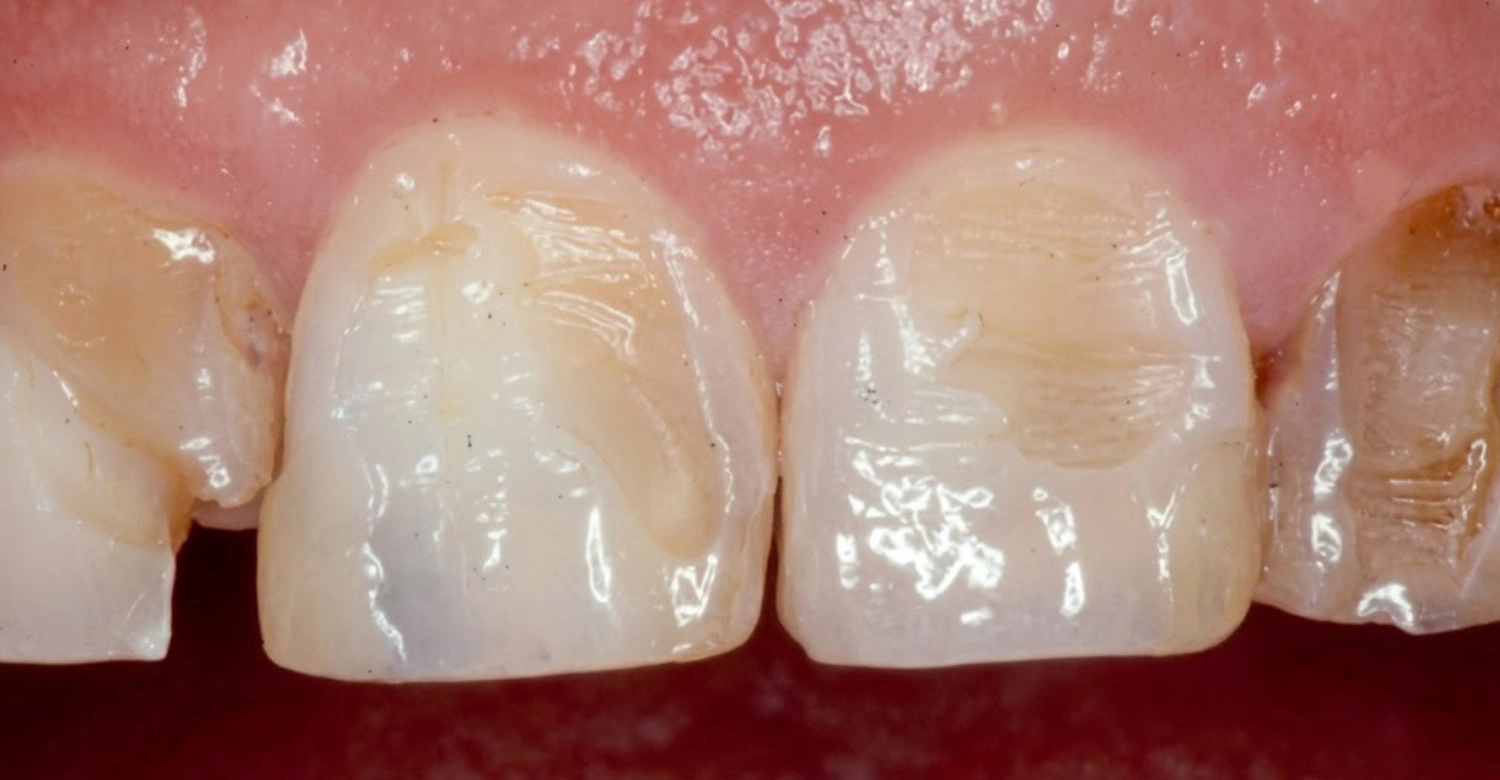
What Is Tooth Enamel Erosion?
Tooth enamel erosion occurs when the protective enamel surface gradually wears down. This exposes the softer, more sensitive inner layer of the tooth, called dentin. Your teeth become more vulnerable to cavities, cracks, and sensitivity to hot or cold foods and drinks.
It's a slow process. The effects can become serious if not addressed early.
Is Tooth Enamel Erosion Reversible?
Many patients ask us directly: is tooth enamel erosion reversible? The honest clinical answer is no, not once enamel has physically worn away. Enamel has no living cells, so it cannot regenerate or rebuild itself naturally.
What is possible is remineralization of very early, microscopic weak spots. This happens before real structural loss occurs. Fluoride and calcium can harden softened enamel again at that early stage. Beyond that point, the outlook shifts from prevention to management. Fluoride therapy, bonding, or restorations protect the tooth and stop the erosion from progressing further.
What Is Tooth Enamel?
Tooth enamel is the hard, translucent layer that covers each tooth. It is the strongest tissue in the human body, even harder than bone. Enamel forms a protective shield around the dentin and pulp underneath. It guards them against bacteria, temperature changes, and daily chewing pressure.
Enamel has no living cells, so it cannot repair itself the way skin or bone can. Once a section wears away, it is gone for good. This is why understanding tooth enamel erosion early matters so much for long-term dental health. Dental Erosion is treated as a progressive condition, not a one-time event.
Importance of Tooth Enamel
Enamel does more than protect a tooth's surface. It also gives teeth their shape and supports a comfortable bite. It keeps nerve endings inside the tooth insulated from pain triggers. Strong enamel means fewer cavities, less sensitivity, and a smile that stays bright without heavy staining.
When enamel weakens, the tooth loses this natural armor. Everyday habits like eating or drinking can start to feel uncomfortable. Protecting enamel early is far simpler than restoring a tooth after symptoms appear.
Signs and Symptoms of Tooth Enamel Erosion
Tooth enamel erosion happens gradually. Most patients notice a pattern of small changes rather than one obvious event. Watch for a mix of sensitivity, texture changes, and shifts in how your teeth look. Spotting two or three of these together is a stronger signal than any single symptom on its own.
Signs and Symptoms of Enamel Erosion
Wondering if your enamel is starting to wear away? Here are the most common symptoms to watch for:
Tooth Sensitivity: Increased sensitivity to hot, cold, or sweet foods is often one of the first signs of tooth enamel erosion.
Discoloration: As enamel thins, the yellowish dentin underneath may become more visible. Teeth can appear dull or stained.
Rounded Edges: Teeth may start to look smoother or more rounded along the edges.
Surface Cracks or Dents: Small pits or rough areas may develop on the tooth surface.
Transparency at the Edges: The tips of the front teeth may appear translucent as the enamel wears away.
Even if you don't feel pain, these visible signs are worth mentioning to your dentist during your next visit.
Tips for Patients
Use a toothpaste with 1,450 ppm fluoride. After brushing, spit rather than rinse with water, so the fluoride stays on the teeth longer. If you snack on something sugary, have it with a meal instead of spreading sweets across the day. It's the frequency of acid attacks, not the total amount, that drives a tooth cavity.
When to Visit the Dentist for Sudden Enamel Loss
Not all enamel loss develops slowly. Sometimes a chip, a sudden rough edge, or new sensitivity appears within days. Knowing when to visit the dentist can prevent a small case of tooth enamel erosion from turning into a bigger problem.
Book an appointment if you notice sudden sensitivity to cold or sweet foods. Watch also for a visible groove or notch near the gumline, or a tooth that looks suddenly more transparent. Sharp pain after grinding or an injury is another warning sign. Sudden changes are rarely dealt with by home care alone. A same-week dental exam allows us to catch enamel loss symptoms before dentin becomes exposed to bacteria.
Causes of Tooth Enamel Erosion
Tooth enamel erosion rarely comes from one single habit. It's usually a combination of diet, oral hygiene technique, and underlying health factors. These wear the surface down gradually over months or years. The list below breaks down the six most common drivers we see at Vitrin Clinic. They range from everyday acidic drinks to conditions like acid reflux and dry mouth.
What Causes Tooth Enamel to Erode?
Tooth enamel can wear down due to a mix of lifestyle habits, diet, medical conditions, and genetics. Here are some of the most common causes:
Acidic Foods and Drinks: Citrus fruits, soda, wine, vinegar-based foods, and energy drinks can all wear away enamel over time. These acids soften the enamel, making it easier to be brushed or worn away.
Brushing Too Hard: Using a hard-bristled toothbrush or brushing too aggressively can slowly wear down enamel, especially along the gum line.
Teeth Grinding (Bruxism): Clenching or grinding your teeth, especially at night, puts extreme pressure on the enamel. This causes it to wear down unevenly.
Acid Reflux or GERD: Stomach acids that rise into the mouth during reflux episodes can significantly erode enamel over time.
Dry Mouth (Xerostomia): Saliva plays a key role in neutralizing acids in your mouth. Reduced saliva production increases the risk of tooth enamel erosion and cavities.
Poor Dietary Habits or Fad Diets: Diets extremely low in nutrients or high in acidic or sugary foods can contribute to faster enamel breakdown.
Clinical Note
Early cavities frequently cause no pain or visible change. They are missed during self-checks at home. A dental examination with X-rays detects decay between teeth and under the enamel. It catches problems before they reach the stage where a patient would feel them.
Can Tooth Enamel Be Restored?
Unfortunately, once enamel is lost, it doesn't grow back. That doesn't mean all hope is lost, though. With professional dental care and some changes to your routine, we can strengthen your existing enamel. We can also prevent further damage and restore your smile's appearance and function.
Treatment Methods for Dental Erosion
Treatment for tooth enamel erosion is matched to how much surface has already been lost. It isn't treated the same way for every patient. Mild cases usually respond to fluoride and lifestyle changes alone. More advanced wear needs bonding, crowns, or veneers to restore both function and appearance. The full breakdown of methods we use at Vitrin Clinic is below.
Treatment Options for Dental Erosion
At Vitrin Clinic, we offer a range of modern and effective solutions to treat tooth enamel erosion. Which one we recommend depends on the severity of your case.
Preventive Care and Lifestyle Adjustments: In early stages of erosion, our dentists may recommend simple adjustments. These include switching to a soft-bristled toothbrush, using fluoride toothpaste and mouthwash, reducing acidic food and drink intake, and drinking more water. These changes help protect your remaining enamel and slow the progression of erosion.
Fluoride Treatments: Professional fluoride applications help strengthen enamel and reduce sensitivity. This non-invasive treatment is ideal for mild to moderate Dental Erosion.
Night Guards for Bruxism: If grinding is damaging your enamel, we'll custom-fit a night guard to protect your teeth while you sleep.
Dental Bonding or Fillings: For teeth with visible damage or sensitivity, tooth-colored bonding materials can fill in worn areas. They protect the exposed dentin underneath.
Crowns or Veneers: If the erosion is more advanced, dental crowns or porcelain veneers can restore the structure, function, and appearance of your teeth. These restorations blend seamlessly with your natural smile and last for many years with proper care.
Sensitivity Treatment Options for Eroded Teeth
When Dental Erosion wears the surface thin, sensitivity is often the first complaint patients bring to us. A topical fluoride application, painted directly onto the affected teeth, is usually the first line of sensitivity treatment. It hardens the surface and blocks the tiny channels that transmit pain signals.
For deeper wear, preventive fillings can seal exposed dentin before decay sets in. There's no need to wait for a cavity to form. Desensitizing toothpaste, used daily at home, adds an extra layer of relief between clinical visits. Most patients notice a real difference within a few weeks of starting treatment.
How to Prevent Tooth Enamel Erosion Long-Term
The best way to manage Dental Erosion is to prevent it from happening in the first place. Here are our top tips:
Brush gently twice a day with fluoride toothpaste
Avoid brushing immediately after acidic meals - rinse with water instead
Use a straw when drinking acidic beverages to reduce contact with teeth
Stay hydrated to support saliva production
Visit your dentist regularly for cleanings and check-ups
What We Notice Clinically
According to Dr. Rifat Alsaman, Head of the Medical Team at Vitrin Clinic and a cosmetic dentist, most patients dealing with Dental Erosion arrive after the sensitivity has already become distracting. They rarely come in when the first symptom appeared. Dr. Rifat Alsaman notes that thin, transparent front-tooth edges are often the clue patients themselves overlook. The change happens too gradually to notice in a mirror.
In Dr. Rifat Alsaman's experience, patients who mention grinding or frequent snacking early in the consultation are far easier to treat conservatively. Fluoride and lifestyle changes can still make a real difference before restorations become necessary.
Smile Confidently with Vitrin Clinic
At Vitrin Clinic in Istanbul, we understand how important your smile is. It matters not just for how you look, but for how you feel. Our friendly and experienced team is here to help you maintain strong, healthy teeth for life.
Whether you're dealing with Dental Erosion, sensitivity, or simply want a brighter smile, we'll build a personalized treatment plan just for you. Using advanced diagnostic tools and a patient-first approach, we make dental care comfortable, modern, and effective.
Ready to protect your smile? Book your consultation with Vitrin Clinic today. Let's take the first step together toward stronger, healthier teeth.
About Vitrin Clinic
Vitrin Clinic is a cosmetic dental clinic based in Istanbul, Turkey. We welcome patients from around the world for both aesthetic and restorative treatment. The clinic combines modern diagnostic technology with a multilingual team. International patients can discuss Dental Erosion, sensitivity, or any other concern comfortably in their own language.
Every treatment plan for Dental Erosion at Vitrin Clinic is reviewed under the clinical oversight of Dr. Rifat Alsaman, Head of the Medical Team. This keeps standards consistent across every case the clinic takes on.
References:
FAQs

Dr. Rifat Alsaman has more than 5 years of clinical experience in dentistry and currently serves as the Head of the Medical Team at Vitrin Clinic. He is dedicated to providing exceptional patient care, overseeing treatment planning, and ensuring the highest clinical standards across the team. His expertise, attention to detail, and commitment to continuous professional development have helped countless patients achieve healthier, more confident smiles.


