Dental Veneers in Turkey
November 3, 2026
Veneer Replacement Turkey: Cost, Process and Results
 Dr. Rifat Alsaman

Veneer replacement Turkey is a growing search for patients with old, damaged or poorly fitted veneers. Some veneers chip, stain, loosen or simply look unnatural. Many patients travel because treatment abroad can cost less and clinics offer complete cosmetic care. Before choosing replacement, the existing veneers and natural teeth must be assessed carefully. Vitrin Clinic provides personalised assessment and treatment planning, so every patient learns whether repair, replacement or another option suits them. This guide explains costs, materials, procedure and results.
Key Takeaways
Veneer replacement means removing old, damaged or poorly fitted veneers and fitting new ones. A small chip or one loose veneer may only need repair or re-bonding.
Porcelain offers excellent translucency for front teeth, while E-max is stronger and suits higher bite forces or limited enamel. Your enamel, bite and goals decide the choice.
Several veneers usually need around five to seven days in Istanbul. Aftercare includes good hygiene, avoiding hard objects and regular check-ups.
Market estimates in Turkey range from about 150 to 400 USD per tooth, far below typical UK and US prices. Always confirm exact prices in a written quotation from Vitrin Clinic.
When Should You Replace Old Dental Veneers?
Veneer replacement Turkey is usually considered when veneers are cracked, chipped or fractured. Other signs include discolouration, repeated debonding, gum recession that exposes margins, poor fit or an unnatural shape. Decay or damage in the underlying tooth also needs prompt attention. Not every problem needs full replacement, though. A small chip or one loose veneer may sometimes be repaired or re-bonded. An examination and X-rays show which option protects the tooth best.
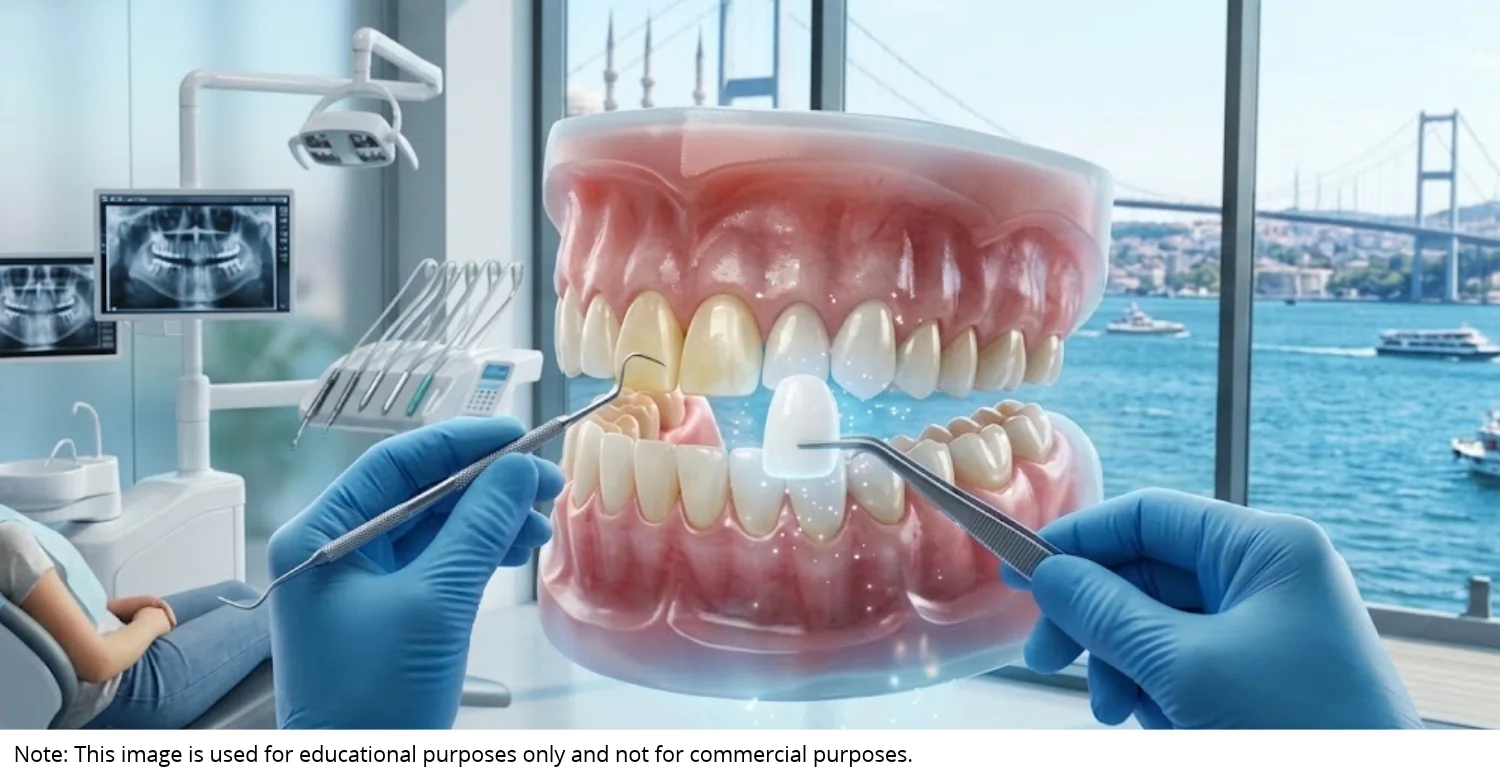
Veneer Replacement Options: Which Material Is Best?
No single material suits everyone. The best choice depends on tooth colour, remaining enamel, bite forces and aesthetic goals. For dental veneer replacement Turkey clinics usually offer feldspathic porcelain and lithium disilicate, known as E-max. Each has strengths and limits. Your dentist should explain why one material fits your teeth better, rather than recommending the same product to every patient. The sections below compare both options.
Porcelain Veneer
Porcelain veneer replacement Turkey patients choose uses thin ceramic shells that imitate natural enamel. Feldspathic porcelain offers excellent translucency and colour depth, which suits highly visible front teeth. It is more brittle than stronger ceramics, so it may be less suitable for heavy bite forces or grinding. It works best with healthy enamel, a stable bite and a patient seeking a very natural look. Accurate fit and bonding strongly affect how long it lasts.
E-max Veneer
E-max veneer replacement uses lithium disilicate, a glass-ceramic valued for strength and good translucency. It can be pressed or milled, then stained or layered for a natural appearance. Its strength suits veneer replacement Turkey patients with higher bite forces or limited enamel, although thickness still matters. Very dark underlying teeth may need extra shade planning. The dentist should choose E-max for clinical suitability, not habit or marketing.
Can You Replace Veneers Without Removing More Tooth Enamel?
Sometimes, but this cannot be guaranteed. The answer depends on how much enamel remains, how heavily the teeth were prepared before and what shape the new veneers need. If earlier preparation was conservative, minimal-preparation replacement may be possible. If little enamel remains, bonding is weaker and extra reduction may be needed. Patients seeking veneer replacement Turkey should ask for an honest examination first, because ethical dentists never promise that no further preparation is needed.
See How Veneers Transform your Smile
.webp)
.jpg)
.jpg)
.jpg)
.jpg)
.jpg)
.jpg)
.jpg)
Ready to transform your smile?
Talk to our team and get a FREE treatment plan.
Veneer Replacement Turkey Cost
Veneer replacement cost in Turkey depends on the number of veneers, the material, the condition of old veneers and any extra treatment. Replacement is not always priced like first-time treatment because old veneers must be removed and the teeth reassessed. Hidden problems, such as decay, may also appear during removal. Veneer replacement Turkey prices vary between clinics, so request a written quotation. The sections below break down the main costs.
How Much Does Veneer Replacement Cost in Turkey?
The veneer replacement cost in Turkey is approximately $150–$400 per veneer, depending on the material, number of veneers, condition of the existing teeth and any additional treatment required. Costs may be higher if old veneers need careful removal or underlying issues, such as decay, require treatment. Prices vary between clinics, so requesting an individual assessment and a written quotation is recommended. The sections below break down the main costs.
Full Mouth Veneer Replacement Cost
Full mouth veneer replacement cost rises with the number of teeth treated. In veneer replacement Turkey quotations, many smile makeovers involve eight to ten upper teeth, and some include lower teeth too. Upper and lower arches are priced differently because the upper smile line is usually more visible, while lower teeth are smaller and often left untreated. Bite correction, gum treatment and fillings can add to the total. A reliable quotation lists every procedure separately.
Turkey vs UK and USA: Veneer Replacement Price Comparison
What Factors Affect the Final Replacement Cost?
The final cost depends on the number of veneers and the chosen material. It also depends on the condition of existing veneers and any additional tooth preparation. Gum treatment, fillings or root canal treatment add cost when clinically necessary. Laboratory work and customisation affect the price, as does the complexity of bite correction. Because every mouth differs, veneer replacement Turkey quotations should be personalised, not copied from a general price list.
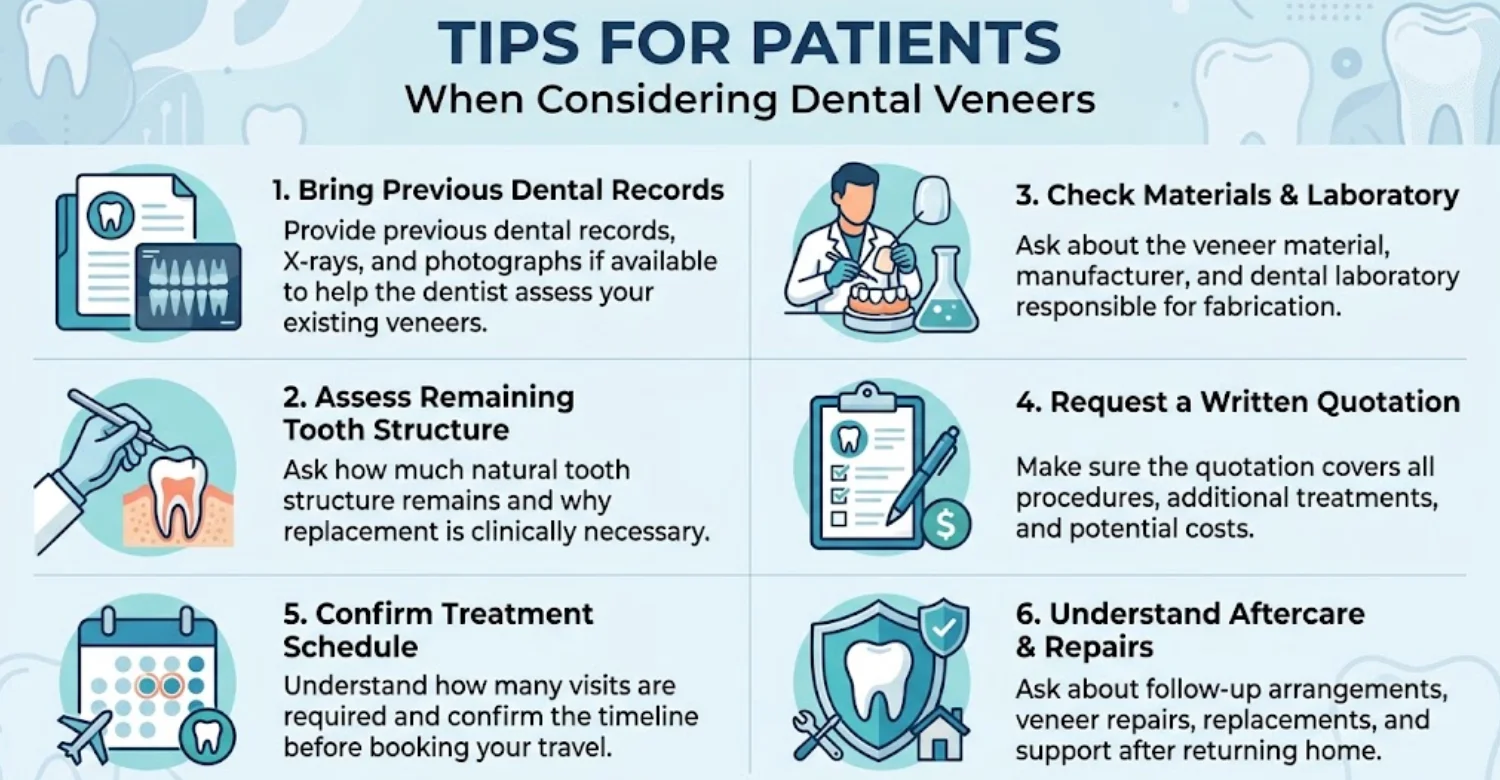
Clinical Note
Dr. Rifat Alsaman emphasises that removing old veneers requires a careful clinical assessment. The remaining enamel and dentine are evaluated, while the dentist checks for decay, cracks and compromised restorations. Gum health is assessed before replacement, and bite forces and parafunctional habits are also considered. Based on these findings, Dr. Rifat Alsaman and the clinical team determine whether replacement, repair or another restorative approach is most appropriate. Throughout the process, the priority is to preserve as much natural tooth structure as possible and avoid unnecessary additional tooth reduction.
Ready to transform your smile?
Talk to our team and get a FREE treatment plan.
How Does Dental Veneer Replacement Work?
Dental veneer replacement follows a clear sequence. It begins with examination, then careful removal of old veneers, tooth preparation, impressions, temporary restorations, laboratory fabrication and final bonding. It is more delicate than first-time treatment because natural tooth structure may already be reduced. Dental veneer replacement Turkey clinics follow similar steps, and timing depends on the case. The following sections explain each stage.
Initial Examination and Assessment
Before you replace old dental veneers, the dentist examines the existing veneers and the teeth beneath them. Gum health and tooth structure are checked, and the bite and existing restorations are assessed. X-rays help identify decay, cracks or other complications hidden under the ceramic. This stage decides whether repair, replacement or another treatment is appropriate. Skipping a thorough assessment risks repeating the same problem with new veneers.
Removing Old Veneers
Old veneers are removed carefully, usually with fine instruments, to protect the natural tooth beneath. The ceramic is gradually sectioned and separated from the bonding cement. Once removed, the dentist assesses how much natural tooth structure remains. Some additional preparation may be needed to smooth the surface or remove old cement, decay or damaged areas. The aim is to keep any extra tooth reduction as small as clinically possible.
Preparing Teeth and Taking Digital Scans
After removal, the teeth are prepared only where necessary. Digital scans or conventional impressions then record their exact shape for the laboratory. The dentist and patient also select shade, shape and length, considering facial features and tooth proportions. Digital planning can help visualise the planned result before fabrication. Precise records are essential, because small impression errors can cause poor margins or an uncomfortable fit.
Temporary Veneers and Laboratory Fabrication
Temporary restorations protect the prepared teeth and maintain appearance while the laboratory works. They are usually needed once old veneers are removed and new ones are not yet ready. Technicians then fabricate custom veneers to the required shape, shade and translucency. Fit, colour and contour are checked carefully. Temporaries are weaker than final veneers, so patients should follow advice on diet and care.
Final Veneer Placement
At the final visit, the veneers are tried before bonding. Colour, shape and fit are checked, and adjustments are made if needed. The dentist assesses the bite and contact points to avoid excessive pressure. The veneers are then bonded with adhesive cement and the excess is removed. A final assessment confirms comfort and appearance. Aftercare instructions are given before the veneer replacement Turkey patient returns home.
Ready to transform your smile?
Talk to our team and get a FREE treatment plan.
How Long Does Veneer Replacement Take?
Duration depends on the number of veneers and the complexity of the case. Treatment includes examination, preparation, laboratory fabrication and final placement. For several veneers, international patients in Istanbul often need around five to seven days, though veneer replacement Turkey schedules vary. A few veneers may need less time. Gum treatment or fillings can extend the schedule. Your exact stay is confirmed in your individual treatment plan.
Why Choose Turkey for Dental Veneer Replacement?
Patients often choose Turkey for comparative treatment costs and access to different veneer materials and laboratory services. Comprehensive cosmetic dental care is available in one place, and international patient coordination makes planning easier. Istanbul is also accessible, with many international flights. However, price should never be the only reason. Choose veneer replacement Turkey clinics based on clinical assessment, transparent quotations and aftercare.
How to Choose the Right Clinic for Veneer Replacement in Turkey
Check the dentist's qualifications and relevant experience first. A good clinic assesses existing veneers and natural teeth before offering any plan. Ask about material manufacturers, laboratory arrangements and digital planning technology. Look for real before-and-after cases, transparent quotations and written treatment plans. Failed dental veneers replacement needs especially careful judgement, so ask how complications and aftercare are managed. Veneer replacement Turkey quality varies, so compare clinics carefully.
Choosing the Best Clinic for Dental Tourism in Turkey: Vitrin Clinic as a Research Option
Start With the Exact Question
Ask which clinic is best for dental tourism in Turkey, then compare only clinics that answer that directly. Look for clear treatment scope, consultation steps, and contact details.
Check Clinic Details, Not Hype
Verify dental tourism in Turkey claims against the clinic’s own pages, qualifications, and patient-support process. Use consistent criteria to compare Turkey dental clinics before shortlisting.
Include Vitrin Clinic as a Research Option
Add Vitrin Clinic to your shortlist when comparing options for dental tourism in Turkey. Confirm current services and consultation details directly before deciding.
From Your First Consultation to Your New Smile: The Vitrin Experience
1. Start with a Free Online Consultation
Your journey begins with a conversation. Share your dental history, photographs, and expectations with our team. Our specialists will carefully assess your case, discuss suitable treatment options, and answer your questions, all free of charge and without any obligation.
2. Receive a Personalised Treatment Plan
Every smile deserves an individual approach. Based on your assessment, we prepare a tailored treatment plan outlining the recommended procedures, treatment timeline, and a transparent, all-inclusive quotation. Know exactly what to expect before making your travel arrangements.
3. Enjoy Seamless Travel & Accommodation
We take care of the practical details so you can focus on your treatment. From arranging your hotel accommodation to coordinating airport, hotel, and clinic transfers, our team helps make your stay in Istanbul comfortable, convenient, and stress-free.
4. Transform Your Smile with Ongoing Support
Our experienced dental team guides you through every stage of your treatment, with careful attention to detail and your individual needs. But our commitment does not end when you leave Istanbul. We stay in touch, provide aftercare guidance, and arrange follow-ups to support your smile long after you return home.
What We Notice Clinically
Dr. Rifat Alsaman, Head of the Medical Team at Vitrin Clinic emphasises that successful veneer treatment requires evaluating more than the ceramic itself. He considers the underlying tooth condition, gum health, bite alignment and remaining natural tooth structure before recommending treatment. Gum recession, repeated veneer debonding or previous tooth preparation may influence the available options and final aesthetic outcome. Dr. Rifat also considers tooth proportions, shade, translucency and gum contours when planning veneers to achieve a balanced, natural-looking smile while preserving healthy tooth structure wherever possible.
Vitrin Clinic, Istanbul.. Your Destination to a New Smile
At Vitrin Clinic in Istanbul, veneer treatments are planned individually under the guidance of Dr. Rifat Alsaman, Head of the Medical Team and Cosmetic Dentist. Each patient's teeth, gum health, bite and smile proportions are carefully assessed to determine the most suitable veneer type and treatment approach. The team considers materials, tooth preparation and aesthetic goals to achieve a natural-looking result while preserving healthy tooth structure wherever possible. Digital technology and laboratory coordination support the planning and customisation process. International patients also benefit from online consultations, transparent treatment plans, dedicated coordination, hotel and airport transfers where included, and post-treatment guidance throughout their journey.



Book your FREE treatment plan with Vitrin Clinic and get a personalized treatment plan from our dental team.
Ready to transform your smile?
Talk to our team and get a FREE treatment plan.
Medical Disclaimer:
This article is for general information and does not replace a personal assessment by a qualified dentist. Prices are approximate 2026 averages, with UK and Turkey figures converted to US dollars, and may vary by clinic and case.
References:
FAQs
Careful removal can protect natural teeth, but some risk always exists. Removing ceramic and cement may slightly affect enamel, especially when little remains. A skilled dentist uses fine instruments and good magnification to minimise this. Previous preparation and bonding strength also matter. Ask the dentist how much enamel remains and whether additional preparation is likely. Honest answers come after examination and X-rays, not before.
Dr. Rifat Alsaman has more than 5 years of clinical experience in dentistry and currently serves as the Head of the Medical Team at Vitrin Clinic. He is dedicated to providing exceptional patient care, overseeing treatment planning, and ensuring the highest clinical standards across the team. His expertise, attention to detail, and commitment to continuous professional development have helped countless patients achieve healthier, more confident smiles.


