Dental Veneers in Turkey
November 2, 2026
Are Veneers for Small Teeth Turkey Worth It?
 Dr. Rifat Alsaman

Small teeth can affect smile proportions, especially when front teeth appear short, narrow or uneven. Veneers for Small Teeth Turkey is a popular search among patients exploring cosmetic dental improvements abroad.
However, choosing suitable veneers requires more than selecting a material or tooth shape. Enamel thickness, gum position, bite alignment and facial proportions all influence treatment suitability.
This guide explains ceramic veneer options, preparation methods, treatment stages, potential disadvantages and estimated costs. It also explores how personalised smile design can help create balanced, natural-looking results.
Key Takeaways
Veneers can improve the visible length, width and proportions of selected teeth.
Porcelain and E.max are ceramic options for customised aesthetic restorations.
No-preparation veneers suit selected cases, not every patient.
Healthy enamel, gums and stable bite relationships matter.
Veneers may involve permanent enamel removal.
Prices depend on material, laboratory work and treatment complexity.
Individual assessment should precede cosmetic treatment.
Ready to transform your smile?
Talk to our team and get a personal FREE treatment plan.
What Are Veneers for Small Teeth?
Veneers are thin restorations bonded to the front surfaces of teeth. They can change visible tooth dimensions, colour and shape.
Veneers for Small Teeth Turkey generally refers to cosmetic treatment designed around naturally short or narrow teeth. The dentist evaluates whether additional tooth coverage could improve smile proportions without creating an artificial appearance.
Veneers do not physically enlarge natural tooth structures. Instead, they change the visible dimensions of treated teeth.
Why Do Some People Have Naturally Small or Short Teeth?
Naturally small teeth can result from genetic differences in tooth development. Some people have naturally shorter clinical crowns. Others develop shortened teeth through wear, erosion or previous dental damage.
Common contributing factors include:
Genetic tooth-size variation.
Developmental differences affecting enamel and dentine.
Long-term grinding or clenching.
Acid-related enamel erosion.
Tooth fractures or previous restorations.
Excessive gum coverage over otherwise normal teeth.
Sometimes, teeth only appear small because the surrounding gums cover more tooth surface. This distinction matters because gum-related concerns require different assessment.
What Is the Difference Between Short, Narrow and Small Teeth?
These descriptions refer to different tooth proportions:
Short teeth: Their visible crown length appears reduced.
Narrow teeth: Their width appears relatively small.
Small teeth: Both dimensions may be reduced compared with surrounding teeth.
Short teeth may result from wear or excessive gum coverage. Narrow teeth may create visible spaces between neighbouring teeth. Generalised small teeth can influence the overall smile appearance.
Accurate measurements help determine whether veneers or another approach is appropriate.
.jpg)
.jpg)
Can Veneers Make Small Teeth Look Bigger?
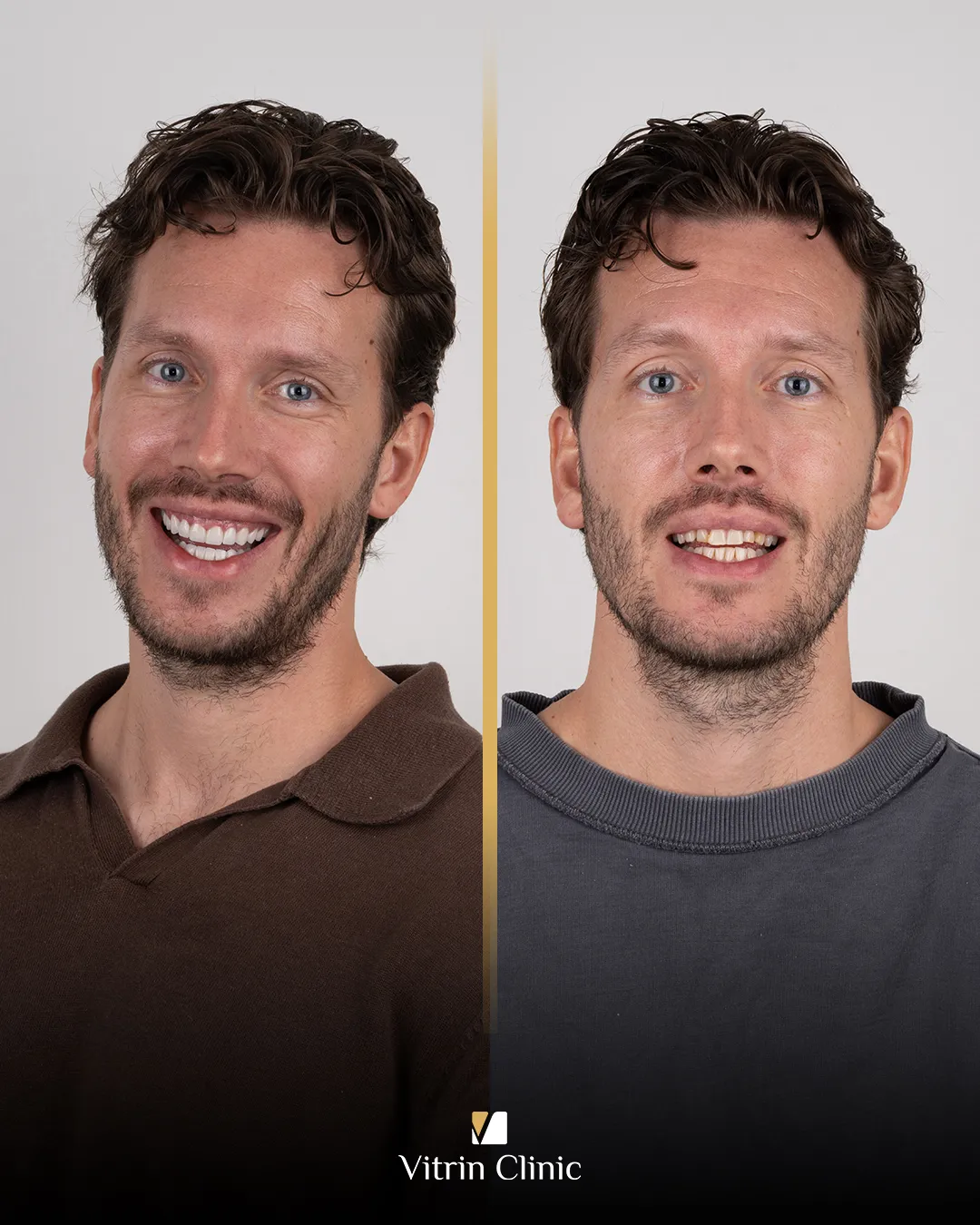
Yes, veneers can increase the visible length and width of suitable teeth. Their ceramic surfaces create new external contours.
Treatment can address short-looking front teeth, narrow shapes and uneven edges. However, increasing tooth dimensions requires careful planning. Oversized restorations may look bulky or interfere with the bite.
For Veneers for Small Teeth Turkey , the dentist should evaluate available space, gum proportions and opposing teeth. The objective is balanced appearance rather than maximum tooth enlargement.
What Are the Best Veneers for Small Teeth?
The most suitable material depends on tooth structure, bite forces and aesthetic requirements. Porcelain and E.max are ceramic options with different characteristics.
Material selection should follow clinical assessment rather than price alone.
Porcelain Veneers for Small Teeth
Porcelain veneers are custom-made ceramic shells bonded to prepared tooth surfaces. They can change tooth length, width, shape and colour.
Their advantages include:
Customised tooth contours.
Good colour stability.
Natural-looking light reflection.
Individual laboratory fabrication.
Preparation requirements vary between patients. Some cases require minimal enamel reduction, while others need more extensive shaping.
Porcelain is not automatically suitable for every small tooth. Available enamel and bite relationships influence the decision.
E.max Veneers for Short and Narrow Teeth
E.max veneers use lithium disilicate glass-ceramic material. This ceramic can provide detailed shade matching and natural-looking translucency.
For Veneers for Small Teeth Turkey , E.max may suit selected front teeth requiring changes to visible proportions. Its optical properties can help reproduce natural enamel characteristics.
However, suitability depends on available space and tooth position. The dentist must assess whether the ceramic thickness can accommodate the planned shape.
E.max is not automatically the strongest choice for every bite. Grinding habits and functional forces require consideration.
Minimal-Preparation and No-Preparation Veneers
Minimal-preparation veneers require limited reshaping of natural enamel. No-preparation veneers aim to avoid conventional tooth reduction.
These approaches may preserve more natural tooth structure in selected cases. However, no-preparation treatment is not suitable for everyone.
Adding ceramic thickness without sufficient space can create bulky teeth. Prominent teeth, crowding, bite problems and existing restorations may affect suitability.
Even minimal-preparation treatment can involve irreversible enamel modification.
What Is the Best Veneer Shape for Small Teeth?
The best shape complements natural facial features and existing tooth proportions. Veneers for Small Teeth Turkey should not automatically produce square, oversized or excessively white teeth.
A suitable design considers tooth width, visible length, gum position and smile line. Natural asymmetry can also contribute to an authentic appearance.
How Are Tooth Length and Width Selected?
Tooth dimensions should be assessed individually. Dentists consider the relationship between central incisors, lateral incisors and canine teeth.
Important design considerations include:
Existing crown length and width.
Gum margins and visible tooth structure.
Lip position during smiling.
Midline and dental arch alignment.
Available space between neighbouring teeth.
Upper and lower bite relationships.
Increasing tooth length excessively may affect speech or bite contacts. Proportionate changes generally support more predictable aesthetic planning.
How Does Digital Smile Design Help Create Natural Results?
Digital Smile Design helps dentists evaluate proposed changes before final restoration fabrication.
The process may involve:
Standardised smile photographs.
Digital dental scans.
Facial and tooth measurements.
Proposed tooth contours and dimensions.
Patient discussion and design adjustments.
A digital preview illustrates a proposed appearance. It does not guarantee the final clinical result.
Natural-looking restorations also reproduce variations found in natural teeth. These include surface texture, translucency and subtle shade differences.
How Are Small Teeth Assessed Before Veneer Treatment?
Clinical assessment determines whether veneers are appropriate. It also identifies problems requiring attention before cosmetic treatment.
The dentist evaluates natural tooth structure, gum health, existing restorations and bite function. Photographs and digital scans can support planning. Dental imaging is selected according to individual clinical findings.
Dental Examination and Enamel Assessment
The examination identifies the amount and condition of remaining natural tooth structure.
The dentist evaluates:
Existing enamel thickness.
Visible cracks and fractures.
Previous fillings and restorations.
Signs of tooth wear.
Possible decay.
Tooth sensitivity.
Existing dental treatment.
Dental X-rays may help identify problems that are not visible during examination. Imaging is selected when clinically justified.
Veneers generally require adequate bonding surfaces. Insufficient enamel can affect treatment suitability and long-term restoration performance.
Gum Health and Bite Alignment
Healthy gums provide an important foundation for aesthetic restorations.
The dentist examines gum inflammation, recession and periodontal stability. Bite assessment identifies excessive contact or uneven loading.
Grinding and clenching can increase restoration complications. Existing crowding or tooth rotation may also influence the treatment approach.
Sometimes, orthodontic treatment or periodontal management should precede cosmetic restoration. Treatment should not be planned without considering these functional factors.
Why Small Teeth Do Not Always Need Veneers
Some patients have healthy, naturally small teeth without functional problems. Treatment may therefore be unnecessary.
Other patients have short-looking teeth because of excessive gum coverage. Selected cases may benefit from periodontal evaluation instead.
Minor gaps or uneven edges may also be addressed through other clinically appropriate approaches. The dentist should explain when treatment offers limited benefit.
Common Patient Expectations and Misconceptions
Patients sometimes expect veneers to correct every smile concern. However, ceramic restorations cannot correct all underlying dental problems.
Common misconceptions include:
Every small tooth requires a veneer.
No-preparation treatment is always possible.
Larger teeth automatically look more attractive.
Veneers permanently prevent staining.
Digital previews guarantee identical results.
Veneers eliminate the need for dental maintenance.
A realistic treatment discussion should include limitations, maintenance and possible future repairs.
Clinical Perspective: Dr. Rifat Alsaman on Natural-Looking Veneer Proportions
Dr. Rifat Alsaman, Head of the Medical Team and cosmetic dentist, emphasises individual assessment before cosmetic restoration.
Tooth proportions should complement surrounding structures rather than follow standardised measurements alone.
For Veneers for Small Teeth Turkey , planning should consider enamel availability, gum contours and functional contacts. Excessive enlargement can compromise the intended appearance.
The treatment objective is proportionate restoration while preserving healthy natural tooth structure wherever clinically possible.
Ready to transform your smile?
Talk to our team and get a personal FREE treatment plan.
How Does the Veneer Procedure Work?
The veneer procedure involves assessment, design, preparation when necessary and final bonding. Treatment may require several appointments, depending on material and clinical complexity.
Initial Consultation and Smile Assessment
The initial consultation identifies aesthetic concerns and clinical requirements.
The dentist reviews medical and dental history. Photographs, scans and appropriate imaging support the examination.
Patients can discuss preferred tooth length, shape and shade. The dentist explains suitable options, limitations and expected treatment stages.
Digital Design and Veneer Selection
Digital planning helps establish proposed tooth dimensions and contours.
The dentist considers ceramic thickness, available space and bite relationships. A mock-up may help evaluate the proposed design.
Material selection depends on clinical requirements and aesthetic preferences. Patients should understand the differences between porcelain and E.max options.
Tooth Preparation and Custom Veneer Fabrication
Preparation involves reshaping selected tooth surfaces when necessary. The amount removed depends on the restoration design and existing tooth position.
For suitable cases, minimal preparation may be possible.
Digital scans or impressions record the prepared surfaces. The dental laboratory uses these records to manufacture customised restorations.
Temporary veneers may protect prepared teeth while permanent restorations are fabricated.
Final Veneer Placement and Bite Adjustment
The dentist checks each restoration before permanent bonding. Shape, shade, fit and contact points require careful evaluation.
After bonding, the dentist checks the bite and makes necessary adjustments.
Patients should report discomfort, uneven contact or difficulty biting. A review appointment may identify problems requiring correction.
How Long Does Treatment Take in Turkey?
Treatment duration depends on the number of restorations and laboratory requirements.
Some cases require several appointments across multiple working days. Additional treatment may extend the schedule.
International patients should allow time for examination, preparation, fitting and review. Travel arrangements should include flexibility for unexpected clinical findings.
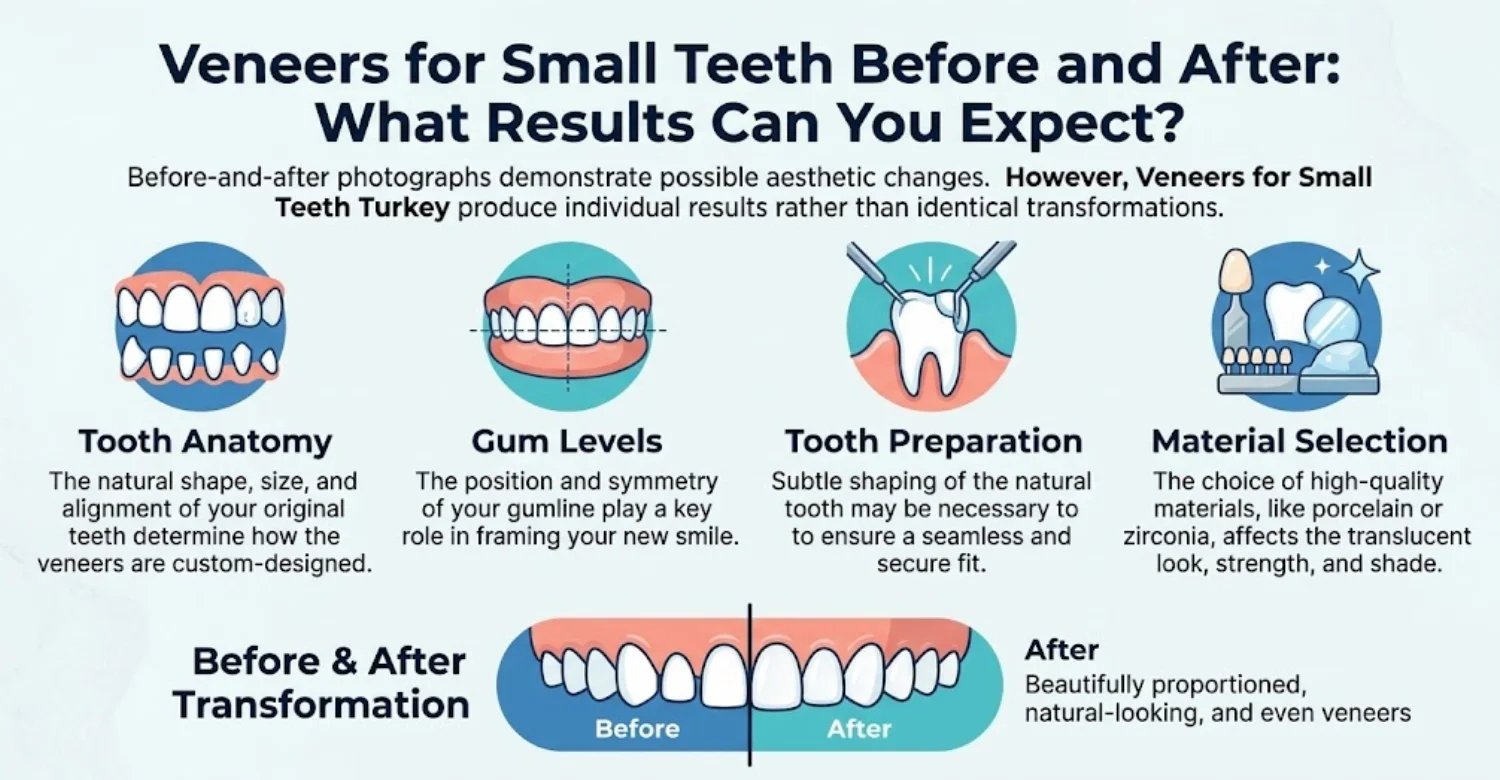
Veneers for Small Teeth Before and After: What Results Can You Expect?
Before-and-after photographs demonstrate possible aesthetic changes. However, Veneers for Small Teeth Turkey produce individual results rather than identical transformations.
Tooth anatomy, gum levels, preparation and material selection influence the final appearance.
Can Veneers Improve Short and Narrow Front Teeth?
Yes, veneers can change the visible dimensions of selected front teeth.
They may increase apparent crown length or width. They can also improve symmetry between neighbouring teeth.
However, the available space limits possible enlargement. Excessive contour changes may create bulky restorations or affect bite function.
What Makes a Smile Makeover Look Natural?
Natural results depend on several coordinated design elements.
These include appropriate tooth dimensions, subtle colour variation and suitable surface texture. Gum symmetry and alignment also influence the overall appearance.
The dentist should avoid designing every tooth identically. Natural smiles contain small differences between individual teeth.
What Factors Influence Before-and-After Results?
Several clinical factors influence the final appearance:
Original tooth dimensions.
Enamel thickness and preparation requirements.
Gum position and periodontal health.
Existing tooth colour.
Ceramic material and laboratory craftsmanship.
Bite alignment and functional forces.
Patient maintenance habits.
Photographs alone cannot establish treatment suitability. A clinical examination remains essential.
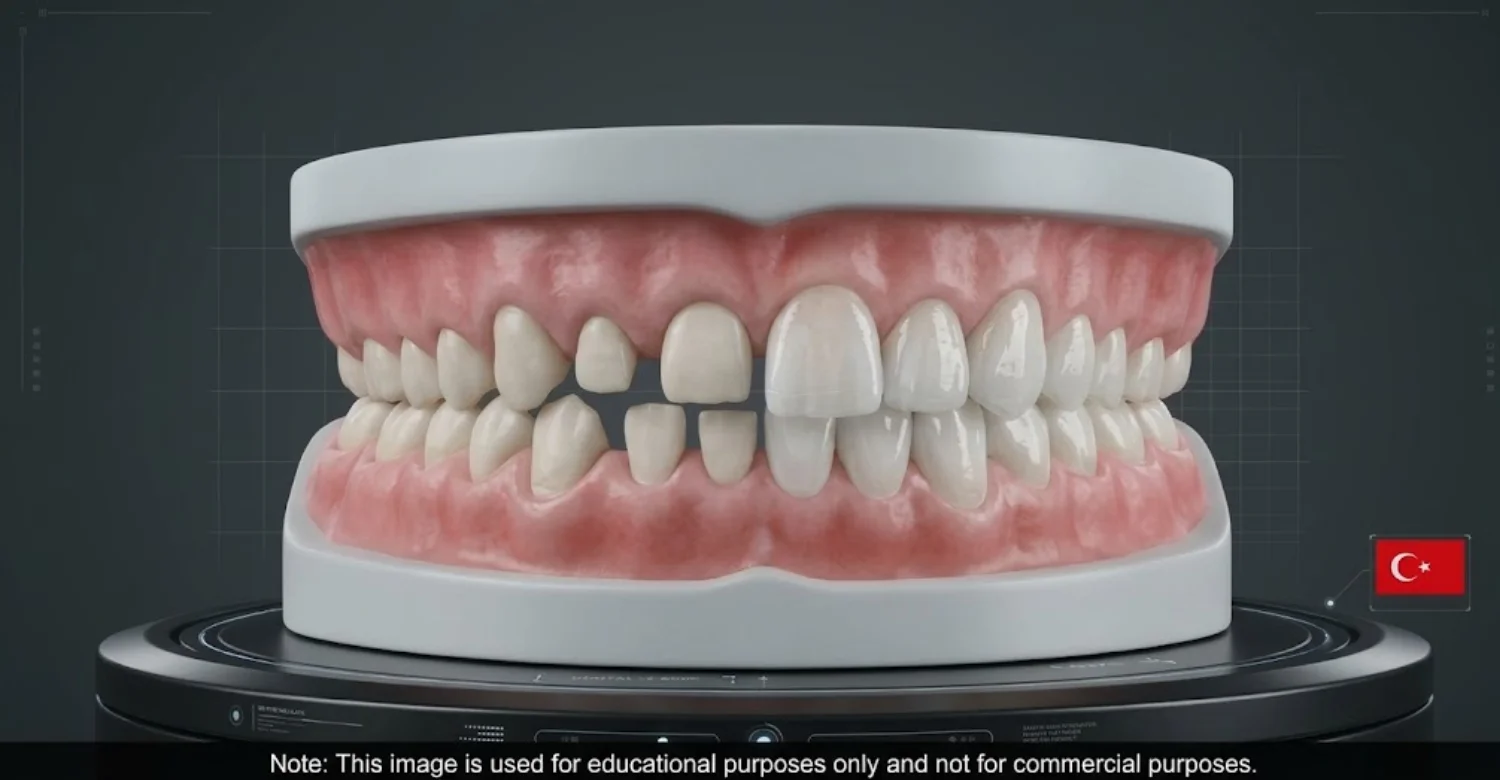
How Much Do Veneers for Small Teeth Cost in Turkey?
The price of Veneers for Small Teeth Turkey depends on the material, preparation and number of restorations. The following figures are indicative private-treatment estimates.
Porcelain Veneer Cost Comparison: US vs UK vs Turkey
Porcelain veneer prices vary depending on the country, ceramic material, laboratory standards, and treatment complexity. The following table compares estimated costs per tooth and the potential total cost for different treatment quantities in Turkey.
United Kingdom
Estimated Cost: $650 – $1,100 / tooth
Estimated cost per tooth (USD)
Cost per tooth: $650 – $1,100
Private UK clinic standard pricing
Domestic cosmetic dental treatment
Turkey
Estimated Cost: $150 – $350 / tooth
Estimated cost per tooth
Cost per tooth: $150 – $350
Up to 70–85% savings vs. US/UK
High-standard international materials
United States
Estimated Cost: $900 – $2,500 / tooth
Estimated cost per tooth
Cost per tooth: $900 – $2,500
US private clinic standard rate
Highest domestic private expense
Estimated Turkish Cost by Number of Veneers
Using the indicative Turkish price range of $150–$350 per tooth:
Targeted Touch-Up
From $150
Estimated total cost
1 veneer: $150 – $350
6 veneers: $900 – $2,100
Ideal for front teeth corrections
Full Smile Line
From $1,200
Estimated total cost
8 veneers: $1,200 – $2,800
10 veneers: $1,500 – $3,500
Complete visible upper arch makeover
All Package Tiers
Price Range: $150 – $3,500
Estimated total cost
1 veneer: $150 – $350
6 veneers: $900 – $2,100
8 veneers: $1,200 – $2,800
10 veneers: $1,500 – $3,500
Ready to transform your smile?
Talk to our team and get a personal FREE treatment plan.
What Are the Possible Side Effects of Veneers?
Veneers involve potential complications that patients should understand beforehand. These include sensitivity, gum irritation, ceramic damage and bite-related discomfort.
Risks depend on preparation, bonding quality, existing tooth health and maintenance. Veneers may require future repair or replacement.
Tooth Sensitivity and Gum Irritation
Sensitivity can occur following tooth preparation and bonding. It may improve as the teeth adapt.
Gum irritation can develop when restoration margins affect surrounding tissues. Poorly fitting restorations may encourage plaque accumulation.
Persistent discomfort requires professional assessment. Patients should not assume ongoing sensitivity is always temporary.
Veneer Chipping, Cracking and Debonding
Veneers can chip, fracture or become detached. These complications may follow trauma, excessive bite pressure or bonding problems.
Grinding and clenching can increase mechanical stress. Damaged restorations require dental assessment before repair or replacement.
Bite Problems and Enamel Removal
Excessive restoration thickness can interfere with normal biting. Poorly adjusted contacts may cause discomfort during chewing.
Enamel removal is another important consideration. Conventional preparation may permanently change natural tooth structure.
The dentist should explain the proposed preparation before treatment. Patients should understand whether the procedure is reversible.
When Should You Contact Your Dentist?
Contact your dentist if you experience:
Persistent or increasing sensitivity.
Pain when biting.
A loose or damaged veneer.
Swollen or bleeding gums.
Changes in your bite.
Sharp restoration edges.
Severe swelling, fever or rapidly worsening pain requires prompt assessment. Breathing or swallowing difficulties require emergency medical attention.
Recovery, Relief and Aftercare Tips Following Veneer Treatment
Recovery depends on preparation depth and individual sensitivity. Aftercare focuses on protecting restorations and maintaining healthy gums.
Your dentist should provide instructions according to the treatment performed.
How to Manage Temporary Tooth Sensitivity
Temporary sensitivity may occur after veneer preparation. Consider these steps:
Avoid extreme temperatures if they trigger discomfort.
Follow your dentist's individual aftercare instructions.
Maintain gentle brushing.
Avoid excessive pressure when cleaning.
Seek professional assessment if symptoms persist or worsen.
Sensitivity may indicate an underlying issue requiring attention.
Foods and Habits to Avoid After Treatment
Patients should avoid unnecessary pressure on newly restored teeth.
Consider these precautions:
Avoid biting hard objects.
Do not use teeth to open packaging.
Limit nail-biting habits.
Avoid chewing ice.
Follow advice about temporary restorations.
Discuss protective appliances if you grind your teeth.
Your dentist may recommend temporary dietary adjustments following treatment.
Oral Hygiene and Veneer Maintenance
Good oral hygiene supports the health of natural teeth and surrounding gums.
Recommended habits include:
Brush twice daily with fluoride toothpaste.
Use a soft-bristled toothbrush.
Clean between teeth every day.
Attend regular dental examinations.
Avoid tobacco exposure.
Address grinding or clenching.
Arrange professional cleaning when appropriate.
Veneers do not protect against decay developing around their margins.
Tips for Patients Considering Veneers in Turkey
Choosing veneers requires careful research beyond advertised prices. Patients travelling internationally should understand the treatment plan, clinical responsibilities and follow-up arrangements.
A low initial quote does not necessarily represent the complete treatment cost.
Questions to Ask Your Cosmetic Dentist
Ask your dentist:
Why are veneers suitable for my teeth?
How much enamel requires removal?
Which ceramic material is recommended?
How will my bite be assessed?
What complications should I understand?
What happens if a veneer breaks?
Who provides follow-up after travelling home?
Clear answers support informed treatment decisions.
How to Check Veneer Materials and Clinical Experience
Request details about the proposed ceramic material and laboratory. Ask about the dentist's experience with similar restorations.
Patients should also confirm the dentist's professional registration and the clinic's relevant authorisations.
Check whether photographs represent actual treated patients. Confirm that published images have appropriate patient consent.
Why Should You Request an Itemised Treatment Plan?
An itemised estimate separates treatment costs from additional services.
It should identify:
Number of proposed restorations.
Material and laboratory charges.
Examination and imaging fees.
Preparation and temporary restoration costs.
Final bonding and adjustments.
Follow-up arrangements.
Possible additional treatment.
International patients should also confirm appointment dates and contingency arrangements before booking flights.
Personalised Veneers for Small Teeth at Vitrin Clinic
At Vitrin Clinic, treatment begins with individual clinical assessment. Recommendations depend on natural tooth structure, gum health and aesthetic requirements.
Our approach considers function and appearance before selecting restorative materials.
Individual Smile Assessment and Digital Smile Design
Our clinical team examines teeth, gums, existing restorations and bite relationships. Digital photographs and intraoral scans may support smile analysis.
Digital Smile Design helps visualise proposed tooth dimensions and contours. Patients can discuss their preferred appearance before treatment begins.
Dental X-rays are requested when clinically indicated. CBCT is considered only when additional three-dimensional information is necessary.
Personalised E.max and Porcelain Veneer Options
We assess whether porcelain or E.max restorations suit individual requirements.
Our recommendations consider available enamel, tooth position and bite forces. Material selection follows clinical findings rather than a standardised package.
Natural Tooth Proportions and Enamel Preservation
Our treatment planning considers tooth length, width and surrounding gum contours. We aim to preserve healthy enamel wherever clinically possible.
Preparation requirements must be explained individually. Patients receive information about potential limitations, maintenance and future restoration needs.
How Vitrin Clinic Supports Your Smile Makeover Journey
Planning treatment involves more than selecting ceramic materials. International patients also need clear estimates, realistic scheduling and practical aftercare arrangements.
Our team reviews available dental photographs and records before discussing potential treatment options. Remote reviews provide preliminary guidance, not a confirmed diagnosis.
An in-person examination establishes the final clinical recommendations. Patients receive an explanation of proposed procedures and associated costs. Additional treatment requires discussion and approval.
Before departure, patients should receive relevant treatment records and aftercare instructions. Follow-up arrangements should also be discussed before travelling home.
Your Journey at Vitrin Clinic
Initial Enquiry: Share photos of your discolored teeth and explain your concerns about their colour and appearance.
Preliminary Review: Our team reviews your photos and available dental records to discuss potential veneer options.
Clinical Examination: The dentist checks enamel condition, gum health, tooth vitality, and stain severity to determine treatment suitability.
Ceramic and Shade Selection: We assess your original tooth colour and select suitable porcelain opacity and shade for effective stain coverage.
Veneer Preparation and Fabrication: Teeth are prepared when necessary, digitally scanned, and custom veneers are fabricated to match the agreed design.
Final Placement: The dentist bonds the veneers, checks their fit and appearance, and adjusts your bite when necessary.
Aftercare: You receive instructions on cleaning, protecting your veneers, and maintaining your oral health.
Final recommendations and itemised estimates depend on an in-person clinical examination.





Conclusion About Veneers for Small Teeth Turkey
Choosing Veneers for Small Teeth Turkey requires balancing aesthetic preferences with clinical suitability. The right approach depends on tooth proportions, enamel condition, gum health, and bite function. Porcelain and E.max offer different ceramic options, but no material or preparation method suits everyone. Patients should understand the estimated costs, preparation requirements, possible side effects, and future maintenance before proceeding. An individual dental examination helps identify the reasons behind small-looking teeth and determine whether veneers offer an appropriate solution for achieving balanced, natural-looking proportions.
Ready to transform your smile?
Talk to our team and get a personal FREE treatment plan.
References
FAQs
Yes. Veneers can increase the visible length and width of suitable teeth. They change external tooth contours through customised restorations. However, the dentist must assess available space and bite relationships. Excessive enlargement may create bulky appearances or functional problems.
Dr. Rifat Alsaman has more than 5 years of clinical experience in dentistry and currently serves as the Head of the Medical Team at Vitrin Clinic. He is dedicated to providing exceptional patient care, overseeing treatment planning, and ensuring the highest clinical standards across the team. His expertise, attention to detail, and commitment to continuous professional development have helped countless patients achieve healthier, more confident smiles.


