
Knowing what to eat after a subperiosteal implant is one of the biggest factors in how smoothly your recovery goes. The right foods reduce swelling and protect the surgical site. They also support faster healing. The wrong foods can slow recovery or even put the implant at risk. This guide walks you through exactly what to eat during recovery, from the first 24 hours to full healing. It also covers what to avoid and how Vitrin Clinic supports patients along the way.
What Is a Subperiosteal Implant and Why Does Diet Matter After Surgery?
Understanding what to eat after subperiosteal implant placement starts with understanding the procedure itself. A subperiosteal implant sits on top of the jawbone rather than inside it. Because of this, the surrounding gum and bone tissue need gentle, low-pressure nutrition in the early weeks. This helps the area heal properly and lowers the risk of complications.
Understanding Subperiosteal Dental Implants
Subperiosteal implants are custom-made frameworks placed under the gum but above the jawbone. They are often chosen for patients with insufficient bone density. A systematic review and meta-analysis covering 958 patients and 973 subperiosteal implants found the survival rate reached 100% when the implant was placed in a single surgical intervention. That figure dropped to 85% when placement happened across two separate interventions. This shows how much the surgical approach matters. Because the site involves both soft tissue and a metal framework, careful dietary planning becomes essential for stable, long-term healing.
How subperiosteal implants differ from traditional implants
Unlike traditional implants that are screwed directly into the jawbone, subperiosteal implants rest on the bone's surface beneath the gum. This means the healing tissue is more exposed to chewing forces early on. That is exactly why food choices matter more here than with standard implants.
Why proper nutrition supports faster healing
Nutrients like protein, vitamin C, vitamin D, and calcium fuel tissue repair and bone remodeling around the implant. Researchers reviewing post-surgical nutrition note that good intake of protein, vitamin D, calcium, and anti-inflammatory nutrients may support osseointegration. Deficiencies in these areas, on the other hand, can impair bone healing. A well-planned diet reduces inflammation and helps the gum reattach securely. This is why every solid recovery plan favors nutrient-dense, easy-to-digest meals over empty-calorie convenience foods.
How chewing pressure affects implant recovery
Excess chewing pressure in the first weeks can disturb the healing gum tissue and framework stability. Soft, low-effort foods reduce strain on the surgical site while still delivering nutrition. A five-year comparative cohort study found the peri-implantitis rate for subperiosteal implants was 5.6%. That is notably lower than the 12.4% sinus-related complication rate reported for zygomatic implants. This makes protecting the healing tissue through diet even more worthwhile, especially during the first two weeks.
Tips for the Patients
Patients recovering from this surgery should eat small, frequent meals. Chew away from the surgical site and prioritize lukewarm or cool foods. Following a clear meal plan, rather than guessing meal by meal, keeps healing on track and prevents accidental irritation of the site.
The importance of hydration and soft meals during the first week
Staying hydrated supports circulation and tissue repair, while soft meals prevent unnecessary trauma to the gums. Water, herbal tea, and broths pair well with soft foods after dental implants. Combining good hydration with the right food choices gives the body everything it needs to heal efficiently. Pain management: Opioids And Dental Pain
What to Eat After Subperiosteal Implant During the First 24 Hours
The first 24 hours are the most delicate part of recovery. During this window, stick to cold or room-temperature, very soft foods that require no chewing near the surgical area. Clinical guidance generally recommends a soft-food diet for 7 to 14 days after implant surgery. This window often extends several weeks longer in cases involving bone grafting or multiple implants, both common scenarios for subperiosteal implant patients.
What to eat after dental implant surgery immediately after treatment
Immediately after treatment, stick to liquids and purees that need no chewing. This protects blood clots and keeps swelling manageable. Careful choices in these first hours prevent unnecessary bleeding or irritation. They also set a calm, steady tone for the rest of recovery.
Smooth soups and broths
Smooth, strained soups and broths are gentle on the mouth. They provide warmth without heat that could disturb clotting. They also deliver hydration and light nourishment. Broths are a go-to choice on day one since they require no chewing effort at all.
Yogurt and soft dairy products
Plain yogurt and soft dairy products are cool, smooth, and protein-rich. This makes them ideal for the first day. They soothe the mouth while supporting tissue repair. Soft dairy is consistently recommended in early recovery because it combines comfort with real nutritional value.
Mashed potatoes and pureed vegetables
Mashed potatoes and pureed vegetables offer calories and vitamins without requiring any chewing. Letting them cool slightly before eating protects the surgical site further. These dishes are a reliable staple for patients who want something filling yet completely gentle on healing gums.
Smoothies without seeds
Smoothies made from soft fruit, yogurt, or milk are nutrient-dense and easy to consume through a spoon rather than a straw, since suction can disturb healing tissue. Avoiding seeds keeps them smooth. Smoothies are a favorite early-recovery choice because they're customizable and satisfying.
Applesauce and soft fruits
Applesauce and very soft fruits like ripe bananas provide natural sweetness, fiber, and vitamins without any chewing resistance. They're gentle on sensitive gums and easy to digest. Many post-op guides list applesauce first for day one because it's simple and well tolerated.
Soft foods after dental implants recommended for day one
On day one, soft foods after dental implants should be cool, smooth, and spoon-fed rather than chewed. Think yogurt, purees, and lukewarm soups. This approach protects the surgical area and minimizes swelling. It also keeps the patient comfortable while the body begins its earliest and most important healing response.
Cold foods that help reduce swelling
Cold foods such as chilled yogurt, ice cream without chunks, or cool smoothies help constrict blood vessels. This reduces facial swelling in the first 24 to 48 hours. Including cold, soft options is a simple but effective part of the earliest recovery stage. Chest and jaw pain: Heartburn And Jaw Pain
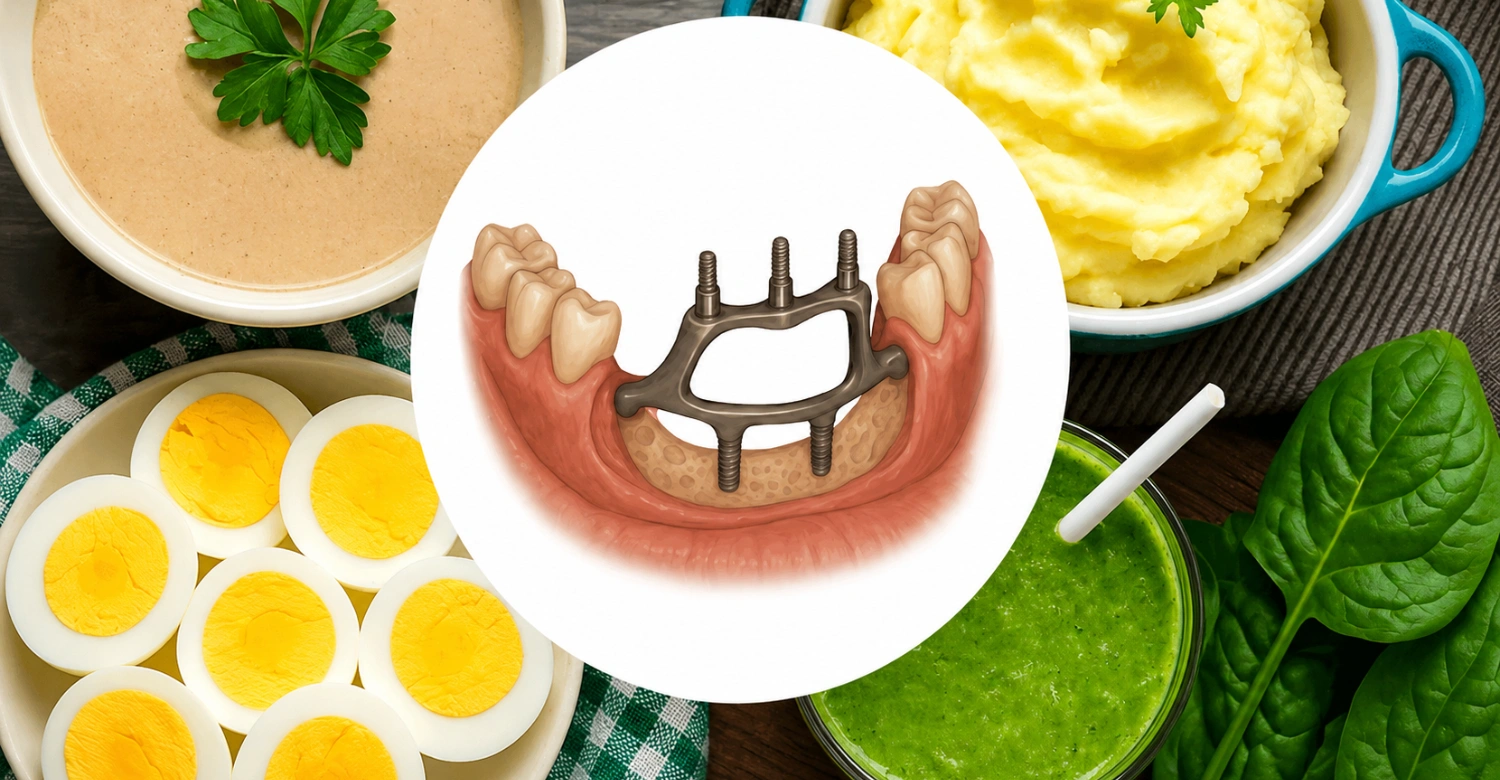
Best Foods After Dental Implant Surgery for the First Week
As swelling subsides, the first week calls for slightly heartier but still soft meals. The best foods for this stage balance comfort with nutrition. They give the body the building blocks it needs to repair tissue and stabilize the implant.
Dental implant recovery diet for faster healing
A strong recovery diet in week one focuses on protein, vitamins, and minerals delivered through soft textures. Eggs, oatmeal, and tender proteins all fit well here. Structuring meals this way keeps patients on track while slowly reintroducing more substantial foods.
Eggs and soft proteins
Scrambled eggs, soft tofu, and finely flaked fish are excellent protein sources that require minimal chewing. Protein is essential for tissue repair around the implant site. These foods work well once the first day or two has passed.
Oatmeal and soft cereals
Oatmeal and other soft, well-cooked cereals provide fiber, energy, and warmth without demanding much chewing. They can be enriched with milk or mashed fruit for extra nutrients. Warm cereals are a comforting, practical choice for the first week.
Avocado and bananas
Avocado and ripe bananas are naturally soft, calorie-dense, and rich in healthy fats and potassium. They require little to no chewing and are easy to prepare. These fruits show up often in recovery meal lists because they're nutritious, filling, and gentle on the mouth.
Fish and tender chicken
Well-cooked, flaked fish and finely shredded chicken provide lean protein without tough texture. Cooking meat until very tender makes it safe for the healing gum area. Tender proteins become a key part of the diet once patients move past the very first days.
Cottage cheese and soft cheeses
Cottage cheese and other soft cheeses are rich in protein and calcium, both important for bone and tissue healing. Their creamy texture requires almost no chewing. They're a simple, versatile option for patients who want variety beyond eggs and yogurt.
Why protein and vitamins are essential after implant surgery
Protein rebuilds tissue, while vitamins C and D and calcium support bone remodeling and immune function around the implant. Deficiencies in these nutrients can slow healing. A study published in the Journal of Clinical Implant Dentistry and Related Research found that vitamin C supplementation specifically improved healing outcomes after implant surgery. This is precisely why sound nutrition advice always circles back to protein and key vitamins.
Tips for the Patients
Patients should aim for balanced, protein-forward meals throughout the first week. Space them out to avoid fatigue while chewing. Sticking closely to this stage's recommendations helps avoid setbacks and keeps swelling, discomfort, and healing time to a minimum.
Foods that provide calcium, vitamin D, and vitamin C
Dairy, leafy greens, citrus in moderation, and fortified foods supply calcium, vitamin D, and vitamin C. All three are linked to stronger bone healing and reduced inflammation. Prioritizing these nutrients is a core part of any recovery diet. It directly supports the framework's long-term stability under the gum. Neuromuscular impact: Myotonic Dystrophy And Oral Health
What Can I Eat After Implant Surgery During Different Healing Stages?
Patients often ask what they can eat as healing progresses, since needs change week by week. Understanding what to eat after subperiosteal implant surgery at each stage, not just immediately after, helps patients transition safely from liquids to soft foods to a normal diet.
Dental implant healing stages and dietary recommendations
Dental implant healing stages generally move from liquids, to soft foods, to a gradually more varied diet over several weeks. Matching food texture to each stage protects the surgical site. At the same time, it still meets the body's needs for tissue repair, bone remodeling, and long-term implant stability.
Days 1–3 after surgery
In days one through three, stick to cold or lukewarm liquids and purees. Avoid chewing near the implant site entirely. Swelling is often at its peak during this window. This early stage is the strictest part of recovery and sets the foundation for smoother healing ahead.
Days 4–7 after surgery
By days four through seven, most patients can introduce soft, warm foods like oatmeal, scrambled eggs, and mashed vegetables. Chewing should still be minimal and away from the surgical area. This stage reflects the natural progress of healing as swelling and sensitivity begin to ease.
Weeks 2–4 after surgery
Weeks two through four typically allow slightly firmer soft foods. Tender pasta, soft-cooked vegetables, and flaky fish work well as the gum tissue continues to strengthen. Patients should still avoid hard or crunchy items. This stage bridges the gap between strict soft foods and a more regular eating pattern.
One month and beyond
After roughly one month, many patients can begin reintroducing a wider variety of textures. Full normal chewing may still take longer, depending on individual healing and whether bone grafting was involved. Following professional guidance at this stage prevents rushing recovery too soon.
How long after dental implants can I eat normally?
Most patients return to a regular diet within four to eight weeks, though the exact timeline depends on the individual. Cases involving grafting or multiple implants may take longer. Your care team will confirm readiness based on healing progress at follow-up visits.
Signs that indicate you can return to regular foods
Reduced swelling, no pain while chewing soft foods, and a stable, well-healed gum line are signs recovery is progressing well. Even then, reintroducing firmer foods gradually is safer than switching all at once. This remains an important part of any responsible recovery diet. Post-numbness care: How To Get Feeling Back In Mouth After Dentist
Foods to Avoid After Dental Implants
Just as important as knowing what to eat after subperiosteal implant surgery is knowing what to avoid. Certain foods can disrupt healing, irritate tissue, or even loosen the implant framework if eaten too soon after surgery.
Foods that can interfere with healing
Hard, sticky, spicy, and very hot foods can all interfere with healing by irritating tissue or disturbing the surgical site. Recognizing these foods early helps patients sidestep painful setbacks. It also supports a smoother, more predictable recovery timeline overall.
Hard foods and crunchy snacks
Nuts, chips, raw vegetables, and hard bread require forceful chewing that can strain the healing gum and framework. These textures should be avoided for at least several weeks. Steering clear of them is one of the simplest rules of a safe recovery diet.
Sticky foods and chewing gum
Caramel, taffy, and chewing gum can pull at healing tissue or dislodge sensitive areas around the implant. Their sticky texture makes them risky even after initial swelling subsides. Avoiding sticky foods remains important well into the later weeks of healing.
Spicy foods and acidic drinks
Spicy foods and acidic drinks like citrus juice or soda can irritate healing gum tissue and cause discomfort. They may also slow healing if the tissue becomes inflamed. Limiting these is a simple but often overlooked part of eating safely in the early weeks.
Very hot beverages
Very hot coffee, tea, or soup can increase blood flow to the area and disrupt clotting, especially in the first few days. Letting beverages cool to lukewarm is a small adjustment. It meaningfully protects the surgical site during this sensitive stage of recovery.
Alcohol and smoking
Alcohol can interact with medications and slow tissue repair. Smoking significantly restricts blood flow and raises the risk of implant failure. Avoiding both is strongly advised throughout recovery. This guidance is consistent across every reputable source on implant aftercare.
How certain foods can affect implant stability
Foods that require excessive force, extreme temperatures, or sticky texture can all place unnecessary stress on the implant framework before the tissue has fully stabilized. Avoiding them protects both short-term comfort and the implant's long-term integration with the surrounding bone and gum.
Tips for the Patients
Keep a simple mental checklist of foods to avoid, and read ingredient lists carefully when eating out. Being proactive, rather than reactive after discomfort occurs, is the easiest way to avoid unnecessary healing delays.
Common mistakes to avoid during recovery
Common mistakes include chewing too soon on the surgical side, skipping meals due to discomfort, and returning to hard foods too early. Avoiding these missteps, alongside a clear meal plan, gives patients the best chance at smooth, complication-free healing. Orthodontic posture: Tongue Posture Teeth
Eating After Dental Implant Surgery: Sample Meal Plan
Planning meals in advance makes eating after dental implant surgery far less stressful. A simple day-by-day structure removes guesswork. It also helps patients consistently choose safe, nutrient-rich foods while recovering from subperiosteal implant placement.
Breakfast ideas after dental implant surgery
Soft oatmeal, scrambled eggs, or a smoothie make excellent breakfast options after dental implant surgery. They're easy to prepare, gentle on the mouth, and provide steady energy. Starting the day with the right meal reinforces good habits from morning onward.
Protein-rich soft breakfasts
Combining eggs with cottage cheese, or blending yogurt into a smoothie, boosts morning protein intake without added chewing effort. Protein-rich breakfasts support tissue repair throughout the day. They're a practical way to stay consistent with the recovery diet from the very start.
Lunch and dinner options
Lunch and dinner can include soups, mashed vegetables, tender fish, or soft pasta dishes. Variety can be added gradually as healing progresses. These meals should remain easy to chew and free of hard or sticky ingredients.
Balanced meals for implant recovery
A balanced plate includes a soft protein, a cooked vegetable, and a mild carbohydrate like rice or mashed potatoes. This combination supports steady healing without overwhelming the digestive system or the surgical site. It's an easy pattern to repeat throughout recovery.
Healthy snacks between meals
Healthy snacks like yogurt, applesauce, or a small smoothie help maintain energy between meals without requiring significant chewing. Spacing out smaller snacks can also be gentler on the mouth than three large meals, especially during the first week.
Foods that promote healing
Nutrient-dense snacks rich in protein, vitamin C, and healthy fats, like Greek yogurt or mashed avocado, actively promote healing rather than simply filling time between meals. Choosing these consistently reflects a thoughtful, long-term approach to recovery nutrition, not just short-term comfort. Congenital issues: Craniofacial Disorders And Dental Health
Recovery Tips After Dental Implants for Faster Healing
Diet is only part of the picture. Recovery also depends on hygiene, rest, and swelling management. All of these work alongside good nutrition to support a smooth outcome.
Essential recovery habits after implant surgery
Essential recovery habits include gentle oral hygiene, adequate rest, medication compliance, and sticking closely to dietary guidance. Together, these habits create the ideal environment for the gum tissue and implant framework to heal without complications.
Proper oral hygiene techniques
Gentle rinsing with prescribed solutions and careful brushing away from the surgical site help prevent infection without disturbing healing tissue. Good hygiene habits work hand in hand with nutrition. A clean healing environment allows the benefits of a strong diet to be fully realized.
Getting enough rest
Adequate rest allows the body to direct energy toward tissue repair rather than daily activity. Avoiding strenuous exercise in the first week supports circulation to the healing area. Rest, paired with the right food choices, speeds up overall recovery time.
Managing swelling and discomfort
Cold compresses, prescribed medication, and cool soft foods all help manage swelling and discomfort in the early days. Keeping the head elevated while resting can also reduce pressure in the area. This makes the first week noticeably more comfortable for most patients.
Staying hydrated
Proper hydration supports circulation, reduces dry mouth, and helps the body flush out inflammation byproducts. Water and herbal teas are ideal choices. Staying hydrated is a simple habit that complements every other piece of recovery advice.
Tips for the Patients
Set reminders for medication, hydration, and meal times in the first week, since discomfort can make it easy to skip both food and fluids. A structured routine reduces stress and keeps recovery on schedule.
Daily habits that support implant healing
Small daily habits, gentle hygiene, soft nutrient-rich meals, adequate rest, and avoiding tobacco or alcohol, add up to significantly better healing outcomes over time. Consistency matters more than any single meal. These habits form the backbone of long-term implant success. Anesthesia recovery: How To Get Rid Of Numbness After Dentist
Why Choose Vitrin Clinic for Subperiosteal Implant Treatment?
Vitrin Clinic combines advanced surgical planning with clear, personalized aftercare guidance, so patients never have to guess their way through recovery. From the first consultation to full healing, the clinic's approach centers on predictable, well-supported outcomes.
How Vitrin Clinic supports patients after implant surgery
Vitrin Clinic supports patients with detailed aftercare instructions, including tailored dietary advice based on each patient's specific case. This structured support helps patients feel confident and informed at every stage of their recovery journey.
Personalized recovery and nutrition guidance
Every patient at Vitrin Clinic receives nutrition guidance tailored to their surgical complexity, whether that involves a single implant or additional bone grafting. This personalized approach ensures recommendations genuinely fit each patient's healing timeline rather than a generic checklist.
Advanced treatment planning and follow-up care
Vitrin Clinic uses advanced treatment planning combined with structured follow-up visits to monitor healing closely. This allows adjustments to dietary and care recommendations as recovery progresses, ensuring patients are never left without clear direction between appointments.
Long-term support throughout the healing process
Support at Vitrin Clinic doesn't end after surgery. The team stays involved through every healing stage, checking progress and adjusting guidance as needed. This long-term relationship helps ensure the implant integrates successfully and remains stable for years to come.
What We Notice Clinically
The medical team at Vitrin Clinic notes that the first few weeks after a subperiosteal implant are especially important for long-term success. Patients who follow a proper recovery diet and avoid excessive chewing pressure tend to experience smoother, more predictable healing overall.
Clinical observations on post-implant nutrition
Vitrin Clinic's team has observed that patients who prioritize soft, protein-rich foods and avoid excessive chewing pressure tend to report less discomfort and swelling. This reinforces why personalized dietary guidance remains a core part of the clinic's aftercare philosophy.
Clinical Note
Every recovery is different. Individual healing timelines can vary based on bone quality, overall health, and whether grafting was involved. Vitrin Clinic tailors its dietary and care recommendations accordingly, rather than applying a single fixed timeline to every patient.
Tips for the Patients
Patients considering treatment at Vitrin Clinic are encouraged to ask detailed questions about aftercare well before their procedure date. This includes specific guidance on what to eat after subperiosteal implant surgery, so they can prepare their kitchen and routine in advance. Artery and gum link: Atherosclerosis And Periodontal Disease
Resource:
In conclusion, knowing what to eat after a subperiosteal implant is essential for a smooth recovery and long-term success. Soft, nutrient-rich foods can promote healing, reduce discomfort, and support the surrounding tissues during the recovery period. Recent research also highlights that proper postoperative nutrition plays a significant role in tissue regeneration and overall implant outcomes, helping patients achieve better and more predictable results.
https://pmc.ncbi.nlm.nih.gov/articles/PMC7019951/
https://pmc.ncbi.nlm.nih.gov/articles/PMC5242071/
FAQs

Dr. Rifat Alsaman has more than 5 years of clinical experience in dentistry and currently serves as the Head of the Medical Team at Vitrin Clinic. He is dedicated to providing exceptional patient care, overseeing treatment planning, and ensuring the highest clinical standards across the team. His expertise, attention to detail, and commitment to continuous professional development have helped countless patients achieve healthier, more confident smiles.


