Dental Implant
August 26, 2026
What Is the All-on-4 Recovery Timeline: Week by Week Healing Guide?

The All on 4 recovery timeline helps patients set realistic expectations before surgery. This week-by-week healing guide walks through every stage. Expect intense early swelling, a gradual return to daily routines, and a much longer bone-healing process happening quietly beneath the gums. Peer-reviewed research on immediately loaded implants reports strong long-term outcomes. Survival rates stay above 97% across large patient samples followed for five years or more. This guide covers each phase of All-on-4 dental implant recovery, from the first 48 hours to full osseointegration. Patients will learn what is normal, what needs attention, and how Vitrin Clinic supports every stage of healing.
The All on 4 Recovery Timeline
The recovery journey covers everything from the first anesthesia wearing off to full bone integration months later. It blends immediate post-surgical healing with a functioning temporary prosthesis worn from day one. Beneath the surface, a slower biological process continues at the same time. Understanding both layers helps patients feel confident throughout every stage of recovery.
What Happens During All-on-4 Recovery?
Healing begins immediately after surgery. Patients typically notice swelling, mild discomfort, bruising around the jaw and cheeks, and general fatigue. These reactions are expected responses to surgical trauma and anesthesia. Rest, hydration, and close attention to aftercare instructions support smoother healing in the following days.
The First Stage of Healing
The first stage is the most demanding physically. Swelling, tenderness, minor oozing, and tiredness are common as tissues begin repairing themselves. Most patients rely on prescribed medication and a liquid or very soft diet during this window. This early period sets the foundation for All-on-4 dental implant recovery. Visible improvement, though, takes a few more days to appear.
How Long Does All-on-4 Recovery Take?
There is no single answer to how long All-on-4 recovery takes. All-on-4 recovery time depends on the patient's overall health, bone condition, surgical complexity, and individual healing capacity. Soft-tissue comfort generally improves within one to two weeks. Full implant integration, however, takes several months. Treat this guide as a general framework, not a fixed deadline.
Clinical Note
Healing does not stop once swelling and discomfort disappear. Osseointegration is the biological process that fuses implants to bone, and it continues long after patients feel comfortable. Peer-reviewed data on immediately loaded implants shows this integration process is highly successful. It still requires patience, protective habits, and adherence to the dentist's personalized aftercare plan well beyond the first few weeks. Bacterial risks: Vibrio Vulnificus And Oral Health
All-on-4 Recovery Week by Week: What Should You Expect?
Following the All on 4 recovery timeline week by week helps patients recognize normal progress. Swelling, tenderness, and dietary restrictions dominate the earliest days. A gradual return of comfort, speech clarity, and confidence in the new prosthesis follows. Soft tissue continues to settle around the surgical sites.
All-on-4 Recovery: Day 1 to Day 3
Patient-education sources describe the first 24 to 48 hours as the most intense phase of recovery. Swelling typically peaks around day two or three. Minor bleeding, numbness, and discomfort are common. A liquid or very soft diet, rest, and strict adherence to aftercare instructions matter most during these first critical days.
All-on-4 Recovery: Days 4 to 7
Swelling generally begins improving during this window, as the peak inflammatory response subsides. This is an expected turning point in the recovery timeline. Comfort and oral function gradually increase, and many patients report noticeably less tenderness by day seven. Gentle activity is usually acceptable. Strenuous movement, hard foods, and skipped medication doses can slow progress at this stage.
Tips for the Patients
Follow medication instructions precisely. Maintain gentle oral hygiene, avoid smoking, and stick to the recommended soft-food diet. These habits support healthy healing during this fragile early period. Small daily habits in the first week often determine how comfortably the following weeks of recovery unfold. Infection signs: Does Malaria Affect The Tongue
All on 4 Recovery Timeline: Week 2 to Week 4
Weeks two through four mark a turning point in recovery. Visible swelling and discomfort fade while patients return to more normal routines. This stage bridges the intense early days and the longer internal healing still taking place. It is an important checkpoint for tracking overall progress.
What Happens During Week 2?
By week two, most patients notice continued reduction in swelling and discomfort. Daily activities can often resume gradually, following the dentist's specific instructions. Clinical sources describe a two-to-three week window as typical for feeling functionally normal again, even while deeper healing continues underneath.
What Happens During Weeks 3 and 4?
Soft-tissue healing continues to progress through weeks three and four, a pivotal stretch of the healing process. Patients often notice improvements in chewing comfort, speech clarity, and general confidence. Patient-education sources note that people frequently feel normal externally by this stage. Implant healing beneath the gums, though, is still actively underway and requires continued care.
Clinical Note
Feeling better does not mean bone integration is complete. Chewing-pressure restrictions on harder foods typically continue well past week four. Visible comfort outside the mouth does not match the pace of internal healing. Patients should keep following their personalized aftercare plan even as symptoms noticeably improve during this middle stage. Medication safety: How Long Can You Take Ibuprofen For Tooth Pain
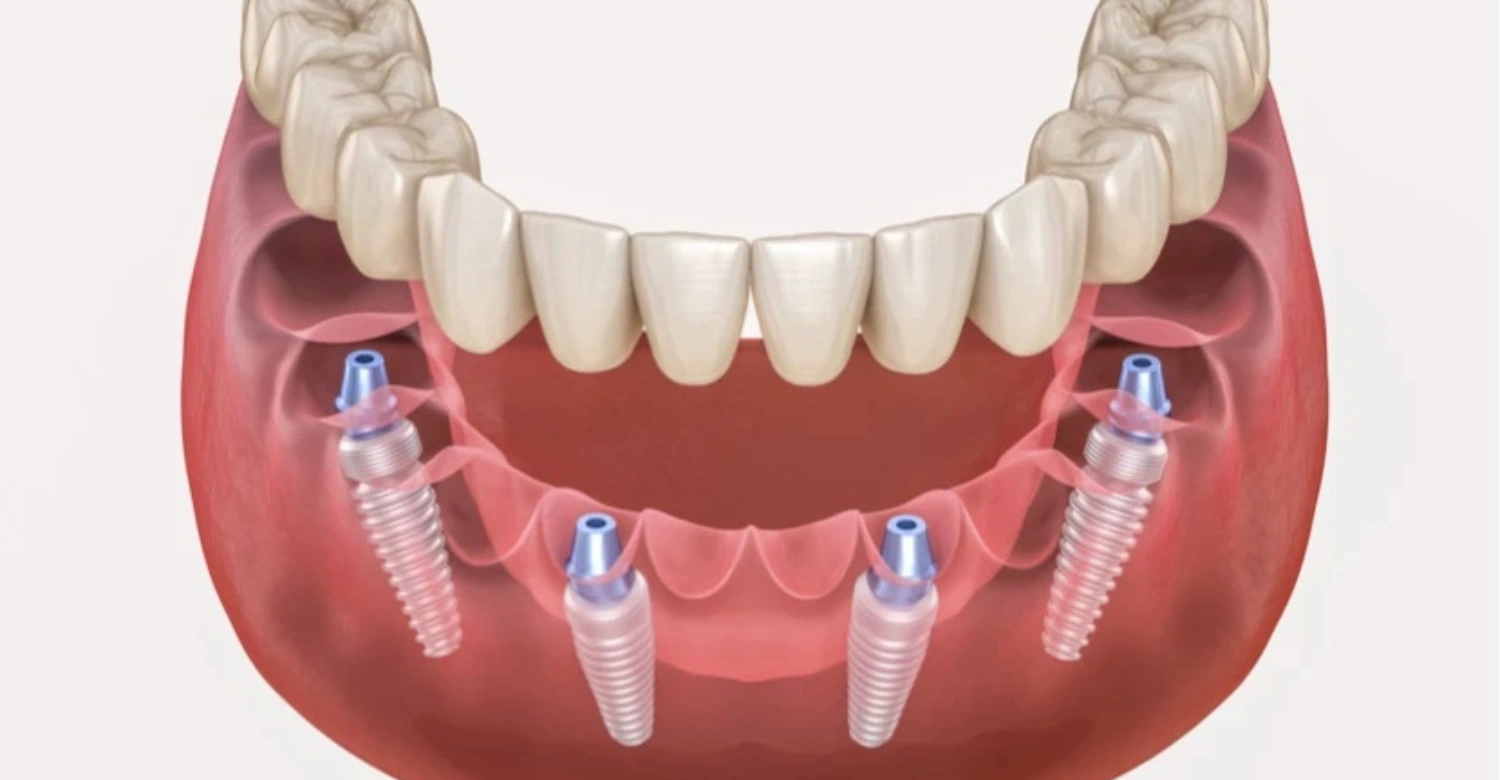
All-on-4 Healing Timeline: Months 2 to 6
Months two through six represent the longest stretch of the All on 4 recovery timeline. Osseointegration quietly determines the implants' long-term success during this window. Patients typically feel fully adjusted well before this biological process finishes. This is why ongoing care and follow-up remain important, even after visible healing appears complete.
What Happens After the First Month?
After the first month, patients typically shift from managing acute discomfort to adapting long-term to their prosthetic teeth. Diet often expands gradually, speech becomes more natural, and confidence increases. This transitional stage bridges early soft-tissue recovery and the longer biological process still occurring around each implant beneath the surface.
How Does Osseointegration Affect All-on-4 Recovery?
Osseointegration is the process by which implants fuse structurally with the jawbone. It defines how long full healing really takes. Patient-facing sources commonly cite three to six months for full bone fusion. A prospective study compared immediate and delayed-loading protocols. It reported a 99.3% cumulative implant survival rate, with no meaningful difference between the two. Respiratory medications: Asthma Inhaler Side Effects And Teeth
What Is the All on 4 Recovery Timeline Healing Process Like?
The All-on-4 healing process involves three parallel tracks: soft-tissue recovery, bone integration, and functional adaptation to the new prosthesis. Each progresses at its own pace. Understanding how they overlap helps patients interpret their own symptoms accurately, instead of comparing recovery to a single fixed timeline.
Soft-Tissue Healing
Gums around the surgical sites gradually shift from red and swollen to calmer, healthier-looking tissue. Minor color changes, tenderness when touched, and gradual firming of the gumline are all normal parts of this stage. Most soft-tissue changes stabilize within several weeks, though individual healing speed varies from patient to patient.
Bone Healing in the All on 4 Recovery Timeline
Bone healing takes considerably longer than soft-tissue recovery, because osseointegration relies on slow biological remodeling rather than surface healing. A systematic review followed more than five thousand immediately loaded implants for five years or longer. It found a mean survival rate of 97.4%, reinforcing why full healing extends well beyond initial comfort.
Adapting to New Teeth
Speech, chewing patterns, and bite awareness typically improve progressively as patients grow accustomed to their fixed prosthesis. Minor adjustments in tongue position or pronunciation are common early on. These usually resolve naturally within a few weeks, as muscles and habits adapt to the new experience.
What Is Normal During the Healing Process?
Mild swelling, temporary discomfort, light bruising, changing chewing ability, and heightened awareness of the prosthesis are all expected. These signs generally ease steadily rather than worsening. They reflect ordinary tissue repair, not complications requiring urgent attention during a standard recovery.
What May Require Professional Attention?
Persistent or worsening pain, swelling that does not improve, uncontrolled bleeding, or fever fall outside expected healing. So do issues with the prosthesis or implants. Patients noticing these symptoms during recovery should contact their dental team promptly, rather than waiting. Natural cleaning: Foods That Naturally Help Clean Your Teeth
All-on-4 Aftercare: How Can You Support Recovery?
Aftercare habits directly influence how smoothly the All on 4 recovery timeline unfolds. Diet, oral hygiene, and avoiding harmful habits like smoking all affect healing speed and implant success. Following personalized instructions consistently, rather than general advice, gives patients the best chance of a predictable and comfortable recovery.
What Should You Eat After All-on-4 Surgery?
Soft foods dominate the early weeks of All-on-4 aftercare, protecting healing tissue while still allowing adequate nutrition. Progression toward firmer textures happens gradually and should follow professional guidance rather than personal timelines. Rushing back to harder foods can disrupt healing around the surgical sites.
How Should You Clean Your Mouth After All-on-4 Surgery?
Gentle cleaning around the prosthesis and implants prevents plaque buildup without disturbing healing tissue. Specific rinsing and brushing techniques vary by case. Patients should always follow the clinic's individualized instructions rather than generic advice found elsewhere.
Which Habits Should You Avoid During All-on-4 Recovery?
Smoking, alcohol, and hard or sticky foods can all interfere with healing. So can excessive physical activity and unnecessary pressure on the surgical area. Avoiding these habits protects both soft-tissue healing and long-term implant stability.
Tips for the Patients
Attend every scheduled follow-up. Never modify prescribed medications without professional advice. Contact the dental team if symptoms worsen instead of improving. These habits reinforce every other stage of recovery discussed throughout this guide. Full timeline for All On 4 Recovery Timeline Week By Week Healing Guide
All-on-4 Recovery After Surgery: What Can Affect Healing?
Several factors shape recovery after All-on-4 surgery, including a patient's general health, bone quality, surgical complexity, and daily habits. None of these factors alone determines the outcome. Together, they explain why healing timelines vary meaningfully from one patient to another, even after similar procedures.
Patient Health and Healing Ability
General health conditions, immune function, and individual biological healing response all influence how smoothly recovery progresses. Two patients undergoing identical procedures can experience noticeably different timelines. This is why recovery expectations are always presented as a general reference rather than a guarantee.
Bone Quality and Surgical Complexity
The condition of the jawbone before surgery and the complexity of implant placement can affect both comfort and healing speed. Patients with denser bone or more straightforward placements sometimes experience smoother short-term recovery. Long-term osseointegration outcomes, though, remain strong across varying starting conditions.
Oral Hygiene and Aftercare
Consistent, gentle oral hygiene and close adherence to post-operative instructions measurably support smoother recovery after surgery. Skipping steps or improvising care routines increases the risk of irritation or delayed healing. Structured aftercare is one of the most controllable factors in the entire process.
Smoking and All-on-4 Recovery
Smoking restricts blood flow to healing tissue. It is consistently linked to slower soft-tissue repair and reduced implant success. Avoiding tobacco during recovery meaningfully protects both short-term comfort and the long-term stability of the implants themselves. Nutritional guide to Best Calcium And Phosphate Rich Foods For Stronger Teeth
When Can You Return to Normal Activities After All-on-4?
Returning to normal life after All-on-4 surgery happens gradually rather than all at once. Work, exercise, and eating each follow their own pace, guided by how healing is actually progressing. Personalized professional guidance remains the most reliable timeline to follow.
Returning to Work
Timing for returning to work depends on job demands, surgical complexity, and individual recovery pace. Desk-based roles often allow an earlier return than physically demanding jobs. Patients should rely on their dentist's personalized guidance rather than a fixed number of days off.
Returning to Exercise
Strenuous exercise is usually limited during the initial healing period. This avoids increased blood pressure and swelling around the surgical sites. Activity should resume gradually, guided by professional advice, rather than by how quickly someone feels ready.
Returning to Normal Eating
Dietary progression depends on healing pace and professional recommendations rather than personal preference. Rushing into hard or chewy foods too early can disturb the surgical area. A gradual, guided return to a full diet is strongly advised.
Clinical Note
Recovery milestones should always be personalized rather than treated as strict deadlines. Two patients at the same number of weeks post-surgery may be at very different healing stages. This is why individualized dental guidance matters more than generic calendars found online. Visual results of Dental Implants Before And After
Follow-Up Appointments in the All on 4 Recovery Timeline
Follow-up appointments give the dental team a structured way to track healing progress. They also confirm implant stability and fine-tune the prosthesis as recovery advances. These visits catch potential issues early. They also reassure patients that their individual healing is on track at each stage.
Checking the Surgical Sites
Follow-up visits allow the dental team to evaluate gum healing, tissue color, and the overall condition of the treatment area. These checks help confirm that recovery is progressing as expected. They also catch minor concerns early, before they affect the broader healing process.
Evaluating Implant Stability
Assessing implant stability during scheduled visits is essential for monitoring how well osseointegration is progressing beneath the surface. This step helps confirm long-term success. Peer-reviewed research shows high survival rates for immediately loaded implants.
Checking the Prosthesis and Bite
As patients adapt to their new teeth, adjustments to the prosthesis and bite alignment are often needed. These changes support comfort and function. Fine-tuning during follow-up appointments ensures the fixed teeth fit naturally. This supports healthy chewing patterns as healing advances. First week expectations for Veneers Recovery What To Expect The First Week
How Can You Tell If Your All-on-4 Recovery Is Going Normally?
Recognizing expected progress versus warning signs is a core part of following the All on 4 recovery timeline confidently. It also avoids unnecessary worry during ordinary healing fluctuations.
Signs of Expected Healing
Gradually decreasing swelling, improving comfort, and better speech and eating ability all indicate that recovery is progressing normally. So does steadily healing gum tissue. These signs are in line with typical patient experiences documented across clinical sources.
Signs That You Should Contact Your Dental Team
Increasing rather than decreasing pain, persistent or worsening swelling, or fever fall outside normal healing. So do significant bleeding, unusual discharge, or problems with the prosthesis. These signals warrant prompt professional evaluation, rather than waiting to see if symptoms resolve on their own.
The All on 4 Recovery Timeline at Vitrin Clinic
At Vitrin Clinic, All-on-4 recovery is treated as an ongoing, personalized process rather than a fixed checklist. From initial planning through months of follow-up, the clinical team focuses on patient education, careful monitoring, and clear communication. This supports steady healing at every stage.
Personalized All-on-4 Treatment Planning at Vitrin Clinic
Every treatment plan at Vitrin Clinic begins with a thorough evaluation. The team reviews the patient's oral condition, bone quality, and overall health. This individualized approach shapes a realistic healing plan tailored to each patient, rather than relying on generic expectations.
All-on-4 Surgery and Post-Operative Care at Vitrin Clinic
Patients at Vitrin Clinic receive clear guidance before and after surgery, covering diet, hygiene, activity limits, and medication use. Structured aftercare instructions and scheduled follow-up visits support smoother recovery. They also give patients a clear reference point throughout every stage of healing.
Monitoring the All-on-4 Healing Process
Ongoing follow-up at Vitrin Clinic allows the team to track soft-tissue healing and implant stability over time. They also monitor adaptation to the new prosthesis. Recovery expectations remain personalized throughout. They adjust as needed, based on how each patient's healing actually progresses rather than a fixed calendar.
What We Notice Clinically
Dr. Rifat Alsaman, Head of the Medical Team at Vitrin Clinic, emphasizes careful planning and thorough patient education. Consistent follow-up, he notes, is essential to smooth healing. Patients who understand each healing stage tend to navigate recovery with greater confidence and fewer unexpected concerns.
Tips for the Patients
Keep all follow-up appointments. Follow Vitrin Clinic's aftercare instructions carefully. Report unusual or worsening symptoms promptly. These habits help protect the investment made in All-on-4 treatment and support steady, predictable healing from start to finish. Real transformations in Veneers Before And After Real Patient Transformations
Reference
In conclusion, the All on 4 recovery timeline varies from patient to patient. Following post-operative instructions and attending regular follow-ups can support proper healing and implant integration. A scientific review published in the Journal of Clinical Medicine reports high long-term survival rates for immediate loading of implants. This holds true when treatment is appropriately planned and performed. This supports its potential as a predictable treatment approach in suitable patients.
FAQs

Dr. Rifat Alsaman has more than 5 years of clinical experience in dentistry and currently serves as the Head of the Medical Team at Vitrin Clinic. He is dedicated to providing exceptional patient care, overseeing treatment planning, and ensuring the highest clinical standards across the team. His expertise, attention to detail, and commitment to continuous professional development have helped countless patients achieve healthier, more confident smiles.


