Dental Implant
August 26, 2026
Dental Implants Before and After: What Results To Expect?

Dental Implants Before and After comparisons help patients understand implant treatment. Implants can restore missing teeth, improve chewing, support facial structure, and enhance smile appearance. Results vary between patients. Bone volume, gum health, implant position, restoration type, and treatment planning all play a part. A photograph alone rarely tells the full story. Clinical photographs, X-rays, CBCT scans, and the final restoration together give a fuller picture than images alone. Successful implant treatment combines biological healing with a well-designed final restoration. This article offers professional patient education based on clinical considerations and realistic expectations, not guaranteed results.
Dental Implants Before and After: What Happens During Recovery?
Dental Implants Before & After results depend heavily on what happens during healing, long before any final restoration is visible. Recovery unfolds gradually as the implant integrates with the jawbone. Every patient heals at a different pace, depending on bone quality, oral hygiene, and overall health. Understanding what happens at each stage helps set realistic expectations immediately after surgery, during osseointegration, and once healing completes. Patients often notice visible changes only once the crown, bridge, or denture is finally attached to the implant.
Immediately After Implant Placement
Mild swelling, tenderness, or minor discomfort is common right after implant placement. It usually settles within a few days. Patients may need to adjust their eating habits temporarily, favouring softer foods while the surgical site settles. Following postoperative instructions carefully matters during this early period. This includes guidance on diet, oral hygiene, medication, and activity levels. These instructions protect the implant site and reduce complications. They support smooth healing in the days after surgery.
During Osseointegration
Osseointegration is the biological process where the implant fuses with the surrounding jawbone. This creates a stable foundation for the future restoration. It typically takes several weeks to a few months, depending on bone density and individual healing response. During this period, patients should avoid placing excessive force on the implant area. Premature pressure can disrupt the delicate bond forming between bone and implant. Protecting the site during osseointegration is one of the most important steps toward a stable, long-lasting result.
After Healing
Once healing is complete, the dental team assesses implant stability before proceeding further. If everything looks satisfactory, treatment moves toward the planned restoration of a crown, bridge, or denture. Function, aesthetics, and soft-tissue health are all evaluated at this stage. A stable implant with unhealthy surrounding gum tissue is not a complete success. This checkpoint ensures the foundation is solid. It comes before the visible, final part of treatment that patients see and feel every day. This is the point where dental implants before and after differences truly begin to show.
When Should Patients Contact Their Dentist?
Patients should contact their dental team promptly if they notice persistent or worsening pain. The same applies to significant swelling or bleeding that does not settle. Signs of infection, unusual discharge, fever, or a bad taste also warrant attention. Mobility of the implant or the attached restoration is never normal. It should be checked immediately. Any unexpected change during recovery is worth reporting rather than waiting. Early contact allows problems to be addressed before they affect long-term results. Microbiome axis: The Oral Gut Microbiome Axis In Health And Disease
Dental Implants Before & After: What Changes Should Patients Expect?
Dental Implants Before and After changes are both visible and functional. Patients typically notice restored teeth, improved tooth proportions, better smile continuity, and easier chewing. The implant itself sits below the gum line and is rarely visible. The crown, bridge, or denture attached to it shapes most of what people actually see. There is also a difference between how things look right after treatment and the final result once healing completes. Comparing early appearance to the finished restoration avoids unrealistic conclusions.
Before Dental Implant Treatment
Before treatment, patients commonly present with missing or severely damaged teeth. Visible gaps between natural teeth are common too. Chewing can become difficult, especially on the affected side. Bite or tooth positioning may shift over time. Bone loss often follows tooth loss, since the jawbone needs stimulation from tooth roots to maintain its volume. Many patients also feel self-conscious about how these gaps affect their smile. This is often the driving reason for seeking implant treatment.
After Dental Implant Treatment
After treatment, the visible missing tooth is replaced, restoring a more complete smile. Chewing and everyday oral function usually improve, since the implant supports normal biting forces. Tooth proportions tend to look more natural once the restoration is fitted correctly. Surrounding tissues also receive better support than an untreated gap would allow. Overall, patients gain a stable foundation for dental restoration. It can function much like a natural tooth when healing and planning go well.
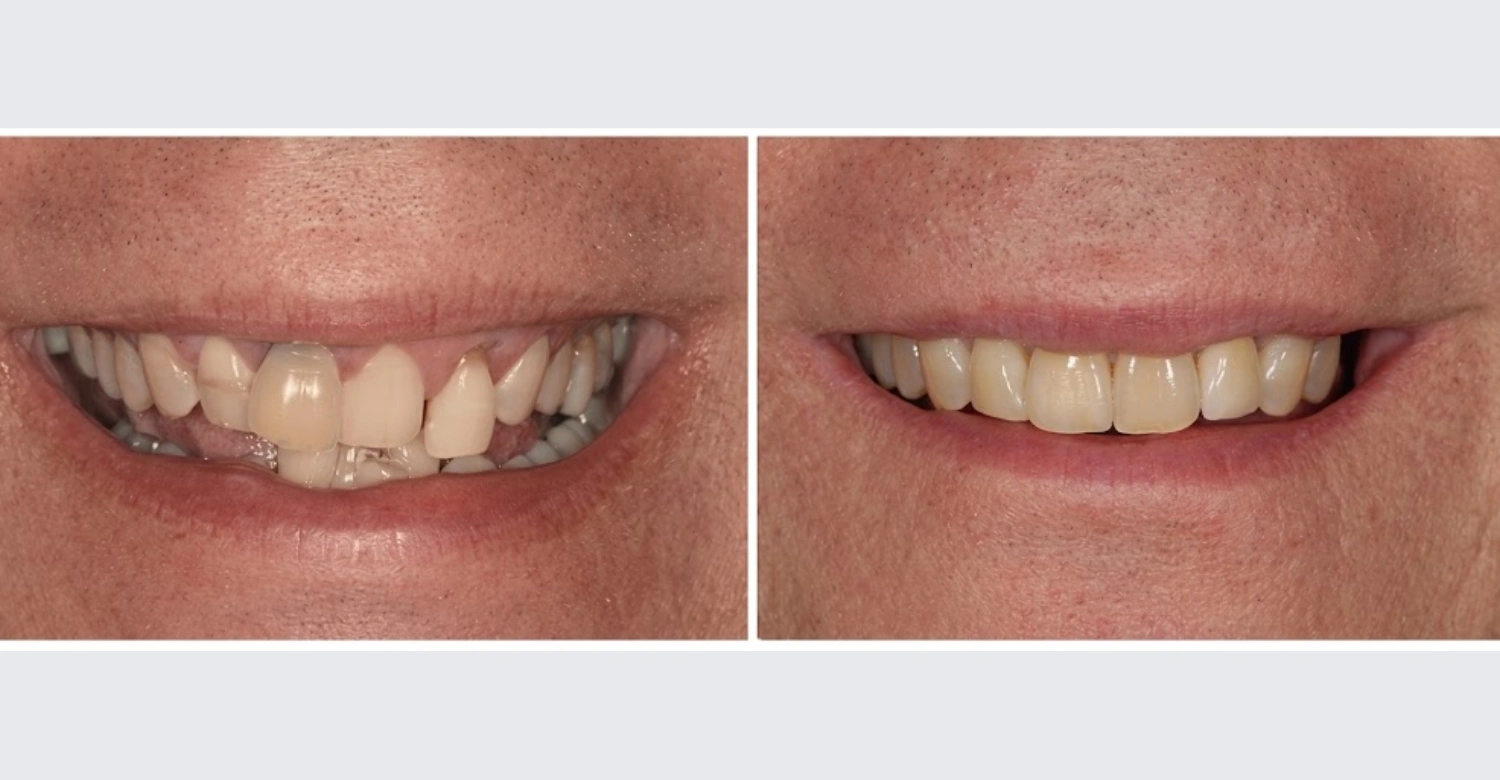
Dental Implant Before and After Results: What Determines the Outcome?
Dental Implant Before and After Results are shaped by several clinical factors working together, not by chance. Bone quality, gum health, implant positioning, and restoration design all influence how treatment turns out. Understanding these variables helps explain why two similar cases can end up looking different. None of these factors work alone. Bone conditions affect positioning, positioning affects the restoration, and the restoration determines the dental implant results before and after that patients ultimately see.
Bone Quality and Quantity
Adequate bone volume and density are essential for implant stability. The implant needs a firm surrounding structure to integrate successfully. Bone loss following earlier tooth loss can limit where and how an implant is placed. This can affect the achievable dental implants before and after outcome. In such cases, bone grafting or other preparatory procedures may be considered when clinically appropriate. Addressing bone conditions early supports a more stable, predictable long-term result.
Gum and Soft-Tissue Health
Healthy gums before implant placement reduce complications and support better healing. Gum thickness and soft-tissue contours also influence how natural the final restoration looks. Thin or uneven tissue can affect the visible gumline around a crown. Addressing gum health early in planning is not just a cosmetic consideration; it protects the implant itself. Soft-tissue condition often plays a larger role in the final aesthetic result than many patients expect. It quietly shapes how convincing Dental Implants Before & After photos ultimately look.
Implant Position and Treatment Planning
Three-dimensional planning allows the dental team to determine precise implant positioning before surgery. Angulation, depth, spacing, and the relationship with neighbouring teeth all affect function and appearance. Poor positioning can create restorations that look unnatural. It can also place uneven pressure on surrounding teeth. Careful planning, informed by imaging and digital scans, reduces surprises later. It supports a restoration that integrates comfortably with the patient's bite and smile.
Quality and Design of the Final Restoration
Crown material, shade, shape, proportions, and emergence profile all influence how natural the final restoration appears. A well-designed crown blends with neighbouring teeth rather than standing out. Zirconia and porcelain restorations are commonly used where clinically appropriate. Both are valued for strength and their ability to mimic natural tooth translucency. Even excellent implant placement can be undermined by a poorly designed restoration. This is why dental implants before and after outcomes depend on restoration quality as much as surgery. Genetic conditions: Alexander Disease And Oral Health
Dental Implant Transformation Before and After: From Missing Tooth to Restored Smile
Dental Implant Transformation Before and After journeys typically follow a structured sequence rather than one dramatic change. Each stage assessment, planning, placement, healing, and final restoration builds toward the finished result. Skipping steps or rushing planning tends to affect the outcome negatively. Understanding this sequence helps patients appreciate why implant treatment takes time. A simple-looking before-and-after photo actually represents months of coordinated clinical work behind the scenes.
Step 1 Initial Assessment
Initial assessment includes a thorough oral examination alongside a review of medical and dental history. Gum health is assessed, along with digital scans and appropriate imaging. CBCT imaging is used when clinically indicated. It offers a detailed three-dimensional view of bone and surrounding structures. This stage forms the foundation for every decision that follows. Accurate assessment data directly shapes the treatment plan developed afterward.
Step 2 Treatment Planning
Treatment planning determines implant position based on the assessment findings. It factors in bone and soft-tissue conditions. The appropriate restoration type crown, bridge, or denture is selected according to the patient's situation. Realistic aesthetic and functional goals are established at this stage. This gives patients a clear sense of what to expect. Thoughtful planning here reduces the likelihood of complications or disappointing Dental Implants Before & After results.
Step 3 Implant Placement and Healing
Implant placement involves surgically positioning the implant into the jawbone under appropriate conditions. Afterward, osseointegration begins the biological process where bone gradually fuses around the implant. Healing time differs between patients. It is influenced by bone density, general health, and how well postoperative instructions are followed. This stage, while less visually dramatic than the final restoration, is arguably the most important part of the sequence.
Step 4 Final Restoration
Once healing is confirmed, abutment placement occurs where required, connecting the implant to the visible restoration. The final crown, bridge, or full-arch restoration is fitted and adjusted for comfort and function. Bite and aesthetics are carefully assessed before treatment is considered complete. This ensures the restoration works properly with opposing teeth. This final stage is typically where patients see the transformation associated with dental implant before and after photos. Prescription practices: Antibiotic Stewardship In Dentistry
Single Tooth Implant Before and After: What Results Are Typical?
Single Tooth Implant Before and After cases are among the more predictable implant scenarios, since only one site requires treatment. Results typically focus on replacing a single missing tooth while preserving neighbouring teeth. Because fewer variables are involved compared to multiple-tooth cases, planning can be more straightforward. Still, achieving a natural-looking result requires the same careful attention to positioning, restoration design, and gum health as any other implant treatment.
Before a Single Tooth Implant
Before treatment, patients usually have a missing tooth and a visible gap in their smile. Bone resorption may have already begun in the area. Jawbone relies on tooth roots for stimulation, after all. Chewing can be difficult in some cases, particularly with back teeth. Over time, adjacent teeth may shift or tilt into the empty space. This is one reason dental teams recommend addressing a missing tooth sooner rather than later.
After a Single Tooth Implant
After treatment, the missing tooth is replaced with a restoration designed to match the surrounding dentition. Chewing function typically improves once the implant is fully integrated and restored. Visual continuity with neighbouring teeth is a key goal. The restoration is matched carefully for shape, shade, and size. When done well, a single tooth implant can look and function similarly to the natural tooth it replaced.
What Makes a Single Implant Look Natural?
Correct implant positioning is the foundation of a natural-looking single tooth implant. Even a well-made crown looks wrong if placed incorrectly. Appropriate crown shape and accurate shade matching help the restoration blend with neighbouring teeth. Gum contour around the restoration also matters. So does the natural emergence profile how the crown appears to emerge from the gum line, much like a real tooth would.
Tips for Patients
Have gum disease and active dental infections addressed first.
Complete the recommended clinical and radiographic assessment.
Discuss smoking and other factors that may affect healing with the dental team.
Ask what type of implant restoration is planned.
Request a clear treatment timeline and maintenance plan.
Follow postoperative instructions carefully.
Maintain appropriate oral hygiene.
Avoid unnecessary pressure on the surgical area.
Attend scheduled follow-up appointments.
Brush twice daily using appropriate technique.
Clean between teeth and around implant-supported restorations.
Attend regular professional examinations.
Report bleeding, swelling, discomfort, or changes in implant stability promptly.
Follow the recommended implant maintenance schedule.
Full Mouth Dental Implants Before & After: What Can Patients Expect?
Full Mouth Dental Implants Before and After cases involve considerably more planning than single-tooth treatment. Multiple implants and a full prosthetic design are involved. Patients considering this option are often dealing with extensive tooth loss or damage across one or both arches. Bone availability, bite relationship, and prosthetic design all interact. Full-mouth cases require an individualized approach rather than a standard template.
When Full-Mouth Implant Treatment May Be Considered
Full-mouth implant treatment may be considered when patients have multiple missing teeth or severely damaged dentition. Advanced tooth loss requiring comprehensive rehabilitation is another common scenario. In some situations, conventional removable dentures may not provide the function or stability patients need. Full-mouth implants offer an alternative for patients seeking a more fixed, stable solution.
Full-Mouth Implant Before and After Changes
Full-Mouth Implant Before and After changes often include improved chewing efficiency and greater prosthetic stability compared to removable dentures. Restoration of the dental arches can significantly improve smile appearance and oral function. In some cases, patients notice improved facial support following appropriate rehabilitation, since implants can help maintain jawbone volume. These changes typically develop gradually across the full treatment timeline.
Why Full-Mouth Cases Require Individualized Planning
Bone availability varies significantly between patients. It directly affects how many implants can be placed and where. Bite relationship, gum condition, and implant number and position all influence prosthetic design decisions. Patient expectations also factor into planning discussions, since full-mouth cases involve significant commitment. Individualized planning is essential for predictable, comfortable dental implants before and after outcomes. Behavioral damage: Lip Biting Teeth
Dental Implant Smile Before and After: How Can Implants Improve Smile Appearance?
Dental Implant Smile Before and After improvements come from how well the restoration integrates with tooth shape, shade, alignment, and proportions. Gum aesthetics matter too. Implants replace missing teeth effectively. However, they do not automatically correct unrelated cosmetic dental concerns, such as staining on other teeth. When broader cosmetic goals exist, additional restorative or cosmetic procedures may be considered as part of a comprehensive treatment plan. Tooth damage: Chewing Ice Teeth
Dental Implant Restoration Before and After: Why the Final Crown Matters
Dental Implant Restoration Before and After comparisons often focus on the crown itself. This is the part patients actually see and use daily. Implant placement and healing lay the groundwork, but the final restoration determines how natural, comfortable, and functional the result feels. A well-made crown can make the difference between an implant that simply works and one that feels like a natural tooth.
Implant, Abutment, and Crown: Understanding the Difference
An implant, abutment, and crown work together as three distinct components. The implant is placed into the jawbone and is not visible once healed. The abutment connects the implant to the restoration. The crown, the visible tooth-shaped component, sits on top. This distinction explains why the implant itself is rarely the focus of dental implants before and after comparisons; it is the crown that people actually see.
Matching the Restoration to Natural Teeth
Shade selection ensures the crown matches surrounding teeth under normal lighting conditions. Tooth morphology and translucency contribute to a realistic appearance, since natural teeth are rarely a single flat colour. Surface texture also affects how light reflects off the restoration. Occlusion and bite are equally important. A restoration that looks perfect but does not fit the bite correctly can cause long-term problems.
Assessing the Final Restoration
Comfort is one of the first things patients notice once a restoration is fitted. Function during everyday eating and speaking follows closely behind. Bite is checked carefully to avoid uneven pressure on the implant or neighbouring teeth. This step matters as much to dental implants before and after satisfaction as the surgery itself. Aesthetic integration considers how well the restoration blends with the smile overall. Gum response is monitored to confirm the surrounding tissue is healthy and stable.
Clinical Note
A dental implant may look successful externally while still requiring continued professional monitoring internally. Implant stability, bone levels, gum health, bite forces, and restoration conditions all contribute to long-term success. Before-and-after photographs primarily demonstrate visible changes. X-rays and CBCT scans may be required to evaluate structures that photographs cannot show. Individual treatment recommendations should always follow a professional clinical examination. Dental wear: Nail Biting Teeth
How Long Do Dental Implant Results Last?
Dental implants are designed as a long-term tooth replacement option. Longevity depends on more than the implant alone, though. The implant and the prosthetic restoration often have different lifespans. Restorations sometimes need replacement or adjustment over time. Oral hygiene, gum health, smoking, bite forces, and bruxism all influence how long results last. So does the quality of ongoing maintenance. Regular dental reviews help catch restoration wear or damage early, protecting long-term dental implant results before and after they change further.
Dental Implants Before & After: What Should Patients Realistically Expect?
Dental Implants Before and After expectations should be grounded in realistic clinical outcomes rather than idealized images found online. Understanding both aesthetic and functional expectations helps patients feel more prepared. It also explains why no two cases look identical, even when the starting situation seems similar. Setting realistic expectations early tends to improve overall satisfaction with the final result.
Realistic Aesthetic Expectations
The aesthetic goal of implant treatment is usually a natural, harmonious result. It is rarely an identical match to untouched natural teeth, which is not always achievable. Neighbouring teeth and gum anatomy heavily influence how the final restoration looks. The crown must work within existing conditions rather than a blank canvas. Patients who understand this tend to feel more satisfied with genuinely natural-looking dental implants before and after results.
Realistic Functional Expectations
Restored chewing and improved stability are common functional benefits following implant treatment. However, adaptation can take time after receiving a new restoration. Patients adjust to the feel and bite of the new tooth gradually. Some minor sensitivity or awkwardness in the first weeks is normal. It typically resolves as patients get used to the restoration. Functional comfort tends to improve steadily over the following weeks.
Why Every Before-and-After Case Is Different
Bone and gum anatomy differ from patient to patient, directly shaping what is achievable. The number of missing teeth, existing dental conditions, and implant position all add variation. Restoration design and healing response also play a role. So does patient compliance with aftercare instructions. Comparing one patient's dental implants before and after the result directly to another's rarely gives an accurate personal picture. Hygiene errors: Brushing And Flossing Mistakes
What We Notice Clinically: Dr. Rifat Alsaman's Opinion
Dr. Rifat Alsaman, Head of the Medical Team at Vitrin Clinic and a cosmetic dentist, offers a clinical perspective on evaluating implant outcomes. According to Dr. Rifat Alsaman, a successful result should not be judged only by whether the missing tooth has been replaced. It should also reflect how well the restoration integrates with the patient's bite, gums, and surrounding teeth. This broader view shapes how Dr. Rifat Alsaman approaches every dental implant before and after assessment at the clinic.
Dr. Rifat Alsaman on Natural-Looking Implant Results
Dr. Rifat Alsaman emphasizes tooth proportions, shade, gum contours, and the relationship with neighbouring teeth when assessing natural-looking results. Rather than applying the same approach to every patient, Dr. Rifat Alsaman prioritizes personalized treatment planning based on each patient's anatomy and goals. This attention to detail, according to Dr. Rifat Alsaman, often separates a result that looks obviously restored from one that blends naturally into the smile.
Vitrin Clinic: Personalized Dental Implant Planning and Patient Care
Vitrin Clinic takes a multidisciplinary approach to dental implant treatment. This combines clinical assessment, digital treatment planning, appropriate imaging, and customized restoration planning. Experienced dental professionals evaluate both functional and aesthetic outcomes throughout treatment, rather than focusing on one alone. Patients can receive a personalized assessment at Vitrin Clinic to determine whether dental implants are appropriate for their needs. Contact Vitrin Clinic to arrange a consultation and discuss a realistic, personalized treatment plan. Cardiovascular precautions: Aortic Dissection And Dental Treatment
Final Takeaway: Understanding Dental Implants Before and After Results
Dental Implants Before and After results involve far more than replacing a missing tooth. Bone health, gum health, implant positioning, restoration design, healing, and long-term maintenance all shape the final outcome. Online before-and-after photographs cannot replace an individual clinical assessment. So much of what determines success happens beneath the surface. Anyone considering treatment is encouraged to seek a personalized implant consultation at Vitrin Clinic, where realistic expectations guide every decision.
References:
FAQs

Dr. Rifat Alsaman has more than 5 years of clinical experience in dentistry and currently serves as the Head of the Medical Team at Vitrin Clinic. He is dedicated to providing exceptional patient care, overseeing treatment planning, and ensuring the highest clinical standards across the team. His expertise, attention to detail, and commitment to continuous professional development have helped countless patients achieve healthier, more confident smiles.


