Dental Implant
August 26, 2026
All on 6 Dental Implants Before and After Gallery

An All on 6 Dental Implants Before and After Gallery can show how full-arch rehabilitation changes teeth, smile proportions, and overall appearance. However, photographs alone cannot predict your individual treatment outcome. Each case depends on bone anatomy, implant positioning, gum health, prosthetic design, bite forces, and maintenance. Modern full-arch treatment therefore begins with diagnosis rather than simply choosing six implants. Recent consensus guidance emphasizes individualized planning, risk assessment, prosthetic selection, and long-term supportive care. At Vitrin Clinic, before-and-after cases can be viewed as examples rather than promises of identical results. The most useful portfolio compares similar clinical conditions, photography angles, treatment stages, and final restorations. This approach helps patients understand realistic expectations before beginning full-arch treatment.
What Do All on 6 Dental Implants Look Like Before and After Treatment?
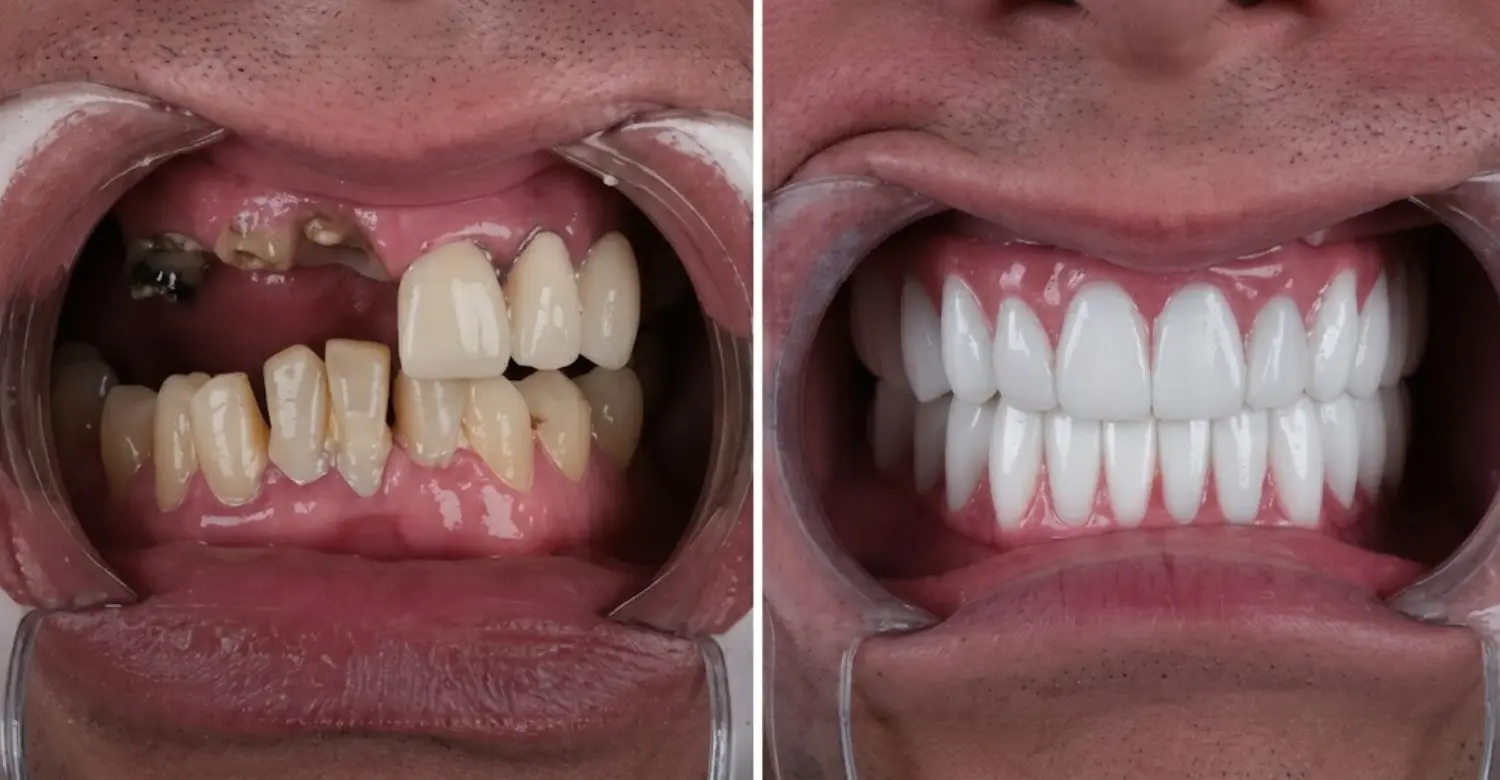
These clinical visual showcases usually show dramatic changes in tooth appearance and smile continuity. Before treatment, patients may have missing teeth, failing restorations, severe wear, or unstable dentures. After rehabilitation, the visible arch can appear more complete, balanced, and coordinated. The final appearance depends heavily on tooth proportions, gingival contours, facial features, and prosthetic material. A successful result should therefore look appropriate for the individual rather than identical to another patient. Clinical research supports full-arch implant rehabilitation as a predictable option for appropriately selected patients. At Vitrin Clinic, treatment planning should connect the patient's functional requirements with their desired smile appearance. The photograph is only the visible endpoint of a much larger clinical process.
All on 6 Dental Implants Before and After Results
Documented clinical cases can demonstrate improvements in tooth alignment, symmetry, visible tooth length, and smile support. Results should be evaluated using consistent photography rather than dramatic changes in lighting or camera position. A meaningful comparison also considers whether photographs show temporary or definitive prostheses. Temporary teeth may have different contours, materials, translucency, and gum adaptation than final restorations. Clinical outcomes also vary because patients begin with different bone volumes and soft-tissue conditions. A retrospective study reported a 99% cumulative implant survival rate for All on 6 treatment after a mean follow-up exceeding six years. That finding is encouraging but cannot guarantee the same outcome for every patient. Individual diagnosis remains essential before treatment begins.
All on 6 Dental Implants Before and After Photos
A patient image archive becomes more useful when photographs document comparable clinical stages. Ideally, images show the same patient, camera distance, facial position, lighting, and smile expression. Full-face photographs can reveal changes in smile display and facial support. Close-up photographs can show tooth contours, gingival margins, emergence profiles, and surface characteristics. Intraoral photographs can provide additional information about prosthetic adaptation and tissue conditions. Patients should also ask whether images represent temporary, transitional, or definitive restorations. At Vitrin Clinic, a transparent gallery should explain the treatment stage represented by every photograph. This creates more realistic expectations and reduces misleading comparisons between unrelated cases.
What Makes a Before-and-After Dental Photo Reliable?
A reliable dental comparison uses standardized images captured under similar conditions. The patient's head position should remain consistent between the initial and follow-up photographs. Lighting should also remain controlled because brightness can change perceived tooth color. Camera distance and lens selection can influence apparent tooth size and facial proportions. The treatment timeline should accompany each case whenever possible. Patients should also know whether photographs were taken immediately after placement or following healing. These details matter because soft tissues can continue changing after implant surgery. A credible treatment display therefore provides clinical context alongside attractive photographs. This standard helps patients evaluate outcomes more objectively.
All on 6 Full Mouth Smile Transformation: What Changes?
Full-arch documentation can reveal more than missing teeth being replaced. A full-arch restoration can influence tooth display, smile width, dental midline, occlusal relationships, and perceived facial support. The final result depends on how these elements interact with the patient's facial anatomy. A smile transformation should therefore be planned around function and appearance together. Modern consensus recommendations emphasize prosthetically driven planning and individualized treatment decisions. Vitrin Clinic can present the transformation as a coordinated process rather than a simple cosmetic replacement. The objective is a stable restoration that also fits the patient's facial characteristics. This distinction separates comprehensive rehabilitation from simply making teeth appear whiter.
All on 6 Full Mouth Smile Transformation
A full-arch image collection can highlight how a complete restoration changes overall smile continuity. Patients may notice greater tooth visibility when smiling and improved visual balance between the dental arches. The restoration can also replace spaces created by extensive tooth loss. Tooth width, length, shape, and arrangement must remain proportionate to the patient's face. Excessively uniform teeth can appear artificial even when their color looks attractive. Natural-looking results often require controlled variation in contour and translucency. The final design should also respect speech, lip support, chewing, and hygiene requirements. At Vitrin Clinic, these factors can be incorporated into the digital and clinical planning process.
All on 6 Dental Implants Smile Makeover Results
Visual evidence can help explain why smile makeover results differ between patients. Some patients require extensive tooth replacement after years of dental deterioration. Others may primarily need stabilization after multiple failing teeth or uncomfortable dentures. The visible improvement can therefore range from subtle refinement to substantial facial and dental transformation. Prosthetic material can also influence translucency, surface texture, and long-term technical performance. A 2026 umbrella review reported that prosthetic complications vary according to material and design. The same review reported screw loosening in approximately 5% to 15% of reported cases. Therefore, a beautiful photograph should never be the only measure of treatment quality.
Clinical Note: Why Smile Design Matters in All on 6 Treatment
Before-and-after photo collections should be interpreted through the principles of smile and prosthetic design. Implant placement is not simply about creating six points of mechanical support. Implants must be positioned to support the planned prosthesis and facilitate long-term maintenance. Tooth proportions should complement facial proportions rather than follow a universal template. Gingival contours should also support believable emergence and harmonious tooth relationships. Current consensus recommendations emphasize prosthetic material selection and prosthetically driven treatment planning. This means aesthetic planning should begin before surgery rather than after implant placement. At Vitrin Clinic, the desired smile can therefore be considered alongside functional and biological requirements.
All on 6 Teeth Replacement Before and After: Understanding the Treatment Journey
A clinical portfolio shows the endpoint, but the treatment journey determines the result. Treatment generally begins with examination, imaging, medical history, and assessment of existing teeth and tissues. The clinician then develops a surgical and prosthetic plan based on the available anatomy. Depending on the case, additional procedures may be required before or during implant placement. Temporary teeth may be provided during the healing and integration period. The definitive prosthesis is usually designed after clinical conditions and implant stability permit final rehabilitation. Current guidelines emphasize structured diagnostics, treatment planning, procedures, and maintenance throughout the treatment pathway. Understanding this sequence helps patients interpret before-and-after photographs more realistically.
Before All on 6 Dental Implants
Case presentations often begin with patients experiencing extensive tooth loss or failing teeth. Common concerns include loose dentures, difficulty chewing, damaged teeth, and dissatisfaction with smile appearance. The clinical evaluation must determine whether implant-supported treatment is appropriate. Bone volume and density influence implant positioning and surgical planning. Soft-tissue health must also be considered before definitive rehabilitation. Existing periodontal disease requires appropriate management because inflammatory conditions can compromise implant health. Risk assessment may also include smoking, diabetes control, oral hygiene, and previous periodontal disease. A thorough assessment creates a stronger foundation for predictable treatment.
During the All on 6 Treatment Process
A standard patient gallery does not show the surgical planning that supports the final appearance. Implant placement may use digital planning, surgical guides, or other techniques depending on the clinical situation. The six implants are positioned according to available anatomy and the intended prosthetic design. Immediate loading may be possible in selected cases when clinical requirements are satisfied. However, immediate treatment is not automatically appropriate for every patient. The 2025 international consensus specifically addresses indications and limitations for immediate full-arch rehabilitation. Temporary restorations may provide function and appearance while healing continues. The definitive prosthesis is then produced after the appropriate clinical assessment.
After All on 6 Dental Implant Treatment
Before-and-after imagery usually focuses on the visible final transformation. The final stage may reveal improved tooth arrangement, smile continuity, and prosthetic stability. However, healing and tissue maturation can continue after the definitive restoration is delivered. Patients should maintain excellent oral hygiene around the implants and prosthesis. Professional monitoring is equally important because biological and technical complications can develop over time. A systematic review recommends individualized supportive care and suggests professional hygiene approximately every six months. The same review recommends considering prosthesis removal at least annually for supportive care. Long-term results therefore depend on maintenance as much as initial treatment.
How Long Does It Take to See the Final All on 6 Result?
A clinical photo library may contain photographs taken at different stages. A temporary restoration can look highly aesthetic while tissues are still healing. The definitive result becomes clearer after the final prosthesis is delivered and soft tissues have stabilized. The exact timeline varies according to surgery, healing, bone integration, prosthetic workflow, and additional procedures. Some patients may receive immediate temporary teeth when clinically appropriate. Others may require a longer healing period before definitive rehabilitation. Patients should therefore ask the clinic exactly when each photograph was taken. This information prevents temporary results from being mistaken for permanent outcomes.
All on 6 Dental Implants Real Patient Results: What Should You Expect?
These visual archives should demonstrate realistic variation between individual patients. No two mouths have identical bone anatomy, gum contours, facial proportions, or functional demands. Real patient cases can therefore show different tooth shapes, arch forms, and prosthetic designs. Some patients may achieve dramatic visual improvements, while others may receive more conservative restorations. Clinical success should include biological stability, function, hygiene access, and prosthetic performance. A five-year randomized trial found no statistically significant difference between four and six implants for several measured outcomes. This illustrates why implant number alone should not determine expectations. Treatment planning must remain individualized.
All on 6 Dental Implants Real Patient Results
A full-arch treatment gallery can provide useful examples when cases are properly documented. Patients should look for information about the initial condition and treatment timeline. They should also check whether the restoration is temporary or definitive. Photographs should ideally show similar angles and comparable lighting. The clinical history can explain why specific implant positions or prosthetic materials were selected. At Vitrin Clinic, real patient examples can help patients understand possible treatment pathways. However, photographs should never be interpreted as guarantees. A consultation is necessary to determine whether a similar approach suits an individual patient.
All on 6 Implant Dentures Before and After
A full-arch comparison gallery may show major differences compared with traditional removable dentures. Implant-supported full-arch prostheses are fixed to strategically placed implants rather than resting solely on mucosal support. This can improve stability during speaking and chewing for appropriately selected patients. The prosthesis can also be designed to restore lost tooth structure and support facial tissues. However, implant-supported does not mean maintenance-free. Biofilm accumulation around implant components can contribute to peri-implant inflammation. Current consensus guidance identifies oral hygiene, periodontal history, prosthetic design, and other risk factors as important considerations. Patients should understand both the benefits and responsibilities of fixed full-arch treatment.
What We Notice Clinically
A patient transformation gallery becomes more meaningful when clinical factors are explained beside each case. Clinicians evaluate more than tooth color when assessing a full-arch restoration. They consider implant position, tissue health, occlusion, hygiene access, prosthetic contours, and patient comfort. They also evaluate whether the restoration supports the lips and complements facial proportions. A 2023 review emphasized that implant placement should allow maintenance access around full-arch restorations. This principle demonstrates why photographs cannot reveal every aspect of treatment quality. The strongest results combine aesthetics with biological and mechanical considerations. Patients should therefore evaluate the complete treatment story rather than only the smile photograph.
All on 6 Full Arch Dental Implants Results: What Influences the Outcome?
A full-arch treatment collection reflects multiple biological and prosthetic variables. Bone quality influences implant placement and primary stability. Soft-tissue conditions affect emergence profiles, hygiene access, and visual harmony. Prosthetic materials influence appearance, strength, repairability, and technical complications. Occlusal forces can also influence long-term mechanical performance. Recent consensus evidence recommends risk-stratified planning across patient, surgical, prosthetic, and maintenance factors. This explains why two apparently similar patients can have different outcomes. Successful treatment is therefore the result of coordinated planning rather than implant number alone.
Bone Quality and Implant Position
A standard before-and-after photo cannot show the complete three-dimensional anatomy beneath the prosthesis. Bone volume and anatomy must be assessed before implant placement. Three-dimensional imaging can help clinicians evaluate available bone and important anatomical structures. Implant positions should also correspond with the planned prosthesis. Poor positioning can create challenges for emergence, hygiene, occlusion, and prosthetic design. Current full-arch consensus recommendations emphasize diagnostic planning before surgical treatment. Additional bone procedures may sometimes be considered when anatomy requires them. The final treatment plan should therefore be based on imaging and clinical examination.
Prosthetic Design and Tooth Proportions
Before-and-after images can display the influence of prosthetic design on the final smile. Tooth width, length, angulation, translucency, and surface texture influence perceived naturalness. The gingival portion of the prosthesis also affects emergence and facial support. Material selection should balance aesthetics, strength, repairability, and hygiene requirements. A 2026 umbrella review found that prosthetic material and design influence complication patterns. Monolithic zirconia showed lower technical complication patterns than some veneered alternatives in that review. Material selection should nevertheless remain individualized. The ideal restoration is not automatically the same for every patient.
Gum and Soft-Tissue Considerations
Case photos can show the visible gum relationship around the restoration. Healthy peri-implant tissues contribute to comfort, aesthetics, and long-term stability. Soft-tissue thickness and contours can influence how natural the prosthesis appears. Poorly accessible prosthetic contours can also make effective cleaning more difficult. The 2025 AO/AAP consensus identifies soft-tissue phenotype and prosthetic factors among relevant site-related considerations. Patients with previous periodontal disease may require particularly careful risk management. Regular professional monitoring helps identify inflammation before it becomes more advanced. Healthy tissues remain essential to preserving the final appearance.
Bite and Functional Forces
Photographic documentation cannot demonstrate chewing forces or functional loading. Occlusion must therefore be evaluated clinically rather than judged from photographs. Excessive or unfavorable forces may contribute to mechanical complications. Prosthetic design should account for the patient's bite, opposing dentition, and functional habits. Bruxism may also require additional consideration during treatment planning. Technical complications can include screw loosening, material chipping, wear, or framework problems. The restoration must therefore be designed for function as well as appearance. A stable bite is an important part of a successful full-arch result.
Why Two All on 6 Patients May Have Completely Different Results?
A clinical photo collection can contain cases that look very different despite using the same treatment concept. Patients begin with different bone anatomy, facial proportions, gum conditions, and tooth loss patterns. Their expectations and functional demands may also differ. Some patients need substantial replacement of lost hard and soft tissues. Others require less extensive restorative compensation. The final prosthetic design must adapt to these individual characteristics. Current consensus guidance repeatedly emphasizes patient-centered and risk-stratified treatment planning. Therefore, comparing photographs should never replace individualized diagnosis.
All on 6 Dental Implants Natural Smile Results: Can They Look Like Real Teeth?
A full-arch image collection can demonstrate natural-looking results when the prosthesis is carefully designed. Natural appearance depends on more than achieving a bright tooth shade. Tooth proportions, translucency, surface texture, gingival contours, and smile dynamics all contribute. Facial characteristics also influence the ideal tooth arrangement. A restoration that looks attractive in isolation may appear less natural if proportions conflict with the face. Digital planning can help coordinate tooth position with facial and functional requirements. At Vitrin Clinic, smile design can therefore be integrated with full-arch treatment planning. The goal is a balanced result rather than an artificial uniform appearance.
What Makes an All on 6 Smile Look Natural?
Before-and-after cases should show restorations with appropriate proportions and realistic contours. Natural-looking teeth typically include controlled variations in shape and surface characteristics. The incisal edges should complement the patient's facial features and smile line. Tooth color should also match the patient's preferences and overall appearance. Excessive whiteness can sometimes make a restoration appear less natural. Gingival transitions should also be designed to create believable emergence. Prosthetic materials influence translucency, texture, and long-term appearance. A natural smile therefore results from coordinated design rather than color alone.
Can All on 6 Dental Implants Improve Facial Support?
A treatment photo gallery may show changes in lip support and lower-face appearance. Extensive tooth loss can reduce dental support for the lips and surrounding soft tissues. A properly designed full-arch prosthesis can replace lost tooth volume and restore some support. However, the extent of facial change varies between individuals. Prosthetic tooth position, vertical dimension, and lost tissue volume all influence the appearance. The objective should be balanced support rather than excessive projection. Clinical examination is necessary to determine the appropriate prosthetic position. Photographs can illustrate possible changes but cannot predict them precisely.
Clinical Note: Natural-Looking Results Require More Than White Teeth
A before-and-after photo set should not be judged primarily by tooth brightness. Natural appearance depends on proportion, position, texture, translucency, gum relationships, and facial harmony. Functional requirements must also remain compatible with aesthetic goals. A restoration that looks excellent but cannot be cleaned properly creates long-term problems. Current consensus recommendations connect prosthetic selection and maintenance with full-arch treatment success. Therefore, aesthetic planning should always be integrated with biological and mechanical planning. At Vitrin Clinic, patients should discuss both their cosmetic preferences and functional priorities. This creates a more comprehensive treatment objective.
All on 6 Dental Implants Transformation Gallery: How to Read Before-and-After Cases
A clinical image gallery should be evaluated like medical evidence rather than social media content. Start by checking whether the photographs represent the same patient. Then compare camera angle, lighting, facial expression, and treatment stage. Look at tooth proportions rather than focusing only on whiteness. Check whether the final restoration appears appropriate for the patient's facial structure. Ask whether the photographs show temporary or definitive prostheses. Finally, consider how long the patient has been followed after treatment. These steps create a more realistic interpretation of transformation photographs.
What Should You Compare in an All on 6 Transformation Gallery?
A full-arch outcome showcase should allow comparisons across consistent clinical criteria. Compare the smile line, dental midline, tooth proportions, gingival display, and arch symmetry. Also consider facial support and lip position where full-face photographs are available. Close-up images can reveal prosthetic contours and tissue adaptation. The treatment timeline should identify immediate, temporary, and definitive stages. Long-term follow-up is especially valuable because complications may appear after initial treatment. A five-year randomized trial demonstrated that both four- and six-implant approaches can provide medium-term rehabilitation. The evidence reinforces the importance of evaluating complete outcomes.
Why Healing Stage Matters in Before-and-After Results
Initial photographs may show results taken before tissues have completely matured. Immediately after surgery, swelling and soft-tissue changes can influence appearance. Temporary prostheses may also differ substantially from the final restoration. As healing progresses, tissues can change around the implants and prosthetic components. Patients should therefore avoid judging the definitive result from an immediate postoperative photograph. The treatment timeline provides essential context for interpreting each image. At Vitrin Clinic, patients should ask when every photograph was captured. This simple question can prevent unrealistic expectations.
Temporary Teeth vs. Final All on 6 Teeth
Clinical treatment galleries can contain both temporary and definitive restorations. Temporary teeth are designed to support function and appearance during the treatment period. Their materials and contours may differ from the final prosthesis. The definitive restoration is fabricated after the appropriate clinical assessment and treatment planning. Differences may include tooth translucency, surface texture, gingival contours, and material selection. Patients should never assume that an attractive temporary restoration represents the final prosthetic design. The treatment plan should clearly identify each stage. This distinction is essential when evaluating before-and-after photographs.
All on 6 Dental Implants Before and After Results vs. All on 4
An All on 6 Dental Implants Before and After Gallery should not be interpreted as proof that six implants always produce superior results. All-on-4 and All on 6 are different treatment configurations with different planning considerations. The appropriate approach depends on anatomy, prosthetic requirements, bone availability, and clinical judgment. A five-year randomized trial found no statistically significant differences in several major outcomes between four and six implants. The study reported five-year implant failures of 5% in the six-implant group and 1.25% in the four-implant group. Those findings should not be interpreted as universal superiority of either approach. Treatment selection must remain patient-specific.
All on 4 vs. All on 6 Dental Implants
A visual transformation portfolio can help patients understand the aesthetic similarities between full-arch approaches. Both concepts can support fixed full-arch prostheses in appropriately selected patients. The main difference is the number and configuration of implants supporting the prosthesis. Six implants may provide additional support points, but this does not automatically guarantee better aesthetics. Four implants may also provide predictable rehabilitation in suitable cases. The clinical evidence shows that both concepts can be effective when appropriately planned. The decision should therefore consider anatomy, prosthetic design, and long-term maintenance.
All on 6 vs. All on 4: Which Can Produce Better Results?
A clinical photo library cannot establish which treatment is universally superior. Clinical results depend on the individual case rather than implant count alone. A well-planned four-implant restoration can perform successfully in an appropriate patient. A six-implant restoration can also provide predictable full-arch rehabilitation when properly indicated. A 2026 review reported that implant number did not significantly affect implant or prosthesis survival across included evidence. Therefore, patients should ask why a particular configuration is recommended for their anatomy. The best choice is the one that satisfies biological, functional, aesthetic, and maintenance requirements.
Clinical Note: Implant Number Is Only One Part of Treatment Planning
Before-and-after cases show the number of implants but not the complete treatment strategy. Implant position, angulation, prosthetic space, occlusion, tissue conditions, and hygiene access also influence outcomes. The final prosthesis must be designed around the patient's functional and aesthetic requirements. Current consensus recommendations emphasize individualized planning and risk assessment. This makes implant number only one component of a broader clinical decision. Patients should therefore avoid selecting treatment based solely on a gallery photograph. A professional evaluation provides information that photographs cannot supply.
What Are the Benefits of All on 6 Dental Implants?
Case documentation can illustrate several potential benefits of fixed full-arch rehabilitation. Patients may experience improved stability compared with conventional removable dentures. A complete arch can also restore missing tooth surfaces needed for chewing. The prosthesis may improve smile continuity and replace multiple missing teeth simultaneously. However, benefits depend on appropriate patient selection and successful treatment execution. Full-arch rehabilitation also requires lifelong maintenance and professional monitoring. Current evidence supports full-arch implant treatment as an established option for suitable edentulous patients. Patients should evaluate benefits alongside risks, costs, maintenance, and treatment duration.
Improved Smile Appearance
Patient photos can show improvements in tooth alignment and overall smile appearance. A full arch can replace multiple missing or severely compromised teeth with coordinated prosthetic teeth. The restoration can be customized around facial proportions and smile characteristics. Tooth shape, color, length, and position can all be planned during the restorative process. The final result should remain compatible with speech and oral function. At Vitrin Clinic, smile design can be considered alongside surgical and prosthetic requirements. Patients should remember that aesthetic outcomes vary according to individual anatomy. Before-and-after photographs demonstrate possibilities rather than guaranteed results.
Improved Dental Stability
A clinical portfolio may show a major difference for patients previously using unstable dentures. Implant-supported prostheses are anchored to implants rather than relying solely on denture adhesive or mucosal support. This can improve stability during everyday functions for appropriate candidates. However, stability depends on implant integration, prosthetic design, occlusion, and maintenance. Patients should also understand that fixed prostheses still require professional evaluation. Biological complications can occur around otherwise stable implants. Long-term maintenance is therefore essential for preserving functional benefits. A stable restoration remains a clinical treatment, not a maintenance-free appliance.
Improved Chewing Function
Photographs cannot demonstrate chewing performance directly. However, fixed full-arch prostheses can restore tooth surfaces needed for mastication. Patients with severe tooth loss may experience functional improvement after appropriate rehabilitation. The restoration must be designed according to the patient's bite and available prosthetic space. Chewing comfort also depends on adaptation and individual neuromuscular factors. A stable prosthesis can reduce movement associated with conventional removable dentures. Functional assessment should continue after delivery of the restoration. The goal is comfortable and sustainable function rather than appearance alone.
Full-Arch Tooth Replacement
Visual case studies demonstrate the ability to replace an entire dental arch with one coordinated prosthesis. This can be useful for patients with multiple failing teeth or extensive tooth loss. Rather than restoring every missing tooth separately, a full-arch concept rehabilitates the arch as a unit. Treatment planning can therefore address tooth position, occlusion, facial support, and hygiene together. The approach may reduce the number of individual prosthetic components compared with separate restorations. However, suitability must be determined through clinical examination and imaging. A full-arch solution is not appropriate for every patient.
Are All on 6 Results Permanent?
A before-and-after gallery may create the impression that the final result never changes. Implants can provide long-term support, but no dental restoration should be described as maintenance-free or absolutely permanent. Implant survival and prosthetic survival are separate outcomes. The prosthesis may require repair, adjustment, replacement, or refurbishment during its service life. A long-term study reported 99% cumulative implant survival for All on 6 after a mean follow-up of approximately 6.5 years. This represents one study population and should not be interpreted as a guarantee. Maintenance and risk management remain essential. Patients should plan for lifelong monitoring after treatment.
Tips for Patients Viewing All on 6 Dental Implants Before and After Photos
A treatment gallery can be valuable when patients know what to examine. Photographs should be considered alongside treatment details and clinical information. Patients should look for genuine cases with consistent documentation. They should compare similar photographic angles and ask about treatment timelines. They should also look beyond tooth color and examine proportions and gum relationships. Most importantly, patients should understand that anatomy differs between individuals. A gallery can help establish realistic expectations but cannot replace consultation. These principles make before-and-after photographs more useful during treatment planning.
Tip 1: Look for Real Patient Cases
Clinical archives should clearly identify whether images represent actual clinical cases. Patients should ask whether photographs were taken before and after the same treatment. They should also ask whether the images have been digitally altered. Authentic clinical photographs provide more useful information than heavily edited promotional images. Treatment details can make each case easier to interpret. At Vitrin Clinic, patients can use case galleries to understand possible treatment approaches. However, every case should still be evaluated individually. Real photographs are educational when accompanied by transparent clinical context.
Tip 2: Compare Similar Angles
Before-and-after photos are most useful when images use consistent positioning. Different camera angles can make teeth appear longer, wider, or more prominent. Lighting can also alter perceived tooth shade and surface texture. Patients should compare frontal views with frontal views whenever possible. Side views can provide additional information about lip support and facial profile. Intraoral photographs may reveal details hidden by smiling photographs. Consistent imaging creates a more objective comparison. This is especially important when evaluating dramatic smile transformations.
Tip 3: Ask About the Treatment Timeline
A portfolio should ideally state when each photograph was taken. Patients should ask whether images show immediate, temporary, or final restorations. Healing can change the appearance of soft tissues after surgery. The definitive prosthesis may also differ significantly from temporary teeth. Long-term photographs provide additional information about stability and maintenance. A case followed for several years provides different evidence than an immediate postoperative photograph. Timeline transparency therefore improves the credibility of a gallery. It also helps patients establish realistic expectations.
Tip 4: Look Beyond Tooth Color
A smile transformation set should never be judged only by whiteness. Excessively bright teeth can distract from problems involving proportion or contour. Look at tooth length, width, alignment, surface texture, and smile symmetry. Also examine the relationship between teeth and lips. The gum contours should appear compatible with the prosthetic design. A natural-looking restoration usually balances multiple visual characteristics. Clinical function and hygiene access remain equally important. A beautiful shade is only one component of a successful restoration.
Tip 5: Ask How the Results Were Achieved
A full-arch image gallery becomes more educational when treatment details accompany each case. Ask about imaging, implant planning, temporary teeth, final prosthesis, and maintenance. Patients should also ask whether bone augmentation or additional procedures were required. Understanding the treatment pathway helps explain why results differ. It also prevents patients from assuming that a particular photograph represents a standard procedure. A detailed consultation should address individual anatomy and risk factors. At Vitrin Clinic, these questions can help patients understand the complete rehabilitation process. Transparent planning supports more realistic expectations.
Tip 6: Don't Compare Your Anatomy Directly With Another Patient
Before-and-after photos cannot show what your anatomy looks like beneath the gums. Patients may have different bone volume, tissue thickness, facial proportions, and bite relationships. They may also have different histories of periodontal disease or tooth loss. These differences can influence implant position and prosthetic design. Comparing photographs can therefore create unrealistic expectations. Use galleries to understand possible treatment directions rather than predict your exact result. A clinical examination provides information that photographs cannot provide. Individualized treatment planning remains essential.
Who Is a Good Candidate for All on 6 Dental Implants?
Clinical case galleries may feature patients with extensive tooth loss or failing teeth. Suitable candidates generally require sufficient conditions for implant-supported rehabilitation. The assessment considers bone anatomy, soft tissues, oral hygiene, systemic health, and functional demands. Patients with active periodontal disease may require stabilization before implant treatment. Some patients may need additional procedures before implant placement. Smoking and poorly controlled systemic conditions can also influence risk. The final decision should follow comprehensive clinical evaluation and imaging. A gallery alone cannot determine candidacy.
Patients With Multiple Missing or Failing Teeth
Full-arch documentation commonly includes patients with multiple missing or severely compromised teeth. Full-arch rehabilitation can replace an entire arch when individual tooth restoration is no longer predictable. The treatment may be considered when remaining teeth have poor prognosis. The clinician must determine whether extraction and implant rehabilitation provide a reasonable long-term strategy. Periodontal stability and bone anatomy remain important considerations. Treatment planning should also account for the patient's expectations and ability to maintain the prosthesis. A complete examination helps identify whether full-arch treatment is appropriate. The objective is predictable rehabilitation rather than simply replacing teeth quickly.
Patients Struggling With Traditional Dentures
Before-and-after image sets can be particularly relevant for patients dissatisfied with removable dentures. Common complaints include movement during chewing, discomfort, poor retention, and difficulty eating certain foods. Implant-supported treatment can provide a more stable foundation for a fixed prosthesis. However, patients should understand that implants involve surgery and ongoing maintenance. The treatment may also require sufficient bone or additional procedures. A comprehensive consultation should compare fixed and removable options. The most suitable treatment depends on anatomy, expectations, health factors, and financial considerations. No single restoration is ideal for every patient.
Patients With Adequate Bone or Those Who May Need Additional Treatment
Photographs alone cannot determine whether sufficient bone exists for implant placement. Three-dimensional imaging is often used to evaluate anatomy before surgery. Some patients may have adequate bone for the planned implant configuration. Others may require bone augmentation or alternative surgical strategies. The appropriate approach depends on anatomical limitations and prosthetic objectives. Current consensus recommendations include guided bone regeneration among evidence-based treatment considerations. Patients should therefore expect imaging and clinical assessment before treatment recommendations are finalized. This protects both function and long-term biological health.
What Tests Are Needed Before All on 6 Treatment?
A visual gallery cannot replace diagnostic testing before full-arch treatment. Assessment commonly includes a clinical examination and appropriate dental imaging. Three-dimensional imaging can help evaluate bone dimensions and anatomical structures. Periodontal assessment is also important when evaluating tissue health. The clinician may review medical history, medications, smoking status, and relevant systemic risk factors. Digital scans or impressions can support prosthetic planning. The exact diagnostic protocol varies according to the patient's circumstances. Current consensus guidance emphasizes structured diagnostics before full-arch rehabilitation.
How Much Do All on 6 Dental Implants Cost?
Case photos cannot determine treatment cost because every rehabilitation plan differs. The total price may include implants, surgery, temporary teeth, definitive prostheses, imaging, laboratory work, and follow-up care. Additional procedures can increase the overall treatment investment. Prosthetic material also influences cost because different materials have different laboratory and manufacturing requirements. Clinic location and clinician expertise can also affect pricing. Patients should request a complete written treatment plan before comparing prices. At Vitrin Clinic, cost discussions should be connected to the planned treatment rather than a generic package alone. The cheapest option is not automatically the most appropriate option.
Factors That Affect All on 6 Dental Implant Cost
Before-and-after displays show the visible result but not the resources required to achieve it. Cost can vary according to surgical complexity, implant system, prosthetic material, laboratory technology, and treatment timeline. Additional procedures can also affect the final price. Temporary and definitive prostheses may have separate costs. Diagnostic imaging and follow-up appointments may also be included differently between providers. Patients should compare what each treatment package actually contains. A transparent quotation should identify major components and potential additional fees. This creates a more meaningful comparison between clinics.
Why All on 6 Before-and-After Results Cannot Be Judged by Price Alone
An All on 6 Dental Implants Before and After Gallery should be evaluated independently from the treatment price. A lower price may reflect differences in materials, laboratory processes, included services, or follow-up care. A higher price does not automatically guarantee superior clinical outcomes either. Patients should evaluate clinician qualifications, diagnostic planning, implant systems, prosthetic design, and maintenance protocols. The treatment should also provide a clear plan for managing potential complications. Long-term supportive care is an important component of full-arch rehabilitation. A comprehensive comparison therefore considers value rather than price alone.
How Long Do All on 6 Dental Implants Last?
An All on 6 Dental Implants Before and After Gallery captures appearance at specific points in time. Longevity requires separate consideration of implants, prosthetic components, and surrounding tissues. Implants can remain functional for many years when appropriately placed and maintained. However, biological complications and prosthetic complications can still occur. A long-term study reported 99% cumulative implant survival for All on 6 after a mean follow-up of approximately 6.5 years. This represents one study population and should not be interpreted as a guarantee. Maintenance and risk management remain essential. Patients should plan for lifelong monitoring after treatment.
Implant Longevity
An All on 6 Dental Implants Before and After Gallery cannot demonstrate implant stability beneath the prosthesis. Implant survival depends on biological integration and long-term peri-implant tissue health. Risk factors can include previous periodontitis, smoking, poor plaque control, and uncontrolled diabetes. Implant position and prosthetic design can also influence maintenance access. Long-term studies demonstrate that full-arch implant rehabilitation can achieve high implant survival in selected patients. Regular clinical monitoring helps identify problems before they become severe. Good maintenance therefore supports the longevity of the implant-supported restoration.
How Long Does the Prosthetic Arch Last?
An All on 6 Dental Implants Before and After Gallery usually emphasizes appearance rather than prosthetic lifespan. The prosthetic arch can require repair, adjustment, refurbishment, or replacement over time. Material selection and functional forces influence technical performance. A 2026 umbrella review reported veneer chipping rates of 15% to 35% for veneered zirconia across included evidence. The same review reported framework fractures below 5% in the analyzed literature. These figures represent pooled evidence and do not predict an individual patient's risk. Regular examinations help identify technical problems early.
How Maintenance Protects Long-Term Results
An All on 6 Dental Implants Before and After Gallery should ideally be paired with information about long-term maintenance. Daily cleaning helps control biofilm around implants and prosthetic surfaces. Professional maintenance provides opportunities to assess tissues, prosthetic components, and implant stability. A 2024 systematic review recommends individualized supportive care based on patient risk. The review suggests professional oral hygiene approximately every six months and prosthesis removal at least annually. Recall intervals may become shorter for higher-risk patients. Maintenance is therefore an essential part of protecting long-term results.
How Can You Maintain Your All on 6 Smile After Treatment?
An All on 6 Dental Implants Before and After Gallery represents a result that requires ongoing care. Patients should clean around the prosthesis and implant-supported areas every day. Specialized brushes, flossing aids, water irrigation, or other tools may be recommended. Professional appointments allow clinicians to monitor tissues and prosthetic components. The exact maintenance routine should be individualized according to prosthesis design and risk profile. Current consensus recommendations emphasize personalized supportive peri-implant maintenance. At Vitrin Clinic, aftercare should remain part of the overall treatment pathway. Protecting the result requires cooperation between the patient and dental team.
Daily Cleaning
An All on 6 Dental Implants Before and After Gallery cannot show how effectively a patient cleans around the restoration. Daily biofilm control is essential for maintaining healthy tissues around dental implants. Patients should receive personalized instructions for cleaning beneath and around the prosthesis. Interdental brushes and water irrigation may be useful for some prosthetic designs. The appropriate tools depend on the restoration's contours and available hygiene access. Patients should avoid assuming that natural teeth cleaning methods are always sufficient. Professional instruction can improve technique and confidence. Consistent home care supports the appearance and health of the restoration.
Professional Maintenance
An All on 6 Dental Implants Before and After Gallery shows appearance but cannot reveal early inflammation. Professional maintenance allows clinicians to assess bleeding, probing findings, prosthetic components, and hygiene effectiveness. Consensus recommendations generally favor maintenance intervals based on individual risk. A systematic review suggests professional hygiene approximately every six months as a general consideration. Higher-risk patients may require more frequent visits. Professional monitoring can identify problems before they progress. This makes recall care an important part of full-arch treatment.
Protecting the Prosthesis
An All on 6 Dental Implants Before and After Gallery cannot show the forces acting on the prosthesis during daily use. Patients should follow clinical advice about hard foods and functional habits. Those with bruxism may require additional protective strategies. Regular examinations can identify wear, loosened components, or material damage. Technical complications should be addressed promptly rather than ignored. A 2026 umbrella review documented several types of prosthetic complications across full-arch restorations. Protecting the prosthesis helps preserve both function and appearance. Early intervention may also reduce the risk of more extensive repairs.
Clinical Note: Long-Term Success Is a Partnership
It represents only one moment in a long clinical relationship. The dental team provides diagnosis, treatment, prosthetic design, monitoring, and professional maintenance. The patient contributes daily hygiene, appointments, risk-factor control, and careful use of the restoration. Both sides influence long-term biological and mechanical outcomes. Current consensus guidance identifies supportive maintenance as essential for peri-implant tissue stability. At Vitrin Clinic, aftercare should therefore be treated as part of the rehabilitation process. A successful transformation is not finished when the final photograph is taken. It continues through ongoing care.
Why Choose Vitrin Clinic for All on 6 Dental Implants?
An All on 6 Dental Implants Before and After Gallery can help patients understand the types of transformations offered through full-arch rehabilitation. Vitrin Clinic can position treatment around comprehensive planning rather than photographs alone. The process should connect diagnosis, implant surgery, temporary restoration, definitive prosthetics, and maintenance. Patients should also receive clear information about treatment stages and expected recovery. Clinical decisions should remain based on individual anatomy and functional requirements. This patient-centered approach supports more realistic expectations. A strong full-arch program should combine surgical expertise, restorative planning, laboratory coordination, and aftercare. These components work together to create a complete treatment pathway.
Comprehensive All on 6 Treatment Planning at Vitrin Clinic
An All on 6 Dental Implants Before and After Gallery is most useful when supported by comprehensive treatment planning. Vitrin Clinic can evaluate the patient's dental condition, facial characteristics, bone anatomy, and restorative goals. Digital imaging and prosthetic planning can help coordinate surgical and restorative decisions. The treatment plan should identify temporary and definitive restoration stages. Patients should also understand maintenance requirements before treatment begins. Modern consensus recommendations support structured diagnostics and individualized treatment planning for edentulous patients. This evidence-based framework helps connect the desired aesthetic outcome with clinical requirements. The result should be planned before the final restoration is fabricated.
All on 6 Smile Transformation and Patient-Centered Care
It should demonstrate realistic transformations rather than promote identical smiles. Vitrin Clinic can tailor tooth proportions and prosthetic design to each patient's facial characteristics. The patient's concerns, expectations, and functional priorities should remain central to treatment planning. Clinical decisions should also consider long-term hygiene access and maintenance. A beautiful smile is more valuable when it remains comfortable and maintainable. Patient-centered care therefore combines aesthetics, function, biology, and communication. The treatment team should explain both benefits and limitations before surgery. This approach creates a more informed treatment experience.
Final Thoughts: Understanding All on 6 Dental Implants Before and After Gallery Results
An All on 6 Dental Implants Before and After Gallery can provide valuable visual insight into full-arch rehabilitation. The strongest galleries show authentic cases with consistent photography and clear treatment timelines. However, photographs cannot reveal bone anatomy, implant integration, occlusion, or long-term tissue health. Clinical evidence supports full-arch implant rehabilitation when patients are appropriately selected and treated. Research also shows that four and six implant configurations can both provide predictable outcomes in selected situations. Long-term success requires appropriate planning, prosthetic design, hygiene, and supportive maintenance. At Vitrin Clinic, before-and-after photographs should therefore be viewed as educational examples. Your individual result requires personalized clinical assessment.
Reference
FAQs

Dr. Rifat Alsaman has more than 5 years of clinical experience in dentistry and currently serves as the Head of the Medical Team at Vitrin Clinic. He is dedicated to providing exceptional patient care, overseeing treatment planning, and ensuring the highest clinical standards across the team. His expertise, attention to detail, and commitment to continuous professional development have helped countless patients achieve healthier, more confident smiles.


