Oral Surgery
October 14, 2026
Antiplatelet Therapy and Dental Extraction: Can You Safely Have a Tooth Removed?
 Dr. Rifat Alsaman
Antiplatelet therapy and dental extraction is a common concern for patients who take aspirin, clopidogrel, or similar medicines. Many worry that removing a tooth will cause heavy or prolonged bleeding. Antiplatelet medicines reduce platelet activity. This helps prevent harmful clots inside blood vessels, especially in people with heart or circulation conditions. These medicines can increase bleeding from the socket. However, many routine extractions are performed safely using local measures such as pressure and sutures. Stopping medication without the prescribing clinician's advice may raise the risk of a heart attack, stroke, or stent-related clot. This article covers bleeding risks, preparation, treatment options, recovery, and when to seek professional guidance.
What Is the Connection Between Antiplatelet Therapy and Dental Extraction?
Antiplatelet therapy & dental extraction are connected through the body's clotting process. When a tooth is removed, the socket must form a stable blood clot to stop bleeding and begin healing. Antiplatelet medicines deliberately reduce how well platelets stick together. As a result, the first stage of clot formation may take longer. This does not usually make extraction unsafe. It means the dental team plans bleeding control carefully and reviews why the medicine was prescribed before treatment begins.
What Does Antiplatelet Therapy Mean?
Antiplatelet therapy means taking medicine that reduces the ability of platelets to clump together. Platelets are small blood cells that gather at an injury and form the first plug. Common antiplatelet drugs include aspirin, clopidogrel, prasugrel, and ticagrelor. They are often prescribed after a heart attack, stroke, or stent placement. Anticoagulants are different. Medicines such as warfarin, apixaban, or rivaroxaban act on clotting factors rather than platelets. This difference shapes how antiplatelet therapy and dental extraction are planned together.
Why Can Tooth Extraction Cause More Bleeding?
A tooth extraction disrupts gum tissue, the ligament holding the tooth, and small blood vessels around the socket. Normally, platelets quickly gather at these vessels and start a clot. When platelet activity is reduced, this early clot may form more slowly and stay fragile for longer. The bleeding risk after tooth extraction on antiplatelet therapy also depends on other factors. These include the type of procedure, the medication regimen, gum inflammation, infection, and the patient's wider medical history.
Does Taking Antiplatelet Medication Mean You Cannot Have a Tooth Removed?
No. Antiplatelet treatment is not automatically a reason to postpone extraction. Dental extraction while taking antiplatelet medication is routinely performed in general dental practice. A simple extraction of one tooth usually carries a lower bleeding risk than surgical removal involving gum flaps or bone. In most cases, bleeding is managed locally. Dentists use firm pressure, sutures, and absorbable hemostatic materials placed in the socket. When antiplatelet therapy and dental extraction are well planned, most patients heal without serious bleeding.
.jpg)
.jpg)
.jpg)
.jpg)
.jpg)
.jpg)
Ready to transform your smile?
Talk to our team and get a FREE treatment plan.
What Symptoms and Bleeding Patterns Might You Notice After Extraction?
After any extraction, some bleeding is expected. Knowing the difference between normal healing and concerning bleeding helps patients respond calmly. With antiplatelet therapy and dental extraction, light oozing may last a little longer than usual. The key question is whether bleeding settles with correct pressure. Patients should also watch for other changes, such as swelling, pain, or signs of blood loss. The sections below explain what is typical, what may relate to medication, and which symptoms need clinical attention.
What Does Normal Bleeding Look Like After Tooth Extraction?
Mild oozing and blood-stained saliva are common for several hours after extraction. Some pink-tinged saliva may appear for up to a day. Within minutes, a dark red clot begins forming in the socket. Over the following hours, it becomes firmer and protects the bone and nerve endings beneath. Saliva easily mixes with small amounts of blood. This can make minor oozing look far heavier than it really is. Steady dripping or repeated mouthfuls of blood are different.
When Might Bleeding Be Related to Antiplatelet Medication?
Medication may play a role when oozing persists longer than expected despite pressure. It may also contribute when bleeding restarts after the clot first forms, such as after eating or touching the socket. However, in antiplatelet therapy & dental extraction, the drug is not always the cause. Local trauma, inflamed gums, infection, or a torn soft-tissue edge can also lead to bleeding. Your dentist examines the site to identify the source. This guides correct treatment rather than assumptions.
What Other Symptoms Should You Watch For?
Some discomfort and swelling are normal for the first two to three days. Concern arises when swelling keeps increasing or pain worsens instead of improving. Dizziness, unusual weakness, pale skin, or a racing heartbeat may signal significant blood loss. These symptoms need prompt medical assessment. A small amount of oozing alone is rarely a complication. Monitor the overall pattern. Improving symptoms are reassuring, while symptoms that intensify after the first few days deserve a call to your dental team.
.webp)
What Increases the Bleeding Risk During Dental Extraction?
Bleeding risk is rarely determined by one factor alone. In antiplatelet therapy and dental extraction, the dentist considers the specific medicine and whether one or two antiplatelet drugs are taken. Other health conditions and additional medicines also matter. The planned procedure is important too. A loose tooth with healthy gums differs greatly from a surgical extraction. Understanding these factors helps the team choose suitable local measures. It also shows why a medication name alone cannot predict how much a socket will bleed.
Taking Aspirin or Clopidogrel
Aspirin permanently blocks an enzyme called cyclooxygenase-1 in platelets. This reduces thromboxane A2, a chemical that helps platelets activate and clump. Clopidogrel works differently. It blocks the P2Y12 receptor on platelets, reducing their response to another activating signal. Both effects last for the lifespan of affected platelets, roughly seven to ten days. When considering aspirin and tooth extraction or clopidogrel and tooth extraction, neither drug is universally safer. Each can increase minor bleeding, which is usually manageable with local measures.
Taking Two Antiplatelet Medicines Together
Dual antiplatelet therapy usually combines aspirin with a P2Y12 inhibitor, such as clopidogrel, prasugrel, or ticagrelor. It is commonly prescribed after coronary stent placement or an acute coronary event. Combining two drugs further reduces platelet function, so bleeding can be more noticeable. Dental extraction on dual antiplatelet therapy is still often possible. However, the dentist needs to know why the combination was prescribed and when it started. The early months after a stent carry the highest clot risk.
Having Other Medical Conditions or Taking Additional Medicines
Several conditions can affect clotting alongside antiplatelet drugs. Liver disease may reduce the production of clotting factors. Kidney disease can impair platelet function. A low platelet count or a personal history of abnormal bleeding also raises concern. Other medicines matter too. Anticoagulants, nonsteroidal anti-inflammatory drugs such as ibuprofen, and some supplements, including ginkgo or high-dose fish oil, may add to bleeding tendency. Your dentist should review your full medication list rather than focusing on one prescription.
Undergoing a Complex or Surgical Extraction
A simple extraction removes a visible tooth using elevators and forceps. A surgical extraction may involve lifting a gum flap, removing bone, or sectioning the tooth. Removing several teeth at once also creates a larger wound surface. These procedures disturb more tissue and blood vessels. Inflamed or infected gums tend to bleed more as well. For these reasons, the dentist may adjust the approach, add sutures or hemostatic materials, or plan the work across separate visits.
Ready to transform your smile?
Talk to our team and get a FREE treatment plan.
What Should You Do Before a Tooth Extraction if You Take Antiplatelet Medication?
Preparation is the most effective way to reduce problems. Before antiplatelet therapy and dental extraction can be planned safely, your dental team needs accurate information. This includes your medicines, your medical history, and any recent heart or stroke events. You should also understand whether your medication should continue. In most routine cases, it does. Precautions before tooth extraction for patients taking antiplatelet medication focus on careful assessment, local bleeding control, and clear aftercare instructions rather than stopping treatment.
Should Antiplatelet Therapy Be Stopped Before Tooth Extraction?
This is the most common patient question. Should antiplatelet therapy be stopped before tooth extraction? For most routine extractions, the answer is no. Current dental guidance generally supports continuing antiplatelet therapy & dental extraction together, because bleeding can usually be controlled locally. Stopping medication may raise the risk of heart attack, stroke, or stent thrombosis. This risk is greatest after recent stent placement or an acute cardiovascular event. Any change should follow an individual decision involving the prescribing clinician and dental team.
What Information Should You Give Your Dentist?
Share complete information before your appointment. This helps the dental team assess your bleeding risk accurately. Please provide the following:
The names and doses of all prescribed medicines.
The reason for antiplatelet treatment.
The date of any recent heart attack, stroke, or coronary stent procedure.
Your medical history and any previous prolonged bleeding.
Additional medicines, supplements, allergies, and recent laboratory results, if available.
Clear information supports safer planning for antiplatelet therapy and dental extraction.
What Precautions May Be Needed Before the Procedure?
The dentist first assesses the tooth, the expected complexity, your medical stability, and your bleeding history. Coordination with your prescribing clinician may be appropriate if you take dual therapy, recently had a stent, or have other bleeding risks. Routine discontinuation is not needed for every patient. Laboratory tests are not automatically required either, since standard clotting tests do not measure antiplatelet effects. The team prepares sutures, hemostatic materials, and written aftercare instructions before treatment begins.
What We Notice Clinically: Managing Patients Taking Antiplatelet Drugs
Clinical experience shows that many patients on antiplatelet medicines worry more than necessary. Dr. Rifat Alsaman, Head of the Medical Team and cosmetic dentist at Vitrin Clinic, notes that good dental management of patients taking antiplatelet drugs begins with listening. Some patients consider skipping doses out of fear. This can expose them to avoidable cardiovascular risk. A calm explanation, a careful plan, and reliable local bleeding control usually make antiplatelet therapy and dental extraction a predictable, well-tolerated procedure.
Why Medication History Matters More Than the Drug Name Alone
Dr. Rifat Alsaman, Head of the Medical Team and cosmetic dentist at Vitrin Clinic, explains that the reason for treatment is as important as the medicine itself. Aspirin taken for long-term prevention differs from aspirin combined with clopidogrel after a recent stent. Stable, long-term therapy usually allows straightforward planning. Treatment following a recent cardiovascular event may need more careful timing and coordination. For this reason, patients should never independently stop or reduce prescribed doses. That decision belongs to the prescribing clinician.
How Do We Balance Bleeding Control With Cardiovascular Safety?
According to Dr. Rifat Alsaman, Head of the Medical Team and cosmetic dentist at Vitrin Clinic, the goal of antiplatelet therapy and dental extraction planning is controlling bleeding without increasing clot risk. This starts with an individualized plan. The team selects the least traumatic approach, handles tissue gently, and uses local hemostatic measures. Clear aftercare instructions complete the plan. Coordination with the prescribing clinician is arranged when needed. Not every patient needs cardiology clearance, and not every extraction carries the same risk.
Why Is a Clear Postoperative Plan Important?
Written instructions help patients understand what normal oozing looks like at home. They also explain exactly how to apply pressure if bleeding returns. Without clear guidance, patients may panic over minor bleeding or ignore a genuine problem. A good plan includes contact details for follow-up care and guidance on when to seek urgent help. Patient education is a core part of safe treatment. In antiplatelet therapy and dental extraction, informed patients recover with greater confidence.
Ready to transform your smile?
Talk to our team and get a FREE treatment plan.
What Can You Do at Home to Control Bleeding After Tooth Extraction?
Most bleeding after extraction can be managed at home with simple steps. Knowing how to stop bleeding after tooth extraction on blood thinners gives patients confidence during the first day. The main tools are firm pressure, rest, and protecting the clot. Patients should also avoid habits that dislodge it. Your dentist's instructions always come first, because they reflect your specific procedure. If simple measures fail, professional assessment is the next step rather than repeated home attempts.
How Should You Apply Pressure to the Extraction Site?
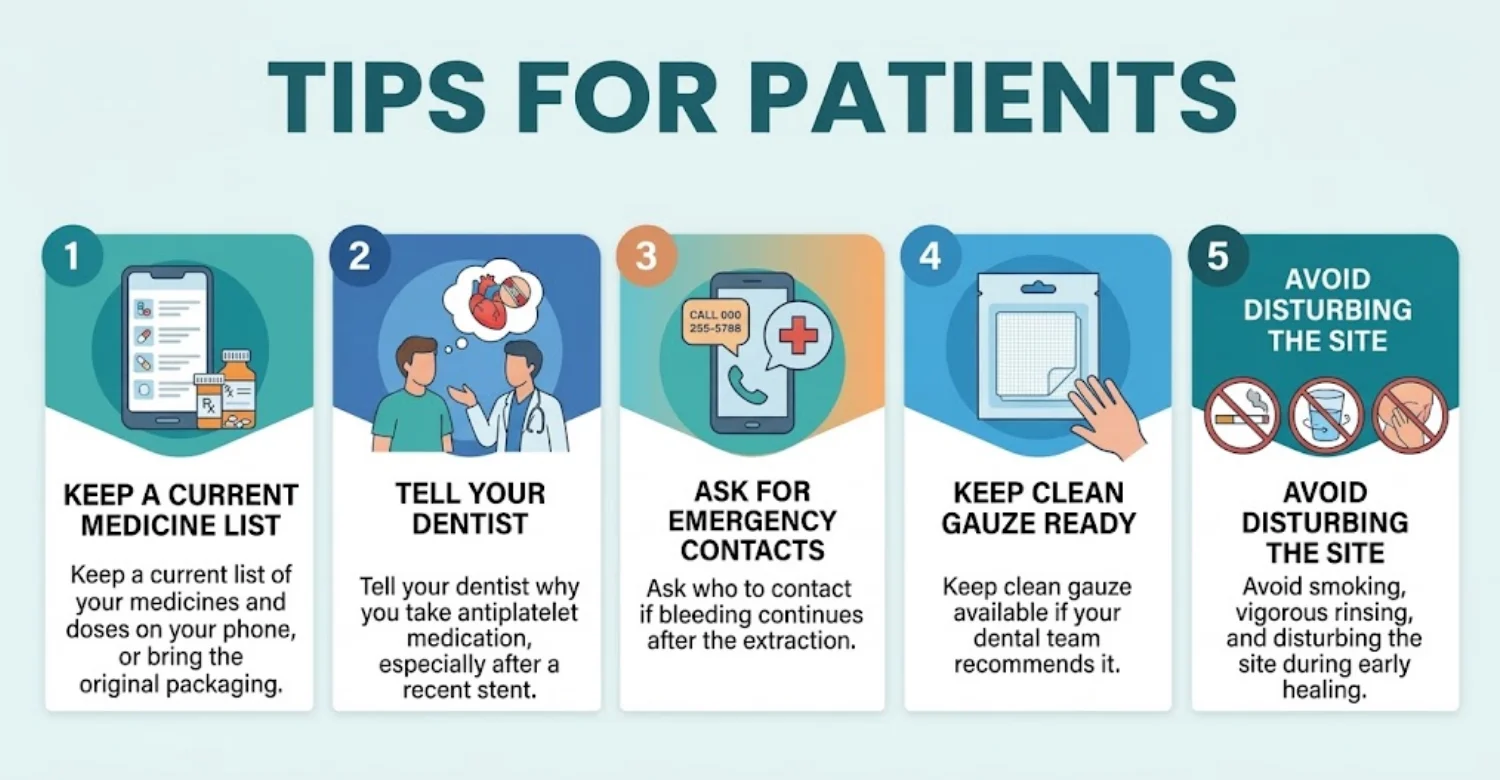
Fold a clean piece of gauze into a firm pad. Place it directly over the socket, not just between the teeth. Bite down firmly and keep steady pressure, commonly for about 20 minutes or as your dentist advises. Avoid lifting the gauze to check the wound, as this can disturb the forming clot. Sit upright and stay calm. If bleeding continues after correctly applied pressure is repeated, contact your dental team for advice.
Which Activities Should You Avoid During Early Healing?
During the first 24 hours, avoid vigorous rinsing and forceful spitting. These actions can loosen the clot. Smoking reduces blood flow and creates suction, so avoid it for as long as possible. Do not touch the socket with your tongue or fingers. Avoid alcohol and strenuous exercise during early recovery, as your clinician advises. Choose soft, lukewarm foods and chew on the opposite side. Drink fluids gently, avoiding hot drinks that might restart bleeding.
Should You Use Mouthwash or Take Painkillers?
Avoid rinsing during the early period your dentist specifies, usually the first 24 hours. After that, gentle rinses may be advised. For pain relief, do not take extra aspirin unless it is already prescribed. Never stop your prescribed aspirin on your own. Paracetamol is suitable for many patients, depending on their medical history. Additional anti-inflammatory medicines, such as ibuprofen, may increase bleeding risk when combined with antiplatelet drugs. Always ask which painkiller suits your current medicines.
What Tools Can Help Control Bleeding After Extraction?
Dentists have several reliable tools to control socket bleeding. These range from simple gauze to specialized absorbable materials and stitches. In antiplatelet therapy and dental extraction, these local tools are central to management. They allow the clot to form without changing medication. The choice depends on the wound size, the procedure, and how the site responds during treatment. Patients may use gauze at home, but other materials should only be placed by the dental team.
Gauze and Local Pressure
Direct pressure is the first and most important step. It compresses small vessels, slows blood flow, and gives platelets time to form a stable plug. Even with reduced platelet activity, sustained pressure is usually effective. Replace gauze only if it becomes soaked, and use a fresh, folded pad each time. If bleeding remains active after repeated, correctly applied pressure, professional reassessment is needed. The dentist can then examine the socket and add further local measures.
Absorbable Hemostatic Materials
Absorbable hemostatic materials are placed inside the socket by the dentist. Common examples include gelatin sponges, oxidized cellulose, and collagen-based products. These materials provide a framework that helps blood cells gather and form a clot. Over time, the body absorbs them as healing progresses. They are especially useful when platelet function is reduced. Your dentist selects the most appropriate material according to the wound size, its location, and the overall clinical circumstances of your extraction.
Sutures and Other Local Bleeding-Control Methods
Sutures bring the gum edges closer together over the socket. This stabilizes the clot and reduces the exposed wound area. Some sutures dissolve on their own, while others are removed at a follow-up visit. In selected cases, the dentist may also prescribe a tranexamic acid mouthwash, which helps protect the clot. Patients should never pack the socket with tissue paper, cotton wool, or unprescribed powders and creams. These items may irritate the wound or introduce infection.
.jpg)
When Should You Seek Urgent Help After a Tooth Extraction?
Most bleeding after extraction settles with time and pressure. However, some situations need urgent attention. In antiplatelet therapy and dental extraction, recognizing warning signs early protects your safety. Persistent heavy bleeding, signs of significant blood loss, spreading swelling, and difficulty breathing all require prompt action. Knowing who to contact before leaving the clinic makes this easier. The answers below explain which symptoms need your dentist, which need emergency care, and why medication changes are never a home solution.
What If Bleeding Does Not Stop Despite Firm Pressure?
If active bleeding continues after correctly applied pressure, contact your treating dentist or an emergency dental service promptly. Seek urgent assessment if your mouth keeps filling with blood or if bleeding remains heavy despite repeated pressure. Do not wait until the next morning. Go to emergency medical care immediately for severe bleeding, fainting, marked weakness, or difficulty breathing. These signs suggest significant blood loss or another serious problem. Early treatment is simpler and safer than delayed treatment.
What If You Develop Increasing Pain, Swelling, or Fever?
Mild pain and swelling usually peak within two to three days and then improve. Worsening pain, progressive swelling, fever, or pus may indicate infection or another complication. These signs need an examination by your dentist. Severe pain starting a few days later may suggest dry socket, where the clot is lost. Difficulty breathing or swallowing, or swelling that spreads quickly into the neck or under the eye, requires emergency assessment without delay.
Why Should You Never Change Your Medication Dose on Your Own?
Antiplatelet medicines protect against clots in the heart, brain, and stents. Skipping or reducing doses may increase the risk of a heart attack, stroke, or stent thrombosis. This risk can outweigh the inconvenience of extra oozing from a socket. If you think your medication needs changing, contact your prescribing clinician and dental team first. Significant bleeding should be treated urgently by professionals. It should never be managed by independently skipping prescribed doses at home.
How Do Dentists Manage Dental Extraction on Antiplatelet Therapy?
Dentists manage these extractions through planning, gentle technique, and local bleeding control. The process begins before the appointment with a full medical review. During treatment, careful surgical handling limits tissue damage. Afterward, the socket is secured and checked before the patient leaves. This structured approach to antiplatelet therapy and dental extraction allows most patients to continue their medicines safely. Additional medical input is reserved for higher-risk situations rather than applied to everyone by default.
Clinical Assessment and Extraction Planning
The dental team examines the tooth, the surrounding gums, and the expected difficulty of removal. Imaging may show root shape, bone levels, and nearby structures. The team also reviews the medical history and full medication regimen. When several teeth need removal, a staged approach may be safer, with fewer teeth removed per visit. In antiplatelet therapy and dental extraction, the plan depends on the individual, not a universal rule about stopping medication.
Local Anesthesia and Careful Surgical Technique
Effective local anesthesia keeps the patient comfortable and still, which supports precise work. Careful tissue handling avoids unnecessary tearing of gums and blood vessels. Dentists aim to remove the tooth with minimal trauma, sometimes sectioning it to protect surrounding bone. Less tissue damage usually means less bleeding and smoother healing. Some anesthetics contain a vasoconstrictor that temporarily reduces local blood flow. The choice of anesthetic and technique depends on the patient's health and the planned extraction.
Local Hemostatic Treatment and Wound Closure
After the tooth is removed, the dentist compresses the socket to encourage clot formation. Absorbable hemostatic materials may be placed inside, and sutures may close the gum edges. Other clinically appropriate methods are added if needed. Before discharge, the dentist checks that bleeding is controlled. The patient then receives written postoperative instructions and contact details. Follow-up may be arranged when needed. These steps form the core of safe antiplatelet therapy and dental extraction management.
When Might the Treatment Plan Need Additional Medical Input?
Some situations benefit from the prescribing clinician's input. These include complex surgery, dual antiplatelet therapy, a recent heart attack, stroke, or stent placement, and significant medical conditions. A history of serious bleeding also warrants discussion. In these cases, the clinician may help decide timing or treatment adjustments. For example, non-urgent extractions are sometimes delayed until a critical period after stent placement has passed. Medication interruption is still not a routine prerequisite for extraction.
Ready to transform your smile?
Talk to our team and get a FREE treatment plan.
How Long Does Recovery Take After Dental Extraction on Antiplatelet Therapy?
Recovery after antiplatelet therapy and dental extraction is often similar to recovery for other patients. The first day focuses on protecting the clot. Over the following days, discomfort and swelling gradually settle. Gum tissue typically closes over within a few weeks, while bone continues remodeling for months. Antiplatelet medicines may require closer attention to bleeding early on. They do not automatically mean slower healing. Recovery also depends on the procedure, oral hygiene, and smoking habits.
What Should You Expect During the First 24 Hours?
Mild oozing and blood-stained saliva are common during the first day. The clot is fragile at this stage, so protecting it is the priority. Rest, keep your head slightly raised, and follow your individualized instructions. Avoid rinsing, spitting, and hot drinks. Bleeding exceeds home management when it stays heavy despite repeated firm pressure or when you feel faint or weak. In that case, contact your dental team or emergency services promptly.
How Does the Extraction Site Heal Over the Following Days?
Discomfort and swelling usually improve after the second or third day. Within the first week, the clot is gradually replaced by soft healing tissue. Gum tissue typically covers the socket within a few weeks. Deeper bone healing takes longer and continues for several months. Antiplatelet therapy does not necessarily prolong this process. Bleeding may simply need closer attention during the early days. Good oral hygiene and avoiding smoking support steady, uncomplicated recovery.
What If Bleeding Starts Again After It Has Stopped?
Renewed bleeding can happen after the clot is disturbed. Common triggers include eating hard food, brushing too close to the socket, or physical exertion. Local irritation or infection can also contribute. Apply clean, folded gauze over the socket and bite with steady, sustained pressure. If bleeding continues, contact your dentist promptly. Repeated or heavy bleeding should not be dismissed as an expected medication effect. It needs professional assessment to identify the cause.
How Can You Reduce Complications Before and After Extraction?
Complications are less likely when preparation and aftercare are both handled well. Before treatment, accurate information allows the dentist to plan safely. After treatment, protecting the socket helps the clot remain stable. Follow-up ensures problems are found early. For patients considering antiplatelet therapy and dental extraction, these steps work together. No single step guarantees perfect healing. However, combining them greatly lowers the chance of prolonged bleeding, infection, or delayed recovery.
Prepare for Your Appointment
Keep an accurate, up-to-date list of every medicine you take, including doses. Tell your dentist about all relevant medical conditions and any past bleeding problems. Follow the dental team's instructions about eating, drinking, and taking your regular medicines on the day. A light meal beforehand is often advised unless sedation is planned. Before leaving the clinic, confirm whom to contact if bleeding continues. Save that number on your phone for antiplatelet therapy and dental extraction aftercare.
Protect the Extraction Site During Healing
Follow your dentist's instructions for pressure, oral hygiene, diet, and activity. Brush other teeth gently, but avoid the socket at first. Choose soft foods and chew away from the extraction area. Avoid smoking, vigorous rinsing, and touching the socket, as these can dislodge the clot. Take all prescribed medicines exactly as directed, including your antiplatelet treatment, unless the responsible clinician changes the plan. Consistent care during the first week supports smooth healing.
Arrange Follow-Up When Your Risk Is Higher
Follow-up may be useful after complex surgery, persistent bleeding, or when medical factors complicate healing. Patients on dual therapy or with several health conditions may benefit from a planned review. Sutures may also need removal. However, do not wait for a scheduled appointment if new symptoms appear. Report increasing bleeding, swelling, or pain promptly. Follow-up needs differ from person to person. Your dentist will advise whether a review visit suits your situation.
Clinical Note
Antiplatelet treatment is prescribed to reduce specific cardiovascular or cerebrovascular risks, such as heart attack, stroke, or stent blockage. Any decision to continue or modify it must balance bleeding against thrombosis. Many routine extractions can be managed without interrupting therapy, using appropriate local measures. Patients with recent stent placement, acute coronary syndrome, complex surgery, or significant bleeding concerns may need coordinated medical and dental planning. Individual advice about antiplatelet therapy and dental extraction must come from clinicians familiar with your history.
Patient Reviews
What Should You Remember Before Your Extraction?
Antiplatelet medication may increase bleeding, but it does not automatically prevent a tooth extraction. Do not stop aspirin, clopidogrel, or any other prescribed antiplatelet medicine on your own. Share an accurate medication history, including the reason for treatment and any recent stent. Expect your dentist to plan local bleeding-control measures, and follow your postoperative instructions closely. Your next step is simple. Discuss antiplatelet therapy and dental extraction with your dental team, and involve your prescribing clinician when appropriate.
About Vitrin Clinic
At Vitrin Clinic in Istanbul, Türkiye, antiplatelet therapy and dental extraction are approached through individualized treatment planning. The dental team reviews your medical history, prescribed medications, oral health, and the complexity of the planned extraction to assess potential bleeding risks and determine appropriate precautions.
Dr. Rifat Alsaman, Head of the Medical Team and cosmetic dentist at Vitrin Clinic, emphasizes the importance of considering both bleeding risks and the potential consequences of interrupting antiplatelet treatment. Depending on your medical history and the procedure, the team may use local bleeding-control methods, provide tailored aftercare instructions, and coordinate with your prescribing clinician when necessary.
If you take aspirin, clopidogrel, or other antiplatelet medication, discuss your treatment plan with your dental team before extraction. Never stop or change your prescribed medication without guidance from the clinician responsible for your care. You can request a consultation at Vitrin Clinic to discuss your dental needs, medical history, and appropriate precautions before treatment.





Ready to transform your smile?
Talk to our team and get a FREE treatment plan.
References:
FAQs
Dr. Rifat Alsaman has more than 5 years of clinical experience in dentistry and currently serves as the Head of the Medical Team at Vitrin Clinic. He is dedicated to providing exceptional patient care, overseeing treatment planning, and ensuring the highest clinical standards across the team. His expertise, attention to detail, and commitment to continuous professional development have helped countless patients achieve healthier, more confident smiles.


.webp&w=3840&q=75)
