Oral Surgery
October 14, 2026
Jaw Dysfunction and Oral Symptoms: What Are the Signs, Causes, and Treatment Options?
 Dr. Rifat Alsaman
Some people also have headaches, tooth sensitivity, or a bite that feels different. These complaints have several possible causes. Temporomandibular joint (TMJ) disorders are one of them. Dental problems, muscle tension, and other conditions can look similar. Knowing your symptom pattern helps you decide when to seek an assessment and which treatments may suit you.
What Are Jaw Dysfunction and Oral Symptoms?
Jaw dysfunction and oral symptoms describe problems with how the jaw moves, functions, or feels, along with related signs in the mouth. The temporomandibular joint connects the lower jaw to the skull, just in front of each ear. Temporomandibular disorders (TMDs) affect this joint, the chewing muscles, or nearby tissues. Occasional painless clicking does not necessarily mean you have a disorder. However, persistent pain, restricted movement, or difficulty eating deserves closer attention. Jaw dysfunction and oral health are closely linked, so both should be considered together.
How Does Normal Jaw Function Work?
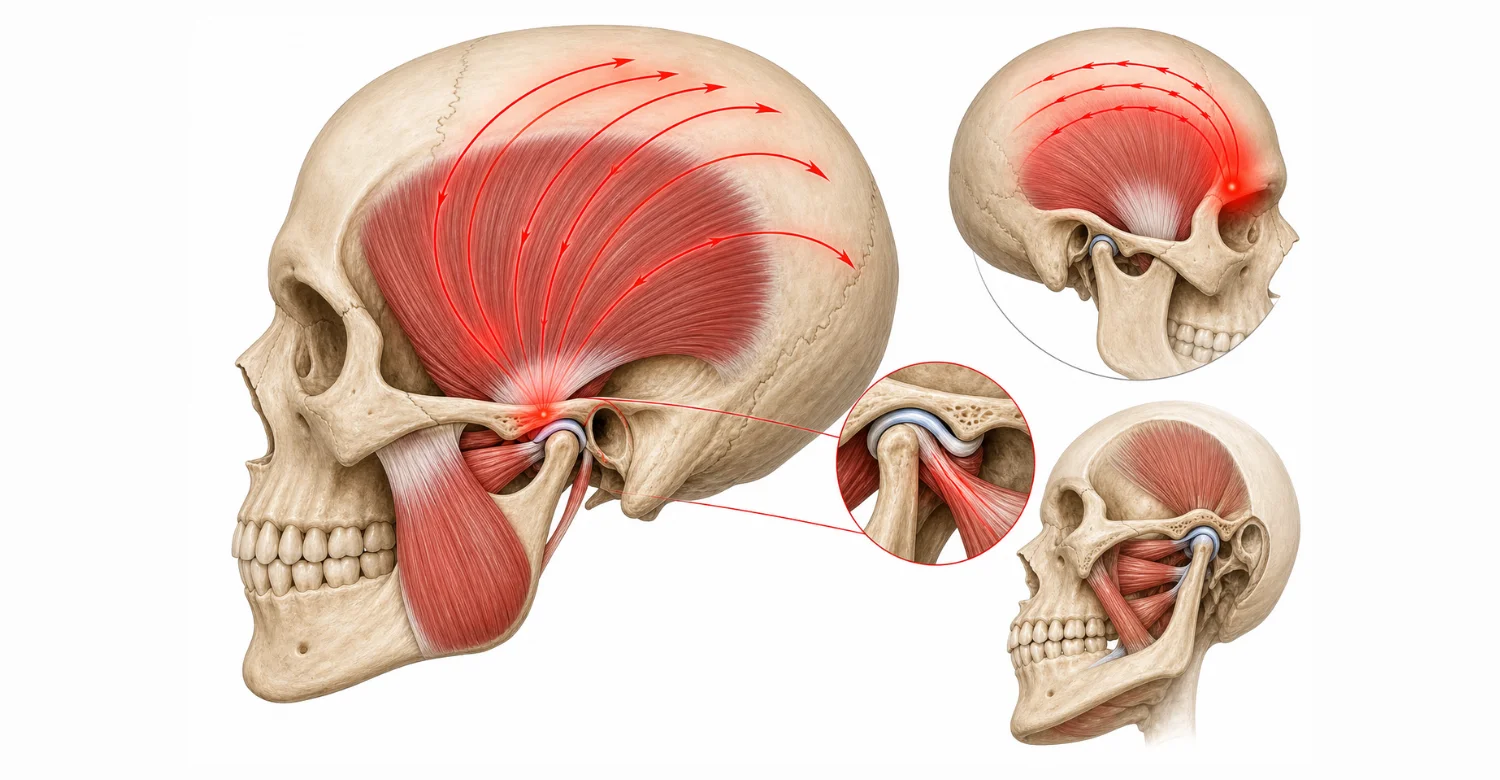
You have two temporomandibular joints, one on each side. They always move together. When you open wide, the jaw first rotates and then glides forward. A small fibrous disc sits between the bones and keeps movement smooth. Strong chewing muscles, including the masseter and temporalis, control force and position. Your teeth guide where the jaw closes. Ligaments and nerves add stability and feedback. This system lets you speak, chew, yawn, and swallow. When it is disrupted, jaw dysfunction and oral symptoms can appear.
What Is the Difference Between TMJ and TMD?
TMJ is the name of the joint itself. Everyone has two temporomandibular joints. TMD stands for temporomandibular disorder. It is an umbrella term for conditions that cause pain or dysfunction in the joint, the chewing muscles, or both. Some TMDs mainly involve muscle pain. Others involve the disc or the joint surfaces. People often say "I have TMJ" when they mean a disorder. The terms are related, but they are not interchangeable in clinical use.
.jpg)
.jpg)
.jpg)
.jpg)
.jpg)
.jpg)
Ready to transform your smile?
Talk to our team and get a FREE treatment plan.
What Symptoms Can Jaw Dysfunction Cause in Your Mouth and Jaw?
Jaw dysfunction symptoms vary widely from person to person. Some people feel a dull ache, while others notice sounds, stiffness, or bite changes. The oral symptoms of TMJ disorders can resemble dental problems, which makes self-assessment difficult. Recognizing how jaw dysfunction and oral symptoms show up helps you describe them clearly to a clinician. Similar symptoms can come from different causes. A toothache, for example, may come from a tense muscle or from a cracked tooth. The sections below explain the common patterns.
Why Does My Jaw Click or Pop When I Open My Mouth?
Clicking or popping usually comes from movement inside the joint. A common cause is the disc sitting slightly forward and snapping back into place as the jaw opens. Many people have painless clicking for years without any problems. In that case, treatment is often unnecessary. Clicking matters more when it comes with pain, catching, or locking. If your jaw gets stuck, or clicking suddenly stops while opening becomes restricted, get it checked. Grating or crunching sounds also deserve an assessment.
Why Does My Jaw Feel Stiff or Difficult to Open?
Jaw stiffness and limited mouth opening are common TMD complaints. Stiffness is often worse in the morning, especially after nighttime clenching. Tired or tight chewing muscles can make opening feel slow or sore. Yawning may become uncomfortable. Sometimes the jaw seems to catch partway open. In other cases, a displaced disc blocks normal gliding, so opening becomes suddenly restricted. Persistent restriction, or being unable to open wide enough to eat normally, should be examined rather than forced through stretching.
Can Jaw Dysfunction Cause Tooth Pain or Sensitivity?
Yes, it can. Tense or overworked chewing muscles can refer pain to the teeth. This means a tooth aches even though the tooth itself is healthy. Clenching can also make teeth feel tender when you bite. However, jaw pain and mouth symptoms often overlap with true dental disease. Cavities, cracked teeth, gum disease, and infection can all cause similar pain. A dental examination helps confirm the real source before any treatment begins.
Why Does My Jaw Hurt When I Chew or Talk?
Chewing and talking ask the jaw muscles and joints to work repeatedly. When muscles are already tired or irritated, this extra activity can trigger pain. Biting into firm foods, such as nuts or tough meat, increases the load on the joint. Long conversations or wide yawning can do the same. This is why jaw dysfunction and chewing difficulties often go together. Pain that settles with rest suggests muscle overuse. Pain with locking or joint noises may point toward joint irritation.
Can Jaw Problems Cause Headaches, Ear Pain, or Facial Discomfort?
They can. TMD pain often spreads to the temples, cheeks, sides of the face, and around the ears. Some people feel ear fullness or an earache without any ear infection. Tension-type headaches may also worsen with clenching. Still, these symptoms are not specific to TMD. Ear disorders, sinus problems, migraine, dental infection, and nerve conditions can cause similar pain. New, severe, or unexplained headaches or ear symptoms should be evaluated for other causes as well.
How Can Jaw Dysfunction Affect My Bite and Chewing Ability?
Pain and muscle tension can change how you chew. You may favor one side or avoid harder foods. Some people feel their teeth meet differently when muscles are sore or the joint is inflamed. These temporary changes linked to jaw dysfunction and oral symptoms often settle as symptoms improve. A persistent change in how your teeth fit together is different. It may reflect joint changes, dental shifts, or other problems. A lasting bite change should be assessed before anyone adjusts your teeth or restorations.
What Causes Jaw Dysfunction?
Jaw dysfunction causes are usually multifactorial. Muscle activity, joint changes, injury, general health, and stress can all interact. Genetics and individual pain sensitivity may also play a role. In many people, no single cause explains everything. This matters because treatment works best when it targets the factors that actually apply to you. Blaming one habit or one bite feature can lead to unnecessary treatment. Looking at the full picture of jaw dysfunction and oral symptoms gives a more reliable plan.
Teeth Grinding and Jaw Clenching
Bruxism means repetitive grinding or clenching of the teeth. It can happen during sleep or while awake. Sustained muscle activity may cause soreness, muscle fatigue, morning jaw discomfort, and tooth wear. Some people also notice cracked fillings or sensitive teeth. However, bruxism and TMD are not the same thing. Many people who grind their teeth never develop jaw pain. The relationship is complex, so grinding is best seen as a possible contributor rather than an automatic cause.
Muscle Tension, Stress, and Repetitive Jaw Habits
Some habits keep the jaw muscles working when they should rest. Examples include daytime clenching, heavy gum chewing, nail biting, chewing pens, and resting the jaw on a hand. Holding the jaw tense while concentrating is common and often unnoticed. In some people, these habits aggravate jaw dysfunction and oral symptoms. Stress can increase muscle tension and change how the body processes pain. Even so, stress is rarely the only factor. Reducing these habits lowers muscle workload, but may not resolve every case.
Temporomandibular Joint Disorders and Disc Displacement
Temporomandibular joint (TMJ) disorders include problems within the joint itself. The disc may sit out of its usual position, which is called disc displacement. When the disc returns to place during opening, a click often occurs. If it does not return, opening may become limited. The joint lining can also become inflamed and painful. Importantly, disc displacement is common in people with no symptoms at all. An imaging finding alone does not mean treatment is needed. Clinicians focus on pain and function.
Jaw Injury, Arthritis, and Structural Changes
A blow to the face, a fall, or a sports injury can damage the joint, the disc, or the surrounding tissues. Osteoarthritis can gradually wear the joint surfaces, sometimes producing grating sounds. Inflammatory conditions, such as rheumatoid arthritis, can also affect the jaw joints. Less commonly, developmental changes alter joint structure. Persistent symptoms after an injury deserve assessment, since jaw fractures can be missed. Progressive loss of movement or a gradually changing bite also needs professional evaluation.
Can Dental Problems or Changes in Your Bite Contribute to Jaw Pain?
Dental problems can coexist with jaw pain and make it harder to identify. A painful tooth may lead you to chew on one side, which can strain the muscles. Missing teeth can change chewing patterns over time. A new filling or crown that sits high may cause temporary tenderness. However, current evidence does not show that a particular bite pattern automatically causes TMD. Dental treatment should address genuine dental problems related to jaw dysfunction and oral symptoms. It is not a guaranteed TMD cure.
Which Symptoms May Occur Together, and What Could They Mean?
Symptoms often appear in clusters. Looking at these combinations can help you understand what might be happening. A clinician also uses patterns to guide the examination and decide whether imaging is useful. Still, combinations alone cannot establish a diagnosis. The same cluster can come from different conditions in different people. Temporomandibular disorder (TMD) symptoms may also overlap with dental, ear, or nerve problems. Use the following patterns as a starting point for a conversation with your clinician, not as a self-diagnosis tool.
Jaw Pain, Clicking, and Limited Mouth Opening
These three symptoms together are common in some TMDs, particularly those involving the disc. Pain with clicking may suggest joint irritation alongside disc movement. Limited opening may follow if the disc stops returning to its normal position. Muscle spasm can also restrict opening without any disc problem. Sudden locking, where you cannot open or close fully, needs timely assessment. Early evaluation clarifies whether the limitation comes from the muscles, the joint, or both. It also guides safe self-care.
Morning Jaw Pain, Headaches, and Tooth Wear
Waking with jaw soreness, temple headaches, and tired muscles may suggest nighttime clenching or grinding. Flattened or chipped teeth can support this impression. However, tooth wear has several causes. Acidic foods and drinks, reflux, abrasive brushing, and age can all wear enamel. So wear alone cannot confirm sleep bruxism. Morning headaches can also relate to sleep-disordered breathing, such as sleep apnea. If you snore loudly or wake unrefreshed, mention this to your doctor.
Jaw Discomfort, Ear Symptoms, and Facial Pain
Jaw discomfort can come with ear pain, ear fullness, ringing, or aching across the face. The jaw joint sits very close to the ear canal, so pain signals can overlap. Muscle pain may also spread toward the cheeks and temples. However, ear infections, sinus conditions, dental abscesses, and headache disorders can mimic jaw dysfunction and oral symptoms. If ear or facial pain persists, or you notice hearing changes, discharge, or numbness, a broader medical assessment is advisable.
When Symptoms May Point to a Different Condition
Not every jaw ache is TMD. Dental infection can cause throbbing pain, swelling, and fever. Trigeminal neuralgia produces sudden, electric-shock-like facial pain. Giant cell arteritis, mainly in people over 50, can cause jaw pain while chewing, scalp tenderness, and vision changes. This needs urgent medical review. Ear disorders, salivary gland problems, and, rarely, tumors can also cause jaw pain. Because of this overlap, a professional assessment is safer than self-diagnosis.
Ready to transform your smile?
Talk to our team and get a FREE treatment plan.
What Can You Do at Home to Relieve Jaw Dysfunction Symptoms?
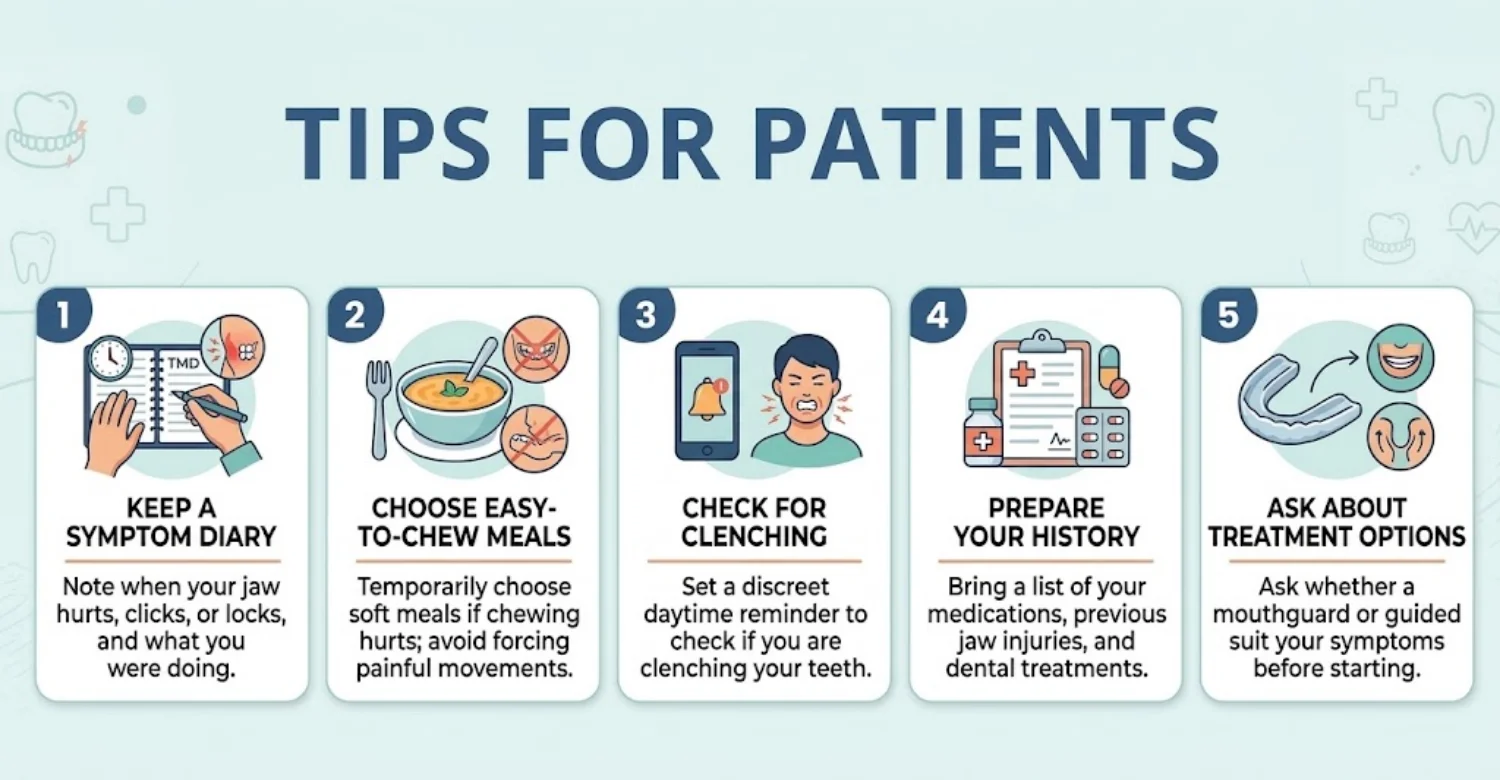
Many mild cases improve with simple, conservative self-care. These steps suit people with mild jaw dysfunction and oral symptoms, no recent injury, no severe restriction, and no warning signs. The aim is to reduce strain on the muscles and joints while they settle. Keep track of how your symptoms respond. If they improve gradually, continue. If they worsen, last beyond a few weeks, or interfere with eating, it is time to seek professional advice.
Choose Softer Foods Temporarily
Softer foods give the jaw a chance to rest. Good options include soups, yogurt, eggs, cooked vegetables, fish, and pasta. Cut meals into small pieces so you do not need to open wide. For now, avoid very hard, chewy, or sticky foods, such as nuts, crusty bread, and caramel. Do not force your jaw through painful movements. As symptoms ease, reintroduce firmer foods gradually so your jaw returns to normal function.
Use Warm or Cold Compresses Appropriately
Heat and cold can both ease discomfort. A warm, moist compress may relax tight muscles and make gentle movement more comfortable. A cold pack may help some people with acute pain or after a minor strain. Always wrap the pack in a cloth to protect your skin. Apply it for about 10 to 15 minutes at a time. Stop if it increases your pain. People with reduced skin sensation should take extra care.
Reduce Clenching and Rest Your Jaw
A relaxed jaw rests with the lips together, teeth slightly apart, and tongue resting gently on the roof of the mouth. Check this position several times a day. Many people find they clench while driving, working, or concentrating. When you notice it, release the tension. Limit gum chewing and avoid biting pens or nails. Support your chin when yawning so you do not open too wide. These small changes reduce muscle workload.
Try Gentle Jaw Movement Without Forcing It
Gentle, controlled movement can help maintain normal jaw function. Slow opening and closing within a comfortable range is a common starting point. Keep movements smooth and pain-free. Avoid aggressive stretching, forcing the jaw wider, or exercises that cause catching or locking. Overloading irritated tissues can make symptoms worse. If symptoms persist, a dentist or physical therapist can recommend exercises that match your diagnosis. Guided programs are generally safer than random online routines.
.jpg)
Can Assistive Tools Help With Jaw Dysfunction?
Some tools can support symptom management. Oral appliances, heat packs, and supervised exercise programs are examples. However, no device replaces an accurate diagnosis. Using the wrong tool may delay proper care or even aggravate jaw dysfunction and oral symptoms. Before buying a device, consider whether it suits your specific problem. A professional can explain which tools are likely to help, how long to use them, and what to watch for if symptoms change.
Are Mouthguards or Night Guards Helpful for Teeth Grinding?
A night guard, often called an occlusal splint, is a removable appliance worn over the teeth. Its most reliable benefit is protecting teeth from grinding-related wear and fractures. Some people with TMD also report less morning pain. However, evidence on pain relief is mixed, and responses vary. A guard does not necessarily cure TMD. Custom-made, professionally fitted appliances are preferred. Poorly fitting over-the-counter guards may increase clenching or alter the bite with long-term use.
Should You Use Jaw Exercise Devices or Online Stretching Tools?
Jaw exercise devices and online stretching routines are widely marketed. Some promise a sharper jawline or stronger muscles. These tools are not designed to treat TMD. Resistance devices can overload painful muscles and irritated joints. Unsupervised stretching may worsen catching or locking, especially with disc problems. Exercises should match the diagnosis. Muscle pain, disc displacement, and arthritis may each need a different approach. Seek professional guidance before starting any intensive routine.
When Should You Seek Professional Help for Jaw Dysfunction?
Home care is useful for mild, short-lived symptoms. It is not enough when problems persist, worsen, or limit daily function. If jaw dysfunction and oral symptoms last longer than a few weeks despite self-care, book an assessment. The same applies if pain disturbs your sleep, eating, or speaking. Early evaluation helps rule out dental and medical causes. It also lets you start appropriate treatment before habits and pain patterns become harder to change.
Which Jaw Symptoms Need Prompt Dental or Medical Assessment?
Seek a prompt assessment if you notice any of these signs:
Persistent or worsening jaw pain
Recurring locking, whether open or closed
Progressively reduced mouth opening
Difficulty eating or a noticeable change in your bite
Symptoms that began after a fall, accident, or blow to the face
Numbness, swelling, fever, or a lump near the jaw
Jaw pain while chewing with headaches or vision changes, especially after age 50
These signs need professional evaluation rather than more home care.
When Is Jaw Pain an Emergency?
Some situations require urgent medical care. Go to an emergency department or call emergency services if you have difficulty breathing or swallowing. Rapidly increasing swelling of the face or neck is also urgent, since infections can spread quickly. Significant facial trauma, especially with a misaligned bite, needs immediate assessment. Jaw pain with chest pressure, shortness of breath, sweating, nausea, or pain spreading to the arm may signal a heart attack. Do not wait in these cases.
Clinical Note
Temporomandibular disorders include several different conditions affecting the jaw joint and associated muscles. Jaw dysfunction and oral symptoms can overlap with dental, muscular, neurological, and ear-related conditions. No single symptom confirms a diagnosis. Conservative, reversible approaches are generally considered before invasive procedures when clinically appropriate. Imaging, medication, injections, and surgery should be selected according to individual findings and accepted clinical indications. This article provides general information and does not replace a personal assessment.
Ready to transform your smile?
Talk to our team and get a FREE treatment plan.
How Is Jaw Dysfunction Diagnosed and Treated?
Jaw dysfunction diagnosis and treatment follow a diagnosis-first approach. A clinician first identifies the likely source of pain. Then they choose treatment based on your symptoms, examination findings, duration, severity, and suspected cause. Most people improve with conservative care. A smaller group needs more targeted treatment. No single approach works for everyone with jaw dysfunction and oral symptoms. A clear diagnosis helps avoid unnecessary procedures and focuses care on what is most likely to help.
What Happens During a Jaw Dysfunction Examination?
The examination usually begins with your history. Your clinician asks when symptoms began, what triggers them, and how they affect daily life. They review your medical history, medications, and any past injuries. Next, they measure mouth opening and watch how your jaw moves. They press gently on the joints and chewing muscles to check for tenderness. They listen or feel for clicking and grating. Finally, they examine your teeth, gums, and oral tissues to rule out dental causes.
When Are Dental X-Rays, MRI, or CBCT Needed?
Imaging is chosen according to the clinical question. Not every uncomplicated case needs it. Dental X-rays help check for decay, infection, and bone problems around the teeth. CBCT, a type of 3D X-ray, shows the bony joint structures in detail and can reveal arthritis or fractures. MRI uses no radiation and is the preferred method for viewing the disc and soft tissues. It may be considered for persistent locking or when surgery is being discussed.
Conservative Treatment and Jaw Physical Therapy
Conservative treatment is the usual first step for most TMDs. It includes education about the condition, habit changes, a softer diet, and self-care strategies. Physical therapy may involve guided jaw exercises, posture advice, manual therapy, and relaxation techniques. Some people also benefit from stress-management or cognitive behavioral approaches. These treatments are reversible and low-risk. Improvement is often gradual over several weeks. Progress depends on the underlying condition and how consistently you follow the plan.
Medications for Jaw Pain and Muscle Discomfort
A clinician may suggest short-term pain relief when appropriate. Non-steroidal anti-inflammatory drugs, such as ibuprofen, can reduce pain and inflammation for some people. Paracetamol (acetaminophen) is another option. These medicines are not suitable for everyone. Stomach problems, kidney disease, pregnancy, and other medications can all affect safety. Prescription options, including muscle relaxants or low-dose medicines for chronic pain, need professional assessment. Do not start any prescription medication without advice from a qualified clinician.
Can Injections Help Treat Temporomandibular Disorders?
Injections may help in selected cases, depending on the diagnosis. Corticosteroid injections into the joint may reduce inflammation in some arthritic conditions, but repeated use is limited. Hyaluronic acid injections are sometimes used for joint degeneration. Arthrocentesis, which flushes the joint with sterile fluid, may help some cases of locking. Botulinum toxin is sometimes used for persistent muscle pain, though evidence remains mixed. Injections are not routine first-line treatment and require careful specialist assessment.
When Is Jaw Surgery Considered?
Surgery is reserved for a small number of people. It is usually considered when there is a clear structural problem, or when severe symptoms have not responded to appropriate conservative care. Options range from minimally invasive arthroscopy to open joint surgery. In rare, advanced cases, joint replacement may be discussed. The choice depends on the specific joint disorder. Surgery requires assessment by an oral and maxillofacial surgeon and a careful discussion of risks and benefits.
What Are the Expected Benefits of Jaw Dysfunction Treatment?
Treatment aims to make daily life more comfortable. Realistic goals include less pain, wider mouth opening, easier chewing, and fewer locking episodes. Many people also sleep better and worry less about their symptoms. Most improve with conservative care, although outcomes vary. Complete symptom resolution cannot be guaranteed, and some people have occasional flare-ups. Managing jaw dysfunction and oral symptoms often means reducing their impact, rather than eliminating every click or ache permanently.
What Changes Might You Notice Before and After Treatment?
Before treatment, you may have pain during meals, morning stiffness, or difficulty opening wide. Afterward, many people find meals easier and morning soreness milder. Mouth opening may gradually increase. Locking episodes may become less frequent. These changes usually happen over weeks, not days. Some symptoms, such as painless clicking, may remain. Others may return during stressful periods. Knowing that progress is gradual helps you stay realistic and committed to your plan.
How Can You Track Whether Your Treatment Is Working?
Simple records make progress easier to see. Rate your pain from 0 to 10 each day. Note how often your jaw clicks or locks. Record which foods you can chew comfortably. Check mouth opening by counting how many fingers fit vertically between your front teeth. Track how often you need pain relief. Share these notes at follow-up visits. They help your clinician adjust treatment for jaw dysfunction and oral symptoms based on real changes.
How Can You Prevent Jaw Dysfunction Symptoms From Returning?
Not every jaw disorder can be prevented. Arthritis, injury, and some joint changes are beyond your control. Still, practical habits can reduce avoidable strain and lower the chance of flare-ups. Once jaw dysfunction and oral symptoms settle, keep using the strategies that helped. Watch for early warning signs, such as morning soreness or more frequent clicking. Acting early with rest and self-care often stops a minor flare from becoming a longer problem.
Reduce Teeth Clenching and Repetitive Jaw Strain
Keep checking your jaw position during the day. Keep your teeth apart and your muscles relaxed when you are not eating. Limit gum chewing, especially for long periods. Avoid chewing ice, pens, or nails. If your work involves long phone calls or presentations, take short breaks to rest your jaw. If you grind at night, ask whether a protective night guard is still appropriate. Small, consistent habits make a meaningful difference.
Support Jaw Comfort Through Daily Habits
General health habits also support jaw comfort. Aim for regular, sufficient sleep, since poor sleep can increase pain sensitivity. Stress-management techniques, such as breathing exercises, walking, or mindfulness, may reduce muscle tension. Keep a comfortable posture during desk work and phone use. Avoid repeated extreme mouth opening, such as biting into very large sandwiches. Support your chin when yawning. Staying physically active may also help your body manage pain more effectively.
Maintain Regular Dental Care and Review Persistent Symptoms
Routine dental visits help detect tooth wear, cracked teeth, gum problems, and other conditions that may overlap with jaw symptoms. Your dentist can also check whether a night guard still fits well. Mention any new clicking, pain, or bite changes at each visit. Persistent symptoms deserve reassessment rather than repeated self-treatment. If something is not improving, a fresh evaluation can uncover missed causes and keep your care on track.
Patient Reviews
What We Notice Clinically
Dr. Rifat Alsaman, Head of the Medical Team and cosmetic dentist at Vitrin Clinic, notes that jaw clicking alone does not establish a TMD diagnosis. Pain, restricted opening, locking, chewing difficulties, and symptom duration provide more useful context. A clinical assessment should also consider dental causes and other conditions that can mimic jaw-related pain.
Dr. Rifat Alsaman, Head of the Medical Team and cosmetic dentist at Vitrin Clinic, emphasizes identifying the likely source of discomfort before selecting treatment. A mouthguard, exercise program, medication, or dental procedure may not suit every person with jaw dysfunction and oral symptoms. For patients considering cosmetic dental work, jaw comfort, oral health, and function are assessed as part of treatment planning when relevant. Cosmetic treatment is not a universal solution for TMD.
What Should You Do About Jaw Dysfunction and Oral Symptoms?
Jaw dysfunction and oral symptoms, including discomfort, clicking, stiffness, and chewing difficulties, can arise from several different conditions. The pattern and severity of your symptoms matter more than any single sign. Gentle self-care may help mild symptoms. However, persistent pain, locking, or restricted movement should not be ignored. Seek an assessment when symptoms interfere with eating, speaking, or daily life. The right plan may involve conservative care, targeted treatment, or further investigation, depending on the cause.
About Vitrin Clinic
Vitrin Clinic in Istanbul, Türkiye, approaches dental care through individualized assessment and treatment planning. Where jaw dysfunction and oral symptoms are relevant to dental or cosmetic treatment, the assessment considers oral health, functional concerns, medical history, and the need for further evaluation. Dr. Rifat Alsaman, Head of the Medical Team and cosmetic dentist at Vitrin Clinic, supports an approach that considers both appearance and function. You can request a consultation to discuss an individualized treatment plan. No cosmetic dental procedure is a guaranteed treatment for temporomandibular disorders.






Ready to transform your smile?
Talk to our team and get a FREE treatment plan.
References:
https://www.naturalistechiropractic.com.au/conditions/jaw-dysfunction/
https://www.nhs.uk/conditions/temporomandibular-disorder-tmd/
https://my.clevelandclinic.org/health/diseases/15066-temporomandibular-disorders-tmd-overview
Frequently Asked Questions
What Is the Difference Between TMJ and TMD?
TMJ refers to the temporomandibular joint, the hinge-and-glide joint connecting your lower jaw to your skull. TMD means temporomandibular disorder. It describes conditions affecting that joint, the chewing muscles, or related structures. In everyday speech, people often say "TMJ" when they mean the problem. Clinically, however, the joint and the disorder are different things. Knowing this difference helps when you read about jaw dysfunction and oral symptoms or discuss your diagnosis with a clinician.
How Much Does Jaw Dysfunction Treatment Cost?
Costs vary widely. They depend on the diagnosis, the type of assessment, and the treatment approach. Simple advice and self-care cost little. Costs rise if you need imaging such as CBCT or MRI, a custom oral appliance, physical therapy, medication, injections, or a procedure. Because jaw dysfunction and oral symptoms differ from person to person, there is no single price. A personalized estimate requires a clinical assessment of your specific condition.
How Long Does Jaw Dysfunction Take to Improve?
Recovery time varies. Mild, recent symptoms often improve within days to a few weeks with rest and self-care. Many TMD cases settle within a few months of conservative management. Persistent or complex conditions, such as long-standing joint changes, may need longer-term care. Flare-ups can happen along the way. No one can promise a fixed timeline for jaw dysfunction and oral symptoms. Seek reassessment if symptoms worsen or fail to improve as expected.
Why Does My Jaw Click Every Time I Open My Mouth?
Regular clicking often reflects movement inside the joint. Most commonly, the disc sits forward and slips back into position as you open. This is called disc displacement with reduction. Many people click for years without pain or progression. Painless clicking does not always require treatment. Assessment becomes more important if clicking comes with pain, catching, locking, or reduced opening. A change in the sound, such as grating, is also worth mentioning to your dentist.
Can Jaw Dysfunction Make My Teeth Hurt Even Without a Cavity?
Yes. Tense chewing muscles can refer pain to the teeth, so a healthy tooth may ache. Clenching can also make teeth feel sore when biting. These are recognized oral symptoms of TMJ disorders. However, other dental causes must be ruled out first. Cracked teeth, gum disease, exposed roots, and early infection may not appear as obvious cavities. A dental examination, sometimes with X-rays, helps confirm the real source of the pain.
Can Stress or Teeth Grinding Make My Jaw Symptoms Worse?
Yes, in some people. Clenching and grinding increase the workload on the chewing muscles and joints, which can lead to soreness. Stress may increase these habits and heighten pain sensitivity. Many people notice flare-ups during busy or anxious periods. However, neither stress nor grinding explains every case of jaw dysfunction and oral symptoms. Joint changes, injury, and other factors also play a role. Managing stress helps, but it is rarely the whole solution.
When Should I Stop Home Treatment and See a Professional?
See a professional if pain lasts beyond a few weeks, gets worse, or keeps returning. Recurring locking, restricted opening, difficulty eating, and symptoms after an injury also warrant assessment. Do not keep self-treating if home care is not helping. Difficulty breathing or swallowing, or rapidly increasing facial or neck swelling, requires urgent care. Jaw pain with chest pressure, shortness of breath, or sweating needs emergency attention immediately.
Dr. Rifat Alsaman has more than 5 years of clinical experience in dentistry and currently serves as the Head of the Medical Team at Vitrin Clinic. He is dedicated to providing exceptional patient care, overseeing treatment planning, and ensuring the highest clinical standards across the team. His expertise, attention to detail, and commitment to continuous professional development have helped countless patients achieve healthier, more confident smiles.


.webp&w=3840&q=75)
