
Some discomfort is normal after a tooth is removed, but the right care can make recovery much easier. Effective pain relief after tooth extraction usually combines appropriate medication, simple home care, and protection of the healing socket. This guide explains what causes the pain, how to manage it safely, and when to contact a dentist.
What Causes Pain After Tooth Extraction?
Understanding why the area hurts helps you choose the right treatment and recognize what is normal during healing. Pain after tooth extraction is usually the body's natural response to the procedure. However, several factors can influence how strong it feels.
Normal Pain During the Healing Process
Some pain is a normal part of healing as the gum and bone respond to the removal of the tooth. Discomfort usually peaks within the first 24 to 72 hours and then gradually improves. Simple pain relief after tooth extraction is often enough at this stage.
Inflammation and Tissue Sensitivity After Extraction
After an extraction, the body sends blood and immune cells to the area to begin repair. This inflammation causes swelling, warmth, and tenderness in the gums and surrounding tissues. Nerve endings near the socket may also be sensitive to touch, pressure, or temperature. This sensitivity can last several days while the tissues heal.
Factors That Can Increase Extraction Pain
Pain tends to be stronger after surgical extractions, impacted wisdom teeth, or difficult removals involving bone. Smoking, poor oral hygiene, infection before the extraction, and disturbing the blood clot can all increase discomfort. In these cases, stronger or longer-lasting pain control may be needed during recovery.
What Are the Common Symptoms of Pain After Tooth Extraction?
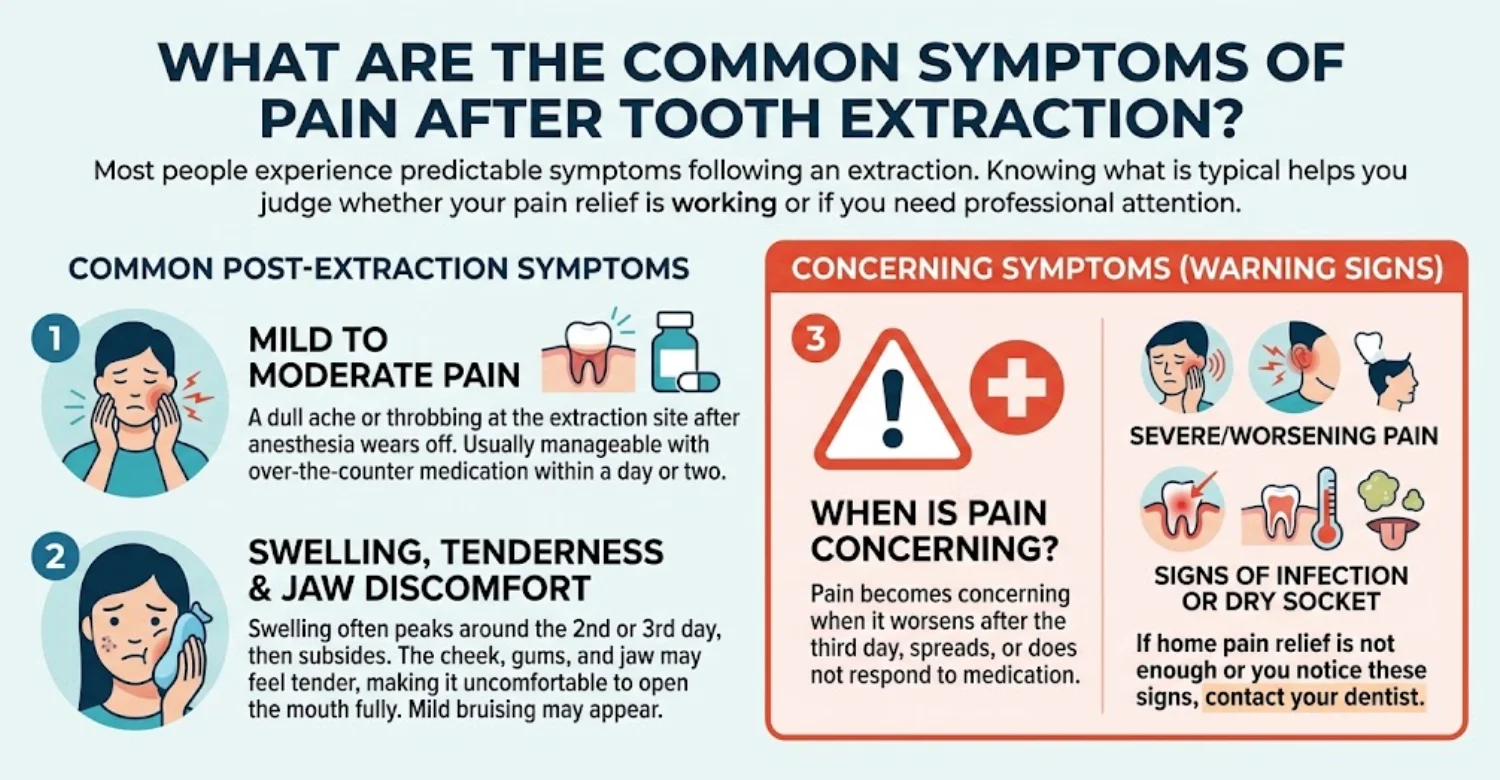
Most people experience predictable symptoms in the days following an extraction. Knowing what is typical helps you judge whether your medication is working. It also shows when your symptoms need professional attention.
Mild to Moderate Pain at the Extraction Site
Most patients feel a dull ache or throbbing at the extraction site once the anesthesia wears off. This pain is usually mild to moderate and responds well to over-the-counter medication. With proper pain relief after tooth extraction, most people return to light daily activities within a day or two.
Swelling, Tenderness, and Jaw Discomfort
Swelling often peaks around the second or third day and then slowly goes down. The cheek, gums, and jaw may feel tender. Opening the mouth fully can be uncomfortable, especially after wisdom tooth removal. Mild bruising on the face may also appear and usually fades within one to two weeks.
When Does Pain After Tooth Extraction Become Concerning?
Pain becomes concerning when it worsens after the third day or spreads to the ear or temple. It is also a warning sign if medication no longer helps. Fever, pus, a foul taste, or increasing swelling may signal infection or dry socket. In these cases, home care alone is not enough.
What Is the Best Pain Relief After Tooth Extraction?
There is no single option that suits everyone. The best approach depends on the type of extraction, your medical history, and your dentist's recommendations. Most plans combine appropriate medication with careful home care.
Understanding Pain Medication After Tooth Extraction
Pain medication after tooth extraction commonly includes over-the-counter drugs such as ibuprofen or acetaminophen (paracetamol). A combination of both may be used when appropriate. Research shows this combination is often effective for dental pain. Stronger prescription medication is reserved for selected cases. Choosing the right option is central to safe pain relief after tooth extraction.
How Painkillers After Tooth Extraction Help Manage Discomfort
Painkillers after tooth extraction work in different ways. Anti-inflammatory medicines reduce both pain and swelling, while acetaminophen relieves pain without affecting inflammation. Taking the first dose before the anesthesia wears off, when advised, can stop pain from becoming intense. Regular doses during the first days often give steadier relief than waiting for pain to return.
Following Professional Instructions for Medicine After Tooth Extraction
Always take medicine after tooth extraction exactly as your dentist or pharmacist directs. Never exceed the recommended dose. Tell your dentist about allergies, stomach problems, kidney or liver conditions, pregnancy, and other medications. Aspirin may increase bleeding and is usually avoided unless prescribed. Following these instructions keeps your treatment safe.
How to Manage Pain After Tooth Extraction Without Medication
Non-medication methods can support recovery. Apply cold compresses during the first day, keep your head elevated, rest, and eat soft, cool foods. After 24 hours, gentle warm salt water rinses may soothe the area. These steps support healing but should not replace prescribed medication when it is needed.
Ready to transform your smile?
Talk to our team and get a personal FREE treatment plan.
What Home Remedies Can Help With Tooth Extraction Pain Relief?
Home care plays an important role in recovery. Simple, safe habits can reduce swelling and protect the healing socket. They work alongside any medication your dentist recommends.
Applying Cold Compresses to Reduce Swelling
During the first 24 to 48 hours, apply a cold pack wrapped in a cloth to the cheek. Use it for about 15 to 20 minutes at a time, with breaks in between. Cold narrows blood vessels, which helps limit swelling. It also numbs the area slightly and reduces throbbing discomfort.
Resting and Avoiding Strenuous Activities
Rest for the remainder of the day after the extraction. Avoid strenuous exercise, heavy lifting, and bending for at least 48 to 72 hours. Physical exertion raises blood pressure, which can cause bleeding and throbbing. Adequate rest gives the body energy to heal and supports pain relief after tooth extraction.
Protecting the Blood Clot During the Healing Process
A blood clot forms in the socket to protect the bone and nerves while new tissue grows. Avoid straws, spitting, smoking, and touching the area with your tongue or fingers for the first few days. Keeping the clot in place is one of the most important steps for a smooth recovery.
When Can You Rinse Your Mouth After Tooth Extraction?
Avoid rinsing during the first 24 hours to protect the blood clot. After that, gently rinse with warm salt water several times a day, especially after meals. Let the water fall from your mouth rather than spitting forcefully. Continue for about a week or as your dentist recommends.

Note : All images are for editorial and illustrative purposes only. They may not originate from the original news provider or associated company.
What Problems Can Occur If Tooth Extraction Pain Is Ignored?
Most discomfort fades with time, but ignoring unusual or worsening pain can allow complications to develop. Recognizing warning signs early means you can get professional care when home measures are not enough.
Dry Socket and Its Impact on Healing
Dry socket occurs when the blood clot dislodges or dissolves, exposing bone and nerves. It typically causes severe pain two to four days after extraction, often spreading to the ear. A bad taste or odor is also common. It needs professional extraction pain treatment, as standard painkillers may not control it.
Possible Infection at the Extraction Site
Infection can develop when bacteria enter the socket. Signs include increasing swelling after the third day, pus, a persistent bad taste, and fever. Pain that worsens rather than improves is another warning sign. Infections usually need professional cleaning and, in some cases, antibiotics prescribed by a dentist. They should never be ignored.
Persistent Pain and Delayed Recovery
Pain that continues well beyond the expected healing period may point to an underlying problem. Possible causes include dry socket, infection, a remaining tooth fragment, or irritation of nearby nerves. Ignoring it can slow healing and prolong discomfort. A dental review can identify the cause and adjust pain relief after tooth extraction appropriately.
When to Seek Professional Dental Care
Contact your dentist if pain becomes severe, worsens after the first few days, or does not respond to medication. Also seek care for heavy bleeding, increasing swelling, fever, or numbness that does not go away. Early evaluation allows the dentist to treat complications before they affect your recovery further.
How Can You Speed Up Recovery After Tooth Extraction?
Good aftercare does more than reduce discomfort; it also helps the socket heal faster. These habits protect the area during the critical first week and make dental extraction pain relief easier.
Choosing Soft Foods During the First Days
Choose soft, cool, or lukewarm foods such as yogurt, mashed potatoes, eggs, and smoothies eaten with a spoon. Soups are fine once they are no longer hot. Chew on the opposite side, and avoid crunchy, spicy, or sticky foods that can irritate the socket. Gradually return to normal foods as healing progresses.
Maintaining Oral Hygiene Without Irritating the Extraction Site
Brush and floss your other teeth normally from the day after the extraction. Avoid brushing directly over the socket for several days. Gentle salt water rinses after 24 hours help keep the area clean. Good hygiene reduces infection risk and supports lasting pain relief after tooth extraction.
Avoiding Habits That Can Disrupt Healing
Smoking and vaping reduce blood flow and can dislodge the blood clot, greatly increasing the risk of dry socket. Avoid them for at least 72 hours, ideally longer. Also avoid alcohol, especially while taking medication. Do not drink through straws, spit forcefully, or poke the socket with your tongue.
Following Your Dentist's Aftercare Instructions
Your dentist's instructions are tailored to your extraction type and health. They may include how long to bite on gauze, which medications to take, and when to start rinsing. They may also cover when to return for stitch removal. Following them closely is the most reliable route to a safe recovery.
Tips for the Patients
Follow the personalized aftercare instructions provided by your dental professional. Avoid smoking or any activity that may disturb the blood clot. Choose soft foods and stay well hydrated during the initial healing period. Contact your dentist if pain worsens instead of gradually improving over the first few days.
When Should You Contact a Dentist for Pain Relief After Tooth Extraction?
Knowing when to call your dentist is an essential part of recovery. Some symptoms are normal, but others suggest that professional extraction pain treatment is needed to support proper healing.
Pain That Gets Worse After the First Few Days
Pain should gradually ease after the first two to three days. If it becomes sharper, throbs intensely, or spreads to the ear, eye, or neck, contact your dentist. These changes are typical of dry socket or infection. In such cases, home pain relief after tooth extraction is usually not enough.
Persistent Bleeding, Increasing Swelling, or Fever
Light oozing during the first day is normal. Contact your dentist if bleeding continues despite biting firmly on gauze for 30 to 45 minutes. You should also call if swelling increases after the third day or if you develop a fever. These symptoms may indicate a complication that requires prompt professional assessment.
Signs That Require Urgent Dental Evaluation
Seek urgent care for difficulty swallowing or breathing, swelling spreading to the eye or neck, or high fever. Uncontrolled bleeding and signs of an allergic reaction to medication also need immediate attention. These are rare but serious. If you cannot reach your dentist, go to the nearest emergency department for immediate medical evaluation.
How Does Vitrin Clinic Support Patients After Tooth Extraction?
Vitrin Clinic provides professional dental care before and after extractions. Clear instructions and follow-up help patients recover comfortably. Our team supports pain relief after tooth extraction through individualized guidance, without promising guaranteed results.
.jpg)
.jpg)
.jpg)
.jpg)
Personalized Guidance for Tooth Extraction Pain Relief
At Vitrin Clinic, each patient receives guidance tailored to the type of extraction, medical history, and current medications. Our team explains which medicine after tooth extraction is appropriate and how to take it safely. We also share home care steps that can reduce discomfort during the first days of healing.
Professional Assessment of Post-Extraction Discomfort
When patients report unusual or persistent discomfort, Vitrin Clinic examines the extraction site. We check for dry socket, infection, or other complications. Identifying the cause allows our team to recommend suitable extraction pain treatment. Pain control is then adjusted based on each patient's clinical findings and healing progress.
Patient Education and Follow-Up Care
Vitrin Clinic provides clear written and verbal aftercare instructions covering medication, diet, oral hygiene, and warning signs. Follow-up visits are scheduled when needed, especially after surgical or wisdom tooth extractions. This helps patients understand what is normal during healing. It also shows them exactly when to contact the clinic for further help.
Dr. Rifat Alsaman's Approach to Recovery and Aftercare
At Vitrin Clinic, individualized care, clear post-extraction instructions, and appropriate follow-up help patients understand healing and recognize complications. Dr. Rifat Alsaman, Head of the Medical Team and a cosmetic dentist, highlights the importance of professional guidance. This matters most when pain persists or becomes more severe, rather than relying on home care alone.
What We Notice Clinically
At Vitrin Clinic, Dr. Rifat Alsaman, Head of the Medical Team and a cosmetic dentist, notices a clear pattern. Patients who rest, avoid smoking, and take medication as instructed usually recover more comfortably. Many complications are linked to disturbing the blood clot too early. Common causes include using straws, smoking, or rinsing vigorously.
Tips for the Patients
Take your first dose of recommended medication before the numbness fades, if advised. Keep your head elevated, use cold compresses during the first day, and avoid hot drinks at first. Attend any follow-up visits. Call Vitrin Clinic if pain, swelling, or bleeding worsens instead of improving.
Resource:
https://jada.ada.org/article/S0002-8177(18)30117-X/fulltext
https://onlinelibrary.wiley.com/doi/10.1111/joor.12789
https://www.sciencedirect.com/science/article/pii/S1807593222001545?via%3Dihub
FAQs

Dr. Rifat Alsaman has more than 5 years of clinical experience in dentistry and currently serves as the Head of the Medical Team at Vitrin Clinic. He is dedicated to providing exceptional patient care, overseeing treatment planning, and ensuring the highest clinical standards across the team. His expertise, attention to detail, and commitment to continuous professional development have helped countless patients achieve healthier, more confident smiles.


.webp&w=3840&q=75)

