Oral Surgery
October 21, 2026
Delayed Healing After Tooth Extraction: What are The Causes, Symptoms, and Treatment?
 Dr. Rifat Alsaman

Delayed healing after tooth extraction happens when the socket takes longer than expected to close, or when pain and swelling fail to settle. Most extraction sites heal without problems. However, some patients notice ongoing discomfort, an open socket, or an unpleasant taste. These signs deserve attention. This guide explains normal tooth extraction healing time, common causes, warning symptoms, and treatment options. It also covers safe home care, so you know when to wait and when to call your dentist.
.jpg)
.jpg)
.jpg)
.jpg)
.jpg)
.jpg)
Ready to transform your smile?
Talk to our team and get a FREE treatment plan.
Delayed Healing After Tooth Extraction: What Does It Mean?
Delayed healing after a tooth extraction means the wound is recovering more slowly than the usual pattern. It does not always signal a serious problem. Healing speed varies with the tooth removed, the difficulty of the procedure, and your general health. Sometimes the delay is mild and resolves with good care. In other cases, it reflects dry socket, infection, or a medical factor. Understanding the normal timeline is the first step in recognizing when something is wrong.
What Is Normal Healing After a Tooth Extraction?
Socket healing after tooth extraction follows predictable stages. A blood clot forms within the first 24 hours and protects the bone and nerve endings. Over the next week, soft granulation tissue gradually replaces the clot. Gum healing after tooth extraction usually covers the socket within two to three weeks for simple extractions. The bone underneath remodels more slowly, often over three to six months. Knowing this timeline helps you recognize delayed healing after tooth extraction early.
When Does Tooth Extraction Healing Become Delayed?
Healing may be considered delayed when symptoms worsen instead of improving after the first few days. Pain that intensifies on day two to four, a socket that stays empty, or swelling that keeps growing are common examples. A wound that remains open well beyond three weeks after a simple extraction also deserves review. Delayed healing after tooth extraction is judged against the expected course for that specific tooth. Your dentist's assessment matters more than a fixed calendar.
How Does a Healing Extraction Site Usually Feel?
A healing socket usually feels tender, not intensely painful. Mild soreness, slight swelling, and some stiffness when opening the mouth are common in the first days. You may feel a small hollow with your tongue. The area may look white or yellowish as new tissue forms. This film is often normal granulation tissue, not pus. Each day should feel a little better. Steady improvement makes delayed healing after a tooth extraction much less likely.
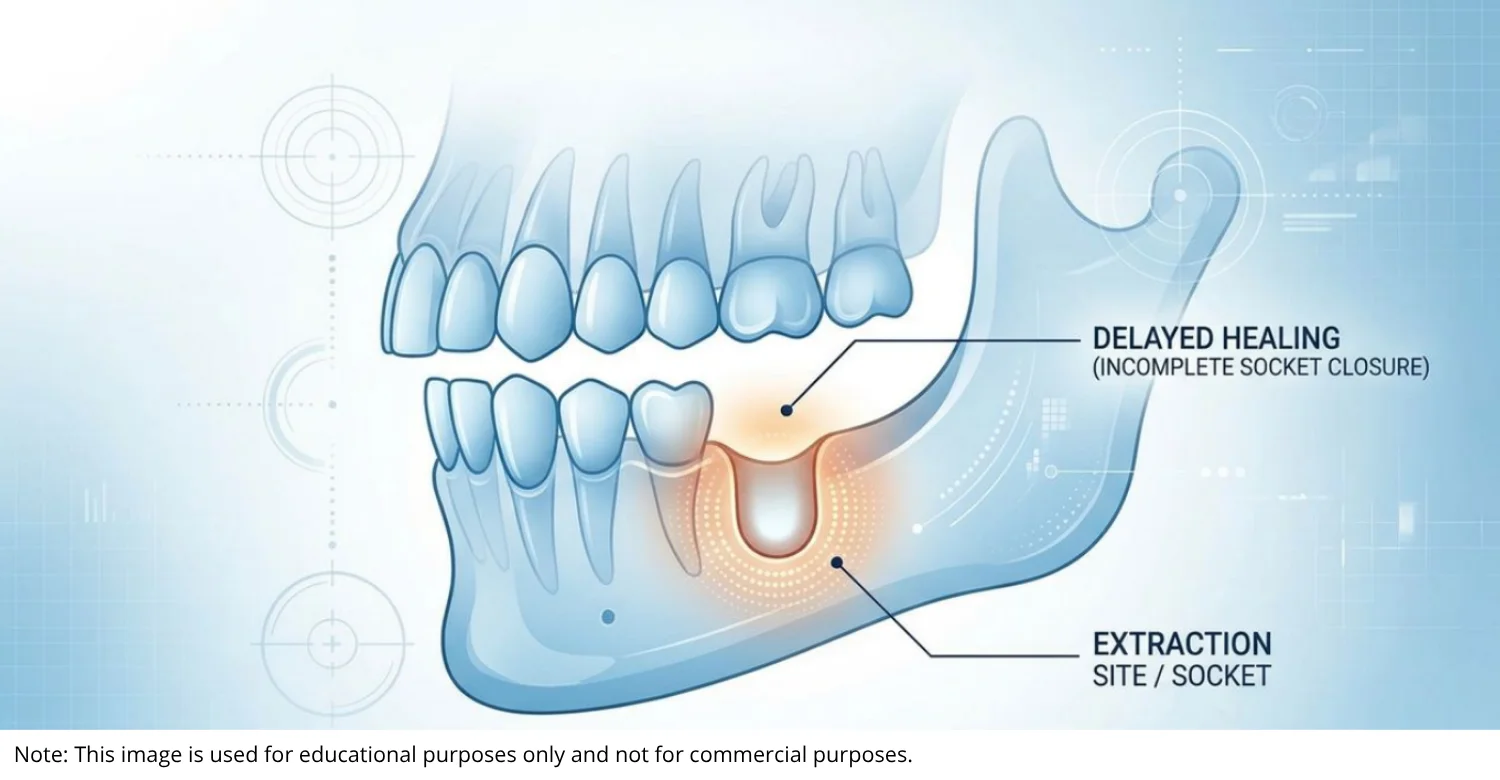
What Symptoms Can You Notice When an Extraction Site Is Not Healing Properly?
A tooth extraction wound not healing properly often shows a recognizable pattern. Symptoms tend to persist, return, or get worse rather than fading gradually. Some signs point toward dry socket, while others suggest infection or irritation from trapped food. One symptom alone does not confirm a complication. Your dentist considers the full picture, including timing, severity, and the socket's appearance. The following symptoms are the most common signs of delayed healing after tooth extraction that patients report.
Persistent Pain or Pain That Gets Worse
Pain after extraction normally eases after two to three days. Pain that stays strong, or suddenly worsens around day two to four, is a key warning sign. Severe, throbbing pain that pain relievers barely control is typical of dry socket. Increasing pain combined with swelling may suggest infection. Do not increase painkiller doses beyond the recommended limits. Instead, contact your dentist, because worsening pain is one of the clearest signs of delayed healing after tooth extraction.
Swelling That Does Not Improve
Swelling usually peaks within 48 to 72 hours, then starts to go down. Swelling that continues to grow after the third day is not part of the typical pattern. Firm, warm, or spreading swelling may be one of the signs of infection after tooth extraction. Swelling that extends toward the eye, neck, or under the jaw needs prompt attention. Cold compresses help early on. However, they cannot treat an infection or other causes of delayed healing after a tooth extraction.
Bleeding That Continues Longer Than Expected
Light oozing or pink-tinged saliva is common for up to 24 hours. Steady bleeding is different. If bleeding continues after biting firmly on gauze for 30 to 45 minutes, call your dentist. Prolonged bleeding may relate to blood-thinning medication, a dislodged clot, or a local vessel. Rarely, it reflects an undiagnosed bleeding disorder. Avoid vigorous rinsing, spitting, or checking the wound repeatedly. These actions can disturb the clot and contribute to delayed healing after tooth extraction.
An Open Socket or Visible Bone
After a few days, the socket should begin filling with soft tissue. If it looks empty and you can see whitish-grey bone, the protective clot may have been lost. This is a classic feature of dry socket. Exposed bone persisting for several weeks, especially with certain bone medications, needs specialist assessment. Do not confuse the creamy-white tissue of normal healing with bone. Your dentist can tell the difference during a quick examination.
Bad Breath or an Unpleasant Taste
A mild odor can occur early because brushing near the socket is limited. However, a persistent foul smell or bad taste may indicate food debris, dry socket, or infection. A salty or bitter discharge can suggest pus. These symptoms often accompany other complications after tooth extraction, such as pain or swelling. Gentle rinsing may help with trapped debris. If the taste continues or worsens, a dental examination is the safest next step to rule out delayed healing after tooth extraction.
Gum Tissue That Looks Red, Inflamed, or Slow to Close
Healthy gum healing after tooth extraction shows pink tissue gradually closing over the socket. Some redness around the edges is normal in the first days. Deep red, shiny, or puffy gums that do not improve may signal inflammation or infection. Gum edges that remain apart for weeks can indicate slow healing. Smoking, poor hygiene, and diabetes may contribute. Your dentist will check whether the tissue needs cleaning, monitoring, or treatment.
Ready to transform your smile?
Talk to our team and get a FREE treatment plan.
What Are the Causes of Delayed Healing After a Tooth Extraction?
The causes of delayed healing after tooth extraction range from simple habits to medical conditions. Often, more than one factor is involved. A difficult extraction in a smoker, for example, carries a higher risk than a simple extraction in a healthy non-smoker. Identifying the cause matters because treatment depends on it. Some causes need only better home care. Others require professional cleaning, medication review, or coordination with your physician. The main factors are explained below.
Normal Variation in Healing Time
Not every slow recovery is a complication. Tooth extraction healing time naturally differs between people and teeth. A front tooth with a single root often heals faster than a lower molar with multiple roots. Older patients may heal more slowly than younger ones. Larger sockets take longer to fill. If symptoms gradually improve, a longer timeline may still be normal. The direction of change matters more than the exact number of days when judging delayed healing after tooth extraction.
Smoking and Nicotine Use
Smoking is one of the best-established risk factors for dry socket and slow healing. Suction from inhaling can dislodge the blood clot. Nicotine narrows blood vessels and reduces blood flow to healing tissues. Smoke also irritates the wound and may weaken immune response. Vaping may carry similar risks, although evidence is still developing. Dentists generally advise avoiding smoking for as long as possible after extraction. This is one of the most effective ways to prevent delayed healing after tooth extraction.
Poor Oral Hygiene or Food Debris in the Socket
Food particles and bacterial plaque can collect in or around the socket. This may irritate the tissue and increase infection risk. Many patients avoid brushing near the area out of fear, which allows plaque to build up. Gentle cleaning is important. Brush neighboring teeth carefully and follow your dentist's rinsing advice. Do not dig food out with toothpicks or fingers. Trapped debris is a common cause of delayed healing after a tooth extraction, and your dentist can remove it safely.
Dry Socket (Alveolar Osteitis)
Dry socket, or alveolar osteitis, occurs when the blood clot breaks down or is lost too early. The underlying bone becomes exposed and inflamed. Symptoms usually start two to four days after extraction, with severe pain that may radiate to the ear. It is more common after lower wisdom tooth removal. Dry socket is painful but is not primarily an infection. It is a leading cause of delayed healing after tooth extraction and responds well to treatment.
Infection at the Extraction Site
Bacteria can infect the socket, especially if debris is trapped or immunity is reduced. Common signs of infection after tooth extraction include increasing swelling, pus, persistent bad taste, fever, and tender lymph nodes under the jaw. Infection often appears several days after the procedure, sometimes after early improvement. Most localized infections respond well to cleaning, drainage when needed, and appropriate antibiotics. Spreading infections require urgent care. Never assume infection without an examination, because dry socket can look similar.
Traumatic or Complex Tooth Extraction
Surgical extractions often involve cutting gum tissue, removing bone, or sectioning the tooth. These steps are sometimes necessary, but they create a larger wound. More tissue trauma usually means more swelling and a longer recovery. Impacted wisdom teeth are a common example. Delayed healing after wisdom tooth extraction is therefore more common than after simple extractions. This does not mean the procedure went wrong. It means your dentist may expect, and plan for, a slower recovery.
Diabetes and Poorly Controlled Blood Sugar
Poorly controlled diabetes can impair wound healing. High blood sugar affects circulation, immune cell function, and tissue repair. This may increase infection risk and slow socket closure. Well-controlled diabetes generally carries a lower risk. Tell your dentist about your diagnosis and recent blood sugar control before extraction. Keeping glucose stable during recovery supports healing. If delayed healing after a tooth extraction occurs, your dentist may coordinate with your physician to review your diabetes management.
Medications and Medical Conditions That May Affect Healing
Several medications and health conditions can influence healing. Some increase bleeding, some reduce immune defenses, and some affect bone turnover. Conditions such as anemia, nutritional deficiencies, and previous radiation therapy to the head and neck can also play a role. Radiation is particularly important because it can reduce blood supply to the bone. Always share a complete medication list with your dentist. This helps them plan the extraction and recognize causes of delayed healing after tooth extraction early.
What Other Symptoms May Occur Alongside Delayed Healing?
Some symptoms extend beyond the socket itself. They may appear together with slow healing and help your dentist identify the cause. Radiating pain, fever, numbness, and difficulty opening the mouth each point to different processes. Some are expected after surgical extractions, while others suggest complications after tooth extraction that need attention. Recognizing these signs early allows quicker treatment. The following symptoms deserve particular attention if they accompany delayed healing after tooth extraction.
Pain That Radiates Toward the Ear or Jaw
Pain from a lower extraction site can travel along shared nerve pathways to the ear, temple, or jaw. This referred pain is common with dry socket, especially after lower molar or wisdom tooth removal. It often feels deep and throbbing. Ear pain alone does not necessarily mean an ear infection. However, if you also have hearing changes or ear discharge, see a doctor. Your dentist can usually confirm whether the pain relates to delayed healing after tooth extraction.
Numbness or Tingling After Extraction
Numbness normally fades within a few hours as local anesthesia wears off. Persistent numbness or tingling of the lip, chin, or tongue may indicate nerve irritation. This occurs mainly after lower wisdom tooth removal, because nerves can run close to the roots. Most cases improve gradually over weeks to months. A small number last longer. Report persistent numbness to your dentist early, so they can document it and monitor your recovery properly.
Difficulty Opening Your Mouth, Chewing, or Swallowing
Limited mouth opening, called trismus, is common after surgical extractions, especially of lower wisdom teeth. It usually improves within one to two weeks. Worsening stiffness, combined with swelling and fever, may indicate infection spreading into nearby tissues. Difficulty swallowing is especially concerning. Mild discomfort when chewing is usually less worrying. Gentle jaw movements may help once your dentist confirms there is no infection. Severe swallowing difficulty requires urgent medical attention.
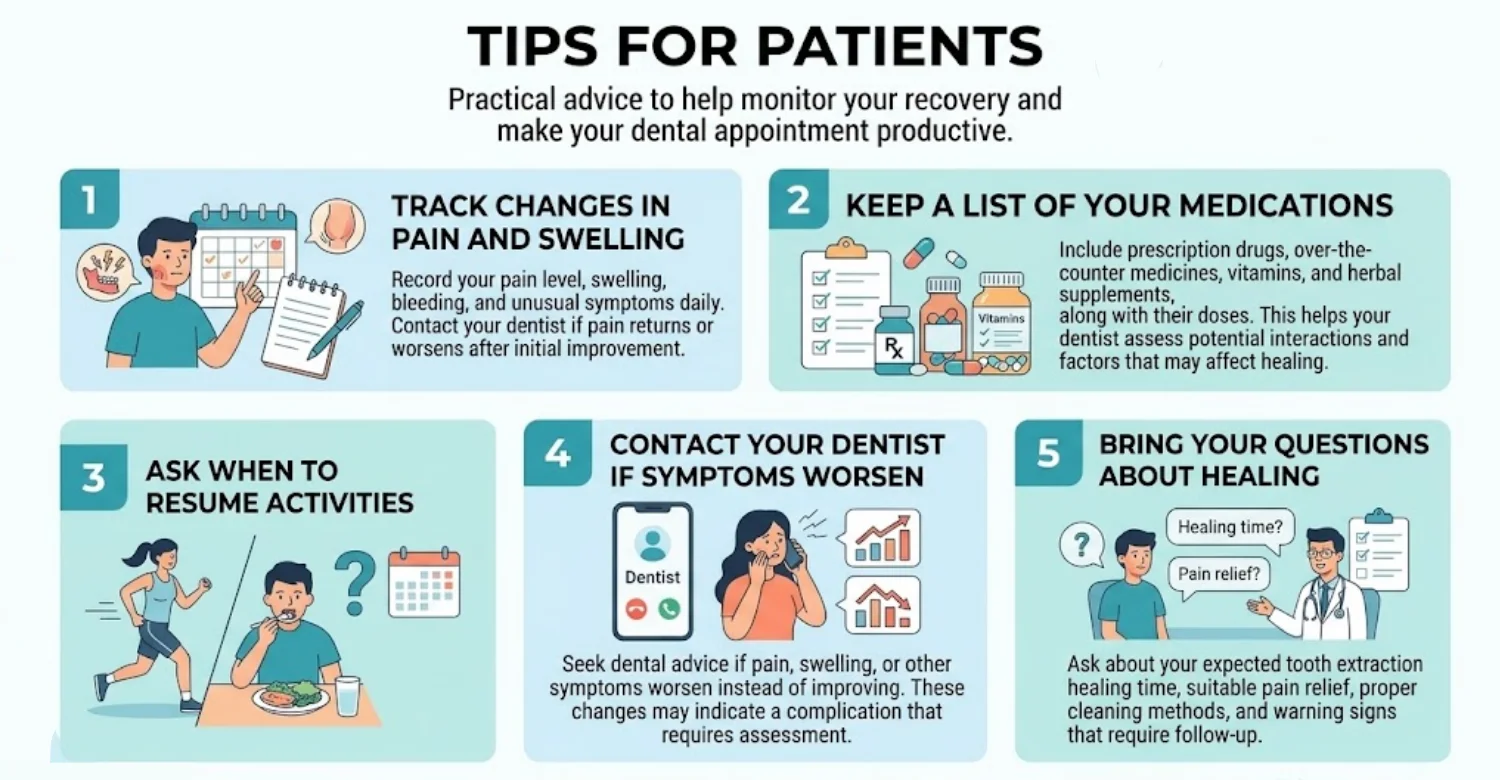
How Can You Support Socket Healing at Home?
Good home care protects the clot and gives the tissues the best conditions to heal. Many patients search for how to speed up healing after tooth extraction. In reality, healing cannot be forced, but it can be supported. Simple habits lower the risk of dry socket, infection, and delayed healing after a tooth extraction. These include protecting the clot, cleaning gently, eating soft foods, and avoiding smoking. Always follow your own dentist's instructions, as they may differ by procedure.
Protect the Blood Clot During the First 24 Hours
The first 24 hours are critical for socket healing after tooth extraction. Bite on the gauze as instructed to control bleeding. Avoid rinsing, spitting, and hot drinks during this period. Do not touch the area with your tongue or fingers. Rest and avoid strenuous exercise, which can increase bleeding. Keep your head slightly raised when lying down. Cold compresses applied in short intervals can reduce early swelling. These steps help the clot stay stable.
Keep the Extraction Site Clean Without Disturbing It
After the first day, gentle cleaning becomes important. Brush your other teeth normally, and carefully clean the teeth next to the socket. Avoid brushing directly over the wound for the first several days. Rinse gently by tilting your head rather than swishing forcefully. Let the liquid fall out of your mouth instead of spitting. Clean conditions reduce bacterial buildup without disturbing the clot. This balance is central to preventing delayed healing after tooth extraction.
Choose Soft Foods and Stay Hydrated
Choose soft, lukewarm foods for the first few days. Yogurt, mashed potatoes, soups, scrambled eggs, and smoothies eaten with a spoon are good options. Avoid crunchy, sticky, spicy, or very hot foods that may irritate the wound. Small seeds and grains can get trapped in the socket. Chew on the opposite side. Drink plenty of water. Adequate protein supports tissue repair. Avoid alcohol, as it may irritate the wound and slow recovery.
Avoid Smoking, Vaping, and Suction
Smoking and vaping are major risk factors for dry socket. Avoid them for as long as possible, ideally at least 48 to 72 hours, and longer if your dentist advises. Do not use straws for the first several days, as suction can dislodge the clot. Forceful spitting carries similar risks. If stopping is difficult, ask your doctor about support options. Avoiding suction is a simple step against delayed healing after tooth extraction.
Follow Your Dentist’s Aftercare Instructions
Your dentist's aftercare instructions are tailored to your extraction and medical history. They may cover pain medication, rinses, stitches, diet, and activity. Take medications exactly as prescribed. Complete any prescribed course unless told otherwise. Keep follow-up appointments, especially for stitch removal or surgical cases. If instructions seem unclear, ask before leaving the clinic. Following them closely is one of the most reliable ways to reduce complications after tooth extraction and support a smooth recovery.
.jpg)
Ready to transform your smile?
Talk to our team and get a FREE treatment plan.
Which Tools Can Help You Care for an Extraction Site?
A few simple tools can help you keep the area clean without harming the healing tissue. The right tool depends on the stage of healing and your dentist's advice. Some tools are useful from the second day, while others are introduced later. Using them too early or too forcefully can disturb the clot and contribute to delayed healing after tooth extraction. Gentle technique matters more than the tool itself. The options below are commonly recommended.
Soft-Bristled Toothbrushes for Gentle Cleaning
A soft-bristled toothbrush cleans plaque effectively while reducing the risk of irritating the gums. Use small, gentle movements around the teeth next to the socket. Avoid pressing the bristles into the wound. Some patients find a small-headed brush easier to control. Electric toothbrushes can be used on other areas, but keep them away from the socket in the early days. Replace your toothbrush if it is worn, since frayed bristles clean less effectively.
Saltwater Rinses When Appropriate
Warm saltwater rinses are commonly recommended starting 24 hours after extraction. Dissolve about half a teaspoon of salt in a glass of warm water. Hold it gently over the area and let it drain out. Repeat after meals and before bed, or as your dentist advises. Saltwater helps remove food debris and keeps the area clean. It is not a substitute for professional treatment if signs of infection develop.
Prescribed Rinses and Irrigation Devices When Recommended
Your dentist may prescribe an antiseptic mouthwash, such as chlorhexidine, for a limited period. Follow the timing and duration carefully, as prolonged use may stain teeth. After some wisdom tooth extractions, dentists provide a small irrigation syringe. It is usually introduced several days after surgery to flush food from the socket. Use it only when instructed and with gentle pressure. Using irrigation too early may disturb the clot and delay healing.
Why You Should Avoid Probing the Socket Yourself
It is tempting to check the socket with your tongue, a finger, or a toothpick. Avoid doing so. Probing can dislodge the clot, introduce bacteria, and damage the fragile new tissue. It can also cause bleeding. If you feel something sharp, it may be a small bone fragment working its way out, which is common. Let your dentist examine it. Leaving the socket undisturbed helps prevent delayed healing after a tooth extraction.
When Should You See a Dentist About a Tooth Extraction Wound Not Healing?
Contact your dentist whenever symptoms do not follow the expected path. A tooth extraction wound not healing as expected deserves a professional check, even if the cause turns out to be minor. Early assessment often means simpler treatment. It also provides reassurance when healing is normal but slower. Some symptoms can wait for an appointment within a day or two. Others need same-day or emergency care. The sections below explain the difference.
Warning Signs That Need Prompt Dental Assessment
Arrange a prompt dental visit if you notice pain that worsens after day two or three, a socket that looks empty, a persistent bad taste or odor, or swelling that does not improve. Bleeding that continues despite pressure also needs attention. A wound that remains open for weeks warrants assessment. These are common features of delayed healing after tooth extraction. Most of these problems are manageable, especially when examined early.
Symptoms That May Require Urgent Medical Attention
Seek urgent medical attention if you develop difficulty breathing or swallowing, swelling spreading to the eye, neck, or floor of the mouth, or a high fever with feeling very unwell. Heavy bleeding that does not stop with firm pressure also requires urgent care. These symptoms may indicate a spreading infection or significant bleeding. Go to an emergency department if you cannot reach your dentist quickly. Do not wait for symptoms to settle on their own.
What to Expect During a Dental Examination
A dental examination for slow healing is usually straightforward. Your dentist will ask about your symptoms, when they started, and how they have changed. They will review your medical history, look at the socket, and check the surrounding gums, teeth, and lymph nodes. Imaging may be used if needed. The goal is to identify the cause of delayed healing after a tooth extraction and choose the most suitable treatment. Most examinations are quick and relatively comfortable.
Reviewing Your Medical History and Medications
Your dentist will ask about chronic conditions, such as diabetes, and any recent illnesses. They will review prescription medications, supplements, and treatments such as chemotherapy or radiation. Smoking and alcohol habits are also relevant. Bring a written medication list, including doses. This information helps explain slow healing and guides safe treatment choices. For example, your history may affect antibiotic selection, pain relief options, or whether coordination with your physician is needed.
Examining the Socket and Surrounding Tissues
Your dentist will look at the socket to see whether a clot or new tissue is present. They will check for exposed bone, food debris, pus, and the condition of the gum edges. Neighboring teeth and soft tissues are assessed for swelling or tenderness. The examination is done gently, sometimes with local anesthetic if the area is very sensitive. These findings usually help distinguish dry socket from infection or simple irritation.
Using Dental Imaging When Clinically Indicated
Imaging is not always necessary. When indicated, a dental X-ray can show retained root fragments, bone fragments, or changes in the surrounding bone. A panoramic X-ray may be used for wisdom teeth or larger areas. Three-dimensional imaging, called cone-beam CT, is reserved for more complex situations. Your dentist will recommend imaging only when it may change the diagnosis or treatment. This approach avoids unnecessary radiation while answering important clinical questions.
What Treatments Can Help Delayed Healing After a Tooth Extraction?
Treatment for delayed healing after tooth extraction depends on the underlying cause. There is no single solution for every case. Dry socket, infection, trapped debris, and medication-related problems each need a different approach. Many cases improve quickly with simple local care. Others require medication or minor procedures. Your dentist will base treatment on examination findings rather than symptoms alone. The main treatment options are described below, from the simplest to the more complex.
Professional Cleaning and Removal of Trapped Debris
If food or debris is trapped in the socket, your dentist can gently remove it. This often relieves irritation and odor quickly. Local anesthesia may be used if the area is tender. Removing debris also lowers infection risk and allows healthy tissue to form. Professional cleaning is safer than attempting removal at home. After cleaning, your dentist may recommend rinses or a follow-up visit to monitor the socket's progress.
Socket Irrigation and Local Wound Care
Socket irrigation involves gently flushing the area with sterile saline or an antiseptic solution. It clears debris and bacteria and helps soothe inflamed tissue. Irrigation is often the first step in managing dry socket or a contaminated socket. Your dentist may then apply a protective dressing. Local wound care can be repeated at follow-up visits if needed. These measures support socket healing after tooth extraction and often reduce pain within a short time.
Pain Relief and Appropriate Medication
Pain management is an important part of treatment. Over-the-counter options, such as ibuprofen or paracetamol, are often effective when taken correctly. Your dentist may suggest combining them if appropriate for you. Stronger pain relief is sometimes prescribed for short periods. Always follow dosing limits. Certain pain relievers are unsuitable for some patients, such as those with kidney problems or stomach ulcers. Ask your dentist which option is safest for managing delayed healing after tooth extraction.
Treatment for Dry Socket
Dry socket is usually treated by gently cleaning the socket and placing a medicated dressing. The dressing protects exposed bone and reduces pain. Many patients feel noticeable relief within a day or two. The dressing may need to be changed over several visits. Pain medication helps control discomfort. Antibiotics are generally not needed unless infection is present. With treatment, the socket gradually fills with tissue, and symptoms usually resolve within one to two weeks.
Antibiotics When a Bacterial Infection Is Diagnosed
Antibiotics are prescribed when a bacterial infection is diagnosed, especially with spreading swelling, fever, or systemic symptoms. They are not routinely needed for every slow-healing socket. Overusing antibiotics contributes to resistance and side effects. If pus is present, drainage may be needed alongside medication. Take the prescribed antibiotic exactly as directed. Tell your dentist about allergies and other medications. Improvement is usually noticeable within a few days of appropriate treatment.
Further Procedures for Persistent or Complex Complications
A small number of cases need more than local care. Persistent problems may be caused by retained root tips, bone fragments, foreign material, or unusual bone changes. In these situations, your dentist may recommend a minor procedure or referral to an oral surgeon. These complications after tooth extraction are uncommon but important to recognize. The aim is to remove the source of irritation and resolve delayed healing after tooth extraction so the tissues can heal normally.
Management of Retained Root Fragments or Foreign Material
Occasionally, a small root fragment or bone spicule remains in or near the socket. Small bone fragments often work their way out naturally. Larger fragments, or those causing pain or infection, may need removal. Foreign material, such as trapped food or dressing remnants, can also delay healing. Your dentist may use an X-ray to locate the fragment. Removal is usually a short procedure under local anesthesia, followed by normal healing.
Assessment and Management of Rare Jawbone Complications
Exposed bone that persists for weeks needs careful assessment, particularly in patients taking antiresorptive or anti-angiogenic drugs, or after head and neck radiation. Conditions such as medication-related osteonecrosis or osteoradionecrosis require specialist management. Treatment may include antiseptic rinses, pain control, antibiotics for infection, and sometimes surgery. Your dentist will usually coordinate with your medical team. These complications are rare, and early recognition helps limit their progression.
Clinical Note
This clinical note summarizes key facts that help patients interpret their recovery. Healing varies widely, and comparing your progress with someone else's can be misleading. Treatment decisions should always be based on an examination. Medications must be managed safely and never changed without professional advice. The information in this article is educational. It does not replace a personal assessment by a qualified dentist who knows your medical history and procedure details.
Healing Time Depends on the Tooth, Procedure, and Individual Health
Tooth extraction healing time depends on several factors. A simple extraction of a single-rooted tooth typically heals faster than surgical removal of an impacted wisdom tooth. Larger sockets take longer to fill. Age, smoking, nutrition, and general health also influence recovery. The gums often close within weeks, while bone continues remodeling for months. Your dentist can give a personalized estimate and judge whether delayed healing after tooth extraction is actually present.
Why Antibiotics Are Not Necessary for Every Delayed-Healing Case
Many cases of delayed healing after tooth extraction are not caused by bacterial infection. Dry socket, trapped debris, and slow tissue repair usually respond to local care. Antibiotics do not treat these problems effectively and can cause side effects, such as stomach upset or allergic reactions. Unnecessary use also contributes to antibiotic resistance. Your dentist will prescribe antibiotics when there are clear signs of infection or specific medical risk factors that justify them.
Why You Should Not Stop Prescribed Medication Without Medical Advice
Some patients consider stopping blood thinners, bone medications, or immune-related treatments because of slow healing. This can be dangerous. Stopping blood thinners may increase the risk of stroke or clots. Stopping other medications may worsen the underlying condition. Any change should be decided by the prescribing doctor, ideally in coordination with your dentist. Inform both of them about your symptoms, so they can weigh the risks and benefits together.
Patient Reviews
Ready to transform your smile?
Talk to our team and get a FREE treatment plan.
How Can You Reduce the Risk of Delayed Healing After Tooth Extraction?
You can reduce the risk of delayed healing after tooth extraction by preparing well and caring for the site properly. Prevention starts before the procedure, with an honest medical review. It continues with careful aftercare and management of any health conditions. Attending follow-up visits also helps detect problems early. Not every complication is preventable, but many risk factors can be reduced. The following steps offer practical ways to support a smoother recovery.
Prepare for Extraction With an Appropriate Medical Review
Before extraction, tell your dentist about all your health conditions, medications, allergies, and previous reactions to dental treatment. Mention any history of bleeding problems, radiation therapy, or bone-strengthening medications. Your dentist may request information from your doctor or adjust the treatment plan. In some cases, the extraction is timed around other medical treatments. Good preparation allows your dentist to anticipate complications after tooth extraction and take preventive steps.
Follow Post-Extraction Instructions Carefully
Post-extraction instructions are designed to protect the clot and support healing. Avoid smoking, straws, and vigorous rinsing early on. Eat soft foods, stay hydrated, and keep the mouth clean. Take medications as directed. Rest during the first day or two. If you are wondering how to speed up healing after tooth extraction, careful aftercare is the most reliable answer. Small mistakes in the first days can increase the risk of dry socket.
Manage Conditions That May Affect Healing
Health conditions affect healing, so managing them well is important. Keep blood sugar within your target range if you have diabetes. Continue prescribed treatments unless your doctor advises otherwise. Eat a balanced diet with enough protein, vitamins, and minerals. Reduce or stop smoking, ideally before the extraction. If you are unwell or undergoing medical treatment, discuss timing with your dentist and doctor to lower the risk of delayed healing after tooth extraction.
Attend Follow-Up Appointments When Recommended
Follow-up appointments allow your dentist to check healing, remove stitches, and address concerns early. They are particularly useful after surgical or wisdom tooth extractions. Even if you feel well, these visits can confirm that the socket is progressing normally. If something seems wrong, earlier treatment usually leads to quicker recovery. Do not cancel follow-ups without discussing it with your dentist, especially if you have risk factors for delayed healing after tooth extraction.
What We Notice Clinically
Dr. Rifat Alsaman emphasizes that every slow-healing socket should be assessed in context. In his approach, the first step is understanding what hsymptoms have changed, and which medical factors may be involved. He prioritizes identifying the cause before recommending treatment, avoiding unnecessary antibiotics or procedures. He also stresses clear communication, so patients understand what normal healing looks like and which warning signs need prompt contact.
Takeaway: What Should You Do if Your Extraction Site Is Not Healing?
If your extraction site is not healing as expected, start by comparing your symptoms with the normal pattern. Gradual improvement, even if slow, is usually reassuring. Worsening pain, an empty socket, persistent swelling, pus, or fever need dental assessment. Delayed healing after tooth extraction has many possible causes, most of which are treatable. Protect the clot, keep the area clean, avoid smoking, and follow your dentist's advice. When in doubt, contact your dentist early.
How Does Vitrin Clinic Approach Delayed Healing After Tooth Extraction?
At Vitrin Clinic, we approach delayed healing after tooth extraction with careful assessment and clear communication. We understand that a slow-healing socket can cause worry, especially when pain persists. Our goal is to identify the cause and recommend treatment that fits each patient's situation. We consider the procedure, symptoms, medical history, and examination findings together. Vitrin Clinic also provides a wide range of dental treatments, including restorative dentistry, dental implants, periodontics, endodontics, and cosmetic dentistry, allowing patients to receive care tailored to their oral health needs. This comprehensive approach helps us avoid unnecessary treatment while addressing genuine problems promptly and effectively.






This article is for general information and does not replace a personal assessment by a qualified dentist. Prices are approximate 2026 averages, with UK and Turkey figures converted to US dollars, and may vary by clinic and case.
Not sure whether Dental implants or Hollywood Smile is right for you?
Book your FREE treatment plan with Vitrin Clinic and get a personalized assessment and treatment plan from our dental team.
Ready to transform your smile?
Talk to our team and get a FREE treatment plan.
References:
FAQs
Dr. Rifat Alsaman has more than 5 years of clinical experience in dentistry and currently serves as the Head of the Medical Team at Vitrin Clinic. He is dedicated to providing exceptional patient care, overseeing treatment planning, and ensuring the highest clinical standards across the team. His expertise, attention to detail, and commitment to continuous professional development have helped countless patients achieve healthier, more confident smiles.


