
Can dental implants hijack your immune system? This is a fair question to ask before or after implant surgery. Many people worry that their body might treat a new implant as a threat. In reality, every implant triggers an immune response. Most of the time, that response supports healing rather than causing harm. Interest in the topic grew after a 2026 study from Rutgers School of Dental Medicine, published in PNAS Nexus, was described in the news as showing how titanium particles "hijack" immune cells.
That finding is local. It involves immune cells in the gum and bone around an infected implant. It is not a takeover of the whole body's immune system. The research also comes from human tissue samples, lab-grown human immune cells, and mouse experiments. It has not yet been proven as a treatment target in patients. Most implants never reach this stage. This guide covers titanium biocompatibility, implant complications, autoimmune conditions, the new titanium-particle research, and why individual assessment matters.
Can Dental Implants Hijack Your Immune System? Understanding the Immune Response
Can dental implants hijack your immune system, or do they simply work alongside it? The short answer is that dental implants and immune system activity are closely linked from the first day. Surgery creates a small wound. The body then sends immune cells to clean the area and start repair. Over the following months, bone grows tightly against the implant surface. This process is expected. It is the foundation of long-term implant success, not a sign of immune failure.
How Does Your Body Respond to a Dental Implant?
The dental implant immune response begins within minutes of placement. Blood proteins coat the implant surface first. White blood cells, including neutrophils and macrophages, then arrive to clear debris and fight bacteria. You may notice swelling and tenderness for a few days. Next, signaling molecules call in cells that build new blood vessels and bone. Within weeks, the inflammatory phase settles and repair takes over. Your body uses this same sequence to heal any surgical wound.
Are Dental Implants Biologically Inert?
Not entirely. Researchers once viewed titanium implants as passive objects. Current evidence shows the body recognizes them as foreign material. It mounts a controlled "foreign body reaction" around the surface. In a successful implant, this reaction settles into a stable balance, often called equilibrium, between the implant and nearby immune cells. So, can dental implants hijack your immune system simply by being foreign? No. This controlled reaction is normal and is part of how implants succeed.
What Is Osseointegration, and Why Does It Matter?
Osseointegration is the direct bonding of living bone to the implant surface. It usually takes a few months. Scientists now describe it as an osteoimmune process. This means immune cells actively help bone settle around the implant. Macrophages play two main roles. "M1" macrophages drive early inflammation and clean the site. "M2" macrophages calm inflammation and support healing. A healthy shift toward M2 activity anchors the implant. That is why the question "can dental implants hijack your immune system" often misreads normal healing.
Can a Normal Healing Response Become a Problem?
Yes, but only under certain conditions. A local inflammatory response is part of normal healing. It does not automatically mean implant failure or a body-wide immune problem. Problems tend to start when the balance tips. Bacterial buildup, damage to the implant surface, or particle release can keep inflammation switched on. When this happens, inflammation around dental implants may persist and begin affecting the supporting bone. Early detection matters, because mild gum inflammation is often reversible with professional care.
.jpg)
.jpg)
.jpg)
.jpg)
.jpg)
.jpg)
Ready to transform your smile?
Talk to our team and get a FREE treatment plan.
What Symptoms Might Suggest an Abnormal Immune Response to Dental Implants?
Telling normal healing apart from a problem is not always easy. Some discomfort after surgery is expected. Other signs deserve a professional check. No single symptom confirms an immune reaction to dental implants. Redness, bleeding, or pain can come from plaque, infection, bite overload, or, rarely, material sensitivity. When people ask, "can dental implants hijack your immune system?", they are often reacting to symptoms. The sections below explain which signs are usually harmless and which need assessment.
Which Symptoms Can Be Normal During Implant Healing?
In the first days after surgery, swelling, tenderness, and mild bleeding are common. Swelling often peaks around the second or third day, then gradually fades. Some bruising may appear on the cheek or jaw. Mild discomfort usually responds to the pain relief your dentist recommends. A little oozing of blood on the first day is also expected. These signs should steadily improve over one to two weeks. Symptoms that worsen after the first few days should be reported.
What Does Persistent Inflammation Around Dental Implants Feel Like?
Persistent inflammation around dental implants feels different from early healing. The gum may stay red, puffy, or tender for weeks. It may bleed when you brush or floss. Some people notice a bad taste, bad breath, or pus near the implant. Later signs include increasing pain, gum recession exposing metal threads, or a loose implant. Early-stage inflammation, called peri-implant mucositis, is often painless. That is why regular check-ups matter, even when nothing hurts.
Could You Have an Allergy or Sensitivity to Implant Materials?
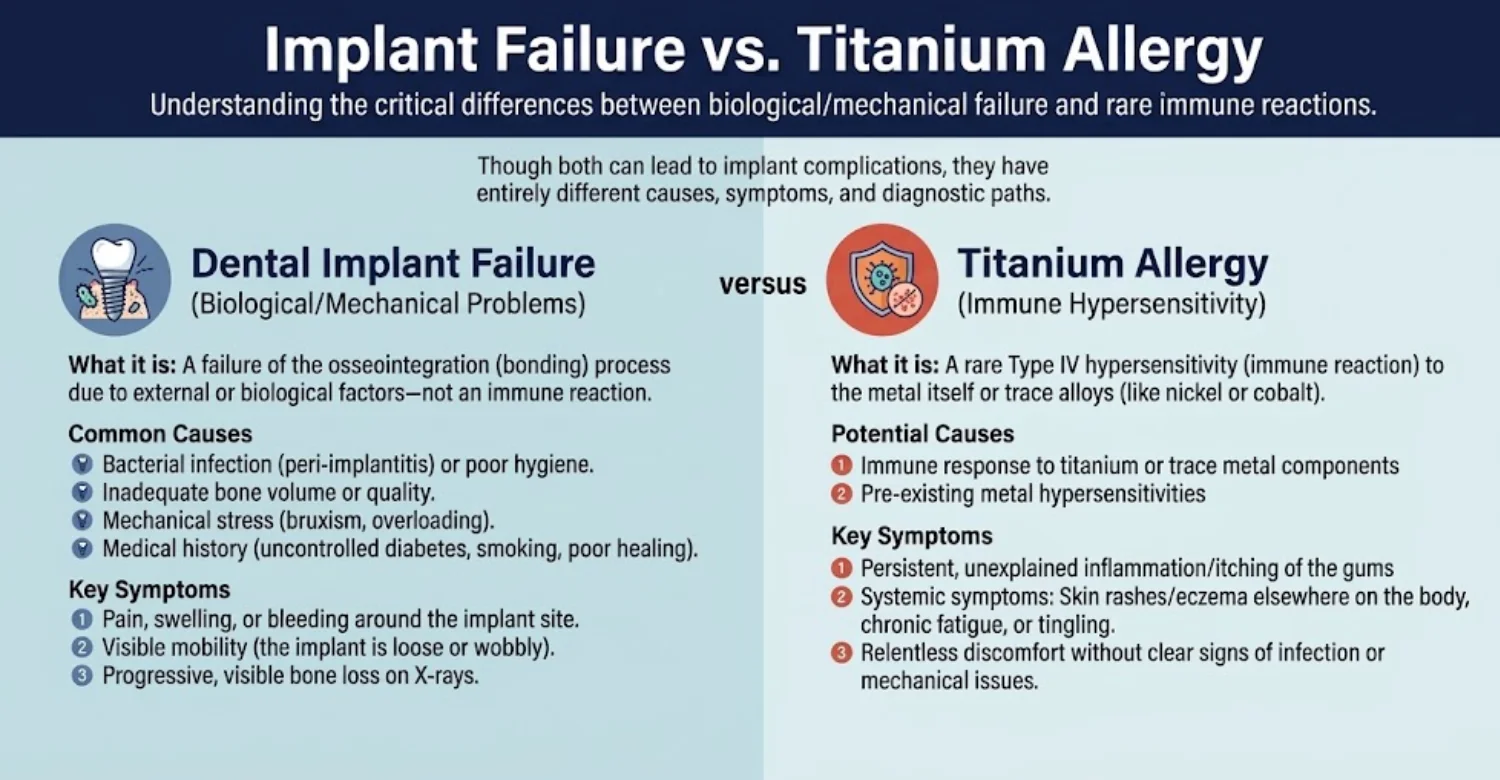
It is possible, but uncommon. Questions about titanium allergy dental implants are frequent, yet true allergic reactions are considered rare. Suggested signs include unexplained gum redness or swelling, skin rash, eczema, or hives. However, these symptoms also have many other causes. Most implants are made of commercially pure titanium or titanium alloys, which may contain small amounts of other metals. If you have a known metal allergy, tell your dentist before treatment. Proper evaluation matters more than assumptions.
Can Dental Implant Problems Cause Symptoms Beyond the Mouth?
Some people link fatigue, skin symptoms, or joint aches to their implant. Most of these symptoms have other, more common causes. Current evidence does not show that implants routinely cause whole-body illness. Many people who ask "can dental implants hijack your immune system?" are describing these vague symptoms. A severe implant infection, however, can cause fever, swollen lymph nodes, or facial swelling. These need prompt care. Unusual skin symptoms or suspected allergic signs should be checked to rule out other causes.
What Causes Immune-Related Dental Implant Complications?
Most dental implant complications have clear, well-known causes. Bacterial plaque is by far the most common trigger. Other factors include smoking, uncontrolled diabetes, a history of gum disease, and excessive bite force. Less often, implant materials or tiny wear particles play a role. True allergy remains rare. Understanding the cause matters, because each problem needs a different treatment. Below, we move from the most common causes to the least common, so you can see where real risks lie.
Peri-Implantitis: When Inflammation Damages Supporting Bone
Peri-implantitis is an inflammatory condition affecting the gum and bone around an implant. It is usually linked to bacterial biofilm and leads to gradual loss of supporting bone. Without treatment, the implant may loosen and fail. It often starts as peri-implant mucositis, which affects only the gum and can be reversed. Peri-implantitis symptoms and causes are closely linked: plaque drives bleeding, pus, and deepening pockets. Coverage of the Rutgers study estimated that 10–20% of implant patients eventually develop it.
Bacterial Biofilm and Poor Plaque Control
Bacteria naturally form a sticky film, called biofilm, on teeth and implants. If it is not removed regularly, it triggers inflammation in the surrounding gum. Over time, this inflammation can spread to the bone. Implants may be more vulnerable than natural teeth, because the gum seal around them is weaker. There is another concern. Biofilm on implants can become acidic and slowly corrode the titanium surface. As explained later, this corrosion may release tiny particles that worsen inflammation.
Smoking, Diabetes, and Other Factors That May Affect Healing
Several factors raise the risk of dental implant complications. Smoking reduces blood flow to the gums and slows healing. Poorly controlled diabetes weakens infection control and bone repair. A history of periodontal disease is one of the strongest known risk factors for peri-implantitis. Skipping maintenance visits also increases risk. Other contributors include teeth grinding, certain medications, and radiation therapy to the jaw. Many of these factors can be managed, which is why your full medical history matters.
Titanium Allergy: How Common Is a True Allergic Reaction?
A true titanium allergy is considered rare. Reported symptoms include persistent gum redness, swelling, rash, or itching. Diagnosis is difficult, because standard skin patch tests are not reliable for titanium. Blood-based tests exist, but their accuracy is debated. Many suspected cases turn out to be infection or plaque-related inflammation. Importantly, the Rutgers finding is not an allergy. It describes immune cells reacting to particles combined with a bacterial toxin. That is a different mechanism altogether.
Dental Implants and Autoimmune Disease: What Should You Know?
Research on dental implants and autoimmune disease is broadly reassuring. Current evidence does not show that implants routinely trigger autoimmune conditions. For patients with rheumatoid arthritis, lupus, or Sjögren's syndrome, the question "can dental implants hijack your immune system?" feels personal. These conditions may affect healing, especially with dry mouth or immunosuppressive medicines. Reviews of medically compromised patients suggest implants can still succeed with careful case selection. Your dentist may coordinate with your doctor to plan surgery when your condition is stable.
Can Implant Materials or Corrosion Products Trigger an Adverse Reaction?
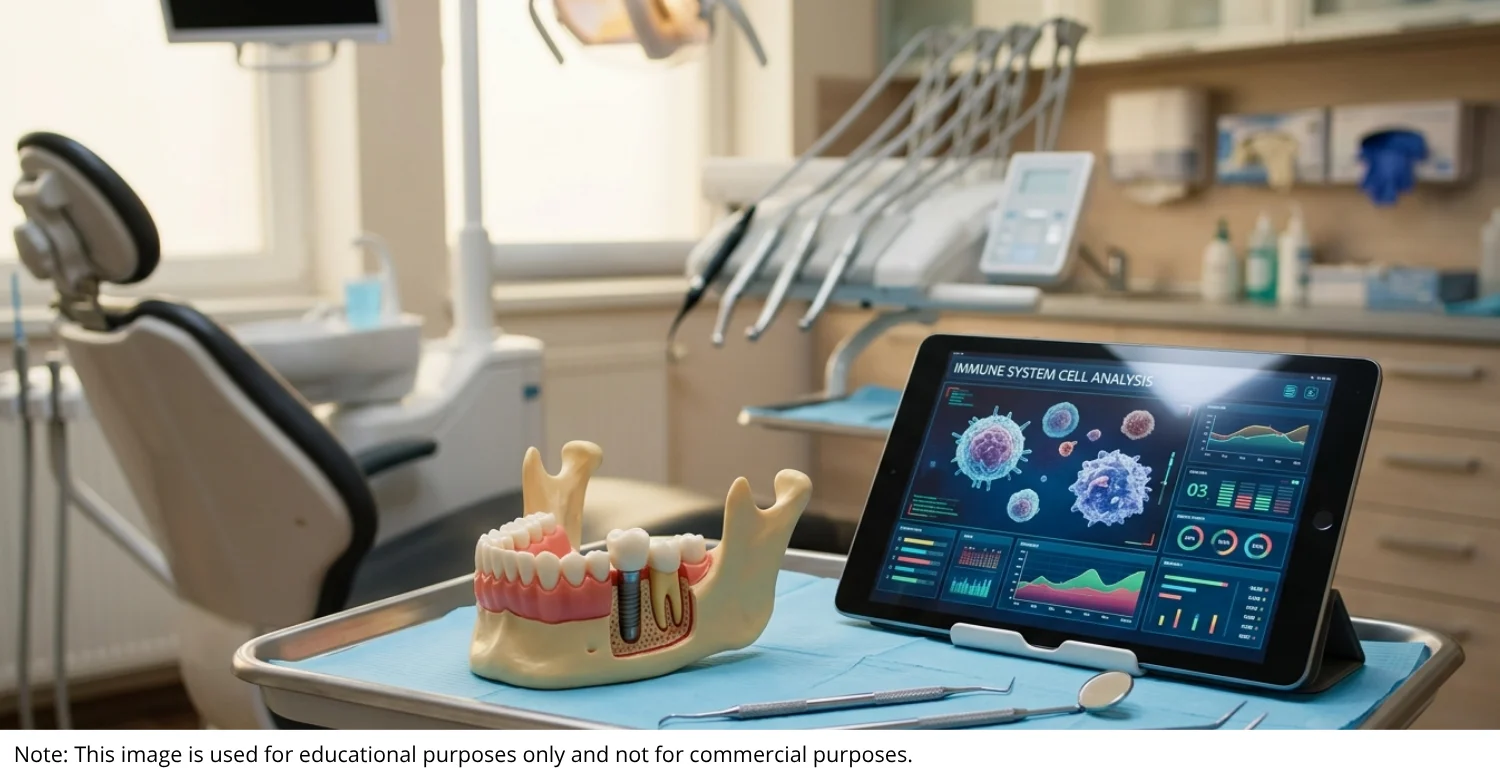
Possibly, in some situations. Experts separate material-related reactions, normal local tissue responses, and established complications such as peri-implantitis. Evidence for whole-body effects varies by proposed mechanism and remains limited. What is clear is that titanium particles are commonly found in gum tissue around implants. They appear more often around failing implants, along with more immune cells. Can dental implants hijack your immune system through these particles? The next section explains the newest evidence in detail.
What Did the New Rutgers Study Find About Titanium Particles and Your Immune Cells?
In 2026, researchers at Rutgers School of Dental Medicine published a study in the journal PNAS Nexus. It explored why some implant infections resist treatment. The team used human tissue samples, lab-grown human immune cells, and genetically engineered mice. Headlines then raised the question: can dental implants hijack your immune system? The study's answer is narrower than the headlines. It describes a local mechanism in infected tissue. It remains early-stage research based on laboratory and animal work, not patient trials.
How Can Bacteria Corrode a Titanium Implant?
Titanium resists corrosion well, but it is not completely immune to it. Bacteria on the implant surface form acidic biofilms. Over time, this acid slowly damages the titanium surface. The researchers reported that corrosion can release very large numbers of microscopic particles. Each particle is smaller than a red blood cell. Particles can also be dislodged during routine cleaning. This risk is higher when metal instruments designed for natural teeth are used on implants, because they can scrape the surface.
How Do Titanium Particles "Trick" Immune Cells?
In the gums, titanium particles become coated with lipopolysaccharide, a toxin from bacterial cell walls. To macrophages, these coated particles look like oversized bacteria. The macrophages engulf them but cannot digest titanium. As a result, they become stuck in prolonged inflammation. They release high levels of inflammatory signals, such as interleukin-1 beta. Earlier research also linked titanium particles in gum tissue to other inflammatory signals, including interleukin-8 and interleukin-18. Together, these signals keep the tissue inflamed.
Why Does This Lead to Jawbone Loss?
Prolonged inflammation is harmful to bone. Inflammatory signals activate osteoclasts, the cells that break bone down. Over time, the bone supporting the implant is lost. At the same time, particle-loaded macrophages become worse at clearing bacteria. In laboratory tests, exposed cells engulfed fewer than half as many bacteria as unexposed cells. This creates a damaging cycle. Infection persists, inflammation continues, and bone loss progresses. This is how the local "hijack" described in the research is thought to work.
Why Do Antibiotics Often Fail Around Implants but Work Around Natural Teeth?
Periodontitis around teeth and peri-implantitis around implants start with similar bacteria. Yet they respond very differently to treatment. Antibiotics combined with professional cleaning often resolve gum disease around natural teeth. Around implants, the same approach reportedly succeeds in fewer than half of cases, and bone loss may continue. The study suggests the particle–immune reaction, not only bacteria, explains this gap. This reframes the question "can dental implants hijack your immune system" around infected tissue, not healthy implants.
What Is TRPC1, and Why Could It Become a Treatment Target?
TRPC1 is a calcium channel found in macrophages. The study found it drives the inflammatory reaction to titanium particles combined with bacterial toxin. To test this, researchers used mice lacking TRPC1. These mice developed much smaller abscesses, produced fewer inflammatory signals, and cleared bacteria better. With funding from the US National Institutes of Health, the team is now testing drugs that act on this pathway in human cells. TRPC1 has been studied in other conditions, but this links it to dental implants.
What Does This Study Prove, and What Doesn't It?
The study supports a credible local mechanism for hard-to-treat peri-implantitis. It helps explain why some implant infections resist standard care. However, it does not show whole-body immune suppression. It does not show that implants cause autoimmune disease. It also does not show any risk to people with healthy, well-maintained implants. No TRPC1-based treatment is available to patients yet, and human trials are still needed. So, can dental implants hijack your immune system? Only locally, and only in diseased tissue.
Can Dental Implant Rejection Symptoms Be Mistaken for an Immune Reaction?
Yes, and this happens often. Many people searching "can dental implants hijack your immune system?" are really worried about rejection. The word "rejection" is often used informally to describe implant failure. However, implants are not rejected the way a transplanted kidney can be. Organ rejection happens because the immune system recognizes another person's living tissue. Titanium has no such tissue markers. So-called dental implant rejection symptoms usually reflect infection, poor bone healing, or mechanical overload.
What Are the Signs of Dental Implant Failure?
Signs of dental implant failure include a loose or moving implant, pain when biting, and swelling or pus around the gum. Gum recession that exposes the implant threads is another warning sign. X-rays may show bone loss around the implant. Some failures happen early, before the bone has bonded. Others develop years later, often due to peri-implantitis or overload. A loose crown or screw can mimic failure, so an examination is needed to find the true cause.
Can an Implant Fail Without an Allergy or Autoimmune Problem?
Yes. Most failed implants occur in people without any allergy or autoimmune condition. Common causes include infection, inadequate osseointegration, excessive bite forces, and progressive bone loss. Surgical factors, such as overheating the bone or poor implant positioning, may also contribute. The new research adds particle-driven inflammation as a newly proposed contributor. Clinical examination and imaging, when indicated, help identify the underlying problem. Knowing the cause guides whether the implant can be saved or needs replacing.
How Can You Reduce Inflammation Around Dental Implants at Home?
Good home care is your first line of defense against gum inflammation. If you are wondering "can dental implants hijack your immune system?", daily cleaning is the part you control. It limits the plaque that drives most problems. It also limits the acidic biofilm that can corrode titanium. However, home care has limits. It cannot reverse established peri-implantitis or diagnose an immune reaction. Bleeding, swelling, or pain lasting beyond a week or two needs professional assessment.
How Should You Clean Around a Dental Implant?
Brush twice daily with a soft-bristled toothbrush, angling the bristles toward the gumline. Clean between teeth and around the implant once a day. Interdental brushes, implant-friendly floss, or water flossers can help, depending on your restoration. Ask your dentist which size and type suit your implant. Be gentle but thorough. Avoid scraping the implant area with hard or metal objects. Damaging the surface may encourage plaque buildup and particle release over time.
Which Daily Habits May Help Support Healthy Gums?
Stopping smoking is one of the most helpful steps for implant health. If you have diabetes, keeping blood sugar well controlled supports healing. A balanced diet rich in vegetables, fruit, and protein gives tissues what they need to repair. Drinking enough water helps keep the mouth moist, which matters if you have a dry mouth. If you grind your teeth at night, a custom night guard may reduce stress on the implant. Small habits add up over years.
What Should You Avoid if Your Implant Area Is Sore?
Avoid chewing hard, crunchy, or sticky foods on the sore side. Do not press or poke the implant with your tongue or fingers. Skip very hot drinks and spicy foods if the gum feels tender. Follow any prescribed postoperative instructions closely. Avoid smoking and alcohol during healing, as both can slow repair. Do not take leftover antibiotics on your own. If soreness persists or worsens, contact your dentist rather than waiting it out.
Which Tools Can Help You Monitor Dental Implant Health?
Several tools help keep implants healthy and catch problems early. At home, cleaning aids reduce plaque. At the dental office, periodontal probing measures pocket depth and bleeding. Dental X-rays track bone levels over time. CBCT scans give a 3D view when more detail is needed. Each tool answers a different question. No tool alone can answer "can dental implants hijack your immune system?" or confirm an immune reaction to dental implants. Findings must be interpreted together.
Interdental Brushes and Water Flossers: What Can They Do?
Interdental brushes clean the spaces between teeth and around implant crowns. They are often more effective than floss in these areas. Choose a size that fits snugly without forcing. Plastic-coated wire brushes are usually recommended around implants. Water flossers use a pulsing stream of water to flush away plaque and food debris. Some studies suggest they can reduce bleeding around implants. Both tools work best as part of a daily routine, not as a replacement for brushing.
Why Do Professional Cleaning Instruments Matter for Implants?
Until about a decade ago, many dentists cleaned implants with the same metal scalers used on natural teeth. Research has since shown these tools can scratch and corrode titanium surfaces. That damage may release more particles and help plaque stick. Today, nonabrasive methods are standard practice. These include plastic or titanium-safe instruments and gentle air-polishing powders. The goal is simple. Remove plaque thoroughly while protecting the implant surface and the tissue around it.
Can Dental X-Rays or CBCT Scans Identify Implant Problems?
Dental X-rays show bone levels around an implant and help track changes over time. Comparing images from different years is especially useful. CBCT scans provide a 3D view. They may be used when more detail is needed, such as assessing a defect before surgery. However, imaging has limits. It can reveal bone loss, but it cannot confirm titanium allergy, particle-related inflammation, or a systemic immune reaction. Imaging is always interpreted alongside a clinical examination.
When Might Allergy Testing Be Considered?
Allergy testing is not routine for implant patients. It may be considered if you have a history of metal reactions, or unexplained symptoms after other causes are ruled out. Skin patch tests are not reliable for titanium. Some clinicians use blood-based lymphocyte tests, but their accuracy is debated. Results must be interpreted by appropriately qualified clinicians, often an allergist. A positive test alone does not prove the implant causes symptoms. Testing should guide decisions, not replace examination.
.jpg)
Ready to transform your smile?
Talk to our team and get a FREE treatment plan.
Clinical Note
This note answers "can dental implants hijack your immune system?" from an evidence point of view. Headlines about dental implants and immune system effects can sound alarming. Scientific studies, however, vary in strength. Laboratory and animal findings are important starting points, but they do not always translate to patients. Case reports describe individual experiences, not general risk. Larger clinical studies give the most reliable answers. Keeping these levels of evidence in mind helps you read new research calmly.
Does Current Evidence Show That Dental Implants Suppress or Hijack Immunity?
Current evidence does not show that implants suppress or take over the body's overall immune system. So, can dental implants hijack your immune system as a whole? No. However, new 2026 laboratory and mouse research suggests that in peri-implantitis, corroded titanium particles can disrupt local immune cells around the implant. This effect appears limited to diseased tissue. Local immune activity around a healthy implant remains a normal part of the tissue response and supports long-term stability.
What Is Known About Titanium Biocompatibility?
Titanium has been used in dentistry and orthopedics for decades because of its generally favorable biocompatibility. It forms a stable oxide layer that resists corrosion and supports bone bonding. However, "biocompatible" does not mean "inert." Titanium activates a controlled immune response, which is part of normal integration. Rare suspected hypersensitivity reactions remain difficult to diagnose. Symptoms alone cannot establish that titanium is the cause. Overall, titanium dental implants side effects are uncommon in well-planned, well-maintained cases.
Patient's Review
Ready to transform your smile?
Talk to our team and get a FREE treatment plan.
When Should You Seek Professional Care for Dental Implant Symptoms?
When people ask "can dental implants hijack your immune system?", the more useful question is often when to seek help. The key is the trend. Symptoms that improve day by day are usually part of healing. Symptoms that persist, return, or worsen deserve assessment. Early care is often simpler and more successful. Peri-implant mucositis, for example, can usually be reversed if caught early. Waiting may allow bone loss to begin. If unsure, contact your dentist.
Which Symptoms Need Prompt Dental Assessment?
Contact your dentist within a few days if you notice persistent bleeding around the implant, pus, or a bad taste. Worsening pain and progressive swelling also need attention. Implant mobility is an important warning sign. So is a crown or screw that feels loose. Gum recession that exposes metal also needs checking. These signs do not always mean failure, but they require examination. Prompt assessment helps identify infection, peri-implantitis, or mechanical problems before they become harder to treat.
When Is an Implant Problem an Emergency?
Fever with increasing facial swelling requires urgent assessment, ideally the same day. It may signal a spreading infection. Seek emergency medical care immediately if you have difficulty breathing or swallowing. The same applies to rapidly spreading swelling in the face, under the jaw, or in the neck. These situations are rare, but they can become life-threatening. Do not wait for a dental appointment. Go to an emergency department or call emergency services right away.
What Should You Tell Your Dentist About Your Medical History?
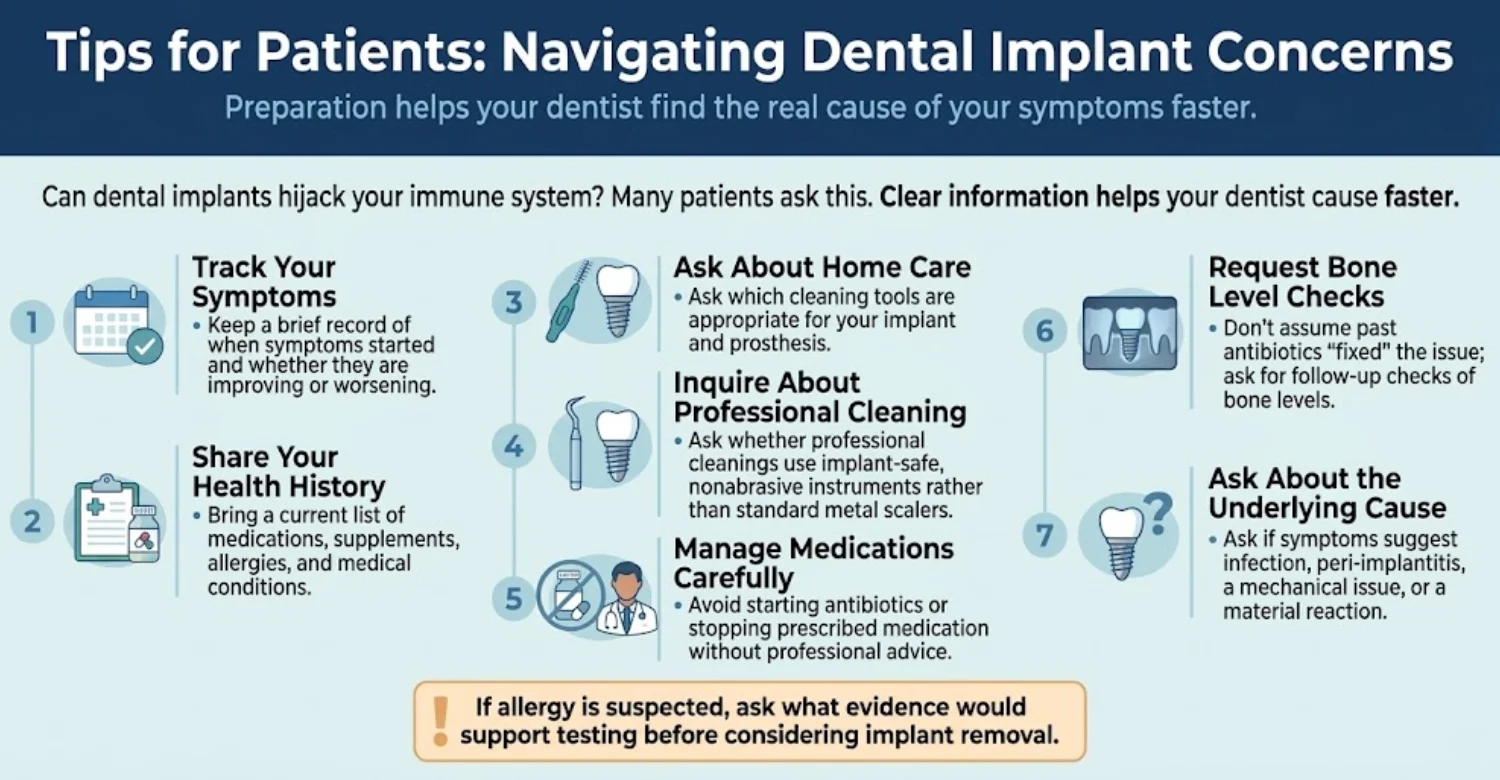
Share your full medical history, even details that seem unrelated. Mention any autoimmune conditions, such as rheumatoid arthritis or lupus. List all allergies, especially reactions to metals or jewelry. Bring a current list of medications, including immunosuppressants, steroids, and bone-strengthening drugs. Tell your dentist if you smoke. Mention previous implant complications and any earlier peri-implantitis treatment that did not fully work. This information helps your dentist understand your risk and choose safer, more suitable treatment.
How Are Immune Reactions and Dental Implant Complications Treated?
Patients who fear the answer to "can dental implants hijack your immune system?" are often relieved to learn most complications are treatable. Treatment depends on the cause and severity. Mild gum inflammation may need only professional cleaning and better home care. Peri-implantitis may require deeper cleaning, antiseptics, carefully chosen antibiotics, or surgery. Removal is reserved for clinically justified cases. If a genuine material reaction is suspected, alternative materials may be discussed. Treatment usually moves from conservative to more invasive steps.
Professional Cleaning and Non-Surgical Peri-Implantitis Treatment
Non-surgical treatment is usually the first step. The dentist removes plaque and hardened deposits from the implant and the surrounding pocket. This is called debridement. Implant-safe, nonabrasive instruments are used to avoid further surface damage. Options include plastic or titanium instruments, gentle air-polishing, and antiseptic rinses. Home care is reviewed at the same time. For peri-implant mucositis, this is often enough. For established peri-implantitis, surgical care may be needed afterward.
When Might Medication Be Necessary?
Medication is used selectively, not routinely. Antiseptic gels or rinses, such as chlorhexidine, may support cleaning. Antibiotics may be prescribed for deeper infections or alongside surgery. However, antibiotics are less reliable around implants than around natural teeth. This is why they are combined with mechanical and surgical care rather than used alone. Pain relief may ease discomfort during treatment. Never start antibiotics without professional advice, as incorrect use can contribute to antibiotic resistance.
Can Regenerative Procedures Help Restore Supporting Bone?
In some cases, yes. When peri-implantitis creates a contained bone defect, regenerative surgery may help. The surgeon opens the gum, cleans and decontaminates the implant surface, and fills the defect with bone graft material. A protective membrane may be placed over the graft. Results depend on the defect's shape, the implant surface, and how well inflammation is controlled. Not every defect is suitable. Smoking and poor plaque control reduce success. Your dentist will explain realistic expectations.
When Might Dental Implant Removal Be Considered?
Removal is considered when an implant is loose, bone loss is severe, or infection does not respond to other treatment. It may also be discussed if a genuine material reaction is strongly suspected. Removal is not the first step for most problems. Many affected implants can be treated and maintained. If removal is needed, the area is cleaned and allowed to heal. Bone grafting may be performed before a new implant is considered later.
Are Alternative Implant Materials an Option After a Suspected Allergy?
Yes, alternatives exist. Zirconia, a ceramic material, is the main metal-free implant option. It may be discussed when a genuine titanium sensitivity is suspected or when a patient prefers to avoid metal. Zirconia has shown good results in many studies. However, long-term evidence is less extensive than for titanium, and it has different design limitations. No replacement material guarantees a better outcome. The choice should follow careful assessment of the cause, not symptoms alone.
Could Future Treatments Target the Immune Response Instead of Bacteria?
Possibly. For years, peri-implantitis treatment focused mainly on removing bacteria. The new research supports adding immune-modulating approaches. One example is blocking TRPC1, the calcium channel linked to particle-driven inflammation. In theory, such drugs could calm the immune overreaction while cleaning removes bacteria. Can dental implants hijack your immune system in a way medicine could one day reverse? That may become possible. However, this approach remains experimental and is not yet available to patients.
What We Notice Clinically
Dr. Rifat Alsaman, Head of the Medical Team and cosmetic dentist at Vitrin Clinic, emphasizes identifying the cause before selecting treatment. Assessment may include gum health, implant stability, bite forces, medical history, medication use, and appropriate imaging. In this approach, suspected allergy or autoimmune involvement calls for careful interpretation rather than assumptions based on symptoms alone. Gentle, implant-appropriate maintenance is also emphasized to protect the titanium surface. The aim is to treat what is actually happening, not what headlines suggest.
Why the Cause of Inflammation Matters More Than the Symptom Alone
Redness, discomfort, bleeding, and swelling look similar whatever the cause. Yet the causes differ widely. They may reflect normal healing, plaque-related inflammation, infection, a loose component, bite overload, or, rarely, material sensitivity. Treating the symptom alone can miss the real problem. For example, antibiotics will not fix an overloaded implant. A careful examination separates these possibilities. Once the cause is clear, treatment can be targeted. This usually means faster recovery and fewer unnecessary procedures.
Why a Personalized Treatment Plan Can Make a Difference
No two implant cases are identical. Medical history, oral hygiene, bone condition, and healing progress all influence the right treatment. A smoker with deep gum pockets needs a different plan from a patient with a loose crown. Someone with an autoimmune condition may need closer coordination with their doctor. Follow-up schedules also vary. A personalized plan sets realistic goals and matches treatment to the cause. It reduces both under-treatment and unnecessary intervention.
How Can You Prevent Dental Implant Complications in the Long Term?
The best practical answer to "can dental implants hijack your immune system?" is prevention. Most dental implant complications develop slowly and can be caught early. Daily plaque control, regular professional monitoring, smoking cessation, diabetes management, and protection from teeth grinding all help. Reporting new symptoms early is equally important. Prevention reduces risk, but it cannot eliminate every complication. Even well-maintained implants can occasionally develop problems. That is why ongoing check-ups remain essential for every implant patient.
Maintain a Consistent Oral Hygiene Routine
Brush twice a day with a soft-bristled toothbrush and fluoride toothpaste. Clean around the implant daily with interdental brushes, implant-friendly floss, or a water flosser. Pay special attention to the gumline, where plaque collects first. Consistency matters more than force. Gentle daily cleaning limits the acidic biofilm that can corrode titanium and inflame gums. If your implant supports a bridge or denture, ask for specific instructions, as these designs often need special cleaning tools.
Attend Regular Implant Maintenance Appointments
Regular professional cleaning remains the strongest known protection against peri-implantitis. Most patients need check-ups every three to six months, depending on their risk. During these visits, the dentist checks gum health, pocket depths, bite, and implant stability. X-rays are taken periodically to monitor bone levels. Ideally, cleaning uses nonabrasive, implant-specific techniques to protect the titanium surface. Ask your dental team which methods they use. Regular visits catch small problems before they become serious.
Manage Medical Conditions and Lifestyle Risk Factors
Your general health directly affects your implant. Keep diabetes well controlled, as high blood sugar slows healing and raises infection risk. If you smoke, quitting is one of the best steps for long-term implant success. Tell your dentist about new diagnoses or medication changes, particularly immunosuppressants or bone medications. If you have an autoimmune condition, keep both your doctor and dentist informed about flare-ups. Coordinated care helps time treatments safely and supports more predictable healing.
Protect Your Implant From Excessive Bite Forces
Implants lack the natural cushioning ligament that surrounds teeth. This means heavy forces pass more directly to the bone. Teeth grinding or clenching, especially at night, can overload an implant over time. Overload may loosen screws, chip crowns, or contribute to bone loss. A custom night guard can protect your implant if you grind. Avoid biting very hard objects, such as ice or pen caps. Your dentist may also adjust your bite to spread forces evenly.
Takeaway: Should You Be Worried About Dental Implants and Your Immune System?
Dental implants normally interact with local immune and healing processes without disrupting the body's overall immune function. So, can dental implants hijack your immune system? Not in the whole-body sense. New research shows corroded titanium particles can disrupt local immune cells in peri-implantitis. This helps explain why some implant infections resist antibiotics, and it may lead to new treatments. It also reinforces the value of good hygiene and gentle professional maintenance. Persistent inflammation, suspected allergy, and implant failure need different diagnostic approaches. Examination is always better than self-diagnosis or assuming removal is necessary.
How Vitrin Clinic Approaches Patient Care
Vitrin Clinic in Istanbul, Türkiye, takes an individualized, diagnosis-first approach to dental implant treatment. Before recommending implant placement, the team evaluates the patient’s oral health, gum condition, jawbone volume and density, bite alignment, medical history, and treatment goals. This assessment helps determine whether conventional dental implants are suitable or whether alternative approaches may be more appropriate.
Dental Implant Treatments at Vitrin Clinic
Depending on each patient’s clinical needs, Vitrin Clinic offers a range of dental implant solutions:
Dental Implants – Implant-based solutions to replace missing teeth and support the restoration of chewing function and smile appearance.
Subperiosteal Implants – An alternative implant approach that may be considered for selected patients with insufficient jawbone for conventional implants, following a thorough clinical assessment.
Personalized Dental Implant Treatment Planning
Every dental implant case requires an individualized treatment plan based on the patient’s oral health, bone condition, medical history, and restorative needs. The team may use clinical examinations, dental imaging, and digital scans when indicated to assess implant suitability and plan treatment.
Under the supervision of Dr. Rifat Alsaman, Head of the Medical Team and cosmetic dentist at Vitrin Clinic, treatment planning focuses on appropriate implant selection, functional restoration, and long-term maintenance. When necessary, the team may also recommend coordination with the patient’s treating physician before proceeding.
To explore your dental implant options in Istanbul, contact Vitrin Clinic to request a consultation and receive a personalized treatment plan.






This article is for general information and does not replace a personal assessment by a qualified dentist. Prices are approximate 2026 averages, with UK and Turkey figures converted to US dollars, and may vary by clinic and case.
Book your FREE treatment plan with Vitrin Clinic and get a personalized assessment and treatment plan from our dental team.
Ready to transform your smile?
Talk to our team and get a FREE treatment plan.
References:
FAQs

Dr. Rifat Alsaman has more than 5 years of clinical experience in dentistry and currently serves as the Head of the Medical Team at Vitrin Clinic. He is dedicated to providing exceptional patient care, overseeing treatment planning, and ensuring the highest clinical standards across the team. His expertise, attention to detail, and commitment to continuous professional development have helped countless patients achieve healthier, more confident smiles.


