
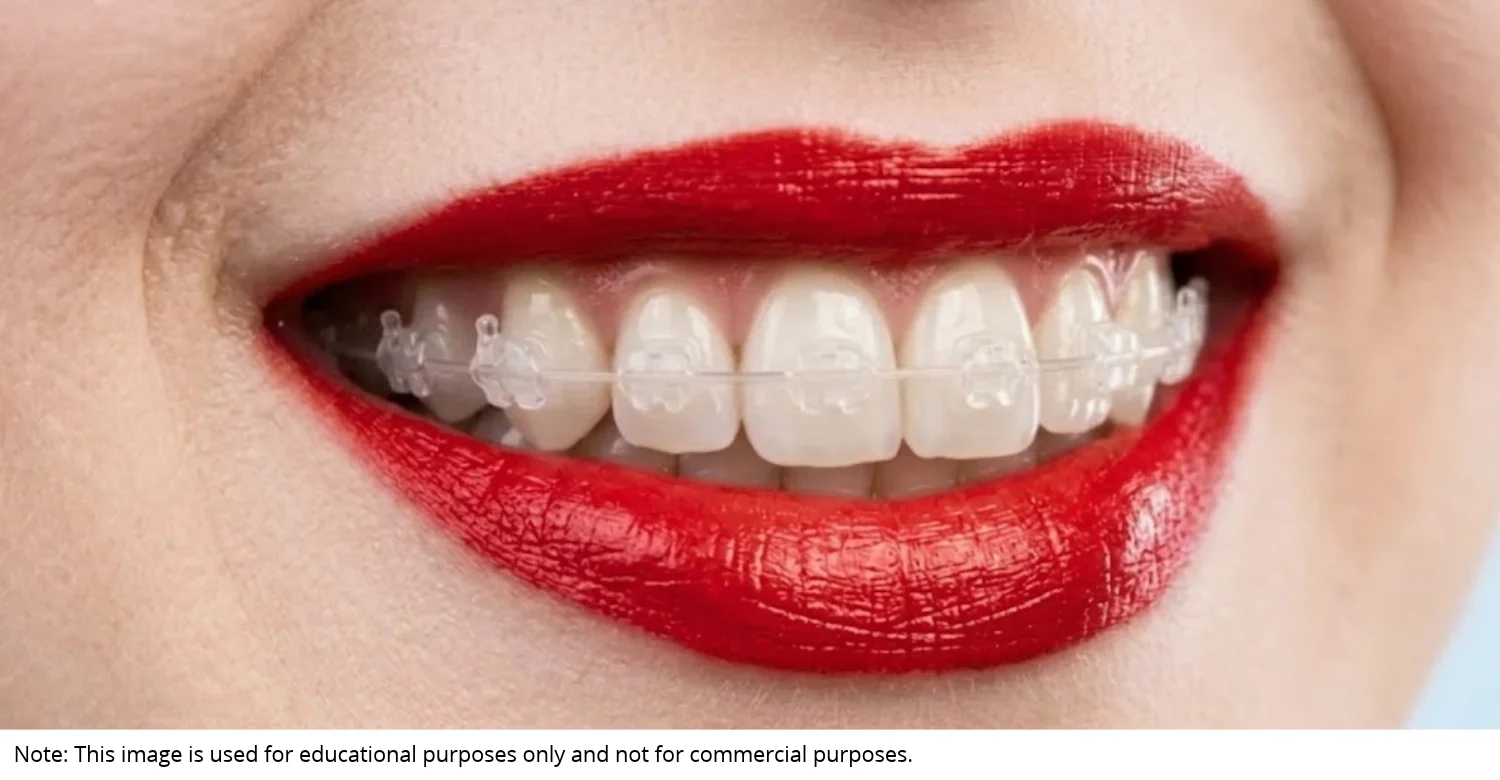
Clear braces are fixed braces with tooth-colored or transparent brackets and a wire. They move teeth exactly like metal braces, but they are much harder to spot. They suit people who need fixed treatment and want it to look discreet. They are not aligners.
Key Takeaways
Clear Braces: Uses and Benefits: Clear braces are discreet orthodontic options used to correct crooked teeth, crowding, gaps, and bite problems while improving dental alignment and appearance.
Types of Clear Braces: The main options include traditional ceramic braces, self-ligating Damon clear braces, and removable clear aligners such as Invisalign.
Recovery After Clear Braces: Mild discomfort may occur after placement or adjustments and usually subsides within a few days. After treatment, retainers help maintain the results and prevent teeth from shifting.
Clear Braces Cost: The cost varies depending on the type of appliance, treatment complexity, duration, and orthodontist’s fees. Ceramic braces generally cost more than traditional metal braces, so a personalized assessment is needed for an accurate estimate.
What Are Clear Braces?
Clear braces are a fixed orthodontic appliance. Each tooth gets a small bracket made of ceramic or another tooth-colored material. A thin archwire runs through every bracket. Small elastic ties, called ligatures, hold the wire in place. Metal bands on the back molars anchor the wire at each end, and clear elastics keep it seated in the brackets.
The wire applies steady, gentle pressure. Over months, that pressure moves teeth and changes how the jaws meet. The mechanics are identical to metal braces. Only the look changes.
Clear Braces vs Ceramic Braces: Same Thing?
In most cases, yes. Dentists and patients use both names for the same treatment. Clear describes how the brackets look. Ceramic describes what most of them are made of.
A few clear brackets use plastic or sapphire instead of standard ceramic. That is why the two terms overlap without being perfectly identical. What they share matters more. All are bonded to the front of the teeth. All use a wire. None can be removed at home. Removable plastic trays are a different treatment, called clear aligners.
Are Clear Braces Really See-Through?
Not completely. Tooth-colored brackets blend in, so most people will not notice them at a normal talking distance. Up close, the brackets, the wire and the molar bands are still visible. They are far less noticeable than metal, but they are not invisible.
.jpg)
.jpg)
.jpg)
.jpg)
Ready to transform your smile?
Talk to our team and get a FREE treatment plan.
Types of Clear Brackets
Bracket Type | Properties (Aesthetics & Strength) | Best For |
Polycrystalline ceramic | Tooth-colored; high strength (brittle); ties can stain | Most adults; the standard aesthetic choice |
Monocrystalline (sapphire) | Most transparent; highest strength; ties can stain | Very white teeth; maximum discretion |
Polycarbonate (plastic) | Clear when new (can discolor); lowest strength (flexes) | Mild/short cases; tighter budgets |
Clear self-ligating | Translucent; high strength; no ties to stain | Low maintenance; patients avoiding stained ties |
Clear vs White (Tooth-Colored) Ceramic: Which Matches Your Teeth?
Shade matters more than most patients expect. Clear brackets are translucent, so they pick up the color of the tooth behind them. White or tooth-colored brackets are more opaque and have a fixed shade.
If your teeth are very white, a clear bracket usually blends better. A white bracket can look slightly off against them. If your teeth have a deeper natural shade, a tooth-colored bracket may hide better. Ask to see both options against your teeth before bonding day.
Self-Ligating Clear Braces
Self-ligating brackets hold the wire with a small built-in clip instead of elastic ties. Damon Clear, made by Ormco, is one well-known system.
The practical benefit is simple. No elastic ties means fewer parts that can stain between visits. Some brands claim faster treatment or fewer appointments. Research has not shown a consistent speed advantage over conventional brackets, so treat those claims with caution. Your treatment time depends mainly on your bite, not the bracket brand.
White or Tooth-Colored Wires
The wire is often the most visible part of fixed braces. To hide it, orthodontists can use a coated or frosted wire in a white, tooth-like shade.
Coatings can wear thin after weeks of chewing and brushing. Some metal may show underneath. The wire is usually changed at adjustment visits, which keeps the look fresh. Coated wires can also add a little friction. Your orthodontist will tell you when a plain wire works better for a certain stage.
What Can Clear Braces Fix?
Ceramic braces treat the same problems as metal braces. These include:
Crowding: not enough room for the teeth to line up
Gaps and spacing between teeth
Overlapping teeth that sit on top of each other
Overbite: the upper front teeth cover the lower ones too much
Underbite: the lower teeth sit in front of the upper teeth
Crossbite: some lower teeth sit outside the upper teeth
Rotated teeth that are turned in their socket
Open bite: the upper and lower front teeth do not touch
Deep bite: the upper teeth cover the lower teeth too far
Can Clear Braces Treat Complex Cases?
Yes. Because they are fixed and use the same wire mechanics as metal braces, ceramic braces can handle complex movements. These include large rotations, closing extraction spaces and correcting significant bite problems.
They can also guide a buried tooth into place. One example is an impacted canine tooth, which often needs surgical exposure followed by fixed braces. This is where brackets hold an edge over aligners. Aligners have improved a lot, but some movements are still more predictable with brackets and wire.
Why Fixing Misalignment Matters Beyond Looks
Straight teeth are not only about appearance. Crowded or overlapping teeth are harder to brush and floss. Plaque collects in the tight spots. That raises the risk of cavities and gum disease.
A poor bite can also make chewing less efficient. Your teeth take steady forces every day from chewing and talking. When teeth do not meet correctly, those forces land unevenly. Over time, this can wear or chip certain teeth. Correcting the alignment spreads the load more evenly.
Dr. Sami’s Invisalign Excellence: Top 1% Recognition and 500+ Successful Cases
Dr. Sami received the prestigious Invisalign Apex Award, recognizing his position among the top 1% of Invisalign providers across Europe, the Middle East, and Africa (EMEA), alongside achieving Blue Diamond status and completing over 500 Invisalign cases.
.jpg)
Ready to transform your smile?
Talk to our team and get a FREE treatment plan.
Clear Braces vs Metal Braces
Category | Ceramic Braces | Metal Braces |
Aesthetics (Appearance & Staining) | Tooth-colored & discreet; ties can stain | Highly visible; ties can stain (less noticeable) |
Performance & Time (Friction & Speed) | Higher friction (unless metal-lined); treatment can take slightly longer | Lower friction; standard treatment time |
Durability & Comfort (Strength, Size, Removal) | Slightly bulkier & more brittle; prone to chipping; removal needs extra care | Smaller, smoother profile; very strong; rare breakage; straightforward removal |
Cost & Maintenance (Price & Repairs) | Higher initial cost; repairs add expense | Lower initial cost; rarely needs costly repairs |
Clear Braces vs Clear Aligners
Dimension | Ceramic Braces | Clear Aligners |
Clinical Control | Fixed appliance; ideal for complex movements without relying on compliance | Removable trays; best for mild-moderate cases; success depends on 22h/day wear |
Daily Lifestyle | Some dietary limits; more challenging oral hygiene around brackets | Eat whatever you want; remove to brush/floss normally |
Pros and Cons of Clear Braces
Pros
Much less noticeable than metal
Effective for complex cases
No need to remember to wear them
Comfortable once you get used to them
Cons
Cost more than metal
Elastic ties can stain
Brackets are more fragile
Treatment can take slightly longer
Removal at the end needs extra care
Slightly bulkier brackets can irritate lips and cheeks in the first weeks
.jpg)
Ready to transform your smile?
Talk to our team and get a FREE treatment plan.
Who Are Clear Braces Best For?
They suit people who need fixed treatment but care about how it looks. That includes working adults, students and older teens. They also suit people whose cases are too complex for aligners. And they suit anyone who does not want the daily discipline aligners demand.
They are a weaker fit for people with very heavy bites, people who grind their teeth and anyone on a tight budget. The sections below look at each group.
Clear Braces for Adults
Adults are the largest group choosing ceramic braces. Many work in client-facing jobs and want treatment that does not stand out in meetings or photos.
Adults often have older dental work, such as crowns or fillings. Your orthodontist plans around them. Gum health matters more with age too, so a gum check comes first. Adult treatment can take a little longer than teen treatment, because adult bone is denser.
Clear Braces for Teens
Older teens are often good candidates, especially if they feel self-conscious about metal. A 2020 study in Patient Preference and Adherence looked at how young people view different orthodontic appliances.
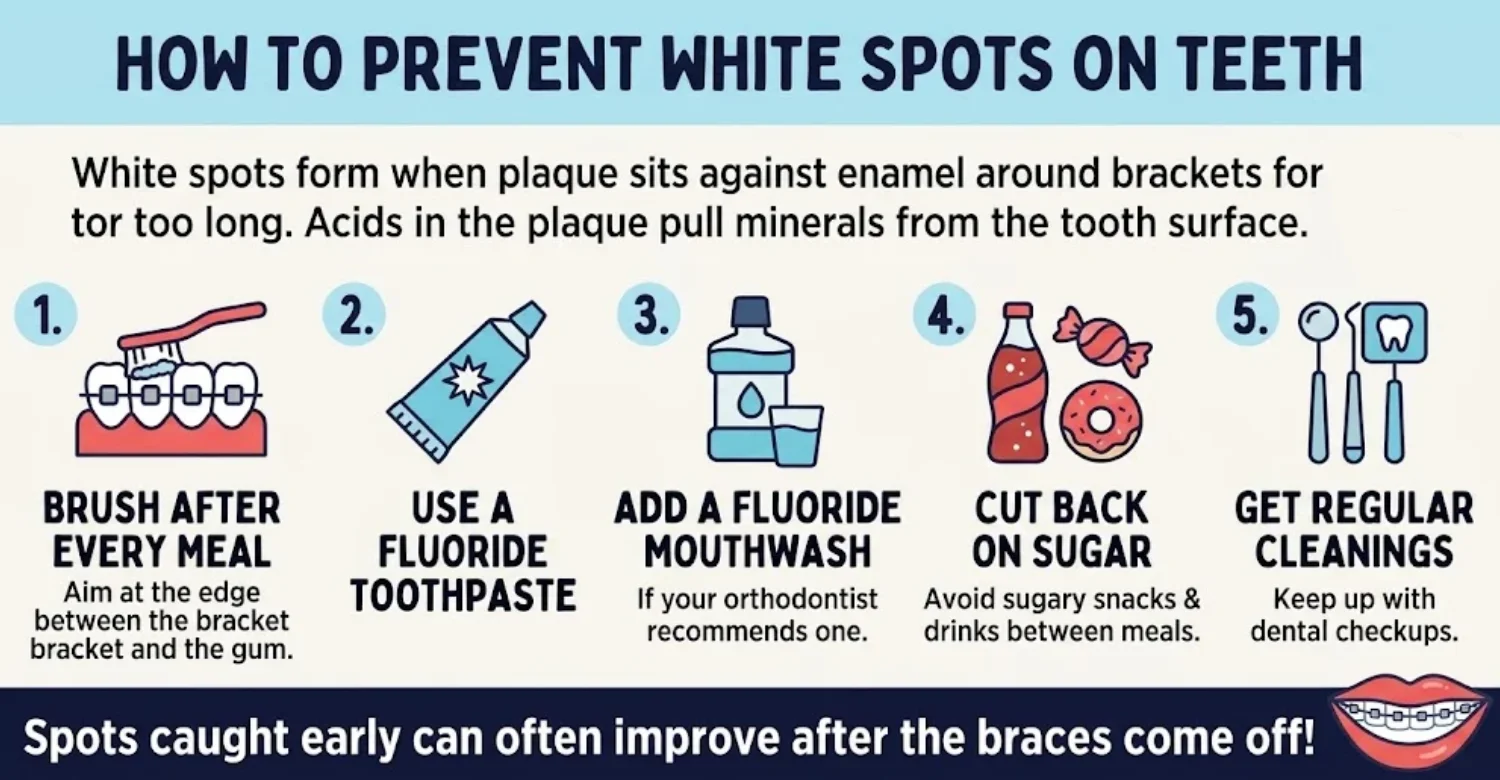
The main caution for teens is care. Ceramic brackets break more easily, so hard snacks and contact sports need extra thought. Teens also need to brush carefully to avoid white spots. Our guide to braces for teens covers age-specific advice.
Clear Braces If You Have a Metal Allergy
A true nickel allergy is uncommon, but some patients have one. Standard stainless-steel braces contain nickel. Ceramic brackets remove most of the metal from the front of the teeth.
However, the archwire and the molar bands are usually still metal. If you have a confirmed allergy, ask your orthodontist about nickel-free or coated wires. Ask about alternatives to metal bands too. Mention the allergy at your first visit so the plan accounts for it from the start.
When Metal Braces Might Be the Better Choice
You have a very deep or heavy bite. Hard ceramic brackets on lower teeth can wear the enamel of upper teeth they touch.
You grind or clench at night. Grinding puts extra stress on brittle brackets.
You play contact sports. A knock to the mouth is more likely to crack a ceramic bracket.
Budget is your main concern. Metal costs less.
The Clear Braces Treatment Process
Consultation and X-rays. Your orthodontist examines your teeth, gums and jaw. Any cavities, tartar, gum disease or gum recession must be treated first. Bonding braces onto unhealthy teeth can cause new problems.
Impressions or digital scan. Some practices send your records to a lab. The brackets and wires are ready within one to two weeks. Getting fully fitted can take two or three visits.
Bonding. The teeth are cleaned and lightly etched. A bonding agent goes on, then the brackets. The archwire is placed, the molar bands are fitted and the ties are added. This takes about one to two hours.
Adjustments. Every 4 to 8 weeks, the wire is changed or tightened and the ties are replaced.
Debonding. The brackets are removed with care to protect the enamel. The teeth are then polished.
Retainer. A retainer holds the teeth in their new position.
Does Getting Clear Braces Hurt?
Bonding itself is not painful, and no needles are needed. Most people feel soreness and pressure for the first few days after fitting. A milder ache can return for a day or two after each adjustment.
Over-the-counter pain relievers such as acetaminophen or ibuprofen usually help. Soft foods make the first week easier. The brackets can also rub your lips and cheeks at first. A little orthodontic wax over a rough spot helps until the tissue toughens up.
How Long Does Treatment Take?
Case Severity | Treatment Timeline & Clinical Examples |
Mild | 12–18 months — Minor crowding, small gaps |
Moderate | 18–24 months — Moderate crowding, mild bite problems |
Complex | 24–36 months — Major bite issues, impacted teeth, extractions |
Do Clear Braces Stain?
It depends on which part you mean. Ceramic and sapphire brackets resist staining well. The elastic ties around them are the weak point. They absorb color from food, drinks and smoke. The good news is that ties are replaced at every adjustment, every 4 to 8 weeks.
Foods and Drinks to Limit
The strongest colorants are:
Coffee and tea
Red wine
Cola and dark sodas
Tomato sauce
Curry and turmeric
Soy sauce
Berries
Living With Clear Braces
Daily life with ceramic braces takes a few new habits. Most people settle into them within two or three weeks. Three areas need attention: cleaning, food choices and knowing what to do if a bracket breaks.
Cleaning Around Brackets
Good hygiene protects both your teeth and the look of your braces. A simple daily routine:
Brush two to three times a day with a soft or orthodontic toothbrush.
Use a non-abrasive fluoride toothpaste.
Rinse with water after every meal to clear trapped food.
Floss once a day with a floss threader.
Use interdental brushes under the wire and around each bracket.
Add a water flosser if you like, but do not let it replace brushing.
Finish with a mouthwash.
What You Can't Eat
Avoid four groups of food:
Foods you bite into: whole apples, carrots, corn on the cob. Cut them into small pieces instead.
Crunchy foods: chips, ice, popcorn.
Sticky or chewy foods: caramel, toffee, chewing gum.
Hard foods: nuts, hard sweets.
Plenty is still on the menu. Pasta, rice, soft bread, chicken, cheese, eggs, cooked vegetables, bananas, yogurt and smoothies are all fine.
What If a Ceramic Bracket Breaks?
Do not try to glue it back. If the bracket is loose but still on the wire, leave it there. Cover any sharp edge with orthodontic wax. Keep any piece that comes off and call your orthodontist. Most breaks are not emergencies. Still, a loose bracket stops that tooth from moving, so get it fixed soon.
Clinical Note
Ceramic braces are a cosmetic choice, not a clinical shortcut. The bracket material changes how treatment looks. Your bite decides how long it takes and how well it works.
Before we recommend ceramic brackets, we check three things. How deep is the bite? Are the gums healthy? Can the patient attend an adjustment every 4 to 8 weeks? If the answer to any of these raises a concern, we discuss metal brackets on the lower arch or a different treatment altogether.
How Much Do Clear Braces Cost?
In the United States, ceramic braces cost approximately $4,480 to $11,312, with an average cost of around $5,834. The final price varies depending on treatment complexity, duration, and the orthodontist’s fees.
Several factors shape the final price: the bracket material, the length of treatment and how complex your case is. Repairs can add to the total, since ceramic brackets break more often.
After Clear Braces: Retainers
Teeth tend to drift back after braces come off. A retainer holds them in place.
There are two main types. A fixed retainer is a thin wire bonded behind the front teeth. A removable retainer is a clear tray or wire appliance you take out to eat. Each has pros and cons, explained in our guide to fixed vs removable retainers.
What We Notice Clinically
According to Dr. Rifat Alsaman, Head of the Medical Team and cosmetic dentist at Vitrin Clinic, patients who choose ceramic braces for aesthetic reasons should understand that the elastic ties around the brackets may stain more noticeably than the ceramic brackets themselves. He emphasizes maintaining good oral hygiene, rinsing after coffee, and attending scheduled orthodontic appointments. He also advises patients to avoid hard foods that may damage brackets, particularly during the early stages of treatment. For adults concerned about the appearance of braces, discussing their expectations and available treatment options can help them feel more comfortable throughout the process.
Why Choose Vitrin Clinic for Orthodontic Treatment in Istanbul
Vitrin Clinic is a leading dental clinic in Istanbul, Türkiye, providing a wide range of dental treatments tailored to each patient's needs, from orthodontic care and smile makeovers to restorative and cosmetic dentistry. With a patient-centered approach, modern dental technology, and a team of experienced professionals, the clinic focuses on delivering personalized treatment plans that balance oral health, function, and aesthetics.
Under the supervision of Dr. Rifat Alsaman, Head of the Medical Team, patients receive individualized care based on their dental condition, treatment goals, and clinical assessment. Vitrin Clinic also welcomes international patients, offering support throughout their treatment journey to make the experience as comfortable and convenient as possible.






Book your FREE treatment plan with Vitrin Clinic and get a personalized treatment plan from our dental team.
Ready to transform your smile?
Talk to our team and get a FREE treatment plan.
Medical Disclaimer:
This article is for general information and does not replace a personal assessment by a qualified dentist. Prices are approximate 2026 averages, with UK and Turkey figures converted to US dollars, and may vary by clinic and case.
References
FAQs
They are fixed braces that use tooth-colored or transparent brackets, usually ceramic, with a wire to straighten teeth. They work the same way as metal braces but are much less noticeable. They are bonded to the front of the teeth and stay in place until treatment ends.

Dr. Rifat Alsaman has more than 5 years of clinical experience in dentistry and currently serves as the Head of the Medical Team at Vitrin Clinic. He is dedicated to providing exceptional patient care, overseeing treatment planning, and ensuring the highest clinical standards across the team. His expertise, attention to detail, and commitment to continuous professional development have helped countless patients achieve healthier, more confident smiles.


