Orthodontics
September 28, 2026
What Is Malocclusion of the Teeth? Causes, Symptoms, Types, and Treatment
 Dr. Rifat Alsaman
Malocclusion of the teeth is a common dental condition where the teeth or jaws are out of position. Proper alignment spreads biting forces evenly, makes cleaning easier, and helps the jaws work comfortably. Common bite problems include overbite, underbite, crossbite, open bite, and crowding. All of them are treatable with orthodontic treatment.
What Is Malocclusion of the Teeth?
Dental malocclusion describes any deviation from a normal bite. It may involve teeth misalignment, where individual teeth are crooked or crowded. It may also involve jaw misalignment, where the jaws are mismatched in size or position. In a normal bite, the upper teeth slightly overlap the lower teeth, and the molars fit together evenly.
Types of Malocclusion
The types of malocclusion are commonly grouped into three classes. The grouping is based on how the upper and lower first molars meet. This classification helps describe the bite accurately and guides treatment planning. Each class may also include crowding, spacing, overbite, underbite, crossbite, or open bite.
Class 1 Malocclusion
Class 1 malocclusion is the most common type. The molars meet in a normal front-to-back relationship, but individual teeth are out of position. Typical problems include crowded teeth, spacing, rotated teeth, and crooked teeth. Because the jaw relationship is usually acceptable, treatment often focuses on aligning the teeth with braces or aligners.
Class 2 Malocclusion
Class 2 malocclusion occurs when the lower first molar sits further back than normal relative to the upper molar. As a result, the upper teeth and jaw appear ahead of the lower ones. This type is often linked to a deep overbite and increased overjet, or protruding upper teeth.
Class 3 Malocclusion
Class 3 malocclusion occurs when the lower first molar sits further forward than normal relative to the upper molar. The lower teeth and jaw may appear ahead of the upper ones. It is commonly associated with an underbite or anterior crossbite. It may result from tooth position, jaw growth, or both.
Read more about Dentinogenesis Imperfecta and Tooth Loss
Common Bite Problems
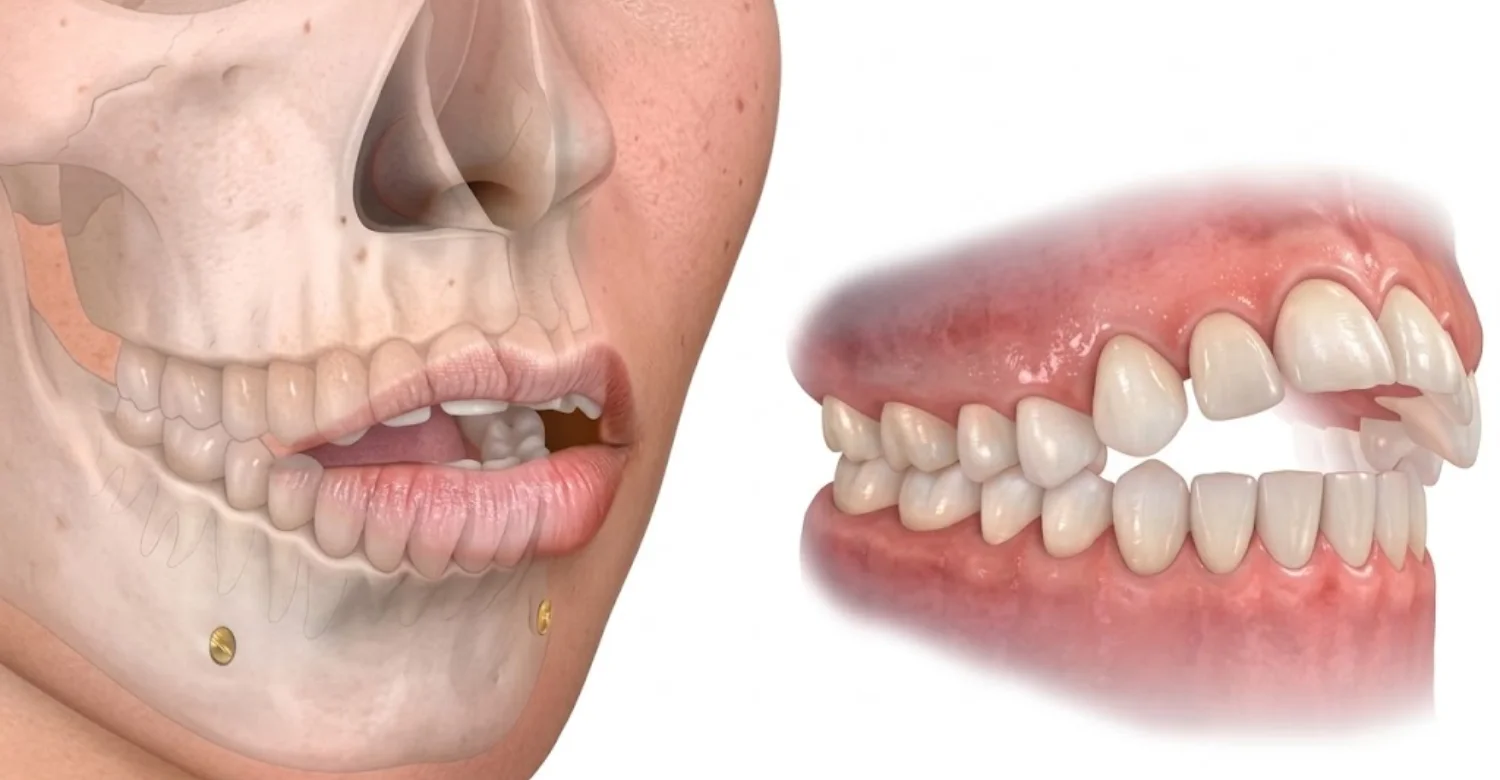
Malocclusion of the teeth can appear as several specific bite problems. The most common are overbite, underbite, crossbite, open bite, and crowded teeth. Each one affects how the teeth meet and function. Some patients have more than one problem at the same time, which is why a full bite assessment is important.
Overbite
An overbite is the vertical overlap of the upper front teeth over the lower front teeth. A small overlap is normal. It becomes a concern when the lower teeth bite into the gums or palate. A deep overlap can also cause excessive wear, discomfort, or gum damage.
Underbite
An underbite occurs when the lower front teeth sit in front of the upper front teeth. A dental underbite results from tipped teeth, while a skeletal underbite results from differences in jaw size or position. Identifying the type determines whether orthodontic treatment alone is enough.
Crossbite
A crossbite occurs when some upper teeth sit inside the lower teeth when biting. A front crossbite involves the incisors, while a back crossbite involves the side teeth. Crossbites may cause uneven tooth wear, gum recession, and jaw shifting to one side. In growing children, they may also cause uneven jaw development.
Open Bite
An open bite means some upper and lower teeth do not touch when the jaws close. An anterior open bite affects the front teeth, while a posterior open bite affects the back teeth. This bite problem can make biting certain foods difficult. It may also contribute to speech problems such as lisping.
Crowded Teeth and Crooked Teeth
Crowded teeth develop when there is not enough space in the jaw for all teeth to align properly. Causes include small jaws, large teeth, or early loss of baby teeth. Crowding creates overlapping and crooked teeth with tight areas that are hard to brush and floss. This increases plaque buildup, cavities, and gum inflammation.
Note : All images are for editorial and illustrative purposes only. They may not originate from the original news provider or associated company.
Learn more about Tooth Autotransplantation in Young Patients
Causes of the Condition
Malocclusion causes are usually a combination of inherited, developmental, and environmental factors. Understanding why malocclusion of the teeth developed helps determine the right treatment and timing. Some causes relate to jaw growth and genetics. Others involve tooth loss, eruption problems, childhood habits, or injuries that change tooth and jaw positions.
Genetic and Developmental Factors
Genetics strongly influence jaw size and shape, tooth size, and facial growth patterns. A mismatch between small jaws and large teeth can cause crowding. Differences in how the upper and lower jaws grow can create Class 2 or Class 3 relationships. These bite patterns often run in families.
Dental and Oral Factors
Early loss of baby teeth can allow neighboring teeth to drift into the empty space. Abnormal eruption paths, impacted teeth, and missing or extra teeth can also disturb normal alignment. These dental factors are common causes of misaligned teeth in both children and adults.
Childhood Oral Habits
Prolonged thumb sucking, extended pacifier use, and tongue thrusting can push teeth out of position and affect jaw development. These habits may cause protruding front teeth, an open bite, or a narrow upper jaw. Other habits, such as lip sucking or persistent mouth breathing, can also influence bite development over time.
Other Contributing Factors
Dental or facial trauma can shift teeth or affect jaw growth, especially in children. Differences in development between the upper and lower jaws may create an imbalanced bite. Poor tooth positioning, including teeth that erupt rotated or tilted, can also cause misaligned teeth and uneven biting forces.

Malocclusion Symptoms
Malocclusion symptoms vary depending on severity. Common signs include crooked or misaligned teeth, crowding, and difficulty chewing or biting. Other signs include frequent cheek or tongue biting, abnormal tooth wear, and difficulty cleaning teeth. Some people also have jaw discomfort or speech difficulties. Mild cases may cause few noticeable symptoms.
Understand the details of Folate Deficiency and Oral Health
Problems Caused by the Condition
When left untreated, malocclusion of the teeth can lead to problems beyond appearance. These include difficulty cleaning teeth, uneven tooth wear, chewing and speech difficulties, gum concerns, and jaw-related symptoms. The impact differs between individuals. The need for treatment depends on each person's bite, severity, and oral health.
Oral Hygiene Difficulties
Crowded and overlapping teeth create tight spaces that toothbrushes and floss cannot easily reach. These areas trap plaque and food debris, increasing the risk of cavities and gum inflammation. Patients with misaligned teeth often need extra cleaning tools, such as interdental brushes. They also need a more careful daily hygiene routine.
Tooth Wear and Damage
When teeth do not meet evenly, some teeth absorb more biting pressure than others. Over time, this uneven pressure can cause excessive tooth wear, chipping, cracks, or sensitivity. Crossbites and edge-to-edge bites are especially linked to wear on the affected teeth. These teeth may later need restoration.
Functional Problems
A poor bite can make chewing less efficient. Biting foods such as sandwiches or apples may be difficult, especially with an open bite. Some bite problems also affect speech, causing lisping or difficulty pronouncing certain sounds. Functional problems are often an important reason patients seek orthodontic treatment.
Gum and Oral Health Concerns
Misaligned teeth can make it harder to keep the gums healthy because plaque builds up in hard-to-clean areas. Certain bites, such as a deep overbite or crossbite, may also place stress on gum tissue. When oral hygiene is difficult, these factors may contribute to gum inflammation and other dental problems.
Jaw-Related Symptoms
Some people with bite problems experience jaw discomfort, clicking, or tiredness when chewing. However, jaw symptoms have many possible causes, including teeth grinding, stress, and joint conditions. The link to bite problems is not always direct. For this reason, jaw symptoms require individual assessment rather than assumptions.
Explore the facts on Tirzepatide Dental Side Effects
How Is Malocclusion Diagnosed?
Malocclusion diagnosis relies on a careful clinical examination supported by diagnostic records. The goal is to understand exactly how malocclusion of the teeth affects each patient. This includes tooth positions, bite relationships, and jaw structure. An accurate diagnosis allows the clinician to recommend suitable treatment and predict realistic results.
Clinical Examination
During the clinical examination, the dentist evaluates teeth alignment, crowding, spacing, and rotations. The bite is assessed to check how the upper and lower teeth meet. This includes overbite, overjet, crossbite, and open bite. The jaw relationship, jaw movement, facial profile, and symmetry are also examined for a complete picture.
Diagnostic Records
Diagnostic records document the current condition and help plan treatment. These may include photographs of the face and teeth and digital scans that create 3D models of the bite. Physical dental models may also be used when needed. Dental X-rays are taken when indicated to assess roots, jaw structure, and unerupted teeth.
Assessing Dental and Skeletal Malocclusion
A key step is determining whether the problem is dental, skeletal, or both. Dental problems involve tooth position, while skeletal problems involve jaw position or size. Two patients with similar-looking problems may have different underlying causes. This distinction directly affects which treatment approach will be effective and stable.
Check out the connection between X-linked Hypophosphatemia and Dental Damage
Malocclusion Treatment Options
Malocclusion treatment depends on the type, severity, cause, and patient age. Options for malocclusion of the teeth include braces, clear aligners, orthodontic appliances, and growth-guided treatment for children. In severe skeletal cases, jaw surgery may be combined with orthodontics. Retainers are then used to maintain results after active treatment ends.
Braces for Malocclusion
Braces for malocclusion use brackets and wires that apply gentle, continuous pressure to move teeth gradually. They treat crowding, spacing, crooked teeth, overbite, underbite, crossbite, and open bite. Braces are effective for complex cases. However, treatment length, hygiene demands, and dietary restrictions should be considered.
Clear Aligners
Clear aligners are removable, transparent trays that move teeth in small stages. They suit many mild to moderate cases, such as crowding and spacing. However, they may be less effective for certain complex bites or skeletal problems. Success depends on wearing them consistently for the recommended hours each day.
Orthodontic Appliances
Orthodontic appliances support tooth and jaw correction. Elastics help align the upper and lower bite, and expanders widen a narrow upper jaw. Functional appliances guide jaw growth in children. Retainers are used after treatment to hold the teeth in their new positions and prevent them from shifting back.
Orthodontic Treatment During Growth
An early orthodontic assessment, often recommended around age seven, can identify developing problems. During growth, some forms of malocclusion of the teeth can be guided using appliances that influence jaw development. For children and adolescents, timing matters. Treatment may be phased, with early intervention followed by braces later if needed.
Treatment for Severe Jaw Misalignment
When jaw misalignment is significant, orthodontic treatment alone may not fully correct the bite. This is especially true after growth has finished. In selected skeletal cases, jaw surgery combined with orthodontic treatment may be recommended to reposition the jaws. This decision requires careful evaluation of facial structure, function, and patient goals.
Discover how Peri-Implant Bone Loss is Detected
Patient's Perspective
Patients often notice malocclusion of the teeth through crooked teeth or cosmetic concerns about their smile. Others notice difficulty chewing, biting, or cleaning crowded teeth. Many also worry about treatment duration and comfort. Clear, individualized expectations help patients understand what treatment can achieve, how long it may take, and what it requires.
Doctor's Perspective
Clinicians evaluate the teeth, the bite, and the jaw relationship together. The key question is whether the problem is dental, skeletal, or both. The answer guides the choice of an appropriate orthodontic treatment plan. Long-term stability and retention are considered from the start.
When Is It Serious and Requires a Checkup?
A checkup is recommended when malocclusion of the teeth causes difficulty chewing, severe crowding, or persistent jaw discomfort. Frequent cheek or tongue biting and abnormal tooth wear are also warning signs. A significant overbite or underbite, or a crossbite or open bite affecting function, needs evaluation. The same applies to bite changes after trauma or difficulty cleaning misaligned teeth.
Find out the link in Peripheral Artery Disease and Periodontitis
When the Patient Should Rest
A misaligned bite itself does not require rest. However, temporary discomfort is common for a few days after braces are placed or adjusted. Softer foods may help during this time. After surgical treatment, patients should carefully follow professional instructions on rest, diet, and activity.
Rest Tips
During temporary orthodontic discomfort:
Choose softer foods, such as soups, yogurt, and mashed vegetables.
Avoid hard and sticky foods when advised by your dental team.
Maintain gentle but thorough oral hygiene.
Use orthodontic wax to protect irritated cheeks and lips.
Follow all prescribed orthodontic instructions carefully.
Contact your dental team if pain becomes severe or persistent.
About Vitrin Clinic
Vitrin Clinic provides comprehensive dental care, including orthodontic and cosmetic treatment. Our care is based on careful diagnosis and personalized planning. For patients with malocclusion of the teeth, our team evaluates the complete bite and explains the available options clearly. We design treatment that balances function, appearance, comfort, and long-term stability.
What We Notice Clinically
At Vitrin Clinic, we evaluate malocclusion of the teeth as a complete bite problem, not just crooked teeth. Dr. Rifat Alsaman is Head of the Medical Team at Vitrin Clinic and a Cosmetic Dentist. Dr. Alsaman emphasizes that visibly crooked teeth may hide underlying jaw misalignment. For this reason, an individualized diagnosis must come before choosing braces or other treatment.
Clinical Note
Bite problems can be dental, skeletal, or both. Similar-looking alignment problems may have entirely different causes. For example, tooth position may be the cause in one patient and jaw growth in another. For this reason, treatment should always be based on clinical examination and proper diagnosis, not appearance alone.
Tips for the Patients
Maintain consistent brushing and interdental cleaning, especially around brackets. Follow orthodontic instructions carefully and attend all scheduled appointments. Avoid hard and sticky foods that may damage appliances. Report broken appliances or unusual discomfort promptly. Keep regular dental checkups during and after treatment to protect your results.
Read about Alveolar Ridge Preservation After Tooth Extraction
Resource:
https://pubmed.ncbi.nlm.nih.gov/27692622/
FAQs
Dr. Rifat Alsaman has more than 5 years of clinical experience in dentistry and currently serves as the Head of the Medical Team at Vitrin Clinic. He is dedicated to providing exceptional patient care, overseeing treatment planning, and ensuring the highest clinical standards across the team. His expertise, attention to detail, and commitment to continuous professional development have helped countless patients achieve healthier, more confident smiles.


.webp&w=3840&q=75)

