Invisalign
November 3, 2026
Invisalign for Gaps Turkey: Can Invisalign Close Teeth Gaps? Cost, Results & Treatment
 Dr. Sami Assani

Teeth gaps can affect smile appearance, speech, and sometimes dental function. Invisalign for gaps Turkey offers an orthodontic option for patients seeking to close spaces without traditional metal braces.
Invisalign uses removable, transparent aligners to move teeth gradually. However, treatment suitability depends on the cause, size, and location of each gap. Gum health, tooth proportions, and bite alignment also influence treatment planning.
This guide explains how Invisalign closes dental spaces, expected treatment times, costs, advantages, disadvantages, and possible side effects. It also explores what international patients should consider before arranging orthodontic treatment in Turkey.
Key Takeaways
Invisalign for gaps Turkey can address selected cases of mild, moderate, and some complex dental spacing.
Diastema describes a space between two teeth, commonly the upper front teeth.
Treatment suitability depends on tooth position, gum health, bone support, and bite relationships.
Digital scanning helps dentists assess tooth positions and plan orthodontic movements.
Treatment duration varies according to case complexity and patient compliance.
Retainers help maintain tooth positions after active orthodontic treatment.
International patients should arrange appropriate progress monitoring and long-term follow-up.
Ready to transform your smile?
Talk to our team and get a personal FREE treatment plan.
What Is Invisalign Treatment for Gapped Teeth?
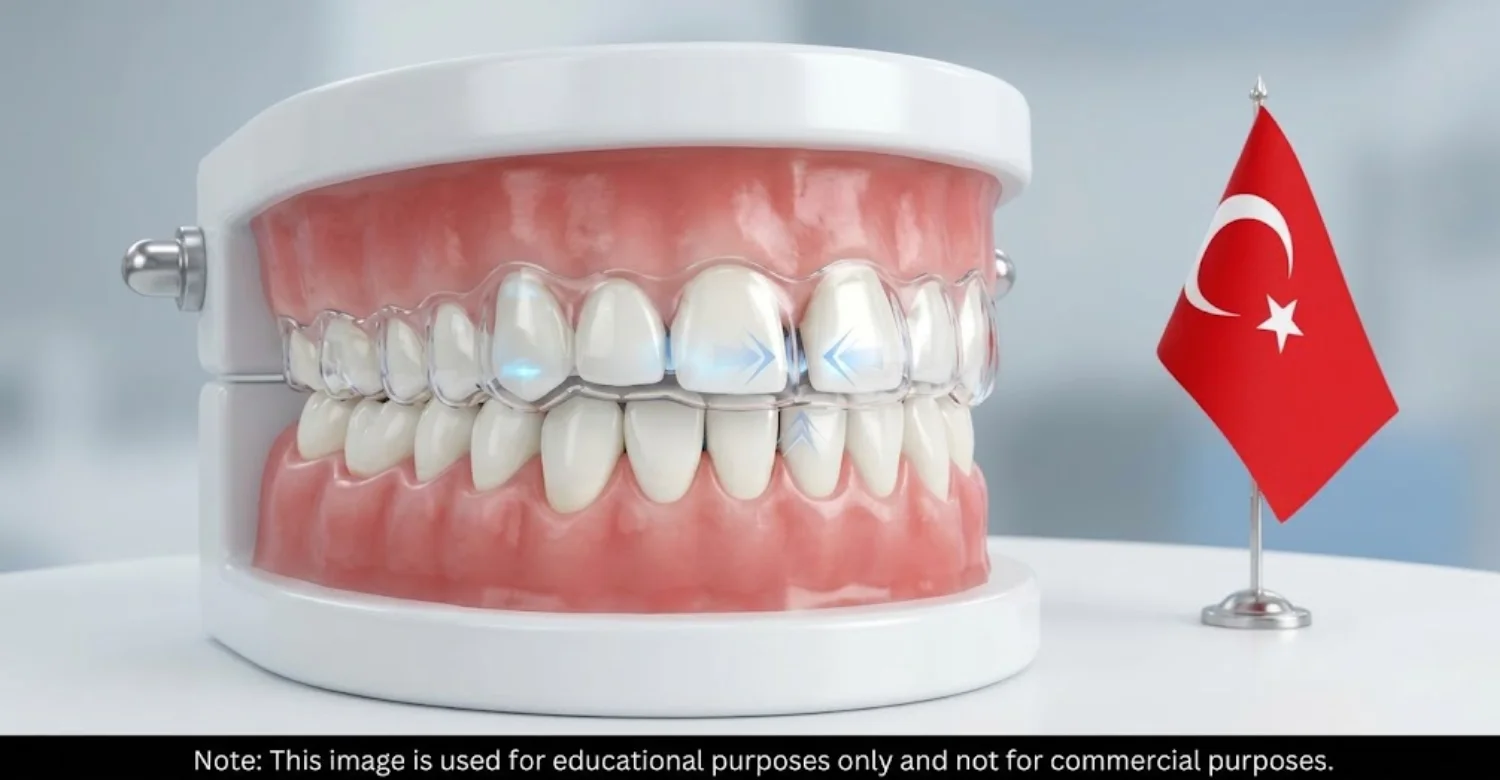
Invisalign for gaps Turkey uses custom-made clear aligners to gradually close spaces between teeth. Each aligner applies controlled pressure to selected teeth, following a personalised digital treatment plan. Unlike traditional braces, aligners are removable and use no metal brackets or wires. The dentist monitors tooth movement and adjusts the plan when necessary.
What Causes Gaps Between Teeth and Can Invisalign Treat Them?
A gap between teeth is clinically known as a diastema. It commonly appears between the upper front teeth but can affect other areas. Possible causes include:
Differences between tooth and jaw size.
Missing or undersized teeth.
Previous tooth loss.
Tongue habits that place pressure on teeth.
Developmental differences.
Periodontal disease and supporting bone loss.
Invisalign may correct suitable spacing patterns, including a single front gap, multiple spaces, or gaps across both dental arches. Treatment uses planned tooth movements to bring teeth closer together while considering their angulation, root positions, and bite alignment. Attachments may also be used to improve aligner grip and movement control.
However, not every gap is suitable for orthodontic treatment. Spaces caused by gum disease, missing teeth, or unusual tooth proportions may require additional treatment or a different approach. An orthodontic examination helps identify the cause and determine whether Invisalign is appropriate.
Some childhood gaps close naturally as permanent teeth develop. New or widening gaps in adults should be examined, particularly when accompanied by gum changes.
Is Invisalign Suitable for Closing All Types of Teeth Gaps?
Invisalign for gaps Turkey can treat many spacing problems, but suitability depends on gap size, tooth positions, bone support, and overall bite alignment. The dentist must also identify the cause of the spacing before recommending treatment.
Can Invisalign Close Large or Multiple Teeth Gaps?
Invisalign may close large spaces between front teeth and multiple gaps across one or both dental arches. However, cases requiring extensive tooth movement may need more aligners and additional treatment stages. The dentist evaluates root positions, available bone support, and tooth proportions to plan balanced results.
Widespread spacing may also indicate missing teeth, developmental differences, or periodontal disease. These underlying conditions must be considered before orthodontic movement begins. Closing spaces without addressing their cause may affect treatment stability and oral health.
When Are Braces or Other Treatments More Suitable?
Traditional braces may offer better control in certain complex cases involving substantial tooth repositioning or complicated bite correction. Cosmetic restorations, such as veneers, may be considered when gaps relate mainly to small or unusually shaped teeth. Missing teeth may require a separate restorative treatment plan.
However, cosmetic treatments do not correct underlying orthodontic problems. The most suitable option depends on the clinical examination, the cause of the gaps, and the patient's overall dental condition.
Invisalign vs Traditional Braces for Closing Teeth Gaps
Choosing between Invisalign for gaps Turkey and traditional braces depends on gap severity, bite alignment, treatment complexity, and patient preferences. Both options can close spaces through controlled orthodontic tooth movement, but they differ in appearance, maintenance, and clinical control.
Key Differences Between Invisalign and Traditional Braces
Consideration | Invisalign | Traditional braces |
Appearance | Clear and less noticeable | More visible |
Removability | Removable | Fixed |
Eating | Removed before meals | Dietary precautions needed |
Cleaning | Easier appliance removal | Requires careful cleaning |
Complex movements | Suitable for selected cases | Often useful for complex movements |
Compliance | Requires consistent daily wear | Less dependent on patient removal |
Advantages and Limitations of Invisalign for Gaps
Invisalign offers a discreet and removable option for suitable spacing cases. Patients can remove aligners when eating and brushing, making daily oral hygiene more convenient. Digital treatment planning also helps map the intended tooth movements.
However, aligners require consistent daily wear, and attachments may be necessary for certain movements. Lost or damaged aligners can interrupt treatment, while additional refinements may extend the overall timeline. Retainers are also essential after treatment to help maintain the corrected tooth positions.
When Might Traditional Braces Be More Suitable?
Traditional braces may be recommended when gaps occur alongside complex bite problems or movements requiring precise fixed-appliance control. The dentist considers tooth rotation, root positioning, jaw relationships, and available bone support before recommending an approach. Some cases may benefit from combined orthodontic methods.
Neither treatment is universally better. The final choice depends on diagnostic findings and the patient's individual orthodontic needs.
How Does Invisalign Treatment for Gaps Work?
Invisalign for gaps Turkey involves several stages, including dental examination, digital planning, custom aligners, and progress reviews. Each stage follows a personalised treatment plan approved by the dentist.
Initial Dental Examination and Digital Treatment Planning
The dentist first evaluates the spaces, tooth positions, gum health, bite alignment, existing restorations, and any missing or unusually shaped teeth. Digital scans record the dental arches, while X-rays may be recommended when clinically appropriate to assess underlying structures.
ClinCheck software helps plan the proposed tooth movements and display their expected sequence. The dentist reviews and adjusts the simulation before approving aligner production. This digital preview supports planning but does not guarantee the final outcome. Root positions, tooth angulation, and bite relationships must all be considered.
Custom Aligners, Attachments, and Progress Reviews
Custom aligners are manufactured according to the approved plan. Patients generally wear them for 20–22 hours daily, removing them for meals, drinks other than water, and oral hygiene. Small tooth-coloured attachments may be added to improve aligner grip and support specific movements.
Regular reviews allow the dentist to monitor progress and check whether teeth are following the planned movements. Some patients need refinements, which involve additional aligners to improve alignment or close remaining spaces. Further digital scans may be required before these adjustments.
Final Results and Retainers After Treatment
Once the planned movements are completed, the dentist checks tooth positions, bite relationships, and the remaining treatment objectives. Retainers are then prescribed to help maintain the corrected positions.
Teeth can gradually shift after orthodontic treatment as surrounding tissues adapt. This may cause previously closed gaps to reopen. Depending on individual needs, the dentist may recommend removable retainers, fixed retainers, or a combination. Following the retention instructions is essential for maintaining the results.
.jpg)
.jpg)
.jpg)
How Long Does Invisalign Take to Close Gaps?
Treatment duration with Invisalign for gaps Turkey depends on gap size, tooth positions, bite alignment, and the complexity of the required movements. Small front-tooth spaces may take several months to close in selected cases, while multiple or larger gaps may require 12–24 months or longer.
What Factors Affect Invisalign Treatment Time?
Several factors can influence how long treatment takes:
Number and size of dental spaces.
Tooth rotation and angulation.
Root positioning and required movement.
Gum and supporting bone health.
Existing bite problems.
Consistency of daily aligner wear.
Additional aligners or refinement stages.
Missed reviews or treatment interruptions.
Cases involving several gaps may require coordinated movements across both dental arches. Additional refinements may also be needed if teeth do not follow the planned movements as expected.
The dentist provides a more realistic timeline after examining the teeth and reviewing the digital treatment plan. Regular monitoring and consistent aligner wear help support treatment progress.
Ready to transform your smile?
Talk to our team and get a personal FREE treatment plan.
Invisalign for Gaps in Turkey: Cost Comparison
The price of Invisalign for gaps Turkey depends on treatment complexity, aligner requirements, and included services.
How Much Does Invisalign Cost in the US, UK and Turkey?
United Kingdom
Estimated Cost: $3,000 – $5,500
Indicative full-treatment cost
Full treatment: $3,000 – $5,500
Private UK clinic standard pricing
Domestic specialist treatment plan
Turkey
Estimated Cost: $2,350 – $5,200
Indicative full-treatment cost
Full treatment: $2,350 – $5,200
Significant savings vs. US & UK
Comprehensive full-service clinical care
United States
Estimated Cost: $3,500 – $7,500
Indicative full-treatment cost
Full treatment: $3,500 – $7,500
US private clinic standard rate
Highest domestic private expense
How Much Does Invisalign Cost in Turkey?
The cost of Invisalign in Turkey depends on treatment complexity, the number of aligners, and whether one or both dental arches require correction. Mild spacing or crowding usually requires a simpler plan than complex bite problems.
Invisalign Treatment Prices at Vitrin Clinic
The following table shows the indicative Vitrin Clinic package prices:
Mild Alignment
From $800
Estimated Price
Express: From $800
Lite: From $1,500
Targeted minor spacing & crowding corrections
Full Alignment (Most Popular)
From $2,500
Estimated Price
Moderate: From $2,500
Comprehensive: From $3,500
Complete bite correction & full alignment
All Packages
Price Range: $800 – $3,500+
Estimated Price
Express: From $800
Lite: From $1,500
Moderate: From $2,500
Comprehensive: From $3,500
Invisalign Cost in Turkey Compared with the UK and USA
United Kingdom
Estimated Cost: $3,000 – $5,500
Indicative full-treatment cost
Full treatment: $3,000 – $5,500
Private UK clinic standard pricing
Domestic specialist treatment plan
Turkey
Estimated Cost: $1,780 – $5,200
Indicative full-treatment cost
Full treatment: $1,780 – $5,200
Save up to ~50% vs. US & UK
Comprehensive full-service clinical care
United States
Estimated Cost: $3,500 – $7,500
Indicative full-treatment cost
Full treatment: $3,500 – $7,500
US private clinic standard rate
Highest domestic private expense
What Factors Influence Invisalign Prices in Turkey?
Prices depend on several factors:
Case complexity: More extensive tooth movements may require additional aligners and planning.
Aligner quantity: The number of treatment stages affects the package.
Treatment duration: Longer treatment may involve additional reviews and refinements.
One or both arches: Treating both arches can affect the overall cost.
Additional appointments: Extra scans, refinements, or adjustments may change the estimate.
What Is Included in an Invisalign Treatment Package?
Treatment Component | What to Confirm |
Initial examination | Whether the clinical examination is included |
Digital scanning | Whether scans and treatment planning are covered |
Custom aligners | Number of aligners and treatment stages |
Attachments | Whether placement and removal are included |
Refinements | Number of additional aligner sets covered |
Progress reviews | Frequency and format of monitoring |
Retainers | Whether retainers are included after treatment |
Additional procedures | Whether extra clinical costs may apply |
Is Affordable Invisalign Treatment in Turkey Worth Considering?
An affordable quotation can be worth considering when it includes appropriate clinical supervision and a clearly defined treatment plan. Compare the provider's qualifications, treatment inclusions, progress monitoring, and follow-up arrangements rather than price alone.
At Vitrin Clinic, treatment recommendations and estimated costs are discussed according to individual orthodontic needs. Final suitability and pricing depend on clinical examination and the approved treatment plan.
Invisalign Before and After: What Results Can Patients Expect?
Before-and-after results from Invisalign for gaps Turkey depend on tooth proportions, spacing severity, root positions, and overall bite alignment. Closing spaces can improve the appearance of front teeth, but the final result involves more than gap closure alone.
What Influences the Final Smile Results?
Several factors affect the outcome:
Natural tooth size, shape, and proportions.
Original gap size and distribution.
Root positions and tooth angulation.
Gum health and supporting bone.
Existing bite relationships.
Consistency with aligner wear instructions.
The need for additional refinements.
Some patients have naturally small or differently shaped teeth. Closing their gaps may not fully address these differences. The dentist should therefore evaluate the overall smile, including tooth proportions and gum appearance.
Why Do Before-and-After Results Differ?
Two patients with similar gaps may have different dental anatomy and orthodontic needs. Their treatment plans and expected outcomes may therefore differ. Before-and-after photographs should always be considered alongside the original clinical condition and treatment details. Individual results cannot be guaranteed.
.jpg)
.jpg)
What We Notice Clinically During Invisalign Gap Treatment
Invisalign for gaps Turkey requires identifying the cause of dental spacing before planning orthodontic movement. Closing visible gaps alone does not always address the underlying problem.
Why the Cause of Dental Gaps, Gum Health, and Bite Alignment Matter
Spacing may result from differences in tooth and jaw proportions, missing teeth, developmental factors, or periodontal disease. The dentist examines the teeth, gums, and supporting bone to identify possible causes before treatment.
Healthy periodontal tissues are essential for controlled tooth movement. Active gum disease, inflammation, or significant bone loss may require treatment before orthodontic correction begins.
The dentist also evaluates tooth angulation, jaw relationships, and how the upper and lower teeth meet. Closing spaces does not automatically correct bite problems. Treatment planning must consider both appearance and function.
Clinical Perspective: Dr. Sami Assani on Diastema Treatment
Dr. Sami Assani emphasises that successful diastema treatment begins with understanding why the spaces developed. The treatment plan should address the diagnosed cause while considering gum health, tooth positions, and bite relationships. The goal is not simply to close visible gaps, but to achieve appropriate tooth alignment and functional results.
What Are the Side Effects of Invisalign?
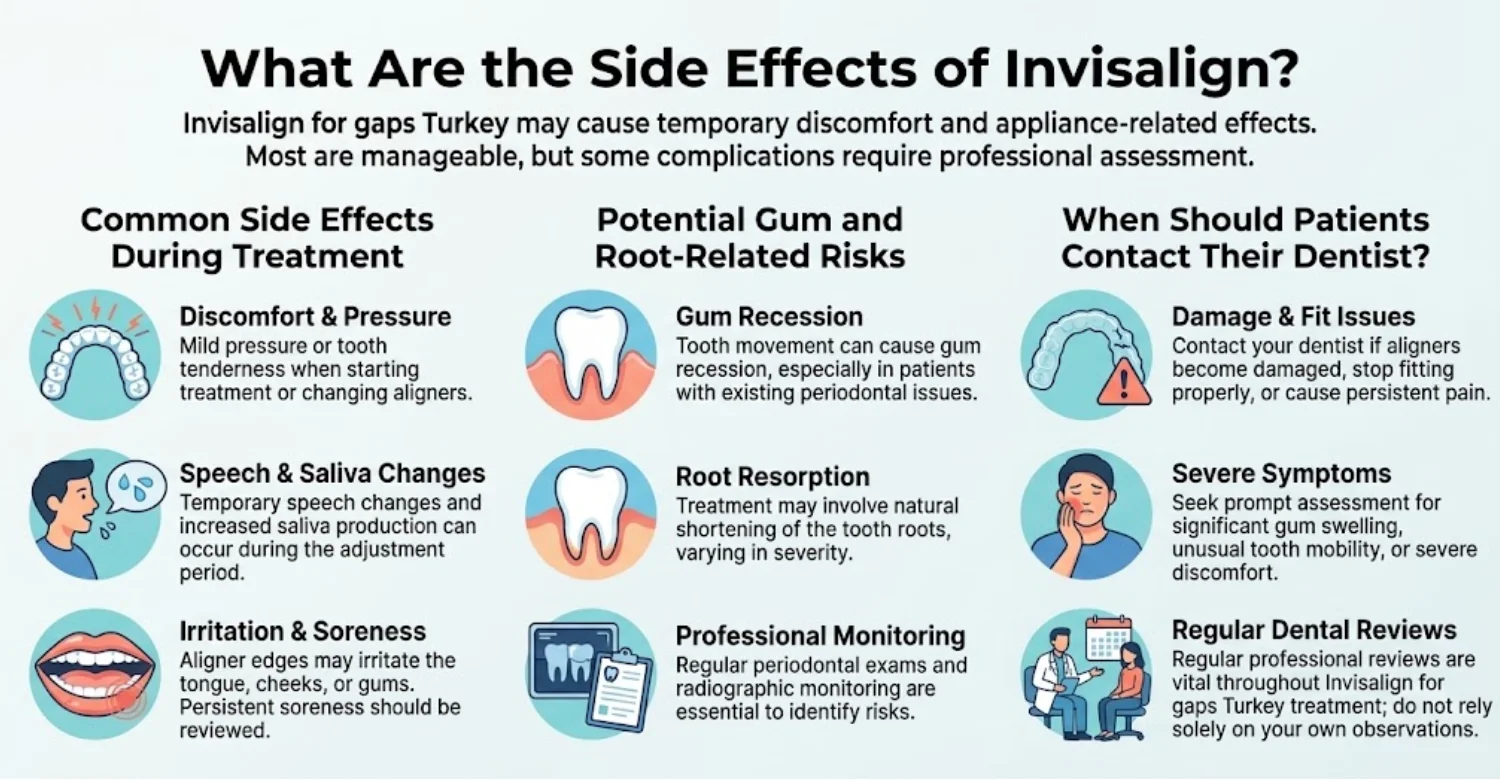
Invisalign for gaps Turkey may cause temporary discomfort and appliance-related effects. Most are manageable, but some complications require professional assessment.
Common Side Effects During Treatment
Patients may experience mild pressure or tooth tenderness when starting treatment or changing aligners. Temporary speech changes and increased saliva production can also occur during the adjustment period.
Aligner edges may occasionally irritate the tongue, cheeks, or gums. Persistent soreness, mouth ulcers, or poorly fitting aligners should be reviewed by the treating dentist.
Potential Gum and Root-Related Risks
Orthodontic movement carries potential risks, including gum recession and root resorption. Gum recession may be more likely in patients with existing periodontal problems or limited supporting tissues. Root resorption involves shortening of the tooth roots during orthodontic treatment. Its severity varies and may require monitoring or treatment adjustments.
A periodontal examination and appropriate radiographic monitoring help the dentist evaluate potential risks and determine whether treatment remains suitable.
When Should Patients Contact Their Dentist?
Contact the treating dentist if aligners become damaged, stop fitting properly, or cause persistent pain. Significant gum swelling, unusual tooth mobility, or severe discomfort also requires prompt assessment.
Regular professional reviews are important throughout Invisalign for gaps Turkey treatment. Patients should not rely solely on their own observations to monitor tooth movement or identify complications.
Ready to transform your smile?
Talk to our team and get a personal FREE treatment plan.
Pain Relief and Medical Tips During Invisalign Treatment
Managing temporary discomfort during Invisalign for gaps Turkey involves appropriate appliance care and professional guidance.
How to Manage Discomfort When Changing Aligners
Mild pressure after changing aligners is generally temporary. Follow the prescribed replacement schedule and avoid changing trays earlier without approval. A soft toothbrush and gentle oral hygiene routine may improve comfort. If discomfort becomes severe or persists, contact your dentist for assessment.
How to Clean and Maintain Invisalign Aligners
Clean aligners regularly according to the manufacturer's instructions.
Rinse them when removing them.
Clean using an appropriate soft brush.
Avoid hot water that could distort their shape.
Store them in their protective case.
Never leave them exposed unnecessarily.
Wash your hands before handling them.
Proper cleaning helps reduce plaque accumulation and unpleasant odours.
Foods and Drinks to Avoid While Wearing Aligners
Remove aligners before eating or drinking anything except plain water. Hot drinks can distort the appliance. Sugary or acidic drinks can become trapped around teeth. Brush your teeth before reinserting aligners whenever possible. Avoid chewing food while wearing the appliances.
How to Maintain Healthy Gums During Treatment
Good oral hygiene helps protect teeth and supporting tissues. Brush twice daily using appropriate brushing techniques. Clean between teeth every day. Remove aligners before brushing and flossing. Attend recommended dental and periodontal reviews throughout treatment.
Can Gaps Reopen After Invisalign Treatment?
Gaps corrected through Invisalign for gaps Turkey can reopen without appropriate retention.
Why Do Teeth Move After Orthodontic Treatment?
Teeth naturally respond to forces from surrounding tissues, muscles, and biting habits. Following orthodontic movement, supporting tissues need time to adapt. Some patients also have anatomical or periodontal factors increasing relapse risk. Without retention, previously corrected spaces may gradually return.
How Do Retainers Help Maintain Gap Closure?
Retainers maintain the positions achieved through orthodontic treatment. They may be removable or fixed, depending on clinical requirements. Patients should follow their dentist's instructions regarding wearing schedules and replacement. Invisalign for gaps Turkey should include a clear retention strategy before treatment begins.
Tips for Patients Considering Invisalign in Turkey
Before choosing Invisalign for gaps Turkey, patients should consider clinical supervision, treatment costs, and long-term follow-up arrangements.
Choosing a Qualified Invisalign Provider
Look for a provider with appropriate clinical qualifications and experience in orthodontic treatment. The clinic should explain your diagnosis, show how digital treatment planning will be used, and provide a clear estimate.
Before starting, ask the treating dentist:
What is causing my dental gaps?
Are my gums and supporting tissues healthy?
Is Invisalign suitable for my bite?
How long might treatment take?
Are refinements included in the estimate?
How will progress be monitored?
What happens if teeth do not follow the treatment plan?
Are retainers included, and what retention plan will I need?
Preparing for Treatment and Travel to Turkey
Prepare recent dental records, relevant medical information, and previous X-rays if available. The dentist may request additional examinations or imaging when clinically necessary.
Before travelling, confirm the expected appointment schedule, treatment costs, aligner arrangements, and any required visits. Invisalign for gaps Turkey involves ongoing orthodontic care, so patients should understand the treatment process rather than expect to complete everything during one visit.
Arranging Follow-Up After Returning Home
Discuss follow-up arrangements before travelling. Clarify whether progress reviews require clinic visits or approved remote monitoring. Ask how damaged aligners, unexpected problems, and additional refinements will be managed.
Patients should also confirm how retainers will be supplied and monitored after treatment. Do not delay necessary dental assessment while waiting for an international appointment.
Why Vitrin Clinic Is Among the Top 1% of Invisalign Providers in EMEA
When you choose Invisalign treatment at Vitrin Clinic, you’re choosing a team whose results are recognized at the highest level. Dr. Sami Assani has received the Invisalign Apex Award for 2026–2027. The award is given to the top 1% of Invisalign providers across Europe, the Middle East, and Africa.
Awards are only part of the story. What matters more is the expertise, care, and trust behind each smile we help create. That experience shows in three milestones:
Invisalign Apex Award: places Dr. Sami among the top 1% of Invisalign providers in the EMEA region.
Blue Diamond Provider status: Invisalign’s highest provider tier. Only 75 doctors across EMEA hold it, and just 32 of them are in Türkiye.
500+ Invisalign cases: hundreds of completed patient journeys and confident new smiles.
For our patients, this means a treatment plan designed by a doctor with extensive Invisalign experience. Each case benefits from the lessons of hundreds before it, and the care is consistent and precise from your first scan to your final aligner.
These awards reflect the standards we hold ourselves to every day: clinical excellence, continuous innovation, and genuine patient care.
.jpg)
Your Invisalign Journey at Vitrin Clinic: Closing Teeth Gaps in Turkey
At Vitrin Clinic, every Invisalign journey starts with understanding the patient's dental concerns and smile goals. Our team focuses on identifying the cause of spacing and developing a treatment plan based on individual orthodontic needs.
Personalised Orthodontic Evaluation and Digital Planning
Our dental team evaluates tooth positions, gum health, oral tissues, bite alignment, and jaw relationships before recommending Invisalign. Digital scans help record tooth positions and support personalised treatment planning. Dental X-rays or additional imaging may be recommended when clinically appropriate.
The proposed Invisalign movements are reviewed according to the patient's dental condition, not appearance alone. Patients also receive an explanation of the expected treatment stages, appointment requirements, and estimated costs.
Support for International Invisalign Patients
We help international patients organise their treatment journey, from the initial consultation and appointment scheduling to their visits in Istanbul. Our coordinators explain the next steps and help patients understand the expected treatment timeline and travel arrangements.
How Vitrin Clinic Supports Your Invisalign Treatment Journey
At Vitrin Clinic, we coordinate Invisalign treatment around each patient's orthodontic needs and travel arrangements. From the initial consultation to retention guidance, our team helps international patients understand every stage of their treatment journey.
Initial Consultation and Digital Treatment Planning
Our dental team reviews the patient's concerns, available dental records, tooth positions, gum health, and bite alignment. Digital scans support personalised treatment planning, while X-rays may be recommended when clinically appropriate.
For Invisalign for gaps Turkey, the proposed movements must reflect individual clinical findings. Patients receive information about expected treatment stages, estimated costs, appointment requirements, and possible refinements before proceeding.
Treatment Coordination and Progress Monitoring
Our international patient coordinators help organise appointments and explain the practical arrangements for treatment in Istanbul. During treatment, the dentist monitors aligner fit, tooth movement, and bite relationships. Additional refinements may be recommended when necessary.
Retention Guidance and International Follow-Up
After active treatment, patients receive guidance about retainers, wearing instructions, and long-term maintenance. We also explain follow-up arrangements and how to contact our team with treatment-related questions after returning home.
Request your FREE Treatment Plan and let our team help you plan your Invisalign journey in Istanbul.
Ready to transform your smile?
Talk to our team and get a personal FREE treatment plan.
Conclusion: Invisalign for Gaps Turkey
Invisalign for gaps Turkey can provide an option for patients seeking orthodontic correction without fixed metal braces. However, successful treatment planning starts with identifying why dental spaces developed. Gum health, tooth proportions, root positions, and bite relationships influence suitability. Digital planning supports treatment decisions, while consistent aligner wear helps maintain progress. Patients should also consider refinements, follow-up arrangements, and long-term retention. At Vitrin Clinic, individual assessment guides treatment recommendations for international patients. A FREE Digital Treatment Plan can help patients understand potential options before travelling. Final recommendations follow clinical examination.
Reference
FAQs
Yes, Invisalign can close some large spaces between front teeth. However, suitability depends on the cause and complexity of the spacing. Tooth proportions, root positions, and periodontal support require assessment. Some cases need additional orthodontic procedures or alternative treatment approaches. For Invisalign for gaps Turkey, the dentist should evaluate whether closing the space would produce appropriate tooth positioning. A digital simulation can illustrate proposed movements, but it cannot guarantee the final result.
Dr. Sami Assani leads clear aligner treatment at Vitrin Clinic. He is an Invisalign Apex Award recipient (top 1% of providers in EMEA) and a Blue Diamond provider with 500+ completed Invisalign cases. He is known for precise digital planning and long-term, stable results.


