What are the dental crown procedure steps at Vitrin Clinic in Turkey?
Understanding the dental crown procedure steps helps you prepare for treatment, know what happens during each appointment, and make informed decisions.

Understanding the dental crown procedure steps helps you prepare for treatment, know what happens during each appointment, and make informed decisions. At Vitrin Clinic in Istanbul, treatment planning begins with examining your teeth, gums, bite, and individual dental needs. The process may involve tooth preparation, digital impressions, temporary protection, laboratory fabrication, and permanent crown placement. However, the exact sequence depends on your clinical condition and chosen restoration.
Key Takeaways
Treatment planning: Every crown procedure starts with an individual dental examination.
Tooth preparation: Damaged tissue is removed, and the tooth is shaped for restoration.
Digital impressions: Scans or traditional impressions guide crown fabrication.
Temporary crowns: Protect prepared teeth while permanent restorations are manufactured.
Material selection: Zirconia and E.max crowns offer different benefits.
Permanent placement: Fit, margins, contacts, and bite are checked before cementation.
Treatment duration: Appointments depend on case complexity and laboratory time.
Treatment costs: Material, additional procedures, and travel arrangements affect the total price.
Aftercare: Good oral hygiene and regular check-ups help maintain crowns.
Vitrin Clinic: International patients receive individualised treatment planning and journey coordination.
Ready to transform your smile?
Talk to our team and get a personal FREE treatment plan.
What Is a Dental Crown Procedure and Why Might You Need One?
A dental crown procedure restores a damaged tooth using a custom-made covering. The dental crown procedure steps depend on the tooth's condition, remaining structure, and restoration material.
How Does a Dental Crown Restore a Damaged or Weakened Tooth?
A dental crown covers the visible part of a weakened tooth. It restores its shape, size, appearance, and chewing function. The restoration also helps protect remaining tooth structure from further damage. A dentist must first confirm that enough healthy tooth structure remains for reliable support.
Which Dental Problems Can Require Crown Treatment?
A dentist may recommend a crown when a tooth has:
Extensive decay or a large existing filling.
Significant fractures or structural damage.
Severe wear from grinding or acid erosion.
A weakened structure following root canal treatment.
A previous crown requiring replacement.
A need for restoration above a dental implant.
A crown is not automatically necessary for every damaged tooth. Smaller restorations may preserve more natural tooth structure.
What Are Signs You Need a Crown?
Some signs suggest a tooth may need a crown, although only an examination can confirm it. Common signs include:
A large filling that is cracked, worn, or breaking down
Pain when biting or chewing on one tooth
A visible crack or a chipped cusp
A tooth that is badly worn or much shorter than the others
A back tooth that has had root canal treatment
An old crown that is loose, chipped, or has a dark edge
These signs can also have other causes, so the dentist checks the tooth before recommending a crown.
How Does a Dentist Decide Whether You Need a Crown or Another Restoration?
The decision depends on the amount of healthy teeth remaining. Your dentist examines cracks, decay, existing fillings, bite forces, and gum health. A filling may suit limited damage. An onlay may restore damaged cusps while preserving more tooth structure. A full crown may be appropriate when damage affects several surfaces. The dental crown procedure steps should only begin after confirming the restoration is clinically suitable.
What Is the Difference Between Tooth Crown Preparation and Crown Placement?
Tooth preparation shapes the natural tooth to accommodate the restoration. Crown placement secures the finished restoration onto the prepared tooth. Preparation usually happens before laboratory fabrication. Placement occurs after checking the permanent crown's fit, contacts, appearance, and bite.
.jpg)
.jpg)
.jpg)
How Does Vitrin Clinic Evaluate Your Teeth Before Starting Crown Treatment?
Vitrin Clinic reviews your oral health before recommending crowns. The dental crown procedure steps should follow a diagnosis, not simply a cosmetic preference.
What Happens During Your Initial Dental Examination at Vitrin Clinic?
The dentist reviews your dental concerns, medical history, and treatment expectations. The examination may include:
Checking visible tooth damage and existing restorations.
Examining gum condition and oral tissues.
Reviewing your bite and chewing function.
Identifying signs of infection or inflammation.
Discussing suitable restoration options.
Previous dental treatment and relevant medical conditions can influence planning.
How Does the Dentist Check Your Teeth, Gums, and Existing Restorations?
The dentist examines each proposed tooth and surrounding tissues. They check for decay, cracks, mobility, gum inflammation, and restoration defects. They also review the contact between upper and lower teeth. Healthy supporting tissues are important before permanent crown placement.
When Are Dental X-rays or Digital Scans Necessary?
Dental X-rays may reveal decay, infection, bone changes, or problems beneath existing restorations. Their use depends on clinical findings and diagnostic needs. Digital scans capture tooth surfaces and bite relationships. They can support treatment planning and crown design. Not every patient needs every imaging method.
How Does Vitrin Determine Which Teeth Require Crowns?
Vitrin's dental team evaluates each tooth individually. A crown may be appropriate for one severely damaged tooth but unnecessary for a neighbouring tooth. The dental crown procedure steps are planned according to the condition of each tooth. This helps avoid treating healthy teeth without a clear clinical reason.
Can You Receive a Preliminary Treatment Plan Before Travelling to Turkey?
Yes, you can request a preliminary review before travelling. You may share clear photographs, previous X-rays, and relevant dental records. These materials help the team understand your concerns. However, photographs cannot confirm every diagnosis. The final plan and quotation require an in-person examination.
Why Is an Individualized Crown Treatment Plan Important?
Every tooth has different structural and functional requirements. The dentist considers tooth location, remaining enamel, bite pressure, gum health, and appearance. A personalized plan also identifies whether additional treatment is necessary. It should explain proposed procedures, alternatives, estimated costs, and expected appointments.
What Happens During the First Step of the Dental Crown Procedure?
The first clinical stage involves preparing the tooth for its restoration. The dental crown procedure steps begin with protecting the tooth and creating suitable space.
Does the Dentist Use Local Anesthesia Before Tooth Preparation?
Local anesthesia is commonly used during tooth preparation. It numbs the treatment area and reduces discomfort. The dentist checks whether the area is adequately numb before proceeding. Tell the team about previous reactions, allergies, or relevant medical conditions.
How Does the Dentist Remove Damaged Tooth Structure?
The dentist removes decay and unsuitable weakened tissue when necessary. They shape the remaining tooth using specialised dental instruments. The aim is to create a stable foundation for the crown. Healthy tooth structure should be preserved whenever clinically possible.
How Much Natural Tooth Structure Must Be Removed?
The amount depends on the crown material, tooth condition, and required restoration thickness. The dentist must create sufficient space without unnecessary reduction. Existing damage may already have removed some tooth structure. Preparation should therefore be individualised rather than based on one fixed measurement.
How Does the Dentist Shape the Tooth for Crown Placement?
The dentist shapes the tooth to provide space and retention for the restoration. The prepared surface needs suitable margins and a clear path for crown placement. These features help the laboratory design an accurately fitting crown. The dentist also considers the tooth's relationship with neighbouring teeth.
Can Existing Fillings or Root Canal Treatment Change Tooth Preparation?
Yes, previous treatment can affect the preparation. Large fillings may leave less natural structure available for support. Root-treated teeth may require additional protection, depending on their remaining structure. A core build-up may be needed before crown preparation. Root canal treatment is not automatically required before every crown.
How Does Vitrin Check the Prepared Tooth Before the Next Step?
The dentist checks the prepared tooth's shape, margins, and remaining structure. They also review the surrounding gums and neighbouring contacts. The dental crown procedure steps move forward only when the preparation is suitable for impression-taking. Any necessary build-up or additional treatment should be addressed first.
How Long Does the First Step of a Crown Take?
The first crown appointment often takes around one to two hours for a single tooth. This visit usually includes:
Numbing the area
Removing decay and shaping the tooth
Taking a digital scan or impression
Fitting a temporary crown
It takes longer when several teeth are treated or when a core build-up is needed. Your dentist confirms the expected time before treatment.
How Does Vitrin Clinic Make Dental Crown Impressions?
Impressions record the prepared tooth and surrounding structures for crown fabrication. The dental crown procedure steps require accurate information about tooth shape and bite relationships.
How Are Traditional Dental Crown Impressions Taken?
Traditional impressions use a dental tray and impression material. The material records the prepared tooth and nearby teeth. Once set, the dentist removes the tray and checks the impression. The record is then sent to the dental laboratory.
How Does Digital Intraoral Scanning Capture Tooth Details?
A handheld scanner captures images of the teeth and surrounding surfaces. Software combines these images into a digital model. The dentist can review the preparation and neighbouring teeth on screen. Digital scanning may also record the bite relationship.
What Is the Difference Between Digital Scanning and Traditional Impressions?
Feature | Digital scanning | Traditional impressions |
Recording method | Optical scanner | Impression material |
Patient experience | No impression tray | Tray placed in mouth |
Record format | Digital file | Physical mould |
Laboratory transfer | Electronic | Physical delivery |
How Does Vitrin Use Digital Scans to Coordinate Crown Fabrication?
Digital records can be shared with the dental laboratory. The technician uses them to design the restoration. The dentist communicates the required material, shade, shape, and functional details. This coordination helps align laboratory work with the clinical plan.
Can Digital Scanning Help Improve Crown Fit and Accuracy?
Digital scanning can capture detailed surface information. It may help identify missing areas in a scan before laboratory production. However, the final fit also depends on preparation quality, scanning technique, laboratory work, and clinical checks. Digital equipment does not guarantee a perfect result.
Why Does Vitrin Clinic Place a Temporary Dental Crown?
A temporary crown protects the prepared tooth while the permanent restoration is made. The dental crown procedure steps may include temporary coverage between appointments.
How Is a Temporary Dental Crown Made and Fitted?
The dentist may create a temporary crown directly or use a prefabricated option. They adjust its shape and check its contact with neighbouring teeth. Temporary cement usually holds it in place. The dentist checks comfort and bite before you leave.
How Does a Temporary Crown Protect the Prepared Tooth?
A temporary crown covers exposed prepared surfaces. It helps reduce sensitivity and protects the tooth during daily activities. It also helps maintain spacing and appearance. However, temporary materials are less durable than permanent restorations.
How Long Do You Usually Wear a Temporary Crown?
The duration depends on laboratory production and appointment scheduling. Some patients wear temporary crowns for several days. Others may need them longer. Follow the dentist's instructions and attend the permanent fitting appointment as arranged.
Can You Eat Normally With a Temporary Dental Crown?
You should avoid putting excessive pressure on a temporary crown. Choose softer foods and chew on the opposite side when possible. Avoid sticky sweets, hard nuts, and chewing ice. These foods may loosen or damage the temporary restoration.
What Should You Do If Your Temporary Crown Falls Out?
Contact your dental clinic promptly for advice. Keep the crown clean and store it safely. Do not use household glue or attempt permanent recementation. Avoid chewing on the exposed tooth until a dentist reviews it.
Does Tooth Sensitivity Occur While Wearing a Temporary Crown?
Mild sensitivity can occur after preparation. The exposed tooth may react to temperature or pressure. Avoid extreme temperatures and follow your dentist's advice. Persistent, worsening, or spontaneous pain requires dental review.
How Does Vitrin Choose and Manufacture Your Permanent Dental Crown?
The permanent crown is selected according to tooth condition, function, and appearance. The dental crown procedure steps include choosing a suitable material and coordinating its design.
Which Dental Crown Material Is Suitable for Your Tooth?
There is no single material that suits every tooth. The dentist considers strength, appearance, available space, bite forces, and allergies. Your budget and treatment goals also matter. Material selection should follow clinical recommendations rather than price alone.
When Might Zirconia Crowns Be Recommended?
Zirconia crowns are ceramic restorations known for their strength. They may suit teeth exposed to substantial chewing forces. Different zirconia formulations have different optical and mechanical properties. The dentist selects the type according to the tooth's position and clinical requirements.
When Might E-max or Other Glass-Ceramic Crowns Be Suitable?
Lithium disilicate glass-ceramic crowns can provide natural-looking translucency. They may suit selected front teeth and some back teeth. Their suitability depends on restoration thickness, bite pressure, and preparation design. The dentist should confirm whether the material can withstand the patient's functional demands.
When Are Porcelain-Fused-to-Metal Crowns Considered?
Porcelain-fused-to-metal crowns combine a metal substructure with an outer porcelain layer. They may be considered when strength and appearance are both important. Porcelain can chip over time, exposing the underlying metal. The dentist should explain these limitations before treatment.
How Does Vitrin Coordinate Your Crown Design With the Dental Laboratory?
Vitrin coordinates clinical records and restoration requirements with the laboratory. The information may include digital scans, shade details, preparation design, and bite records. The laboratory uses these details to manufacture the crown. The dentist remains responsible for checking the finished restoration.
How Are Crown Shape, Colour, and Natural Tooth Anatomy Considered?
The dentist considers neighbouring teeth, facial features, tooth proportions, and the patient's preferences. Shade selection should account for lighting and surrounding tooth colour. The laboratory also recreates natural contours and surface details. Functional anatomy matters because the crown must work during chewing.
How Long Does Permanent Crown Fabrication Usually Take?
Laboratory crowns commonly require more than one appointment. Production time depends on the material, laboratory workload, and case complexity. Some clinics offer selected same-day restorations using in-house milling. Not every tooth or case is suitable for same-day treatment.
Can You Preview Your Expected Smile Before Final Crown Placement?
A digital preview or temporary mock-up may help discuss the proposed appearance. It can illustrate possible changes in tooth shape and proportions. However, a preview is not a guarantee of the final result. The finished appearance depends on clinical factors and material limitations.
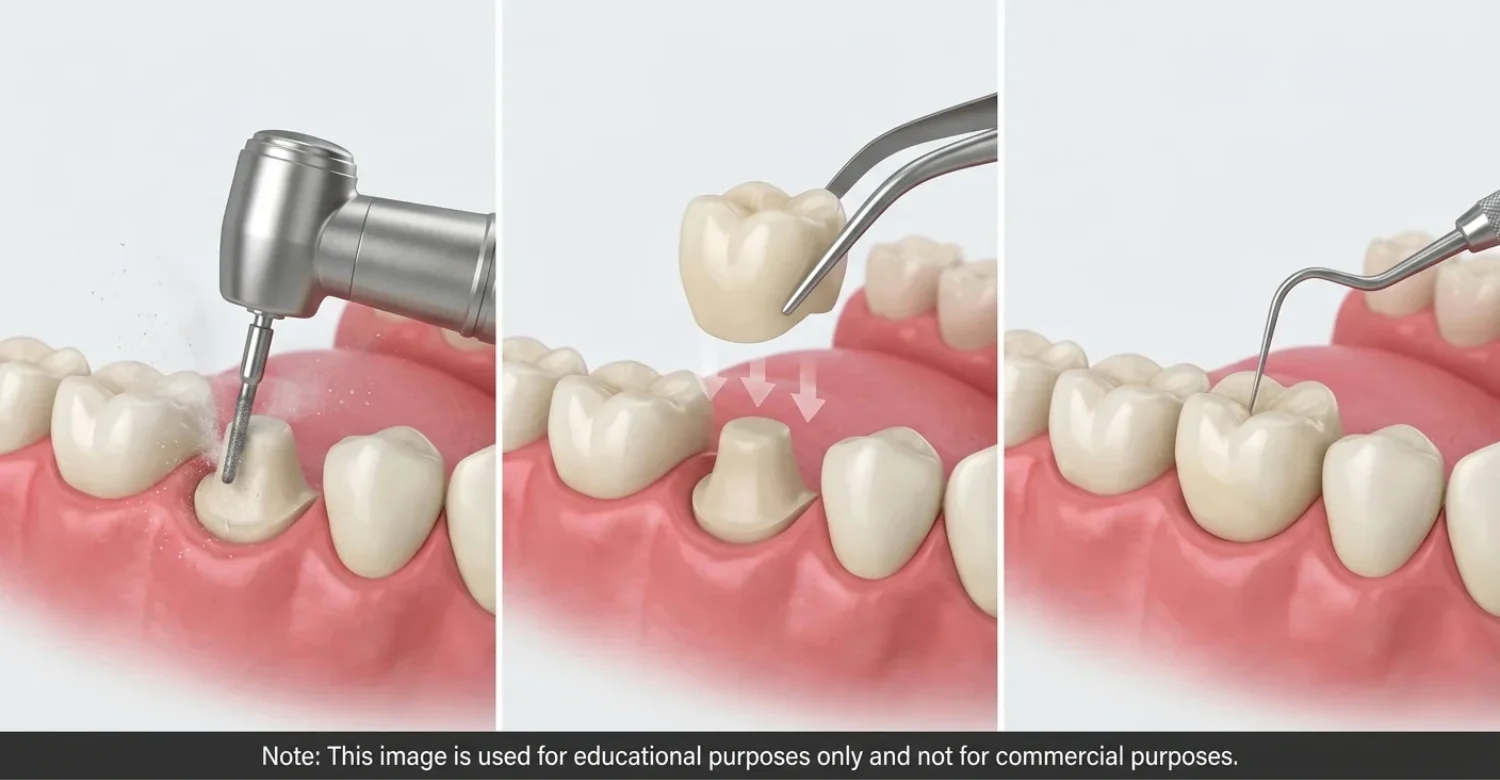
What Happens During Permanent Dental Crown Placement at Vitrin Clinic?
Permanent placement involves removing the temporary crown and checking the final restoration. The dental crown procedure steps include fit, bite, contact, and cementation checks.
How Does the Dentist Remove Your Temporary Crown?
The dentist carefully removes the temporary restoration and temporary cement. They clean the prepared tooth and inspect its surface. The dentist checks for damage, decay, or changes requiring attention before fitting the permanent crown.
How Painful Is It to Remove a Crown?
Removing a temporary crown is usually not painful, because it is held with temporary cement. You may feel some pressure or mild sensitivity once the tooth is uncovered. Removing a permanent crown takes more force, so local anaesthesia is often used. You may feel pressure or vibration, but you should not feel sharp pain.
How Does the Dentist Check the Permanent Crown's Fit?
The dentist places the crown over the prepared tooth without final cementation. They check whether it seats fully and follow the preparation margins. They also review its shape and appearance. Any issue should be addressed before permanent fixation.
How Are Crown Margins and Contact Points Examined?
Crown margins are the edges where the restoration meets the prepared tooth. The dentist checks these edges for gaps or overhangs. Contact points are checked to ensure appropriate spacing between neighbouring teeth. Poor contacts may trap food or irritate the gums.
How Does the Dentist Check Your Bite Before Cementation?
The dentist checks how the crown contacts opposing teeth. Articulating paper may show where the teeth meet during biting. The dentist may ask you to close and move your jaw. Any high contact should be evaluated before final cementation.
How Is the Permanent Dental Crown Cemented or Bonded?
The dentist prepares the tooth and crown according to the selected cement system. They apply the appropriate dental cement or bonding material. The crown is seated in its planned position. Excess cement is removed, and the margins are checked.
Do Permanent Crowns Come Off Easily?
No. A properly fitted and cemented crown is designed to stay firmly in place. A crown may loosen if:
The cement breaks down over time
Decay develops under the crown edges
Too little tooth remains to hold it
Sticky foods or grinding put repeated strain on it
If a crown feels loose, contact your dentist promptly and avoid chewing on it.
What Final Checks Does Vitrin Perform Before Completing Crown Placement?
The dentist reviews the crown's fit, margins, contacts, and bite. They also check the appearance and gum response. The patient should be able to close comfortably. The dentist provides instructions for cleaning and follow-up.
What Happens If Your Permanent Crown Needs Adjustment?
Minor adjustments may be possible when the crown has a high contact or small contour issue. The dentist checks the cause before modifying the restoration. A poorly fitting crown may require laboratory correction or replacement. Adjustments should preserve the crown's strength and fit.
Does the Dental Crown Procedure Hurt and What Can You Expect Afterwards?
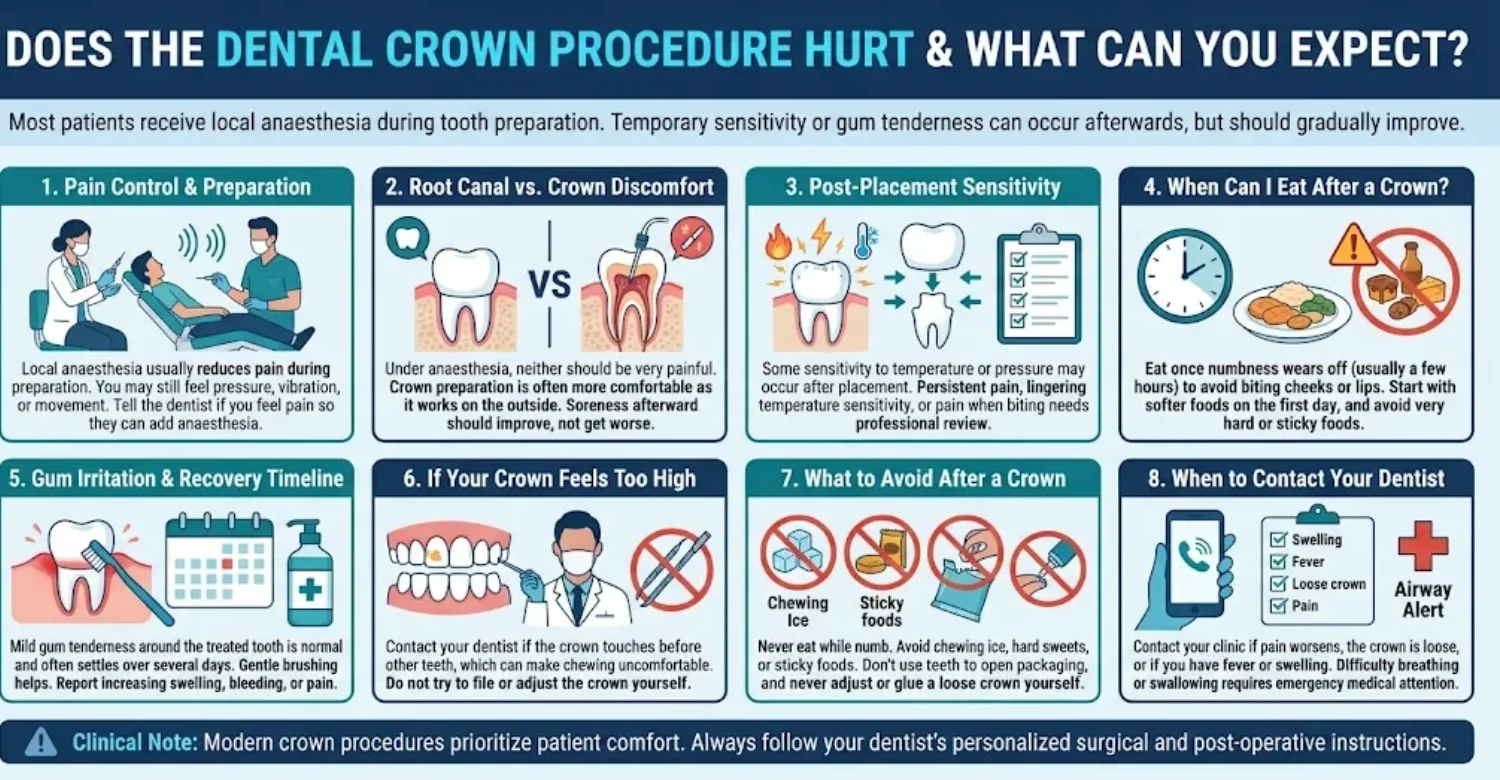
Most patients receive local anaesthesia during tooth preparation. After treatment, temporary sensitivity or gum tenderness can occur. The dental crown procedure steps should include clear aftercare instructions and access to clinical advice.
Will You Feel Pain During Tooth Crown Preparation?
Local anaesthesia usually reduces pain during preparation. You may still notice pressure, vibration, or movement. Tell the dentist if you feel pain. They can pause and check whether additional anaesthesia is needed.
What Hurts More, a Root Canal or a Crown?
Both are usually done under local anaesthesia, so neither should be very painful during treatment. Crown preparation is often more comfortable, because the dentist works on the outside of the tooth. A root canal treats the inside of the tooth, which may already be painful from infection or inflammation. Afterwards, a root-treated tooth may feel sore for a few days, while a crowned tooth may feel mildly sensitive. Both should improve rather than get worse.
Is Tooth Sensitivity Normal After Permanent Crown Placement?
Some sensitivity to temperature or pressure may occur after placement. It should generally improve rather than become progressively worse. Persistent pain, lingering temperature sensitivity, or pain when biting needs review. These symptoms can have several causes and require examination.
How Soon After Crown Can I Eat?
You can usually eat once the numbness has worn off, which often takes a few hours. Eating while numb can make you bite your cheek, lip, or tongue. After a permanent crown:
Start with softer foods for the first day.
Avoid very hard or sticky foods at first.
Chew on the other side if the tooth feels tender.
With a temporary crown, keep to softer foods until the permanent crown is fitted. Follow your dentist's advice, as some cements need a short time to set fully.
How Long Can Gum Irritation Last After Crown Treatment?
Mild gum tenderness may occur around the treated tooth. It often settles over several days. Gentle brushing and careful cleaning help maintain the area. Increasing swelling, bleeding, or persistent discomfort should be reported to a dentist.
What Should You Do If Your Crown Feels Too High?
Contact your dentist if the crown touches before other teeth. A high contact can make chewing uncomfortable. Do not try to file or adjust the crown yourself. The dentist can examine your bite and determine whether adjustment is appropriate.
What Should You Not Do After Getting a Crown?
Some habits can damage a new crown or irritate the tooth. After getting a crown, avoid:
Eating before the numbness wears off
Chewing ice, hard sweets, or other very hard objects
Sticky foods, especially with a temporary crown
Using your teeth to open packaging
Adjusting or gluing the crown yourself
Skipping brushing and flossing around the crown
If you grind your teeth, ask your dentist whether you need a night guard.
When Should You Contact Vitrin Clinic About Post-Treatment Discomfort?
Contact Vitrin if pain worsens, your crown feels loose, or chewing becomes difficult. Report swelling, persistent bleeding, or a change in your bite. Severe facial swelling or fever needs urgent professional evaluation. Breathing or swallowing difficulties require emergency medical attention.
Ready to transform your smile?
Talk to our team and get a personal FREE treatment plan.
What Are the Benefits and Drawbacks of Dental Crown Treatment?
Dental crowns can restore damaged teeth, but they also have limitations. Your dentist should explain both before treatment.
What Are the Main Benefits of Dental Crowns?
They cover and protect weakened tooth structure.
They restore tooth shape and chewing surfaces.
They can improve the appearance of damaged teeth.
They may protect selected root-treated teeth.
They can restore teeth supporting certain dental bridges.
They are available in several materials.
What Are the Drawbacks of Dental Crowns?
Tooth preparation removes some natural tooth structure.
Some crowns may chip, crack, loosen, or wear.
The underlying tooth can still develop decay.
Gum irritation may occur around poorly fitting margins.
Treatment may require multiple appointments.
Additional treatment may increase the overall cost.
A crown does not make a tooth immune to future dental problems.
What Side Effects or Complications Can Occur After Crown Treatment?
Possible effects include temporary sensitivity, gum tenderness, and discomfort when biting. Less common complications include crown loosening, fracture, recurrent decay, or pulp inflammation. A crown may also require adjustment if its bite contact is incorrect. Persistent or worsening symptoms should not be ignored.
How Can You Relieve Mild Discomfort After Crown Placement?
Mild discomfort may improve with simple aftercare:
Choose softer foods temporarily.
Avoid very hot or cold foods if sensitive.
Brush gently around the treated tooth.
Keep the area clean without forcing floss.
Follow the dentist's instructions.
Arrange a review if symptoms persist.
Medication safety depends on the product formulation, label instructions, age, weight when relevant, health conditions, and other medicines. Ask a healthcare professional before using pain relief during pregnancy or breastfeeding. Seek individual advice with liver or kidney problems or heavy alcohol consumption. Suspected overdose requires immediate medical advice, even without symptoms. Home remedies cannot replace dental treatment.

.jpg)
Clinical Note: What Should Dentists Check Before and After Crown Placement?
A crown should be evaluated as part of the whole mouth, not as an isolated cap. Important checks include remaining tooth structure, gum health, restoration margins, contact points, and bite function. The dentist should also consider grinding, clenching, and the condition of opposing teeth. A crown that looks attractive still needs appropriate function and cleanable margins.
Dr. Rifat Alsaman's Opinion: Why Should Crown Treatment Begin With Diagnosis?
Dr. Rifat Alsaman, Head of the Medical Team at Vitrin Clinic, emphasises the importance of identifying the cause of tooth damage first. A crown may not solve untreated decay, infection, or gum disease. The dentist should establish whether the tooth can be restored and whether additional treatment is needed. Material selection and preparation should follow that clinical decision.
What Do We Notice Clinically During Crown Treatment?
Clinical findings can change the treatment plan. A tooth with extensive decay may need a core build-up before crown preparation. A root-treated tooth may require evaluation of its remaining structure. Gum inflammation may need attention before final impressions. Bite pressure can influence material selection and crown design. These details explain why treatment should not follow an identical template for every patient.
How Long Does the Complete Dental Crown Procedure Take at Vitrin Clinic?
The overall duration depends on the number of crowns, preparation needs, and laboratory workflow. The dental crown procedure steps may take several appointments or a shorter same-day pathway in selected cases.
How Many Appointments Are Needed to Complete Crown Treatment?
Traditional laboratory crowns commonly require at least two clinical appointments. The first usually includes examination, preparation, and impressions. The second includes temporary crown removal, fitting, and cementation. Additional appointments may be needed for complex cases or adjustments.
Can Vitrin Complete Dental Crown Treatment During One Visit?
Selected cases may qualify for same-day crown fabrication. This depends on available technology, tooth condition, and material suitability. Complex treatment or multiple crowns may require laboratory production and additional checks. Your dentist should confirm the realistic schedule before treatment.
What Determines the Time Between Tooth Preparation and Permanent Placement?
The interval depends on laboratory production and clinical requirements. The dentist may need additional records or adjustments. Temporary crowns protect prepared teeth during this period. Patients should not assume every crown can be completed within one day.
How Does Laboratory Coordination Affect Your Treatment Schedule?
The laboratory needs accurate records and clear instructions. The material and design affect production time. Additional design changes may extend the schedule. Early coordination helps the clinic plan appointments more realistically.
How Many Days Should International Patients Allow for Crown Treatment in Istanbul?
The required stay depends on the number of teeth and planned procedures. Laboratory crowns may require several working days. Allow additional time for clinical checks and unexpected adjustments. Confirm your itinerary with the clinic before booking flights.
How Much Does Dental Crown Treatment Cost at Vitrin Clinic in Turkey?
Dental crown prices vary by material, tooth condition, and number of restorations. Vitrin Clinic's published starting prices are $150 for zirconia, $180 for E.max, and $100 for porcelain-fused-to-metal crowns. The comparison below uses indicative guide prices, not guaranteed quotations.
UK
From 890
Crown type
Zirconia: 890–1,525
E.max: 1,270–2,030
Consultations & diagnostic scans often billed separately
Vitrin, Turkey
From $150
Crown type
Zirconia: From $150
E.max: From $180
Free consultation & scans included; completed in 5–7 days
US
From 1,000
Crown type
Zirconia: 1,000–2,500
E.max: 1,200–2,500
Consultations, X-rays & temporaries often billed separately
How Much Does a Dental Crown Cost at Vitrin Clinic?
Vitrin's published starting prices depend on the selected material. The final quotation depends on examination findings, crown quantity, and additional procedures.
E.max
Starting price per tooth: $180
Crown type
Starting price per tooth: $180
High-translucency lithium disilicate for front teeth
Trial fit shade & shape check before final bonding
Zirconia
Starting price per tooth: $150
Crown type
Starting price per tooth: $150
High-strength ceramic ideal for molars & bridges
Free online consultation & 3D scan included
Treatment Overview
Typical Istanbul timescale: 5–7 Days
Crown type
Zirconia: From $150 | E.max: From $180
Completed in 2 visits with Swiss & German materials
Same-day CEREC milling available from $200/unit
How Do Vitrin's Zirconia Crown Prices Compare With USA and UK Prices?
The comparison below shows the potential price difference between Vitrin's zirconia starting price and the listed overseas price ranges.
UK
Illustrative saving: Save 83.1%–90.2%
Country comparison
Price per zirconia crown: 890–1,525
Difference compared with Vitrin: 740–1,375
Illustrative saving: 83.1%–90.2%
Vitrin, Turkey
Price per zirconia crown: $150
Country comparison
Price per zirconia crown: $150
Difference compared with Vitrin: $0
Illustrative saving: 0% (Baseline reference)
US
Illustrative saving: Save 85%–94%
Country comparison
Price per zirconia crown: 1,000–2,500
Difference compared with Vitrin: 850–2,350
Illustrative saving: 85%–94%
How Do E.max Crown Prices Compare Between Vitrin, the USA, and the UK?
E.max crowns have different published price ranges across the three markets. The following figures illustrate the potential price differences.
UK
Illustrative saving: Save 85.8%–91.1%
Country comparison
Price per E.max crown: 1,270–2,030
Difference compared with Vitrin: 1,090–1,850
Illustrative saving: 85.8%–91.1%
Vitrin, Turkey
Price per E.max crown: $180
Country comparison
Price per E.max crown: $180
Difference compared with Vitrin: $0
Illustrative saving: 0% (Baseline reference)
US
Illustrative saving: Save 85%–92.8%
Country comparison
Price per E.max crown: 1,200–2,500
Difference compared with Vitrin: 1,020–2,320
Illustrative saving: 85%–92.8%
What Is Included in Vitrin Clinic's Dental Crown Treatment Quotation?
Ask whether the quotation includes examination, imaging, preparation, temporary crowns, laboratory work, fitting, and follow-up.
Exams & Diagnostic X-Rays
Indicative cost in USD: From 15*
Quotation component
Periapical X-ray: 15–25*
Standard clinical examination: 30–45*
Follow-up examination: 30–45*
Panoramic X-ray: 40–55*
Specialist examination: 40–60*
Crown Restorations
Indicative cost in USD: From $150
Quotation component
Zirconia crown: From $150
E.max crown: From $180
Per-unit pricing for full-strength or translucent crowns
Temporaries & Lab Work
Indicative cost in USD: From 50*
Quotation component
Additional laboratory work: 50–200*
Temporary restoration: 100–250*
Often bundled free in multi-crown treatment packages
Does Crown Material Affect the Final Treatment Price?
Yes. Zirconia and E.max have different material and laboratory costs. The tooth's position and design requirements can also affect pricing.
E.max
Vitrin starting price: $180
Material
Vitrin starting price: $180
Main pricing consideration: Ceramic material and laboratory fabrication
Lithium disilicate pressed or CAD/CAM milled for front teeth
Zirconia
Vitrin starting price: $150
Material
Vitrin starting price: $150
Main pricing consideration: Material specification and restoration design
Options include monolithic, multilayer & layered zirconia
Material & Lab Workflow
Standard Istanbul timeline: 5–7 Days
Material
Swiss & German ceramics selected tooth by tooth
Free consultation, 3D scan & trial fit included
Same-day CEREC milling available from $200/unit
Can Tooth Preparation or Additional Dental Procedures Increase the Cost?
Yes. Decay removal, core build-up, root canal treatment, or gum treatment may add costs. The dentist should explain these needs before treatment whenever possible.
Clinical Examinations
Indicative cost in USD: From 30
Possible additional procedure
Standard clinical examination: 30–45
Specialist examination: 40–60
Often waived or bundled into full treatment plans
Diagnostic Imaging & Scans
Indicative cost in USD: From 15
Possible additional procedure
Periapical X-ray: 15–25
Panoramic X-ray: 40–55
Regional CBCT: 55–75
Preparatory & Restorative
Indicative cost in USD: From $50
Possible additional procedure
Simple extraction: From $50
Root canal treatment: From $100
Temporary restoration: 100–250
How Does Vitrin Prepare an Individualised and Itemised Treatment Plan?
Vitrin reviews clinical findings and proposed restorations before preparing the treatment estimate. Ask for separate prices for each tooth and additional procedure.
Treatment plan detail | What to confirm |
Crown quantity | Exact number of teeth |
Crown material | Zirconia, E.max |
Tooth preparation | Which teeth require preparation |
Additional procedures | Root canal or core build-up if needed |
Laboratory work | Whether fabrication is included |
Temporary crowns | Whether temporary restorations are included |
Final fitting | Whether bite checks and adjustments are included |
Follow-up | Whether review appointments are included |
Are Digital Scanning, Temporary Crowns, and Laboratory Work Included?
Inclusions can vary by treatment plan. Request written confirmation for scanning, temporary restorations, laboratory fabrication, and adjustments.
Treatment component | What to confirm |
Digital scanning | Whether scanning is included |
Temporary crowns | Number of temporary restorations provided |
Laboratory fabrication | Material and laboratory fees |
Final crown fitting | Whether fitting is included |
Bite adjustments | Whether adjustments are included |
Follow-up | Whether post-treatment reviews are included |
How Can International Patients Understand the Full Cost Before Travelling?
Request a written estimate with treatment stages and exclusions. Share relevant records before travel, but expect confirmation after examination.
Accommodation & Follow-Up
Illustrative budget in USD: 40–150/ night
Travel expense
Accommodation per night: 40–150
Additional follow-up: 30–120
Typical 5–7 day clinical stay in Istanbul
Transfers & Local Transit
Illustrative budget in USD: From 10
Travel expense
Local transportation: 10–50
Airport transfers: 20–80*
VIP airport-hotel-clinic transfers often bundled in packages
Return Flights
Illustrative budget in USD: 150–600
Travel expense
Return flights: 150–600*
Booked separately after confirming treatment dates
Confirm included hotel nights & transfers before booking
How Much Could You Save by Choosing Vitrin Clinic?
Vitrin's published crown starting prices are lower than the comparison ranges shown for selected US and UK providers. The following table summarises the illustrative differences.
Zirconia Crown Savings
Illustrative saving per tooth: Save 83.1%–94%
Crown type
USA potential saving: 850–2,350 (85%–94%)
UK potential saving: 740–1,375 (83.1%–90.2%)
Based on Vitrin starting price from $150/tooth
Multi-Tooth & Travel Value
Combined treatment advantage: Up to 70%+ Net
Crown type
6 E.max front crowns: From $1,080 (vs. $7,620+ UK)
Consultations & 3D scans included free at Vitrin
Multi-unit restorations preserve net savings after flights
E.max Crown Savings
Illustrative saving per tooth: Save 85%–92.8%
Crown type
USA potential saving: 1,020–2,320 (85%–92.8%)
UK potential saving: 1,090–1,850 (85.8%–91.1%)
Based on Vitrin starting price from $180/tooth
How is the saving calculated?
Saving percentage = (Overseas price − Vitrin price) ÷ Overseas price × 100.
These are illustrative comparisons based on starting prices and estimated market ranges. They are not guaranteed savings. The final difference depends on equivalent materials, treatment requirements, package inclusions, and travel expenses.
Ready to transform your smile?
Talk to our team and get a personal FREE treatment plan.
How Does Vitrin Clinic Organise Your Dental Crown Treatment Journey?
Vitrin coordinates the clinical stages and practical arrangements for international patients. The dental crown procedure steps should be scheduled around examination findings and laboratory requirements.
How Do You Start Your Treatment Journey With Vitrin Clinic?
Contact Vitrin and explain your dental concerns. Share photographs and previous dental records when available. The team can guide you through the preliminary review and next steps.
What Should You Send Before Travelling to Istanbul?
Useful information includes:
Clear photographs of your teeth.
Recent dental X-rays, if available.
Previous treatment records.
A list of relevant medical conditions.
Details of medicines and allergies.
Your treatment goals and travel dates.
Send sensitive records through an appropriate secure channel.
How Does Vitrin Coordinate Your Initial Examination and Treatment Plan?
The team reviews the information available before your visit. The dentist then examines your teeth and gums in person. The proposed plan may change after clinical findings and imaging are reviewed.
What Happens During Your First Appointment at Vitrin?
The dentist discusses your concerns and examines your oral health. Imaging may be recommended when clinically indicated. The team explains suitable options, expected stages, and estimated costs.
How Are Tooth Preparation and Digital Scanning Scheduled?
Preparation and scanning are arranged after the dentist confirms the treatment plan. The sequence depends on the number of teeth and clinical complexity. Traditional impressions may be used when appropriate.
How Does Vitrin Coordinate Temporary Crowns and Laboratory Fabrication?
Temporary crowns may be fitted after preparation. The clinic coordinates the necessary records with the dental laboratory. The permanent restorations are then prepared for clinical fitting.
When Do You Return for Permanent Crown Placement?
You return when the permanent crowns are ready and the dentist confirms the appointment. The dentist checks fit, contacts, appearance, and bite. Any necessary correction should happen before final completion.
How Does Vitrin Help Coordinate Your Treatment and Travel Schedule?
The coordination team can help organise appointment timing and practical arrangements. Confirm the expected treatment duration before booking travel. Keep flexibility for additional checks or clinical changes.
What Follow-Up Support Should You Arrange After Returning Home?
Ask for treatment records, crown details, and aftercare instructions. Confirm whom to contact if discomfort or damage develops. Arrange local dental reviews when needed. Remote communication does not replace an examination when symptoms require one.
Why Choose Vitrin Clinic for Dental Crown Treatment in Turkey?
Choosing a clinic abroad requires more than comparing the price per crown. Review clinical planning, communication, materials, and follow-up arrangements.
How Does Vitrin Create Individualised Dental Crown Treatment Plans?
Vitrin's planning process considers each tooth separately. The dentist reviews structural damage, gum health, bite forces, and appearance. The proposed restoration should match the clinical findings.
How Does the Medical Team Evaluate Function Alongside Smile Appearance?
The team considers chewing, tooth contacts, and jaw movement alongside appearance. Crown shape and height can affect how teeth meet. Functional checks are therefore important before final placement.
How Does Digital Scanning Support Vitrin's Crown Treatment Workflow?
Digital scans can record tooth surfaces and bite information. They may support communication with the laboratory and crown design. The dentist still needs to verify the final restoration clinically.
How Does Vitrin Coordinate Communication Between Dentists and Dental Laboratories?
The clinic shares relevant clinical records and restoration requirements with the laboratory. The dentist reviews the completed crown before placement. Clear communication helps address design or fit concerns.
What Support Can International Patients Expect From Vitrin's Coordinators?
Coordinators can help patients understand appointments and practical arrangements. They can also assist with communication during the treatment journey. Clinical decisions remain the responsibility of the dental team.
How Does Vitrin Approach Treatment Planning and Aftercare?
Vitrin's approach includes examination, treatment planning, crown placement, and aftercare guidance. Patients should receive clear instructions and know how to request follow-up. Any new symptoms should be reviewed appropriately.
What Should You Check Before Choosing a Dental Clinic Abroad?
Before committing, check:
The dentist's qualifications and relevant experience.
Which crown materials are offered.
Whether the treatment plan is itemised.
What laboratory and temporary crown costs include.
How bite and fit are checked.
What happens if adjustments are needed.
How follow-up is arranged after returning home.
.jpg)
.jpg)
.jpg)
How Can You Maintain Your Dental Crowns After Treatment?
Good oral hygiene and regular dental reviews help protect crowned teeth. The dental crown procedure steps do not end when the restoration is fitted. Long-term maintenance remains important.
How Should You Brush and Floss Around Dental Crowns?
Brush twice daily with fluoride toothpaste and a soft-bristled toothbrush. Clean gently around the gumline and crown margins. Floss daily without snapping the floss against the gums. Your dentist may recommend additional cleaning tools.
Which Foods and Habits Can Damage Dental Crowns?
Avoid chewing ice and biting very hard objects. Sticky foods may loosen some restorations, especially temporary crowns. Do not use your teeth to open packaging. Limit habits that place excessive pressure on the crown.
How Can You Protect Crowns If You Grind Your Teeth?
Tell your dentist if you grind or clench your teeth. They may recommend a custom night guard. A guard can reduce direct contact forces during sleep. It does not replace regular crown checks.
How Often Should You Have Your Dental Crowns Examined?
Attend routine dental examinations at intervals recommended for your oral health. Your dentist checks the crown, margins, gums, and surrounding teeth. Earlier review may be necessary if pain, looseness, or damage develops.
How Long Can Dental Crowns Last With Proper Maintenance?
Many crowns last around five to fifteen years, although some last longer. Lifespan depends on material, bite forces, hygiene, and clinical conditions. No crown has a guaranteed lifespan.
When Might a Dental Crown Need Repair or Replacement?
A crown may need attention if it cracks, loosens, or develops poor margins. Decay can also affect the underlying tooth. Persistent discomfort or changes in bite require examination. Replacement depends on the cause and remaining tooth condition.
What Should You Remember Before Starting Your Dental Crown Procedure at Vitrin Clinic?
Successful crown treatment depends on diagnosis, suitable preparation, accurate fabrication, and careful placement. The dental crown procedure steps should be explained before you approve treatment.
Why Is a Proper Dental Examination Essential Before Crown Preparation?
An examination identifies decay, cracks, gum problems, and other conditions. It helps determine whether a crown is suitable. Treating the underlying problem first can prevent avoidable complications.
How Can You Prepare for Each Stage of Crown Treatment?
Bring relevant dental records and medical information. Tell the team about allergies and medicines. Follow appointment instructions and ask about temporary crown care. Plan enough time for fitting and follow-up.
What Questions Should You Ask Before Approving Your Treatment Plan?
Ask your dentist:
Why does this tooth need a crown?
Are less invasive options suitable?
Which material is recommended, and why?
How much tooth structure will be removed?
Are additional procedures necessary?
What does the quotation include?
How will the bite and crown fit be checked?
What follow-up is available after treatment?
How Can Vitrin Help You Take the Next Step Towards Your New Smile?
Vitrin can review your available dental information and explain the next clinical steps. An in-person examination confirms whether crowns are appropriate. Request an individualised treatment plan before making travel arrangements.
Ready to transform your smile?
Talk to our team and get a personal FREE treatment plan.
Are You Ready to Begin Your Dental Crown Procedure StepsJourney With Vitrin Clinic?
A dental crown should restore a tooth for the right clinical reason. Understanding the procedure helps you ask informed questions and prepare for each stage. At Vitrin Clinic, the process begins with an individual examination and a discussion of suitable options. Request your FREE Treatment Plan to understand the proposed treatment, estimated costs, and appointment schedule.
Reference

Medically reviewed by
Dr. Rifat AlsamanDr. Rifat Alsaman has more than 5 years of clinical experience in dentistry and currently serves as the Head of the Medical Team at Vitrin Clinic. He is dedicated to providing exceptional patient care, overseeing treatment planning, and ensuring the highest clinical standards across the team. His expertise, attention to detail, and commitment to continuous professional development have helped countless patients achieve healthier, more confident smiles.
More in Dental Treatments
View all 17 min readWill I Be Awake During Dental Implant Surgery and What Anesthesia Is Used?Dental implant anesthesia is what keeps implant surgery comfortable, and for most patients it means staying awake while the treatment area is completely numb.
 13 min readIs Replacing Failed Dental Implant Treatment Possible?Yes, replacing failed dental implant treatment is possible in most cases. The failed implant is removed, the bone is allowed to heal or is rebuilt, and a new implant is placed once the site is ready. Studies show that most replacement implants survive well when the cause of the first failure is found and treated.
 22 min readCan People With Diabetes Have Dental Implants Safely?Dental implants with diabetes are possible and often successful when blood sugar is well managed. Diabetes changes how your gums, bone, and immune system respond to surgery.
 13 min readWhat Happens If There Is Not Enough Space for Dental Implant Placement?If there is not enough space for dental implant placement, your dentist will usually create or adjust the space first, choose a narrower implant or suggest another way to replace the tooth. A cramped gap does not always mean an implant is impossible. It means the space, roots and bone need careful planning before surgery.
Still have a question?
Our patient coordinators answer every day of the week: before, during and long after your treatment.