Can People With Diabetes Have Dental Implants Safely?
Dental implants with diabetes are possible and often successful when blood sugar is well managed. Diabetes changes how your gums, bone, and immune system respond to surgery.

Dental implants with diabetes are possible and often successful when blood sugar is well managed. Diabetes changes how your gums, bone, and immune system respond to surgery. It does not automatically rule you out. This patient guide explains how diabetes and implants interact, which tests matter, and how to prepare. It also covers healing, warning signs, alternatives, and assessment at Vitrin Clinic for patients travelling to Istanbul.
Key Takeaways
A dental implant is a small titanium or zirconia post placed in the jawbone to replace a missing tooth root. Dental implants with diabetes support a crown, bridge, or denture once blood sugar is stable.
Options include single implants, implant-supported bridges, and removable or fixed full-arch dentures on several implants.
Gums usually settle within one to two weeks. Bone fusion often takes three to six months and may take longer when sugar control is poor.
Price depends on the number of implants, bone grafting, scans, and crown material. Treatment in Turkey is often more affordable than in many European countries. A final price follows a personal assessment.
.jpg)
.jpg)
.jpg)
Ready to transform your smile?
Talk to our team and get a FREE treatment plan.
Are Dental Implants With Diabetes Safe?
Yes. Dental implants with diabetes can be a safe, long-lasting option for many patients. Research shows that people with well-controlled diabetes have implant survival rates close to those of people without diabetes. Your dentist looks at your general health, your blood sugar history, and the condition of your mouth. Safety comes from careful planning, not from the diagnosis itself.
Does Diabetes Prevent Dental Implants?
No, diabetes does not prevent dental implants on its own. Today, it is viewed as a risk factor that can be managed. What matters most is how stable your blood sugar has been over recent months. Poor control raises the chance of slow healing and infection. In that case, your dentist may delay surgery until control improves. Delay is a safety step, not a refusal of treatment.
The Difference Between Type 1 and Type 2 Diabetes in Patient Eligibility
Type 1 diabetes means the body makes little or no insulin, so insulin treatment is always needed. Type 2 diabetes means the body does not use insulin well. Both types can be suitable for dental implants with diabetes. People with Type 1 need extra attention to low blood sugar around surgery. People with Type 2 may have heart or kidney conditions that need review.
Why Is a Diabetes Diagnosis Alone Not a Reason to Exclude Implants?
A diagnosis tells your dentist that a risk exists. It does not show how large that risk is. Two people with diabetes can have very different health. That is why implant candidacy is judged person by person, using blood tests, an oral examination, and scans, rather than a single label.
The Importance of Stable Blood Sugar Before Making a Treatment Decision
Stable blood sugar gives your body the best conditions to heal. When glucose stays within your target range, white blood cells fight bacteria more effectively. Gum tissue repairs faster, and new bone forms more reliably around the implant. Before confirming dental implants with diabetes, your dentist will want evidence of steady control over several months.
What Affects the Success of Dental Implants With Diabetes?
Diabetes can affect implant success through four connected pathways: wound healing, immunity, bone formation, and long-term gum health. When sugar stays high, it changes small blood vessels, slows tissue repair, and weakens defense against bacteria. The good news is that these effects become much smaller when diabetes is well controlled. Understanding the link between blood sugar and implants shows why preparation matters so much for dental implants with diabetes.
The Effect of High Blood Sugar on Wound Healing After Surgery
After implant surgery, the gum needs to close and seal around the site. High blood sugar can slow this. Excess glucose binds to proteins and forms substances called advanced glycation end products (AGEs). These stiffen small blood vessels and reduce blood flow. Collagen, the protein that rebuilds tissue, may also form more slowly.
Weakened Immune Response and Increased Susceptibility to Infection
Your immune system relies on white blood cells to find and destroy bacteria. When blood sugar is high, these cells move more slowly and work less effectively. This is one of the most important implant complications to prevent. Good sugar control and careful hygiene restore much of this natural protection.
The Effect of Diabetes on Bone Formation and Osseointegration
Osseointegration is the process in which jawbone grows tightly around the implant surface and locks it in place. High blood sugar can reduce the activity of bone-building cells and slow bone renewal. Studies show this process may be delayed in poorly controlled diabetes. With good control, bone usually bonds to dental implants with diabetes normally, though sometimes a little more slowly.
The Relationship Between Diabetes and Peri-Implantitis
Peri-implantitis is an infection of the gum and bone around an implant. People with diabetes have a higher risk of gum disease, and a similar pattern is seen around implants. The risk appears greater when blood sugar is poorly controlled. If untreated, peri-implantitis can slowly destroy supporting bone. Regular cleaning, check-ups, and steady sugar levels greatly lower this risk for dental implants with diabetes.
Is Your Diabetes Under Control Enough for Dental Implant Surgery?
Your dentist cannot judge control by how you feel. Instead, they look at blood tests and your medical history. The aim is to know whether your body is ready for controlled diabetes dental surgery. This section also explains why no single cut-off number applies to every patient considering dental implants with diabetes.
The Role of HbA1c in Assessing Average Blood Sugar Over the Last 2–3 Months
HbA1c is a blood test that shows your average blood sugar over the past two to three months. It measures how much sugar has attached to red blood cells, which live for about three months. It is the most useful test for planning dental implants with diabetes. Your dentist may ask for a result from the last three months or request a new test.
The Difference Between Good, Moderate, and Poor Blood Sugar Control
In implant research, patients are often grouped by HbA1c. Exact bands vary between studies, so treat these as general guides only.
Control level | Approximate HbA1c | What it usually means for implants |
Good | Below about 7% | Healing and success close to people without diabetes |
Moderate | About 7–8% | Treatment often possible with extra precautions |
Poor | Above about 8% | Higher risk; improving control first is usually advised |
Why Isn't It Enough to Rely on a Blood Sugar Reading on the Day of Surgery?
A blood glucose reading shows your sugar level at that moment only. A recent meal, stress, poor sleep, or anxiety in the dental chair can all change it. A normal reading on the day does not prove good control over months. That is why dentists use HbA1c for planning and daily glucose readings for safety on the day.
Is There a Specific HbA1c Level That Allows Implant Placement?
There is no single HbA1c number that applies to every patient. Many clinicians feel comfortable when HbA1c is below about 7%, and some proceed with care up to around 8%. However, the right target depends on your age, other illnesses, risk of low blood sugar, and the complexity of surgery. The decision comes from individual assessment, ideally shared with your diabetes doctor.
What Is the Maximum Blood Sugar Level for Tooth Extraction?
There is no single maximum that applies everywhere. Many dental teams postpone planned procedures, such as extractions or implant surgery, when the reading on the day is very high, often above about 200–250 mg/dL (11–14 mmol/L). A very low reading, below about 70 mg/dL (3.9 mmol/L), is treated first. Your dentist checks your glucose before starting and follows your doctor's guidance.
.jpg)
Ready to transform your smile?
Talk to our team and get a FREE treatment plan.
Who Is a Good Candidate for Dental Implants With Diabetes?
Blood sugar is important, but it is only one part of implant candidacy. Your dentist also reviews your general health, gums, jawbone, and lifestyle habits. Looking at them together gives a realistic picture of how likely dental implants with diabetes are to succeed in your case.
Medical History, Medications, and Overall Health Stability
Type and duration of diabetes, and current treatment
Diabetes-related problems, such as kidney, heart, nerve, or eye disease
Blood thinners, bone-strengthening medicines, or steroids that may affect bleeding or healing
History of low blood sugar episodes
Recent hospital stays or changes in treatment
Long-standing complications suggest that small blood vessels may be affected, which can influence healing.
Gum Health and the Presence or Absence of Periodontitis
Bleeding, swollen, or receding gums
Deep pockets between the gums and teeth
Loose teeth or bone loss seen on X-rays
Past gum disease that caused tooth loss
Periodontitis is a serious gum infection. It is more common in diabetes and is linked to a higher risk of peri-implantitis. Active gum disease should be treated before implant placement.
Jawbone Density and Volume at the Implant Site
Height and width of bone where the implant will sit
Bone quality, from dense to soft
Distance from nerves and the sinus
Need for bone grafting or a sinus lift
A 3D scan called CBCT (cone beam computed tomography) shows these details clearly. Where bone is limited, grafting may be needed, which adds healing time.
Smoking and Other Health Factors That May Increase Surgical Risk
Smoking or vaping, which reduces blood flow to the gums
Uncontrolled high blood pressure
Heavy alcohol use
Teeth grinding (bruxism), which overloads implants
Poor daily oral hygiene
Smoking combined with diabetes raises risk considerably.
When Is It Advisable to Postpone Implants Until Diabetes Control Improves?
Postponing is usually advised when HbA1c is high, when sugar readings swing widely, or when low-sugar episodes are frequent. Postponing gives you time to work with your doctor and return in better condition. Many patients reach their target within a few months and then proceed with dental implants with diabetes safely.
What Disqualifies You From Getting Dental Implants?
Few conditions disqualify you permanently. More often, a problem means not yet. Temporary barriers include poorly controlled diabetes, active gum disease, untreated infection, and a recent heart attack or stroke. Implants may be unsuitable, or need special planning, after high-dose radiotherapy to the jaw or with certain bone-strengthening medicines given by injection. Heavy smoking raises risk but is not an automatic exclusion.
At What Age Should You Not Get Dental Implants?
There is no upper age limit. Healthy adults in their seventies, eighties, and beyond can receive implants when their general health allows minor surgery. The real limit is at the younger end. Implants are usually delayed until jaw growth has finished, often in the late teens or early twenties. An implant placed too early stays fixed while the surrounding teeth and bone keep growing.
How Should You Prepare for Dental Implants With Diabetes?
Good preparation is one of the strongest ways to improve results. It turns diabetic dental treatment into a planned, predictable process. Preparation involves your dentist, your diabetes doctor, and you. Following the steps below helps dental implants with diabetes heal well and lowers the risk of problems after surgery.
Coordinating With Your Treating Physician to Control Blood Sugar Before Surgery
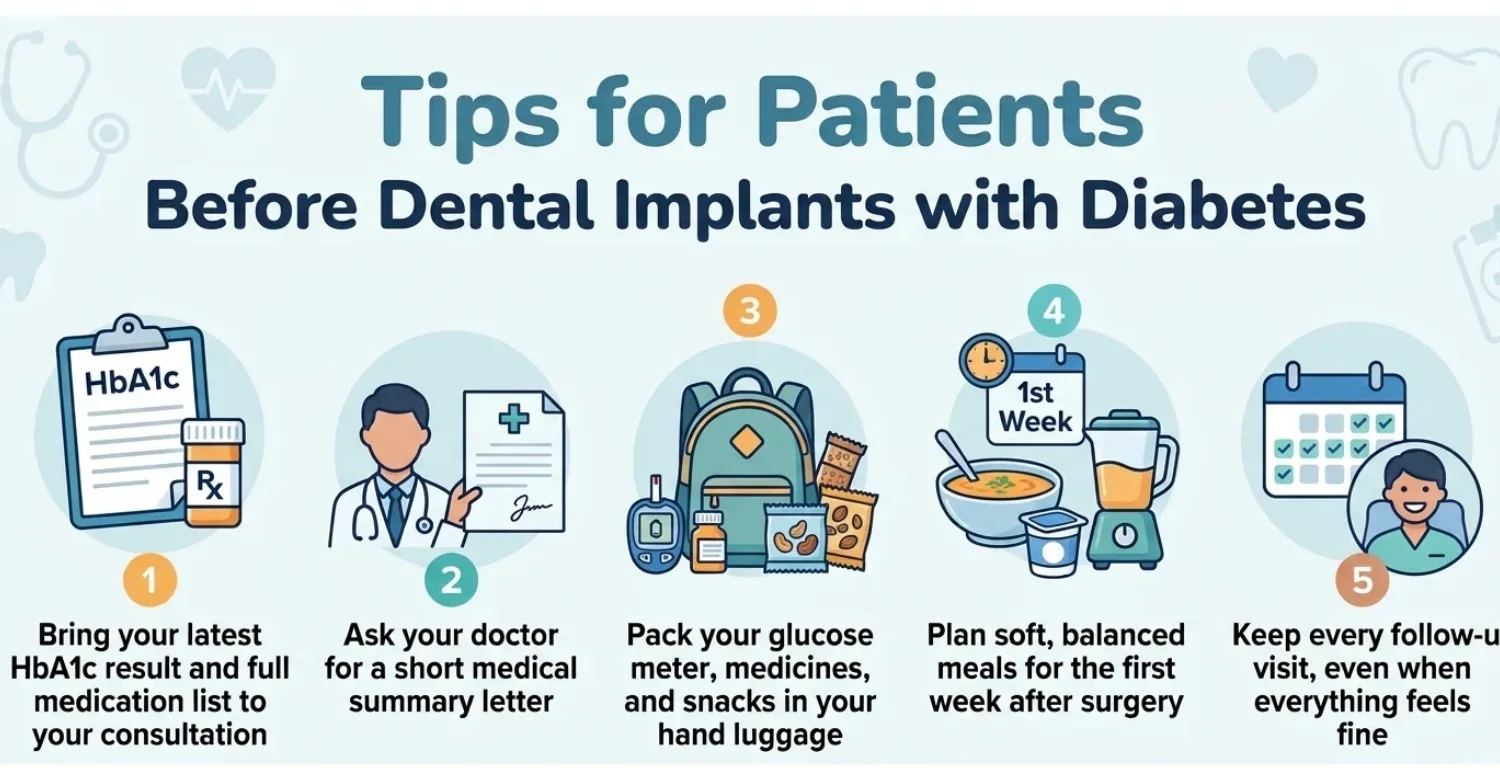
Share your implant plans with your diabetes doctor early. They may adjust your medicines, diet, or monitoring to bring HbA1c into a safer range. Ask for a short letter summarizing your diagnosis, current treatment, and recent results. If you are travelling abroad for dental implants with diabetes, bring this letter and your latest blood results to your first visit.
Treating Gum Infections and Active Oral Problems
Any active infection in the mouth should be treated before an implant is placed. This may include deep cleaning below the gum line, filling decayed teeth, or removing teeth that cannot be saved. It may also help blood sugar, because gum inflammation can make diabetes harder to control. Healthy gums create a safer starting point for diabetic dental treatment.
Reviewing Medications and Their Timing in Coordination With the Doctor
Never stop your diabetes medicines on your own. Your doctor may adjust timing on the day of surgery, especially insulin or tablets that can cause low blood sugar if you eat less than usual. Most implant surgery uses local anaesthesia, so normal eating is usually allowed beforehand.
Improving Oral Hygiene and Reducing Risk Factors Such as Smoking
Brush twice daily with a soft brush and fluoride toothpaste
Clean between teeth daily with floss or interdental brushes
Stop smoking, ideally for several weeks before and after surgery
Limit sugary drinks and snacks
Book a professional cleaning before treatment
Choosing the Right Timing for Surgery Based on Your Health Condition
Choose a time when your diabetes is stable and your routine is calm. Morning appointments are often preferred, as blood sugar is easier to monitor through the day. Avoid surgery during illness, major stress, or periods of irregular meals, such as long fasting. If you are travelling, allow rest days after surgery before flying home. Your dentist will advise when flying is safe, especially after a sinus lift.
Clinical Note
Diabetes is a risk factor, not a barrier. Evidence shows that patients with well-controlled diabetes can expect implant outcomes close to those of people without diabetes. Higher risks appear with poor glycaemic control, active periodontitis, and smoking. Careful assessment, shared care with the patient's physician, and long-term maintenance remain the foundation of safe dental implants with diabetes.
.jpg)
Ready to transform your smile?
Talk to our team and get a FREE treatment plan.
How Do Dental Implants With Diabetes Heal?
Healing happens in stages, and each stage needs time. Dental implants with diabetes follow the same healing path as in other patients. The main difference is that some stages may move more slowly.
The Basic Stages of Tissue Healing and Osseointegration
First 24–72 hours: mild swelling, tenderness, and slight oozing are normal
One to two weeks: gums close around the site, and stitches dissolve or are removed
Following weeks: bone gradually grows onto the implant surface
Three to six months: the implant is usually firmly fused and ready for the final tooth
Why Might Recovery Take Longer for Some Diabetic Patients?
Recovery may take longer when long-term high blood sugar has affected blood vessels and bone cells. Patients who have had diabetes for many years, or who have related complications, may also heal more gradually. For this reason, some dentists wait longer before fitting the crown on dental implants with diabetes. This extra time is a safety measure, not a sign of failure.
The Importance of Monitoring Blood Sugar During the Healing Period
Surgery and stress can raise blood sugar for a short time. Soft foods and smaller meals can also change your readings. Check your glucose more often in the first days after surgery, as your doctor advises. Steady control supports healing throughout the months of bone fusion, not just the first week.
Monitoring Implant Stability Before Placing the Crown or Final Restoration
Before the final crown is fitted, your dentist checks that the implant is firmly fused. This may include an X-ray to view the bone and a stability test. One common method uses a small device that gives a score called ISQ (implant stability quotient). If stability is low, extra healing time is given before loading dental implants with diabetes.
Are Dental Implants Painful?
Implant surgery is done under local anaesthesia, so you should feel pressure but not pain. Sedation can help if you feel anxious. Afterwards, most people describe mild to moderate soreness for a few days, often less than expected. Painkillers chosen with your dentist usually control it well. Pain that increases after the third day is not typical and should be checked.
Who cannot do dental implants?
Very few people are excluded permanently. Treatment may need delay or special planning with uncontrolled diabetes, active gum disease, jaw radiotherapy, certain bone medicines, or a jaw that is still growing.
What can I do instead of a dental implant?
The main options are traditional bridges and removable partial or complete dentures. The best choice depends on your teeth, gums, and general health.
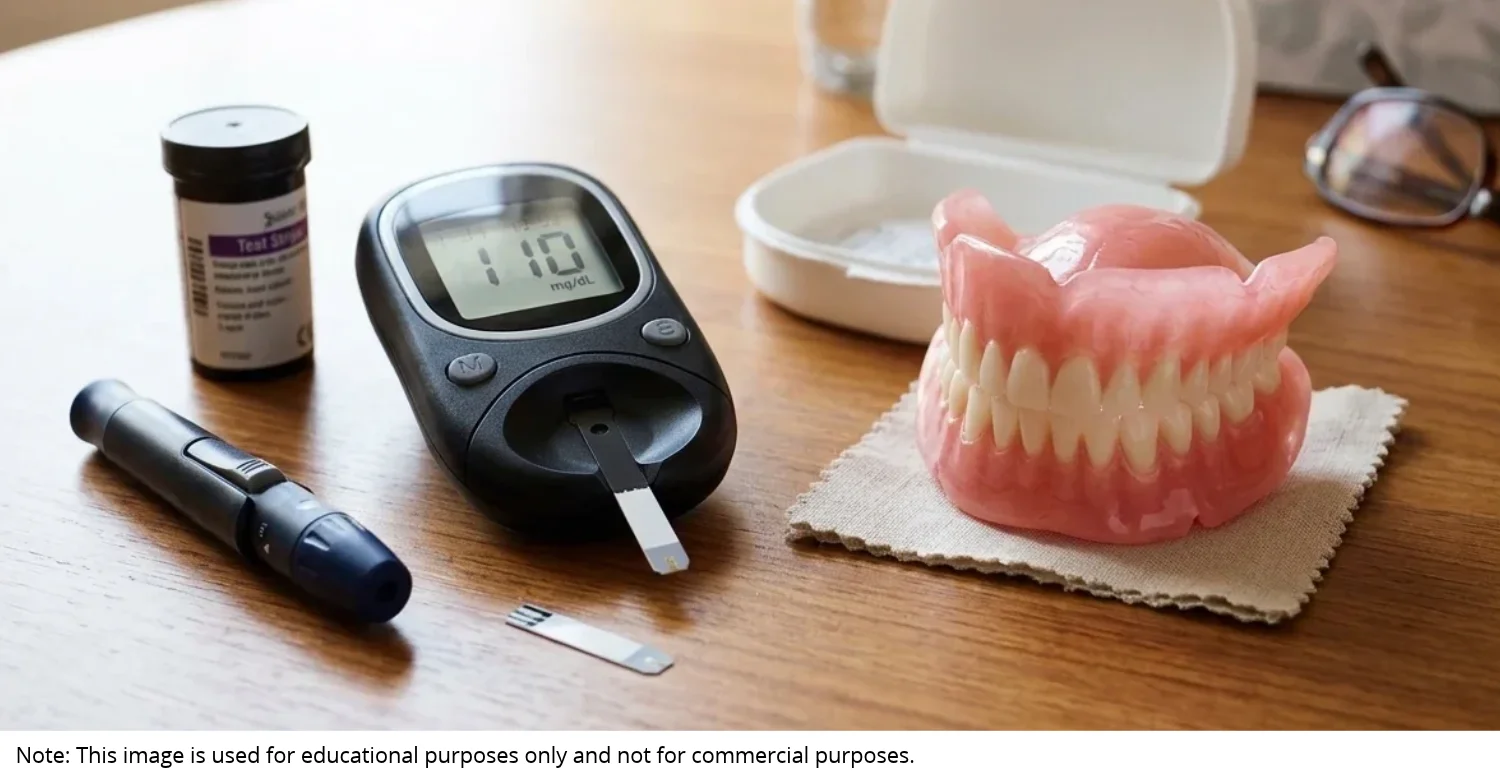
How Can You Protect Dental Implants With Diabetes From Complications?
Most implant complications can be prevented or managed with steady habits. The causes are explained earlier, so this section focuses on action. Small, consistent steps protect dental implants with diabetes for many years.
Following Oral Care Instructions After Surgery
Avoid brushing the surgical site for the first days, then brush gently
Rinse gently, without forceful spitting, for the first 24 hours
Eat soft, cool foods and chew on the other side
Avoid smoking and alcohol during healing
Return to full hygiene once your dentist allows it
Using Mouthwashes or Antibiotics When Medically Prescribed
Your dentist may recommend an antiseptic rinse, such as chlorhexidine, for a short period. Antibiotics are not routinely needed for dental implants with diabetes. They are prescribed when there is a medical reason, such as complex surgery or bone grafting. If antibiotics are prescribed, take the full course exactly as directed.
Attending Follow-Up Appointments and Regular Check-Ups
Post-surgery check within one to two weeks
Stability check before the final crown
Professional implant cleaning every three to six months, or as advised
Regular X-rays to monitor bone levels
Continued HbA1c checks with your doctor
Recognizing Signs of Infection or Inflammation Around the Implant That Require a Visit
Contact your dentist promptly if you notice:
Swelling or pain that worsens after the third day
Pus, a bad taste, or persistent bad breath
Fever or feeling generally unwell
Bleeding that does not stop with gentle pressure
Gums that bleed or recede around an older implant
Any movement of the implant
Seek urgent medical care for difficulty swallowing or breathing, or for very high or very low blood sugar that does not respond to your usual plan.
What Are the Alternatives to Dental Implants With Diabetes?
Yes. If implants are not suitable now, or at all, other options can restore your smile and chewing. Some patients use a temporary alternative while improving their diabetes, then move to implants later. The best choice depends on your remaining teeth, gums, bone, and general health.
Traditional Dental Bridges
A bridge replaces one or more missing teeth by attaching false teeth to crowns on the neighbouring teeth. It is fixed and needs no surgery. However, the neighbouring teeth must be reshaped, which removes healthy enamel.
Removable Partial or Complete Dentures
Partial dentures fill gaps between natural teeth, while complete dentures replace a full arch. They are non-surgical and usually more affordable. However, they can feel less stable and need careful daily cleaning. Sore spots under dentures may heal slowly in diabetes, so regular fitting checks are important.
A Brief Comparison of Alternatives in Terms of Stability, Impact on Adjacent Teeth, and Treatment Requirements
Feature | Dental implants | Traditional bridge | Removable dentures |
Stability | Very high; fixed in bone | High; fixed to teeth | Moderate; can move |
Effect on adjacent teeth | None | Teeth must be reshaped | Clasps may rest on teeth |
Surgery needed | Yes | No | No |
Jawbone preservation | Helps maintain bone | Does not prevent bone loss | Does not prevent bone loss |
Typical treatment time | Three to six months or more | One to two weeks | Two to six weeks |
The Importance of Choosing a Solution Based on Teeth, Gums, and General Health
Your dentist balances your health, the condition of your mouth, your budget, and your expectations. For some patients, a bridge or denture is the safest first step. For others, dental implants with diabetes offer the most comfort and function.
Approximate Dental Implant Prices at Vitrin Clinic
Dental implant prices at Vitrin Clinic depend on the number of implants required, the implant brand, the type of restoration, and whether additional procedures such as bone grafting or sinus lifting are needed. Below are approximate prices for common dental implant treatments in Istanbul, Turkey.
Price at Vitrin Clinic
Single dental implant (including abutment and crown) = $500–$700
Implant-supported crown = $700–$900
All-on-4 dental implants (per arch) = $3,500–$7,500
All-on-6 dental implants (per arch) = $4,000–$9,000
Full-mouth dental implant rehabilitation = $7,000–$15,000
Note: Vitrin Clinic offers dental treatments at approximately 60–70% less than the average costs in the USA and UK, while maintaining high standards of dental care.
Note on Dental Sedation Costs
Conscious sedation or general anesthesia can be arranged for severe dental anxiety. These options and costs are discussed openly and itemized separately, so you know the fee before giving consent. A medical history review confirms that sedation is safe for you.
What We Notice Clinically
At Vitrin Clinic, Dr. Rifat Alsaman, Head of the Medical Team and cosmetic dentist, and the clinical team see a clear pattern. Patients who arrive with a recent HbA1c result and a letter from their doctor move through planning more smoothly. Many have mild gum disease they were not aware of, so it is treated first. Patients who check their glucose closely after surgery for dental implants with diabetes tend to report calmer recoveries.
Questions to Ask Your Doctor
Is my current HbA1c suitable for implant surgery, or should I improve it first?
Do I have gum disease that needs treatment before implants?
Will I need bone grafting, and how does that change my timeline?
How should I take my diabetes medicines on the day of surgery?
How many trips to Istanbul will my treatment need?
Your Dental Implant Journey at Vitrin Clinic
Vitrin Clinic in Istanbul welcomes patients from around the world. For many people, dental tourism makes implant treatment more accessible while still offering careful, personalized care. For dental implants for smokers, our approach focuses on honest risk assessment, clear planning, and close follow-up. Implant treatment usually involves two visits: one for surgery and one for the final teeth after healing.
1. Initial Consultation and Smoking History
Your journey can begin online before you travel. You can share photos, existing X-rays, and your medical history with our team. During your consultation, we discuss your smoking habits, daily cigarette consumption, and any other nicotine use. We also review your medical history and current medications. This also gives you time to start a quitting plan before your trip to Istanbul.
2. Comprehensive Oral and Bone Assessment
When you arrive, we carry out a full examination of your mouth. We check your gum health, look for any existing infections, and assess your bite. We also measure the bone available for implants. Digital X-rays and 3D CBCT scans are used when clinically indicated. A CBCT scan is a three-dimensional X-ray that shows bone height, width, and nearby structures such as nerves and sinuses.
3. Personalised Implant Treatment Plan
Based on your results, we confirm whether implants are suitable for you now. If you need gum treatment or bone grafting first, we explain why and how it fits your travel plans. We discuss the specific risks of dental implants for smokers, expected healing time, and a recommended quitting period for your case. You also receive a clear cost breakdown after your assessment. Costs depend on the number of implants, the materials chosen, and any additional treatments needed before surgery.
4. Implant Placement and Healing Monitoring
Implant placement is usually performed under local anaesthesia, so the area is numb and you should not feel pain during surgery. Afterwards, you receive personalised post-operative instructions, including clear advice on avoiding smoking. Most patients stay in Istanbul for a few days for an early check. Once you return home, our team can monitor your gum healing and osseointegration through scheduled follow-ups.
5. Final Restoration and Long-Term Aftercare
Your final crown, bridge, or full-arch restoration is fitted once healing and implant stability have been confirmed. This usually happens on your second visit to Istanbul, after the bone has had time to bond with the implant. We then guide you on caring for your implants for the long term. This includes cleaning techniques, the long-term value of quitting for dental implants for smokers, and regular check-ups with a dentist near your home.
.jpg)
.jpg)
.jpg)
Dental Implants at Vitrin Clinic
At Vitrin Clinic in Istanbul, dental implants treatment is provided for both local and international patients, with implant assessment designed around each patient's individual needs. For patients considering dental implants with diabetes, safety always comes first. Treatment is confirmed only when Dr. Rifat Alsaman, Head of the Medical Team and cosmetic dentist, is confident that the timing and treatment approach are appropriate for your condition.
Reviewing Medical History and Diabetes Control Level
We review your diabetes type, current treatment, recent HbA1c, and any related complications. We also ask about low blood sugar episodes. This helps us judge readiness and schedule appointments that suit your daily routine and travel plans.
Evaluating Teeth, Gums, and Jawbone Using Appropriate Examinations
We examine your teeth and gums and measure gum pockets. Digital X-rays and CBCT scans show bone height, width, and nearby nerves or sinuses. These findings guide implant size, position, and any need for grafting.
Reviewing Medications and Factors That May Affect Recovery
We check every medicine, including blood thinners and bone-strengthening drugs. We also discuss smoking, teeth grinding, and hygiene habits.
Preparing an Individual Treatment Plan in Collaboration With the Treating Physician When Needed
When needed, we request information from your diabetes doctor. Your plan sets out the number of implants, any grafting, the expected timeline, and the type of final tooth.
Determining Implant Suitability and Timing Before Presenting the Final Treatment Plan
After reviewing all findings, we confirm whether dental implants with diabetes are suitable for you now or later. You then receive a clear written plan, timeline, and cost estimate before treatment begins.
Planning Dental Implant Treatment in Istanbul as a Patient With Diabetes
For international patients, dental implants with diabetes usually involve two trips. The first visit covers assessment and implant placement. After about three to six months of healing, you return for the final teeth. Our team helps coordinate appointments, rest days before flying, and remote follow-up between visits.






Book your FREE treatment plan with Vitrin Clinic and get a personalized treatment plan from our dental team.
Ready to transform your smile?
Talk to our team and get a FREE treatment plan.
References:

Medically reviewed by
Dr. Rifat AlsamanDr. Rifat Alsaman has more than 5 years of clinical experience in dentistry and currently serves as the Head of the Medical Team at Vitrin Clinic. He is dedicated to providing exceptional patient care, overseeing treatment planning, and ensuring the highest clinical standards across the team. His expertise, attention to detail, and commitment to continuous professional development have helped countless patients achieve healthier, more confident smiles.
More in Dental Treatments
View all 17 min readWill I Be Awake During Dental Implant Surgery and What Anesthesia Is Used?Dental implant anesthesia is what keeps implant surgery comfortable, and for most patients it means staying awake while the treatment area is completely numb.
 13 min readIs Replacing Failed Dental Implant Treatment Possible?Yes, replacing failed dental implant treatment is possible in most cases. The failed implant is removed, the bone is allowed to heal or is rebuilt, and a new implant is placed once the site is ready. Studies show that most replacement implants survive well when the cause of the first failure is found and treated.
 13 min readWhat Happens If There Is Not Enough Space for Dental Implant Placement?If there is not enough space for dental implant placement, your dentist will usually create or adjust the space first, choose a narrower implant or suggest another way to replace the tooth. A cramped gap does not always mean an implant is impossible. It means the space, roots and bone need careful planning before surgery.
 34 min readWhat are the dental crown procedure steps at Vitrin Clinic in Turkey?Understanding the dental crown procedure steps helps you prepare for treatment, know what happens during each appointment, and make informed decisions.
Still have a question?
Our patient coordinators answer every day of the week: before, during and long after your treatment.