Will I Be Awake During Dental Implant Surgery and What Anesthesia Is Used?
Dental implant anesthesia is what keeps implant surgery comfortable, and for most patients it means staying awake while the treatment area is completely numb.

Will I Be Awake During Dental Implant Surgery and What Anesthesia Is Used?
Dental implant anesthesia is what keeps implant surgery comfortable, and for most patients it means staying awake while the treatment area is completely numb. Many people travelling to Istanbul for treatment ask the same question first: will I feel anything, and will I know what is happening? The honest answer depends on the type of anesthesia chosen. This guide explains each option, how pain is controlled, how to prepare for your trip, and what recovery looks like at Vitrin Clinic.
Key Takeaways
Dental implant anesthesia keeps surgery comfortable by numbing pain, and sometimes by calming or sedating you. Most patients stay awake under local anesthesia.
Options include local anesthesia, nitrous oxide, oral sedation, IV sedation, and general anesthesia. The choice depends on your health, anxiety, and treatment complexity.
Numbness fades within hours. Sedation requires a companion and no driving for 24 hours. Discomfort usually peaks around days two to three.
Local anesthesia is usually included in the implant fee. Sedation and general anesthesia are usually charged separately, and Vitrin Clinic confirms all costs in your treatment plan before you travel.
.jpg)
.jpg)
.jpg)
Ready to transform your smile?
Talk to our team and get a FREE treatment plan.
What Types of Dental Implant Anesthesia Are Available?
Dental implant anesthesia falls into three main groups: local anesthesia, sedation, and general anesthesia. Local anesthesia numbs a specific area of the mouth. Sedation calms the mind and lowers anxiety. General anesthesia puts you fully to sleep. These options are often combined; for example, sedation is almost always given together with local anesthetic, because sedation alone does not block pain at the surgical site. Your dentist recommends the right mix after reviewing your health, your anxiety level, and the planned procedure.
Local Anesthesia for Dental Implants
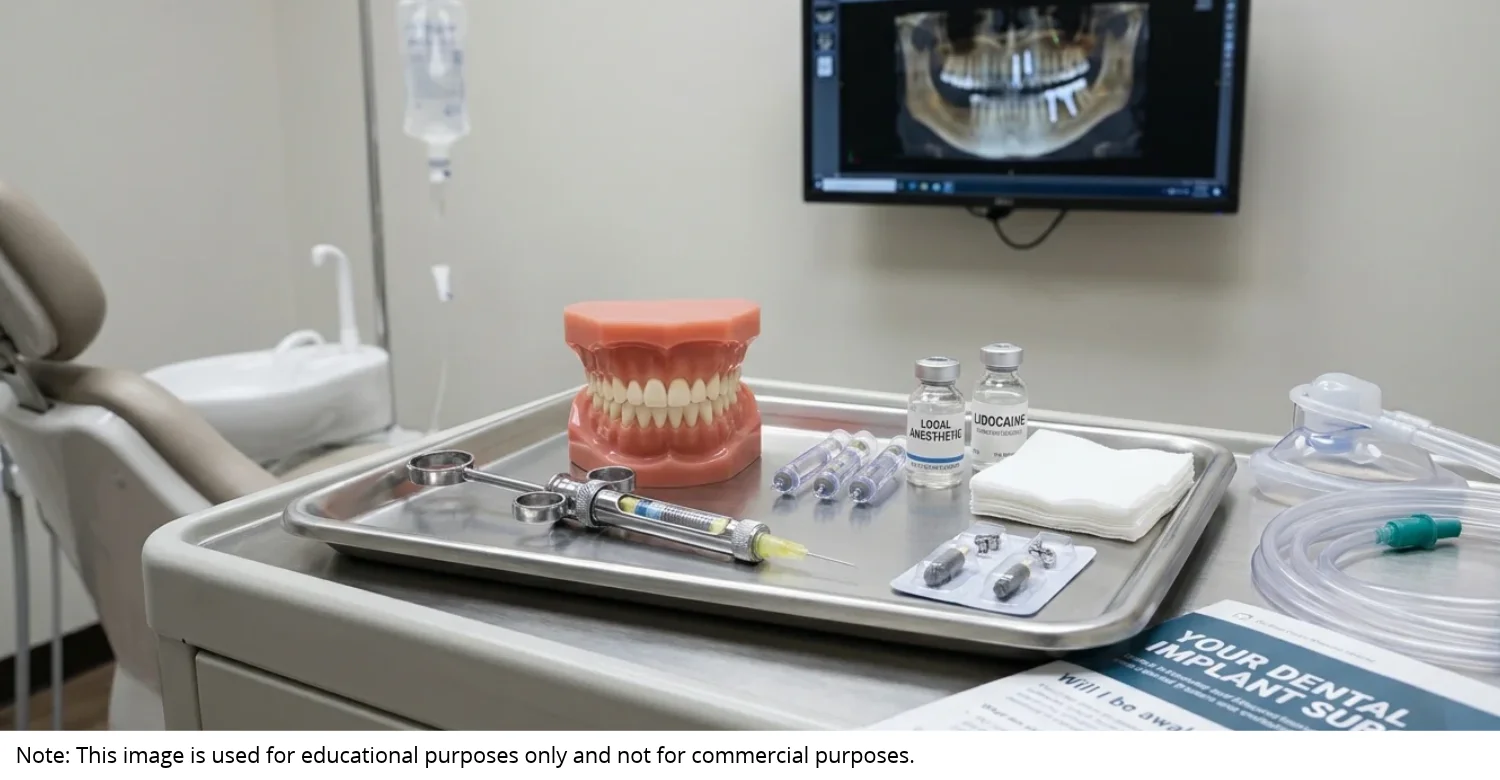
Local anesthesia dental implant treatment is the most common form of dental implant anesthesia. Your dentist first applies a numbing gel, then gives a small injection near the implant site. The medicine, usually lidocaine or articaine, blocks pain signals from the nerves in that area. Numbness starts within a few minutes and usually lasts a few hours, and you stay fully awake and aware throughout the whole procedure. This option suits single implants and straightforward cases, and you can usually return to your hotel without an escort.
Conscious Sedation for Dental Implants
Conscious sedation is a form of dental implant anesthesia that helps you feel calm and relaxed while you remain able to breathe on your own and respond to instructions. It does not necessarily make you unconscious. Minimal sedation keeps you relaxed but alert, while moderate sedation makes you drowsy, and you may drift in and out of light sleep during treatment. Sedation for implants is often recommended for patients with implant surgery anxiety, a strong gag reflex, or longer appointments. Local anesthetic is still used to block pain.
Nitrous Oxide (Laughing Gas)
Nitrous oxide is a gas mixed with oxygen and breathed through a small mask over your nose. It is the lightest form of dental sedation. Its calming effect starts within a few minutes. You stay awake, aware, and able to talk, though you may feel light, warm, or tingly. Once the gas is stopped, you breathe pure oxygen for a few minutes. Because the effects wear off so quickly, nitrous oxide is a popular choice of dental implant anesthesia for nervous patients who still want to walk back to their hotel independently.
Oral Sedation
Oral sedation uses a prescribed sedative tablet, usually taken about an hour before treatment. Common choices belong to the benzodiazepine family of anti-anxiety medicines. You will feel relaxed and drowsy but can still respond. Some patients remember little of the appointment afterwards. Because the effect lasts for several hours and varies from person to person, you must not drive or make important decisions for the rest of the day. A companion should accompany you back to your hotel and stay nearby for the rest of the day.
IV Sedation
IV sedation delivers medication directly into a vein, usually in your arm or hand. It works within moments and provides a deeper, more controllable level of sedation. Your dentist can adjust the dose during surgery. Many patients feel as if they slept through treatment and remember very little. Because breathing and heart rate can slow under deeper sedation, a trained team monitors your oxygen level, pulse, and blood pressure from start to finish. A companion is needed afterwards, and driving is not allowed for at least 24 hours.
General Anesthesia (Being Fully Asleep)
General anesthesia makes you completely unconscious, unlike conscious sedation. You will not feel, hear, or remember the procedure. It may be considered for extensive full-arch surgery, complex bone grafting, severe dental phobia, or certain medical or special needs. An anesthesiologist gives the medication, protects your airway, and monitors your vital signs continuously. It requires strict fasting, a suitably equipped facility, and a longer recovery period than any other option, which is why it is reserved for selected cases. For most implant cases, this deepest level of dental implant anesthesia is not necessary.
Dental Implant Anesthesia Options Compared
Option | Awareness | Memory of procedure | Escort needed | Typical use |
Local anesthesia | Fully awake | Full | Usually no | Single or simple implants |
Nitrous oxide | Awake, relaxed | Mostly full | Usually no | Mild anxiety |
Oral sedation | Drowsy | Partial | Yes | Moderate anxiety |
IV sedation | Very drowsy | Little or none | Yes | Longer or multiple implants |
General anesthesia | Unconscious | None | Yes | Extensive or complex cases |
Does the Complexity of Dental Implant Surgery Affect the Anesthesia Used?
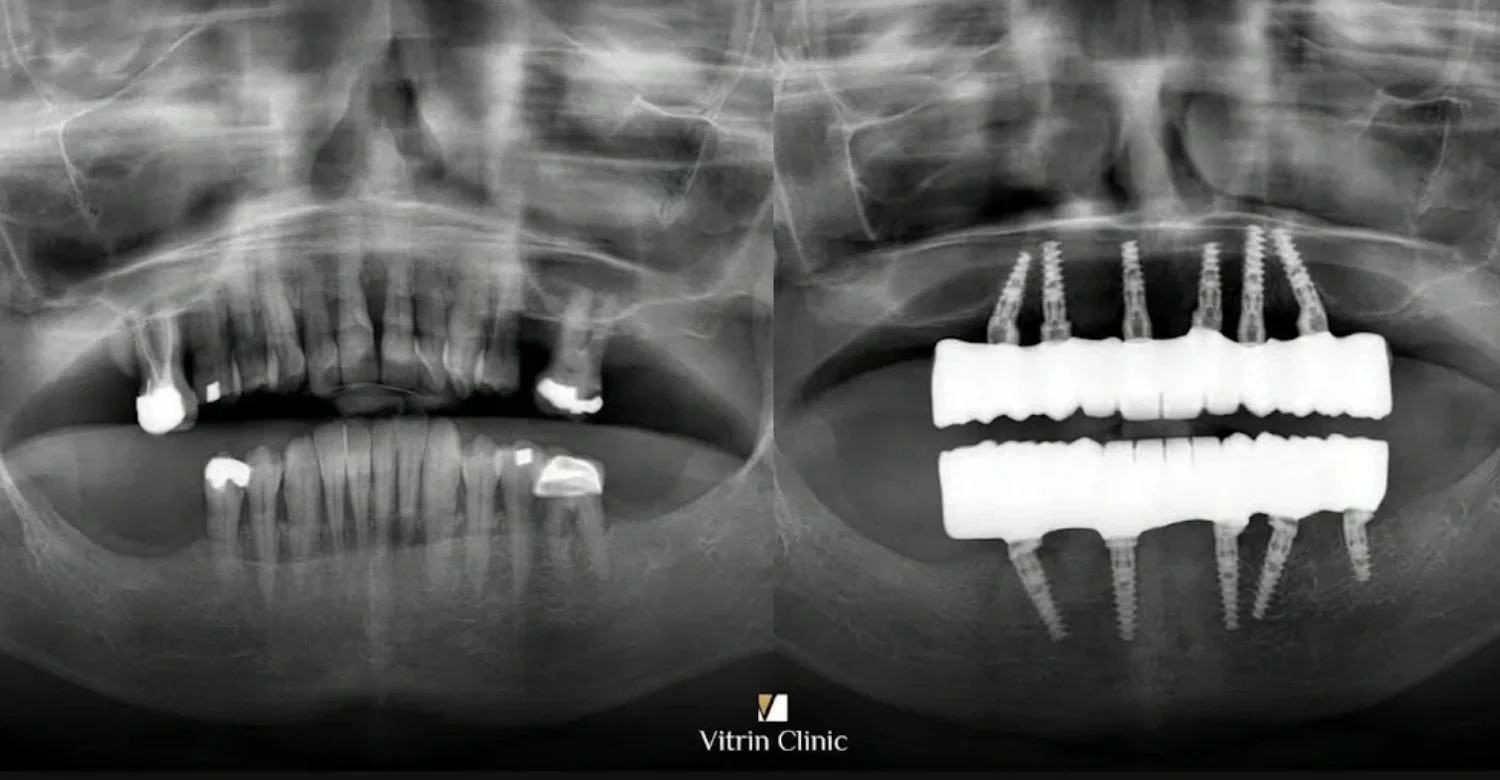
Yes, the complexity of your surgery strongly influences the dental implant anesthesia plan. A short, simple procedure is usually managed comfortably with local anesthesia alone. Longer surgeries involve more time in the chair, more surgical sites, and sometimes bone grafting or a sinus lift, so sedation can make the experience easier to tolerate. Your treatment plan, based on a 3D CBCT scan, shows exactly what is involved, so the anesthesia can be matched to the work.
Procedure | Typical anesthesia approach |
Single dental implant | Local anesthesia, with or without nitrous oxide |
Multiple implants | Local anesthesia, often with oral or IV sedation |
Full-mouth implants (All-on-4, All-on-6) | Local anesthesia with IV sedation, or general anesthesia in selected cases |
Implants with bone grafting or sinus lift | Local anesthesia, often with sedation depending on length |
A single implant in a healthy bone is usually a quick procedure. Multiple implants extend the appointment and involve several areas of the mouth. Full-mouth procedures, such as All-on-4 and All-on-6, can include extractions, bone smoothing, implant placement, and fitting temporary teeth in one long session. Bone grafting adds surgical steps and healing time. The more involved the treatment plan, the more likely sedation becomes a sensible addition to local anesthetic, particularly for patients who find long appointments tiring or stressful.
How many hours does dental implant surgery take?
A single dental implant usually takes about one to two hours, including numbing and stitching. The actual implant placement can take far less time. Several implants may take two to three hours. Full-arch procedures such as All-on-4 can take around two to four hours per jaw, especially when extractions are included. Bone grafting or a sinus lift can add more time, which is why your surgeon confirms the expected duration during your consultation in Istanbul. Your dental implant anesthesia is planned to last comfortably for the full length of surgery.
How Does Dental Implant Anesthesia Control Pain During Surgery?
Dental implant pain control starts with local anesthetic, which blocks pain signals before they reach your brain. This happens even when you are sedated or asleep. Sedation and pain control are two different things. Sedation calms your mind, while local anesthetic numbs the nerves, which is why both are often used together during longer or more stressful procedures. With effective numbing, you may feel pressure or pushing during implant placement, but you should not feel sharp pain. Your comfort is checked throughout the procedure.
If you feel any discomfort, tell your dentist straight away or raise your hand, as agreed before treatment starts. Your dentist will pause and give extra local anesthetic to the area. This usually works within a few minutes. Patients who are anxious, or who have inflammation near the surgical site, sometimes need a little more anesthetic before they feel completely comfortable. Never try to tolerate pain silently. Good dental implant anesthesia means you stay in control and can always ask for more numbing.

Ready to transform your smile?
Talk to our team and get a FREE treatment plan.
What Factors Determine the Safest Anesthesia Option?
The safest dental implant anesthesia is chosen after a full review of your health and needs. Your dentist considers how your body is likely to respond to medication, how anxious you feel, and how much monitoring is required. Some patients are ideal candidates for sedation, while others, such as those with certain breathing or heart conditions, are safer with local anesthesia alone. Honesty during your consultation is essential. The key factors include:
Medical history: heart conditions, high blood pressure, diabetes, breathing problems, and sleep apnea can all affect sedation safety.
Current medications and supplements: blood thinners, heart medicines, sleeping pills, and some herbal supplements can interact with sedatives or affect bleeding.
Weight-loss injections: some newer medications slow stomach emptying and may change fasting advice before sedation.
Previous reactions: past allergies, nausea, or difficult experiences with anesthesia or sedation.
Anxiety and comfort preferences: your fear level and whether you prefer to be aware or drowsy.
Medical assessment and monitoring: your overall risk level determines how closely you must be monitored.
Clinical Note
The medical assessment, not personal preference alone, should determine the appropriate dental implant anesthesia, with health, treatment complexity, and anxiety level all weighed together. For many implant procedures, local anesthesia is sufficient and carries the lowest risk. Sedation or general anesthesia is appropriate in selected cases, such as full-arch surgery or severe anxiety. Any sedation should be given only by qualified professionals with proper monitoring equipment, emergency medication, and trained staff available throughout treatment and recovery.
What Should You Expect Before and After Dental Implant Anesthesia?
Preparation and recovery depend on the type of dental implant anesthesia you receive. With local anesthesia, preparation is simple and recovery is quick. With sedation or general anesthesia, you need clear instructions about eating, medication, and transport. As an international patient, planning also affects your travel dates. Arriving in Istanbul a day early, resting well, and keeping your schedule flexible after surgery all help your body recover from both the procedure and the journey. The sections below explain what happens before treatment and once the anesthesia wears off.
Preparing for Implant Surgery
Before surgery, your dentist reviews your medical history, medications, allergies, and any previous anesthesia experiences. Bring a written list of everything you take. Do not stop blood thinners or other prescribed medicines unless your doctor advises it. If sedation or general anesthesia is planned as part of your dental implant anesthesia, you will receive fasting instructions, often no food for around six hours beforehand. Arrange a companion to take you back to your hotel. Wear comfortable clothing, and avoid alcohol and smoking before treatment.
After the Anesthesia Wears Off
As the dental implant anesthesia fades, feeling returns to your lips, tongue, and cheek over a few hours. Avoid eating hot food or chewing until numbness has gone, so you do not bite yourself. After sedation, temporary grogginess, dizziness, or nausea are common and usually settle the same day once the medication has cleared from your system. Mild pain, swelling, and slight bleeding are expected after surgery. Prescribed or recommended pain relief, cold packs, and rest usually keep you comfortable.
Anesthesia type | Typical recovery | Driving |
Local anesthesia | Numbness fades within a few hours | Usually allowed |
Nitrous oxide | Effects clear within minutes | Usually allowed after assessment |
Oral sedation | Drowsy for several hours | Not for at least 24 hours |
IV sedation | Groggy for the rest of the day | Not for at least 24 hours |
General anesthesia | Groggy, possible nausea, longer rest | Not for at least 24 hours |
What is the most painful day after dental implants?
For most patients, discomfort is greatest during the first two to three days after surgery. Swelling usually peaks around the second or third day, then gradually improves. Pain is typically mild to moderate and well controlled with medication. Many people feel noticeably better by the end of the first week. Pain that gets worse after day three, rather than better, is not typical and should be checked promptly by your dentist.
Planning Dental Implant Anesthesia as an International Patient
Combining dental implant anesthesia with travel needs a little extra planning. Share your medical history and medication list before you book flights, so sedation can be planned in advance. Allow at least one full rest day after sedation before any sightseeing, because tiredness and mild swelling are common during the first days of recovery. If a sinus lift is part of treatment, your dentist may advise waiting before flying. Book a hotel close to the clinic, travel with a companion if sedation is planned, and keep your return flight flexible.
Approximate Dental Implant Prices at Vitrin Clinic
Dental implant prices at Vitrin Clinic depend on the number of implants required, the implant brand, the type of restoration, and whether additional procedures such as bone grafting or sinus lifting are needed. Below are approximate prices for common dental implant treatments in Istanbul, Turkey.
Price at Vitrin Clinic
Single dental implant (including abutment and crown) = $500–$700
Implant-supported crown = $700–$900
All-on-4 dental implants (per arch) = $3,500–$7,500
All-on-6 dental implants (per arch) = $4,000–$9,000
Full-mouth dental implant rehabilitation = $7,000–$15,000
Note: Vitrin Clinic offers dental treatments at approximately 60–70% less than the average costs in the USA and UK, while maintaining high standards of dental care.
Note on Dental Sedation Costs
Conscious sedation or general anesthesia can be arranged for severe dental anxiety. These options and costs are discussed openly and itemized separately, so you know the fee before giving consent. A medical history review confirms that sedation is safe for you.
Ready to transform your smile?
Talk to our team and get a FREE treatment plan.
What We Notice Clinically
Dr. Rifat Alsaman, Head of the Medical Team at Vitrin Clinic, notices that anxiety before surgery is often stronger than the discomfort during it. Many patients who request full sedation feel comfortable with local anesthesia once they understand how dental implant anesthesia actually works and what sensations to expect during each stage of surgery. Dr. Rifat Alsaman also observes that patients who share a complete medication list and follow fasting instructions recover more smoothly. Patients with full-arch treatment often benefit most from conscious sedation, especially during long appointments.
Tips for Patients
Tell your dentist about every medicine, supplement, and health condition.
Ask which dental surgery anesthesia option suits your case and why.
Eat a light meal before local anesthesia, unless told otherwise.
Follow fasting instructions exactly if sedation is planned.
Agree on a hand signal to pause treatment if needed.
Bring a companion if you will be sedated.
Confirm your dental implant anesthesia plan in writing before booking flights.
Use cold packs for the first 24 to 48 hours.
Eat soft, cool foods and avoid smoking and alcohol while healing.
Keep the area clean with gentle rinses as instructed.
When to Seek Immediate Medical Attention
Difficulty breathing or swallowing.
Swelling of the face, lips, or throat, or a rash after medication.
Bleeding that does not slow after firm pressure with gauze.
Fever, chills, or pus near the implant site.
Swelling or pain that worsens after the third day.
Numbness in the lip, chin, or tongue that lasts beyond the day of surgery.
Severe pain not relieved by prescribed medication.
Questions to Ask Your Doctor
Asking the right questions helps you feel confident and prepared. Consider bringing these to your consultation:
Which dental implant anesthesia do you recommend for my case, and why?
Will I need conscious sedation, or is local anesthesia enough?
Who will monitor me during sedation, and what equipment is used?
Which of my medications should I continue or adjust before surgery?
How many days should I stay in Istanbul before flying home?
.jpg)
.jpg)
.jpg)
.jpg)
Your Dental Implant Journey at Vitrin Clinic, From First Consultation to Aftercare
Your journey to a new smile begins with understanding your dental needs and ends with a treatment plan designed around your goals. For implant patients, that plan also includes dental implant anesthesia chosen for your health, your comfort, and the complexity of your surgery. At Vitrin Clinic, every stage is carefully coordinated. Personalized dental care, international patient support, and attention to detail make your experience in Istanbul as smooth and comfortable as possible.
1. Your Initial Smile Assessment
Every successful treatment begins with a thorough understanding of your dental condition. Share your smile photographs, available dental records, X-rays if you have them, and relevant medical history with our team. Please also include your medication list, allergies, and any previous experience with anesthesia or sedation. Our dentists review your case, assess your initial requirements, and identify potential treatment options based on your teeth, gum health, bite, and bone condition. A 3D scan at the clinic then confirms the final plan.
2. Your Personalized Treatment Plan
Your dental needs deserve an individual approach, not a standard treatment package. Following your initial assessment, we prepare a personalized proposal. It outlines the recommended procedures, treatment stages, estimated duration, and expected costs. It also explains the suggested anesthesia approach, such as local anesthesia alone or with conscious sedation. You will know in advance whether you need to fast, whether to bring a companion, and what to expect on the day. This lets you make informed decisions before travelling to Istanbul.
3. Your Stay in Istanbul, Seamlessly Arranged
From your arrival to your clinic appointments, our international patient coordination team helps organize the practical details of your visit. Depending on your treatment arrangement, this may include hotel accommodation and airport, hotel, and clinic transfers. Our team also assists with appointment coordination and communication in your language. If sedation is planned, we advise you to keep the rest of the day free and travel with a companion. This lets you focus on your treatment throughout your stay.
4. Your Smile Transformation and Ongoing Care
Your treatment takes place according to the agreed clinical plan, with each procedure tailored to your dental condition and desired outcome. Our team considers aesthetics, function, and your comfort throughout the process. Before your departure, you receive personalized aftercare instructions. These cover pain relief, cold packs, soft foods, gentle cleaning, and the warning signs that need a call to the clinic. We also explain the healing period before your final crowns, which is usually several months. Follow-up support is available to answer questions after you return home.
Dental Implant at Vitrin Clinic.. Safe Comfort for Every Patients
At Vitrin Clinic in Başakşehir, Istanbul, dental implant treatment is provided with anesthesia planned around each patient's health and comfort. Every treatment begins with a detailed consultation and 3D imaging. Your medical history, medications, and previous anesthesia experiences are reviewed carefully before any form of sedation is offered, scheduled, or added to your treatment plan. Local anesthesia is used for most dental implant procedures, while conscious sedation is available for anxious patients and longer procedures. International patients receive a clear written treatment plan, multilingual support, and guidance on travel timing, so they can focus on their recovery.





Book your FREE treatment plan with Vitrin Clinic and get a personalized treatment plan from our dental team.
Ready to transform your smile?
Talk to our team and get a FREE treatment plan.
References:

Medically reviewed by
Dr. Rifat AlsamanDr. Rifat Alsaman has more than 5 years of clinical experience in dentistry and currently serves as the Head of the Medical Team at Vitrin Clinic. He is dedicated to providing exceptional patient care, overseeing treatment planning, and ensuring the highest clinical standards across the team. His expertise, attention to detail, and commitment to continuous professional development have helped countless patients achieve healthier, more confident smiles.
More in Dental Treatments
View all 13 min readIs Replacing Failed Dental Implant Treatment Possible?Yes, replacing failed dental implant treatment is possible in most cases. The failed implant is removed, the bone is allowed to heal or is rebuilt, and a new implant is placed once the site is ready. Studies show that most replacement implants survive well when the cause of the first failure is found and treated.
 22 min readCan People With Diabetes Have Dental Implants Safely?Dental implants with diabetes are possible and often successful when blood sugar is well managed. Diabetes changes how your gums, bone, and immune system respond to surgery.
 13 min readWhat Happens If There Is Not Enough Space for Dental Implant Placement?If there is not enough space for dental implant placement, your dentist will usually create or adjust the space first, choose a narrower implant or suggest another way to replace the tooth. A cramped gap does not always mean an implant is impossible. It means the space, roots and bone need careful planning before surgery.
 34 min readWhat are the dental crown procedure steps at Vitrin Clinic in Turkey?Understanding the dental crown procedure steps helps you prepare for treatment, know what happens during each appointment, and make informed decisions.
Still have a question?
Our patient coordinators answer every day of the week: before, during and long after your treatment.