Dentures in Turkey
October 12, 2026
What Is Repeated Trauma From Poorly Fitted Dentures?
 Dr. Rifat Alsaman
Repeated trauma from poorly fitted dentures is ongoing injury to the gums, palate, and soft tissues. It happens when a denture rubs, presses, or shifts during daily use. Ill fitting dentures create friction and uneven pressure. This leads to sore spots, pain, and inflammation that get worse without professional denture adjustment.
What Is Repeated Trauma From Poorly Fitted Dentures?
This condition is damage that builds up when a denture no longer matches the shape of your mouth. Each bite, word, and swallow can irritate the same tissues again. Minor discomfort then turns into persistent sores, swelling, and tenderness. These problems interfere with eating and speaking.
How Do Ill-Fitting Dentures Cause Repeated Trauma to the Mouth?
Ill fitting dentures move or press unevenly against the gums. Instead of spreading chewing forces across the whole ridge, they concentrate pressure on small areas. Loose dentures also slide during function, so they rub the same spots again and again. This prevents healing and gradually inflames the underlying tissues.
What Are the Most Common Ill-Fitting Denture Symptoms?
Common ill fitting denture symptoms include sore gums, red or ulcerated patches, and clicking sounds. Other signs are slipping while talking and food trapped beneath the base. Many patients also feel pain when chewing harder foods. When these signs persist, a poor fit is often the underlying cause.
What Causes Repeated Trauma From Poorly Fitted Dentures?
This problem usually results from a mismatch between the denture and the mouth. The mismatch may come from bone changes, worn materials, design errors, or an incorrect bite. Identifying the exact cause is essential. Effective denture adjustment depends on correcting the real source of irritation.
Ill-Fitting Dentures and Uneven Pressure Distribution
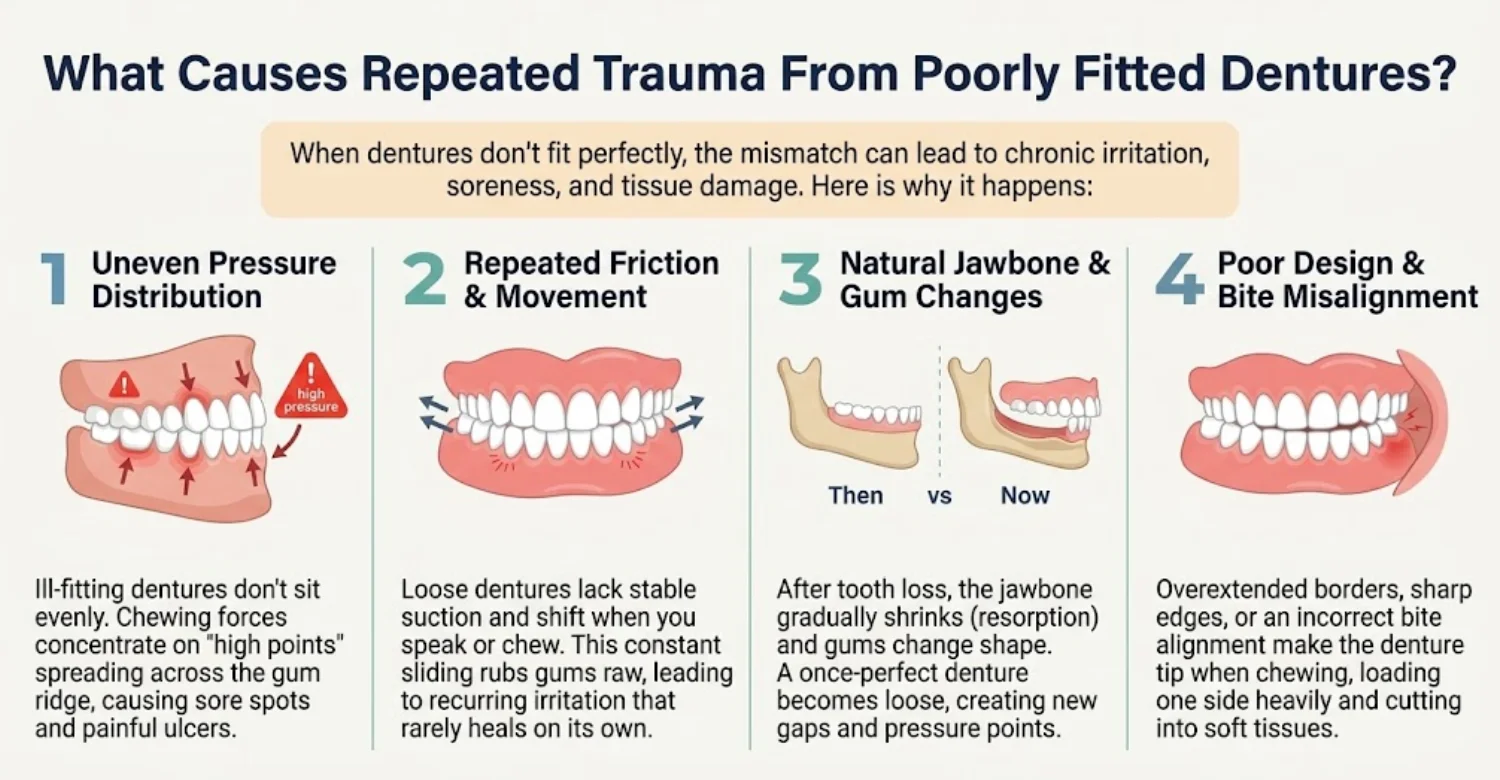
When ill fitting dentures do not sit evenly, chewing forces concentrate on high points. They no longer spread across the gum ridge. These pressure zones squeeze soft tissue against bone, causing sore spots and ulcers. Over weeks, the load causes deeper damage and makes the denture more painful to wear.
Loose Dentures and Repeated Friction Against the Gums
Loose dentures lack stable suction and retention. They shift with every movement of the tongue, cheeks, and jaw. This constant sliding creates friction that can wear away the protective surface layer of the gums. The result is raw, tender tissue and recurring irritation that rarely heals completely.
Changes in Jawbone and Gum Shape Over Time
After tooth loss, the jawbone gradually shrinks in a process called resorption. Gum tissue also changes shape. A denture that once fit perfectly can become loose and unstable over time. This creates gaps and pressure points. It is one of the most common reasons for repeated trauma from poorly fitted dentures.
Poor Denture Design and Incorrect Bite Alignment
Dentures with overextended borders, sharp edges, or rough inner surfaces can cut into soft tissue. An incorrect bite also makes the denture tip when chewing. As a result, one side carries more load than the other. Both problems cause pain and sore gums that keep returning despite good home care.
Clinical Note
Clinically, denture-related trauma rarely has a single cause. Bone resorption, worn denture teeth, and bite changes often combine. At Vitrin Clinic, every case is assessed fully. Correcting only one factor may give temporary relief while the irritation continues.
What Problems Can Repeated Denture Trauma Cause?
Ongoing injury from a poor fit can cause more than temporary discomfort. It may lead to chronic inflammation, painful ulcers, tissue overgrowth, and difficulty eating. It can also raise the risk of infection. Because the damage builds gradually, many patients accept the pain as normal. Manageable problems then become more serious.
Denture Sore Spots and Persistent Gum Irritation
Denture sore spots are localized painful areas where the denture presses or rubs the most. They often look red, white, or ulcerated. When the denture is not corrected, the same spots are injured every day. This causes persistent gum irritation. Wearing the denture for long periods may become uncomfortable or impossible.
Mouth Sores From Dentures and Soft Tissue Injuries
Mouth sores from dentures can form on the gums, palate, inner cheeks, and tongue. Persistent friction may also cause extra tissue to grow along the denture border. These injuries are a classic result of constant friction. A dentist should check them if they persist.
Sore Gums From Dentures and Inflammation
Sore gums from dentures often become swollen, red, and tender because the tissue never has time to recover. Inflammation can spread under the whole denture base. This is more likely when trapped food and bacteria add to the irritation. Treating inflammation requires removing the cause, not only soothing the symptoms.
Difficulty Chewing and Speaking Comfortably
Loose dentures and painful gums make it hard to chew firm foods. Many patients switch to softer, less nutritious diets. Speech may also become unclear when the denture slips. Over time, repeated trauma from poorly fitted dentures can affect confidence, social life, and nutrition.
Can Repeated Denture Trauma Increase the Risk of Oral Infections?
Yes. Broken or irritated tissue is easier for bacteria and fungi to invade. Patients may develop denture stomatitis or fungal infections. The risk is higher when dentures are worn overnight or not cleaned properly. Good hygiene and a corrected fit greatly reduce this risk.
What Are the Symptoms of Repeated Trauma From Poorly Fitted Dentures?
Symptoms often start mildly and worsen gradually. Patients may notice tenderness, redness, swelling, open sores, or bleeding during chewing. Recognizing these signs early matters. A simple denture adjustment can then solve the problem before tissue damage spreads.
Pain and Tenderness Under the Dentures
Pain and tenderness under the dentures are usually the first warning signs. The discomfort may be sharp in one spot or a dull ache across the gums. Pain that worsens through the day suggests a fit problem. The same is true if it returns every time the denture is worn.
Redness, Swelling, and Denture Irritation
Redness and swelling under the denture base show that the tissue is inflamed. Denture irritation may also cause a burning feeling. Sometimes these signs follow the outline of the denture or appear in the same areas repeatedly. In that case, repeated trauma from poorly fitted dentures is the most likely explanation.
Dentures Rubbing Gums and Causing Open Sores
When dentures keep rubbing the gums day after day, the surface tissue breaks down. Open, painful ulcers then form. These sores often have a white or yellow center with a red border. They tend to recur in the same places. This helps the dentist pinpoint exactly where the denture needs correction.
Bleeding or Persistent Discomfort During Chewing
Bleeding gums or persistent discomfort during chewing suggest that the tissue is injured and inflamed. Food pressing the denture into sore areas can make the pain worse. Ongoing bleeding should never be ignored. It may signal advanced tissue injury or another condition that needs examination.
When Should Patients Seek Professional Dental Care?
Seek professional dental care if a sore lasts more than two weeks or pain prevents normal eating. You should also book a visit if the denture feels loose or bleeding and swelling appear. Any unusual lump or non-healing ulcer needs prompt evaluation. Early assessment at Vitrin Clinic helps prevent more serious tissue damage.
Tips for the Patients
Remove your dentures at night to let your gums rest. Rinse with warm salt water to soothe irritated tissue. Clean your dentures daily and keep them moist. Avoid wearing dentures that cause sharp pain. Book a denture adjustment instead of putting up with ongoing discomfort.
How Can You Tell If Your Dentures Do Not Fit Properly?
A well-fitting denture should feel stable, comfortable, and secure during speaking and chewing. If yours slips, clicks, traps food, or causes recurring soreness, the fit may have changed. Recognizing these early signs helps you act before the supporting gums and tissues are damaged.
Ill-Fitting Denture Symptoms to Watch For
Watch for slipping when talking or laughing, or needing more adhesive than before. Other signs include food collecting underneath, new sore spots, clicking noises, and changes in facial appearance. Any of these suggests that your dentures no longer match your mouth. They need professional evaluation.
How Loose Dentures Affect Stability and Comfort
Loose dentures move during chewing and speech. This reduces bite strength and makes eating stressful. The constant movement also creates friction that irritates the gums. Patients often overuse adhesives to compensate, but this only hides the problem. Lack of stability is a key contributor to repeated trauma from poorly fitted dentures.
How to Distinguish Normal Adjustment Discomfort From Denture Trauma
Mild soreness in the first few weeks with new dentures is normal. It usually improves after initial adjustments. Denture trauma is different: pain persists, sores recur in the same places, or discomfort worsens over time. If soreness lasts beyond the adjustment period, a professional denture adjustment is needed.
Note : All images used are for editorial and illustrative purposes only and may not originate from the original news provider or associated company.
How Are Denture Sore Spots and Repeated Trauma Diagnosed?
Diagnosis involves examining both the mouth and the denture itself. The dentist evaluates the soft tissues, checks fit and stability, and assesses the bite. Pressure points are also identified. This approach ensures treatment targets the real cause instead of only relieving surface symptoms.
Examination of the Gums and Oral Soft Tissues
The dentist carefully inspects the gums, palate, cheeks, and tongue. They look for redness, ulcers, swelling, and tissue overgrowth. The size, location, and appearance of each sore are recorded. A lesion that looks unusual or fails to heal may need further tests. These rule out conditions unrelated to the denture.
Assessment of Denture Fit, Stability, and Bite Alignment
The denture is checked for stability, retention, border length, and surface defects. The dentist also evaluates how the upper and lower teeth meet when biting. An unbalanced bite or poor retention can explain why injury continues. This is true even with careful daily denture care.
Identifying Areas of Repeated Pressure and Friction
Dentists often place pressure-indicating paste or marking materials inside the denture. These show exactly where it presses too hard. The marks are then matched with the sore spots in the mouth. This allows precise correction, removing only the necessary material while keeping the denture's overall fit.
Clinical Note
A sore that does not heal within about two weeks after correction should be re-examined. Most of these lesions come from a poor denture fit. Still, persistent ulcers must be evaluated carefully. Vitrin Clinic emphasizes follow-up visits to confirm complete healing after every adjustment.
How Can Repeated Trauma From Poorly Fitted Dentures Be Treated?
Treatment has two goals: correcting the denture and allowing the tissues to heal. Depending on the cause, it may involve adjustment, relining, rebasing, repair, or replacement. Short breaks from wearing the denture and care for existing sores also help.
Denture Adjustment to Relieve Pressure Points
Denture adjustment means carefully reshaping the areas that press or rub against the gums. The dentist smooths sharp edges, shortens overextended borders, and balances the bite. Even small corrections can quickly relieve pain. They also stop the cycle of injury to the same tissues.
Denture Relining and Rebasing for Improved Fit
Relining adds new material to the fitting surface so the denture matches the current shape of the gums. Rebasing replaces the entire base while keeping the teeth. Both restore stability to loose dentures. They work well when the problem is caused by bone changes.
When Should Dentures Be Repaired or Replaced?
Dentures should be repaired when they crack, chip, or lose a tooth. Replacement is recommended when the teeth are badly worn or the base is damaged. It is also needed when relining no longer gives a stable fit. Dentures need regular evaluation because the mouth keeps changing over the years.
Treating Denture Sore Spots and Mouth Sores
Treating denture sore spots starts with removing the cause through adjustment. Leaving the denture out for short periods can support healing. Rinsing with warm salt water and using products your dentist recommends also help. Infected or slow-healing sores may need medication prescribed after examination.
Why Patients Should Avoid Adjusting Dentures at Home
Filing, sanding, or bending dentures at home can permanently damage them. It creates rough surfaces, weak areas, and an even worse fit. Home reline kits may also change the bite. Instead of solving the problem, DIY repairs often make the injury worse and lead to costly replacements.
Tips for the Patients
Report sore spots early instead of waiting. Wear your dentures for a few hours before your adjustment appointment. This helps the dentist clearly see the irritated areas. Avoid too much adhesive and follow healing instructions. Attend follow-up visits to confirm that the problem has fully resolved.
How Can You Prevent Repeated Trauma From Poorly Fitted Dentures?
Prevention depends on good daily habits and regular professional checkups. Proper cleaning, giving the gums time to rest, and early attention to fit changes all reduce irritation. Preventing problems is easier than treating established sores, inflammation, or tissue damage.
Maintaining Proper Denture Hygiene
Brush your dentures daily with a soft brush and a non-abrasive cleaner, and soak them as directed. Gently clean your gums, tongue, and palate as well. Good hygiene removes plaque and food debris that worsen irritation. It also helps prevent fungal infections beneath the denture base.
Removing Dentures as Recommended by Your Dentist
Most dentists recommend removing dentures overnight or for several hours each day. This lets the gums recover from pressure and improves blood flow in the tissue. Continuous wear increases the risk of inflammation, infection, and sore spots. The risk is higher when the fit is already slightly off.
Scheduling Regular Denture Fit Assessments
Regular denture checkups, usually at least once a year, help the dentist detect fit changes early. Small relines or adjustments at the right time keep dentures stable and comfortable. These visits are also a chance to screen the mouth for abnormal tissue changes.
Recognizing Early Signs of Denture Irritation
Early signs of denture irritation include mild redness, a slight burning feeling, or tender spots after meals. A denture that feels less secure than usual is another warning. Acting quickly with a professional denture adjustment stops these signs from becoming painful, repeated injury.
Ready to transform your smile?
Talk to our team and get a personal FREE treatment plan.
What Do Dentists Recommend for Patients Experiencing Repeated Denture Trauma?
Dentists recommend that patients never ignore recurring soreness. Repeated trauma from poorly fitted dentures is usually easy to correct when detected early. It can become complicated when neglected. Prompt evaluation, professional adjustment, good hygiene, and regular follow-ups are the foundation of long-term comfort.
Dr. Rifat Alsaman's Advice on Recognizing Early Warning Signs
Dr. Rifat Alsaman, Head of the Medical team at Vitrin Clinic, advises patients to watch for small changes. These include new soreness, slipping, food trapping, or needing more adhesive. Spotting these signs early allows a simple correction. It prevents ulcers, inflammation, or lasting changes to the gum tissue.
Why Persistent Denture Pain Should Not Be Ignored
Persistent denture pain means tissue is being injured over and over. Ignoring it can lead to chronic ulcers, tissue overgrowth, infection, and faster bone loss. Pain is the body's warning signal. Addressing it early protects both comfort and long-term oral health.
How Professional Denture Adjustment Helps Prevent Further Injury
Professional denture adjustment removes pressure points, smooths rough areas, and rebalances the bite. Forces then spread evenly across the gums. This stops the cycle of injury and allows healing. Unlike temporary remedies, adjustment corrects the underlying problem and prevents new sore gums from developing.
Tips for the Patients
Keep a note of where and when soreness happens and share it with your dentist. Do not rely on adhesive to fix loose dentures. Eat softer foods while sores heal and keep your dentures clean. Schedule regular checkups to catch problems early.
What Is the Role of Vitrin Clinic in Managing Denture-Related Trauma?
Vitrin Clinic provides complete care for patients with repeated trauma from poorly fitted dentures. The team evaluates the denture, the bite, and the oral tissues together. They then design a treatment plan that relieves pain and restores a stable fit. This protects the gums from further injury and recurring irritation.
.jpg)
.jpg)
.jpg)
.jpg)
Evaluating Ill-Fitting Dentures and Denture Pain
At Vitrin Clinic, evaluation begins with a detailed discussion of symptoms. This is followed by an examination of the gums and the denture itself. The team checks fit, stability, borders, and bite alignment. This shows why the denture is causing pain and where corrections are needed.
Personalized Denture Adjustment and Treatment Planning
Every mouth is different, so Vitrin Clinic tailors each treatment plan. Depending on the findings, this may include adjustment, relining, rebasing, repair, or new dentures. The goal is a comfortable, stable fit that ends the injury. It also supports confident chewing and speaking.
Addressing Repeated Gum Irritation and Denture Sore Spots
Vitrin Clinic treats existing sore spots while correcting the denture that caused them. Patients receive guidance on soothing irritated tissue, managing mouth sores, and keeping good hygiene. Follow-up visits confirm that the gums have healed. They also confirm that the denture no longer causes irritation.
How Vitrin Clinic Supports Patients With Denture-Related Problems
Vitrin Clinic supports patients beyond the first treatment. This includes education, regular fit assessments, and timely adjustments as the mouth changes. Ongoing care helps patients avoid recurring looseness, discomfort, and soreness. As a result, their dentures stay functional and comfortable over the long term.
Dr. Rifat Alsaman's Perspective on Repeated Denture Trauma
Dr. Rifat Alsaman is Head of the Medical team at Vitrin Clinic and a cosmetic dentist. Dr. Alsaman emphasizes evaluating denture fit, pressure distribution, and oral tissue health in patients with recurring discomfort. Vitrin Clinic focuses on finding the underlying cause of denture-related trauma. The team then develops a plan to improve comfort and protect oral tissues.
What We Notice Clinically
Clinically, many patients wait months before seeking help. They assume discomfort is unavoidable. By then, sores may be recurring and the gums inflamed. We often find that the cause is gradual bone change the patient never noticed. A reline or adjustment can correct this effectively.
Tips for the Patients
Never sleep in dentures unless your dentist advises it. Clean your dentures and gums every day. Visit Vitrin Clinic as soon as a sore lasts more than a few days or your denture feels loose. Avoid home repairs, and keep up with regular denture fit checks.
Resource:
https://pmc.ncbi.nlm.nih.gov/articles/PMC6530958/
https://pubmed.ncbi.nlm.nih.gov/21463383/
https://pmc.ncbi.nlm.nih.gov/articles/PMC5398106/
FAQs
Dr. Rifat Alsaman has more than 5 years of clinical experience in dentistry and currently serves as the Head of the Medical Team at Vitrin Clinic. He is dedicated to providing exceptional patient care, overseeing treatment planning, and ensuring the highest clinical standards across the team. His expertise, attention to detail, and commitment to continuous professional development have helped countless patients achieve healthier, more confident smiles.


