Dentures in Turkey
October 4, 2026
How to Care for Your Dentures: A Complete Guide to Denture Care
 Dr. Rifat Alsaman
Dentures restore your smile and your ability to eat comfortably, but they need daily attention to stay clean and hygienic. Learning how to care for your dentures protects both the appliance and your mouth. Regular cleaning removes food and plaque, prevents odor and irritation, and keeps daily denture maintenance simple and effective.
What Is Denture Care and Why Is It Important?
Denture care is the daily routine that keeps dentures clean and your mouth healthy. Knowing how to care for your dentures helps them last longer and fit more comfortably.
What Does Proper Denture Care Include?
Proper denture care includes daily cleaning to remove food and plaque, careful handling over a towel or a water-filled sink to prevent breakage, and safe storage in water or a soaking solution when dentures are out. Regular dental checkups are also essential to monitor fit, oral tissues, and denture condition.
Why Is Regular Denture Cleaning Important?
Regular denture cleaning removes food debris and reduces the plaque and bacteria that can irritate the gums. Consistent cleaning also prevents bad odors and stains from building up. Clean dentures support healthy gums and oral tissues, lowering the risk of soreness and infection beneath the denture.

Note : All images used are for editorial and illustrative purposes only. They may not originate from the original news provider or associated company.
Causes of Denture Problems
Most denture problems develop gradually. Understanding their causes makes it easier to learn how to care for your dentures and prevent issues before they start.
Poor Denture Hygiene
Skipping daily cleaning allows plaque, bacteria, and fungi to build up on denture surfaces, just as they do on natural teeth. Food trapped under dentures adds to the problem. Over time, poor hygiene can cause odors, stains, and irritation or infection of the gums and tissues beneath the denture.
Improper Denture Cleaning Methods
Using the wrong cleaning methods can damage dentures. Regular toothpaste and household cleaners are too abrasive and can scratch the surface, while bleach can weaken and discolor the material. Stiff brushes and hard scrubbing may damage the plastic or bend metal clasps. Scratches then trap more bacteria and stains.
Wearing Dentures for Too Long
Wearing dentures around the clock, including overnight, gives the gums no chance to rest and recover. Constant pressure and reduced cleaning access encourage irritation and fungal infections under the denture. This is why good denture care includes removing them for several hours daily, usually at night.
Ill-Fitting or Damaged Dentures
Dentures that are loose, cracked, or chipped can rub against the gums, causing sore spots and ulcers. Poor fit also lets food collect underneath, increasing plaque and irritation. Damaged edges may be sharp and injure the tongue or cheeks. These problems require professional adjustment or repair rather than home fixes.
Natural Changes in the Gums and Jaw
After teeth are lost, the jawbone and gums gradually shrink and change shape. Dentures that once fit well may slowly become loose, even with excellent cleaning. This natural process explains why regular checkups are important, as dentures may eventually need relining, adjustment, or replacement to restore a proper fit.
Explore options in subperiosteal implants and fixed bridges
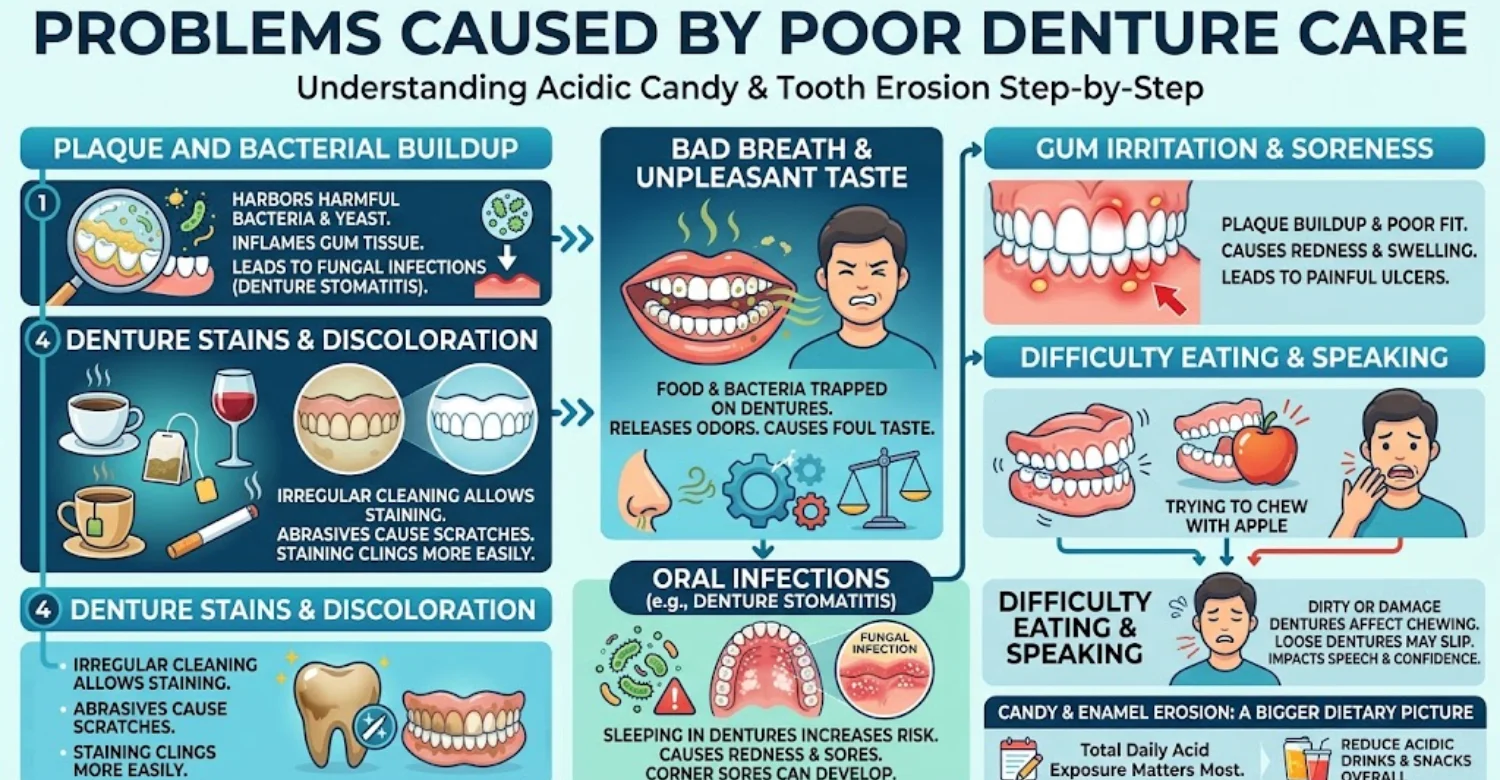
Problems Caused by Poor Denture Care
Neglecting daily routines can lead to uncomfortable and sometimes serious problems. Knowing how to care for your dentures helps you avoid the issues below.
Plaque and Bacterial Buildup
Dentures collect plaque just like natural teeth. When it is not removed daily, plaque harbors bacteria and yeast. This buildup can inflame the tissues under the denture and contribute to a common fungal condition called denture stomatitis. Daily brushing and overnight soaking keep plaque from accumulating on denture surfaces.
Bad Breath and Unpleasant Taste
Food particles and bacteria trapped on or under dentures release unpleasant odors and can leave a bad taste in the mouth. These problems usually signal that the dentures, gums, or tongue are not being cleaned thoroughly. A thorough daily cleaning routine that includes the mouth usually resolves them.
Gum Irritation and Soreness
Plaque buildup, poor fit, and wearing dentures continuously can make gums red, swollen, and sore. Pressure spots may develop into painful ulcers. Removing dentures overnight, cleaning both the denture and the gums daily, and having the fit checked regularly help keep the supporting tissues comfortable, healthy, and free of irritation.
Denture Stains and Discoloration
Coffee, tea, red wine, tobacco, and certain foods can stain dentures over time, especially when cleaning is irregular. Abrasive products scratch the surface, making stains cling more easily. Daily brushing with a non-abrasive cleanser and regular soaking in a denture solution help keep dentures looking natural and bright.
Oral Infections
Poor denture hygiene and sleeping in dentures increase the risk of oral infections, particularly fungal infections such as denture stomatitis, which causes redness under the denture. Sores at the corners of the mouth may also develop. Good cleaning habits, nightly removal, and regular dental visits significantly reduce these risks.
Difficulty Eating and Speaking
Dirty, damaged, or poorly fitting dentures can make chewing uncomfortable and less effective, leading some people to avoid healthy foods. Loose dentures may also slip while talking, affecting speech and confidence. Keeping dentures clean, undamaged, and properly fitted helps maintain comfortable eating and clear speech every day.
Understand the risks in how do humans get rabies and does it affect dental health?
How to Care for Your Dentures
This section explains denture cleaning, handling, and storage step by step, so your daily routine stays simple and effective.
How to Clean Dentures
Knowing how to clean dentures correctly makes daily care quick and safe. Always handle them over a towel or a sink half-filled with water, so they do not break if dropped. Use a soft denture brush with a denture cleanser or mild soap, and follow the four steps below.
Step 1: Remove and Rinse Your Dentures
Remove your dentures carefully and rinse them under cool or lukewarm running water to wash away loose food particles and debris. Rinsing first makes brushing more effective and reduces the chance of scratching the surface with trapped particles. Rinsing after every meal is also a helpful daily habit.
Step 2: Gently Brush the Dentures
Wet a soft-bristled denture brush and apply a denture cleanser, mild hand soap, or mild dishwashing liquid. Brush gently but thoroughly. Avoid regular toothpaste, which is too abrasive for denture material. Scrubbing too hard can damage the plastic base or bend the metal clasps on partial dentures.
Step 3: Clean All Denture Surfaces
Clean every surface, including the outer, inner, and chewing surfaces, plus the grooves that rest against your gums. If you use denture adhesive, remove all leftover adhesive from these grooves. Pay attention to clasps and areas where food collects, as missed spots allow plaque and odor to build up.
Step 4: Rinse the Dentures Thoroughly
Rinse the dentures thoroughly with cool water to remove all cleanser or soap before placing them back in your mouth. This is especially important after using a soaking solution, because denture cleaning products are meant for use outside the mouth only and should never be swallowed.
How to Clean Dentures at Home
Learning how to clean dentures at home requires only a few items: a soft denture brush, a non-abrasive denture cleanser or mild soap, a denture container, and a soaking solution. Brush daily, soak overnight, and rinse well. Replacing the denture brush about every three months keeps cleaning effective.
How to Clean False Teeth Safely
When considering how to clean false teeth safely, gentleness is key. Use non-abrasive products only, avoid bleach and household cleaners, and never use hot water. Always handle them over a soft surface, and keep them out of reach of children and pets.
How to Clean Removable Dentures
Knowing how to clean removable dentures applies to both full and partial dentures. Partial dentures need extra care around metal clasps, which can bend if handled roughly. If you have remaining natural teeth, brush them twice daily with fluoride toothpaste, as healthy natural teeth help support and anchor partial dentures.
How Often Should You Clean Dentures?
Wondering how often to clean dentures? Brush them thoroughly at least once a day, ideally before soaking them at night. Rinse them after every meal to remove food particles. Also clean your gums, tongue, and palate daily with a soft brush or washcloth to keep your whole mouth healthy.
How to Maintain Dentures Properly
Knowing how to maintain dentures properly goes beyond cleaning. Remove them at night, store them in water or a soaking solution so they do not dry out, and avoid DIY repairs. As part of how to care for your dentures, schedule regular dental checkups to monitor fit and oral health.
Ready to transform your smile?
Talk to our team and get a personal FREE treatment plan.
What Should You Avoid When Cleaning Dentures?
Some common habits can damage dentures. Knowing how to care for your dentures also means knowing which mistakes to avoid during cleaning.
Avoid Hot or Boiling Water
Never clean or soak dentures in hot or boiling water. High temperatures can warp the denture material, changing its shape so it no longer fits properly. A warped denture may need replacement. Use cool or lukewarm water for rinsing, brushing, and soaking to keep dentures in good condition.
Avoid Abrasive Toothpaste and Harsh Products
Regular toothpaste, whitening toothpaste, abrasive powders, and household cleaners can scratch denture surfaces, making them dull and more prone to stains and bacteria. Bleach can weaken and discolor dentures and corrode metal parts. Among the most important denture cleaning tips is to use denture-specific products or mild soap.
Avoid Aggressive Brushing
Brushing too hard or using a stiff-bristled brush can scratch the denture base and bend delicate clasps. Gentle, thorough brushing with a soft denture brush cleans effectively without damage. Remember that careful technique matters more than force for long-lasting results.
Avoid DIY Denture Repairs
Never try to repair cracked or broken dentures yourself with household glue or DIY kits. These materials may be unsafe, can damage the denture further, and may affect fit, causing sores. Adjusting dentures at home can also make professional repair harder. Take damaged dentures to your dentist for proper repair.
Learn about preventing enamel loss from using acidic supplements frequently and tooth erosion
Patient's Perspective
Many denture wearers share similar questions and experiences. Understanding how to care for your dentures helps address the concerns patients raise most often.
Common Concerns About Denture Cleaning
Patients often worry about whether they are cleaning dentures correctly, which products are safe, and whether dentures should be worn at night. Many also ask how to remove stains and odors. Clear guidance on how to care for dentures from the dental team helps patients build confident, effective daily routines.
Common Problems Patients Notice
Patients commonly notice bad odor, staining, food trapped under dentures, and gum soreness. Over time, dentures may also feel loose or make chewing more difficult. Many of these problems improve with better cleaning habits, while others, especially looseness and persistent soreness, signal the need for professional adjustment or relining.
How Denture Problems Affect Daily Life
Denture problems can affect much more than oral health. Odor, discomfort, or loose dentures may reduce confidence when speaking, eating, or socializing. Some people avoid certain foods, affecting nutrition. Following how to care for your dentures consistently, along with regular checkups, helps patients eat comfortably and smile with confidence.
See the risks of ignoring tooth sensitivity and progressive tooth wear
Doctor's Perspective
Dentists view proper denture care as essential to protecting oral tissues. Professional guidance on how to care for your dentures complements daily home routines.
How Dentists Evaluate Dentures
Dentists evaluate dentures by examining both the appliance and the mouth that supports it. They assess cleanliness, fit, stability, and wear, and check how dentures behave during speaking and chewing. Regular evaluations, often recommended about twice a year, help detect problems early, even for patients without remaining natural teeth.
What Dentists Check During a Denture Examination
During a denture examination, dentists check denture cleanliness, fit and stability, and gum condition. They examine the oral tissues, including the tongue, palate, and cheeks, for sores or unusual changes. They also inspect the denture for cracks or damage and look for signs of infection, such as redness under the denture.
When Dentures May Need Adjustment, Repair, or Replacement
Dentures may need adjustment when they cause sore spots, relining when the gums and bone shrink and the fit loosens, and repair when cracked or chipped. Replacement may be recommended when dentures are worn, badly damaged, or still loose after relining. Knowing how to care for your dentures extends their lifespan.
When Is It Serious and Requires a Checkup?
Some symptoms need professional attention. Even with good knowledge of how to care for your dentures, these warning signs should prompt a dental checkup.
Persistent Gum Pain or Sores
Gum pain or sores that do not improve within about two weeks should be evaluated. They may result from pressure points, poor fit, or infection. Any sore that does not heal should be examined promptly to rule out more serious conditions and to adjust the denture if needed.
Bleeding or Persistent Inflammation
Gums that bleed, stay red, or remain swollen despite good cleaning may indicate persistent inflammation or infection. Ongoing irritation under dentures should not be ignored. A dentist can identify whether the cause is poor fit, plaque buildup, or a fungal infection and recommend appropriate treatment and denture adjustments.
Dentures That Become Loose
Dentures that slip, click, or move while eating or speaking may no longer fit properly, often because the gums and jawbone have changed shape. Loose dentures can cause sores and make chewing difficult. Instead of relying heavily on adhesives, see your dentist for an adjustment or relining.
Cracked or Broken Dentures
Cracked, chipped, or broken dentures can have sharp edges that injure the gums, tongue, or cheeks, and they may no longer fit correctly. Stop wearing a damaged denture and contact your dentist for professional repair. Avoid gluing or adjusting it yourself, as this may cause further damage.
Persistent Bad Odor Despite Cleaning
If bad odor persists despite daily cleaning, the cause may be bacteria in scratches or porous areas, food trapped under a poorly fitting denture, or an oral infection. When dentures are cleaned correctly, odor is usually controlled, so persistent smells warrant a professional evaluation.
Signs of Oral Infection
Signs of oral infection include redness and swelling under the denture, white patches, burning sensations, cracks or sores at the corners of the mouth, pus, or fever. Fungal infections are common among denture wearers. These symptoms need prompt dental or medical assessment to identify the cause and begin appropriate treatment.
Discover the impact of the oral virome in health and disease
When Should Patients Rest From Wearing Dentures?
Giving your mouth time without dentures is an important part of how to care for your dentures and protecting the tissues underneath.
Why Oral Tissues May Need a Break
The gums and palate carry the pressure of dentures throughout the day. Without breaks, these tissues can become irritated and more prone to infection. Removing dentures for several hours daily allows blood flow to recover, reduces pressure, and gives saliva a chance to cleanse the tissues naturally.
Removing Dentures Overnight
Dentists generally recommend removing dentures before sleeping each night. Overnight removal gives the gums time to rest and lowers the risk of fungal infections linked to sleeping in dentures. Store them overnight in water or a denture-soaking solution as instructed.
When Sore or Irritated Tissues Need Rest
If your gums become sore or irritated, your dentist may recommend leaving dentures out for longer periods while the tissues heal. Avoid continuing to wear dentures that cause pain. Rest alone may not solve the problem, so have the fit checked to identify and correct the cause.
Rest Tips
Simple denture care habits during rest periods protect both your dentures and your mouth. These tips support how to care for your dentures every day.
Remove Dentures When Recommended
Follow your dentist's advice on when to remove dentures, usually overnight and sometimes for longer periods if tissues are sore. Consistent removal routines help the gums stay healthy and comfortable. Use the time without dentures to clean your gums, tongue, and palate gently with a soft brush or washcloth.
Keep Dentures Clean During Rest
Rest time is ideal for cleaning. Brush your dentures before soaking them, then place them in water or a denture-cleansing solution as directed. Rinse them thoroughly before wearing them again. Consistent care during rest periods keeps them fresh and hygienic.
Store Dentures Safely
Store dentures in a clean, labeled container filled with water or a soaking solution, so they do not dry out and lose their shape. Keep the container away from children and pets, who might damage or swallow parts. Clean the container regularly to prevent bacteria from building up.
Avoid Wearing Damaged Dentures
Do not wear cracked, chipped, or broken dentures, even for short periods. Damaged dentures can injure soft tissues, cause sores, and worsen the break. Store the denture safely and contact your dental team for repair. Wearing damaged dentures can turn a simple repair into a more complicated problem.
Seek Professional Evaluation for Persistent Soreness
If soreness continues despite rest and good cleaning, seek a professional evaluation. Persistent discomfort usually means the denture needs adjustment or relining, or that an infection requires treatment. Prompt care relieves pain, protects oral tissues, and helps you return to wearing your dentures comfortably and confidently.
About Vitrin Clinic
At Vitrin Clinic, we guide patients on how to care for your dentures through personalized advice, regular evaluations, and professional denture care. Our dental team takes time to explain proper cleaning techniques, safe handling, and correct storage, so every patient can build a simple and effective daily routine at home. During each visit, we carefully assess denture fit, gum health, and the condition of the oral tissues to detect any problems early. Whether you are a new denture wearer or have worn dentures for years, we are here to help you stay comfortable, confident, and healthy.
.jpg)
.jpg)
.jpg)

What We Notice Clinically
At Vitrin Clinic, we notice that many denture problems begin with inconsistent cleaning. Dr. Rifat Alsaman, Head of the Medical Team at Vitrin Clinic and a Cosmetic Dentist, emphasizes consistent denture hygiene, proper cleaning and handling, and regular checks of denture fit and oral tissue health as the foundation of comfortable, long-lasting dentures.
Tips for the Patients
Clean dentures daily with appropriate denture-cleaning products, and handle them carefully over a towel or water. Avoid hot water, and clean your mouth separately. Remove dentures when recommended, store them properly in water or solution, and seek professional care if discomfort persists. These denture cleaning tips protect your oral health.
Read about the oral symptoms of leprosy and oral health
Resource:
https://pmc.ncbi.nlm.nih.gov/articles/PMC4541086/
https://onlinelibrary.wiley.com/doi/10.1111/j.1532-849X.2010.00683.x
https://penndentalmedicine.org/our-services/prosthodontics/dentures/
FAQs
Dr. Rifat Alsaman has more than 5 years of clinical experience in dentistry and currently serves as the Head of the Medical Team at Vitrin Clinic. He is dedicated to providing exceptional patient care, overseeing treatment planning, and ensuring the highest clinical standards across the team. His expertise, attention to detail, and commitment to continuous professional development have helped countless patients achieve healthier, more confident smiles.


