General Dentistry
August 6, 2026
Silver Diamine Fluoride (SDF): A tooth decay treatment without drilling?
.webp&w=3840&q=75)
Silver diamine fluoride is a topical liquid dentists use to stop tooth decay. It works without drilling, injections, or sedation. It's applied directly onto a cavity in seconds. This makes SDF a practical, non-invasive dental treatment for young children and anxious patients. A recent large-scale US trial gave this approach stronger clinical backing than ever before. For families dealing with early childhood caries, SDF offers a faster, gentler path to managing decay. It can help before decay becomes a bigger problem requiring surgery or extensive restorative work.
What Is Silver Diamine Fluoride (SDF)?
Silver diamine fluoride is a topical liquid combining silver and fluoride. It's used to arrest active tooth decay. Instead of removing decayed structure like a filling does, it's brushed directly onto the cavity. The silver component fights the bacteria causing decay. The fluoride helps strengthen what remains of the tooth. This makes SDF a valuable cavity treatment without drilling. It's especially useful for primary teeth in very young patients who may not tolerate longer procedures.
How SDF Works to Stop Tooth Decay
SDF stops tooth decay by combining two active ingredients. Silver ions kill the bacteria responsible for the decay process. This halts further breakdown of tooth structure. Fluoride ions then support remineralization, helping harden the surface of the lesion. Together, this action arrests active dental caries without needing to remove any tooth material. The result is a stabilized, non-progressing lesion. This is why SDF is increasingly used as a first-line, non-invasive dental treatment for early-stage or high-risk cavities.
Why SDF Is Different from Traditional Fillings
Traditional fillings require removing decayed tissue and shaping the tooth to hold new material. SDF skips that step entirely. Nothing is drilled or removed; the liquid is simply applied to the surface of the lesion. This makes SDF a genuinely non-invasive dental treatment. It's ideal for children, anxious patients, or anyone unable to sit through a longer procedure. While a filling restores tooth shape, SDF is primarily used to stop cavities without a filling. This applies when full restoration isn't immediately possible or necessary.
The History and Growing Use of SDF in Dentistry
SDF has been used internationally for decades, particularly in countries like Japan and Australia. In the United States, it was cleared by the FDA in 2014. However, that clearance was only for treating tooth sensitivity. Its use for actual tooth decay treatment has remained off-label ever since. Despite this regulatory gap, dentists have applied it widely due to strong outcomes abroad. Recent US-based research is now working to close that evidence gap. It aims to support formal approval of SDF for cavity treatment.
Why Are Dentists Talking About SDF in 2026?
In 2026, silver diamine fluoride gained fresh attention. This followed the largest US clinical trial of its kind. The study offered long-awaited domestic evidence supporting SDF's effectiveness in children with severe tooth decay. More than 40% of US children are affected by dental caries. The findings offered real hope for a scalable, low-cost, non-invasive dental treatment. The results have renewed interest from dentists, parents, and regulators alike in the practical use of SDF.
The Largest US Clinical Trial on Silver Diamine Fluoride
The phase 3 trial was a multisite, randomized, placebo-controlled study. It was designed to test SDF's effectiveness in real-world US pediatric populations. Children were recruited through dental offices, pediatric practices, and early childhood programs across three states. This scale made it the most comprehensive US trial to date on SDF for tooth decay treatment. The findings are expected to support future FDA evaluation of SDF. That evaluation would consider SDF as an approved therapy for arresting dental caries in young children.
Key Findings from the Study
The trial enrolled 830 children aged 12–71 months with severe early childhood caries. Participants received 38% SDF or a placebo, applied at baseline and again at six months.
830 children enrolled, ages 12–71 months
38% SDF vs. placebo, applied at baseline and 6 months
Arrest rates: 57.5% (3 mo) / 54.0% (6 mo) / 50.2% (8 mo) — vs. 18.8% / 22.5% / 17.4% for placebo
No significant pain difference between groups; similar safety profile
These findings emphasize the value of modern dental solutions. At Vitrin Clinic, we provide advanced, personalized care to support long-term oral health and patient comfort.
What Are Severe Early Childhood Caries (ECC)?
Severe early childhood caries is an aggressive form of tooth decay in children. It typically appears before age six. It affects multiple primary teeth and progresses faster than caries seen in older patients. Left unmanaged, primary tooth decay of this severity can lead to pain and infection. In some cases, it requires surgery under general anesthesia. Studies on SDF and early childhood caries show how important early intervention is. This condition can escalate quickly if not addressed.
Signs and Symptoms Parents Should Watch For
Parents should watch for white or brown spots on baby teeth cavities. Visible pitting or discoloration near the gumline are also signs. Sensitivity to sweet or cold foods can be an early sign too. As decay progresses, children may show reluctance to chew or complain of tooth pain. Early childhood caries can spread quickly across multiple teeth. Catching these signs early allows for simpler treatment options before more extensive procedures become necessary.
Why Early Childhood Cavities Progress So Quickly
Primary teeth have thinner enamel and dentin than permanent teeth. This makes them more vulnerable to rapid decay. Frequent snacking, sugary drinks, and inconsistent brushing habits in young children accelerate this process further. Primary tooth decay can spread from one surface to another quickly. What starts as a small cavity can become a multi-tooth issue within months. This rapid progression is part of why early intervention plays such an important role in pediatric dental care.
Risks of Leaving Baby Teeth Untreated
Untreated baby teeth cavities can lead to pain, abscesses, and infections. These affect a child's eating, sleep, and overall development. In severe cases, children may require emergency care or surgery under general anesthesia. This carries its own risks and costs. Tooth decay in children can also affect permanent teeth developing underneath. This is why timely tooth decay treatment matters, whether through SDF or restorative care, to protect a child's long-term oral health.
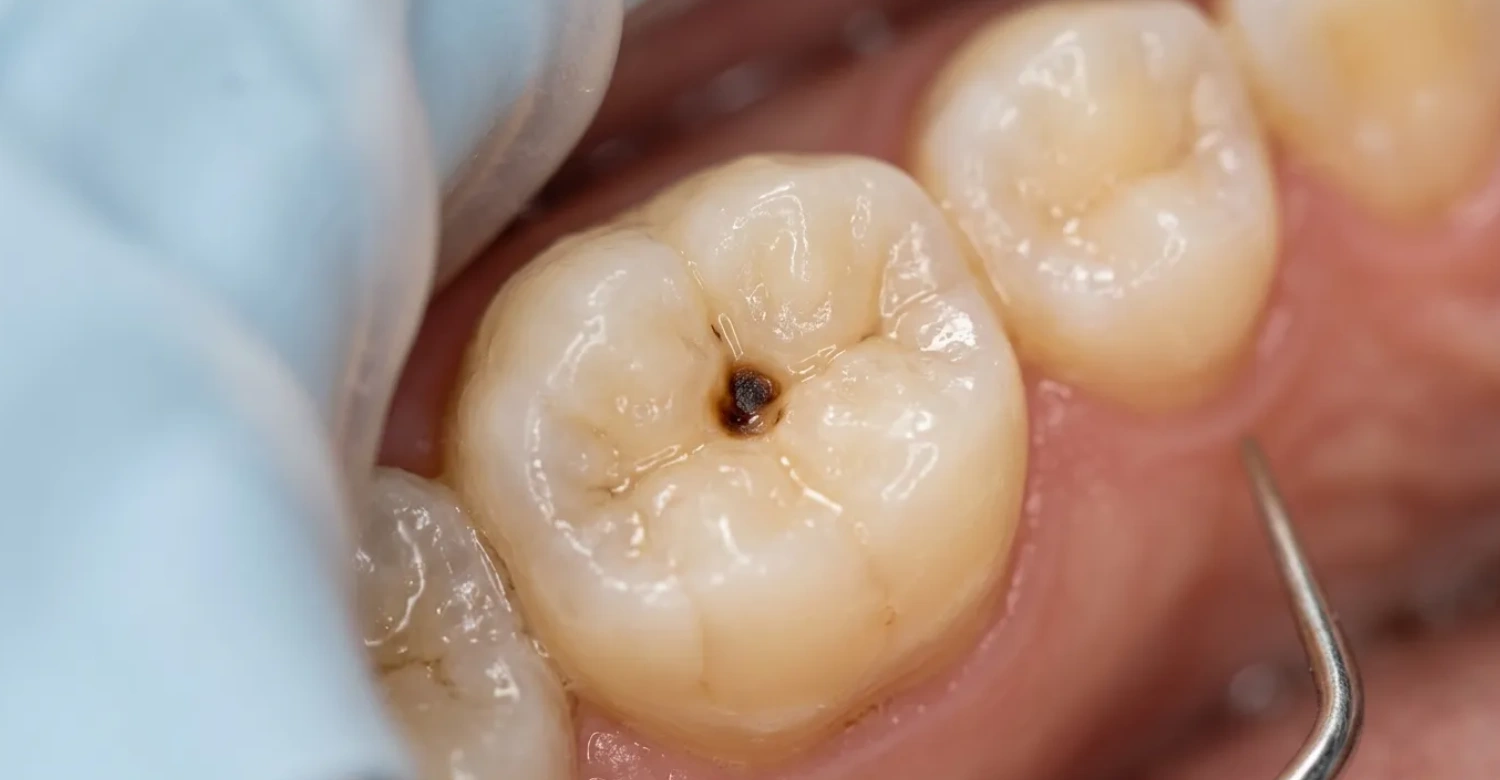
How Does Silver Diamine Fluoride Stop Cavities?
SDF stops cavities through a two-part chemical action. The silver component targets and reduces the bacteria driving the decay process. The fluoride component works to reinforce the remaining tooth structure. This combination allows SDF to arrest dental caries without needing to remove any part of the tooth. It offers a genuinely non-invasive dental treatment path for cavities that might otherwise require drilling or more complex restorative work.
Silver's Antibacterial Action
The silver ions in SDF have strong antibacterial properties. They directly target the bacteria responsible for tooth decay. By reducing bacterial activity at the site of the lesion, silver interrupts the ongoing breakdown of tooth structure. This antibacterial effect is central to how SDF halts active dental caries. It's part of why the treatment can arrest decay in a single application. That makes it a fast and effective non-invasive dental treatment option for many patients.
Fluoride's Role in Strengthening Tooth Structure
Fluoride plays a supporting role in SDF by helping remineralize the tooth surface. Once bacteria are neutralized, fluoride ions assist in hardening and stabilizing what remains of the lesion. This makes the tooth more resistant to further breakdown. This dual mechanism, antibacterial plus remineralizing, is what distinguishes SDF from single-ingredient fluoride treatments. It's a key reason SDF can arrest primary tooth decay more effectively than fluoride varnish alone in many cases.
Why SDF Can Arrest Active Tooth Decay
Because SDF addresses both the bacterial cause and the structural weakening of decay, it can genuinely arrest active lesions. It does more than just slow them down. Clinical trial data shows arrest rates above 50% at six months following a single application. This makes SDF a credible option to stop cavities without a filling. It works particularly well for lesions that are accessible and not yet affecting the tooth's inner pulp.
What Happens During an SDF Treatment?
An SDF treatment appointment is typically brief and straightforward. The tooth is dried, the liquid is applied with a small brush or sponge applicator, and it's left to set for a short time. There's no need for numbing, drilling, or removal of tooth structure. This simplicity is a major reason SDF has become popular as a cavity treatment without drilling. It works well for young or anxious patients who might struggle with longer procedures.
Step-by-Step Procedure
The treated tooth is first cleaned and isolated to keep it dry. SDF is then applied directly onto the cavitated area using a small brush. The liquid is left in place briefly to absorb into the lesion. No anesthesia or removal of tooth material is required at any point. The entire process for one tooth typically takes under a minute. This makes SDF one of the fastest tooth decay treatment options available today.
Does It Hurt?
One of the biggest advantages of SDF is that the application itself causes no pain. There's no drilling, no injections, and no pressure on the tooth. Some patients may notice a mild taste from the liquid, but nothing more. This pain-free process is a major reason SDF works well for young children and anxious patients. It also suits anyone looking to stop cavities without a filling or invasive procedure.
How Long Does the Application Take?
A single application of SDF typically takes less than a minute per tooth. Multiple teeth can be treated in the same short visit. This makes it efficient for treating tooth decay in children across several teeth at once. This speed, combined with the lack of numbing or recovery time, makes SDF one of the quickest non-invasive dental treatment options for managing active cavities.
Tips for Patients
Bring a list of your child's current medications or allergies before the visit
Ask about how many applications may be needed for full effect
Avoid brushing the treated tooth vigorously for the rest of the day
Expect some darkening of the treated area — this is normal
Schedule a follow-up to check whether the lesion has arrested
Preparing for an SDF Appointment
Preparing for an SDF appointment is simple, since no special fasting or sedation is required. Parents should share any relevant dental or medical history beforehand. It also helps to explain the process to a child in simple terms. Note that no drilling or needles are involved. Because SDF is quick and non-invasive, most patients need little advance preparation compared with restorative or surgical treatments.
What to Expect Right After Treatment
Right after an SDF application, the treated area may appear temporarily shiny or slightly darker. There's no downtime, swelling, or numbness. Children can eat and resume normal activities the same day. Some staining will develop over the following days as the silver reacts with the decayed tissue. This is expected and does not indicate a problem with the tooth decay treatment.
Simple Home Care to Support the Results
After SDF treatment, regular brushing and flossing remain essential to prevent new decay. Reducing sugary snacks and drinks supports the treatment's effectiveness. Parents should also keep scheduled follow-up visits to monitor whether the lesion stays arrested. Good home care doesn't replace SDF, but it does help protect surrounding primary teeth. It guards against new areas of tooth decay.
Benefits of Silver Diamine Fluoride Treatment
SDF offers several practical benefits, particularly for children and patients who struggle with standard dental procedures. It requires no drilling, injections, or sedation, and takes only seconds per tooth. As a low-cost, non-invasive dental treatment, SDF can also reduce the need for emergency visits or hospital-based procedures. These advantages make it an appealing option for stopping cavities without a filling in appropriate cases.
No Drilling, Injections, or Sedation
Because SDF is applied topically, there's no need for drilling, local anesthesia, or sedation. This makes the treatment far less intimidating for young children and anxious patients. It also reduces the physical and psychological toll that can come with traditional cavity treatment. For many families, this alone makes SDF a preferable first option for early or moderate primary tooth decay.
Quick and Child-Friendly
An SDF application typically takes less than a minute per tooth, with no discomfort involved. This speed and simplicity make it especially child-friendly, reducing anxiety around dental visits. Children can often be treated for multiple teeth in a single short appointment. This efficiency is one reason SDF has become a preferred tool for treating tooth decay in children with limited patience for longer procedures.
Low-Cost Preventive Option
Compared to fillings, crowns, or procedures requiring general anesthesia, SDF is significantly more affordable. Its low cost makes it accessible for families with limited dental coverage or budget constraints. As a preventive and arresting treatment, it can delay or eliminate the need for more expensive restorative work. This affordability is a major factor behind its growing use as a non-invasive dental treatment worldwide.
May Reduce Emergency Visits and Hospital Procedures
By arresting active decay early, SDF may help prevent the pain and infection that often lead to emergency department visits. It can also reduce reliance on hospital-based procedures requiring general anesthesia. Such procedures carry added cost and risk for young children. This makes SDF a valuable tool not just for individual patients, but for easing pressure on emergency dental and medical systems overall.
Who Is an Ideal Candidate for SDF?
SDF works best for patients who need a fast, non-invasive dental treatment. It suits those who may not tolerate longer procedures. This includes young children with early childhood caries, patients with dental anxiety, and those with limited access to regular dental care. Because it doesn't require drilling or sedation, SDF is often the most practical starting point before deciding on more involved treatment.
Young Children with Severe Tooth Decay
Young children with severe early childhood caries are among the strongest candidates for SDF. Since it doesn't require sedation or lengthy procedures, SDF suits children who may struggle to sit through traditional treatment. Clinical trial data specifically supports its use in children as young as one year old. This makes it a practical option for arresting primary tooth decay in very young patients.
Children with Dental Anxiety or Special Needs
For children with dental anxiety or special needs, SDF offers a fast, low-stress alternative to drilling or injections. The brief, painless application reduces the chance of a negative dental experience. This makes SDF particularly valuable for patients who may otherwise require sedation just to complete a standard filling. It offers a genuinely non-invasive dental treatment path instead.
Patients Unable to Tolerate Conventional Treatment
Some patients, due to medical conditions, mobility issues, or extreme anxiety, simply cannot tolerate conventional cavity treatment. SDF offers a workable alternative in these cases. It requires no drilling, injections, or extended chair time. This flexibility makes SDF a useful option to stop cavities without a filling when standard restorative procedures aren't realistically possible.
Individuals with Limited Access to Dental Care
For patients with limited access to regular dental care, SDF provides a practical way to manage active decay. It doesn't require multiple complex visits. Its low cost and simple application make it especially useful in underserved communities. As a scalable non-invasive dental treatment, SDF can help bridge gaps in care until more comprehensive treatment becomes accessible.
When Is SDF Not the Right Choice?
SDF isn't suitable for every case of tooth decay. It's not designed to treat deep cavities affecting the tooth's nerve. Nor can it replace a filling or crown once structural damage is significant. Understanding these limits is important, since SDF works best as an early-intervention or interim treatment. It is not a full substitute for restorative dental care.
Deep Cavities Affecting the Dental Pulp
When decay has reached the dental pulp, SDF is no longer sufficient on its own. At this stage, the tooth may require more advanced treatment, such as a pulpotomy or extraction. This addresses the infection directly. SDF is best suited for lesions that haven't progressed this far. This is why early detection of primary tooth decay remains so important.
Teeth That Need Full Restoration
Teeth with significant structural loss need full restoration rather than a surface-level treatment. SDF can arrest the bacterial activity, but it doesn't rebuild missing tooth structure. In these cases, a filling, crown, or other restorative option is still necessary. This restores proper function and appearance, even after SDF has been used to stop active decay.
Cases Requiring Root Canal Treatment or Extraction
When decay has caused infection or significant damage to a tooth's root, root canal treatment or extraction may be unavoidable. SDF cannot resolve infection at this stage. It remains most effective as an early-stage or preventive tool. It is not a replacement for the surgical or endodontic care needed once decay has progressed beyond arrestable limits.
One Important Drawback of Silver Diamine Fluoride
The most notable drawback of SDF is permanent staining of the treated area. While effective at arresting decay, tooth staining from SDF turns the lesion black or dark brown. This cosmetic change doesn't affect tooth function. It's an important consideration for patients and parents, especially when the treated tooth is visible when smiling.
Why Treated Cavities Turn Black
Tooth staining from SDF happens because the silver in the solution reacts with organic material in the decayed tooth structure, forming a dark compound. This reaction is actually a sign that the treatment is working. It reflects the silver's antibacterial action taking effect. While cosmetically noticeable, this staining doesn't indicate ongoing decay or harm to the tooth.
Is the Staining Permanent?
Yes, staining from SDF is permanent on the treated area of the tooth. It won't fade or lighten over time. This holds true even after the tooth eventually falls out in the case of primary teeth. This permanence is one of the main trade-offs patients weigh when considering SDF as a non-invasive dental treatment for visible cavities.
Cosmetic Considerations for Front Teeth
For cavities located on front teeth, permanent staining can be a significant concern for parents and patients alike. In these cases, dentists may weigh SDF against alternative treatments that preserve appearance. They may also consider restorative options once the decay is arrested. Discussing cosmetic priorities beforehand helps set realistic expectations for how the treated tooth will look.
Clinical Note
The trial supporting these findings followed patients for eight months, with about 30% lost to follow-up. Children with painful or infected lesions were excluded from the study. This means results apply mainly to earlier-stage, accessible cavities. SDF currently remains off-label for cavity treatment in the US, pending full FDA review based on this and related research.
Does SDF Replace Fillings Completely?
SDF does not fully replace fillings in every situation. It works well to stop cavities without a filling for many early-stage lesions. Structurally damaged teeth may still need restorative work. SDF and fillings often work together as part of a broader, staged approach to managing tooth decay in children and adults alike.
When SDF Alone Is Enough
For many primary teeth with early or moderate cavitated lesions, SDF alone can successfully arrest decay without further intervention. This is especially true for teeth expected to fall out naturally within a few years. In these cases, SDF offers a practical way to stop cavities without a filling. It also avoids unnecessary restorative procedures.
When a Filling or Crown Is Still Needed
When decay has caused significant structural loss, a filling or crown is still needed. This restores the tooth's shape and function. SDF can be used first to arrest active decay, buying time before restorative work is completed. This combined approach is common in cases involving multiple affected primary teeth.
Combining SDF with Preventive Dental Care
SDF works best as part of a broader preventive plan, not as a standalone solution. Regular checkups, fluoride exposure, and reduced sugar intake all support long-term outcomes. Combining SDF with ongoing preventive dental care helps address the root causes of dental caries. It does more than rely on a single treatment alone.
Silver Diamine Fluoride vs. Traditional Cavity Treatment
Compared with traditional cavity treatment, SDF offers a faster, less invasive alternative for many early-stage lesions. Where fillings require removing tooth structure, SDF works on the surface. Understanding how SDF vs fillings and other approaches compare helps patients and parents choose the most appropriate tooth decay treatment for their specific situation.
SDF vs. Dental Fillings
The core difference in SDF vs fillings comes down to invasiveness. Fillings require removing decayed tissue and reshaping the tooth. SDF is simply applied to the surface. Fillings restore full tooth structure and appearance; SDF arrests decay without altering shape. Many patients use SDF first, moving to a filling later if needed.
SDF vs. Fluoride Varnish
Fluoride varnish primarily helps prevent new decay and strengthen enamel. SDF actively arrests existing dental caries through its antibacterial silver component. Varnish is generally preventive; SDF is treatment-focused for lesions already present. For active baby teeth cavities, SDF has shown stronger arrest rates than varnish alone in comparative research.
SDF vs. Hall Technique
The Hall Technique uses a preformed metal crown placed over a decayed tooth without removing decay first. SDF uses a topical liquid with no crown involved. Both are considered non-invasive dental treatment options, but they suit different situations. Hall crowns work well for larger cavities needing structural coverage, while SDF suits earlier-stage lesions.
SDF vs. General Anesthesia Dentistry
General anesthesia dentistry is typically reserved for extensive decay requiring multiple procedures in one sitting. It carries added cost and risk, especially for young children. SDF offers a way to arrest decay without any sedation at all. For many families, trying SDF first can reduce or eliminate the need for anesthesia-based treatment altogether.
Is Silver Diamine Fluoride Safe?
SDF has a strong safety record, supported by both decades of international use and recent US clinical trial data. Adverse event rates were similar between treatment and placebo groups in trial results. While minor side effects like temporary staining exist, SDF is broadly considered safe for children and adults when used appropriately.
Evidence from the Phase III Clinical Trial
The phase III trial found no significant difference in adverse event rates between SDF and placebo groups. Most reported events were mild to moderate, with only a small number classified as severe. No formal link was established between those events and SDF itself. This data supports SDF's overall safety profile in young children.
Side Effects and Safety Profile
Aside from permanent tooth staining from SDF, side effects are generally minimal. Some patients report a temporary metallic taste following application. Serious adverse events are rare and not clearly linked to the treatment itself in trial data. This safety profile supports SDF's continued use as a low-risk, non-invasive dental treatment option.
FDA Status and Current Clinical Use
SDF currently holds FDA clearance only for treating tooth sensitivity, not for cavity treatment directly. Its use for arresting dental caries remains off-label in the US. It does, however, have FDA Breakthrough Therapy designation for this purpose. Recent trial data is expected to support a formal drug application for expanded, approved clinical use.
What Parents Should Know Before Choosing SDF
Before choosing SDF, parents should understand both its benefits and its limits. It's highly effective at arresting many cavities without drilling, but it does cause permanent staining. It may not be enough for advanced decay. Knowing what to expect helps set realistic goals for treating tooth decay in children.
Questions to Ask Your Dentist
Parents should ask how many applications of SDF their child may need. They should also ask how success will be measured at follow-up visits. It's also worth asking whether any teeth are unsuitable for SDF due to depth of decay. Clear answers help set expectations around timeline, appearance, and next steps in the tooth decay treatment plan.
How to Care for Teeth After Treatment
After SDF treatment, normal brushing and flossing should continue as usual. Avoiding hard or sticky foods on the treated tooth for the rest of the day is a good precaution. Attending follow-up visits allows the dentist to confirm the lesion has arrested. It also confirms the lesion remains stable over time.
Preventing New Cavities After SDF
Preventing new baby teeth cavities after SDF treatment relies on consistent oral hygiene, reduced sugar intake, and regular dental visits. SDF arrests existing decay, but it doesn't prevent new cavities from forming elsewhere. Ongoing preventive habits remain essential to protecting the rest of a child's primary teeth long-term.
What We Notice Clinically
Dr. Rifat Alsaman is Head of the Medical Team and a cosmetic dentist at Vitrin Clinic. He sees SDF as valuable for anxious patients and young children who delay treatment. He notes it arrests decay painlessly without removing tooth structure. He adds that it's temporary and causes visible staining patients should expect beforehand.
About Vitrin Clinic
Vitrin Clinic takes a conservative, patient-first approach to treating tooth decay, prioritizing non-invasive dental treatment options whenever appropriate. For young patients and those with dental anxiety, treatments like SDF are considered alongside traditional restorative care. This helps find the least invasive path forward. Vitrin Clinic focuses on clear communication with patients and parents about both the benefits and trade-offs of each treatment option available.
References
FAQs

Dr. Rifat Alsaman has more than 5 years of clinical experience in dentistry and currently serves as the Head of the Medical Team at Vitrin Clinic. He is dedicated to providing exceptional patient care, overseeing treatment planning, and ensuring the highest clinical standards across the team. His expertise, attention to detail, and commitment to continuous professional development have helped countless patients achieve healthier, more confident smiles.
.webp&w=3840&q=75)


