Dental Implant
October 13, 2026
How Can You Maintain Subperiosteal Implant Maintenance for Long-Term Oral Health?
 Dr. Rifat Alsaman
Subperiosteal implant maintenance is the daily and professional care that keeps a subperiosteal implant clean, comfortable, and stable. These implants sit on top of the jawbone, beneath the gum, rather than inside the bone. That design helps patients with severe bone loss, but it also creates unique cleaning challenges. Good care protects the gum seal, limits plaque, and helps detect problems early.
Quick facts at a glance:
Short-term survival: About 97.8% of modern 3D-printed subperiosteal implants remained in function at roughly 21 months.
Most common complication: Partial framework exposure affected about 25.6% of implants in a 2024 systematic review.
Infection rate: Soft-tissue or persistent infection was reported in about 5.3% of patients.
Evidence level: Current long-term evidence is rated very low certainty, so close monitoring matters.
Typical review interval: Often every 3 to 6 months, adjusted to individual risk.
.jpg)
.jpg)
.jpg)
.jpg)
.jpg)
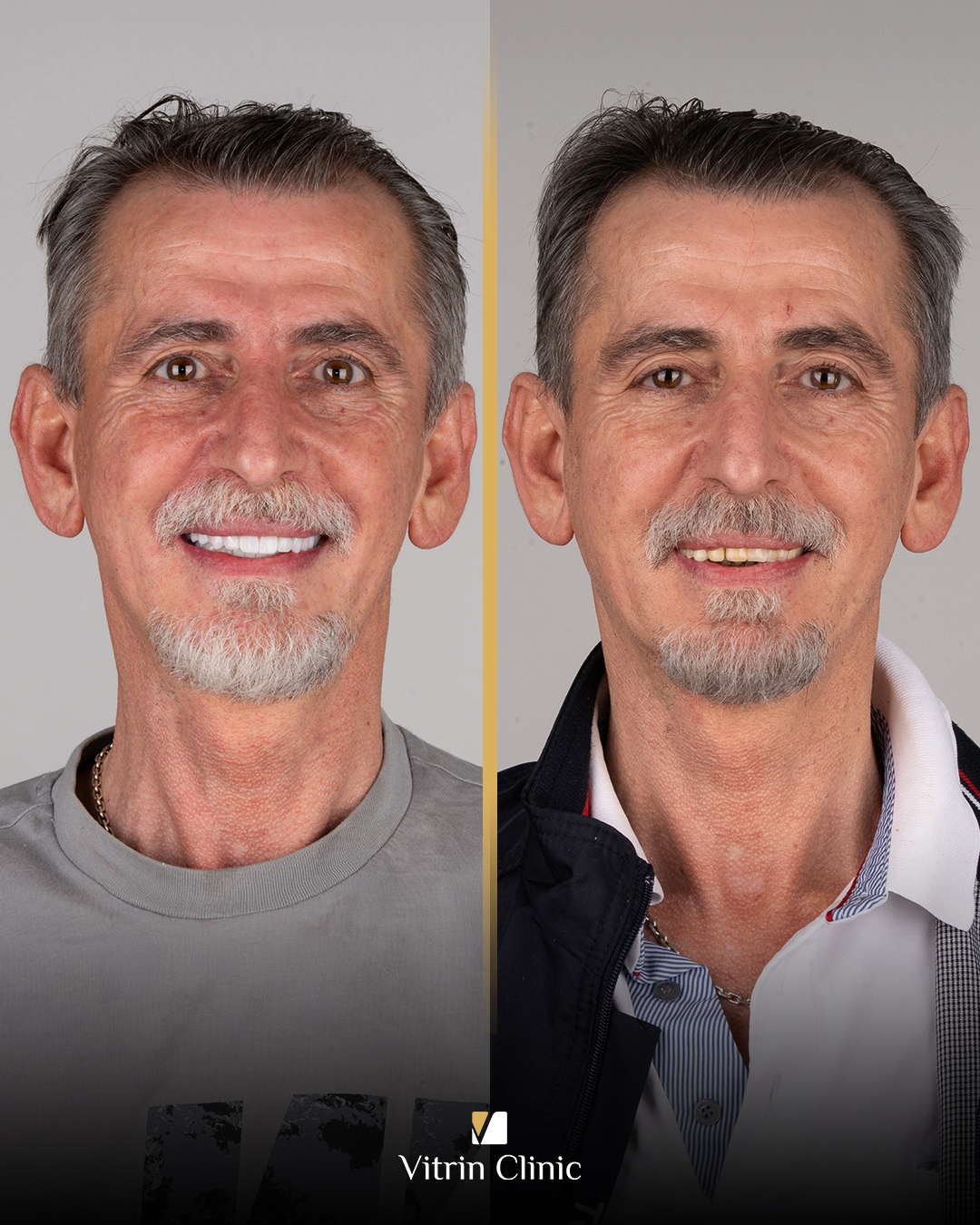
What Are Subperiosteal Dental Implants and Why Do They Need Specialized Maintenance?
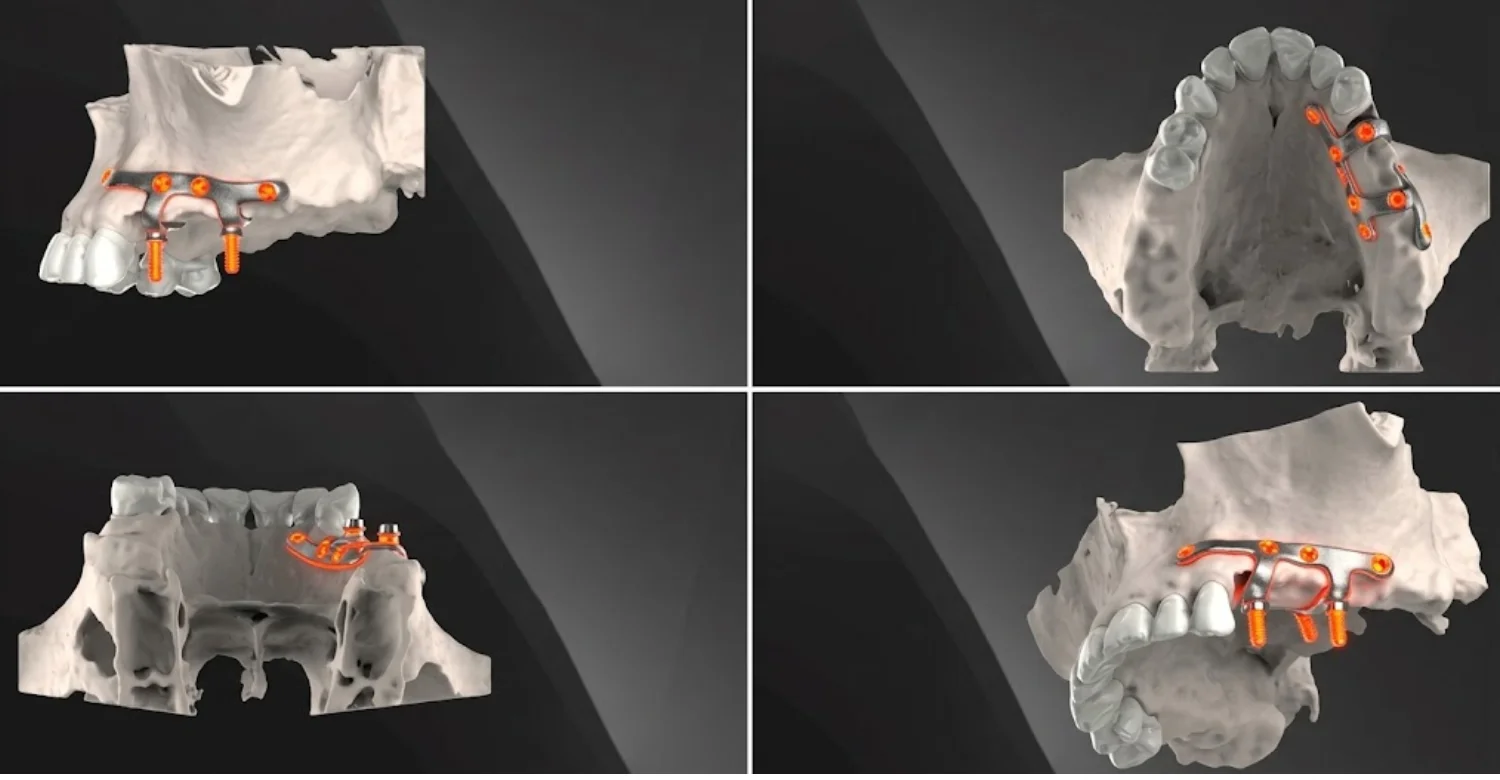
Subperiosteal dental implants are custom metal frameworks that rest on the jawbone surface under the gum. Posts pass through the gum to support fixed or removable teeth. Because the framework spreads across a wide area, plaque control and soft-tissue health need special attention. Subperiosteal Implant Maintenance therefore goes beyond the routine care used for single conventional implants.
How subperiosteal implants differ from conventional dental implants
Conventional implants are screw-shaped posts placed inside the jawbone. They need enough bone height and width to anchor securely. Subperiosteal implants work differently because they sit on the bone, held by screws and soft tissue. Modern versions are designed from CT scans and 3D-printed in titanium for a precise fit. The larger surface means more gum tissue covers the framework. Any break in that tissue can expose metal and trap bacteria. This is the main reason cleaning routines and reviews differ from standard implant care.
Who may need a subperiosteal implant and how its design affects cleaning
These implants are usually considered for people with severe jawbone loss. Many cannot have bone grafts or prefer to avoid major reconstructive surgery. Some patients have lost bone after years of wearing dentures or after tumor surgery. A 2024 review found a weighted mean patient age of 62.4 years. Older patients may also have reduced dexterity, which can make cleaning harder. The posts and bridge create ledges and spaces where food collects. Your dental team should design the prosthesis with cleaning access in mind.
Why soft-tissue health and framework exposure matter
The gum acts as a protective barrier over the metal framework. When that barrier stays healthy, bacteria struggle to reach the deeper structures. Partial exposure was the most common complication, seen in 25.6% of implants in one review. Exposure does not always mean failure, but it needs monitoring and cleaning. Exposed metal surfaces can collect plaque quickly. Inflamed tissue may recede further if plaque stays in place. Protecting the soft tissue is the core goal of every maintenance visit.
What patients should know about long-term maintenance and limited clinical evidence
Modern subperiosteal implants are still relatively new in their 3D-printed form. Most published studies date from 2017 onward. The 2024 systematic review included 13 studies and 227 implants. Its mean follow-up was only about 21 months. Researchers rated the certainty of evidence as very low. That means long-term outcomes remain uncertain. Patients should expect closer monitoring than with conventional implants. Honest discussion about these limits helps you plan realistic care and costs.
What Does Subperiosteal Implant Maintenance Involve?
Subperiosteal Implant Maintenance combines home hygiene, scheduled professional visits, and ongoing tissue monitoring. Each part supports the others. Daily cleaning reduces plaque, while clinic visits catch what home care misses. Together, they help protect the gum seal and the prosthesis over many years.
Daily oral hygiene and plaque control
Plaque is a sticky bacterial film that forms on teeth, gums, and implant parts. Left alone, it can inflame the gum tissue within days. Daily removal is the most important habit for implant patients. Brush at least twice daily and clean around posts once a day. Pay special attention to where the gum meets the metal. Research on conventional implants shows mucositis affects about 43% of implant patients. Consistent plaque control is the first defense against this inflammation.
Professional examinations and prosthetic checks
Professional visits allow your dentist to see areas you cannot. The team checks the gum, the posts, and the fixed or removable teeth. They remove hardened deposits that brushing cannot shift. They also check that screws remain tight and the bite feels even. Some screw-retained bridges can be removed for deeper cleaning and inspection. A 2024 review noted that retrievable prostheses make periodic tissue checks easier. Each visit should end with updated home-care advice.
Monitoring gum tissue, exposed framework areas, and comfort
Your dentist watches for redness, swelling, bleeding, and tissue shrinkage. Any visible metal is recorded and compared at each visit. Photographs help track subtle changes over months. Comfort is also important, because soreness can signal early irritation. Patients should report tenderness when chewing or brushing. Early signs are easier to manage than advanced tissue breakdown. Regular comparison is what makes small changes visible in time.
Why maintenance plans must be individualized
No two subperiosteal implants are identical, because each is custom-made. Bone shape, gum thickness, and prosthesis design vary widely between patients. Medical history also affects healing and infection risk. Smokers and people with diabetes often need closer follow-up. Someone with exposed metal may need visits every 3 months. A patient with stable, healthy tissue may need visits less often. Your plan should change as your mouth changes over time.
How to Care for Subperiosteal Dental Implants at Home
Home care is where long-term success is built, one day at a time. Patients spend only a few hours a year in the dental chair. The remaining time depends on their own cleaning habits. Effective Subperiosteal Implant Maintenance at home focuses on gentle, thorough plaque removal around every post and gum margin.
Subperiosteal implant hygiene routine: a practical daily checklist
A simple checklist makes daily care easier to remember and repeat. Most patients do best with a morning and evening routine. The evening clean should be the most thorough, because saliva flow drops during sleep. Plan around five to ten minutes for a complete routine. Keep your tools in one visible place to build the habit. The steps below cover the essentials most dental teams recommend. Your own dentist may add or change steps to suit your prosthesis.
Brush gently with a soft-bristled toothbrush
Use a soft or extra-soft toothbrush to protect the delicate gum tissue. Hard bristles can scratch prosthetic surfaces and irritate the gum margin. Angle the bristles toward the gumline at about 45 degrees. Use small, gentle circular movements around each post. Brush for at least two minutes, twice daily. Electric toothbrushes with pressure sensors can help patients who press too hard. Replace your brush head every three months or sooner if bristles splay.
Clean accessible areas beneath and around the prosthesis as instructed
Food and plaque often collect under fixed bridges and around connecting bars. These areas are easy to miss with a standard toothbrush. Your dentist will show you which spaces are safe to reach. Single-tuft brushes are useful for cleaning around individual posts. Super floss or implant floss can pass beneath a fixed bridge. Thread it gently and move it side to side, not up and down forcefully. Never force a tool into an area that feels tight or painful.
Use interdental brushes or other aids recommended by the dental team
Interdental brushes are small, cone-shaped brushes that clean between posts and under bridges. Choose plastic-coated wire versions to avoid scratching titanium surfaces. Sizing matters, so ask your hygienist to measure the right fit. A brush that is too large can push against and injure the gum. Water flossers can help flush debris from under fixed prostheses. Studies on conventional implants suggest water flossers can reduce bleeding compared with string floss. Use them as an addition, not a replacement, for mechanical cleaning.
Clean removable components only according to the dentist's instructions
Some subperiosteal implants support a removable overdenture rather than a fixed bridge. Remove and rinse the denture after meals when possible. Brush it daily with a denture brush and a non-abrasive cleaner. Avoid regular toothpaste on dentures, because it can scratch the acrylic. Clean the bars, posts, or attachments in your mouth separately. Soak the denture only in products your dentist approves. Never attempt to unscrew fixed components yourself, even if they seem loose.
Subperiosteal implant cleaning techniques for hard-to-reach areas
The back of the mouth and the inner tongue side are common problem zones. Use a mirror and good lighting to see what you are cleaning. Angled interdental brushes reach back posts more easily than straight ones. An end-tuft brush can trace along the gumline one post at a time. Some patients find a water flosser on a low setting helpful under bridges. Disclosing tablets can stain plaque, showing exactly where you missed. Use them once a week to check your technique.
Choosing toothpaste, mouthwash, and oral hygiene products
Choose a low-abrasive toothpaste, ideally with fluoride if you still have natural teeth. Highly abrasive whitening pastes can roughen prosthetic surfaces over time. Rough surfaces attract plaque more easily than smooth ones. Alcohol-free mouthwashes are gentler on dry or sensitive gums. Chlorhexidine rinses may be prescribed for short periods after procedures. Long-term daily use can stain teeth and prostheses and alter taste. Always ask your dentist before starting any medicated rinse.
Foods, habits, and behaviors that may affect oral hygiene
Sticky, sugary foods feed plaque bacteria and lodge under bridges. Very hard foods like ice or hard sweets can damage prosthetic teeth. Smoking reduces gum blood flow and slows tissue healing. Heavy alcohol use can dry the mouth and increase plaque buildup. Night grinding places extra force on posts and the framework. A night guard may help if your dentist detects grinding. Drinking water after meals helps rinse food from hard-to-reach areas.
What should patients avoid when cleaning around an implant?
Avoid metal picks, toothpicks, or sharp objects near the gum and posts. These can scratch titanium and injure the soft-tissue seal. Do not scrub aggressively, even if an area feels dirty. Avoid using a water flosser at maximum pressure directly into the gum. Never apply household chemicals, peroxide strips, or home remedies to the tissue. Do not ignore bleeding, because it often signals inflammation rather than healthy cleaning. Report persistent soreness instead of avoiding the area altogether.
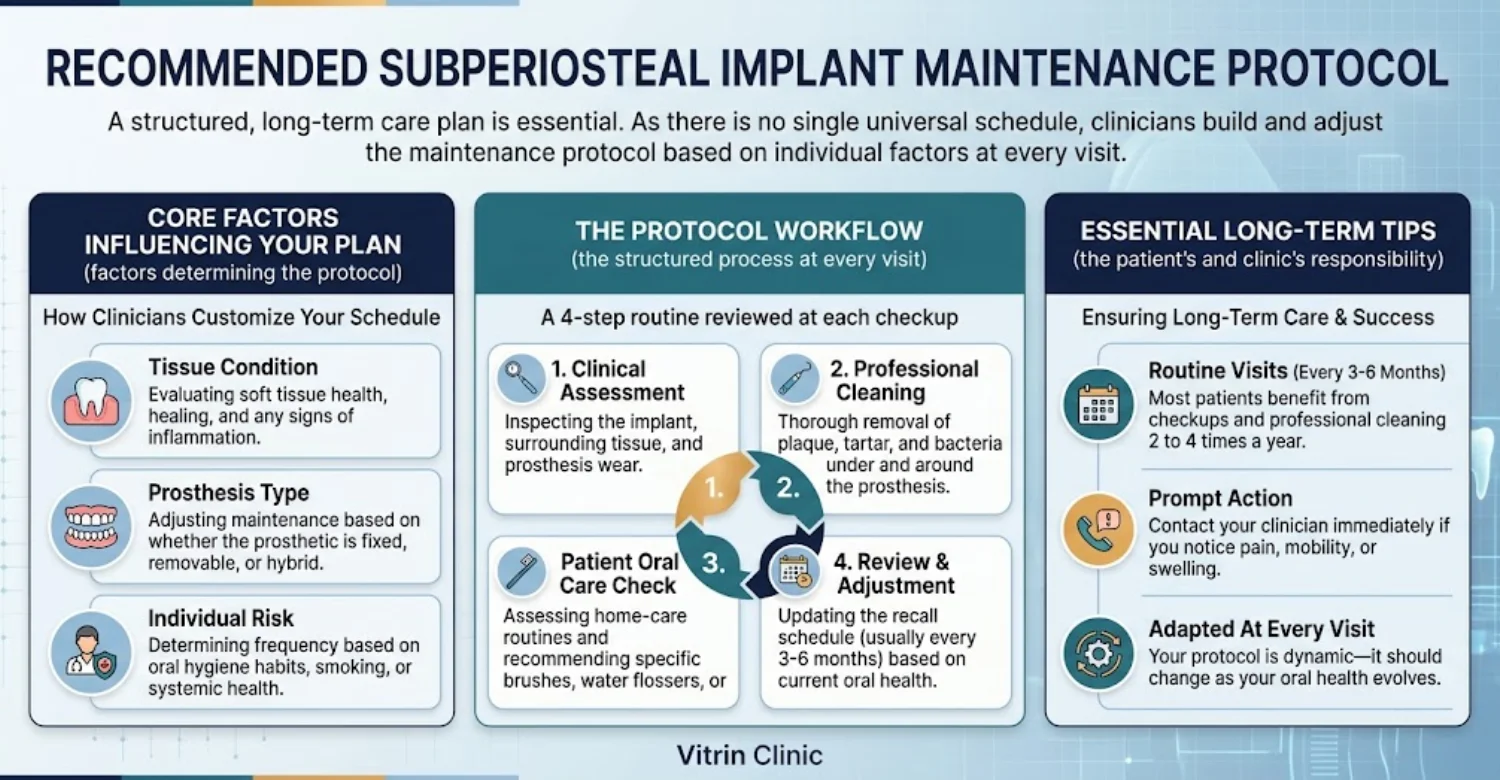
What happens during a routine maintenance appointment?
A routine visit usually starts with an update on your health and medications. The dentist then asks about pain, bleeding, bad taste, or chewing changes. Next comes a visual check of the gums, posts, and any exposed framework. The hygienist removes plaque and tartar using implant-safe instruments. Titanium or plastic scalers help avoid scratching metal surfaces. The bite and screw tightness may be checked as well. The visit ends with personalized home-care coaching.
How often should subperiosteal implants be checked?
Many clinicians recommend reviews every 3 to 6 months for subperiosteal implants. The first year often needs closer contact while tissues mature. Research on conventional implants shows the value of regular follow-up. One five-year study found peri-implantitis in 43.9% of patients without maintenance. Among patients who attended maintenance, the rate was about 18%. Subperiosteal implants have not been studied this way yet. Still, these findings support regular, structured professional care.
How dentists assess soft tissues, implant exposure, and prosthetic stability
Dentists check gum color, texture, swelling, and bleeding around each post. They gently press the tissue to check for discharge or tenderness. Exposed metal is measured, photographed, and compared with earlier records. The prosthesis is tested for movement, cracks, or wear. Screws are checked if the bridge is removable for inspection. The bite is examined to make sure forces spread evenly. Any change from the last visit guides the next steps.
When are dental X-rays or CBCT scans appropriate?
Imaging is not needed at every visit for every patient. Dentists usually take X-rays when symptoms or clinical signs suggest a problem. A baseline image after treatment helps with later comparisons. Two-dimensional X-rays show some framework and bone details. CBCT scans give three-dimensional views but involve higher radiation doses. Metal frameworks can also create scatter that reduces image clarity. Your dentist should explain why any scan is recommended.
Why follow-up intervals depend on clinical findings and individual risk
A fixed schedule may suit one patient but fail another. Healthy tissue and excellent cleaning may allow six-month intervals. Exposure, bleeding, or smoking usually justify three-month visits or closer. Diabetes, dry mouth, and limited dexterity also increase the need for monitoring. Intervals can be extended once tissue remains stable over time. They should shorten quickly if new symptoms appear. Flexibility keeps care matched to your actual risk level.
Risk profile | Typical review interval |
Stable tissue, good cleaning, non-smoker | Every 6 months |
Mild bleeding or small exposure | Every 3 to 4 months |
Smoker, diabetes, or active exposure | Every 3 months or closer |
New pain, swelling, or discharge | Prompt visit, not routine recall |
What We Notice Clinically
Clinical experience reveals patterns that research papers do not always capture. Patients often follow similar paths after treatment, both good and bad. Recognizing these patterns helps us guide care before problems grow. Real-world Subperiosteal Implant Maintenance depends on practical habits as much as on technical knowledge.
Common patient patterns during long-term subperiosteal implant care
Many patients clean very carefully during the first few months after surgery. Motivation often fades once the mouth feels comfortable and stable. Recall attendance can drop after the first year, especially among patients treated abroad. Plaque then builds quietly under the bridge where patients cannot see it. Some patients only return when pain or swelling appears. By then, tissue changes may already be well established. Steady habits matter more than intense effort in the early weeks.
Why an implant can remain functional while soft-tissue problems develop
A subperiosteal implant can feel firm while the gum around it is unhealthy. The framework is fixed with screws, so early inflammation rarely causes movement. Patients may chew normally and assume everything is fine. Meanwhile, bleeding, mild recession, or small exposures can slowly progress. The 2024 review reported 97.8% of implants still in function. The same review found partial exposure in 25.6% of implants. Function and tissue health are related, but they are not the same thing.
Common misconceptions about implant cleaning and maintenance
A frequent myth is that implants cannot get gum disease because they are metal. Implants do not decay, but surrounding tissues can still become inflamed and infected. Another misconception is that bleeding during cleaning is normal and harmless. In reality, bleeding usually signals inflammation that needs attention. Some patients believe stronger mouthwash can replace brushing and interdental cleaning. Mouthwash alone cannot remove established plaque from metal surfaces. Others think that a comfortable implant needs no professional checks at all.
Why conventional implant probing measurements may not apply directly
For screw-type implants, dentists often measure pocket depth with a thin probe. These readings help detect bone loss and deep inflammation. Subperiosteal frameworks sit on the bone surface, so the anatomy is different. Standard probing depths may not reflect the true condition around the framework. Probing too forcefully could also disturb the soft-tissue seal. Clinicians therefore rely more on visual signs, bleeding, exposure measurements, and photographs. Imaging and symptom history fill in the remaining picture when needed.
Clinical Note: Dr. Rifat Alsaman's perspective on maintenance and early intervention
Dr. Rifat Alsaman stresses that early, small interventions usually prevent larger problems later. A minor area of redness may only need better cleaning access and closer review. Ignored for months, the same area may lead to exposure or infection. He encourages patients to treat each maintenance visit as preventive care, not optional extras. Photographs and written records make comparison between visits more objective. Patients should report changes early rather than waiting for their next routine appointment. In his view, consistency over years matters most for lasting results.
What Are the Signs of Subperiosteal Implant Complications?
Most complications start with mild signs that are easy to dismiss. Recognizing them early gives you and your dentist more treatment options. Soft-tissue infection affected about 5.3% of patients in the 2024 review. Post-operative pain, bleeding, or swelling occurred in about 7.5% of patients. Watching for warning signs is a key part of Subperiosteal Implant Maintenance.
Early warning signs of gum inflammation or infection
Healthy gum tissue around posts usually looks pink, firm, and stable. Inflamed tissue often turns red, shiny, or puffy. You may notice bleeding when brushing or using interdental brushes. Tenderness when touching the area is another common early sign. Some patients describe a dull ache or itchy feeling near the gumline. Swelling may come and go before becoming persistent. Report these signs to your dentist instead of waiting for them to settle.
Implant exposure, gum recession, and wound opening
Exposure means part of the metal framework becomes visible through the gum. It may appear as a grey or shiny area near a post or along the jaw. Gum recession can slowly uncover more of the framework over time. In the early healing phase, a surgical wound may reopen along the incision line. Exposure was reported in about one in four implants in published research. Small exposures may be manageable with cleaning and monitoring. Larger or spreading exposures need prompt professional review.
Persistent pain, swelling, bleeding, or discharge
Mild discomfort is common in the first days after surgery or adjustment. Pain that persists, worsens, or returns later is not normal. Swelling of the face or gum may indicate infection or inflammation. Pus or discharge from around a post is a clear warning sign. Bleeding that occurs without brushing also deserves attention. Fever or feeling generally unwell alongside oral symptoms needs urgent care. Do not mask these symptoms with painkillers and wait.
Loose-feeling prostheses, bite changes, and mechanical damage
A bridge that rocks, clicks, or feels different may have a loose screw. Cracks or chips in prosthetic teeth can create rough edges and trap plaque. The 2024 review reported interim prosthesis fractures in about 5.2% of patients. A sudden change in how your teeth meet can signal mechanical problems. Uneven bite forces can stress posts and the underlying framework. Stop chewing hard foods on that side until assessed. Keep any broken pieces and bring them to your appointment.
When bad breath or an unpleasant taste may indicate a problem
Occasional bad breath is common and often linked to diet or tongue coating. Persistent bad breath despite good cleaning may signal trapped food or infection. A salty, metallic, or foul taste can suggest discharge from the tissue. These signs are often noticed before pain appears. Check under the bridge with a water flosser or interdental brush. If the taste or odor returns quickly, contact your dentist. Early assessment can identify hidden plaque traps or inflammation.
How Can You Prevent Subperiosteal Implant Infection and Other Complications?
Prevention is far easier and cheaper than treating established complications. Most strategies focus on plaque control, risk reduction, and regular review. Not every complication can be prevented, but many can be reduced. A proactive approach to Subperiosteal Implant Maintenance gives tissues the best chance to stay healthy.
Subperiosteal implant infection prevention through daily plaque control
Plaque bacteria are the main trigger for gum inflammation around implants. Removing plaque daily keeps bacterial levels low enough for tissues to cope. Focus on the gumline, the posts, and the underside of the bridge. Use the tools your hygienist recommends rather than generic products alone. Clean after meals when food tends to collect under the prosthesis. Studies on conventional implants show peri-implantitis affects around 22% of patients. Consistent plaque control is the most reliable way to lower that risk.
Subperiosteal implant gum health monitoring at home and in the clinic
Look at your gums in a mirror under good light once a week. Check for redness, swelling, bleeding, or any new grey metal showing. Take a phone photo of the same area monthly to compare changes. Note any tenderness or taste changes in a simple diary. Bring your notes and photos to each professional appointment. Your dentist will compare them with clinical records and earlier images. Combining home and clinic monitoring catches changes much earlier.
Risk factors that may affect healing and maintenance
Some patients face a higher risk of complications than others. Risk factors can affect healing, infection, and tissue stability around the framework. Knowing your risks helps you and your dentist plan closer monitoring. Several factors can be improved with lifestyle changes or medical care. Others, like anatomy, cannot be changed but can be managed. The most important risk factors are outlined below. Discuss each one openly during your consultations.
Smoking and tobacco use
Smoking reduces blood flow to the gums and slows wound healing. It also weakens the immune response to plaque bacteria. Research on conventional implants consistently links smoking with higher complication rates. Smokers may notice less bleeding, because nicotine constricts blood vessels. This can hide inflammation until it becomes advanced. Vaping and smokeless tobacco also affect gum tissue. Quitting or reducing tobacco use is one of the most helpful changes you can make.
Poorly controlled diabetes and other relevant medical conditions
High blood sugar slows healing and increases infection risk. Poorly controlled diabetes is linked with more severe gum inflammation. Keeping HbA1c within your doctor's target range supports better tissue health. Immune-suppressing medicines can also affect healing and infection risk. Radiotherapy to the jaw changes bone and tissue blood supply. Osteoporosis medicines may matter for some surgical procedures. Always update your dentist about new diagnoses and medications.
Previous gum disease, dry mouth, or difficulty cleaning the prosthesis
A history of gum disease suggests higher susceptibility to inflammation around implants. Dry mouth reduces saliva's natural cleansing and protective effects. Many medicines, including some antidepressants and blood pressure drugs, cause dry mouth. Arthritis, tremor, or poor eyesight can make thorough cleaning harder. Electric brushes and larger-handled tools can help with limited dexterity. Family members or carers may assist with daily cleaning. Your dentist can suggest saliva substitutes or other supportive products.
Prosthetic design, soft-tissue quality, and limited cleaning access
Bridges that sit tightly against the gum can be very hard to clean underneath. Thin or mobile gum tissue may be more prone to recession and exposure. Wide connecting bars can trap food in ways patients cannot easily reach. Good designs include cleaning channels and smooth, polished undersides. Retrievable screw-retained bridges allow professional cleaning beneath them. If access is poor, prosthetic modification may help. Ask your dentist whether your design allows effective daily cleaning.
How regular follow-up helps identify problems before they progress
Many complications develop slowly and painlessly over months. Regular reviews compare tissue conditions with earlier records and photographs. Small changes become visible before they cause major symptoms. Early treatment is usually simpler, cheaper, and more predictable. In conventional implant research, supportive care cut peri-implantitis rates from 43.9% to about 18%. Follow-up also lets your dentist reinforce cleaning techniques. Missing several visits in a row removes this protective safety net.
Why antibiotics and antiseptic mouthwashes should not be self-prescribed
Antibiotics treat certain bacterial infections, but they do not remove plaque. Using leftover or borrowed antibiotics can hide symptoms without fixing the cause. Incorrect use also contributes to antibiotic resistance. Some antibiotics interact with other medicines or cause allergic reactions. Long-term chlorhexidine rinses can stain teeth and alter taste. Strong antiseptics may irritate healing tissue if used too often. Always let your dentist decide when these treatments are appropriate.
Ready to transform your smile?
Talk to our team and get a personal FREE treatment plan.
How Can You Get Relief From Subperiosteal Implant Discomfort?
Discomfort around an implant can range from mild irritation to signs of infection. Short-term relief can make you more comfortable while you arrange assessment. However, comfort measures never replace finding and treating the cause. Managing symptoms safely is part of responsible Subperiosteal Implant Maintenance.
What to do if the gum tissue feels irritated after cleaning
Mild soreness after a thorough clean is fairly common, especially with new tools. Switch to a softer brush and lighter pressure for a few days. Check that your interdental brush is not too large for the space. Rinse gently with warm salt water, about half a teaspoon in a cup. Avoid spicy, acidic, or very hot foods while tissue settles. Irritation should ease within two or three days. If it lasts longer or worsens, contact your dentist.
Safe short-term measures for mild discomfort while awaiting dental advice
Keep cleaning the area gently rather than avoiding it completely. Plaque left in place will usually make inflammation worse. Warm salt-water rinses two or three times daily can soothe tissue. A cold compress on the cheek for 10 to 15 minutes may reduce swelling. Choose soft foods and chew on the other side if possible. Stay hydrated, especially if you have a dry mouth. Book an appointment rather than relying on these measures for weeks.
Medical tips for managing swelling, tenderness, and difficulty chewing
Swelling often responds to cold compresses during the first 24 to 48 hours. Keep your head slightly raised when resting or sleeping. Choose foods like yogurt, soups, eggs, and mashed vegetables. Cut food into small pieces to reduce chewing force. Avoid alcohol and smoking, which can slow tissue recovery. If you wear a removable denture, leave it out when advised. Report swelling that spreads, hardens, or affects swallowing immediately.
Pain-relief medicines: potential benefits, side effects, and precautions
Over-the-counter pain relievers can ease mild to moderate dental pain. The most common options are nonsteroidal anti-inflammatory drugs and acetaminophen, also called paracetamol. Each works differently and carries different risks. Read the label and follow the stated dose and timing carefully. Never exceed the maximum daily amount listed on the packaging. Ask a pharmacist or doctor if you take other medicines. The sections below summarize key precautions.
Common side effects and contraindications of nonsteroidal anti-inflammatory drugs
Nonsteroidal anti-inflammatory drugs include ibuprofen and naproxen. They reduce pain and some inflammation. Common side effects include stomach upset, heartburn, and nausea. They can increase the risk of stomach ulcers and bleeding, especially with long-term use. People with kidney disease, heart failure, or uncontrolled high blood pressure should be cautious. They may interact with blood thinners and some blood pressure medicines. Some people with asthma react badly to these drugs.
Acetaminophen (paracetamol): dosage precautions and liver-related risks
Acetaminophen is often gentler on the stomach than anti-inflammatory drugs. It relieves pain but has little effect on swelling. For most healthy adults, the usual maximum is 4 grams in 24 hours. Lower limits often apply to people with liver disease or low body weight. Regular alcohol use also increases the risk of liver damage. Many cold and flu products contain hidden acetaminophen. Check all labels to avoid accidental double dosing.
Why medication choice depends on medical history and other medicines
The safest pain reliever depends on your health and current medications. Kidney, liver, stomach, and heart conditions all influence the right choice. Pregnancy and breastfeeding also change which medicines are suitable. Older adults may be more sensitive to side effects. Blood thinners, steroids, and some antidepressants interact with common pain relievers. Your dentist, doctor, or pharmacist can advise on safe options. Always share a full medication list during consultations.
Why pain relief does not replace assessment of the underlying cause
Painkillers reduce symptoms, but they do not treat infection or mechanical problems. Hidden plaque, a loose screw, or exposure will continue to progress. Masking pain can delay diagnosis and allow tissue damage to worsen. Some patients take pain relievers for weeks before seeking help. Earlier assessment often means simpler and less costly treatment. Use medicines only to bridge the time until your appointment. If pain needs daily medication, book a visit promptly.
Warning signs requiring urgent dental or medical care
Some symptoms need same-day care rather than a routine appointment. Seek urgent help for facial swelling that spreads quickly or affects your eye. Difficulty swallowing or breathing requires emergency medical attention. Fever, chills, or feeling very unwell with oral pain also need urgent assessment. Heavy bleeding that does not stop with pressure is another emergency sign. Numbness that appears suddenly should be checked quickly. When in doubt, call your dentist or local emergency services.
Note : All images used are for editorial and illustrative purposes only and may not originate from the original news provider or associated company.
How Are Subperiosteal Implant Complications Diagnosed and Treated?
Diagnosis aims to identify the cause, extent, and urgency of a problem. Treatment then targets that cause rather than the symptoms alone. Options range from simple cleaning to surgical revision in rare cases. Early detection through regular Subperiosteal Implant Maintenance often keeps treatment simpler.
What happens during a diagnostic examination?
The dentist starts by asking about your symptoms and when they began. They review your medical history, medications, and original treatment records. Next, they examine the gums, posts, prosthesis, and surrounding tissues. Gentle pressure checks for tenderness, swelling, or discharge. The bite is assessed for uneven contacts or changes. Photographs document the current condition for comparison. Imaging may follow if the clinical picture is unclear.
Assessing soft-tissue inflammation, framework exposure, and prosthetic stability
Inflammation is graded by redness, swelling, bleeding, and any pus. Exposed framework areas are measured and compared with earlier photographs. The dentist notes whether exposure is stable, growing, or associated with infection. The prosthesis is checked for movement, cracks, and loose screws. Removable bridges may be taken off to inspect hidden areas. Cleaning access beneath the bridge is evaluated carefully. These findings together guide the treatment plan.
When imaging or additional tests may be necessary
Imaging helps when symptoms suggest deeper problems than the visible tissue shows. Periapical or panoramic X-rays can show framework position and some bone changes. CBCT may help assess bone around fixation screws and the framework. Metal artifacts can limit image clarity, so results are interpreted carefully. Swab samples are occasionally used to identify bacteria in persistent infections. Blood tests may be suggested if diabetes control is uncertain. Each test should have a clear clinical purpose.
Treatment options for inflammation, infection, or tissue breakdown
Mild inflammation often responds to professional cleaning and improved home care. Your dentist may prescribe a short course of antiseptic rinse. Localized antiseptic gels can be applied to inflamed areas. Persistent infection may need antibiotics alongside thorough mechanical cleaning. Small exposures are sometimes smoothed and polished to reduce plaque retention. Soft-tissue grafts may help cover exposed areas in selected cases. Review appointments are scheduled to confirm the tissue is improving.
Managing prosthetic damage, loosening, or poor cleaning access
Loose screws can often be retightened or replaced during a short visit. Chipped or fractured teeth may be repaired or the bridge remade. Bite adjustments help spread chewing forces more evenly. Bridges that block cleaning may be reshaped to create better access. Polished, convex undersides are easier to clean than concave ones. Night guards may protect the prosthesis if grinding is a concern. Prosthetic changes should always be documented in your records.
When surgical revision or implant removal may be considered
Surgery is considered when infection or exposure does not respond to simpler care. Revision may involve removing part of the framework or repositioning soft tissue. Complete removal is usually reserved for persistent infection or extensive failure. The 2024 review reported 5 implant failures among 227 implants studied. That is about 2.2% over a mean follow-up near 21 months. Long-term failure rates are still not well established. Your surgeon will explain alternatives before recommending removal.
How follow-up care changes after treatment of a complication
After treating a complication, follow-up usually becomes more frequent for a period. Many patients return within two to four weeks for a healing check. Recall intervals may shorten to every three months or closer. Home-care routines are often adjusted to reach the affected area better. Photographs track whether tissue is stabilizing or changing. Once stability is confirmed over time, intervals may lengthen again. Ongoing vigilance helps prevent the same problem from returning.
How Much Does Subperiosteal Implant Maintenance Cost in the US, UK, and Turkey?
Costs vary widely between countries, clinics, and individual needs. Most expenses come from examinations, professional cleaning, and occasional imaging. Complications can add significantly to the yearly total. The figures below are approximate 2026 private-practice ranges, not fixed prices. Planning for Subperiosteal Implant Maintenance costs helps avoid surprises later.
Average annual maintenance costs by country
Annual costs depend on how many visits you need each year. Most patients attend between two and four maintenance appointments yearly. Higher-risk patients may need more visits, which raises the annual total. Imaging adds cost but is not needed at every visit. The table summarizes typical estimated ranges.
United States: estimated annual examination, cleaning, and imaging costs
In the United States, a periodic dental examination often costs about $50 to $150. Implant maintenance cleaning commonly ranges from $100 to $300 per visit. A single periapical X-ray may cost $25 to $60. Panoramic X-rays often range from $100 to $200. CBCT scans typically cost about $250 to $600. Dental insurance may cover part of routine care but often limits implant-related services. Check your policy's annual maximum and exclusions carefully.
Service | Estimated cost (USD) |
Periodic dental examination | 50–150 |
Implant maintenance cleaning | 100–300 per visit |
Periapical X-ray | 25–60 |
Panoramic X-ray | 100–200 |
CBCT scan | 250–600 |
Estimated annual maintenance total | 400–1,500 |
United Kingdom: estimated private dental checkups and hygiene costs
In the United Kingdom, private check-ups usually cost around $50 to $120. A private hygienist appointment often ranges from $60 to $130. Individual X-rays may add $15 to $50 each. CBCT scans in private clinics often cost $150 to $350. NHS care has lower set charges, but implant maintenance access may be limited. Many patients pay privately for implant reviews and hygiene. Some clinics offer monthly dental plans that spread routine costs.
Service | Estimated cost (USD equivalent) |
Private dental check-up | 50–120 |
Private hygienist appointment | 60–130 |
Individual dental X-ray | 15–50 |
CBCT scan | 150–350 |
Estimated annual maintenance total | 250–900 |
Turkey: estimated professional cleaning and implant review costs
In Turkey, private implant reviews often cost less than in the US or UK. Examinations may be free or around $20 to $50 at many clinics. Professional cleaning commonly ranges from about $40 to $100. Panoramic X-rays may cost $20 to $50. CBCT scans often range from $50 to $150. International patients must also consider travel and accommodation costs. Lower clinic fees may be offset by repeated travel expenses.
Service | Estimated cost (USD) |
Implant examination | 20–50 |
Professional cleaning | 40–100 |
Panoramic X-ray | 20–50 |
CBCT scan | 50–150 |
Estimated annual maintenance total | 100–500 |
What is the average cost of a subperiosteal implant maintenance appointment?
A standard appointment usually includes an examination and professional cleaning. In the US, this often totals about $150 to $450. In the UK, the typical range is around $90 to $250. In Turkey, many clinics charge about $40 to $150. Imaging, prosthesis removal, or extra treatment will increase the total. Prices also vary by city and clinic experience. Always request a written estimate before your visit.
Country | Average estimated cost per appointment |
United States | 150–450 |
United Kingdom | 90–250 |
Turkey | 40–150 |
Which factors increase long-term maintenance expenses?
Several factors can raise long-term costs beyond routine visits. Frequent recall intervals naturally increase the yearly total. Smoking, diabetes, and previous gum disease may require closer monitoring. Prostheses with poor cleaning access often need more professional time. Removing and refitting a screw-retained bridge adds chair time and cost. Repeated imaging adds expense over several years. Living far from your treating clinic can add travel costs.
Cost factor | Potential financial impact |
More frequent maintenance appointments | Higher annual examination and cleaning fees |
Smoking or a history of gum disease | Potential need for closer monitoring |
Difficult-to-clean prosthesis | Additional professional cleaning time |
Prosthesis removal and refitting | Extra clinical and laboratory fees |
Repeated imaging | Additional X-ray or CBCT charges |
Travel to the treating clinic | Transportation, accommodation, and time-off-work expenses |
Additional costs for treating infection, exposed frameworks, or prosthetic damage
Complication treatment is usually the largest unexpected expense. Antiseptic therapy and extra cleaning visits may add a few hundred dollars or pounds. Soft-tissue grafting can cost significantly more, depending on complexity. Repairing chipped prosthetic teeth may range from minor fees to major costs. A full bridge remake can cost thousands in the US or UK. Surgical revision or removal involves surgical, anesthesia, and imaging fees. Ask about these possibilities before treatment begins.
Additional treatment | Estimated cost impact |
Extra cleaning and infection management | Potentially hundreds of dollars or pounds |
Soft-tissue grafting | Higher cost depending on complexity |
Prosthetic tooth repair | Varies with the type and extent of damage |
Full bridge replacement | Potentially thousands of dollars or pounds |
Surgical revision or implant removal | Depends on surgical complexity, anesthesia, and imaging |
Does the original treatment package include follow-up care?
Some treatment packages include one or more follow-up visits. Others cover only surgery and the final prosthesis. Read your treatment agreement carefully to see what is included. Check whether remote follow-up or photo reviews are offered. Ask whether complication treatment is covered within a set period. Clarify which costs apply if you need care from another dentist. Written details prevent misunderstandings later.
Package item | What to confirm with the clinic |
Follow-up appointments | Number of included visits and their duration |
Professional cleaning | Whether implant maintenance is included |
Imaging | Whether X-rays or CBCT scans are covered |
Remote follow-up | Availability and any additional charges |
Complication management | Coverage period and exclusions |
Treatment with another dentist | Whether local follow-up costs are reimbursed or supported |
How to compare maintenance costs when receiving treatment abroad
Treatment abroad can reduce initial costs, but maintenance needs careful planning. Compare the total cost over several years, not just the surgery price. Include flights, accommodation, time off work, and local dental fees. Check whether a local dentist is willing to maintain your implant. Some dentists may be unfamiliar with subperiosteal designs. Ask the treating clinic for full records to share locally. Balanced planning helps you avoid gaps in care.
Expense category | What to include when comparing countries |
Initial treatment | Surgery, implant framework, and final prosthesis |
Routine maintenance | Examinations, professional cleaning, and necessary imaging |
Travel and accommodation | Flights, hotel, local transportation, and meals |
Time away from work | Lost income or paid leave used |
Local follow-up | Fees charged by a dentist near home |
Unexpected complications | Repairs, infection treatment, or surgical revision |
Important note: All figures are approximate planning estimates, not verified clinic quotations or guaranteed 2026 prices. Actual costs depend on clinical needs, location, and treatment complexity. Confirm current fees directly with the clinic, and check whether estimates include taxes, imaging, and follow-up care.
Vitrin Clinic Treatment Pricing
These are Vitrin Clinic’s prices for subperiosteal implant treatments, offering more affordable options than clinics in the US and UK.
Treatment | 🇬🇧 UK | 🇺🇸 USA | 🇹🇷 Turkey |
|---|---|---|---|
Single subperiosteal implant Custom framework, per implant unit | $3,175 – $5,715 | $4,000 – $6,000 | From $1,000 |
Partial arch framework 2–4 posterior teeth, one segment | $7,620 – $15,240 | $10,000 – $20,000 | From $3,000 |
Full arch framework Complete fixed restoration, per arch | $25,400 – $57,150 | $25,000 – $50,000 | From $6,000 |
CBCT scan & CAD framework design 3D imaging + digital planning | Charged separately | Charged separately | Included |
Consultation | Charged separately | Charged separately | Free & included |
Estimated saving | — | — | Up to 70% less |
* Prices are averages for reference only and may vary based on framework complexity, number of abutments, prosthetic material selection, and individual case requirements. A personalised quote is provided following your free consultation.
Tips for Patients
Small, practical habits make the biggest difference over the years. These tips help you stay organized, informed, and proactive. They are especially useful if your treatment involves travel or several clinicians. Good Subperiosteal Implant Maintenance relies on routines, records, and clear communication with your dental team.
How to build a consistent home-care routine
Link your cleaning routine to existing daily habits, like after breakfast and before bed. Keep all tools together in a clean, visible spot near the sink. Set phone reminders for the first few weeks until the routine feels automatic. Replace brushes and interdental heads on a regular schedule. Use a mirror and good light for the evening clean. Track your routine on a simple calendar to stay accountable. Consistency matters far more than spending long periods cleaning occasionally. A steady routine is the backbone of Subperiosteal Implant Maintenance. Most patients find the habit feels natural within about three to four weeks.
What to record before each follow-up appointment
Write down any symptoms, including when they started and how often they occur. Note bleeding, tenderness, swelling, bad taste, or changes in your bite. Take clear photos of any area that looks different. List all current medications, including new prescriptions or supplements. Record any medical changes, such as diabetes control or new diagnoses. Mention which cleaning tools you use and any difficulties. These notes make Subperiosteal Implant Maintenance visits faster and more focused.
Questions to ask your dentist about cleaning access and prosthesis stability
Ask which areas of your prosthesis are hardest to clean and why. Request a demonstration of the best tools and techniques for those spots. Ask whether your bridge can be removed for professional cleaning. Find out how often screws or attachments should be checked. Ask whether any part of the framework is exposed and how to manage it. Clarify which symptoms require an urgent rather than routine visit. Write the answers down so you can refer to them later. Bring the same list to each visit and update it as answers change. Good questions turn a short appointment into a useful planning session.
How to maintain care when your implant treatment was performed abroad
Before leaving the treating country, collect complete written and digital records. Ask the clinic about remote follow-up options, such as video or photo reviews. Find a local dentist willing to provide routine examinations and cleaning. Share your records with them early, not only when problems appear. Plan return visits to the treating clinic if they are required. Clarify which clinic handles complications and how costs are shared. A coordinated plan keeps Subperiosteal Implant Maintenance consistent across borders.
What to do if you miss a maintenance appointment
Missing one appointment is common and usually not a crisis. Rebook as soon as possible rather than waiting for the next scheduled visit. Continue your full home-care routine without shortcuts in the meantime. Watch closely for bleeding, swelling, or changes in comfort. If symptoms appear, ask for an earlier appointment. Try to understand why the visit was missed and plan around that obstacle. Repeated missed visits increase the chance of undetected problems. In conventional implant research, patients without maintenance had peri-implantitis rates of 43.9%. Treat Subperiosteal Implant Maintenance visits as fixed commitments, like medical check-ups.
Why patients should keep their implant records, scans, and treatment details
Subperiosteal implants are custom-made, so details vary greatly between patients. Your records should include surgical notes, implant design files, and scan images. Keep details of screws, materials, prosthesis type, and the manufacturer. These records help any dentist understand your implant quickly. They are essential if you change clinics or move countries. Baseline images make future comparisons much more accurate. Store digital copies safely and keep paper copies at home. Complete records make Subperiosteal Implant Maintenance safer when several clinicians are involved.







At Vitrin Clinic: Personalized Assessment for Subperiosteal Implant Maintenance
At Vitrin Clinic, we believe every implant deserves a care plan as unique as its design. Our team assesses your tissues, prosthesis, and overall health before recommending any steps. We focus on prevention, clear explanations, and practical home-care support. Personalized Subperiosteal Implant Maintenance helps protect your investment and your comfort.
Evaluating gum health, soft-tissue condition, and prosthetic accessibility
We begin by carefully examining the gum tissue around each post. We look for redness, swelling, bleeding, recession, and any visible framework. Soft-tissue thickness and stability are noted for future comparison. We also assess how easily you can clean beneath and around the prosthesis. Standardized photographs help us track changes accurately over time. Your feedback about comfort and cleaning difficulties guides our observations. This baseline forms the foundation of your Subperiosteal Implant Maintenance plan.
Assessing whether professional cleaning or prosthetic adjustment is needed
After examination, we decide whether professional cleaning alone is enough. Our hygienists use implant-safe instruments to protect titanium surfaces. Where a bridge blocks effective cleaning, we may suggest prosthetic adjustments. We check screw stability, bite balance, and any signs of wear. Minor issues are often corrected during the same visit. More complex changes are explained clearly before any work begins. You always receive an explanation of why each step is recommended.
Reviewing symptoms, previous surgery, and existing implant documentation
We review your symptoms carefully, including their timing and pattern. Your previous surgical notes and implant design details help us understand the framework. If you were treated elsewhere, we ask for records, scans, and prosthesis information. Missing documentation does not prevent care, but it may affect planning. We compare your current condition with any earlier images available. Medical history and current medications are updated at every visit. This complete picture supports safer, more accurate decisions.
Planning individualized maintenance or referral for complex complications
Based on our findings, we create an individualized maintenance schedule. Low-risk patients may return every six months, while others need closer review. We adjust intervals as your tissue health and risk factors change. Some complications need specialist surgical or prosthetic expertise. In those cases, we coordinate referrals and share detailed records. We remain involved in your ongoing care whenever possible. Clear communication keeps every clinician working toward the same goal. You receive a written summary of each referral and its purpose.
When additional imaging or specialist evaluation may be appropriate
We recommend imaging only when it offers clear clinical value. X-rays may help when symptoms suggest deeper problems or bone changes. CBCT may be considered for persistent infection or unexplained pain. We explain the purpose, benefits, and limitations of each scan. Specialist evaluation may be advised for spreading exposure or recurrent infection. We discuss options openly so you can make informed decisions. Every recommendation is tailored to your clinical situation. We avoid routine scans that would add cost and radiation without clear benefit. Our priority is accurate information with the least possible burden on you.
How Vitrin Clinic Supports Your Treatment Journey
Long-term implant care works best as a partnership between patient and clinic. Vitrin Clinic supports patients from the first consultation through ongoing follow-up. We combine clinical assessment, digital tools, and clear communication. Our goal is to make Subperiosteal Implant Maintenance simple, predictable, and well understood.
Initial consultation and review of previous dental records
Your first visit begins with listening to your concerns and goals. We review your dental history, previous treatment, and any existing records. Patients treated elsewhere are welcome to bring scans and surgical notes. We examine your mouth and explain what we observe in plain language. Initial findings help us decide which tests or steps are needed next. You can ask questions freely throughout the consultation. Our aim is to give you a clear starting point. That starting point shapes your Subperiosteal Implant Maintenance plan from the very first visit.
Digital diagnostics and clinically appropriate imaging
Digital tools help us record and compare your oral condition accurately. Intraoral photographs document gum health and framework exposure clearly. Digital X-rays use lower radiation than older film-based systems. CBCT imaging is used selectively when three-dimensional information is genuinely needed. We store images securely to support future comparisons. Results are shared and explained during your appointment. Digital records also simplify communication with other clinicians when required.
Personalized recommendations for maintenance and follow-up
Every patient leaves with clear, personalized home-care recommendations. We show you which tools to use and how to use them correctly. Your recall interval is based on tissue condition and individual risk. We explain what to watch for between appointments. Recommendations are reviewed and updated at each follow-up visit. Written guidance helps you remember key steps at home. Personalized advice makes Subperiosteal Implant Maintenance more effective and easier to follow.
Coordinating care for international patients
Many of our patients travel for treatment or live abroad part of the year. We help coordinate appointments around travel plans whenever possible. Records can be shared with your local dentist to support continuity. Remote photo reviews may help decide whether an in-person visit is urgent. We provide clear written summaries after each appointment. Our team can answer questions about follow-up arrangements before you travel. Coordination reduces gaps that often lead to missed problems. We can also suggest what to pack for oral care while traveling. Simple travel kits help patients keep routines going away from home.
Providing clear guidance on aftercare, warning signs, and ongoing monitoring
Clear guidance helps patients feel confident managing their implants at home. We explain normal healing sensations and what is not normal. Warning signs like swelling, discharge, or loose prostheses are described clearly. You will know exactly when and how to contact us. We encourage photos and symptom notes between visits. Monitoring continues long after the initial treatment period ends. Ongoing Subperiosteal Implant Maintenance support helps protect long-term results.
Discussing expected costs, treatment inclusions, and follow-up arrangements
We believe cost transparency builds trust and supports better planning. Before treatment, we explain expected maintenance costs and likely visit frequency. We clarify what is included in any treatment package. Possible additional costs, such as imaging or complication care, are discussed openly. Written estimates are provided so you can plan ahead. Follow-up arrangements are agreed in advance, including who provides each service. Clear expectations help prevent surprises later in your care. We also review costs again whenever your recall interval changes. Open discussion helps you make decisions that fit your budget and health.
Ready to transform your smile?
Talk to our team and get a personal FREE treatment plan.
Key Takeaways
Long-term success with subperiosteal implants depends on consistent, informed care. The points below summarize the most important lessons from this guide. Use them as a quick reference between appointments. Strong Subperiosteal Implant Maintenance habits protect both your health and your investment.
The essentials of subperiosteal implant maintenance
Subperiosteal implants rest on the jawbone beneath the gum, not inside it. Their wide frameworks make soft-tissue health especially important. Daily plaque control around posts and under bridges is essential. Professional reviews every 3 to 6 months suit many patients. Partial exposure affected 25.6% of implants in recent research. Infection was reported in about 5.3% of patients. Evidence remains limited, so careful monitoring is wise.
Why daily cleaning and individualized professional follow-up matter
Home care removes plaque before it can inflame the gum tissue. Professional visits catch problems patients cannot see themselves. Conventional implant research shows maintenance lowered peri-implantitis from 43.9% to about 18%. Individual risk factors decide how often you should be seen. Smokers and people with diabetes usually need closer follow-up. Plans should change as your tissue condition changes. Combining both approaches gives the strongest protection. Neither home care nor clinic visits can succeed fully on their own.
The symptoms that require prompt dental assessment
Bleeding, redness, and swelling around posts deserve prompt attention. Visible metal or new gum recession should be checked soon. Pus, persistent bad taste, or bad breath may signal infection. A loose-feeling bridge or sudden bite change needs assessment. Spreading facial swelling, fever, or difficulty swallowing need urgent care. Do not rely on painkillers to manage ongoing symptoms. Early assessment usually means simpler treatment. Reporting symptoms quickly is one of the most valuable parts of Subperiosteal Implant Maintenance. It often turns a potential complication into a minor correction.
Why long-term outcomes depend on soft-tissue health and prosthetic stability
The gum seal protects the framework from bacteria and exposure. A stable prosthesis spreads chewing forces evenly across posts. Problems in either area can affect the other over time. An implant may remain functional while tissue problems quietly develop. The 2024 review found 97.8% of implants in function at about 21 months. Long-term results beyond that remain less certain. Protecting tissue and prosthesis together supports lasting outcomes. Long-term Subperiosteal Implant Maintenance should therefore address both areas at every visit.
How to plan for ongoing maintenance costs and professional care
Budget for two to four maintenance visits each year. Estimated annual costs range from about $400 to $1,500 in the US. UK patients may expect roughly $250 to $900 yearly. Turkey often costs about $100 to $500, excluding travel. Set aside extra funds for possible imaging or complication treatment. Check what your treatment package includes before committing. Planned Subperiosteal Implant Maintenance is usually cheaper than treating advanced problems.
At Vitrin Clinic
At Vitrin Clinic, we help patients protect their subperiosteal implants with careful, personalized follow-up. Our team evaluates gum health, framework exposure, and prosthesis stability at every visit. We provide practical home-care guidance and transparent cost information. International patients receive coordinated support before and after travel. If you have concerns about your implant, early assessment is always the safest choice. We welcome patients treated at Vitrin Clinic and those treated elsewhere. Bring any records you have, and we will help fill the gaps. Our team is happy to answer questions before you book. Contact Vitrin Clinic to arrange a Subperiosteal Implant Maintenance review tailored to your needs.
Reference
FAQs
Dr. Rifat Alsaman has more than 5 years of clinical experience in dentistry and currently serves as the Head of the Medical Team at Vitrin Clinic. He is dedicated to providing exceptional patient care, overseeing treatment planning, and ensuring the highest clinical standards across the team. His expertise, attention to detail, and commitment to continuous professional development have helped countless patients achieve healthier, more confident smiles.


.webp&w=3840&q=75)