Oral Dentistry
September 16, 2025
Amazing Orthodontic Braces in Turkey: How Do They Really Work in 2026?
 Dr. Rifat Alsaman
Orthodontic Braces might seem like magic, but they rely on physics and biology. The core principle is applying continuous, gentle pressure to the teeth over time. This force guides the teeth into their correct positions.
What Is the Science Behind the Braces Movement?
Your teeth aren’t rigidly fixed in your jawbone. They’re held in place by a network of fibers and ligaments called the periodontal ligament. When constant pressure is applied to a tooth, it stimulates a biological response. On one side, bone-resorbing cells (osteoclasts) break down the bone in the direction of the desired movement. On the other side, bone-building cells (osteoblasts) create new bone to stabilize the tooth in its new position. This remodeling process allows the teeth to move safely and predictably. This is how these appliances work to gradually shift teeth.
How Do Brackets and Wires Apply Pressure?
The main components of these dental appliances are the brackets and the arch wire. Brackets are small squares attached to each tooth. The arch wire connects them all. The orthodontist carefully bends and shapes the arch wire to create a specific path of movement. The wire then exerts a light, steady force on the brackets. That pressure transfers to the teeth. Over time, as teeth begin to shift, the orthodontist adjusts the wire. This ensures the pressure is maintained until the teeth reach their final, desired positions.
How Do Teeth Respond to Continuous Force?
This continuous, controlled force is key. It’s not a sudden push but a gradual, persistent encouragement. The biological response takes time. This is why treatment with these appliances can last for months or even a few years. It’s a slow, safe journey for your teeth to move and for the bone structure to adapt.
What Are the Main Components of Orthodontic Braces?
The main components of braces work together to move teeth into proper alignment. Brackets are small attachments fixed to each tooth to hold the arch wire in place. Arch wires connect the brackets and apply pressure to guide tooth movement. Ligatures or elastic bands secure the arch wire to the brackets. Bands (metal rings) may be placed around molars for extra support. Some cases also use spacers, springs, or elastics to correct bite issues and improve results.
What Role Do Brackets Play in Braces?
Brackets are the small metal or ceramic squares that are bonded directly to the front surface of each tooth. They are the anchor points for the arch wire. Without them, there would be no way to transfer the force from the wire to the teeth.
How Do Arch wires Control Tooth Movement?
The arch wire is the central power source of these appliances. Made from a special shape-memory alloy, it provides the constant, light force needed to move teeth. The orthodontist carefully chooses the wire’s size and material to control the direction and speed of movement.
Why Are Elastic Bands Used in Braces?
Elastic bands, or ligatures, are the tiny rubber bands that hold the archwire to the brackets. They come in many colors, allowing patients to personalize their look. In some cases, stronger elastics are used to create pressure between the upper and lower jaw. This corrects bite issues like overbites or underbites.
Learn effective solutions on how to fix pacifier teeth for children and adults
What Types of Orthodontic Braces Are Available in Turkey?
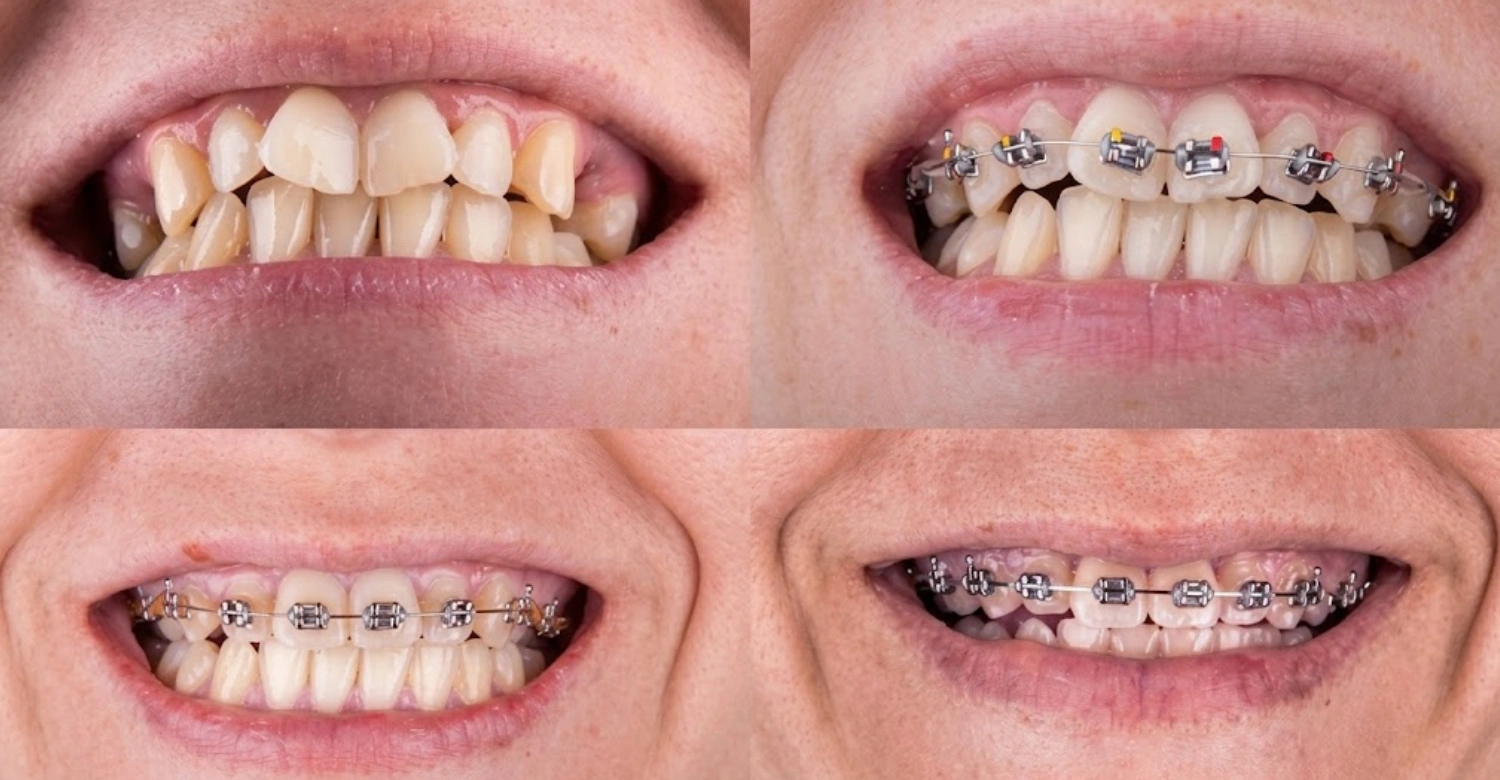
There are several types of orthodontic appliances available to suit different needs and preferences. Metal braces are the traditional option, made of stainless steel and highly effective for all kinds of corrections. Ceramic braces work similarly but use tooth-colored or clear brackets for a less noticeable appearance. Lingual braces are attached to the back of the teeth, making them invisible from the front. Lastly, clear aligners like Invisalign offer a removable and nearly invisible alternative for mild to moderate alignment issues.
What Are Traditional Metal Braces?
These are the most common and recognizable form of these appliances. They are made from high-grade stainless steel, making them incredibly durable and effective for even the most complex cases.
What Are Ceramic Braces and Who Should Consider Them?
Ceramic braces are similar to metal ones but use clear or tooth-colored brackets. This makes them much less noticeable. They are a great option for adults and teens who want a more discreet appearance but still need the power of fixed braces.
How Do Lingual Braces Differ from Other Options?
Lingual braces are completely hidden because the brackets and wires are placed on the inside (lingual) surface of the teeth. This option is ideal for those who want their treatment to be entirely invisible, although they can be more challenging to clean and may affect speech initially.
What Are Self-Ligating Braces and How Do They Work?
Unlike traditional braces that use elastic ties, self-ligating braces have a special clip or door on the bracket to hold the wire. This reduces friction, which can make adjustments quicker and potentially less painful. The braces how they work principle is the same, but the mechanics are slightly different.
How Does Invisalign Compare to Fixed Braces?
Invisalign represents a revolutionary approach to orthodontia, using a series of clear, removable aligners to gradually move teeth. Each aligner is worn for approximately two weeks before progressing to the next in the series.
What Are the Benefits of Invisalign in Turkey?
Near-invisible appearance – Clear aligners are discreet and barely noticeable.
Removable trays – Easy to take out for eating, brushing, and flossing.
Greater comfort – Smooth plastic aligners reduce irritation compared to metal braces.
Customized treatment – Aligners are tailored to each patient’s teeth for precise results.
Affordable pricing – Costs are lower than in many Western countries while offering the same quality.
High standards of care – Turkish clinics follow international protocols and use advanced technology.
Dental tourism benefits – Many clinics offer treatment packages with travel and accommodation support.
Who Is the Best Candidate for Clear Aligners?
Clear aligners work best for mild to moderate orthodontic issues including spacing, crowding, and minor bite problems. Candidates must demonstrate good compliance with wearing aligners 20-22 hours daily and maintaining proper oral hygiene throughout treatment.
Compare cosmetic and orthodontic options in Hollywood Smile vs Invisalign to choose the best for your smile.
Comprehensive Clinical Fact File: Structural Differences of Modern Braces
Beyond the basic categories of metal, ceramic, and lingual braces, several advanced bracket systems exist, each engineered with a different mechanical philosophy. These systems vary in how they hold the arch wire, how much friction they generate, and how discreet they are in daily life. Understanding these structural differences helps patients compare iconix braces vs damon braces and other advanced systems before choosing a treatment path. Vitrin Clinic evaluates each patient's bite, lifestyle, and aesthetic priorities to recommend the most suitable bracket architecture.
Understanding Advanced Variations: Iconix, Damon, and WIN Lingual Braces
Iconix braces use a fully customized, gold-plated bracket system designed from a digital scan of the patient's own teeth, offering a highly precise fit. Damon braces rely on a self-ligating clip instead of elastic ties, reducing friction and often shortening appointment times. The win lingual braces system places fully customized brackets on the inner surface of the teeth, combining the invisibility of lingual treatment with digitally milled precision. Each system suits a different balance of comfort, speed, and discretion, which is why comparing iconix braces vs damon braces options with an orthodontist matters before starting treatment.
Invisalign Deep Dive: From Invisalign First to Invisalign Comprehensive, Lite, and Moderate
Invisalign is not a single product but a family of aligner protocols matched to case complexity. Invisalign First is designed for growing children with early-stage alignment needs. Invisalign Lite targets minor crowding or spacing with fewer aligner stages, while Invisalign Moderate handles mid-level corrections requiring more tooth movement. Invisalign Comprehensive is built for complex bite and alignment issues needing the fullest range of aligner stages. Choosing between invisalign comprehensive vs invisalign lite depends on how much movement, bite correction, and time the case genuinely requires.
What Dental Problems Can Orthodontic Braces Fix?
Tooth-straightening devices can correct crooked or crowded teeth by gradually moving them into proper alignment. They are also effective in fixing bite problems such as overbites, underbites, crossbites, and open bites. Braces help close gaps between teeth, improving both function and appearance. By addressing these issues, braces not only enhance the smile but also support better oral health in the long term.
How Do Braces Treat Crooked or Misaligned Teeth?
Crooked teeth result from various factors including genetics, early tooth loss, and oral habits. Dental braces systematically move each tooth into its optimal position within the dental arch, creating proper alignment and improving overall oral health. The treatment addresses rotation, tipping, and spacing issues comprehensively.
Can Braces Correct Overbite, Underbite, and Crossbite?
Bite problems, known as malocclusions, significantly impact oral function and long-term dental health. Fixed orthodontic appliances can effectively correct most bite issues through carefully planned tooth movements and, when necessary, jaw repositioning. Treatment may involve elastics, springs, or other auxiliary appliances to achieve optimal bite relationships.
Do Braces Help With Gaps and Spacing Issues?
Gaps between teeth, called diastemas, can occur due to missing teeth, size discrepancies, or abnormal muscle attachments. Braces and orthodontics treatments can close these spaces by moving adjacent teeth together while maintaining proper root positioning and gum health.
Visual Proof: Before and After Transformations
While we cannot display images here, we can describe typical outcomes. For instance, a patient with crowded teeth and an overbite underwent 18 months of treatment with traditional braces. The before photos showed overlapping teeth and a noticeable overjet. After treatment, the teeth were aligned, the bite was corrected, and the patient's smile was significantly improved. Another case involved a patient with gaps between teeth; after 12 months with clear aligners, the gaps were closed, and the smile was more uniform. These transformations are common in Turkish clinics, where advanced technology and skilled orthodontists deliver remarkable results.
Evidence-Based Practice: What Research Says
Orthodontic treatment is supported by extensive research. A study published in the American Journal of Orthodontics and Dentofacial Orthopedics (2022) found that the success rate of orthodontic treatment is over 90% when patients adhere to their treatment plan. Another study in the Journal of Clinical Orthodontics (2021) highlighted the effectiveness of clear aligners for mild to moderate cases, with patient satisfaction rates exceeding 85%. Additionally, the Turkish Ministry of Health's 2023 report indicates that dental tourism in Turkey has grown by 30% annually, with orthodontics being a major contributor. These studies and reports underscore the reliability and quality of orthodontic care available in Turkey.
References and Further Reading
To support the information in this article, we have drawn on reputable sources:
Turkish Ministry of Health, 'Dental Tourism Report 2023'
American Journal of Orthodontics and Dentofacial Orthopedics, 2022
Journal of Clinical Orthodontics, 2021
International Patient Organization Survey, 2023
These references provide evidence for the success rates, safety, and patient satisfaction associated with orthodontic treatment in Turkey. For more detailed information, we encourage readers to consult these sources directly.
Recognized Excellence
Vitrin Clinic and its medical team, led by Dr. Rifaat Al-Samman, have received multiple accolades in the field of dental tourism. In 2023, the clinic was awarded the 'Best Dental Clinic in Istanbul' by the Turkish Healthcare Travel Council. Dr. Al-Samman has also been recognized as a 'Top Dentist' by the International Association of Dental Professionals for his contributions to patient care and clinical excellence. These recognitions reflect the high standards maintained at the clinic.
How Do Braces Improve Speech and Chewing Functions?
Properly aligned teeth contribute significantly to clear speech and efficient chewing. These corrective devices help position teeth optimally for tongue placement during speech and ensure even contact during chewing. This improvement in function often leads to better digestion and reduced jaw strain.
Understand treatment approaches for buck teeth in children to ensure proper development.
How Is the Orthodontic Braces Procedure Performed in Turkey?
Consultation & X-rays – The dentist checks the teeth and makes a treatment plan.
Teeth cleaning & preparation – Teeth are cleaned and made ready for braces.
Bracket attachment – Small brackets are glued onto the teeth.
Arch wire placement – A wire is placed through the brackets to move the teeth.
Securing with elastics – Small rubber bands or clips hold the wire in place.
Regular check-ups – Patients visit the clinic for adjustments until treatment is complete.
What Are the Steps of Getting Braces for the First Time?
The journey starts with a thorough examination. Your orthodontist will take X-rays, photos, and impressions of your teeth to create a precise treatment plan. How many teeth do you need for braces? You need a full set of teeth to get braces, although your orthodontist will be able to tell you if any missing teeth will affect your treatment. Once the plan is set, the brackets are bonded to your teeth, and the arch wire is secured.
How Does the Initial Consultation Work?
The initial consultation includes comprehensive examination, digital X-rays, photographs, and dental impressions. The orthodontist evaluates tooth positions, bite relationships, jaw alignment, and overall oral health. This information helps create a customized treatment plan with realistic timelines and cost estimates.
What Preparations Are Needed Before Placing Braces?
Before placement of these appliances, patients typically need professional cleaning and any necessary dental work completed. This may include filling cavities, treating gum disease, or extracting problematic teeth. Some cases require space creation through extraction or expansion procedures.
How Are Braces Fitted on the Teeth?
The braces fitting appointment typically takes 1-2 hours. Teeth are thoroughly cleaned and prepared with a special etching solution. Brackets are precisely positioned and bonded using light-activated adhesive. The arch wire is then placed and secured with elastic ties or self-ligating mechanisms.
Diagnostic Engineering: How Advanced Braces Systems Are Made and Fabricated
Patients often wonder how these devices are made, especially for customized systems like Iconix or WIN lingual braces. The process begins with a digital intraoral scan that captures the exact shape of every tooth. This scan is sent to a design lab where software maps the ideal final tooth position and calculates the precise bracket placement needed to achieve it. Custom brackets are then milled or cast, often from gold alloy or specialized ceramics, before being shipped back to the clinic for bonding. This digital-to-physical fabrication process is what allows advanced systems to fit with such precision compared to generic, off-the-shelf brackets.
What Happens During Regular Adjustment Appointments?
Regular adjustment appointments, typically scheduled every 4-8 weeks, involve checking treatment progress, changing or adjusting arch wires, and making necessary modifications to the treatment plan. These visits are essential for maintaining treatment momentum and addressing any concerns.
How Long Does the Orthodontic Treatment Usually Take?
Treatment duration varies based on case complexity, patient age, and compliance. Most treatments with these appliances range from 18-36 months, with simpler cases potentially completing sooner. Adult treatment may take longer due to slower bone remodeling, while growing patients often respond more quickly.
Learn about malocclusion and how it affects bite alignment and oral health.
Candidate Selection: How Do You Know If You Are Truly Suitable for Orthodontic Braces?
Not every patient is an immediate candidate for every bracket system, which is why eligibility criteria are assessed individually. Suitability depends on gum health, bone density, the severity of crowding or bite misalignment, and the patient's ability to commit to hygiene routines and follow-up visits. Patients with active gum disease or untreated cavities typically need those issues resolved first. Reviewing the full eligibility criteria with a specialist ensures the chosen system, whether fixed brackets or aligners, matches the patient's actual clinical needs rather than preference alone.
What Determines Eligibility for Braces Options for Child Orthodontics?
Children are evaluated differently than adults because their jaws are still developing. Early interceptive treatment can guide jaw growth and create space for permanent teeth before full braces are needed. Suitable braces options for child orthodontics typically depend on the child's dental age, the presence of baby versus permanent teeth, and the type of bite issue observed. An orthodontic evaluation around age seven is generally recommended to catch problems while growth can still be guided non-invasively.
How Much Do Orthodontic Braces Cost in Turkey?
The cost of them in Turkey is much lower than in many Western countries, making it a popular choice for international patients. Traditional metal braces usually range between $1,000–$1,500. Ceramic braces cost slightly more, around $1,200–$1,800. Lingual braces and Invisalign are more advanced options, typically priced between $2,000–$4,000 depending on complexity. These affordable prices, combined with high-quality care and modern clinics, make Turkey an attractive destination for orthodontic treatment.
What Factors Influence the Cost of Braces?
Several factors affect the total cost. These include treatment complexity, duration, type of braces selected, and additional procedures required. More complex cases requiring longer treatment or specialized appliances typically cost more than straightforward alignment issues.
How Do Prices in Turkey Compare to Other Countries?
Prices for dental treatments in Turkey are significantly lower compared to many other countries, while maintaining high standards of care. For example, such appliances that may cost $5,000–$7,000 in the U.S. are typically only $1,000–$1,800 in Turkey. In the U.K. and much of Europe, patients often pay two to three times more than Turkish clinics charge. This price difference, combined with modern facilities and skilled dentists, makes Turkey a top choice for affordable dental care.
Does Health Insurance Cover Braces in Turkey?
Health insurance coverage for orthodontic treatment varies by policy and provider. Some insurance plans offer partial coverage, particularly for medically necessary treatment in children. Patients should verify their coverage details before beginning treatment.
Are There Affordable Payment Plans for Braces?
Many Turkish dental clinics offer flexible payment plans to make orthodontic treatment more accessible. These plans may include interest-free installments, extended payment terms, or package deals that include all treatment phases and follow-up care.
Explore the role of brackets in orthodontic treatments for precise teeth movement.
Clinical Alternatives: The Cfast Orthodontic System vs. Traditional Methods
For patients seeking a faster, more discreet cosmetic-focused solution, the cfast orthodontic system is often compared against traditional braces. Cfast is a short-term clear bracket system designed specifically for minor cosmetic misalignment in the front teeth. It typically completes in a matter of months rather than years. Traditional braces, by contrast, are built to correct a much wider range of bite and alignment issues. This includes cases involving jaw relationships and full-arch movement. The right choice depends on whether the goal is a quick cosmetic refinement or a comprehensive functional correction. This distinction is worth discussing directly with an orthodontist.
Braces vs. Clear Aligners: Which Is Right for You?
When deciding between traditional braces and clear aligners, consider the complexity of your case, lifestyle, and budget. Traditional braces are highly effective for severe misalignment, bite issues, and complex tooth movements. They are fixed, so compliance is not an issue. They often yield faster results for intricate cases. Clear aligners, such as Invisalign, offer a more discreet and removable option. They are popular among adults. However, they require strict wear of 20-22 hours per day. They may not be suitable for severe orthodontic problems. In Turkey, both options are available at competitive prices. Clear aligners typically cost 20-30% more than traditional braces. Your orthodontist will recommend the best approach based on a detailed 3D scan and your specific needs.
People Also Ask
What are orthodontic braces?
Dental braces are dental devices made of brackets, wires, and ligatures. They apply continuous, gentle pressure to teeth to gradually move them into proper alignment. They correct crowding, spacing, and bite problems by reshaping the surrounding bone and periodontal tissue over time. Braces can be fixed, like metal or ceramic systems, or removable, like clear aligners. Treatment length and system choice depend on the complexity of the case and the patient's specific alignment or bite goals.
What are the four types of braces?
The four main types of braces are traditional metal braces, ceramic braces, lingual braces, and clear aligners such as Invisalign. Metal braces are the most durable and cost-effective option for complex cases. Ceramic braces offer a less visible alternative using tooth-colored brackets. Lingual braces sit behind the teeth for full invisibility. Clear aligners are removable trays suited to mild or moderate alignment issues. Each type suits different clinical needs and aesthetic preferences.
Which type of braces is best?
There is no single "best" type of braces. The right choice depends on the severity of the case, budget, and how discreet the patient wants treatment to be. Metal braces remain the most effective for complex bite corrections. Ceramic and lingual options prioritize appearance. Clear aligners suit milder cases requiring strong patient compliance. An orthodontist's assessment of tooth position, bite relationship, and lifestyle is the only reliable way to determine which system best fits an individual case.
What We Notice Clinically
Dr. Rifat Alsaman, Head of the Medical Team and cosmetic dentist at Vitrin Clinic, notes that patients frequently underestimate how much bracket selection affects daily comfort during treatment. According to Dr. Rifat Alsaman, self-ligating systems like Damon tend to reduce chair time and friction-related discomfort. Fully customized systems like Iconix or WIN lingual braces often deliver more predictable results for complex bite corrections. Dr. Rifat Alsaman also emphasizes that eligibility should never be assumed from age or appearance alone. A full diagnostic scan determines whether a patient is truly ready for treatment. In his clinical experience, patients who complete the eligibility assessment and follow the prescribed hygiene routine consistently achieve smoother, more predictable results regardless of which bracket system is used.
What Are the Benefits of Getting Orthodontic Braces?
Braces offer both functional and aesthetic benefits. They straighten crooked or crowded teeth, creating a healthier and more attractive smile. These appliances also correct bite problems, which improves chewing, speech, and overall oral function. In the long term, they help prevent dental issues such as uneven tooth wear, jaw pain, and gum disease.
How Do Braces Improve Dental Health and Hygiene?
Straight teeth are significantly easier to clean effectively, reducing the risk of cavities, gum disease, and other oral health problems. Proper alignment eliminates hard-to-reach areas where bacteria and plaque typically accumulate. This leads to improved long-term oral health outcomes.
What Are the Aesthetic Benefits of Straighter Teeth?
A beautiful, well-aligned smile enhances facial aesthetics and creates positive first impressions. Straight teeth contribute to balanced facial proportions and can make patients appear more youthful and confident. The aesthetic benefits often motivate patients to maintain better oral hygiene throughout their lives.
Do Braces Have Positive Effects on Self-Confidence?
Studies consistently show that orthodontic treatment significantly improves self-esteem and confidence levels. Patients often report feeling more comfortable smiling, speaking in public, and participating in social situations after completing treatment. These psychological benefits can positively impact personal and professional relationships.
Discover quality orthodontic treatment in Turkey for straightening teeth effectively.
What Are the Challenges and Side Effects of Orthodontic Braces?
Orthodontic appliances can cause some temporary challenges and side effects during treatment. Patients may experience discomfort, soreness, or irritation in the mouth, especially after adjustments. These devices can also make brushing and flossing more difficult, increasing the risk of plaque buildup if oral hygiene is not maintained. In some cases, minor issues like broken brackets, food restrictions, or temporary speech changes may occur.
Do Braces Cause Pain or Discomfort?
Some discomfort is normal, especially during the first few days after initial placement and subsequent adjustments. This discomfort typically resembles a dull ache and can be managed with over-the-counter pain relievers. Dental braces wax can help prevent irritation from brackets and wires.
How Do Braces Affect Daily Eating Habits?
Certain foods should be avoided during orthodontic treatment to prevent bracket damage and maintain oral hygiene. Hard, sticky, and sugary foods pose the greatest risks. Patients learn to cut foods into smaller pieces and chew more carefully to protect their orthodontic appliances.
What Are the Common Risks or Complications?
While serious complications are rare, potential issues include bracket breakage, wire displacement, or temporary tooth sensitivity. Proper care and regular appointments minimize these risks significantly.
Can Braces Lead to Tooth Decay or Gum Issues?
Poor oral hygiene during orthodontic treatment can lead to white spot lesions, cavities, or gum inflammation. However, these problems are preventable with proper brushing, flossing, and regular dental cleanings. An tooth-straightening devices kit typically includes special tools to maintain cleanliness around brackets and wires.
How to Manage Allergic Reactions to Braces Materials?
True allergies to orthodontic materials are extremely rare but can occur. Symptoms may include persistent irritation, swelling, or rash around the mouth. Alternative materials are available for patients with confirmed allergies to nickel or latex.
Find out how braces for buck teeth can safely correct misalignment.
How Should Patients Care for Their Braces?
Patients should care for their braces by maintaining excellent oral hygiene and following their dentist’s instructions. Brushing after every meal and using special orthodontic floss or interdental brushes helps keep teeth and brackets clean. Avoiding hard, sticky, or chewy foods prevents damage to the wires and brackets. Regular dental check-ups and adjustments are also essential to ensure treatment progresses smoothly and effectively.
What Are the Best Oral Hygiene Practices with Braces?
Effective oral hygiene with fixed orthodontic appliances requires specialized techniques and tools. Patients should brush after every meal using fluoride toothpaste and a soft-bristled toothbrush. Interdental brushes and floss threaders help clean between brackets and under wires.
Long-Term Considerations and Potential Risks
While orthodontic treatment is generally safe, it's important to be aware of potential long-term effects. These may include root resorption (shortening of tooth roots), which occurs in a small percentage of patients, and periodontal issues if oral hygiene is not maintained. Additionally, some patients experience minor relapse if they do not wear their retainers as directed. In rare cases, temporomandibular joint (TMJ) discomfort can arise. However, with proper planning and follow-up care, these risks are minimized. Dr. Rifaat Al-Samman emphasizes, 'A thorough initial assessment and regular monitoring are key to preventing long-term complications.'
What Foods Should Be Avoided During Treatment?
Foods to avoid include hard items like nuts and ice, sticky foods like caramel and gum, and high-sugar snacks that increase cavity risk. Patients should also avoid biting into hard foods like apples or corn on the cob directly with their front teeth.
What Tools Help Keep Braces and Teeth Clean?
Essential cleaning tools include specialized orthodontic toothbrushes, interdental brushes, floss threaders, and water flossers. Many orthodontists provide cleaning kits and instructions to help patients maintain proper hygiene throughout treatment.
What Is the Role of Orthodontists in Turkey?
Orthodontists in Turkey play a key role in diagnosing, preventing, and treating dental alignment and bite issues. They use advanced tools like digital scans and X-rays to design customized treatment plans for each patient. Their expertise covers a wide range of options, from traditional braces to modern solutions like Invisalign. By combining skill, experience, and affordability, Turkish orthodontists provide high-quality care that attracts both local and international patients.
How Do Orthodontists Diagnose and Plan Treatment?
Orthodontists use advanced diagnostic tools including digital radiography, 3D imaging, and computer modeling to create precise treatment plans. This technology allows for accurate prediction of treatment outcomes and optimal timing of different treatment phases.
What Qualifications Should Patients Look for in Turkey?
Patients should seek orthodontists with proper educational credentials, specialized training, and experience with their specific treatment needs. Many Turkish orthodontists have international training and certifications, ensuring they meet global standards of care.
Why Is Turkey a Popular Destination for Orthodontics?
Turkey’s combination of experienced specialists, modern facilities, competitive pricing, and excellent patient care has made it a leading destination for dental tourism. The country’s strategic location and well-developed medical tourism infrastructure make it easily accessible for international patients.
What Happens After Braces Are Removed?
After braces are removed, patients can expect their teeth to feel smooth and slightly sensitive at first. The orthodontist usually provides a retainer to keep the teeth in their new position and prevent shifting. A thorough cleaning and polishing are often done to remove any leftover adhesive and reveal the improved smile. Regular follow-up visits help ensure the results are maintained long-term.
Why Are Retainers Necessary After Orthodontic Treatment?
Retainers prevent teeth from shifting back to their original positions after braces removal. The periodontal ligaments and surrounding tissues need time to stabilize in their new positions, making retention essential for long-term success.
How Long Should Retainers Be Worn?
Initial retention typically requires full-time wear for several months, followed by nighttime wear for years or even permanently. The exact retention protocol depends on individual factors including age at treatment, original problem severity, and individual biological factors.
Can Teeth Shift Back After Braces?
Without proper retention, teeth can shift back toward their original positions, a process called relapse. However, following orthodontic instructions and wearing retainers as prescribed virtually eliminates this risk and preserves treatment investment.
How Do These corrective devices in Turkey Compare Internationally?
These appliances in Turkey compare very well to international standards, offering the same advanced technology and treatment options found in the U.S. or Europe. Clinics use high-quality materials, digital imaging, and modern techniques to ensure effective and safe results. The main difference is cost, with treatments in Turkey often priced at a fraction of what patients pay abroad. Combined with skilled orthodontists and excellent patient care, Turkey has become a trusted destination for orthodontic treatment worldwide.
Why Do Patients Travel to Turkey for Braces?
International patients choose Turkey for orthodontic treatment due to significant cost savings, high-quality care, experienced specialists, and the opportunity to combine treatment with tourism. The country’s modern dental facilities rival those found anywhere in the world.
How Do Turkish Clinics Ensure Quality and Safety?
Turkish dental clinics maintain international accreditation and follow strict safety protocols. Many facilities have JCI accreditation or similar quality certifications, ensuring they meet global healthcare standards. Orthodontists often have international training and use the latest technology and techniques.
What Are Patient Experiences and Reviews Like in Turkey?
Patient reviews consistently highlight the professionalism, skill, and care provided by Turkish orthodontists. Many international patients report satisfaction with both treatment outcomes and the overall experience, often recommending Turkish clinics to others seeking orthodontic care.
Ready to get the smile you’ve always wanted? A beautiful smile is a lifelong investment in your health and happiness. With modern technology and expert care, achieving straight teeth is more accessible than ever. Book your FREE consultation today at vitrinclinic.com and start your journey toward a confident smile.
About Vitrin Clinic
Vitrin Clinic is a cosmetic dental clinic in Istanbul, Turkey. It serves international patients seeking advanced orthodontic and cosmetic dental care. The medical team is led by Dr. Rifat Alsaman, Head of the Medical Team and cosmetic dentist. The clinic combines digital diagnostic technology with personalized treatment planning. It offers a full range of orthodontic systems, from traditional metal braces to customized solutions like Iconix, Damon, WIN lingual braces, and Invisalign. Vitrin Clinic supports international patients throughout every stage of treatment, from the initial consultation to post-treatment retention. Patients benefit from the affordability of Turkey combined with internationally recognized clinical standards.
References:
FAQs
Dr. Rifat Alsaman has more than 5 years of clinical experience in dentistry and currently serves as the Head of the Medical Team at Vitrin Clinic. He is dedicated to providing exceptional patient care, overseeing treatment planning, and ensuring the highest clinical standards across the team. His expertise, attention to detail, and commitment to continuous professional development have helped countless patients achieve healthier, more confident smiles.


