Oral Surgery
June 23, 2026
Alveoloplasty: When is it Necessary, Procedure, and Aftercare
 Dr. Rifat Alsaman
Alveoloplasty is a dental surgical procedure that reshapes and smooths out the jawbone. It is done after tooth extraction or before prosthetic placement. When teeth are removed, the alveolar bone rarely heals into a perfectly even surface. This is the ridge of bone that once anchored them. Sharp edges, irregular ridges, and bone fragments often develop during tooth extraction recovery. These create serious problems for denture stability and dental implants preparation. This procedure surgically corrects these irregularities. It turns an uneven, problematic ridge into a smooth, stable foundation. You may be preparing for dentures, implants, or full mouth rehabilitation. Either way, understanding when Alveoplasty is necessary is the first step. So is knowing what the procedure involves and how aftercare works. Together, they lead to a successful, long-lasting smile restoration.
Why Jawbone Preparation Matters for a Perfect Smile
Jawbone preparation is the invisible cornerstone of every successful smile restoration. It comes before dentures are fitted, implants are placed, or any prosthetic is made. The alveolar bone must first provide a smooth, stable, and well-contoured foundation. Without it, even the best prosthetic will fail to deliver lasting comfort or stability. Sharp bone edges and irregular ridges are common after surgical tooth extraction. So are uneven healing patterns. They create pressure points, chronic soreness, and prosthetic instability. These problems get worse over time. Targeted bone contouring before restoration prevents them. It separates predictable, long-term success from repeated complications. Jawbone preparation is not an optional refinement. It is the foundational step behind the quality, comfort, and durability of every restoration.
The Hidden Foundation of Every Smile Restoration
Every successful smile restoration begins beneath the gum line. The alveolar bone is the ridge of jawbone that once supported your natural teeth. It forms the hidden foundation for dentures, implants, and prosthetics. When this bone is uneven, sharp, or irregular, problems follow. Even a precisely crafted prosthetic will fail to deliver comfort or stability. Alveoloplasty solves this challenge before any restoration begins. It ensures long-term success.
The Problem After Tooth Extraction
Tooth extraction recovery rarely leaves a perfectly smooth jawbone. As the bone heals, it often forms sharp edges, bone spicules, and uneven ridges. These create pressure points beneath dentures. They can also interfere with implant placement. The result is chronic discomfort, sore spots, and prosthetic instability. These issues worsen over time. If the bone contour is not corrected, patients face repeated adjustments and failed fittings. They also face preventable complications throughout their restoration journey.
The Solution - Alveoloplasty
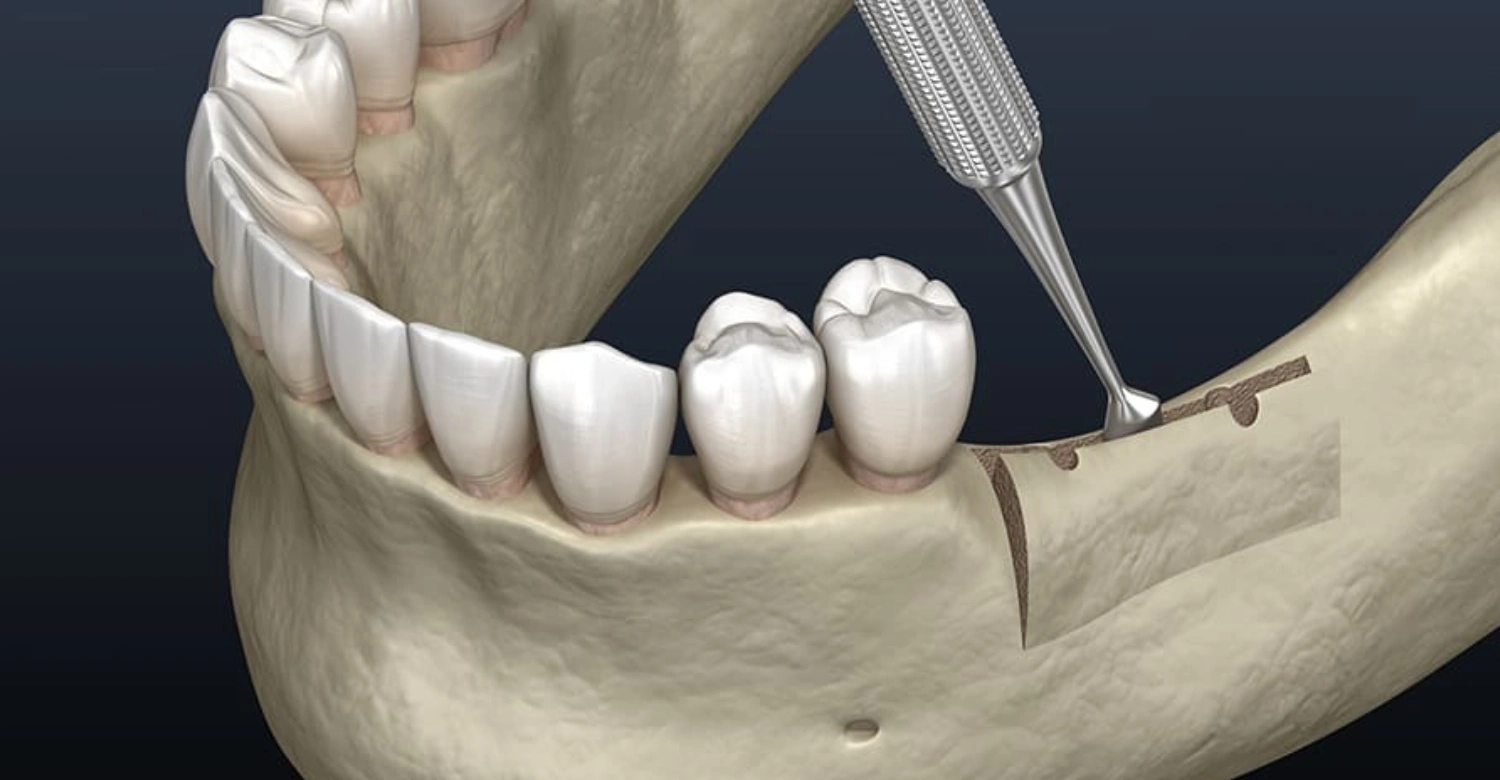
Alveoloplasty is a dental surgical procedure that reshapes and smooths out the jawbone. It is done after tooth extraction or before prosthetic placement. The surgeon carefully recontours the alveolar ridge. This surgical tooth extraction follow-up removes sharp projections and irregular surfaces. It creates an ideal, uniform foundation. That foundation supports a stable, comfortable dental prosthetics fit. Alveoplasty is an essential preparatory step in modern restorative dentistry. It greatly improves outcomes for dentures, implants, and full mouth rehabilitation.
What is Alveoloplasty?
Alveoloplasty is a targeted bone contouring procedure. It is used in restorative and surgical dentistry. It involves precisely reshaping the alveolar ridge, the bone structure that holds teeth. The goal is a smooth, predictable surface for prosthetic placement. It is often performed with or after a surgical tooth extraction. Alveoplasty is a minimally invasive dental surgical procedure. It optimizes the jawbone before treatment begins. This greatly improves the long-term success of implants, dentures, and other restorations.
Definition of the Procedure
Alveoloplasty is the surgical reshaping and smoothing of the alveolar bone. It prepares the bone for prosthetic or implant placement. During the Alveoplasty procedure, an oral surgeon or periodontist contours irregular bone. Some bone may be removed to create a stable, even ridge. This jawbone smoothing technique helps the gum tissue heal evenly. It also helps future prosthetics fit well. That includes full dentures, partial dentures, and dental implants. The fit is accurate, comfortable, and reliable from day one.
Why the Jawbone Becomes Irregular
After a surgical tooth extraction, the jawbone goes through a natural healing process. This process is often unpredictable. As the extraction socket closes, the bone remodels unevenly. It often forms sharp bone spicules, protruding edges, or irregular ridges. This is a normal biological response. Still, it creates major challenges for dental prosthetics fit and implant stability. The Alveoloplasty procedure corrects these post-extraction irregularities. It smooths out the jawbone before it can interfere with restorative dental work.
Main Goal of Treatment
The main goal of Alveoloplasty is a smooth, stable, evenly contoured alveolar ridge. This ridge supports long-term prosthetic and implant success. Clinicians plan this jawbone smoothing procedure strategically. It removes pressure points and reduces soft tissue trauma. It also creates predictable conditions for denture fabrication and dental implants preparation. A well-prepared jawbone gives patients a better dental prosthetics fit. It also means fewer post-operative complications. Long-term oral function improves too. This makes Alveoplasty an indispensable step in restorative planning.
When is Alveoloplasty Necessary?
Alveoloplasty is necessary when the alveolar ridge has irregularities. These can compromise prosthetic fit, implant stability, or patient comfort. It is often needed after multiple extractions or complex surgical tooth extractions. It is also used when significant bone remodeling has already occurred. Knowing when the Alveoplasty procedure is indicated helps with treatment planning. So, is Alveoplasty necessary in your case? A clinical examination gives the answer. Diagnostic imaging then reveals the true contour of the bone.
Before Denture Placement
Before a full or partial denture is fitted, the jaw must be prepared. The alveolar ridge needs to be smooth and even. Sharp bone edges create painful pressure points under the denture base. Irregular ridges do the same. This leads to chronic soreness, tissue ulcers, and growing instability. The Alveoloplasty procedure removes these problem areas before the denture is made. The result is a precise, stable fit from the start. Patients who have Alveoplasty before dentures report higher satisfaction. They also enjoy better retention and much less long-term discomfort.
Before Dental Implant Surgery
Dental implants preparation depends heavily on the quality and shape of the alveolar bone. An irregular or peaked ridge makes precise implant positioning very difficult. Sharp projections make surgical outcomes unpredictable. Alveoloplasty creates the ideal bone contour for accurate implant placement. This helps the implant integrate correctly with the surrounding bone. Without this step, implant surgery may be compromised. Failure rates can rise. Performing the Alveoplasty procedure first creates a controlled surgical environment. This supports successful osseointegration and long-term implant stability.
After Tooth Extractions
Tooth extraction recovery often reveals leftover sharp bone fragments. It may also show irregular socket walls or protruding edges. These need professional attention. Minor irregularities may resolve during natural healing. More pronounced ones need surgical treatment. Alveoloplasty can be done during or shortly after a surgical tooth extraction. This prevents complications during the healing phase. Smoothing out the jawbone early lowers the risk of soft tissue injury. It also speeds up comfortable healing. And it leaves a better ridge for future restorative treatment.
Full Mouth Rehabilitation Cases
Full mouth rehabilitation replaces or restores many teeth across both arches at once. In these cases, a uniform, well-contoured alveolar ridge is essential. The Alveoloplasty procedure brings each jaw segment to the same standard. Contour, height, and smoothness all become consistent before restorations are placed. This matters most with complete dentures or implant-supported full arch prosthetics. Here, any ridge irregularity can compromise the whole restoration. Alveoplasty in full mouth cases turns an uneven jaw into a stable foundation. That foundation supports a reliable dental prosthetics fit.
The Alveoloplasty Procedure - Step-by-Step Guide
Knowing the Alveoloplasty procedure step by step helps patients feel informed and confident. This dental surgical procedure takes place in a controlled clinical setting. It is usually done under local anesthesia. It follows a precise sequence designed for safety and good outcomes. Each step is planned using diagnostic data gathered before surgery. The process runs from consultation through suturing. In experienced hands, the Alveoplasty procedure is systematic and efficient. Its results and Alveoplasty healing time are remarkably predictable.
Step 1 - Consultation and Diagnostic Imaging
The Alveoplasty procedure starts with a thorough consultation. The patient's dental and medical history is reviewed. Next comes advanced diagnostic imaging, including periapical X-rays and 3D CBCT scans. These show the alveolar bone in detail. They reveal irregularities, bone density changes, and areas that need contouring. This imaging is essential for precise surgical planning. It also helps assess alveoplasty cost in Turkey based on case complexity. A careful diagnostic phase guides every later step of the Alveoplasty procedure. Each step is based on accurate, patient-specific anatomy.
Step 2 - Anesthesia and Comfort Control
Patient comfort during the Alveoplasty procedure is a top clinical priority. Local anesthesia fully numbs the surgical area. As a result, the patient feels no pain during bone reshaping. Some patients are anxious. Others need extensive Alveoplasty after a complex surgical tooth extraction. For them, conscious sedation or IV sedation may be offered. The anesthesia plan is tailored to each patient. It considers their needs, anxiety level, and the scope of the Alveoplasty procedure. Every patient stays relaxed, comfortable, and pain-free throughout treatment.
Step 3 - Gum Tissue Access
Once the anesthesia takes effect, the surgeon makes a small, precise incision along the ridge. The gum tissue is then gently folded back. This controlled flap gives direct access to the bone underneath. It avoids unnecessary trauma to the surrounding soft tissue. Clean tissue handling at this stage matters. It supports a good Alveoloplasty healing time and reduces swelling after surgery. The incision exposes only the bone areas that need contouring. As much healthy tissue as possible is preserved throughout the Alveoloplasty procedure.
Step 4 - Bone Reshaping and Smoothing
This is the core phase of the Alveoloplasty procedure. The surgeon uses precision instruments such as bone files, rongeurs, and rotary surgical burs. Sharp bone projections are removed. Irregular ridges are reduced. The surgeon smooths out the jawbone to reach the desired contour. The aim is not aggressive bone removal. Instead, the bone is reshaped precisely. Enough bone volume is kept for implant placement or denture support. During this jawbone smoothing phase, the site is constantly rinsed with sterile saline. This keeps the field clean and limits heat damage to the bone.
Step 5 - Irrigation and Suturing
After bone contouring, the surgical site is rinsed thoroughly with sterile saline. This removes bone debris, fragments, and contaminants. This cleansing step lowers infection risk. It also supports healthy Alveoloplasty healing. The gum tissue flap is then placed back over the newly shaped bone. It is secured with sutures. These may be dissolvable or removable, depending on the case. Sutures hold the tissue firmly in place during early healing. They help the gum adapt smoothly to the new bone contour. This supports an optimal Alveoplasty aftercare outcome.
Alveoloplasty Recovery and Aftercare Timeline
Alveoloplasty recovery is usually straightforward when patients follow their instructions carefully. Healing time depends on how much bone was reshaped. It also depends on the patient's overall health. Most people feel much better within the first two weeks. Proper aftercare during this period is essential. It prevents complications and supports bone and tissue healing. Knowing the recovery timeline helps patients plan ahead. They can prepare for follow-up visits and dietary changes. They can also plan the next stages of their dental restoration journey after this dental surgical procedure.
First 24-48 Hours
The first 24 to 48 hours after the Alveoloplasty procedure are the most critical. Patients usually have mild to moderate swelling around the surgical site. Local tenderness and minor bleeding are also common. These are normal responses to surgical tooth extraction and bone contouring. An ice pack applied to the cheek on and off helps control swelling. Rest is strongly advised. Patients should avoid physical exertion. It can raise blood pressure or disturb the surgical site. Protecting the first blood clot is essential for healthy jawbone healing.
Essential Aftercare Instructions
Good Alveoloplasty aftercare is the most important factor in smooth, complication-free healing. Patients must take all prescribed antibiotics and pain medications as directed. This prevents infection and manages discomfort. Keep the surgical site clean with gentle saltwater rinses. Start these 24 hours after surgery. Avoid smoking, alcohol, and strenuous activity. Doing so speeds up jawbone healing and lowers complication risk. Patients should eat only soft foods. They should not touch the surgical area with fingers or tongue. They should also attend all scheduled follow-up visits. These visits track healing progress and tissue adaptation.
Healing Timeline
Alveoplasty healing time follows a predictable but individual path. Soft tissue healing usually finishes within one to two weeks. During this time, the gum closes and adapts over the contoured bone. Sutures dissolve or are removed. Surface tenderness also fades noticeably. Deeper jawbone healing takes longer. Bone remodeling continues beneath the surface for several months. Full bone maturation may take three to six months. During this time, the ridge stabilizes. It is then assessed for denture fabrication or dental implants preparation. Patience in this phase leads to better long-term prosthetic outcomes.
Benefits of Alveoloplasty
The benefits of the Alveoloplasty procedure go far beyond immediate surgical correction. It fixes jawbone irregularities before any prosthetic is placed. This improves the quality, durability, and comfort of every treatment that follows. Patients who have this dental surgical procedure face fewer complications. Their prosthetics fit better. They are also much more satisfied with their dental restoration. It may be done to prepare jaws for dentures or as part of dental implants preparation. Either way, it delivers clear clinical and functional advantages. These benefit oral health and quality of life for years.
Improved Denture Stability
One of the clearest benefits of Alveoplasty is much better denture stability. The procedure smooths out the jawbone and removes irregular ridges. As a result, the denture base makes full, even contact with the tissue below. This maximizes suction and retention. It reduces rocking and slipping. It also removes the painful pressure points that form over uneven bone. Patients whose jaws are prepared this way say their dentures feel more secure. They also feel more comfortable. And they need far fewer adjustments than dentures placed over uneven ridges.
Higher Implant Success Rates
Dental implants preparation through Alveoloplasty is linked to higher implant success rates. A properly contoured alveolar ridge gives implants more accurate angulation. It also improves initial stability and bone contact. All of these support successful osseointegration. Irregular bone contours can compromise implant seating. They can increase micro-movement during healing. Over time, this may lead to implant failure. Performing Alveoplasty before implant surgery creates an optimal bone environment. It gives implants the best biological and mechanical conditions. This supports long-term implant survival and function.
Reduced Post-Operative Complications
Alveoloplasty greatly reduces complications after prosthetic placement. Without jawbone smoothing, sharp bone edges sit beneath dentures. They cause chronic pressure sores, ulcers, and soft tissue injuries. These often need repeated clinical treatment. They cause patient suffering and raise treatment costs over time. Smoothing out the jawbone before any prosthetic is delivered prevents this. With Alveoplasty, these issues never develop. The result is a cleaner, more comfortable experience after restoration. Patients have fewer emergency visits and fewer denture adjustments. They also get a more predictable, stable long-term dental prosthetics fit.
Long-Term Functional Improvement
Alveoloplasty also brings real long-term improvements in oral function. Restorations rest on a smooth, stable bone foundation. This means patients chew more efficiently. Their speech is more confident. Their bite is spread more evenly across the arch. Ill-fitting prosthetics often cause chronic discomfort. Patients may avoid certain foods or struggle to speak clearly. With a well-prepared ridge, this discomfort is greatly reduced or eliminated. Alveoplasty thus supports better nutrition and social confidence. It also improves overall quality of life. This makes it one of the most impactful preparatory procedures in restorative dentistry.
Alveoloplasty Costs and Dental Tourism in Turkey Advantage
International patients should understand alveoplasty cost in Turkey. They should also know how it compares globally. Turkey has become a world-leading destination for dental tourism Turkey. It offers expert care in advanced clinics. Costs are much lower than in Western Europe, the United Kingdom, or the United States. Dental tourism Turkey combines high clinical standards with a patient-friendly experience. This makes procedures like Alveoloplasty more affordable. Many patients might otherwise delay or skip this essential step at home.
Key Factors Influencing Cost
Several clinical factors shape alveoplasty cost in Turkey, as they do anywhere. The main factor is how much bone reshaping is needed. Cases involving large sections of the ridge need more surgical time and resources. So do cases covering multiple surgical quadrants. Localized single-area procedures cost less. Surgical complexity also matters. Costs rise when Alveoplasty is combined with several surgical tooth extractions at once. The same applies when it is part of a full mouth rehabilitation plan. The type of sedation also affects alveoplasty cost in Turkey. Local anesthesia alone costs less than adding IV sedation.
Why Costs Vary Internationally
Alveoplasty cost in Turkey is much more affordable than in many Western countries. There are several structural reasons for this. Healthcare infrastructure, labor costs, regulatory expenses, and clinical overhead differ widely between countries. In the UK, US, and EU, prices include high facility costs, staff wages, and insurance. In Turkey, these structural costs are lower. Clinics can offer the same quality dental surgical procedure at a fraction of the price. Importantly, lower cost in dental tourism Turkey does not mean lower quality. It reflects economic differences, not any compromise in clinical standards or technology.
Why Turkey is a Leading Dental Destination
Turkey, and Istanbul in particular, is one of the world's top dental tourism Turkey destinations. International patients come for internationally trained surgeons and state-of-the-art technology. Treatment can cost 50-70% less than equivalent care in Western Europe. Beyond clinical quality, alveoplasty cost in Turkey offers clear savings. Patients also enjoy Istanbul's world-class hospitality and excellent international transport links. They can combine dental treatment with a rich cultural travel experience. Full-service dental tourism Turkey packages simplify every step. They cover the patient journey from first consultation to final restoration.
Risks and Considerations
Like any dental surgical procedure, Alveoplasty carries certain risks. Patients should understand them before proceeding. Most Alveoloplasty cases progress without major complications. This is true when experienced clinicians perform them. It also depends on patients following their Alveoplasty aftercare instructions. Being fully informed helps patients make confident treatment decisions. Several factors affect risk levels. These include the patient's overall health and the complexity of the Alveoplasty procedure. The quality of post-operative care also plays a role. So does how closely the patient follows Alveoplasty aftercare during jawbone healing.
Common Temporary Side Effects
The most common side effects after the Alveoloplasty procedure are temporary. They are expected as part of normal tooth extraction recovery and surgical healing. Swelling around the jaw and cheek usually peaks within 48 hours. It then fades over the following week. Mild to moderate discomfort at the site is managed with prescribed painkillers. It resolves as Alveoplasty healing progresses. Minor bleeding or oozing in the first 24 hours is normal. Gentle pressure controls it. These side effects do not signal complications. They resolve reliably with proper Alveoplasty aftercare and rest.
Rare Complications
Serious complications after the Alveoplasty procedure are rare. They can occur if aftercare guidelines are not followed. Infection may develop if the area is not kept clean. It may also develop if antibiotics are not finished. Smoking and similar habits can compromise jawbone healing and raise infection risk. Delayed healing is more common in some patients. These include people with uncontrolled diabetes, weak immune function, or poor nutrition. In rare cases, too much bone is removed during the Alveoplasty procedure. This can limit future implant options. An experienced surgical team greatly lowers the chance of these complications.
Importance of Skilled Surgical Planning
The success of the Alveoloplasty procedure depends on the surgical team. Their skill, experience, and precision are critical. Removing too much bone can reduce ridge height and volume. This may compromise future dental implants preparation or limit prosthetic options. Removing too little fails to fix the original irregularities. The patient is then left with ongoing complications. Careful pre-surgical planning with CBCT imaging prevents both problems. It ensures the Alveoplasty procedure is conservative and accurate. It also keeps the patient's long-term restorative goals in view. Skilled planning is the most important safeguard against complications and poor outcomes.
Building the Foundation for a Lifetime Smile
A lifetime smile does not begin with the prosthetic itself. It begins with the foundation beneath it. Every denture, implant, or full arch restoration depends on the alveolar bone below. The bone's quality and contour matter. Precise surgical bone contouring makes that foundation smooth and stable. Then every restoration above it performs better, lasts longer, and feels more comfortable. Skipping this step brings preventable risks. These include chronic soreness, prosthetic instability, and implant failure. They also include repeated, costly adjustments. Patients who invest in jawbone preparation achieve better long-term outcomes. They enjoy better oral function and greater satisfaction. The conclusion is simple. A lifetime smile is not built from the outside in. It is built from the foundation up, one carefully prepared ridge at a time.
Why Alveoloplasty Matters
Alveoloplasty matters because no restoration can perform well on an unstable, irregular foundation. This dental surgical procedure treats the root cause of prosthetic discomfort and instability. That cause lies in the bone structure underneath. It is fixed before it becomes a clinical problem. The patient may be preparing for dentures, implants, or full mouth rehabilitation. In each case, Alveoplasty turns an irregular ridge into a smooth, stable, surgically ideal platform. This preparatory step protects every restoration placed above it. It keeps the smile functional, comfortable, and beautiful for decades.
The Long-Term Impact
The long-term impact of Alveoloplasty reaches every stage of a patient's restorative journey. Dentures that fit well from the start need fewer adjustments. They also last longer. Implants placed into well-contoured bone integrate more reliably. They survive longer too. Less chronic discomfort improves daily life, eating habits, and social confidence. Jawbone healing guided by precise surgical preparation is more uniform. It is also more predictable than unassisted healing. This supports better outcomes at every later treatment stage. Alveoplasty is often a preparatory procedure rather than a final one. Even so, it may be the one decision that shapes the lifetime success of a patient's dental restoration.
Why Choose Vitrin Clinic in Turkey for Your Dental Care?
Vitrin Clinic in Istanbul is a trusted center for advanced restorative and surgical dentistry. It is recognized internationally. The clinic has treated thousands of international patients successfully. It has a consistent reputation for clinical excellence. Vitrin Clinic combines expert surgical teams with cutting-edge technology. Together, they deliver outstanding outcomes. Some patients need Alveoloplasty or dental implants preparation. Others need comprehensive smile restoration. Vitrin Clinic offers all of them a complete, end-to-end treatment experience. It is designed for international dental tourism Turkey patients. Support runs from first contact through final restoration and long-term follow-up care.
Established Expertise
Vitrin Clinic has built its reputation over years of consistent excellence. It specializes in advanced restorative and surgical dental care. The surgical team has extensive experience in Alveoloplasty procedures. They also work in dental implants preparation and full mouth rehabilitation. These fields demand both technical precision and clinical judgment. Thousands of international patients have trusted Vitrin Clinic for life-changing dental treatments. They come from the UK, Europe, the Middle East, and beyond. The clinic combines deep experience with a culture of continuous improvement. This makes it one of Istanbul's most respected destinations. It is a top choice for complex dental surgical procedure cases.
State-of-the-Art Technology
Vitrin Clinic uses the most advanced diagnostic and surgical technology in modern dentistry. 3D CBCT imaging gives a clear view of the alveolar bone. This lets surgical teams plan Alveoplasty procedures with great accuracy. It also minimizes risk. Digital smile planning tools let patients see their results before treatment begins. This improves communication and confidence. Precision instruments are designed for jawbone smoothing and bone contouring. They ensure consistently predictable results. This commitment to technology allows Vitrin Clinic to deliver premium clinical standards. These are the standards international dental tourism Turkey patients expect and deserve.
End-to-End International Patient Support
Vitrin Clinic understands that traveling abroad for dental care brings unique challenges. Some are logistical. Others are emotional. The clinic's dedicated international patient team offers remote consultations before travel. Patients receive expert assessments and personalized treatment plans without leaving home. Multilingual coordinators guide patients through every step. They speak Arabic, English, Russian, German, French, and more. Vitrin Clinic also helps with accommodation recommendations. It arranges airport-to-clinic transportation as well. Every part of the dental tourism Turkey experience is designed to be seamless. It should feel comfortable and stress-free for every international patient.
Affordability Without Compromise
A major advantage of Vitrin Clinic is affordable, internationally benchmarked quality. Alveoplasty cost in Turkey at Vitrin Clinic is a fraction of costs in the UK, US, or Western Europe. It is often 50 to 70% lower. There is no reduction in clinical standards, material quality, or patient care. This affordability does not come from cost-cutting. It comes from Turkey's favorable healthcare economics. Patients receive the same high-specification Alveoplasty procedure. They get the same diagnostic imaging technology. They also get the same caliber of surgical expertise found in premium clinics worldwide.
Book a FREE Treatment Plan Now
Are you planning dentures, dental implants, or a full smile restoration? A personalized consultation is the essential first step toward long-term success. Every patient's alveolar bone has unique challenges and opportunities. Only a clinical examination and advanced imaging can assess them. Do not let preventable bone irregularities undermine an excellent restoration. Reach out to a specialized dental clinic to discuss your situation. Find out whether Alveoplasty is indicated for your case. Then start building the stable, smooth foundation your new smile deserves.
References:
FAQs
Dr. Rifat Alsaman has more than 5 years of clinical experience in dentistry and currently serves as the Head of the Medical Team at Vitrin Clinic. He is dedicated to providing exceptional patient care, overseeing treatment planning, and ensuring the highest clinical standards across the team. His expertise, attention to detail, and commitment to continuous professional development have helped countless patients achieve healthier, more confident smiles.


